It’s been nearly a year since the poet laureate of medicine, author and neurologist Oliver Sacks, took his final bow as a sentient being on this beautiful planet, succumbing, at 82, to metastases of ocular melanoma which spread to his liver.
The New Yorkermarks the occasion bypublishing Sacks’ fellow neurologist and author Dr. Orrin Devinsky’s recollection of their longstanding friendship. Devinsky paints a vivid picture of an exceptionally compassionate man, who felt a kinship not only with starfish, jellyfish, and octopi, but also humans in both financial and emotional need.
Sacks peppers his remarks with astonishing biological tidbits, a compulsion that delighted his friend Devinsky on their frequent early morning bike rides along New York City’s west side.
(Palatal myoclonus—or rhythmic pulsing—in the palate, eardrum and strap muscles are vestigial evidence that humans once had gills!)
(The dandelion’s name evolved from dent de lion, French for lion’s tooth, a structure the spikes on its serrated leaves could be said to resemble. Also, certain dandelion species reproduce asexually, and Sacks had no fear about eating an unwashed specimen he plucked from the questionably sanitary grounds of Riverside Park!)
The musings that warrant the melancholy piano and strings accompanying Burns’ excerpt are of a more personal nature. Sacks’ was totally immersed in his chosen subject. His mother was a comparative anatomist and surgeon, and his boyish interest in the hard sciences is what led him to biology. A lifetime of scientific observation and clinical interaction only add to the poetry of his thoughts on death:
My generation is on the way out, and each death I have felt as an abruption, a tearing away of part of myself. There will be nobody like us when we are gone, but then there is nobody like anybody ever. When people die they cannot be replaced. They leave holes that cannot be filled. It is the fate, the genetic and neural fate of every human being to be a unique individual, to find his own path, to live his own life, to die his own death. Even so, I am shocked and saddened at the sentence of death, and I cannot pretend I am without fear. But my predominant feeling is one of gratitude. I have loved and been loved. I have been given much and I have given something in return. I have read and traveled and thought and written. I have had an intercourse with the world, the special intercourse of writers and readers. Above all, I have been a sentient being, a thinking animal on this beautiful planet, and this in itself has been an enormous privilege and adventure.
Ayun Halliday is an author, illustrator, theater maker and Chief Primatologist of the East Village Inky zine. Her latest comic contrasts the birth of her second child with the uncensored gore of Game of Thrones. Follow her @AyunHalliday
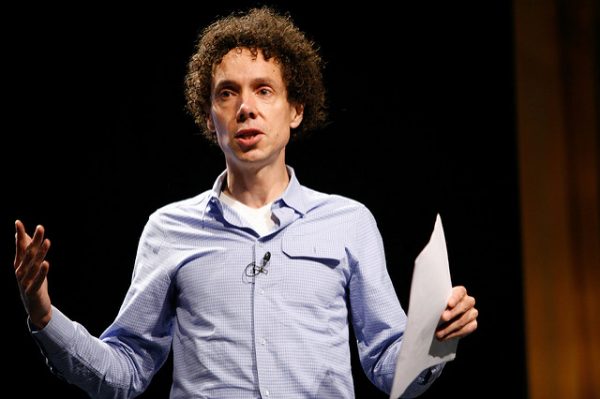
Malcolm Gladwell’s Revisionist History podcast kicked off this summer and in his very first episode, he took on the question of how women have broken into male-dominated fields, and the many reasons that so often hasn’t happened. Having set this tone, Gladwell asks in a more recent inquiry—a three-part series spanning Episodes 4 through 7—a similar question about what we might call meritocracy in education, a value fundamental to liberal democracy, however that’s interpreted. As Gladwell puts it in “Carlos Doesn’t Remember,” “This is what civilized societies are supposed to do: to provide opportunities for people to make the most of their ability. So that if you’re born poor, you can move up. If you work hard, you can improve your life.”
Over some sentimental, homespun orchestration, Gladwell points out that Americans have told ourselves that this is our birthright, “that every kid can become president.” We have seen ourselves this way despite the fact that at the country’s origin, higher offices were solely the property of propertied men, a small minority even then. Lest we forget, for all their good intentions, Ben Franklin’s Poor Richard’s Almanack and later collection, “The Way to Wealth,” were written as satires, “relentlessly scathing social and political commentary,” writes Jill Lepore, that mock wishful thinking and exaggerated ambition even as they offer helpful hints for organized, diligent living. Americans, the more cynical of us might think, have always believed impossible things, and the myth of meritocracy is one of them.
But Gladwell, skimming past the cultural history, wants to genuinely ask the question, “is it true? Is the system geared to serve the poor smart kid, or the rich smart kid?” Apart from our beliefs and political ideologies, what can we really say about what he calls, in economics terms, “the rate of capitalization” in the U.S.? This number, Gladwell explains, measures “the percentage of people in any group who are able to reach their potential.” Better than “its GDP, or its growth rate, or its per-capita income,” a society’s capitalization rate, he says, allows us to judge “how successful and just” a country is—and in the case of the U.S. in particular, how much it lives up to its ideals.
The first episode in the series (Episode 4 of the podcast, stream it above) introduces us to Gladwell’s first subject, Carlos, a very bright high school student in Los Angeles, and Eric Eisner, a retired entertainment lawyer who devotes his time to scouting out talented kids from low income families and helping them get into private schools. Eisner did exactly that for Carlos, finding him a place in an upscale private Brentwood school in the fifth grade. Early in Gladwell’s interview with Carlos, the question of what James Heckman at Boston Review identifies as the “non-cognitive characteristics” that inhibit social success comes up. These are as often “physical and mental health” and the soft skills of social interaction as they are access to something as seemingly mundane as a pair of tennis shoes that fit.
Carlos, a “really, really gifted kid,” Gladwell reiterates, cannot make it into and through the complicated social system of private school without Eisner, who bought him new tennis shoes, and who provides other material and social forms of support for the students he mentors. Students like Carlos, Gladwell argues, need not only mentors, but patrons in the mold of an ancient Roman patrician: “not just any advocate: a high-powered guy with lots of connections, who can get you in and watch over you.” The key to class mobility, in other words, lies with the arbitrary noblesse oblige of those who have already made it, generally with some considerable advantages of their own. The remainder of the episode explores the obvious and non-obvious problems with this modern-day patronage system.
In “Food Fight,” the next part of the mini-series on “capitalization,” Gladwell and his colleagues open the door on the world of prestigious liberal arts colleges’ dining services, starting at Bowdoin College in Maine, a place where the food services are “in a whole different class.” Bowdoin’s excellent food, Gladwell argues, represents a “moral problem.” To help us understand, he makes a direct comparison with Bowdoin’s elite competitor, Vassar College, whose student dining is more in line with what most of us experienced at college; in one student’s understated phrase, there’s “room for improvement.” What the food comparison illustrates is this: when many elite institutions doubled their financial aid budgets a decade or so ago to increase enrollment of low-income students, other budget lines, so Vassar’s president claims, took such a hit that food, facilities, and other services suffered.
Vassar’s current president transformed the student body from primarily full-tuition-paying students to primarily students “who pay very little.” The egalitarian move means the college must lean too heavily on its endowment and on the paying students. Gladwell doesn’t delve into what we’ve also been hearing about for at least the last decade: as institutions like Vassar accept and fund increasing numbers of low-income students, other schools charged legally with providing for the public good, like the University of California system, have raised tuition to levels unaffordable to thousands of prospective students.
Colleges across the country may have raised tuition rates to their current astronomical levels in part to better fund poorer applicants, but they have also faced stiff criticism for spending huge amounts on athletics, building projects, and exorbitant administrative salaries. The food comparison presents us with an either/or scenario, but the moral problem inhabits a much grayer reality than Gladwell acknowledges. Likewise, in the story of Carlos, we come to understand why smart kids from poor neighborhoods face so many impediments once they arrive at elite institutions. But we don’t hear about why so many poor kids fail to achieve at all due to what what Heckman calls “the principle source of inequality today”—children born into poverty begin life at a severe disadvantage from the very start, leading to social divisions of the “skilled and unskilled” even in early childhood.
We do get a broader picture in the final episode in the series, “My Little Hundred Millions,” in which Gladwell looks into another moral problem: In the story of Henry Rowan, who in the early ‘90s donated $100 million to a tiny university in New Jersey, we see a stark contrast to the way most philanthropists operate, almost as a rule making their generous gifts to elite, already wealthy schools like Harvard, Stanford, and Yale. This system of philanthropy perpetuates inequality in higher education and keeps elite institutions elite, even as—in places like Vassar—it gives them the reserve capital they need to fund lower-income students. Like any complex institutional system with a long, tangled history of exclusion and privilege, higher education in the U.S. offers us a very good model for studying inequality.
To hear Gladwell’s full assessment of meritocracy or “capitalization,” you’ll need to listen to the full series as it builds on each example to make its larger point. Each episode’s webpage also includes links to reference documents and featured books so that you can continue the investigation on your own, correcting for the podcast’s blind spots and biases. What Gladwell’s series does well, as do many of his pop sociological bestsellers, is give us concrete examples that run up against many of our abstract preconceptions. It’s an interesting approach—structuring an extended look at exceptionalism and its problems around three exceptional cases. But it is these cases, with all their complications and complexity, that often get lost in over-generalized discussions about higher education and the myths and realities of social mobility.
It takes some guts to open an independent, bricks-and-mortar bookstore these days. But that’s what Josh Spencer did. He’s the proprietor of “The Last Bookstore,” the playfully-named shop located in downtown Los Angeles.
The short documentary above takes you into Josh’s world. And it tells the story of perseverance. Straightaway, you discover that Josh is a paraplegic. He survived a terrible accident, battled depression, and spent time living on welfare and food stamps. Then, he persevered. The Last Bookstore flourishes while so many indie bookstores flounder. If you’re in LA, pay The Last Bookstore a visit. Find their location here.
If you would like to support the mission of Open Culture, consider making a donation to our site. It’s hard to rely 100% on ads, and your contributions will help us continue providing the best free cultural and educational materials to learners everywhere. You can contribute through PayPal, Patreon, and Venmo (@openculture). Thanks!
As the Black Lives Matter movement has come to occupy a greater swath of America’s attention span, a conversation has arisen around the pitfalls of allyship, a term that lends itself to discussions of gender and disability, as well as race.
Simply put, the self-proclaimed allies are members of a more privileged majority, eager to lend support through word and deed.
Unfortunately, their enthusiasm often turns them into microphone hogs in what activist Princess Harmony Rodriguez has referred to as “ally theater.”
A number of would-be allies confuse humility with the seeking of brownie points. If they really got it, those at the center of the movement say, they would not expect members of the minority to rearrange their to-do lists to bring them up to speed on what it’s like to be a person of color (or a transgendered person or a disabled person).
Would-be allies are therefore advised to step out of the spotlight, stuff a sock in it, and educate themselves, by working to find existing essays and narratives, authored by those with whom they would be in solidarity.
Human nature ensures that tempers will flare and hurt feelings will be aired. The horrifying social ill that gave rise to the movement—the shooting of unarmed black men by those charged with protecting the whole of the public—is elbowed offstage, so that a phenomenon such as allyship can be the number one topic of debate on college campuses, websites, and social media.
“Traffic Stop,” above, provides a rare moment of racial accord, stemming from yet another ghastly tale of police brutality.
The short animation was born of a conversation recorded by Alex Landau and Patsy Hathaway in a StoryCorps booth, a massive oral history project designed to attract a wide diversity of participants.
Landau is African-American.
His adoptive mother, Hathaway, is white.
Those who would classify adopting a child of another race as “allyship” must concede that, if so, it is certainly of no casual stripe.
The events of January 15, 2009, when Denver police stopped the 19-year-old Landau and a white friend for making an illegal left turn, caused Hathaway to rethink the colorblind worldview she had espoused while raising her son.
“I thought that love would conquer all and skin color really didn’t matter,” Hathaway tells Landau. “I had to learn the really hard way when they almost killed you.”
Had the attack happened a few years later, Landau’s friend might have managed to document the proceedings with a cell phone, despite the handcuffs that were placed on him after a bag of marijuana was found in his pocket.
Instead, this animation, and the grisly graphic photo that follows of Landau’s face prior to receiving 45 stitches, will have to suffice. His recollection of the laughter and racial epithets directed his way as he lay bleeding on the ground are stomach-churners, too.
Like his mother, Landau’s childhood perception of an all-inclusive, benevolent world was shattered. They mourned it together when they were reunited in the emergency room on the night of the ill-fated traffic stop.
Ultimately, the City of Denver awarded Landau a $795,000 settlement, while the Denver Police Department, citing a lack of evidence, cleared all three officers of misconduct. Follow up articles from 2011 and 2013 are available here and here.
Traffic Stop was animated by Gina Kamentsky & Julie Zammarchi (read an interview with them here). It was recently nominated for an Emmy award last week.
Director Hirokazu Kore-eda’s 1999 film Afterlife tasks its recently deceased characters with choosing a single memory to take with them, as they move into the great unknown.
The subjects of “On Memory,” above, are all very much alive, but they too, have great cause to sift through a lifetime’s worth of memories. All have been diagnosed with Alzheimer’s disease. They range in age from 48 to 70. Two have been living with their diagnoses for six years. The baby of the group received hers just last year.
Those who have no personal connection to Alzheimer’s are likely to have a clearer picture of the disease’s advanced stage than its early presentation. A few minutes with Myriam Marquez, Lon Cole, Frances Smersh, Irene Japha, Nancy Johnson, and Bob Wellington should remedy that.
All six are able to recall and describe the significant events of their youth. At the interviewer’s request, they reflect on the pain of losing beloved parents and the pleasure of first kisses. Their powers of sensory recall bring back their earliest memories, including what the weather was like that day.
The recent past? Much hazier. At present, these individuals’ mild cognitive impairment resemble benign age-related memory slips quite closely. Their diagnoses are what lends urgency to their answers. The prospect of forgetting children and spouse’s names is very real to them.
Knowledge of the interviewees’ diagnoses can’t but help sharpen viewers’ eyes for distinct facial expressions, speech patterns, and individual temperaments. They share a common diagnosis, but for now, there’s no difficulty distinguishing between the six unique personalities, each informed by a wealth of experience.
I was surprised there’s an actual, medical name for it: pareidolia, defined by Merriam-Webster as “the tendency to perceive a specific, often meaningful, image in a random or ambiguous visual pattern.”
Thomas Lamadieu, the artist whose work is showcased above, has a different, but not wholly unrelated condition.
Most of us prefer to contemplate the heavens in a bucolic setting. Lamadieu’s art compels him to look upwards from a more urban landscape. The tops of the buildings hemming him in supply with irregularly shaped frames, which he captures using a fish eye lens. Later, he fills them in with Microsoft Paint drawings, which frequently feature a bearded man whose t‑shirt is striped in sky blue. Negative space, not Crayola, supplies the color here.
Think of it as street art in the sky.
Not every day can be a brilliant azure, but it hardly matters when even Lamadieu’s grayest views exhibit a determined playfulness. It takes a very unique sort of eye to tease a pink nippled, stripe-limbed bunny from a steely UK sky.
Like many street artists, he takes a global approach, traveling the world in search of giant unclaimed canvases. His portfolio contains vistas originally captured in Hong Kong, South Korea, Germany, Spain, Austria, Canada, Belgium, and the United States, as well as his native France.
“The bearded man in my images stands for the sky itself,” he told The Independent, adding that his is a wholly secular vision.
She was a little bit country. He was a little bit rock and roll.
Turns out Marie was also more than a little bit Dada.
From 1985 to 1986, Marie served as actor Jack Palance’s cohost on Ripley’s Believe It or Not, a TV series exploring strange occurrences, bizarre historical facts, and other such crowd-pleasing oddities… one of which was apparently the aforementioned European avant-garde art movement, founded a hundred years ago this week.
If you don’t know as much about Dada as you’d like, Ms. Osmond’s brief primer is a surprisingly sturdy introduction.
No cutesy bootsy, easy references to melting clocks here.
The highlight is her performance of Dada poet and manifesto author Hugo Ball’s nonsensical 1916 sound poem “Karawane.”
Lose the yellow bathrobe and she could be a captive warrior princess onGame of Thrones, fiercely petitioning the Mother of Dragons on behalf of her people. (Invent some subtitles for extra Dada-inflected fun!)
A sharp eyed young art student named Ethan Bates did catch one error in Marie’s lesson. The ’13’ costume she pulls from a handy dressing room niche was not worn by Hugo Ball, but rather Dutch painter Theo Van Doesburg, one of the founders of the De Stijl movement.
Still you’ve got to hand it to Marie, who was slated to perform just a single line of the poem. When it came time to tape, she abandoned the cue cards, blowing producers’ and crew’s minds by delivering the poem in its unhinged entirety from memory.
Now that’s rock and roll.
Below you’ll find footage of Ball himself performing the work in 1916.
In 1975, Nora Ephron sat down with Studs Terkel to talk about Crazy Salad, her collection of essays about women and the women’s rights movement during the 1970s. If the excerpts animated by Blank on Blankabovereflect the entirety of the conversation (listen here), then you can’t help but notice that the gender issues being discussed then, during that late stage of second wave feminism, haven’t gone away today. They’re still very much out there. The difference is the enthusiasm, the sense of possibility, that Ephron couldn’t contain then. “It’s exciting.” “It’s ok being a woman now. I like it. Try it some time!” Indeed.
If you would like to support the mission of Open Culture, consider making a donation to our site. It’s hard to rely 100% on ads, and your contributions will help us continue providing the best free cultural and educational materials to learners everywhere. You can contribute through PayPal, Patreon, and Venmo (@openculture). Thanks!
We're hoping to rely on loyal readers, rather than erratic ads. Please click the Donate button and support Open Culture. You can use Paypal, Venmo, Patreon, even Crypto! We thank you!
Open Culture scours the web for the best educational media. We find the free courses and audio books you need, the language lessons & educational videos you want, and plenty of enlightenment in between.