Alan Watts moved from his native London to New York in 1938, then eventually headed west, to San Francisco in the early 1950s. On the left coast, he started teaching at the Academy of Asian Studies, wrote his bestseller Way of Zen, and began delivering a long-running series of talks about eastern philosophy on KPFA radio in Berkeley. During these years, Watts became one of the foremost popularizers of Zen Buddhism, Hinduism, and Taoism, which made him something of a celebrity, especially when the 60s counterculture movement kicked into gear.
Now, 40 years and change after his death, you can find no shortage of vintage Watts’ media online (including this archive of streaming lectures). And today we’re featuring an episode from a TV series called Eastern Wisdom and Modern Life, which aired in San Francisco circa 1960. “The Silent Mind” runs 28 minutes, and it offered American viewers an introduction to the philosophy and practice of meditation, something still considered exotic at the time. History in the making. You’re watching it happen right here. Find more meditation and Alan Watts resources below.
If you would like to support the mission of Open Culture, consider making a donation to our site. It’s hard to rely 100% on ads, and your contributions will help us continue providing the best free cultural and educational materials to learners everywhere. You can contribute through PayPal, Patreon, and Venmo (@openculture). Thanks!
Where have all the Fezziwigs gone? Those festive souls whose joyfully uncomplicated relationship to Christmas inspires generosity and the highest of spirits?
The factors leading to the seasonal malaise documented above are far less easy to identify than the singular complaint of the famous song Koresky borrows for the title of his video essay.
A simple reunion would have fixed Elvis’s Christmas blues.
Not so the characters played by Catherine Deneuve, Angelica Huston, and other lovely, aging actresses gazing mournfully in this mash up. Large families, sumptuous tables, and lavishly decorated homes are no match for their seasonal depression.
Perhaps they should try volunteering in a soup kitchen.
Or getting away from it all in the French Canadian asbestos mining town that provides the setting for Claude Jutra’s Mon oncle Antoine. (Nothing like a child-sized coffin and some realistically grimy, non-fake snow to make you count your blessings!)
A complete list of the films selected by Koresky for this misery-loves-company compilation is below. (Kudos to producer Casey Moore for his masterful editing.)
Though few of us like to hear it, the fact remains that success in any endeavor requires patient, regular training and a daily routine. To take a mundane, well-worn example, it’s not for nothing that Stephen R. Covey’s best-selling classic of the business and self-help worlds offers us “7 Habits of Highly Effective People,” rather than “7 Sudden Breakthroughs that Will Change Your Life Forever”—though if we credit the spam emails, ads, and sponsored links that clutter our online lives, we may end up believing in quick fixes and easy roads to fame and fortune. But no, a well-developed skill comes only from a set of practiced routines.
That said, the type of routine one adheres to depends on very personal circumstances such that no single creative person’s habits need exactly resemble any other’s. When it comes to the lives of writers, we expect some commonality: a writing space free of distractions, some preferred method of transcription from brain to page, some set time of day or night at which the words flow best. Outside of these basic parameters, the daily lives of writers can look as different as the images in their heads.
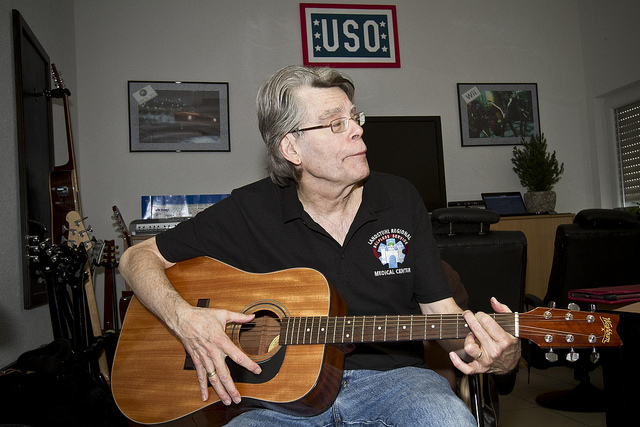
But it seems that once a writer settles on a set of habits—whatever they may be—they stick to them with particular rigor. The writing routine, says hyper-prolific Stephen King, is “not any different than a bedtime routine. Do you go to bed a different way every night?” Likely not. As for why we all have our very specific, personal quirks at bedtime, or at writing time, King answers honestly, “I don’t know.”
“I have a glass of water or a cup of tea. There’s a certain time I sit down, from 8:00 to 8:30, somewhere within that half hour every morning,” he explained. “I have my vitamin pill and my music, sit in the same seat, and the papers are all arranged in the same places. The cumulative purpose of doing these things the same way every day seems to be a way of saying to the mind, you’re going to be dreaming soon.”
The King quotes come to us via the site (and now book) Daily Routines, which features brief summaries of “how writers, artists, and other interesting people organize their days.” We’ve previously featured a few snapshots of the daily lives of famous philosophers. The writers section of the site similarly offers windows into the daily practices of a wide range of authors, from the living to the long dead.
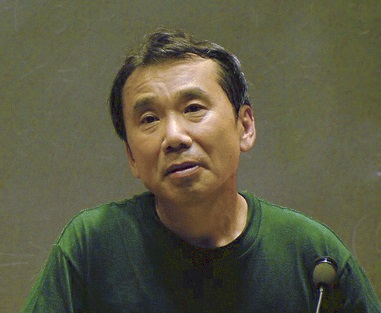
A contemporary of King, though a slower, more self-consciously painstaking writer, Haruki Murakami incorporates into his workday his passion for running, an avocation he has made central to his writing philosophy. Expectedly, Murakami keeps a very athletic writing schedule and routine.
When I’m in writing mode for a novel, I get up at 4:00 am and work for five to six hours. In the afternoon, I run for 10km or swim for 1500m (or do both), then I read a bit and listen to some music. I go to bed at 9:00 pm. I keep to this routine every day without variation. The repetition itself becomes the important thing; it’s a form of mesmerism. I mesmerize myself to reach a deeper state of mind. But to hold to such repetition for so long — six months to a year — requires a good amount of mental and physical strength. In that sense, writing a long novel is like survival training. Physical strength is as necessary as artistic sensitivity.
Not all writers can adhere to such a disciplined way of living and working, particularly those whose waking hours are given over to other, usually painfully unfulfilling, day jobs.
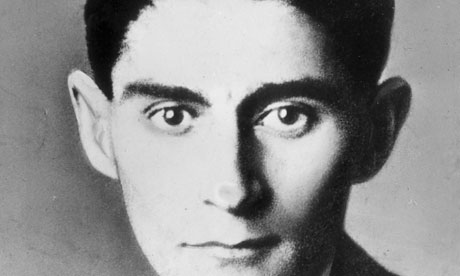
An almost archetypal case of the writer trapped in such a situation, Franz Kafka kept a routine that would cripple most people and that did not bring about physical strength, to say the least. As Zadie Smith writes of the author’s portrayal in Louis Begley’s biography, Kafka “despaired of his twelve hour shifts that left no time for writing.”
[T]wo years later, promoted to the position of chief clerk at the Workers’ Accident Insurance Institute, he was now on the one-shift system, 8:30 AM until 2:30 PM. And then what? Lunch until 3:30, then sleep until 7:30, then exercises, then a family dinner. After which he started work around 11 PM (as Begley points out, the letter- and diary-writing took up at least an hour a day, and more usually two), and then “depending on my strength, inclination, and luck, until one, two, or three o’clock, once even till six in the morning.” Then “every imaginable effort to go to sleep,” as he fitfully rested before leaving to go to the office once more. This routine left him permanently on the verge of collapse.
Might he have chosen a healthier way? When his fiancée Felice Bauer suggested as much, Kafka replied, “The present way is the only possible one; if I can’t bear it, so much the worse; but I will bear it somehow.” And so he did, until his early death from tuberculosis.
While writers require routine, nowhere is it written that their habits must be salubrious or measured. According to Simone De Beauvoir, outré French writer Jean Genet “puts in about twelve hours a day for six months when he’s working on something and when he has finished he can let six months go by without doing anything.” Then there are those writers who have relied on pointedly unhealthy, even dangerous habits to propel them through their workday. Not only did William S. Burroughs and Hunter S. Thompson write under the influence, but so also did such a seemingly conservative person as W.H. Auden, who “swallowed Benzedrine every morning for twenty years… balancing its effect with the barbiturate Seconal when he wanted to sleep.” Auden called the amphetamine habit a “labor saving device” in the “mental kitchen,” though he added that “these mechanisms are very crude, liable to injure the cook, and constantly breaking down.”
So, there you have it, a very diverse sampling of routines and habits in several successful writers’ lives. Though you may try to emulate these if you harbor literary ambitions, you’re probably better off coming up with your own, suited to the oddities of your personal makeup and your tolerance—or not—for serious physical exercise or mind-altering substances. Visit Daily Routines to learn about many more famous writers’ habits.
“There’s nothing left but to introduce you to some people whose lives will forever be a part of the life of Paris. These are our brothers. They were robbed of their stage three weeks ago, and we would like to offer them ours tonight.” And with those words from Bono, the Eagles of Death Metal took the stage again tonight in Paris, just three weeks after the horrific terrorist attack at Le Bataclan. Up top, see them sing, along with U2, a version of Patti Smith’s “People Have the Power.” Next, a version of their own song, “I Love You All the Time.”
Whether the band would perform again was never in doubt. Interviewed days after the attack, the band, still reeling, told Vice they had an obligation to carry on. In the poignant video below, Jesse Hughes said it all: “I cannot wait to get back to Paris. I cannot wait to play. I want to come back. I want to be the first band to play at Le Bataclan when it opens.” Playing at Le Bataclan may have to wait. But getting back to Paris, that’s now certainly done.
Follow Open Culture on Facebook and Twitter and share intelligent media with your friends. Or better yet, sign up for our daily email and get a daily dose of Open Culture in your inbox. And if you want to make sure that our posts definitely appear in your Facebook newsfeed, just follow these simple steps.
The film above documents a 1965 performance of his most celebrated piece, Youth, Maturity, Old Age, and Death, given at 42, the exact midpoint of his life. In four abstract minutes, he progresses through the seven ages of man, relying on nuances of gait and posture to convey each stage.
He performed it countless times throughout his extraordinary career, never straying from his own precisely rendered choreography. The playing area is just a few feet in diameter.
Observe the 1975 performance that filmmaker John Barnes captured for his series Marcel Marceau’s Art of Silence, below. Nothing left to chance there, from the timing of the smallest abdominal isolations to the angle of his head in the final tableau.
Time’s effects may have provided the subject for the piece, but its perennially lithe author claimed not to concern himself with age, telling the New York Times in 1993 that his focus was on “life-force and creation.”
When I started, I hunted butterflies. Later, I began to remember the war and I began to dig deeper, into misery, into solitude, into the fight of human souls against robots.
This would seem to support the theory that maturity is a side effect of age.
His alter ego Bip’s legacy may be the infernal invisible ropes and glass cages that are a mime’s stock in trade, but distilling human experience to its purest expression was the basis of Marceau’s silent art.
He feels his advancing age and fears that the art of mime will die with him. It’s a transitory, ephemeral art, he explains, as it exists only in the moment. As an old man, he works harder than ever, performing three hundred times a year, teaching four hours a day. He is named the UN Ambassador for Aging. Five nights a week he smears the white paint over his face, draws in the red bud at the center of his lips, follows the line of his eyelid with a black pencil. And then takes to the stage, his sideburns frayed, his hair dyed chestnut and combed forward, looking like a toupee.
His body is as elastic as ever, but the old suit of Bip hangs loose on him now. Beneath the whitened jawline is a baggy, sinewy neck. With each contortion of his face, the white paint reveals deep lines. At the end of his show, he folds in a deep bow and the knobs of his spine show above the low cut of Bip’s Breton top.
Ayun Halliday is an author, illustrator, and Chief Primatologist of the East Village Inky zine. In college, she earned a hundred dollars for appearing as a mime before a convention of hungover glassware salesmen, an experience briefly recalled in her memoir, Job Hopper. Follow her @AyunHalliday
Still, it’s hard to resist the preternaturally mature 11-year-old Björk reading the nativity story in her native Icelandic, backed by unsmiling older kids from the Children’s Music School in Reykjavík.
Particularly since I myself do not speak Icelandic.
It would also appear that little Björk, the fiercely self-reliant latchkey kid of a Bohemian single mother, was far and away the most charismatic kid enrolled in the Barnamúsikskóli.
(Less than a year later her self-titled first album sold 7000 copies in Iceland—a modest amount compared to Adele’s debut, maybe, but c’mon, the kid was 11! And Iceland’s population at the time was a couple hundred thousand and change.)
As to the above performance’s religious slant, it wasn’t a reflection of her personal beliefs. As she told the UK music webzine Drowned in Sound in 2011:
…nature is my religion, in a way… I think everybody has their own private religion. I guess what bothers me is when millions have the same one. It just can’t be true. It’s just…what?
Still, it probably wasn’t too controversial that the programmers elected to cleave to the reason in the season. Icelandic church attendance may be low-key, but the overwhelming majority of its citizens identify as Lutheran, or some other Christian denomination.
(They also believe in elves and 13 formerly fearsome Yule Lads, descendants of the ogres Grýla and Leppalúði. By the time Björk appeared on earth, they had long since evolved, through a combination of foreign influence and public decree, into the kinder, gentler, not quite Santa-esque version, addressing the studio audience at the top of the act.)
I once read a book by Larry King called How to Talk to Anyone, Anytime, Anywhere. Slavoj Zizek might well consider writing a book of his own called How to Make Intellectual Pronouncements About Anything, Anytime, Anywhere. From Beethoven’s “Ode to Joy” to political correctness to the Criterion Collection to Starbucks (and those just among the topics we’ve featured here on Open Culture) the Slovenian philosopher-provocateur has for decades demonstrated a willingness to expound on the widest possible variety of subjects, to the point where his career has begun to look like one continuous, free-associative analytical monologue, which in the Big Think video above reaches the inevitable subject: your love life.
Perhaps you’ve tried online dating — a practice that, given the increasingly thorough integration of the internet and daily life, we’ll probably soon just call “dating.” Perhaps you’ve had positive experiences with it, perhaps you’ve had negative ones, and most probably you’ve had a mixture of both, but how often can you take your mind off the awkward fact that you have to first “meet” the other person through an electronic medium, creating a version of yourself to suit that medium? Zizek calls this online dating’s problematic “aspect of self-commodification or self-manipulation.”
“When you date online,” he says, “you have to present yourself there in a certain way, putting forward certain qualities. You focus on your idea of how other people should perceive you. But I think that’s not how love functions, even at the very simple level. I think the English term is ‘endearing foibles’ — an elementary ingredient in love. You cannot ever fall in love with the perfect person. There must be some tiny small disturbing element, and it is only through noticing this element that you say, ‘But in spite of that imperfection, I love him or her.’ ”
Fair enough. But what to do about it? Zizek thinks that the way forward for romantic technologies lies not in a less technological approach, but a more technological approach — or at least a stranger technological approach. He imagines a world of “ideal sexual attraction” where “I meet a lady; we are attracted to each other; we say all the usual stuff — your place, my place, whatever, we meet there. What happens then? She comes with her plastic penis, electric dildo. I come with some horrible thing — I saw it, it’s called something like stimulating training unit — it’s basically a plastic vagina, a hole.”
Dare we examine where this scenario goes? The outcome may surprise you. They simply insert her electric dildo into his stimulating training unit, and voilà, “the machines are doing it for us, buzzing in the background, and I’m free to do whatever I want, and she.” With full tribute paid to the superego by their vulgar devices, “we have a nice talk; we have tea; we talk about movies. I talk with a lady because we really like each other. And, you know, when I’m pouring her tea, or she to me, quite by chance our hands touch. We go on touching. Maybe we even end up in bed. But it’s not the usual oppressive sex where you worry about performance. No, all that is taken care of by the stupid machines. That would be ideal sex for me today.”
“The Depression was not fun,” the late YouTube star, Clara Cannucciari, states in the very first episode of her Great Depression Cooking web series, above. Her first recipe—Pasta with Peas—would likely give your average urbane foodie hives, as would her knife skills, but Clara, who started making these videos when she was 93, takes obvious satisfaction in the outcome.
Her filmmaker grandson Christopher Cannucciari wisely kept Clara in her own kitchen, rather than relocating her to a more sanitized kitchen set. Her plastic paper towel holder, linoleum lined cabinets, and teapot-shaped spoon rest kept things real for several years worth of step-by-step, low budget, mostly vegetarian recipes.
Her fruit-and-gingham ceramic salt and pepper shakers remained consistent throughout.
How many television chefs can you name who would allow the camera crew to film the stained tinfoil lining the bottom of their ovens?
Nonagenarian Clara apparently had nothing to hide. Each episode includes a couple of anecdotes about life during the Great Depression, the period in which she learned to cook from her thrifty Italian mother.
To what did she attribute her youthful appearance?
Clean living and large quantities of olive oil (poured from a vessel the size and shape of a coffee pot).
How to avoid another Great Depression?
“At my age, I don’t really care,” Clara admitted, “But for the younger generation it’s bad.” In the worst case scenario, she counsels sticking together, and not wishing for too much. The Depression, as we’ve mentioned, was not fun, but she got through it, and so, she implies, would you.
The series can be enjoyed on the strength of Clara’s personality alone, but Great Depression Cooking has a lot to offer college students, undiscovered artists, and other fledgling chefs.
Her recipes may not be professionally styled, but they’re simple, nutritious, and undeniably cheap (especially Dandelion Salad).
Homemade Pizza—Clara’s favorite—is the antithesis of a 99¢ slice.
Those on a lean Thanksgiving budget might consider making Clara’s Poor Man’s Feast: lentils and rice, thinly sliced fried steak, plain salad and bread.
Right up until her final, touching appearance below at the age of 96, her hands were nimble enough to shell almonds, purchased that way to save money, though cracking also put her in a holiday mood. Foodies who shudder at Pasta with Peas should find no fault with her wholesome recipe for her mother’s homemade tomato sauce (and by extension, paste).
Ayun Halliday is an author, illustrator, and Chief Primatologist of the East Village Inky zine. She recently co-authored a comic about epilepsy with her 18-year-old daughter. Follow her @AyunHalliday
We're hoping to rely on loyal readers, rather than erratic ads. Please click the Donate button and support Open Culture. You can use Paypal, Venmo, Patreon, even Crypto! We thank you!
Open Culture scours the web for the best educational media. We find the free courses and audio books you need, the language lessons & educational videos you want, and plenty of enlightenment in between.