On Christmas, Browse A Historical Archive of More Than 50,000 Toys

paratroops in action

The Strong Nation­al Muse­um of Play, locat­ed in Rochester, NY, is a fun children’s muse­um. But the insti­tu­tion also has seri­ous research archives, stuffed with toys, games, and records of the toy indus­try. Its online col­lec­tions, which cur­rent­ly boast 55,068 objects, take a hol­i­day brows­er on a trip into a fig­u­ra­tive grandma’s attic, chock-full of the play­things peo­ple loved in the nine­teenth and twen­ti­eth cen­turies.

The online archives are divid­ed into four cat­e­gories: “Toys”, “Dolls”, “Games”, and “More.” Each of these four sec­tions is fur­ther sub­di­vid­ed into top­i­cal­ly-spe­cif­ic groups, cho­sen by the archivists.

The collection’s strength is also its weak­ness: there are so many toys that it can be easy to get over­whelmed. The sub­ject divi­sions are help­ful here. As some­body with an inter­est in gen­der and child­hood, I found myself fas­ci­nat­ed by the house­keep­ing toyskids used to use ovens that were heat­ed with real coals!—and that was an easy way to nar­row down my browse.  Sub­ject group­ings for toy sol­diers, celebri­ty dolls, and board games also piqued my inter­est.

It’s fun to look around for toys from your own child­hood (I found a few), but if you’re inter­est­ed in his­to­ry, you might find the echoes of his­tor­i­cal events to be even more intrigu­ing. Late-nine­teenth-cen­tu­ry kids played with a paper doll inspired by the cir­cus celebri­ty Tom Thumb; chil­dren of the 1930s had licensed dolls of the media-sen­sa­tion Dionne Quin­tu­plets; a play­set from 1940 fea­tured grim, suit­ed-up “Para­troops in Action.”

Mou­s­ing over the thumb­nails will allow you to see the item’s name. If you see a blue “Learn More” tag, be sure to click through; that means that the item’s image will be accom­pa­nied by an inter­pre­tive his­tor­i­cal note writ­ten by the Strong’s archivists. These vary in length, and con­tain intrigu­ing tid­bits. Did you know, for exam­ple, that Hol­ly Hob­bie was a real per­son: the artist Hol­ly Ulinkas Hob­bie? Or that the famous artist Charles Dana Gib­son had a now-for­got­ten fol­low­er, Nell Brink­ley, who illus­trat­ed the flap­per era?

Rebec­ca Onion is a writer and aca­d­e­m­ic liv­ing in Philadel­phia. She runs Slate.com’s his­to­ry blog, The Vault. Fol­low her on Twit­ter: @rebeccaonion

Short Film Shows What Happens When a Letter from World War II Finally Gets Delivered 69 Years Later

A few years ago, I stum­bled upon a nev­er-sent let­ter writ­ten to a friend when we were both in col­lege. The con­tents weren’t heavy. Dis­or­ga­ni­za­tion is the most like­ly expla­na­tion for why it nev­er went in the mail. I cracked the enve­lope and had a look.

It was a time cap­sule, for sure, a cringe-induc­ing one. It was­n’t so much the life I was report­ing on as how I framed it, self-aggran­dize­ment strain­ing to pass as non­cha­lance. For­tu­nate­ly, an artist acquain­tance hap­pened to be run­ning a project— send her your shred­d­a­ble doc­u­ments, and even­tu­al­ly, she’d send you a few sheets of hand­made paper in which your mulched data min­gled with that of oth­ers. Tru­ly a beau­ti­ful way to dis­pose of the evi­dence.

But what hap­pens when nei­ther the writer, nor the intend­ed recip­i­ent, is the find­er of the lost let­ter? In Feb­ru­ary 2013, some mail post­ed by Lt. Joseph O. Matthews, a sol­dier sta­tioned at a mil­i­tary train­ing facil­i­ty in Jack­sonville, North Car­oli­na, found its way to Abbi Jacob­son, an actress (and col­or­ing book author!) rent­ing an apart­ment on Mac­Dou­gal Street in New York City. Addressed to Matthew’s wife, the can­cel­la­tion mark was dat­ed Decem­ber 2, 1944.

Jacob­son opened the let­ter, the con­di­tion of the enve­lope hav­ing sug­gest­ed that she would not be the first to breach its con­tents dur­ing the 69 years it had spent wan­der­ing in the wilder­ness. The words inside were roman­tic, a young offi­cer inform­ing the bride he’d left back home that he’d soon be ship­ping out to Oki­nawa. Eager to pull an Amélie by reunit­ing the let­ter with those to whom it would mean the most, Jacob­son enlist­ed the help of her friend, doc­u­men­tary film­mak­er Todd Bieber. Togeth­er they searched records at City Hall, look­ing for clues. When that approach proved fruit­less, they cre­at­ed the Lost Let­ter Project, a web por­tal that invit­ed the pub­lic to join in the search.

An avalanche of tweets, Face­book updates, and human inter­est pieces ensued. In no time at all, they had their man, or rather his descen­dants, Lt. Matthews hav­ing passed away in 1999, crush­ing Jacob­son’s dreams of hand deliv­er­ing the let­ter to “a lit­tle old man and a lit­tle old lady.” (I’m will­ing to bet Jacob­son will one day wish there was a giant blender capa­ble of turn­ing dig­i­tal state­ments like how cute would that be, my god, right? I love old peo­ple into hand­made paper.)

Bieber’s video reveals what became of Lt. Matthews and his wife. Even more inter­est­ing is how the let­ter res­onates with his grown chil­dren, par­tic­u­lar­ly a cer­tain the­o­log­i­cal ref­er­ence at odds with the man they thought they knew.

Relat­ed Con­tent:

In Touch­ing Video, Artist Mari­na Abramović & For­mer Lover Ulay Reunite After 22 Years Apart

“Noth­ing Good Gets Away”: John Stein­beck Offers Love Advice in a Let­ter to His Son (1958)

Stephen King Writes A Let­ter to His 16-Year-Old Self: “Stay Away from Recre­ation­al Drugs”

Ayun Hal­l­i­day is all for stuff­ing your stock­ing with a hol­i­day gift sub­scrip­tion to the East Vil­lage Inky, her award win­ning hand-illus­trat­ed zine. Fol­low her @AyunHalliday

Teacher Helps His Student Overcome Stuttering and Read Poetry, Using the Sound of Music

Musharaf Asghar, a stu­dent at Thorn­hill Acad­e­my in north­east Eng­land, over­came an acute stam­mer when his teacher, Matthew Bur­ton, bor­rowed an idea from The King’s Speech. The teacher asked his stu­dent to put on some head­phones play­ing the music of Ben Howard, and to start recit­ing a poem called ‘The Moment.’ Sud­den­ly, for the first time, the words began to flow. All of this was cap­tured in a doc­u­men­tary series, Edu­cat­ing York­shire, that aired on the BBC. The seg­ment above con­cludes with Mushy, as he’s known, giv­ing a short talk in front of his class, at what looks like a grad­u­a­tion cer­e­mo­ny. It did­n’t take long for his fel­low stu­dents to break down in tears.

Writ­ing recent­ly in The Guardian, the stu­dent recalls. “My nerves over speak­ing in assem­bly were TERRIBLE though. I did­n’t realise how big 200 peo­ple looks like. I was sweat­ing and I had a lit­tle wob­ble but even­tu­al­ly, I man­aged to get through it. I was excit­ed, if ner­vous, about the whole thing going out. But I’m real­ly hap­py and proud to be on tel­ly as I hope it gives oth­er peo­ple with a stam­mer the con­fi­dence to have a go at pub­lic speak­ing. My speech is get­ting bet­ter every week. Every­one at col­lege gives me time, but I’m get­ting quick­er any­way so they don’t miss their bus while they are lis­ten­ing to me. I still won’t be apply­ing for any call-cen­tre jobs yet though.” Find more infor­ma­tion on how music ther­a­py can help peo­ple over­come stut­ter­ing here.

Don’t miss any­thing from Open Cul­ture. Sign up for our Dai­ly Email or RSS Feed. And we’ll send qual­i­ty cul­ture your way, every day.

via @courosa

by | Permalink | Make a Comment ( 3 ) |

French Café Adds Extra Charge for Rude Customers

french-rude-cafe

A cou­ple of days ago, we high­light­ed a delight­ful­ly Illus­trat­ed Eti­quette Guide Explain­ing How to Ride the Paris Metro in a Civ­i­lized Way. It comes to you cour­tesy of the RATP, the gov­ern­ment orga­ni­za­tion that makes the sub­ways and trains run in Paris (some­times on time).

Let’s now head 600 miles south, to the Riv­iera city of Nice, where some café own­ers opt­ed for anoth­er way to keep bad behav­ior in check. At the Petite Syrah, they’ve imple­ment­ed a sim­ple pric­ing scheme that works like this:

If you ask for “a cof­fee” (it’s most like­ly an espres­so), it will run you 7 euros, or $9.50.

If you ask for a “cof­fee please,” the charge drops to €4.25/$5.80.

But if you start your order by say­ing “Hel­lo, may I have a cof­fee, please,” the bill becomes a man­age­able €1.40.

Now, truth be told, the pric­ing scheme is more car­rot than stick. The café’s man­ag­er read­i­ly admits that he has nev­er actu­al­ly charged any of the puni­tive high­er prices. But that’s not to say that the scheme does­n’t work. Accord­ing to manager/owner Fab­rice Pepino, reg­u­lar cus­tomers quick­ly took note of the sign and began to “say, ‘Hel­lo, your high­ness, will you serve me one of your beau­ti­ful cof­fees.” Eh voilà, no more cof­fee jerks.

via Kot­tke/The Local

Don’t miss any­thing from Open Cul­ture. Sign up for our Dai­ly Email orRSS Feed. And we’ll send qual­i­ty cul­ture your way, every day.

Relat­ed Con­tent:

Illus­trat­ed Eti­quette Guide Explains How to Ride the Paris Metro in a Civ­i­lized Way

Men In Com­mer­cials Being Jerks About Cof­fee: A Mashup of 1950s & 1960s TV Ads

The (Beau­ti­ful) Physics of Adding Cream to Your Cof­fee

Hon­oré de Balzac Writes About “The Plea­sures and Pains of Cof­fee,” and His Epic Cof­fee Addic­tion

by | Permalink | Make a Comment ( 2 ) |

Watch Kids’ Priceless Reactions to Hearing the Timeless Music of The Beatles

Yes­ter­day, John McMil­lian, assis­tant pro­fes­sor of his­to­ry at Geor­gia State Uni­ver­si­ty, appeared on KQED’s Forum in San Fran­cis­co (lis­ten here) to talk about his new book Bea­t­les vs. Stones. It offers a new look at how the two British bands co-exist­ed, often helped one anoth­er, and strate­gi­cal­ly defined them­selves against each oth­er. The Bea­t­les were every­man’s band. Whole­some, clean-cut, wit­ty, the Fab Four appealed to the young and the old, the rich and the poor. The Stones, try­ing to make a name for them­selves in the wake of Beat­le­ma­nia, posi­tioned them­selves as the anti-Bea­t­les. As the jour­nal­ist Tom Wolfe once wrote, “The Bea­t­les want to hold your hand, but the Stones want to burn down your town.”

50 years lat­er, The Bea­t­les still have a near­ly uni­ver­sal appeal. The Boomers and their now mid­dle-aged chil­dren haven’t let dust gath­er on The Bea­t­les’ discog­ra­phy. And, if you plunk the grand­chil­dren in front of old Bea­t­les’ videos, they’ll love what they see. Just watch above.

Don’t miss any­thing from Open Cul­ture. Sign up for our Dai­ly Email or RSS Feed. And we’ll send qual­i­ty cul­ture your way, every day.

Relat­ed Con­tent:

The Bea­t­les: Unplugged Col­lects Acoustic Demos of White Album Songs (1968)

Flash­mob Per­forms The Bea­t­les’ ‘Here Comes the Sun’ in Madrid Unem­ploy­ment Office

The Bea­t­les Per­form in a Spoof of Shakespeare’s A Mid­sum­mer Night’s Dream, 1964

A Short Film on the Famous Cross­walk From the Bea­t­les’ Abbey Road Album Cov­er

by | Permalink | Make a Comment ( 3 ) |

Illustrated Etiquette Guide Explains How to Ride the Paris Metro in a Civilized Way

MUSIC

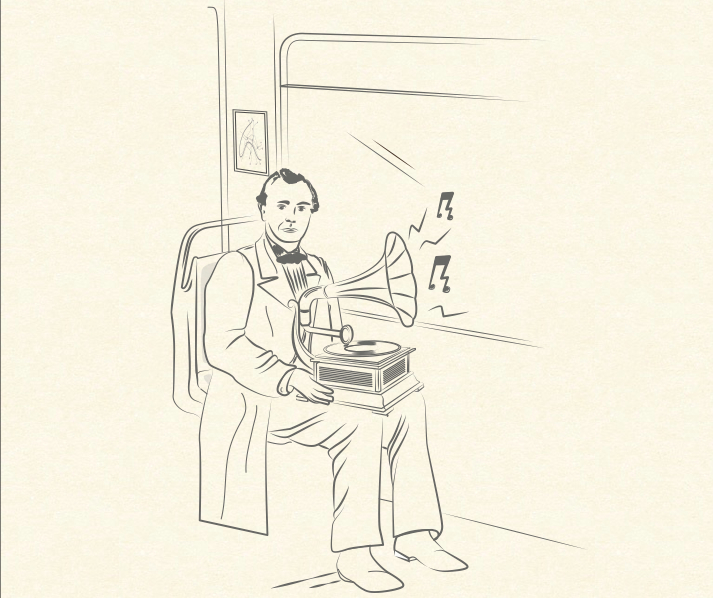
Fel­low rid­ers fail­ing to observe prop­er com­muter eti­quette ranks high on the pet peeves list of habit­u­al sub­way users world­wide. While pas­sen­gers play­ing music loud enough for oth­er com­muters to hear would be incon­ceiv­able in Osa­ka, Japan, most straphang­ers would­n’t bat an eye at iPods blast­ing in New York. Mean­while, New York­ers have their own spin on sub­way eti­quette. Gothamist, a New York City blog, fre­quent­ly posts pho­to­graph­ic vio­la­tions of the unspo­ken rid­ers’ code of con­duct; doc­u­ment­ed gaffes include bring­ing a Christ­mas tree on the sub­way and car­ry­ing a surf­board the wrong way.

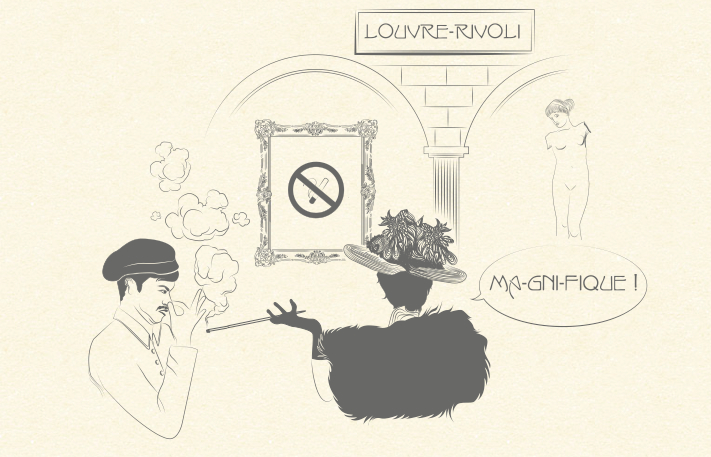
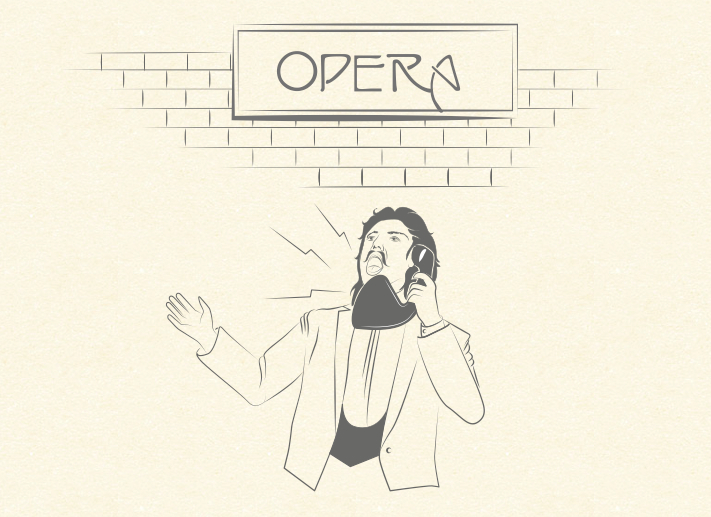
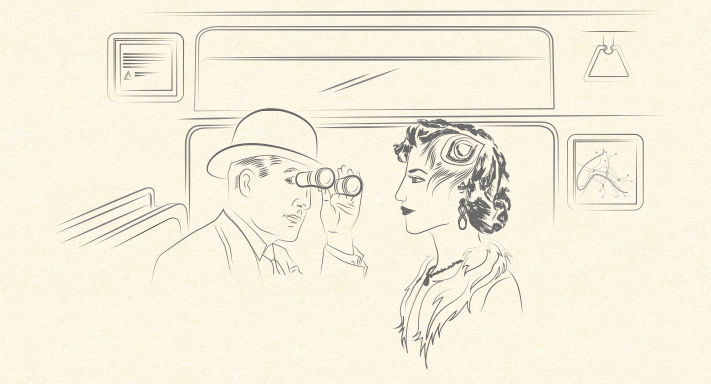
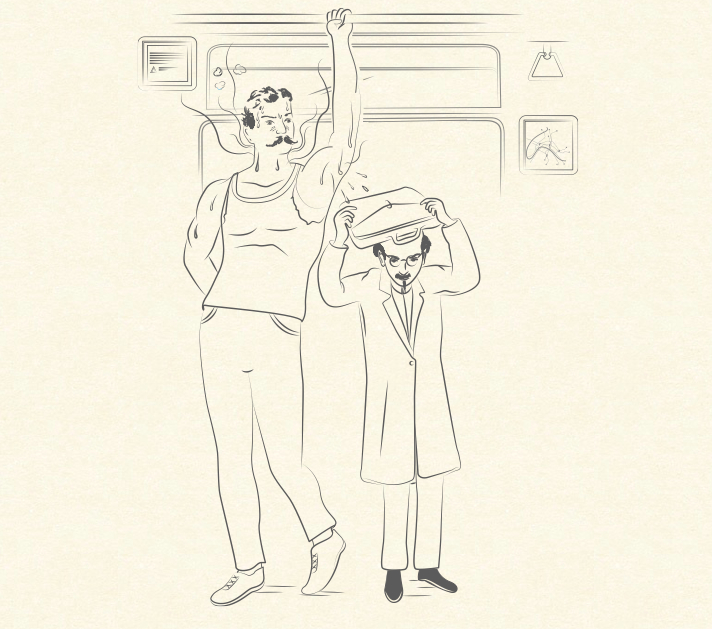
To pre­vent such faux pas from ruin­ing the sub­way-rid­ing expe­ri­ences of Parisian com­muters, France’s pub­lic trans­port oper­a­tor (the RATP) has decid­ed to nip such gauche behav­ior in the bud by issu­ing a short illus­trat­ed man­u­al on sub­way man­nersThe Savoir Vivre Guide For The Mod­ern Trav­elleravail­able here, is a quaint 1950s-style primer that pro­vides much-need­ed point­ers for hap­less for­eign­ers and rur­al French vis­i­tors alike. Its 12 guide­lines, five of which are illus­trat­ed here, are a dis­til­la­tion of some 2000 tips that the RATP received in its crowd­sourced eti­quette cam­paign. For the sake of your read­ing plea­sure and trav­el­ling know-how, we’ve includ­ed a num­ber of the illus­tra­tions and tips below:

SMOKING

“Those No Smok­ing signs aren’t con­tem­po­rary art — they mean no smok­ing”

(C’est com­pren­dre que l’énorme cig­a­rette bar­rée sur le quai n’est pas une œuvre d’art con­tem­po­rain, mais une inter­dic­tion de fumer)

PHONE

“Be con­sid­er­ate when using your cell­phone”

(French read­ers will enjoy the pun: C’est ne pas faire de son portable un insup­port­able)


CREEP

“Don’t be a creep and stare at peo­ple”

(C’est ne pas fix­er une pas­sagère avec insis­tance, quand bien même elle aurait les yeux revolver)


HOT

“On hot days, make like the emper­or pen­guin — keep your arms low, and hold on to the bot­tom of the pole.”

(C’est les jours de grosse chaleur, tel le man­chot empereur, bien garder les bras le long du corps et pren­dre sa meilleure prise en bas du poteau, pas tout en haut)

For all 12 tips, head over to Gothamist.

Ilia Blin­d­er­man is a Mon­tre­al-based cul­ture and sci­ence writer. Fol­low him at @iliablinderman.

John Waters Makes Handmade Christmas Cards, Says the “Whole Purpose of Life is Christmas”

WatersMugshot

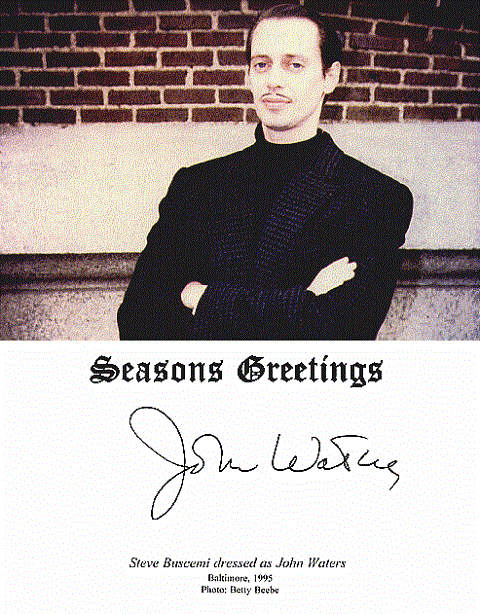
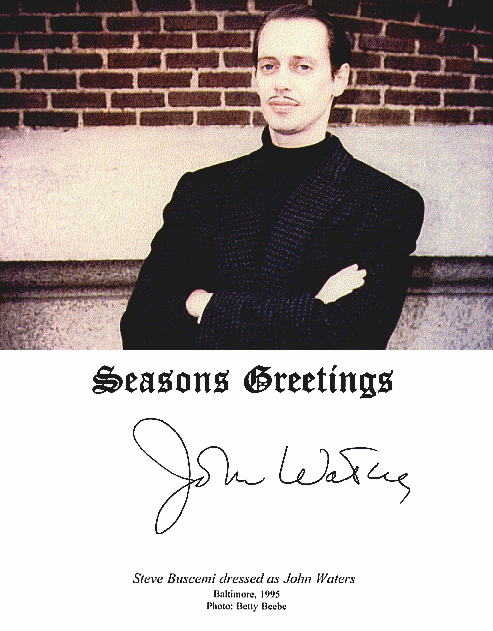
Awk­ward as it feels to receive Christ­mas cards from peo­ple we don’t real­ly know, who among us would turn one down from the one and only John Waters? Then again, the direc­tor of such land­marks in delib­er­ate­ly taste-free cin­e­ma as Pink Flamin­gos and Female Trou­ble would pre­sum­ably delight in inject­ing a lit­tle aes­thet­ic dis­com­fort into our hol­i­day rou­tines. Waters, accord­ing to a New York Times Q&A about his tak­ing on the road “A John Waters Christ­mas,” his “staged mono­logue about all things mer­ry and dark,” has made and sent out his own inim­itable Christ­mas cards for almost fifty years. “I start­ed doing it in high school in 1964,” he explains. “I send out over 2,000 cards by now. Basi­cal­ly, I’m chan­nel­ing Pia Zado­ra, who used to send out the best pricey hol­i­day-relat­ed object to help spread her name and make it last all year.” His 2006 card above bears a gen­uine mugshot from the police depart­ment of Waters’ beloved Bal­ti­more; oth­er images have includ­ed a dra­mat­ic 1940s scene of Christ­mas ruined by a crim­i­nal San­ta, indie-film act­ing icon Steve Busce­mi made up con­vinc­ing­ly as Waters, and Eliz­a­beth Tay­lor shaven-head­ed after brain surgery. One year, he even attached a tree orna­ment con­tain­ing a dead cock­roach.

BuscemiasWaters

“Being a tra­di­tion­al­ist, I’m a rabid suck­er for Christ­mas,” Waters explains in his essay “Why I Love Christ­mas.” “Novem­ber 1 kicks off the jubilee of con­sumerism, and I’m so rid­dled with the hol­i­days sea­son that the mere men­tion of a stock­ing stuffer sex­u­al­ly arous­es me.” Pre­hol­i­day activ­i­ties he con­sid­ers “the fore­play of Christ­mas,” and nat­u­ral­ly, “Christ­mas cards are your first duty and you must send one (with a per­son­al, hand­writ­ten mes­sage) to every sin­gle per­son you ever met, no mat­ter how briefly.” And of course, “you must make your own cards by hand. ‘I don’t have time’ you may whine, but since the whole pur­pose of life is Christ­mas, you’d bet­ter make time, buster.” Waters has also assem­bled his very own Christ­mas album, fea­tur­ing a vari­ety of hol­i­day songs per­formed by Tiny Tim, Stormy Weath­er, and even Alvin and the Chip­munks. The selec­tion below, “First Snow­fall” by the Coc­tails, uses the clas­si­cal­ly kitschy singing saw as a lead:

You may well hear it again if you hap­pen to attend Waters’ own annu­al Christ­mas par­ty in Bal­ti­more, a tra­di­tion he’s kept up for near­ly as long as he’s sent out the cards. “Every­one comes, from the may­or to Pat Sajak to a judge and a well-known crim­i­nal I helped get out of jail,” as he describes it to the Times.” There’s a bar on every floor of the house and a buf­fet table where you’ll see the guy that played the singing anus in Pink Flamin­gos stand­ing next to the gov­er­nor.” For­get the cards; I need an invi­ta­tion.

Relat­ed Con­tent:

Grow­ing Up John Waters: The Odd­ball Film­mak­er Cat­a­logues His Many For­ma­tive Rebel­lions (1993)

An Anti, Anti-Smok­ing Announce­ment from John Waters

John Waters: The Point of Con­tem­po­rary Art

Col­in Mar­shall hosts and pro­duces Note­book on Cities and Cul­ture and writes essays on cities, Asia, film, lit­er­a­ture, and aes­thet­ics. He’s at work on a book about Los Ange­les, A Los Ange­les Primer. Fol­low him on Twit­ter at @colinmarshall or on his brand new Face­book page.

Great New Archive Lets You Hear the Sounds of New York City During the Roaring 20s

NewYorkNoiseComplaints

The French refer to the decade between 1920 and 1929 as les Années folles, “the crazy years,” which is apt when you con­sid­er how the French mid­dle and upper class­es gen­er­al­ly loos­ened their brassieres and defined mod­ern bohemia, à la Coco Chanel.

But the Amer­i­can moniker — the Roar­ing 20s — fits too. Near­ly every­thing about that decade roared: cars, jazz, man­u­fac­tur­ing, con­struc­tion.

Din, in fact, came to define the age, par­tic­u­lar­ly in big cities and espe­cial­ly in New York. An unnamed Japan­ese vis­i­tor was quot­ed upon his vis­it to that city in 1920: “My first impres­sion of New York was its noise. When I know what they mean, I will under­stand civ­i­liza­tion.”

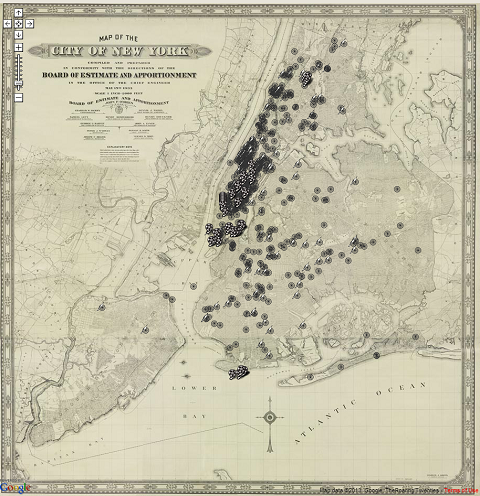
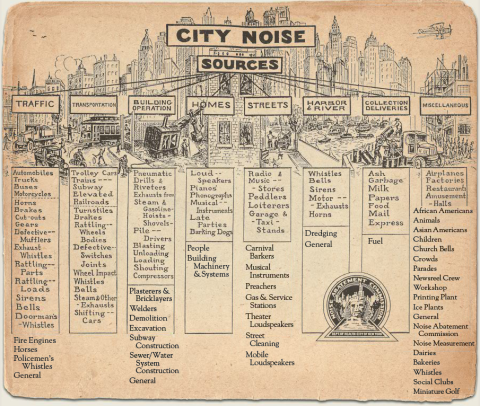
A Prince­ton his­to­ry pro­fes­sor took that chal­lenge at face val­ue, while cap­tur­ing a broad­er indus­tri­al era. The Roar­ing Twen­ties is an audio (and to some extent video) archive of what New York City sound­ed like from 1900 to 1933. Pro­fes­sor Emi­ly Thomp­son and design­er Scott Mahoy have cre­at­ed a love­ly site that’s fun to explore. The archive includes a beau­ti­ful 1933 map of New York City loaded with links to noise com­plaints (screen­shot at top), com­plete with doc­u­men­ta­tion. New York had long been a place where peo­ple from all over the world lived on top of one anoth­er, but noise lev­els were shifting—getting loud­er and more var­ied, that is—and the city was inun­dat­ed with com­plaints about fer­ry whis­tles, radio shops, street traf­fic, the clat­ter of restau­rant dish­wash­ing, and all man­ner of con­struc­tion.

CityNoiseSourcesShot

Sen­si­tiv­i­ty to the city’s vol­ume was high. The city’s Noise Abate­ment Com­mis­sion mea­sured the “deaf­en­ing effect” of sound in Times Square. The women’s cafe­te­ria in the New York Life Insur­ance build­ing was designed with state-of-the-art acoustics to keep the noise of the city out and the sound of office work­ers in.

Cort­landt Street in low­er Man­hat­tan was lined with radio shops, each broad­cast­ing dif­fer­ent music. Don’t miss that video, which you’ll find by scan­ning the Space tab map.

You can also move through time on the site, lis­ten­ing to the city’s cacoph­o­ny from the ear­ly 1900s up to the 1930s, or browse a menu of noise sources from home sounds to the noise of the har­bors and rivers. Again, you can vis­it the The Roar­ing Twen­ties site here.

via i09

Relat­ed Con­tent:

Alan Lomax’s Music Archive Hous­es Over 17,400 Folk Record­ings From 1946 to the 1990s

Cor­nell Launch­es Archive of 150,000 Bird Calls and Ani­mal Sounds, with Record­ings Going Back to 1929

The Chal­lenge of Archiv­ing Sound + Vision in the 21st Cen­tu­ry

Kate Rix writes about edu­ca­tion and dig­i­tal media. Fol­low her on Twit­ter.

« Go BackMore in this category... »
Quantcast