Humans of New York: Street Photography as a Celebration of Life

These days any yahoo with a cell phone and access to the Inter­net fan­cies him or her­self a Hen­ri Carti­er-Bres­son, Ruth Orkin or Helen Levitt, but true street pho­tog­ra­phy involves more than just being in the right place at the right time. Bran­don Stan­ton, the self-taught cre­ator of the wild­ly pop­u­lar Humans of New York blog, has the ded­i­ca­tion as well as the eye and the tech­ni­cal mas­tery. His curios­i­ty and com­pas­sion are abun­dant, but what real­ly sets his work apart is its 21st cen­tu­ry imme­di­a­cy.

Dai­ly, Stan­ton wan­ders the streets of New York, approach­es strangers and asks if he can take some pic­tures. A few hours lat­er, those pho­tos light up Face­book, with cap­tions drawn from the brief col­lab­o­ra­tion between sub­ject and pho­tog­ra­ph­er. In short order, each post gar­ners hun­dreds of likes and com­ments. Nasty feed­back is a rar­i­ty. Stan­ton’s fans seem con­tent to fol­low his lead, find­ing much to cel­e­brate in straight­for­ward pos­es of par­ents with chil­dren, fes­tive­ly attired seniors, and proud odd­balls.

Cer­tain inter­ac­tions beg longer nar­ra­tives, which Stan­ton relates in the “Sto­ries” sec­tion of his web­site. These pieces offer char­ac­ter insights, and often doc­u­ment how the pho­to­graph came to be.

dragonmaster

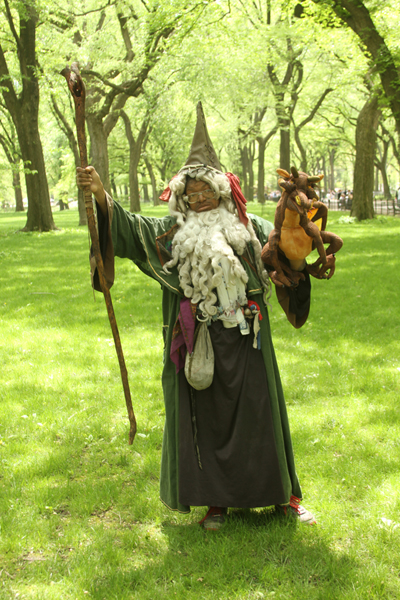
His gift for empa­thy is best exem­pli­fied in his por­trait of Black Wolf, The Drag­on­mas­ter. I’ve run into this dude every­where from the Coney Island Mer­maid Parade to Cen­tral Park, but con­fess that I found his visu­al pre­sen­ta­tion off putting. Unlike me, Stan­ton looked until he found some­thing uni­ver­sal in the delib­er­ate freak­ish­ness.

…we all need to feel impor­tant. Not New York impor­tant, nec­es­sar­i­ly, but impor­tant. We all need to know that there’s a place in this world that only we can fill. Some peo­ple need big­ger places than oth­ers, but every­one needs a place—a hole in the uni­verse that only they can fill. This need is so deep and food-like and so human that we will do any­thing to fill it. We’ll go crazy to feel impor­tant. A pro­tec­tive, evo­lu­tion­ary sort of crazy. When the body has no food, it will break down mus­cle to feed itself. When the ego has no food, it will break down the mind to feed itself. If we have no place in this world, we’ll with­draw from this world, and inhab­it one where we have a place.

Stan­ton’s lens pro­vides the import, yield­ing images so arrest­ing, they stop us in our tracks. Appre­ci­ate his col­lec­tion of extra­or­di­nary humans, then chal­lenge your­self to notice such spec­i­mens in the wild on a dai­ly basis.

Relat­ed Con­tent:

Find­ing Vivian Maier: New Doc­u­men­tary Reveals the Vision of Obscure Chica­go Street Pho­tog­ra­ph­er

Watch as Nation­al Geo­graph­ic Pho­tog­ra­ph­er Steve McCur­ry Shoots the Very Last Roll of Kodachrome

Stan­ley Kubrick’s Jazz Pho­tog­ra­phy and The Film He Almost Made About Jazz Under Nazi Rule

Ayun Hal­l­i­day hopes every Glam­our Don’t will some­day find her­self a Human of New York. Fol­low her @AyunHalliday

Roger Ebert Talks Movingly About Losing and Re-Finding His Voice (TED 2011)

Film crit­ic Roger Ebert, like Pauline Kael before him, leaves behind a great tor­rent of words. Those of us accus­tomed to seek­ing out his opin­ion can com­fort our­selves on the Inter­net, where his thoughts on the great (and not-so-great) films of the last four decades live in per­pe­tu­ity.

After a rup­tured carotid artery robbed him of the pow­er of speech, words assumed an even greater impor­tance for Ebert. Even though he felt lucky to be alive in an age when most home com­put­ers come equipped with a text-to-speech option, he mourned the loss of inflec­tion, tim­ing, and spon­tane­ity. Cere­Proc, a Scot­tish firm spe­cial­iz­ing in per­son­al­ized com­put­er voic­es, cre­at­ed a cus­tom ver­sion he breezi­ly referred to as Roger Junior or Roger 2.0, a Franken­stein’s mon­ster assem­bled from hours of tele­vi­sion appear­ances. A noble, but flawed attempt. Despite his Mid­west­ern attrac­tion to Apple’s com­put­er­ized British accent, Ebert returned to its Amer­i­can male voice, “Alex”, as the most expres­sive option.

In 2011, the speech­less Ebert gave a TED Talk on the sub­ject. “Alex” was giv­en his moment to shine, but there’s no way the tech­no­log­i­cal mir­a­cle can com­pete with the human spec­ta­cle onstage.

Rather than rely on the rel­a­tive­ly autonomous voice sub­sti­tute, Ebert arranged for his wife, Chaz Ham­mel­smith, and friends Dean Ornish and John Hunter, to read his words from pre­pared scripts.

For­get W.C. Fields’ caveat about per­form­ing with chil­dren and dogs. Ebert stole his own show, shame­less­ly upstag­ing his loved ones with jol­ly pan­tomimed thumbs ups and oth­er antics. When he’s on cam­era, you can’t take your eyes off him…as he clear­ly knew. A 2010 Esquire arti­cle by Chica­go-based the­ater crit­ic, Chris Jones, described how the removal of Ebert’s low­er jaw gave him the aspect of a per­ma­nent smile. The dis­fig­ure­ment was shock­ing, but espe­cial­ly so on one whose face was so famil­iar. It led to fre­quent mis­as­sump­tions that he had been men­tal­ly inca­pac­i­tat­ed as well. Ham­mel­smith’s tears when she gets to this part of her hus­band’s elo­quent TED Talk speak vol­umes as well. His will­ing­ness to place him­self front and cen­ter, where peo­ple who might think it impo­lite to stare could not help but see and hear him as a whole per­son, was a rev­o­lu­tion­ary act.

“With­out intel­li­gence and mem­o­ry, there is no his­to­ry.”  — Roger Ebert, 1942 — 2013

Ayun Hal­l­i­day is a writer in the Big Apple.

“Professor Risk” at Cambridge University Says “One of the Biggest Risks is Being Too Cautious”

To eat bacon sand­wich­es? Or not to eat bacon sand­wich­es? That’s a ques­tion tack­led by David Spiegel­hal­ter, who holds the title, “Win­ton Pro­fes­sor for the Pub­lic Under­stand­ing of Risk” at Cam­bridge Uni­ver­si­ty. Some­times they just call him “Pro­fes­sor Risk” for short.

In his aca­d­e­m­ic work, Spiegel­hal­ter looks at risk and uncer­tain­ty every day, see­ing how they affect the lives of indi­vid­u­als and soci­ety. You’d fig­ure that this might make him more cau­tious than the rest of us. But that’s not how it turns out. After ana­lyz­ing all of the data, Spiegel­hal­ter comes to this con­clu­sion: some cal­cu­lat­ed risks are worth it. They have min­i­mal down­side and make life worth liv­ing. Or, looked at a lit­tle dif­fer­ent­ly, some­times “one of the biggest risks [in life] is being too cau­tious.”

You can stay cur­rent on Spiegel­hal­ter’s think­ing by fol­low­ing his blog Under­stand­ing Uncer­tain­ty.

If you would like to sign up for Open Culture’s free email newslet­ter, please find it here. It’s a great way to see our new posts, all bun­dled in one email, each day.

If you would like to sup­port the mis­sion of Open Cul­ture, con­sid­er mak­ing a dona­tion to our site. It’s hard to rely 100% on ads, and your con­tri­bu­tions will help us con­tin­ue pro­vid­ing the best free cul­tur­al and edu­ca­tion­al mate­ri­als to learn­ers every­where. You can con­tribute through Pay­Pal, Patre­on, and Ven­mo (@openculture). Thanks!

Relat­ed Con­tent:

J.K. Rowl­ing Tells Har­vard Grads Why Suc­cess Begins with Fail­ure

Paulo Coel­ho on The Fear of Fail­ure

Find Cours­es from Cam­bridge in our Col­lec­tion of Free Cours­es Online


by | Permalink | Make a Comment ( 2 ) |

Orson Welles Teaches Baccarat, Craps, Blackjack, Roulette, and Keno at Caesars Palace (1978)

I’ve nev­er gone near Las Vegas’ Cae­sars Palace. The very idea of a gam­bling com­plex of such labyrinthine vast­ness, slick lux­u­ry, and rel­a­tive­ly recent construction—especially giv­en the ancient-Rome sim­u­lacrum it goes for here and there—frightens me. Then again, so does the idea of Las Vegas itself; I’ve nev­er gone near the city either. Per­haps you feel the same way. The video above promis­es, by lead­ing us straight into the bel­ly of the beast, to alle­vi­ate such fears. Not only does it offer a view of the milder, some­what less audio­vi­su­al­ly aggres­sive casi­no of 1978 (though the era’s col­lars, lapels, and hair­styles com­pen­sate with an aggres­sion of their own), it explains such pop­u­lar games of chance as bac­carat, craps, black­jack, roulette, and Keno. Give the Cae­sars Guide to Gam­ing with Orson Welles this: it cer­tain­ly picks a strik­ing Vir­gil.

“I’ve been asked by Cae­sars Palace to tell you a lit­tle about gam­ing,” Welles says. “I guess they’ve asked me because I know a lit­tle about cards, a lit­tle about his­to­ry, and, well, because I’ve been known to take a long shot or two.” And indeed, he pep­pers his lessons on bet­ting with anec­dotes about Posei­don, Zeus, shield-spin­ning Greek sol­diers, and the prim­i­tive bone-toss­ing games of ancient man. The Cae­sars Guide to Gam­ing with Orson Welles appeared five years after F for Fake, Welles’ final the­atri­cal fea­ture. I need hard­ly high­light the fact that F for Fake this ain’t, nor Welles’ abun­dance of awk­ward late-career projects and appear­ances. Still, you’ll learn a great deal more from it that you will from play­ing that frozen peas com­mer­cial record­ing ses­sion one more time.

via Metafil­ter

Relat­ed Con­tent:

Watch Orson Welles’ The Stranger Free Online, Where 1940s Film Noir Meets Real Hor­rors of WWII

Orson Welles Nar­rates Plato’s Cave Alle­go­ry, Kafka’s Para­ble, and Free­dom Riv­er

Orson Welles’ Last Inter­view and Final Moments Cap­tured on Film

Col­in Mar­shall hosts and pro­duces Note­book on Cities and Cul­ture and writes essays on lit­er­a­ture, film, cities, Asia, and aes­thet­ics. He’s at work on a book about Los Ange­lesA Los Ange­les Primer. Fol­low him on Twit­ter at @colinmarshall.

Meet Frank Catalfumo, the Shoemaker Who Has Been Mending Souls in Brooklyn Since 1945

Frank Catal­fu­mo, now 90-and-a-half years old, opened F&C Shoes in 1945, a shoe repair store in the Ben­son­hurst sec­tion of Brook­lyn. Dur­ing the past 70+ years, every­thing around Frank has changed. Prices have gone up; neigh­bor­ing stores have come and gone, prob­a­bly many times over. But one thing has remained the same. Frank “keeps mov­ing for­ward,” com­ing to work five days a week and bring­ing worn souls back to life. His hands tell the sto­ry.

You can get to know Frank with the short film above and this accom­pa­ny­ing pho­to essay, both cre­at­ed by film­mak­er Dustin Cohen. The Shoe­mak­er is the lat­est install­ment in Cohen’s film series called “Made in Brook­lyn.” Pre­vi­ous install­ments include The Vio­lin Mak­er, The Watch­mak­er, and The Jew­el­ry Mak­er.

shoemaker_20

by | Permalink | Make a Comment ( 4 ) |

Horses Wearing Nick Cave’s Soundsuits Stampede Into Grand Central Station

Pa, the hors­es got out of the barn again, and dan­ged if they don’t appear to have passed through the Muse­um of Nat­ur­al His­to­ry on their way to Grand Cen­tral.

The oth­er­world­ly beasts are occu­py­ing the famed New York City tran­sit hub’s Van­der­bilt Hall this week as Heard NYC, a col­lab­o­ra­tion between artist Nick Cave and Cre­ative Time, which com­mis­sions work for pre­sen­ta­tion in pub­lic spaces. For his lat­est feat, Cave took his Sound­suits—wear­able sculp­tures with an organ­ic son­ic component—in a direc­tion both equine and ethno­graph­ic. Six­ty dancers from the Ailey School bring the herd of thir­ty to life, stamp­ing raf­fia-sheathed legs and toss­ing black heads aug­ment­ed with fes­tive Rajasthani embroi­dery. Their twice dai­ly per­for­mances occur dur­ing off-peak hours. Chance inter­ac­tions with mid­day trav­el­ers are one thing, but an unscript­ed encounter with an exhaust­ed com­muter rush­ing for the Metro North bar car? That’s a horse of a dif­fer­ent col­or, my friend.

They’ve a far bet­ter like­li­hood of cross­ing paths with your aver­age, unsus­pect­ing Joe than actress Til­da Swin­ton, a‑slumber in her glass cof­fin at the near­by Muse­um of Mod­ern Art (see below), but as of yet, the mon­sters are not viewed as con­sti­tut­ing a major secu­ri­ty threat.

Relat­ed Con­tent:

Wear­able Sculp­ture by Nick Cave (But No, Not That Nick Cave) Invade Microsoft

The Cre­ators Project Presents the Future of Art and Design, Brought to You by Intel and Vice Mag­a­zine

Pi in the Sky: The World’s Largest Ephemer­al Art Instal­la­tion over Beau­ti­ful San Fran­cis­co

Ayun Hal­l­i­day, hav­ing com­muned with the hors­es, is off to cel­e­brate her birth­day at Spa Cas­tle. @AyunHalliday

Creative Uses of the Fax Machine: From Iggy Pop’s Bile to Stephen Hawking’s Snark

Iggy fax

Unlike the type­writer, the low­ly fax machine nev­er pulled itself out of the hive-like exis­tence of util­i­tar­i­an office machines and into lit­er­ary celebri­ty. With their bland, func­tion­al styling, fax machines will not have their impend­ing obso­les­cence capped with muse­um exhi­bi­tions. And as lit­tle more than con­duits for wonky, unglam­orous com­mu­niqués, fax machines rarely con­duct a piece of text that inspires peo­ple to savor, and want to save, the words, as with per­son­al let­ters. While we often fea­ture his­toric cor­re­spon­dence of a time before email from one of our favorite sites, Let­ters of Note, the ris­i­ble, pro­found, and shock­ing sen­ti­ments expressed by famous fig­ures when they think that no one’s look­ing rarely make it into office mem­o­ran­da.

How­ev­er, inspired by our recent post on Mark Twain’s type­writer, a read­er alert­ed us to a Let­ters of Note sub­genre of sorts, “fax­es of note.” These odd­ball mes­sages defy the worka­day con­ven­tions of the fax. Take, for exam­ple, the fax above sent by Iggy Pop to Plazm mag­a­zine writer Joshua Berg­er as an adden­dum to a 1995 inter­view. Scrawled with his fevered thoughts, on Delta Air­lines sta­tion­ary, Pop’s fax amounts to what Let­ters of Note calls “a rant so rich with quotable lines, it’s amaz­ing he was able to con­tain it all on a sin­gle sheet.”

You can click here for a full tran­script of Iggy’s take on Amer­i­can cul­tur­al deca­dence, but here are just a few high­lights from his faxed get-off-my-lawn moment: Pop—on tour in Europe at the time—calls his home coun­try “a nation of midgets,” and decries the ‘90s rehash of ‘60s and ’70s music (“none of them have fuck-all to say”); he rails against the Calvin Klein aes­thet­ic, adding “our gods are ass­holes” (maybe some pro­fes­sion­al jeal­ousy here—Pop more or less invent­ed hero­in chic). Final­ly, he signs off with some cranky ono­matopoeia: “i hate it all. heavy met­al. hol­ly­wood movies. SCHPOLOOGY! YeHE­HCHH!” This is archival-wor­thy vit­ri­ol, for sure.

Hawking fax

Anoth­er fax of note uses the medi­um to oppo­site effect; Stephen Hawking’s fax (above), also from 1995, responds to a request from erst­while British music and fash­ion mag­a­zine The Face for the for­mu­la for time trav­el. Hawk­ing replies, via his per­son­al assis­tant, “Thank you for your recent fax. I do not have any equa­tions for time trav­el. If I had, I would win the Nation­al Lot­tery every week.”  Unlike Iggy’s explo­sion of hand­writ­ten bile, Hawking’s mis­sive retains all the for­mal prop­er­ties of the fax—appropriate insti­tu­tion­al let­ter­head, “from” and “to” lines, etc—which makes his pithy retort all the more incon­gru­ous.

While the 1980s and ’90s were boom times for fax trans­mis­sions, the machine actu­al­ly dates back to 1843, when it was patent­ed by Scot­tish inven­tor Alexan­der Bain. As ear­ly as 1902, fax tech­nol­o­gy allowed pho­tographs to be sent over tele­phone lines. And yes, as every frus­trat­ed admin­is­tra­tive assis­tant knows too well, the hum­ble fax machine is still in use in offices around the world, trans­mit­ting blear­ing­ly bor­ing mes­sages, as well as the occa­sion­al flash of indi­vid­u­al­i­ty. For more on famous fax­es, see this help­ful info­graph­ic from our read­er.

H/T @jaclynlambert

Relat­ed Con­tent:

From The Stooges to Iggy Pop: 1986 Doc­u­men­tary Charts the Rise of Punk’s God­fa­ther

Sev­en Ques­tions for Stephen Hawk­ing: What Would He Ask Albert Ein­stein & More

David Bowie’s First Amer­i­can Fan Let­ter And His Evolv­ing Views of the U.S. (1967–1997)

Josh Jones is a writer, edi­tor, and musi­cian based in Wash­ing­ton, DC. Fol­low him @jdmagness

Font Based on Sigmund Freud’s Handwriting Coming Courtesy of Successful Kickstarter Campaign

Doc­tor, what does it mean if you dream of cre­at­ing a font of Freud’s hand­writ­ing?

This is exact­ly what Ger­man typog­ra­ph­er Har­ald Geisler has in mind, and, in the spir­it of self-actu­al­iza­tion, he’s fund­ing the project on Kick­starter. His charis­ma is such that he’s already raised over eight times the orig­i­nal $1500 goal that will allow him to trav­el to Vien­na, where he will cre­ate the type­face in a bor­rowed apart­ment with­in walk­ing dis­tance from Freud’s for­mer home at Berggasse 19. That address is now home to the Sig­mund Freud Muse­um, where the roman­ti­cal­ly-mind­ed Geisler plans to vis­it the hard copies of the eight let­ters from which his alpha­bet will be assem­bled.

Don’t let the pro­jec­t’s ful­ly-in-the-black sta­tus keep you from vis­it­ing its fundrais­ing page. In addi­tion to being an inad­ver­tent tuto­r­i­al on the ele­ments of a top-notch Kick­starter cam­paign, it also pro­vides some inter­est­ing infor­ma­tion with regard to pen­man­ship, font cre­ation, and the dif­fer­ence between Kur­rent, the Ger­man-style script Freud learned as a school­boy, and the Latin-style cur­sive that was stan­dard among his North Amer­i­can patients.

Geisler says it cracks him up to imag­ine some­one jot­ting a note to his or her shrink in Freud’s hand­writ­ing. Per­haps those of us not cur­rent­ly under the care of a psy­chi­a­try pro­fes­sion­al could use it to write our moth­ers.

Relat­ed Con­tent:

Sig­mund Freud Speaks: The Only Known Record­ing of His Voice, 1938

Jean-Paul Sartre Writes a Script for John Huston’s Film on Freud (1958)

Sig­mund Freud’s Home Movies: A Rare Glimpse of His Pri­vate Life

Ayun Hal­l­i­day has nev­er regret­ted her child­ish deci­sion to ape her moth­er’s high­ly idio­syn­crat­ic hand.

« Go BackMore in this category... »
Quantcast