Where music goes, technologically speaking, audio books soon follow. We’ve had audio books on vinyl LP, on cassette tape, on CD, and on MP3, just like we’ve had music. Now that so many of us pull up our daily jams on Spotify, it shouldn’t come as a surprise that we can do a fair bit of our “reading” there as well. We’ve found a few lists that gather up the best audio book available on Spotify, including 21 classics and a collection of Shakespeare plays and sonnets at Gnarl’d, ten evergreen literary picks from Lifehacker, and a Spotify forum thread dedicated to subject.
Below, you’ll find Spotify links to more than 60 classic works of literature that, even if you struggled on getting them read in your English classes, you can now revisit in a perhaps much more lifestyle-compatible medium. If you find more audio books on Spotify, definitely let us know in the comments section below and we’ll add them to our list.
To listen to any of these, you will of course need Spotify’s software and account, both easy to come by: you just download and register.
The strict realist mold that dominated fiction and poetry for over a hundred years broke open in the late nineteenth century with symbolist French poets like Arthur Rimbaud, Stéphane Mallarmé, and Charles Baudelaire. The next few modernist decades made it impossible to ignore experimental literature, which trickled into the public consciousness through all variety of media. Popular songcraft, however, held out for a few more decades, and though styles proliferated, the standard ballad forms—straightforward narratives of love and loss—more or less dominated into the 1960s, with the exception of odd novelty records whose existence proved the rule.
Though neither ever abandoned the ballad, it’s significant that two of that decade’s most innovative pop songwriters, John Lennon and Bob Dylan, drew much of the inspiration for their more experimental songs from poetry—Lennon from an older nonsense tradition in English literature exemplified by Lewis Carroll, and Dylan from T.S. Eliot and other modernist poets.
But another strain developed in the fifties and sixties—darker and weirder, though no less traceable to a literary source: William S. Burroughs’ surrealist cut-up technique, which he developed with artist Brion Gysin. Just above, you can hear Burroughs explain cut-up writing as a “montage technique” from painting applied to “words on a page.” Words and phrases are cut from newspapers and magazines and the fragments re-arranged at random. Burroughs and Gysin expanded the technique to audio recording and film, and these experiments inspired avant-garde electronic artists like Throbbing Gristle and Atari Teenage Riot, both of whom shared Burroughs’ desire to disrupt the social order with their audio experiments and neither of whom are household names. But Burroughs’ experiments with cut-up writing were also adopted by songwriters everyone knows well. In the clip at the top of the post, see David Bowie explain how he used the cut-up technique—“a kind of Western Tarot,” he calls it—both as a compositional tool and a means of finding inspiration.
In a 2008 interview, Bowie further explained his use of cut-ups: “You write down a paragraph or two describing different subjects, creating a kind of ‘story ingredients’ list, I suppose, and then cut the sentences into four or five-word sections, mix ‘em up and reconnect them.” The technique allows songwriters, he says, to “get some pretty interesting idea combinations,” even if they “have a craven need not to lose control.” Bowie almost single-handedly created the category of “art rock” with his application of avant-garde techniques to conventional song structures and rock ‘n’ roll attitudes.
Decades later, another hugely influential songwriter also made Burroughs’ technique mainstream. Kurt Cobain, who had the chance to meet and collaborate with Burroughs (above), used cut-ups to construct his lyrics—like Bowie, taking the bits of text from his own writing rather than from the mass media productions Burroughs and Gysin preferred. Pop music critic Jim Derogatis quotes Cobain as saying, “My lyrics are total cut-up. I take lines from different poems that I’ve written. I build on a theme if I can, but sometimes I can’t even come up with an idea of what the song is about.” Burroughs blog RealityStudio further documents the artistic influence of Burroughs and other writers on Cobain’s songwriting.
Though Bowie and Cobain are perhaps the two most prominent adopters of Burroughs’ technique, the Beat writer’s influence on pop music stretches back to the Beatles, who included him on the cover of Sgt. Peppers Lonely Hearts Club Band, and extends through the work of artists like Joy Division, Iggy Pop, and, notably, Radiohead’s Thom Yorke, who supposedly drew cut-up phrases from a hat to write the lyrics for the band’s groundbreaking album Kid A. And though Burroughs can seem like a sui generis force, wholly original, Language is a Virus notes that he himself “cited T.S. Eliot’s poem, The Waste Land (1922) and John Dos Passos’ U.S.A. Trilogy, which incorporated newspaper clippings, as early examples of the cut ups he popularized.” The technique can be traced even further back to founding Dadaist artist Tristan Tzara’s 1920 “To Make a Dadaist Poem.” Each case of Burroughs’ influence on both avant-garde and popular musicians demonstrates not only his well-deserved reputation as the father of the underground—from Beats to punks—but also the symbiotic relationship between musical and literary innovation.
William S. Burroughs is one of the most mythologized American authors of the 20th century. When you recall the details of his life, they read like the biography of a fictional character. He was an unabashed heroin addict yet he dressed like a dapper insurance salesman. He was openly, militantly gay at a time when homosexuality wasn’t even mentioned in polite society. He shot his wife, Joan Vollmer, in Mexico City while playing an ill-conceived game of William Tell and then spent years in Tangiers indulging in every possible vice while writing Naked Lunch, which happened to be one of the most controversial books of the century. And his writing influenced just about everyone you consider cool.
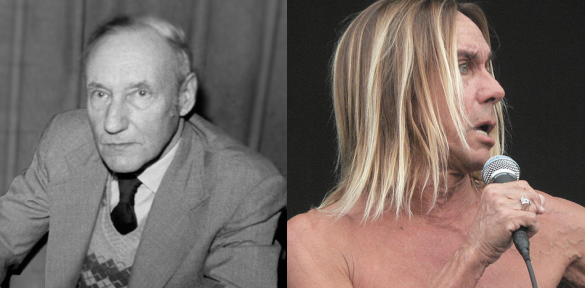
This week is the 101st birthday of Burroughs. To mark the occasion, This American Life aired a BBC documentary on Burroughs’s life. The show is narrated by Iggy Pop whose voice, in announcer mode, bears an uncanny resemblance to Sam Elliot. Pop relates how Burroughs influenced Kurt Cobain, punk rock and Bob Dylan, and how he himself lifted lyrics from Burroughs for his most popular song, and unlikely Carnival Cruise jingle, “Lust for Life.”
As Ira Glass notes, the documentary paints a clear picture of why he is such a revered figure – going into detail about his writing, his hugely influential “Cut Up” method, his obsession with cats – while never buying into his mystique. In fact, one of the most interesting parts of the doc is a damning appraisal of Burroughs’s cool junkie persona by author Will Self, who was himself an addict for a couple of decades. You can listen to the whole episode above.
If you would like to support the mission of Open Culture, consider making a donation to our site. It’s hard to rely 100% on ads, and your contributions will help us continue providing the best free cultural and educational materials to learners everywhere. You can contribute through PayPal, Patreon, and Venmo (@openculture). Thanks!
Jonathan Crow is a Los Angeles-based writer and filmmaker whose work has appeared in Yahoo!, The Hollywood Reporter, and other publications. You can follow him at @jonccrow. And check out his blog Veeptopus, featuring lots of pictures of badgers and even more pictures of vice presidents with octopuses on their heads. The Veeptopus store is here.
We can probably all agree that it’s a little premature, but all the same, the BBC has barreled ahead with its list of “The 21st Century’s 12 greatest novels.” Topping the list of excellent, if not especially surprising, picks is The Brief Wondrous Life of Oscar Wao, Junot Díaz’s Pulitzer Prize-winning debut novel about, as he puts it in the interview above, “a closeted nerd writing about an absolutely out nerd, and using their shared mutual language to tell the story.” The book has connected with such a wide swath of readers for more than its appeal to fellow nerds, though that’s no small thing. A great many readers have seen their own lives reflected in Díaz’s characters—Dominican immigrants growing up in New Jersey—or have found their experiences illuminating. And even though Yunior and Oscar’s very male point of view might have alienated female readers in the hands of a lesser author, Díaz has the sensitivity and self-awareness to—as Joe Fassler argues in The Atlantic—write sexist characters, but not sexist books. As the author himself says above, “if it wasn’t for women readers, I wouldn’t have a career.”
Díaz’s ear for dialogue and idiom and his facility for constructing completely believable characters with completely distinctive voices are matched by his commitment to representing the experiences of people who still get routinely left out of the contemporary canon. Despite the attention given to such stellar non-white, non-male writers as Toni Morrison, Maxine Hong-Kingston, Arundhati Roy, and Jamaica Kincaid, most MFA programs, Diaz argued in a recent essay for The New Yorker, are still “too white,” reproducing “exactly the dominant culture’s blind spots and assumptions around race and racism (and sexism and heteronormativity, etc).” In his own MFA workshop experiences at Cornell, he found that “the default subject position of reading and writing—of Literature with a capital L—was white, straight and male.”
The problem is more than just personal, though he certainly found the experience personally alienating, and it isn’t a matter of redressing historical wrongs or enforcing an abstract PC notion of diversity. Instead, as Díaz told Salon, it’s a problem of accurately representing reality. “If race or gender (or any other important social force) are not part of your interpretive logic—if they’re not part of what you consider the real—then you’re leaving out most of what has made our world our world.” In his own role at a professor at MIT, teaching undergraduate writing courses for the Comparative Media Studies/Writing Department, Díaz is very thoughtful about his approach, emphasizing, “it’s not the books you teach, but how you teach them.” In addition to novels by authors like Haitian-born Edwidge Danticat and Zimbabwean author NoViolet Bulawayo, he has his students read “classic Gothic texts which are themselves not very diverse by our standards,” but, he says, “the critical lens I deploy helps my students understand how issues of race, gender, coloniality etc. are never far.”
Salon tracked down the syllabi and reading lists for two of Díaz’s MIT courses, “World-Building” and “Advanced Fiction.” We do find one classic Gothic text—Bram Stoker’s Dracula—and also much of what we might expect from the self-confessed nerd, including work from such well-regarded comic writers as Frank Miller and Alan Moore and classic sci-fi from Tarzan creator Edgar Rice Burroughs. In addition to these white, male writers, we have fiction from African-American sci-fi authors Octavia Butler and N.K. Jemisin. Díaz’s “Advanced Fiction” list is even more wide-ranging, inclusive of writers from Chile, Zimbabwe, China, and Haiti, as well as the U.S. See both lists below.
World-Building:
Description: “This class concerns the design and analysis of imaginary (or constructed) worlds for narrative media such as roleplaying games, films, comics, videogames and literary texts. … The class’ primary goal is to help participants create better imaginary worlds – ultimately all our efforts should serve that higher purpose.”
Prerequisites: “You will need to have seen Star Wars (episode four: A New Hope) and read The Lord of the Rings by JRR Tolkien.”
Reading List:
“A Princess of Mars” by ER Burroughs
“Dracula” by Bram Stoker
“Batman: The Dark Knight Returns” by Frank Miller
“Sunshine” by Robin McKinley
“V for Vendetta” by Alan Moore
“The Hunger Games” by Suzanne Collins
“The Hundred Thousand Kingdoms” by NK Jemisin
“Lilith’s Brood” by Octavia Butler
“Perdido Street Station” by China Miéville
“Snow Crash” by Neal Stephenson (Recommended)
Some things to consider always when taking on a new world: What are its primary features—spatial, cultural, biological, fantastic, cosmological? What is the world’s ethos (the guiding beliefs or ideals that characterize the world)? What are the precise strategies that are used by its creator to convey the world to us and us to the world? How are our characters connected to the world? And how are we the viewer or reader or player connected to the world?
Advanced Fiction
Description: “An advanced workshop on the writing and critiquing of prose.”
Reading List:
“Clara” by Roberto Bolaño
“Hitting Budapest” by NoViolet Bulawayo
“Whites” by Julie Otsuka
“Ghosts” by Edwidge Danticat
“My Good Man” by Eric Gansworth
“Gold Boy, Emerald Girl” by Yiyun Li
“Bounty” by George Saunders
Herman Melville’s Moby Dick, the work he is most known for in death, had the effect in life of ruining his literary reputation and driving him into obscurity. This is but one of many ironies attending the massive novel, first published in Britain in three volumes on October 18, 1851. At that time, it was simply called The Whale, and as Melville.org informs us, was “expurgated to avoid offending delicate political and moral sensibilities.” One month later, the first American edition appeared, now titled Moby Dick; Or, The Whale, compiled into one huge volume, and with its censored passages, including the Epilogue, restored. In both printings, the book sold poorly, and the reviews—save those from a handful of American critics, including Melville’s fellow Great American novelist Nathaniel Hawthorne—were largely negative.
Another irony surrounding the novel is one nearly everyone who’s read it, or tried to read it, will know well. We’re socialized through visual media to approach the story as great, tragic action/adventure. As Melville’s friend, publisher Evert Augustus Duyckinck, described it, the novel is ostensibly “a romantic, fanciful & literal & most enjoyable presentment of the Whale Fishery,” driven by the revenge plot of mad old Captain Ahab. And yet, it is not that at all, or not simply that. Despite the fact that it lends itself so well to adventurous retelling, the novel itself can seem very obscure, ponderous, and digressive to a maddening degree. The so-called “whaling chapters,” notably “Cetology,” delve deeply into the lore and technique of whaling, the anatomy and physiology of various whale species, and the history and politics of the venture.
Throughout the novel, ordinary objects and events—especially, of course, the whale itself—acquire such symbolic weight that they become almost cartoonish talismans and leap bewilderingly out of the narrative, forcing the reader to contemplate their significance—no easy task. Depending on your sensibilities and tolerance for Melville’s labyrinthine prose, these very strange features of the novel are either indispensably fascinating or just plain excess baggage. Since many editions are published with the whaling chapters excised, many readers clearly feel they are the latter. That is unfortunate, I think. It’s one of my favorite novels, in all its baroque overstuffedness and philosophical density. But there’s no denying that it works, as they say, “on many levels.” Depending on how you experience the book—it’s either an incredibly gripping adventure tale, or a very dense and puzzling work of history, philosophy, politics, and zoology… or both, and more besides….
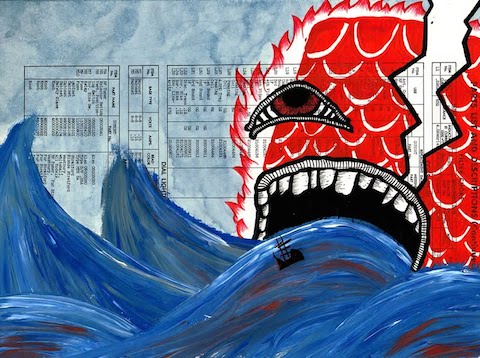
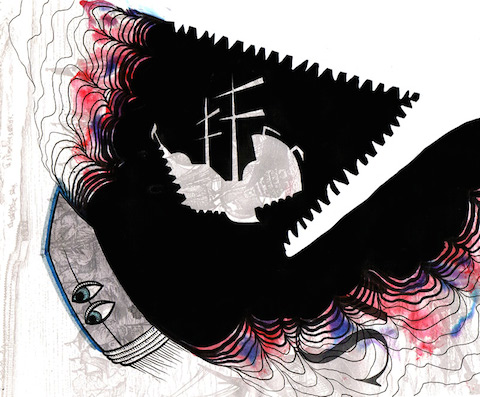
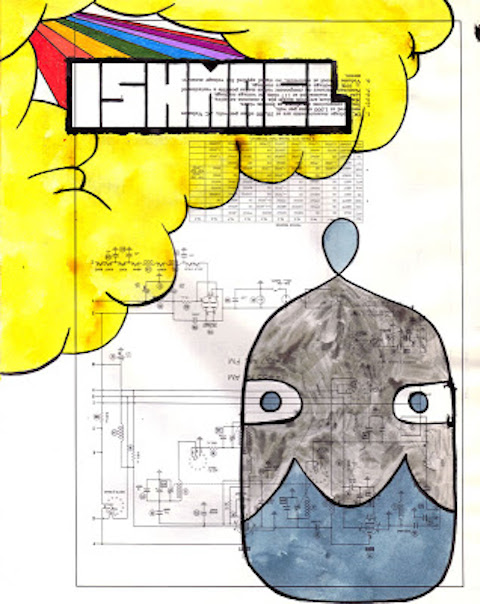
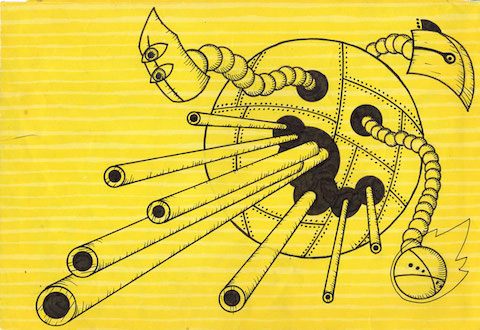
Recognizing the power of Melville’s arresting imagery, artist and librarian Matt Kish decided that he would illustrate all 552 pages of the Signet Classic paperback edition of Moby Dick, a book he considers “to be the greatest novel ever written.” He began the project in August of 2009 with the first page, illustrating those famous first words—“Call me Ishmael”—above. (At the top, see page 489, below it page 158, and directly below, page 116). Kish completed his epic project at the end of 2010. He used a variety of media—ink, watercolor, acrylic paint—and incorporated a number of different graphic art styles. As he explains in the comments under the first illustration, he chose “drawing and painting over pages from old books and diagrams because the presence of visual information on those pages would in some ways interfere with, and clutter up, my own obsessive control over my marks.” All in all, it’s a very admirable undertaking, and you can see each individual illustration, and many of the stages of drafting and composition, at Kish’s blog or on this list we’ve compiled. (You can also find links to the first 25 pages at bottom of this post.) The entire project has also been published as a book, Moby-Dick in Pictures: One Drawing for Every Page, a further irony given the obsessive literariness of Melville’s novel, a work as obsessed with language as Captain Ahab is with his great white nemesis.
Nonetheless, what Kish’s project further demonstrates is the seemingly inexhaustible treasure house that is Moby Dick, a book that so richly appeals to all the senses as it also ceaselessly engages the intellect. Kish has gone on to apply his wonderful interpretive technique to other classic literary works, including Joseph Conrad’s Heart of Darkness and Italo Calvino’s Invisible Cities. These projects are equally striking, but it’s Moby Dick, “the great unread American novel,” that most inspired Kish, as it has so many other artists and readers.
This is surely worth a quick mention: Today we have a recording of Raymond Carver reading his most famous story, “What We Talk About When We Talk About Love.” Taped in a Palo Alto hotel room in 1983 for a new radio series called Tell Me a Story, it’s the only known recording of Carver reading his signature story. The reading itself starts at the 6:00 mark. Start listening here (or stream it above).
In 2009, Stephen King called Raymond Carver “surely the most influential writer of American short stories in the second half of the 20th century.” If you’d like to get deeper into his literary world — a literary world that explores “the dim ache in the nondescript lives of aspiring students, down-and-outers, diner waitresses, salesmen, and unhappily hitched blue-collar couples,” as Josh Jones once put it — you can refer back to a previous post where we featured Richard Ford, Anne Enright, and David Means reading several other Carver stories.
If you would like to support the mission of Open Culture, consider making a donation to our site. It’s hard to rely 100% on ads, and your contributions will help us continue providing the best free cultural and educational materials to learners everywhere. You can contribute through PayPal, Patreon, and Venmo (@openculture). Thanks!
Ah, the joys of dining at a new friend’s home, knowing sooner or later, one’s hostess’ bladder or some bit of last minute meal preparation will dictate that one will be left alone to rifle the titles on her bookshelf with abandon. No medicine cabinet can compete with this peek into the psyche.
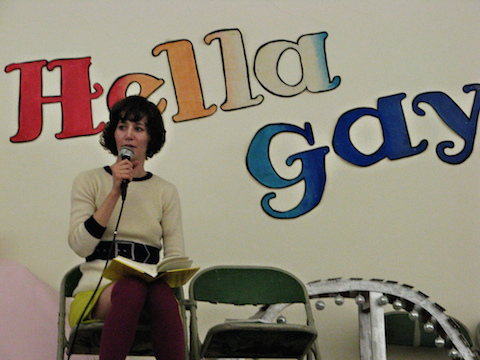
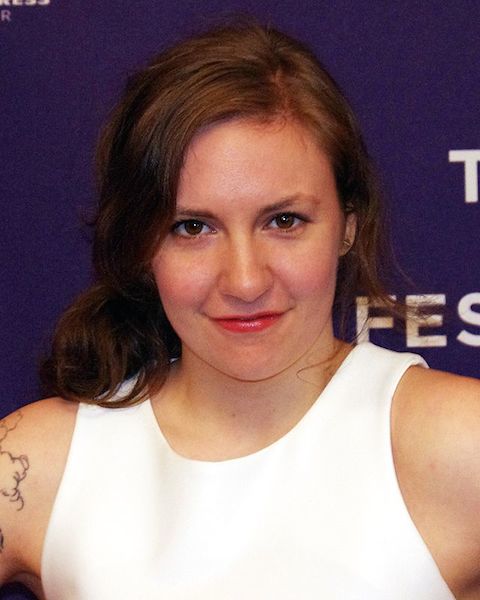
Pity that some of the people whose bookshelves I’d be most curious to see are the least likely to open their homes to me. That’s why I’d like to thank The Strand bookstore for providing a virtual peek at the shelves of filmmakers-cum-authors Miranda July and Lena Dunham. (Previous participants in the Authors Bookshelf series include just-plain-regular authors George Saunders, Edwidge Danticat and the late David Foster Wallace whose contributions were selected by biographer D.T. Max.)
I wish Dunham and July had offered up some personal commentary to explain their hand-picked titles. (Surely their homes are lined with books. Surely each list is but a representative sampling, one shelf from hundreds. Hmm. Interesting. Did they run back and forth between various rooms, curating with a vengeance, or is this a case of whatever happened to be in the case closest at hand when deadline loomed?)
Which book’s a longtime favorite?
Which the literary equivalent of comfort food?
Are there things that only made the cut because the author is a friend?
Both women are celebrated storytellers. Surely, there are stories here beyond the ones contained between two covers.
But no matter. The lack of accompanying anecdotes means we now have the fun of inventing imaginary dinner parties:
ME: (flustered) Oh, ha ha, yes! Alex! … I sent him a Facebook request and he accepted.
LENA DUNHAM: (mutters under her breath)
ME: Design Sponge? Really? What’s someone in your shoes doing with a bunch of DIY decorating books?
LENA DUNHAM: (coldly) Research.
Actually, maybe it is better to admire one’s idols’ bookshelves from afar.
I’m chagrined that I don’t recognize more of their modern fiction picks. That wasn’t such a problem when I was measuring myself against the 430 books on Marilyn Monroe’s reading list.
Thank heaven for old standbys like Madame Bovary.
In all sincerity, I was glad that Dunham didn’t try to mask her love of home decor blog books.
One’s shelves, after all, are a matter of taste. So, celebrate the similarities, take their recommendations under advisement, see below and read what you like!
The Girls’ Guide to Hunting and Fishing — Melissa Bank
A Little History of the World — E. H. Gombrich
Anne of Green Gables — L.M. Montgomery
Apartment Therapy Presents: Real Homes, Real People, Hundreds of Real Design Solutions — Maxwell Gillingham-Ryan
Ariel: The Restored Edition — Sylvia Plath
Bad Feminist: Essays — Roxane Gay
Bastard Out of Carolina (20th Anniversary Edition) — Dorothy Allison
Blue is the Warmest Color — Julie Maroh
Brighton Rock — Graham Greene
Cavedweller - Dorothy Allison
Country Girl: A Memoir — Edna O’Brien
Crazy Salad and Scribble Scribble: Some Things About Women and Notes on Media — Nora Ephron
Design Sponge at Home — Grace Bonney
Dinner: A Love Story: It All Begins at the Family Table — Jenny Rosenstrach
Eleanor & Park — Rainbow Rowell
Eloise — Kay Thompson
Eloise In Moscow — Kay Thompson
Eloise In Paris — Kay Thompson
Fanny At Chez Panisse — Alice Waters
Goodbye, Columbus and Five Short Stories — Philip Roth
Holidays on Ice — David Sedaris
Important Artifacts and Personal Property from the Collection of Lenore Doolan and Harold Morris, Including Books, Street Fashion, and Jewelry — Leanne Shapton
Lentil — Robert McCloskey
Love Poems — Nikki Giovanni
Love, an Index (McSweeney’s Poetry Series) — Rebecca Lindenberg
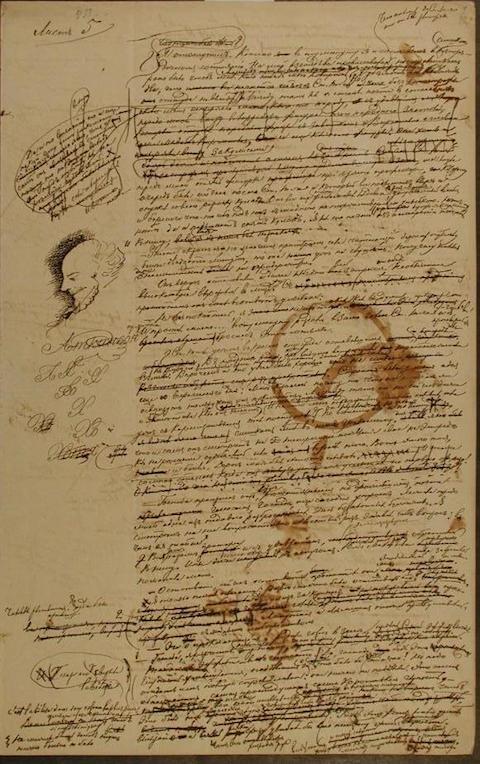
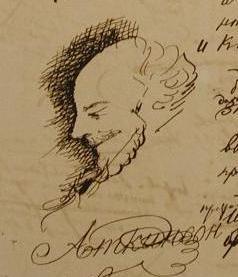
Dostoevsky, a doodler? Surely not! Great Russian brow furrowed over the meaning of love and hate and faith and crime, diving into squalid hells, ascending to the heights of spiritual ecstasy, taking a gasp of heavenly air, then back down to the depths again to churn out the pages and hundreds of character arcs—that’s Dostoevsky’s style. Doodles? No. And yet, even Dostoevsky, the acme of literary seriousness, made time for the odd pen and ink caricature amidst his bouts of existential angst, poverty, and ill health. We’ve shown you some of them before—indeed, some very well rendered portraits and architectural drawings in the pages of his manuscripts. Now, just above, see yet another, a recently discovered tiny portrait of Shakespeare in profile, etched in the margins of a page from one of his angstiest novels, The Possessed, available in our collection, 800 Free eBooks for iPad, Kindle & Other Devices.
Annie Martirosyan in The Huffington Post points out some family resemblance between the Shakespeare doodle and the famous brooding oil portrait of Dostoevsky himself, by Vasily Perov. She also notes the ring stain and sundry drips over the “hardly legible… scribbles” and “marginalia… scattered naughtily across the page” is from the author’s tea. “Feodor Mikhailovich was an avid tea drinker,” and he would consume his favorite beverage while walking “to and fro in the room and mak[ing] up his characters’ speeches out loud….” Can’t you just see it? Under the drawing (see it closer in the inset)—in one of the many examples of the author’s painstaking handwriting practice—is the name “Atkinson.”
Martirosyan sums up a somewhat complicated academic discussion between Dostoevsky experts Vladimir Zakharov and Boris Tikhomirov about the source of this name. This may be of interest to literary specialists. But perhaps it suffices to say that both scholars “have now confirmed the authenticity of the image as Dostoevsky’s drawing of Shakespeare,” and that the name and drawing may have no conceptual connection. It’s also further proof that Dostoevsky, like many of us, turned to making pictures when, says scholar Konstantin Barsht—whom Colin Marshall quoted in our previous post—“the words came slowest.” In fact, some of the author’s character descriptions, Barsht claims, “are actually the descriptions of doodled portraits he kept reworking until they were right.”
So why Shakespeare? Perhaps it’s simply that the great psychological novelist felt a kinship with the “inventor of the human.” After all, Dostoevsky has been called, in those memorable words from Count Melchoir de Vogue, “the Shakespeare of the lunatic asylum.”
We're hoping to rely on loyal readers, rather than erratic ads. Please click the Donate button and support Open Culture. You can use Paypal, Venmo, Patreon, even Crypto! We thank you!
Open Culture scours the web for the best educational media. We find the free courses and audio books you need, the language lessons & educational videos you want, and plenty of enlightenment in between.





.jpg)


