Similar to traditional role playing games, we advance our character through experience, but that is where the similarities end. Ever, Jane is about playing the actual character in the game, building stories. Our quests are derived from player’s actions and stories. And we gossip rather than swords and magic to demolish our enemies and aid our friends.
Try to win the sympathy of Lizzie Bennet by telling lies about your rival, as Mr. Wickham does, but be careful. The system will notify someone if they are being talked about too often and a good sleuth may find the player who is spreading such rumors. If you are caught in your lies, the consequences you intended for your target will hit you two-fold.
A description is nice, but a demo is even better. And happily you can download a prototype that “provides fully functional infrastructure for both the gossip and the invitation systems as well as a 3D village in which you can walk about, bowing and curtsying to people appropriately.” There’s also a tutorial that walks you through the basic mechanics and UI. (It should be included in the download from this link.) More information about Ever, Jane can be found on the project’s Kickstarter page.
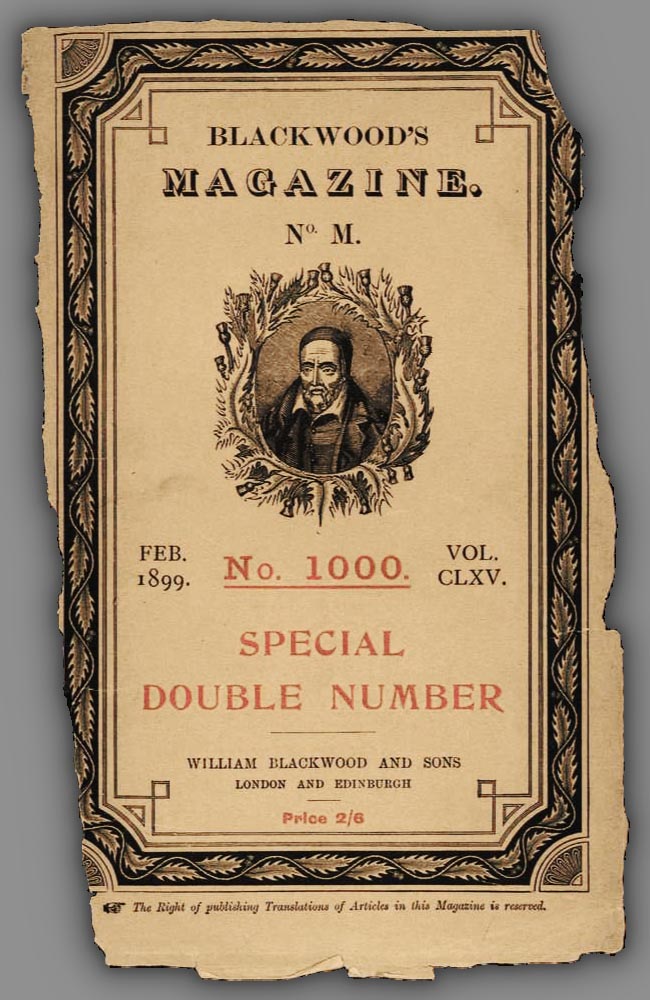
Like many other novelists of his era, Joseph Conrad began by publishing his work in serialized magazines. Novel serialization, which had first gained popularity and commercial appeal with Charles Dickens’ Pickwick Papers in 1836, was commonplace throughout the 19th century. By the time that Conrad released his first novel in 1895, entitled Almayer’s Folly, publishing serious work within the pages of weekly literary periodicals had become de rigueur. Indeed, Scribner’s Monthly magazine noted that it is the “second and third rate novelist who could not get published in a magazine and is obliged to publish in a volume, and it is in a magazine that the best novelists always appear first.” Although Scribner’s claim doubtless contains an element of self-promotion, one cannot deny that it is precisely through serialized publication that Conrad joined the ranks of literary greats such as Alexandre Dumas, Henry James, Gustave Flaubert, and Leo Tolstoy.
Through the website Conrad First: The Joseph Conrad Periodical Archive, contemporary readers can enjoy the original, digitized versions of Conrad’s first editions. The database, which holds some 80,000 images and links to over a hundred periodicals, includes the original releases for Conrad’s many novels, including Heart of Darkness(1899, Blackwood’s Magazine), Lord Jim(1899, Blackwood’s Magazine), Nostromo(1904, T.P.‘s Weekly), and The Secret Agent(1906, Ridgway’s Magazine), as well as essays, such as Rudyard Kipling: A Criticism on His Poems and A propos of Alphonse Daudet. For those more interested in household goods of yore than Conrad’s prose, these pages will also prove enjoyable; ads for the Harlene Remedy for Baldness and requests imploring readers to Employ British Labour abound.
Petty criminal, outlaw writer, political radical, gay icon—the name Jean Genet means many things to many people, but filmmaker isn’t usually one of them. Yet Genet did direct a short film, A Song of Love (Un chant d’amour), in 1950. Silent and shot in grainy black and white, the film presents a passionate relationship between inmates, separated from each other by the prison walls. The prisoners express their estranged desire for each other in increasingly sensual ways until the frame is filled with writhing bodies. All the while, a lone guard watches, menacing and jealous.
Despite the fact that the film was banned for many years, and that Genet himself disowned it, it’s a foundational work for later gay filmmakers, from Andy Warhol to the early Derek Jarman, whose first feature Sebastiane (1976) surely owes a debt to A Song of Love. Genet’s choice of setting is no mere autobiographical detail; the previous year he faced a life sentence after his tenth conviction, and was only saved by the intervention of his respected supporters Jean-Paul Sartre, Pablo Picasso, and Jean Cocteau, who petitioned the president on his behalf. It’s possible to read A Song of Love in many ways, but it’s hard not to see it at least as Genet’s projection of the frustrated (yet hothouse) sexual tension he would know if incarcerated for the rest of his days.
Of course Genet began his writing career in prison, drafting his first novel, the pulpy yet profoundly lyrical Our Lady of the Flowers, while serving out a sentence in the early forties. Genet’s erotically charged, some might say decadent, fiction worked to reclaim and revalue his identity as a homosexual, social outcast, and criminal. In his autobiographical novel, The Thief’s Journal, written in 1949 while his fate was being decided, Genet defined himself thus:
Limited by the world, which I oppose, jagged by it, I shall be all the more handsome and sparkling as the angles which wound me and give me shape are more acute and the jagging more cruel.
The quote could almost serve as an epigraph for Genet’s only film, which, writes Fernando Croce, draws its “presiding image… of flesh against stone” from The Thief’s Journal. It’s an image Croce interprets as “metaphor for society-enforced division imposed on gay men, and also of the need for connection which encompasses all human existence.” Like all Genet’s work, A Song of Love takes pleasure from pain and finds arresting intimacy and unabashedly liberating sexual fulfillment in the Parisian sewers, garrets, and jails.
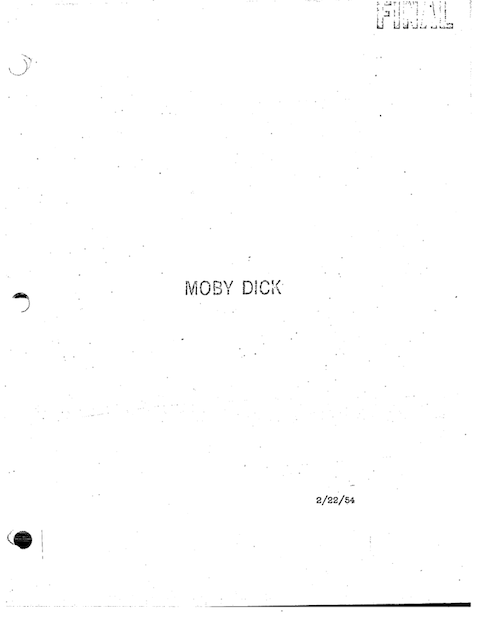
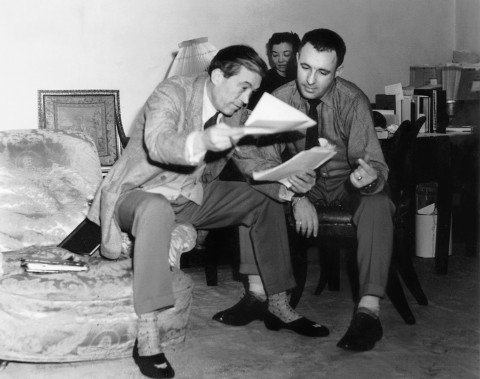
Ray Bradbury, unlike many novelists who choose to reside in Southern California, didn’t support his fiction-writing career by taking screenplay work. With the likes of The Martian Chroniclesand Fahrenheit 451to his name, he didn’t need to, not that it stopped him from adapting certain stories of his own for television and the movies. Only once did the prolific Bradbury undertake to write a screenplay based upon a book he didn’t write. But oh, what a book: Herman Melville’s Moby-Dick, turned into the John Huston-directed 1956 film of almost the same name. Though ultimately stormy — working with Huston, even in the best of times and for the brightest of writers, tended to become an ordeal — the collaboration began auspiciously, with the writer an avowed fan of the filmmaker, and the filmmaker an avowed fan of the writer. Yet neither, ironically, had much time for the Melville novel to which they had dedicated their efforts.
“Have you tried to read that novel?” Bradbury asks his audience in the clip just above. “Oh my god! John Huston didn’t know any more about it than I did. He wanted to play Ahab. Give him a harpoon, and he would’ve done it.” Working on the script in Ireland, Bradbury spent “eight long months of agonizing work, subconscious work,” all of which prepared him for the next decisive moment in this particular writing process: “I got out of bed one morning in London, looked in the mirror, and said, ‘I am Herman Melville!’ I sat down at the typewriter, and in eight hours of passionate, red-hot writing, I finished the screenplay of Moby Dick, and I ran across London, I threw the script in John Huston’s lap, and said, ‘There! It’s done!’ He read it and said, ‘My god, what happened?’ I said, ‘Behold: Herman Melville.’ ”
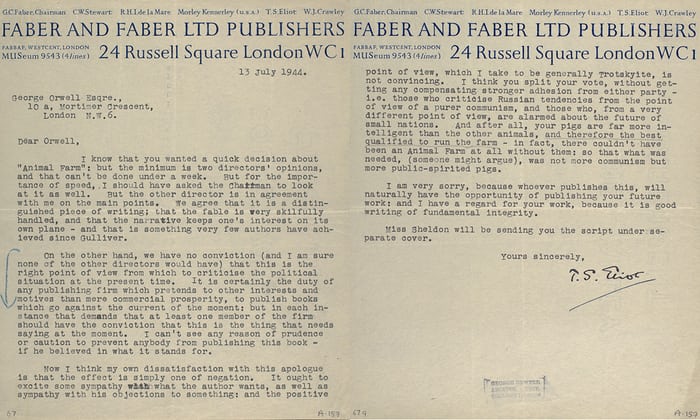
We’ve written recently about that most common occurrence in the life of every artist—the rejection letter. Most rejections are uncomplicated affairs, ostensibly reflecting matters of taste among editors, producers, and curators. In 1944, in his capacity as an editorial director at Faber & Faber, T.S. Eliot wrote a letter to George Orwell rejecting the latter’s satirical allegoryAnimal Farm. The letter is remarkable for its candid admission of the politics involved in the decision.
From the very start of the letter, Eliot betrays a personal familiarity with Orwell, in the informal salutation “Dear Orwell.” The two were in fact acquainted, and Orwell two years earlier had published a penetrating review of the first three of Eliot’s Four Quartets, writing “I know a respectable quantity of Eliot’s earlier work by heart. I did not sit down and learn it, it simply stuck in my mind as any passage of verse is liable to do when it has really rung the bell.”
Eliot’s apologetic rejection of Orwell’s fable begins with similarly high praise for its author, comparing the book to “Gulliver” in what may have been to Orwell a flattering reference to Jonathan Swift. A mutual admiration for each other’s artistry may have been the only thing Eliot and Orwell had in common. “On the other hand,” begins the second paragraph, and then cites the reasons for Faber & Faber’s passing on the novel, the principle one being a dismissal of Orwell’s “unconvincing” “Trotskyite” views. The rejection also may have stemmed from something a little more craven—the desire to appease a wartime ally. As the Encyclopaedia Brittanica blog puts it:
Eliot, that Tory of Tories, did not want to upset the Soviets in those fraught years of World War II. Besides, he opined, the pigs, being the smartest of the critters on the farm in question, were best qualified to run the place.
The decision was probably not Eliot’s alone, and Eliot parenthetically disowns the opinions personally, writing “what was needed, (someone might argue), was not more communism but more public-spirited pigs.” Indeed. The full text of Eliot’s letter is below.
13 July 1944
Dear Orwell,
I know that you wanted a quick decision about Animal Farm: but minimum is two directors’ opinions, and that can’t be done under a week. But for the importance of speed, I should have asked the Chairman to look at it as well. But the other director is in agreement with me on the main points. We agree that it is a distinguished piece of writing; that the fable is very skilfully handled, and that the narrative keeps one’s interest on its own plane—and that is something very few authors have achieved since Gulliver.
On the other hand, we have no conviction (and I am sure none of other directors would have) that this is the right point of view from which to criticise the political situation at the present time. It is certainly the duty of any publishing firm which pretends to other interests and motives than mere commercial prosperity, to publish books which go against current of the moment: but in each instance that demands that at least one member of the firm should have the conviction that this is the thing that needs saying at the moment. I can’t see any reason of prudence or caution to prevent anybody from publishing this book—if he believed in what it stands for.
Now I think my own dissatisfaction with this apologue is that the effect is simply one of negation. It ought to excite some sympathy with what the author wants, as well as sympathy with his objections to something: and the positive point of view, which I take to be generally Trotskyite, is not convincing. I think you split your vote, without getting any compensating stronger adhesion from either party—i.e. those who criticise Russian tendencies from the point of view of a purer communism, and those who, from a very different point of view, are alarmed about the future of small nations. And after all, your pigs are far more intelligent than the other animals, and therefore the best qualified to run the farm—in fact, there couldn’t have been an Animal Farm at all without them: so that what was needed, (someone might argue), was not more communism but more public-spirited pigs.
I am very sorry, because whoever publishes this, will naturally have the opportunity of publishing your future work: and I have a regard for your work, because it is good writing of fundamental integrity.
Miss Sheldon will be sending you the script under separate cover.
Yours sincerely,
T. S. Eliot
After four rejections in total, Orwell’s novel eventually saw publication in 1945. Five years later, a Russian émigré in West Germany, Vladimir Gorachek, published a small print run of the novel in Russian for free distribution to readers behind the Iron Curtain. And in 1954, the CIA funded the animated adaptation of Animal Farm by John Halas and Joy Batchelor (see the full film here). Yet another strange twist in the life of a book that could make discerning anti-communists as uncomfortable as it could the staunchest defenders of the Soviet system. You can find Animal Farm listed in our Free Audio Books and Free eBooks collections.
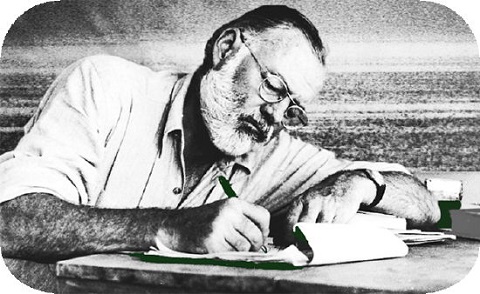
At the web site, The Fertile Fact, you can read lists and lists of things you never knew about your favorite cultural figures. Or rather, you can read lists and lists of guesses about what your favorite cultural figures of the 19th and 20th centuries would have enjoyed about life in our 21st century. From Paul Hendrickson, author of Hemingway’s Boat: Everything He Loved in Life, and Lost, 1934 – 1961, we learn that Papa would have liked e‑mail (“for a man who wrote letters to tune himself up and cool himself down against the day’s ‘real writing’, email would have been a great outlet for his emotion”). But he would have loved Twitter:
Email squared. Hemingway was the master of ‘cable-ese’, a form of slang developed by journalists in the 1920s to save space (and, as importantly, money) when sending telegraphs, which he learned in his youth as a newspaperman. He would have loved the 140-character limit to write small little novels of rage or love or something in between. If he could write an arc of a story in six words, which went: “For Sale: baby shoes, never worn,” thereby arguably inventing flash fiction, then just imagine the possibilities of the kind of War and Peace epics he might have tried via Twitter. And the possible spats he might have got into, of course.
The thing that frustrated Chandler most about Hollywood was that his vision as a writer rarely made it onto screen unmediated. For Ray, the studio always got in the way of what he was trying to do. It was a problem that particularly affected The Blue Dahlia. Though a movie beset by problems (a tight schedule meant Chandler had to write the ending in a state of extreme intoxication) one of the most constant laments in his letters is the studio’s persistent meddling with the picture. He wrote to a friend, shortly after finishing the film, “So here was I a mere writer and a tired one at that screaming at the front office to protect the producer and actually going on the set to direct scenes – I know nothing about directing – in order that the whole project be saved from going down the drain.”
Studios were more interested in getting punters into the theatre than producing good films as far as Chandler was concerned (see the bitter portrait of a studio boss in The Little Sister who talks of caring only for the number of theatres he owns, not the films shown in them, while letting his dog urinate on his trouser cuff). Though Quentin Tarantino is hardly the first director to work independently of a studio, his determination to make the films he wants (proving the value of letting a film-maker stick to his vision in the process) is something Chandler would have admired deeply. Tarantino is also willing to embrace all levels of culture, and this too is something Ray would have respected; he was never one for literary snobbery.
The author of The Rebel would find little reason for hope, but none for despair. The instances of non-violent protest in Tunisia and Egypt would serve as illustrations of Camus’ insistence that true rebels never lose sight of the humanity of those who oppress them. Syria? The tragic illustration of what happens when rebels do lose sight of this imperative.
The Fertile Fact offers not only more things these three men would enjoy about our era, but similar lists for such creators as Alfred Hitchcock, Nancy Mitford, Tennessee Williams, and Agatha Christie. How long before they produce one for Virginia Woolf, the writer who, describing “the creative fact,” “the fact that engenders and suggests,” coined the phrase that gave the site its name?
Kurt Vonnegut once commented, in an interview with Joseph Heller, that the best audience he had ever encountered was at the 92nd Street Y in New York. “Those people know everything. They are wide awake and responsive.”
Located at the corner of 92nd Street and Lexington Avenue, the 92Y has a venerable history of public performance, conversation, poetry and beyond. Vonnegut himself appeared at the 92Y seven times to read aloud from his own work. (Including this reading from Breakfast of Champions three years before the book was published.)
Cultural programming has been a focus at the 92Y since it opened in 1874. Originally, it served mostly German-Jewish men (note, it isn’t a YMCA, but a YM-YWHA—Young Men’s and Women’s Hebrew Association). But the Kaufmann Concert Hall opened in 1930, and that’s where a veritable Who’s Who of noted entertainment, politics, sports, and science figures have appeared over the years, speaking to that “wide awake and responsive” audience.
Lucky for the rest of us, the 92Y recorded the vast majority of those performances. And now 1,000 recordings appear on a new site, 92Y On Demand. It’s a fantastic archive of audio and video files, searchable by topic, year or performer name.
It’s all there: Yogi Berra looking back on his life and career. A 1961 reading by a young Nadine Gordimer. Harold Pinter reading his own short stories and weighing in on the Beatles vs. the Rolling Stones. Andrés Segovia playing a classical guitar recital. Lou Reed speaking on the eve of his live performance of Berlin (top).Billy Crystal (below) on roasting Muhammad Ali.
One day in November of 1970, Nobel prize-nominated author Yukio Mishima barricaded himself in the Eastern Command office of Japan’s Self-Defense Forces and tied the commandant to a chair. Accompanied by a handful of young men from the Tatenokai, a student society-cum-militia, Mishima had launched a coup against the government. He followed in the tradition of literary radicals, whose ranks held writers as diverse as Alexander Pushkin and Pablo Neruda, with one key distinction: while Russian and Chilean authors sought leftward political shifts, Mishima espoused a jackboot brand of ascetic nationalism. If Mishima’s captivation with authoritarian politics seems out of character for a writer of such emotional depth, it is worth noting that his values were rooted in the honour code of the samurai, known as bushido. A rare clip of Mishima’s English interviews, above, makes the author’s beliefs about both art and honor palpably clear:
I think that brutality might come from our feminine aspect, and elegance comes from our nervous side. Sometimes we are too sensitive about defilement, or elegance, or a sense of beauty, or the aesthetic side. Sometimes we get tired of it. Sometimes we need a sudden explosion to make us free from it. For instance, after the war, our brutal side was completely hidden… I don’t like that the Japanese culture is represented only by flower arrangement—a peace-loving culture. We still have a very strong warrior mind.
The samurai ethos was a critical component of Mishima’s most moving works, including The Sailor Who Fell From Grace With The Sea and Patriotism. In the film adaptation of Patriotism, below, Mishima shows that to him, even love is subordinate to—or perhaps greatest when it works alongside—honour. While the film’s theatrical production and graphic nature may not be for everyone’s tastes (we also note that the clip below has been re-scored, with the original film available here), the ritual suicide it depicts offers some insight into the author’s psyche—after his failed coup,Mishima plunged a blade into his stomach, and had one of the Tatenokai members behead him. He was 45 years old.
Ilia Blinderman is a Montreal-based culture and science writer. Follow him at @iliablinderman.
We're hoping to rely on loyal readers, rather than erratic ads. Please click the Donate button and support Open Culture. You can use Paypal, Venmo, Patreon, even Crypto! We thank you!
Open Culture scours the web for the best educational media. We find the free courses and audio books you need, the language lessons & educational videos you want, and plenty of enlightenment in between.