Last September, British archaeologists made a pretty startling discovery. They found, they believed, the bones of Richard III (1452–1485) in a makeshift grave under a parking lot in the city of Leicester. It sounded like a pretty ignominious but karmically justified resting place for the tyrannical medieval king portrayed so famously by William Shakespeare.
From the beginning, the archaeologists were convinced that the skeletal remains belonged to Richard (check out the photo gallery of the bones), but they still needed irrefutable proof. So they took DNA samples and matched them to DNA belonging to Richard’s living descendants. They awaited the results, and today Richard Buckley, the lead archaeologist, told reporters, “Beyond reasonable doubt, the individual exhumed … is indeed Richard III, the last Plantagenet king of England.” You can get more on the story over at The Guardian and The New York Times.
Follow us on Facebook, Twitter and Google Plus and share intelligent media with your friends! They’ll thank you for it.
And make sure you always take two sharpened Number 2 pencils with you on airplanes (Margaret Atwood).
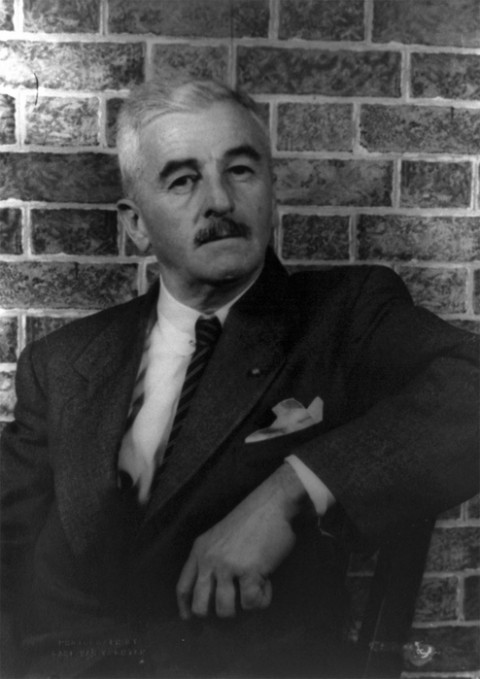
Like I said, it’s all pretty nuts-and-bolts advice. But if you’re looking for something a little more colorful and outside-the-box, then look no further than William Faulkner’s 1956 interview with the Paris Review. When asked “Is there any possible formula to follow in order to be a good novelist?,” Faulkner perhaps surprised his interviewer, Jean Stein, when he said:
An artist is a creature driven by demons… He is completely amoral in that he will rob, borrow, beg, or steal from anybody and everybody to get the work done.
Elaborating, Faulkner continued:
The writer’s only responsibility is to his art. He will be completely ruthless if he is a good one. He has a dream. It anguishes him so much he must get rid of it. He has no peace until then. Everything goes by the board: honor, pride, decency, security, happiness, all, to get the book written. If a writer has to rob his mother, he will not hesitate.…
If Stein hoped to get Faulkner back into more practical territory with her next question, she was disappointed. To the question, “Then what would be the best environment for a writer?,” Faulkner offered this:
If you mean me, the best job that was ever offered to me was to become a landlord in a brothel. In my opinion it’s the perfect milieu for an artist to work in. It gives him perfect economic freedom; he’s free of fear and hunger; he has a roof over his head and nothing whatever to do except keep a few simple accounts and to go once every month and pay off the local police. The place is quiet during the morning hours, which is the best time of the day to work. There’s enough social life in the evening, if he wishes to participate, to keep him from being bored.… My own experience has been that the tools I need for my trade are paper, tobacco, food, and a little whiskey.
If you want to translate this into practical advice, you get something like this. What should a young novelist aspire to? Basically being a Machiavellian-type in a cat house. Not a pretty idea, but that’s how one of America’s pre-eminent writers saw the literary life. And if you strip things down to their rawest essentials, you might find some wisdom there. Live for your art, and give yourself the economic freedom to write. Nothing more. Nothing less.
Five years ago, a 30-something music producer from Houston, Texas got a big idea. Why not take his two favorite things — Bob Dylan and Dr. Seuss, of course — and mash them up into one original creation. Hence came Dylan Hears a Who, a mock album that took seven Dr. Seuss classics and put them to the melodies and imitated voice of Mr. Dylan. The cuts went viral, giving Dylan-Seuss fans worldwide the chance to enjoy creative takes on Green Eggs and Ham (above); The Cat in the Hat;Oh, The Thinks You Can Think! (below); Too Many Daves; and The Zax. Soon enough, the songs faded into YouTube oblivion, awaiting the day when a digital archaeologist would come along and do an excavation. Well, today’s the day. Enjoy!
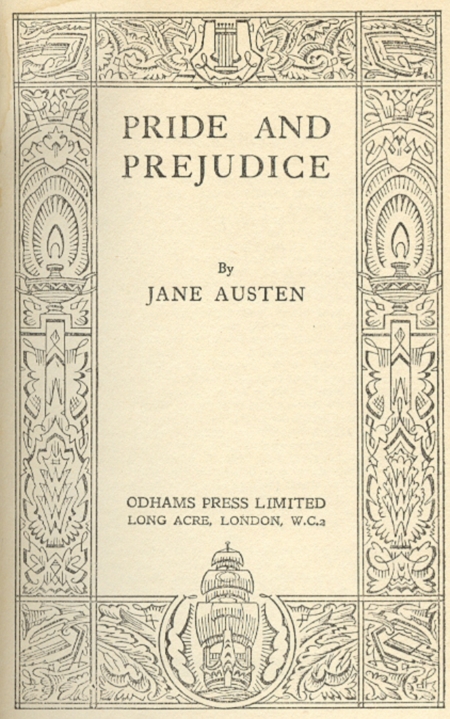
“Currently, it seems, Jane Austen is hotter than Quentin Tarantino.” Martin Amis wrote this in the New Yorker back in 1996, when Tarantino had cultural heat to spare. Even today, as the filmmaker rides high on another one of his periodic waves of pop-cultural exuberance and controversy-courting violence, Austen may still win the popularity contest. Her much-read, often-adapted second novel Pride and Prejudice has, in fact, just passed its 200th anniversary of publication, and its reputation as a reliably sharp and engaging comedy seems stronger than ever.
Especially striking for a novel of its age, this reputation appears to have also grown wider than ever. Though some have always dismissed her — and will always dismiss her — as a writer of mere romantic fiction meant solely for women, admiration for Austen knows no demographic boundaries. Just look at her high-profile living male enthusiasts, a group that ranges from Amis to venture capitalist and essayist Paul Graham, who names Austen as one of his heroes. “In her novels I can’t see the gears at work,” Graham writes. “Though I’d really like to know how she does what she does, I can’t figure it out, because she’s so good that her stories don’t seem made up.”
“When I was introduced to the novel, at the age of fourteen,” Amis writes of Pride and Prejudice, “I read twenty pages and then besieged my stepmother’s study until she told me what I needed to know. I needed to know that Darcy married Elizabeth. (I needed to know that Bingley married Jane.) I needed this information as badly as I had ever needed anything. Pride and Prejudice suckers you. Amazingly — and, I believe, uniquely — it goes on suckering you.” And if that 200-year-old novel fails to sucker you, perhaps its 202-year-old predecessor Sense and Sensibility or its 199-year-old successor Mansfield Park will. You can browse Austen’s hand-written manuscripts pertaining to these and other of her novels in Jane Austen’s Fiction Manuscripts, an online joint project from the University of Oxford and King’s College London. Austen’s fanbase, perhaps because of its broadness, seems to contain relatively few obsessive exegetes (compared to, say, acolytes of Thomas Pynchon), but you can only read her six novels so many times before feeling a need, if a vain one, to glimpse those “gears at work.” And if this contact with Austen’s creative spirit moves you to write your own adaptation of Pride and Prejudice, why not think outside the box and check on Tarantino’s availability to direct?
You can also download free audio versions of Jane Austen novels if you take part in the free trial programs offered by Audible.com and FreeAudioBooks.com.
Colin Marshall hosts and produces Notebook on Cities and Cultureand writes essays on literature, film, cities, Asia, and aesthetics. He’s at work on a book about Los Angeles, A Los Angeles Primer. Follow him on Twitter at @colinmarshall.
Today we bring you one of the best-loved poems of W.H. Auden, “As I Walked Out One Evening,” read (below) by the poet himself. Auden wrote the poem in 1937 and first published it in his 1940 volume, Another Time. The poem is a variant of the ballad form, made up of 15 rhymed quatrains. It’s a meditation on love and the remorselessness of time, told in three voices: the narrator, a rapturous lover, and the reproachful clocks that speak back to the lover.
‘The years shall run like rabbits, For in my arms I hold The Flower of the Ages, And the first love of the world.’
But all the clocks in the city Began to whirr and chime: ‘O let not Time deceive you, You cannot conquer Time
Auden made a number of audio recordings over the years, and we were unable to track down the time and place of this one. It may be a 1953 recording originally released by Caedmon Records. “As I Walked Out One Evening” is included in the Random House audio collection, Voice of the Poet: W.H. Auden.
Many Moons Ago, a poetry teacher of mine introduced me to the term “terminal aesthetic,” meaning a style that could go no further, having burned up all of its resources. It’s a great way to characterize the poet Hart Crane’s ambivalent appraisal of his literary forefather, T.S. Eliot. Crane spent his poetry career trying to remedy what he saw as Eliot’s failure to salvage anything from the modern world but cramped despair in The Waste Land. As Crane put it, Eliot’s masterwork was “so damned dead” and manifested “a refusal to see certain spiritual events and possibilities.” It’s probably safe to say that nearly everyone subjected to Eliot’s portentous verse has felt this way at one time or another. But Crane felt it and persevered; he tried to out-write The Waste Land with his own modernist epic, The Bridge.
Crane’s short life was a train wreck—a teenage suicide attempt, followed by bitter estrangements from his mother, a Christian Scientist, and his father, a well-to-do Cleveland candy maker who disapproved of his son’s habits. Living as a semi-closeted gay man on the fringes of the cultural limelight in New York and Europe, Crane had affairs with sailors, drank too much, got in fights, and couldn’t hold a job.
Crane’s depression and feelings of failure drove him to suicide in 1932, at age 32: he leapt into the Gulf of Mexico from the steam ship Orizaba (most think; he left no note). His tombstone is inscribed with the words “lost at sea.”
That phrase also captures how so many readers feel when faced with Crane’s rococo verse. With its archaic (some would say pretentious) diction, and obscure allusions nested inside oblique references, the word “difficult” may be an understatement. But Crane’s work has had many champions, among them, Tennessee Williams. As an epigraph to A Streetcar Named Desire, Williams chose these lines from Crane’s “The Broken Tower”:
And so it was I entered the broken world
To trace the visionary company of love, its voice
An instant in the wind (I know not whither hurled)
But not for long to hold each desperate choice.
The exquisite rhythms of Crane’s lines—Shakespearean by way of Eliot—lend themselves so well to reading aloud. Above, then, we have the privilege of hearing Crane’s defender Williams read “The Broken Tower” in his reedy, Southern voice. Follow the text of the poem in the video as Williams reads. Both the audio above and that below—of Williams reading Crane’s hypnotic “The Hurricane”—come from a nearly-impossible-to-find 1960 LP from Caedmon Records. Thanks again, Internet, and thanks to Don Yorty, who posted these videos.
In the summer of 1942, Jack Kerouac followed in the footsteps of Joseph Conrad and Eugene O’Neill and went to sea. After dropping out of Columbia University the previous Fall, the 20-year-old Kerouac signed up for the merchant marine and shipped out aboard the U.S. Army Transport ship Dorchester.
Although World War II had broken out at about the time of his departure from Columbia, Kerouac’s motives for going to sea were more personal than patriotic. “My mother is very worried over my having joined the Merchant Marine,” Kerouac wrote in his journal at the time, “but I need money for college, I need adventure, of a sort (the real adventure of rotting wharves and seagulls, winey waters and ships, ports, cities, and faces & voices); and I want to study more of the earth, not out of books, but from direct experience.”
In October of 1942, after completing a voyage to and from an Army command base in Greenland (which he would later write about in Vanity of Duluoz), Kerouac left the merchant marine and returned to Columbia. That was lucky, because most of the Dorchester’s crew–more than 600 men–died three months later when the ship was torpedoed by a German U‑boat. But the restless Kerouac lasted only a month at Columbia before dropping out again and making plans to return to sea. In December of 1942 he enlisted in the U.S. Naval Reserve. He wanted to join the Naval Air Force, but failed an aptitude test. So on February 26, 1943 he was sent to the Naval Training Station in Newport, Rhode Island. That’s apparently when the photograph above was taken of the young Kerouac with his military haircut. It would have been right around the time of his 21st birthday.
Kerouac lasted only 10 days in boot camp. As Miriam Klieman writes at the National Archives, “The qualities that made On the Road a huge success and Kerouac a powerful storyteller, guide, and literary icon are the same ones that rendered him remarkably unsuitable for the military: independence, creativity, impulsivity, sensuality, and recklessness.” According to files released by the government in 2005, Naval doctors at Newport found Kerouac to be “restless, apathetic, seclusive” and determined that he was mentally unfit for service, writing that “neuropsychiatric examination disclosed auditory hallucinations, ideas of reference and suicide, and a rambling, grandiose, philosophical manner.” He was sent to the Naval Hospital in Bethesda Maryland and eventually discharged.
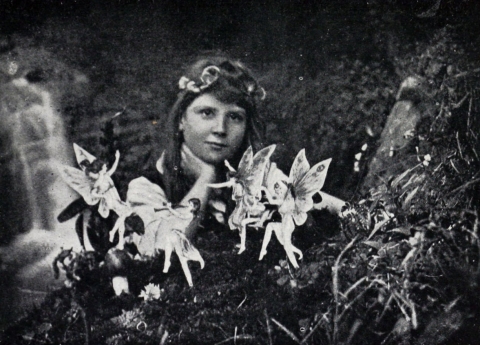
In a previous post, we brought you what is likely the only appearance on film of Sir Arthur Conan Doyle—an interview in which he talks of Sherlock Holmes and spiritualism. Although Conan Doyle created one of the most hardnosed rational characters in literature, the author himself later became converted to a variety of supernatural beliefs, and he was taken in by a few hoaxes. One such famous hoax was the case of the so-called “Cottingley Fairies.” As you can see from the photo above (from 1917), the case involved what Conan Doyle believed was photographic evidence of the existence of fairies, documented by two young Yorkshire girls, Elsie Wright and her cousin Frances Griffiths (the girl in the photo above). According to The Haunted Museum, the story of Doyle’s involvement goes something like this:
In 1920, Conan Doyle received a letter from a Spiritualist friend, Felicia Scatcherd, who informed of some photographs which proved the existence of fairies in Yorkshire. Conan Doyle asked his friend Edward Gardner to go down and investigate and Gardner soon found himself in the possession of several photos which showed very small female figures with transparent wings. The photographers had been two young girls, Elsie Wright and her cousin, Frances Griffiths. They claimed they had seen the fairies on an earlier occasion and had gone back with a camera and photographed them. They had been taken in July and September 1917, near the Yorkshire village of Cottingley.
The two cousins claimed to have seen the fairies around the “beck” (a local term for “stream”) on an almost daily basis. At the time, they claimed to have no intention of seeking fame or notoriety. Elsie had borrowed her father’s camera on a host Saturday in July 1917 to take pictures of Frances and the beck fairies.
Elsie’s father, a skeptic, filed the photos away as a joke, but her mother, Polly Wright, believed, and brought the images to Gardner (there were only two at first, not “several”), who circulated them through the British spiritualist community. When Conan Doyle saw them in 1920, he gave each girl a camera and commissioned them to take more. They produced three additional prints. The online Museum of Hoaxesdetails each of the five photos from the two sessions with text from Edward Gardner’s 1945 Theosophical Society publication The Cottingley Photographs and Their Sequel.
These photos swayed thousands over the course of the century, but arch-skeptic James Randi seemingly debunked them for good when he pointed out that the fairies were ringers for figures in the 1915 children’s book Princess Mary’s Gift Book, and that the prints show discrepancies in exposure times that clearly point to deliberate manipulation. The two women, Elsie and Frances, finally confessed in the early 1980s, fifty years after Conan Doyle’s involvement, that they had faked the photos with paper cutouts. Watch Randi and Elsie Wright discuss the trickery above.
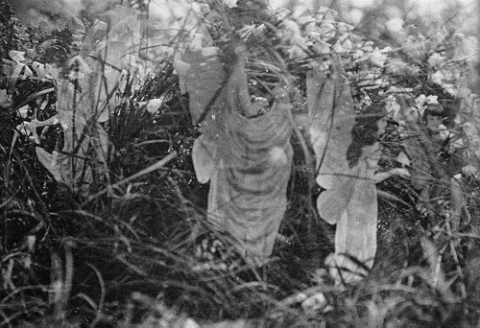
The daughter and granddaughter of Griffiths possess the original prints and one of Conan Doyle’s cameras. Both once believed that the fairies were real, but as the host explains, they were not simply credulous fools. Throughout much of the twentieth century, people looked at the camera as a scientific instrument, unaware of the ease with which images could be manipulated and staged. But even as Frances admitted to the fakery of the first four photos, she insisted that number five was genuine. Everyone on the show agrees, including the host. Certainly Conan Doyle and his friend Edward Gardner thought so. In the latter’s description of #5, he wrote:
This is especially remarkable as it contains a feature quite unknown to the girls. The sheath or cocoon appearing in the middle of the grasses had not been seen by them before, and they had no idea what it was. Fairy observers of Scotland and the New Forest, however, were familiar with it and described it as a magnetic bath, woven very quickly by the fairies and used after dull weather, in the autumn especially. The interior seems to be magnetised in some manner that stimulates and pleases.
I must say, I remain seriously unconvinced. Even if I were inclined to believe in fairies, photo number five looks as phony to me as numbers one through four. But the Antiques Roadshow appearance does add a fun new layer to the story and an air of mystery I can’t help but find intriguing, as Conan Doyle did in 1920, if only for the historical angle of the three generations of Griffiths who held onto the legend and the artifacts. Oh, and the appraisal for the five original photos and Arthur Conan Doyle’s camera? Twenty-five to thirty-thousand pounds—not too shabby for an adolescent prank.
Josh Jones is a freelance writer, editor, and musician based in Washington, DC. Follow him @jdmagness
We're hoping to rely on loyal readers, rather than erratic ads. Please click the Donate button and support Open Culture. You can use Paypal, Venmo, Patreon, even Crypto! We thank you!
Open Culture scours the web for the best educational media. We find the free courses and audio books you need, the language lessons & educational videos you want, and plenty of enlightenment in between.
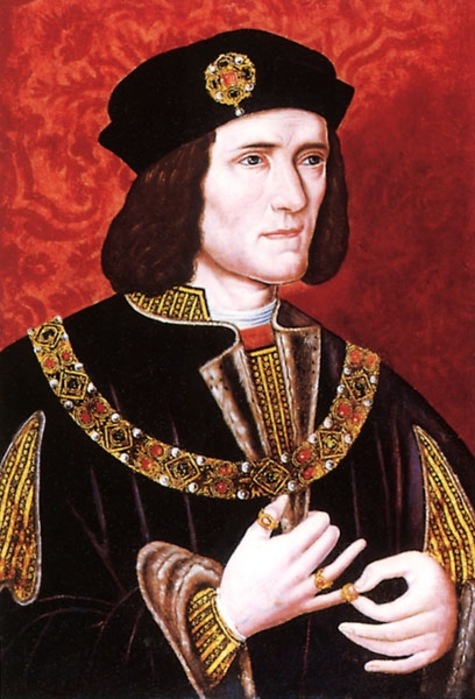 Last September, British archaeologists made a pretty startling discovery. They found, they believed, the bones of Richard III (1452–1485) in a makeshift grave under a parking lot in the city of Leicester. It sounded like a pretty ignominious but karmically justified resting place for the tyrannical medieval king portrayed so famously by William Shakespeare.