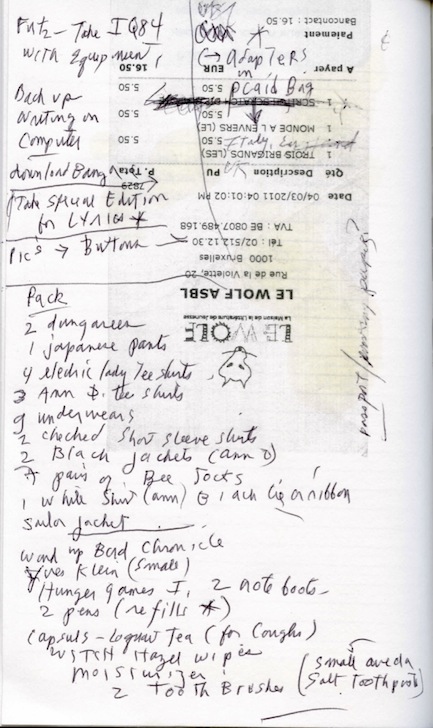
But the handwritten packing list Godmother of Punk Patti Smith scrawled upside down on a photocopied receipt from a children’s bookstore on the eve of a 40-date European tour comes close. One can kind of imagine her stuffing her adaptors, her Japanese pants, and her “9 underwears” into a shopping bag or a dirty day pack, using it as a pillow in the back of the van…
Behold the reality, below.
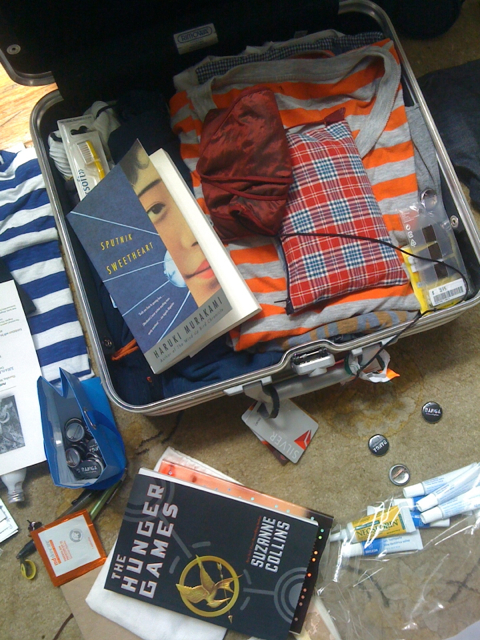
Smith’s hard shell case is kitted out with practiced precision, its contents pared to the leanest of luxury-brand necessities to keep her happy and healthy on the road.
Other essentials in Smith’s tour bag include loquat tea for her throat and plenty of reading material. In addition to the Hunger Games, she elected to take along some old favorites from author Haruki Murakami:
I decide this will be essentially a Haruki Murakami tour. So I will take several of his books including the three volume IQ84 to reread. He is a good writer to reread as he sets your mind to daydreaming while you are reading him. thus i always miss stuff.
Readers, use the comments section to let us know what indispensable items you would pack when embarking on a 40-city tour with Patti Smith.
Ayun Halliday is an author, illustrator, and Chief Primatologist of the East Village Inky zine. Her play, Fawnbook, opens in New York City later this fall. Follow her @AyunHalliday
In the spirit of full disclosure, we should clarify that the true Poe fanboy is not the fictional Gomez Addams, but rather the first actor to bring the character to life, John Astin, of television fame.
His discoveries about human nature were so right, and so accurate, that it’s almost a wonder to read, or reread. There are continually discoveries, in the reading of Poe, about humankind.
Philip Brandes, reviewing a performance in the Los Angeles Times wrote:
Reciting “The Raven” in its entirety, Astin cannot afford to milk each line for atmosphere à la Vincent Price; it would take him most of the second act.
Instead, he races through the poem as an author would in recalling his own familiar words, gradually getting caught up in their power and finishing on a dramatic crescendo.
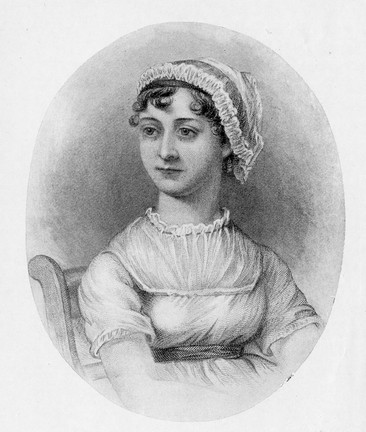
In a time when people offer up every gesture as fodder for their adoring social media public, it’s a little difficult to imagine living a life as private as Jane Austen (1775–1817) did. And yet, the impression we have of her as shy and retiring is misleading. She did not achieve literary fame during her lifetime, it’s true, and it’s not clear that she desired it. As her nephew James Edward Austen-Leigh wrote in the Memoir of Jane Austen, the 1870 biographical sketch that helped popularize Austen in the 19th century, “her talents did not introduce her to the notice of other writers, or connect her with the literary world, or in any degree pierce through the obscurity of her domestic retirement.” Yet, reducing Austen’s personality, as Austen-Leigh does, to “the moral rectitude, the correct taste, and the warm affections with which she invested her ideal characters” misses her fierce intelligence and complexity.
Austen’s nephew’s portrait of her seems concerned with preserving those canons of propriety that she scrupulously documented and satirized in her novels. Perhaps this is partly why he characterizes her as a very shy person. But we know that Austen maintained a lively social life and kept up regular correspondence with family and friends. Her letter-writing, some of it excerpted in Austen-Leigh’s biography, gives us the distinct impression that she used her letters to practice the sharp portraits she drew in the novels of the mores and strictures of her social class. Thus it is surprising when her nephew tells us we are “not to expect too much from them.” “The style is always clear,” he opined, “and generally animated, while a vein of humour continually gleams through the whole; but the materials may be thought inferior to the execution, for they treat only of the details of domestic life. There is in them no notice of politics or public events; scarcely any discussions on literature, or other subjects of general interest.”
What Austen’s nephew seems not to understand is what her legions of adoring readers and critics have since come to see in her work: in Austen, the “details of domestic life” are revealed as microcosms of her society’s politics, public events, literature, and “subjects of general interest.” Austen-Leigh almost admits as much, despite himself, when he compares his aunt’s letters to “the nest some little bird builds of the materials nearest at hand, of the twigs and mosses supplied by the tree in which it is placed; curiously constructed out of the simplest matters.” In Austen’s hands, however, the small domestic dramas proceeding on the country estates around her were anything but simple matters. Letter-writing plays a central role in novels like Pride and Prejudice, as in most fiction of the period. The surviving Austen letters are worth reading as source material for the novels—or worth reading for their own sake, so enjoyable are their turns of phrase and withering characterizations.
Take a November, 1800 letter Austen wrote to her sister Cassandra (preserved in the so-called “Brabourne edition” of her letters). Austen begins by confessing, “I believe I drank too much wine last night at Hurstbourne; I know not how else to account for the shaking of my hand to-day.” To the “venial error” of her hangover she attributes “any indistinctness of writing.” She then goes on to describe in vivid and very witty detail the ball she’d attended the night previous, taking the risk of boring her sister “because one is prone to think much more of such things the morning after they happen, than when time has entirely driven them out of one’s recollection.” Read an excerpt of her description below and see if the scene doesn’t come alive before your eyes:
There were very few beauties, and such as there were were not very handsome. Miss Iremonger did not look well, and Mrs. Blount was the only one much admired. She appeared exactly as she did in September, with the same broad face, diamond bandeau, white shoes, pink husband, and fat neck. The two Miss Coxes were there: I traced in one the remains of the vulgar, broad-featured girl who danced at Enham eight years ago; the other is refined into a nice, composed-looking girl, like Catherine Bigg. I looked at Sir Thomas Champneys and thought of poor Rosalie; I looked at his daughter, and thought her a queer animal with a white neck. Mrs. Warren, I was constrained to think, a very fine young woman, which I much regret. She has got rid of some part of her child, and danced away with great activity looking by no means very large. Her husband is ugly enough, uglier even than his cousin John; but he does not look so very old. The Miss Maitlands are both prettyish, very like Anne, with brown skins, large dark eyes, and a good deal of nose. The General has got the gout, and Mrs. Maitland the jaundice. Miss Debary, Susan, and Sally, all in black, but without any stature, made their appearance, and I was as civil to them as their bad breath would allow me.
Needless to say, before the development and widespread use of photography in mass publications, illustrations provided the only visual accompaniment to religious texts, novels, books of poetry, scientific studies, and magazines literary, lifestyle, and otherwise. The development of techniques like etching, engraving, and lithography enabled artists and printers to better collaborate on more detailed and colorful plates. But whatever the media, behind each of the millions of illustrations to appear in manuscript and print—before and after Gutenberg—there was an artist. And many of those artists’ names are now well known to us as exemplars of graphic art styles.
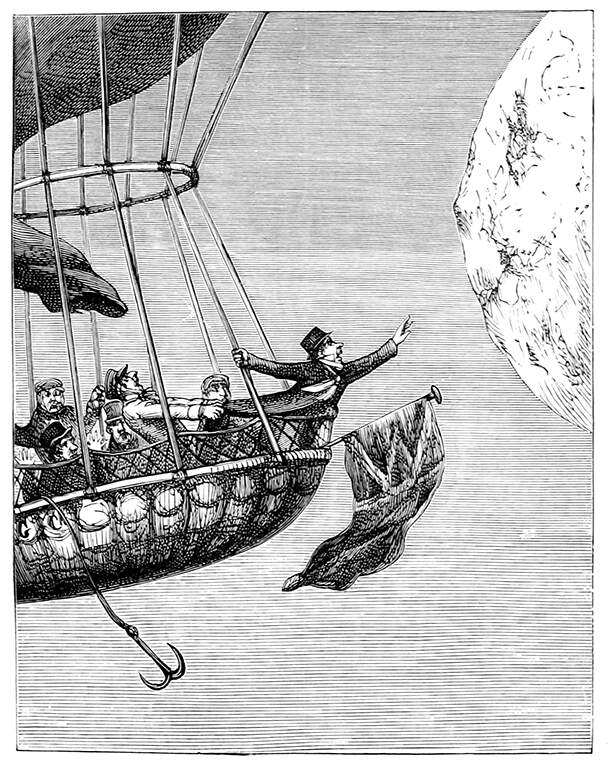
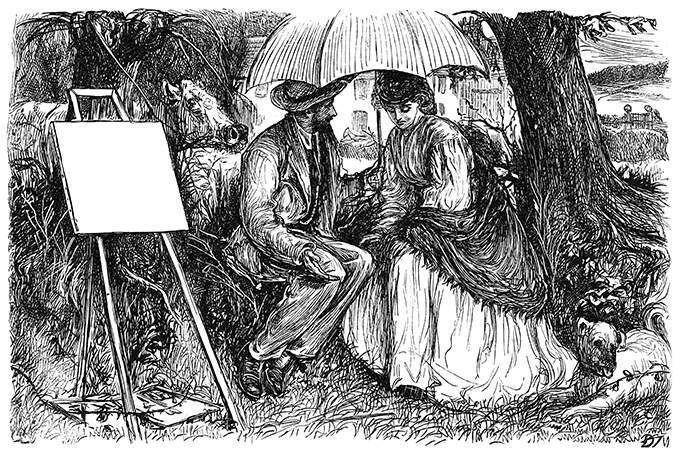
It was in the 19th century that book and magazine illustration began its golden age. Illustrations by artists like George Cruikshank (see his “’Monstre’ Balloon” above”) were so distinctive as to make their creators famous. The hugely influential English satire magazine Punch, founded in 1841, became the first to use the word “cartoon” to mean a humorous illustration, usually accompanied by a humorous caption. The drawings of Punch cartoons were generally more visually sophisticated than the average New Yorker cartoon, but their humor was often as pithy and oblique. And at times, it was narrative, as in the cartoon below by French artist George Du Maurier.
The lengthy caption beneath Du Maurier’s illustration, “Punch’s physiology of courtship,” introduces Edwin, a landscape painter, who “is now persuading Angelina to share with him the honours and profits of his glorious career, proposing they should marry on the proceeds of his first picture, now in progress (and which we have faithfully represented above).” The humor is representative of Punch’s brand, as is the work of Du Maurier, a frequent contributor until his death. You can find much more of Cruikshank and Du Maurier’s work at Old Book Illustrations, a public domain archive of illustrations from artists famous and not-so-famous. You’ll find there many other resources as well, such as biographical essays and a still-expanding online edition of William Savage’s 1832 compendium of printing terminology, A Dictionary of the Art of Printing.
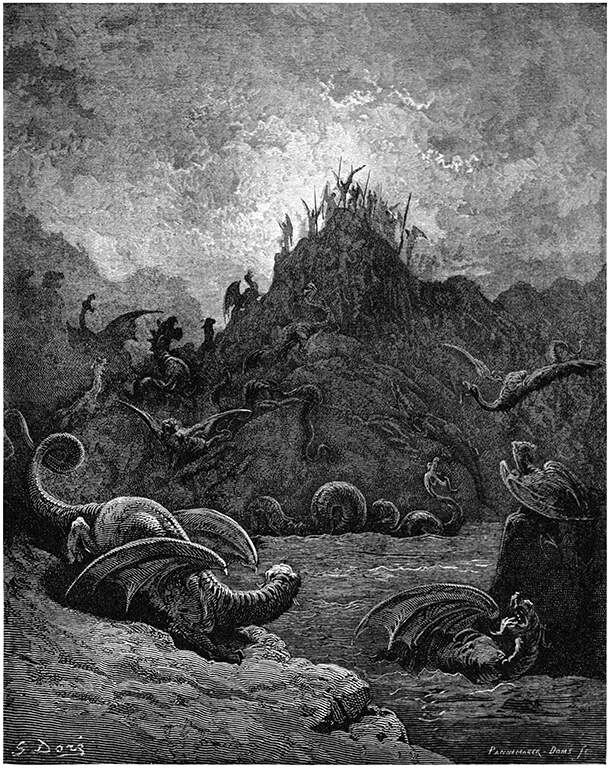
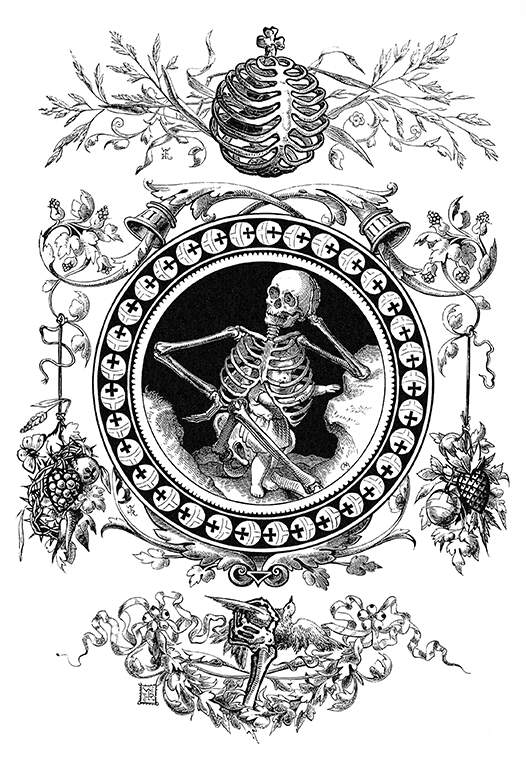
Old Book Illustrations allows you to download high resolution images of its hundreds of featured scans, “though it appears,” writes Boing Boing, “the scans are sometimes worse-for-wear.” Most of the illustrations also “come with lots of details about their original creation and printing.” You’ll find there many illustrations from an artist we’ve featured here several times before, Gustave Doré (see “Gorgons and Hydras” from his Paradise Lost edition, above). As much as artists like Cruikshank and Du Maurier can be said to have dominated the illustration of periodicals in the 19th century, Doré dominated the field of book illustration. In a laudatory biographical essay on the French artist, Elbert Hubbard writes, “He stands alone: he had no predecessors, and he left no successors.” You’ll find a beautifully, and morbidly, 19th century illustrated edition of 17th century poet Francis Quarles’ Emblems, with pages like that below, illustrating “The Body of This Death.”
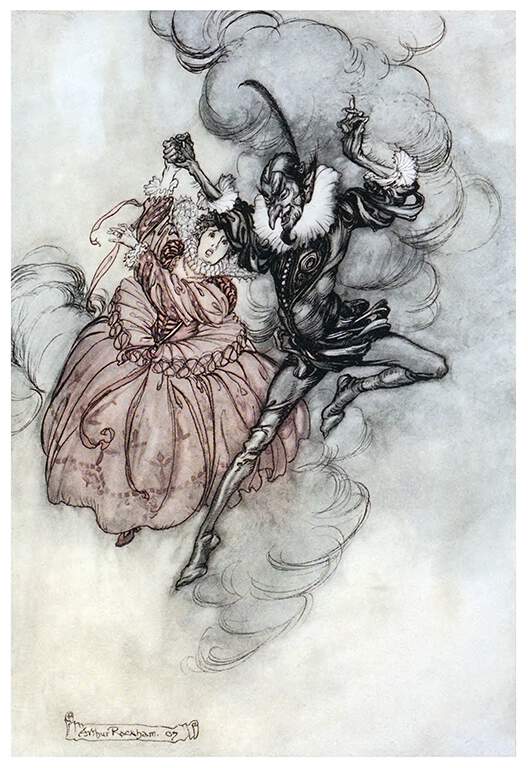
Not all of the illustrations at Old Book Illustrations date from the Victorian era, though most do. Some of the more striking exceptions come from Arthur Rackham, known primarily as an early 20th century illustrator of fantasies and folk tales. See his “Pas de Deux” below from his edition of The Ingoldsby Legends. These are but a very few of the many hundreds of illustrations available, and not all of them literary or topical (see, for example, the “Science & Technology” category). Be sure also to check out the OBI Scrapbook Blog, a running log of illustrations from other collections and libraries.
Let’s face it, the holidays are a miserable time of year for many people. Writers have mined this fact for pathos and much dark humor in stories featuring low-rent mall Santas, squabbling family dinners, inept home invaders, and King of the Hill’s resident sad sack, Bill Dauterive. Most narratives of unhappy holidays end with some kind of redemption—someone discovers a Christmas miracle, the real Santa shows up, the Grinch’s heart grows to nearly bursting from his chest, Ebenezer Scrooge repents….
What if the redemption is one down-and-out junky sharing his only fix with a man suffering from kidney stones—that is, after the junky spends the day trying to steal enough to buy heroin, finds a suitcase containing two severed human legs, and finally scores a little morphine by goldbricking at a crooked doctor’s house? That’s the plot of William S. Burroughs’ story “The Junky’s Christmas,” which appeared in the 1989 collection Interzone and thereafter achieved some notoriety in two adaptations from 1993.
The first (above)—produced by Francis Ford Coppola and directed by Nick Donkin and Melodie McDaniel—-animates a reading by Burroughs in Claymation, with appearances from the man himself at the beginning and end. The story ends with a Christmas miracle of sorts, the “immaculate fix” the main character Danny receives as if from heaven after his unselfish act. It ain’t Frank Capra, but it’s a lot closer to some people’s real lives than It’s a Wonderful Life’s angelic visitation.
Also in 1993, Burroughs collaborated with another artist plagued by addiction, entering a studio in Lawrence, Kansas with Kurt Cobain to read an earlier version of “The Junky’s Christmas” titled “The ‘Priest’ They Called Him.” (Hear it in the fan-made video above.) This version of the story also has the suitcase full of severed legs, but this time the recipient of the junky’s charity is a disabled Mexican fellow addict suffering from withdrawal. Underneath Burroughs’ deadpan, Cobain plays bars of “Silent Night” on a guitar that sounds like it’s being strangled to death. You can read Burroughs’ earlier unhappy Christmas story in full here. And if you’re still not bummed out enough, check out Nerve’s “Ten Most Depressing Christmas Songs Ever Recorded.”
Most writers find their individual voice only after they sojourn through periods of imitation. Though it’s an excellent way to appropriate experimental techniques and move out of comfortable ruts, imitation can only take us so far. But more prescriptive guidelines from famous authors can offer ways to refine our individual styles and visions. Advice, for example, from such a clear and succinct theorist as Kurt Vonnegut can go a very long way indeed for aspiring fiction writers.
Another reason for appreciating great writers’ how-to guidelines accords with the injunction we often hear: to read, read, read as much as possible. Learning how William Faulkner conceived of his craft can give us useful insights into his novels. What did Faulkner think of the writing enterprise and the social role of the writer? How did he come to formulate his impressively dense style? What was his view of learning from other writers?
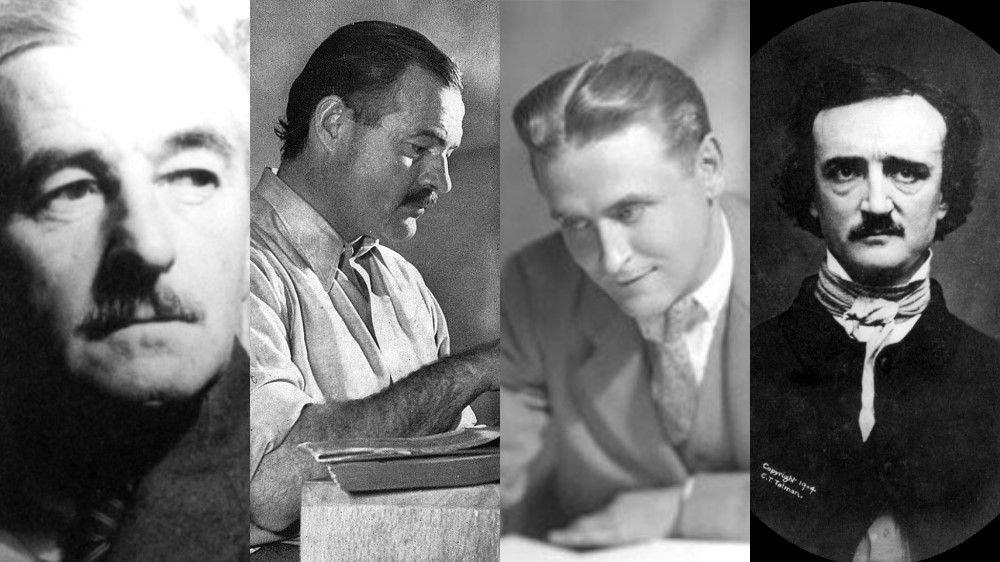
We can answer the last question by reference to seven writing tips we previously compiled from lectures and Q&A sessions Faulkner conducted while serving as writer-in-residence at the University of Virginia from 1957 to ’58. The first tip? Take what you need from other writers. To that end, we offer seven writing tips each from four American greats (or 28 tips in total). As writers, we’re free to take or leave their guidelines; as readers we may always find their philosophies of keen interest.
William Faulkner:
Take What You Need From Other Writers
During a writing class on February 25, 1957, Faulkner said the following:
I think the writer, as I’ve said before, is completely amoral. He takes whatever he needs, wherever he needs, and he does that openly and honestly because he himself hopes that what he does will be good enough so that after him people will take from him, and they are welcome to take from him, as he feels that he would be welcome by the best of his predecessors to take what they had done.
Faulkner’s advice can help tremendously–at least in a psychological sense–those writers who might have qualms about “stealing” from others. You have permission to do so from none other than perhaps the greatest American modernist writer of them all.
Faulkner also said “the young writer would be a fool to follow a theory,” a piece of advice we might bear in mind as we peruse famous writing theories. “The good artist,” he said, “believes that nobody is good enough to give him advice.”
Faulkner’s modernist foil and sometime rival Ernest Hemingway had some characteristically pragmatic advice for budding writers. Like many writers’ tips, some of his advice may do little but help you write more like Hemingway. And some of it, like “use a pencil,” is perfectly useless if you’ve already found your preferred method of working. One guideline, however, is intriguingly counter-intuitive. Hemingway counsels us to
Never Think about the Story When You’re Not Working
This is one thing Faulkner and Hemingway might agree on. In an Esquire article, Hemingway describes his experience during the composition of A Moveable Feast, one Faulkner characterizes in his writing advice as “never exhaust your imagination.”
When I was writing, it was necessary for me to read after I had written. If you kept thinking about it, you would lose the thing you were writing before you could go on with it the next day. It was necessary to get exercise, to be tired in the body, and it was very good to make love with whom you loved. That was better than anything. But afterwards, when you were empty, it was necessary to read in order not to think or worry about your work until you could do it again. I had learned already never to empty the well of my writing, but always to stop when there was still something there in the deep part of the well, and let it refill at night from the springs that fed it.
Despite his reputation as an undisciplined and messy writer, Fitzgerald has some of the most practical tips of all for organizing your ideas. One of his more philosophical prescriptions takes a similar tone as Hemingway’s in regard to the private world of the imagination:
Don’t Describe Your Work-in-Progress to Anyone
Fitzgerald offered this piece of advice in a 1940 letter to his daughter, Scottie, writing,
I think it’s a pretty good rule not to tell what a thing is about until it’s finished. If you do you always seem to lose some of it. It never quite belongs to you so much again.
This seems to me a good piece of advice for holding on to the magic of a creatively imagined world. Trying to summarize a good story in brief—like trying to explain a joke—generally has the effect of taking all the fun out of it.
Finally, we reach back to the 19th century, to the father of the American gothic and the detective story, Edgar Allan Poe, who had some very specific, very Poe things to say about the art of fiction. In his essay “The Philosophy of Composition,” Poe focuses on how to achieve what he vaguely called a “unity of effect,” the quality he desired most to produce in his narrative poem “The Raven.” Perhaps the clearest piece of advice Poe offers in his treatise is:
Know the Ending in Advance, Before You Begin to Write
You will likely find other authors who advise against this and tell you to write your way to the end. Bearing in mind Faulkner’s disclaimer—that we would be “fool to follow a theory”—we might at least try this practice and see if it works for us as it did for Poe. As he described it, “nothing is more clear than that every plot, worth the name, must be elaborated to its dénouement before any thing be attempted with the pen.”
Keeping the end “constantly in view,” wrote Poe, gives “a plot its indispensable air of consequence.” Poe’s advice applies to short works that can be read in a single sitting, the only ones he generally allows can achieve “unity of effect.” Novel-writing is different. I don’t know if it’s necessary to fully know the ending of a short story before one begins, but Vonnegut counsels writers to “start as close to the end as possible” when writing one.
Should you desire more writing advice, you’ll find no shortage here at Open Culture, from writers as diverse as Stephen King, Toni Morrison, Roberto Bolaño, H.P. Lovecraft, Haruki Murakami, Ray Bradbury, and many more. Whether or not we decide to take any of their advice, it always opens a window onto their art of creating fictional worlds, which can seem to many of us a creative act akin to magic.
In English-speaking countries where Christmas is celebrated, A Christmas Carol, Charles Dickens’ secular Victorian tale of a Grinch restored to holiday cheer, usually plays some part.
How many children have been traumatized by Marley’s Ghost in the annual rebroadcast of the half hour, 1971 animated version, featuring the voices of Alistair Sim and Michael Redgrave as Scrooge and Bob Cratchit?
Personally, I lived in mortal fear of the cowled Ghost of Christmas Yet to Come from Scrooge, a movie musical version starring Albert Finney.
And in some lucky families, an older relative with a flair for the theatrical reads the story aloud, preferably on the actual day.
It’s a tradition that Charles Dickens himself observed. It must’ve been a very picturesque scene, with his wife and all ten of their children gathered around. (Presumably his mistress was not included in the festivities).
Eventually, the torch was passed to the next generation, who mimicked and preserved the cadences favored by the master.
Dickens great-granddaughter, novelist Monica Dickens, who narrated a condensed version of the classic tale in 1984, above, was schooled in the family interpretation by her grandfather, Henry Fielding Dickens, who said of his famous father:
I remember him as being at his best either at Christmas time or at other times when Gad’s Hill was full of guests, for he loved social intercourse and was a perfect host. At such times he rose to the very height of the occasion, and it is quite impossible to express in words his geniality and brilliancy amid a brilliant circle.
Before the reading, Ms. Dickens shares some charming anecdotes about the original publication, but those with limited time and/or a Scrooge-like aversion to jolly intros can skip ahead to 7:59, when Big Ben chimes to signal the start of the story proper.
An interesting thing happens when you read certain of George Saunders’ stories. At first, you see the satirist at work, skewering American meanness and banality with the same unsparing knife’s edge as earlier postmodernists like John Barth or Donald Barthelme. Then you begin to notice something else taking shape… something perhaps unexpected: compassion. Rather than serving as paper targets of Saunders’ dark humor, his misguided characters come to seem like real people, people he cares about; and the real target of his satire becomes a culture that alienates and devalues those people.
Take the oft-anthologized “Sea Oak,” a farcical melodrama about a dead aunt who returns reanimated to annoy and depress her downwardly mobile family members. The stage is set for a series of buffoonish episodes that, in the hands of a less mature writer, might play out to emphasize just how ridiculous these characters’ lives are, and how justifiably we—author and reader—might mock them from our perches. Saunders does not do this at all. Rather than distancing, he draws us closer, so that the characters in the story become more sympathetic and three-dimensional even as events become increasingly outlandish.
All of this humanizing is by design, or rather, we might say that empathy is baked into Saunders’ ethos—one he has articulated many times in essays, interviews, and a moving 2013 Syracuse University commencement speech. Now we can see him in a candid filmed appearance above, in a documentary titled “George Saunders: On Story” by Redglass Pictures (executive produced by Ken Burns). Created from a two-hour interview with Saunders, the short video at the top offers “a direct look at the process by which he is able to take a single mundane sentence and infuse it with the distinct blend of depth, compassion, and outright magic that are the trademarks of his most powerful work.”
In Saunders’ own words, “a good story is one that says, at many different levels, ‘we’re both human beings, we’re in this crazy situation called life, that we don’t really understand. Can we put our heads together and confer about it a little bit at a very high, non-bullshitty level?’ Then, all kinds of magic can happen.” The rest of Saunders’ fascinating monologue on story gets an animated treatment that illustrates the magic he describes. If you haven’t read Saunders, this is almost as good an introduction to him as, say, “Sea Oak.” His thoughts on the role fiction plays in our lives and the ways good stories work are always lucid, his examples vividly inventive. The effect of listening to him mirrors that of sitting in a seminar with one of the best teachers of creative writing, which Saunders happens to be as well.
I would love to take a class with him, but barring that, I’m very happy for the chance to hear him discuss writing techniques and philosophy in the short film at the top and in the interview extras below it: “On the relationship between reader and writer,” “On the tricks of the writing process,” and “In defense of darkness.” Praised by no less a postmodernist luminary than Thomas Pynchon, Saunders’ story collections like CivilWArLand in Bad Decline, Pastoralia, and In Persuasion Nation get at much of what ails us in these United States, but they do so always with an underlying hopefulness and a “non-bullshitty” conviction of shared humanity.
We're hoping to rely on loyal readers, rather than erratic ads. Please click the Donate button and support Open Culture. You can use Paypal, Venmo, Patreon, even Crypto! We thank you!
Open Culture scours the web for the best educational media. We find the free courses and audio books you need, the language lessons & educational videos you want, and plenty of enlightenment in between.