What Makes Music Sound Like Christmas Music? Hear the Single Most Christmassy Chord of All Explained

Dur­ing the past few months of this year, as in those same months of any year, we’ve been hear­ing a great deal of Christ­mas music. Some of the songs in the mix — “Rudolph the Red-Nosed Rein­deer,” “Have Your­self a Mer­ry Lit­tle Christ­mas,” “The Christ­mas Song” — few of us have ever known a time with­out, and oth­ers make it in because of their sea­son­al­ly themed lyri­cal con­tent. But cer­tain songs just sound like Christ­mas songs, some­how, and to under­stand what, in musi­cal terms, fills those com­po­si­tions with the spir­it of the hol­i­day sea­son, watch the five-minute Vox explain­er above that reveals “the secret chord that makes Christ­mas music sound so Christ­massy.”

First we should dis­tin­guish pop­u­lar Christ­mas songs from pop­u­lar non-Christ­mas songs, espe­cial­ly ones record­ed in the past half-cen­tu­ry. “Rock ’n’ roll songs (and the sub­se­quent pop songs influ­enced by the genre) may only con­tain three or four chords, each chord usu­al­ly being just a major or a minor — the two chord ‘fla­vors’ anal­o­gous to choco­late and vanil­la,” writes Slate’s Adam Ragusea. In con­trast, a selec­tion from “the Great Amer­i­can Song­book” might “use a Baskin-Rob­bins shop full of chords and chord fla­vors — 7ths and 9ths, half and ful­ly dimin­ished, var­i­ous inver­sions, and more” under melodies that “tend to include a lot of chro­mat­ic notes (the black notes on the piano when play­ing in the key of C major).”

In the era when most beloved Christ­mas stan­dards were con­ceived, song­writ­ers still made much use of that wide musi­cal palette, the son­ic col­ors of which had as much to do with jazz as with pop. But since the 1960s, writ­ers of pop songs  have used these now-exot­ic har­monies “to get a ‘clas­sic’ sound. For instance, John Lennon and Yoko Ono’s ‘Hap­py Xmas (War Is Over)’ includes some notes in its choral parts that I think are intend­ed to recall the har­mon­ic vocab­u­lary of those 1940s Christ­mas stan­dards.” No coin­ci­dence, sure­ly, that Mari­ah Carey’s “All I Want for Christ­mas Is You,” per­haps the only Christ­mas song writ­ten in recent decades to attain the same pop­u­lar­i­ty as the old stan­dards, uses the same com­po­si­tion­al tech­niques.

“I count at least 13 dis­tinct chords at work in ‘All I Want for Christ­mas Is You,’ result­ing in a sump­tu­ous­ly chro­mat­ic melody,” writes Ragusea. “The song also includes what I con­sid­er the most Christ­massy chord of all — a minor sub­dom­i­nant, or “iv,” chord with an added 6, under the words ‘under­neath the Christ­mas tree,’ among oth­er places.” As in Irv­ing Berlin’s “White Christ­mas,” he notes, “the chord comes imme­di­ate­ly after a major sub­dom­i­nant chord, giv­ing the effect of a ‘bright’ major sub­dom­i­nant that you might say ‘sighs’ or ‘melts’ into a ‘dark’ minor sub­dom­i­nant spiked with a ‘spicy’ extra tone (the added 6), before the songs set­tle back into their ton­ic, or ‘home,’ chords.” And so we come to the unex­pect­ed find­ing — though hard­ly a dis­pleas­ing one — that a prop­er­ly made Christ­mas song has more than a lit­tle in com­mon with a prop­er­ly made Christ­mas cock­tail.

Relat­ed Con­tent:

Stream 22 Hours of Funky, Rock­ing & Swing­ing Christ­mas Albums: From James Brown and John­ny Cash to Christo­pher Lee & The Ven­tures

Stream a Playlist of 68 Punk Rock Christ­mas Songs: The Ramones, The Damned, Bad Reli­gion & More

Hear Paul McCartney’s Exper­i­men­tal Christ­mas Mix­tape: A Rare & For­got­ten Record­ing from 1965

Gui­tarist Randy Bach­man Demys­ti­fies the Open­ing Chord of The Bea­t­les’ “A Hard Day’s Night”

The Moth­er of All Funk Chords

Based in Seoul, Col­in Mar­shall writes and broad­casts on cities, lan­guage, and cul­ture. His projects include the book The State­less City: a Walk through 21st-Cen­tu­ry Los Ange­les and the video series The City in Cin­e­ma. Fol­low him on Twit­ter at @colinmarshall or on Face­book.

Lin-Manuel Miranda & Emily Blunt Take You Through 22 Classic Musicals in 12 Minutes

Watch­ing James Cor­den, Lin-Manuel Miran­da, and Emi­ly Blunt don­ning bad wigs to mug their way through a 12-minute salute to 22 movie musi­cal “clas­sics” is a bit rem­i­nis­cent of watch­ing the three most pop­u­lar coun­selors ham it up dur­ing an over­long sum­mer camp skit.

Their one-take per­for­mance was part of Role Call, a reg­u­lar fea­ture of the Late Late Show with James Cor­den. Usu­al­ly, this fan favorite is an excuse for Cor­den and a megas­tar guest—Tom Han­ks, Julia Roberts, Samuel L. Jack­son—to bum­ble through the most icon­ic moments of their career.

These kinds of larks are more fun for being a mess, and the live stu­dio audi­ence screams like besot­ted campers at every goofy quick change and wink­ing inside ref­er­ence. Blunt and Miran­da are def­i­nite­ly game, though one won­ders if they felt a bit cha­grinned that the film they are pro­mot­ing, Mary Pop­pins Returns, is giv­en pride of place­ment, while the orig­i­nal 1964 film star­ring Julie Andrews and Dick Van Dyke is strange­ly absent.

As is Thor­ough­ly Mod­ern Mil­lie, Victor/Victoria, and even The Sound of Music.

Maybe Corden’s sav­ing up for a Julia Andrews-cen­tric Role Call.

What did make the cut points to how few orig­i­nal movie musi­cals there are to res­onate with mod­ern audi­ences.

Of the 22, over 2/3 start­ed out as Broad­way plays.

And “You Can’t Stop the Beat” from 2007’s Hair­spray was born of the 2002 stage adap­ta­tion, not the grit­ty 1988 orig­i­nal star­ring John Waters’ main­stay, Divine.

Is it wrong to hope that most view­ers hear­ing “Your Song” will think, Elton John! not Moulin Rouge”?

And Beau­ty and The Beast is per­haps not so much a movie musi­cal as a children’s fea­ture-length ani­ma­tion, so why not The Lit­tle Mer­maid, The Lion  King, or hell, Snow White or Pinoc­chio?

Alas, 1953’s Gen­tle­men Pre­fer Blondes is as far back as this skit’s mem­o­ry goes, pre­sum­ably because the audi­ence has a greater like­li­hood of rec­og­niz­ing Mar­i­lyn Mon­roe than say, Howard Keel.

More inter­est­ing than the jokey horse­play with Into the Woods and The Mup­pet Movie is the choice to blithe­ly cast white actors in roles that were writ­ten for black women (Dream­girls, Lit­tle Shop of Hor­rors). I don’t think any­one would try to get away with that on Broad­way these days, even in in a spoofy char­i­ta­ble event like Broad­way Bares or East­er Bon­net… though if they did, get­ting Lin-Manuel Miran­da on board would be a very good idea.

As to why Hamil­ton isn’t one of the titles below … it’s not a movie musi­cal—yet!

Readers—what glar­ing omis­sions leap out at you?

Cabaret

Chica­go

La La Land

Beau­ty and the Beast

Guys and Dolls

Evi­ta

Sin­gin’ in the Rain

Mary Pop­pins Returns

The Mup­pet Movie

The Wiz­ard of Oz 

Hair­spray

Dream­girls

Annie

Fid­dler on the Roof

Into the Woods 

Lit­tle Shop of Hor­rors

Les Mis­er­ables

Moulin Rouge 

Once

Fame 

Gen­tle­men Pre­fer Blondes

Mama Mia

Relat­ed Con­tent:

Hair: The Amer­i­can Trib­al Love-Rock Musi­cal Debuted on Broad­way 50 Years Ago: Watch Footage of the Cast Per­form­ing in 1968

David Bowie Dreamed of Turn­ing George Orwell’s 1984 Into a Musi­cal: Hear the Songs That Sur­vived the Aban­doned Project

Alexan­der Hamil­ton: Hip-Hop Hero at the White House Poet­ry Evening

Ayun Hal­l­i­day is an author, illus­tra­tor, the­ater mak­er and Chief Pri­ma­tol­o­gist of the East Vil­lage Inky zine.  See her onstage in New York City this Jan­u­ary as host of  The­ater of the Apes book-based vari­ety show, Necro­mancers of the Pub­lic Domain. Fol­low her @AyunHalliday.


The Moonlight Sonata But the Bass Is a Bar Late, and the Melody Is a Bar Early

From com­pos­er and elec­tron­ic musi­cian Isaac Schankler comes an exper­i­men­tal take on Beethoven’s Moon­light Sonata. As the title says, the bass is a bar late and the melody is a bar ear­ly. Sheet music for the exper­i­ment can be found here. And some of Schankler’s more seri­ous com­po­si­tions here.

If you would like to sup­port the mis­sion of Open Cul­ture, con­sid­er mak­ing a dona­tion to our site. It’s hard to rely 100% on ads, and your con­tri­bu­tions will help us con­tin­ue pro­vid­ing the best free cul­tur­al and edu­ca­tion­al mate­ri­als to learn­ers every­where. You can con­tribute through Pay­Pal, Patre­on, and Ven­mo (@openculture). Thanks!

via Metafil­ter

Relat­ed Con­tent:

How Did Beethoven Com­pose His 9th Sym­pho­ny After He Went Com­plete­ly Deaf?

Beethoven’s Ode to Joy Played With 167 Theremins Placed Inside Matryosh­ka Dolls in Japan

The Sto­ry of How Beethoven Helped Make It So That CDs Could Play 74 Min­utes of Music


by | Permalink | Make a Comment ( 3 ) |

Listen to a Heartfelt Musical Retelling of O. Henry’s “Gift of the Magi” with Hanky in Hand

It’s that time of year when cer­tain songs con­spire with cer­tain moods to hit you right in the ol’ brisket.

The feel­ing is volup­tuous, and not nec­es­sar­i­ly unpleas­ant, pro­vid­ed there’s a bath­room stall or spare bed­room should you need to flee a par­ty like Cin­derel­la, as some old chest­nut threat­ens to turn you into a blub­ber­ing mess.

Let the kid­dies deck the halls, jin­gle bells, and prance about with Rudolph and Frosty. The best sec­u­lar songs for grown ups are the ones with a thick cur­rent of long­ing just under the sur­face, a yearn­ing for those who aren’t here with us, for a bet­ter future, for the way we were…

There’s got to be some hope in the bal­ance though, some sweet­ness to savor as we mud­dle through.

(Judy Gar­land famous­ly stonewalled on the first ver­sion of “Have Your­self a Mer­ry Lit­tle Christ­mas” until lyri­cist Hugh Mar­tin agreed to light­en things up a bit. In the end, both got what they want­ed. She got her update:

Have your­self a mer­ry lit­tle Christ­mas

Let your heart be light 

Next year all our trou­bles will be out of sight

But the ten­sion between the promise of a bet­ter tomor­row and her emo­tion­al deliv­ery holds a place for Hugh­es’ appeal­ing­ly dark sen­ti­ment:

Have your­self a mer­ry lit­tle Christ­mas

It may be your last 

Next year we may all be liv­ing in the past

I’ll Be Home for Christ­mas” man­ages to ring some of those same bells.

As a rule, the oldies are the good­ies in this depart­ment.

More recent bids by Cold­play and Tay­lor Swift have failed to achieve the prop­er mix of hope and hope­less­ness.

It’s a dif­fi­cult bal­ance, but singer-song­writer Ellia Bisker pulls it off beau­ti­ful­ly, above, by turn­ing to O. Henry’s endur­ing short sto­ry, “The Gift of the Magi.”

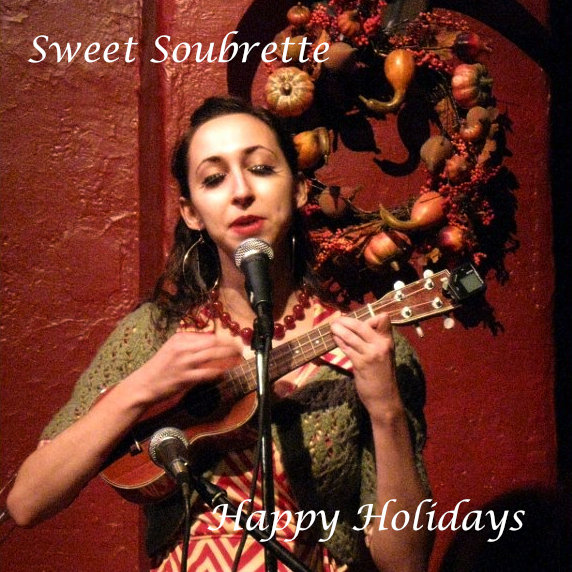
Accom­pa­ny­ing her­self on ukulele as she per­forms under her par­lor rock pseu­do­nym, Sweet Soubrette, Bisker’s sound is both sun­ny and plain­tive. It’s an appro­pri­ate choice for a young bride who parts with her most valu­able asset, in order to give her cher­ished hus­band a “wor­thy” gift:

I want to give you some­thing that I can’t afford,

Let you believe with me we’re real­ly not so poor.

You see that pack­age wait­ing under­neath the tree? 

It’s just a token of how much you mean to me.

(Spoil­er for the hand­ful of peo­ple unfa­mil­iar with this tale: he does the same, thus negat­ing the util­i­ty of both cost­ly presents.)

In an inter­view with Open Cul­ture, Bisker praised the O. Hen­ry story’s iron­ic sym­me­try:

It’s a lit­tle like the death scene in Romeo & Juli­et, but with­out the tragedy. The sto­ry itself still feels sur­pris­ing­ly fresh, despite the peri­od details. It has more humor and sym­pa­thy to it than sen­ti­ment. It sur­pris­es you with real emo­tion. 

The Romeo and Juli­et com­par­i­son is apt. The sto­ry cov­ers a time peri­od so brief that the new­ly­weds’ feel­ings for each oth­er nev­er stray from purest won­der and admi­ra­tion.

Bisker taps into those feel­ings in a way Joni Mitchell’s mean­der­ing, unre­leased take on the same mate­r­i­al did not.

The Squir­rel Nut Zip­pers also took a crack at musi­cal­iz­ing “The Gift of the Magi,” but the sound is more Ozarks than shab­by, urban New York, with back­ground har­monies hint­ing that the young cou­ple may be part of a larg­er sup­port net­work.

Bisker’s song starts, as it ends, with a pair of young, broke lovers who only have eyes for each oth­er.

Let’s not for­get O. Hen­ry’s part­ing words:

The magi, as you know, were wise men—wonderfully wise men—who brought gifts to the Babe in the manger. They invent­ed the art of giv­ing Christ­mas presents. Being wise, their gifts were no doubt wise ones, pos­si­bly bear­ing the priv­i­lege of exchange in case of dupli­ca­tion. And here I have lame­ly relat­ed to you the unevent­ful chron­i­cle of two fool­ish chil­dren in a flat who most unwise­ly sac­ri­ficed for each oth­er the great­est trea­sures of their house. But in a last word to the wise of these days let it be said that of all who give gifts these two were the wis­est. Of all who give and receive gifts, such as they are wis­est. Every­where they are wis­est. They are the magi. 

Enjoy this musi­cal gift, read­ers. The artist has made the track free for down­load­ing, though per­haps you could scratch up a few coins in thanks, with­out pawn­ing your watch or cut­ting your hair.

Read O. Hen­ry’s short sto­ry “The Gift of the Magi” here.

Lis­ten to Ellia Bisker’s “Gift of the Magi,” and four oth­er tracks off of Sweet Soubrette’s name-your-own-price Hap­py Hol­i­days album here.

We were young and broke, but we didn’t care 

You had your pock­et­watch, I had my gold­en hair 

We were just scrap­ing by, wait­ing to make it big 

I was an ingénue, you were just a kid 

But it was Christ­mas eve, didn’t know what to do 

How could I hope to buy some kind of gift for you 

Ain’t got no trust fund hon, ain’t got no sav­ings bond 

Just got my stu­dent loans, the clothes that I’ve got on 

I want to give you some­thing that I can’t afford 

Let you believe with me we’re real­ly not so poor 

You see that pack­age wait­ing under­neath the tree 

It’s just a token of how much you mean to me 

Frank­in­cense (here’s what I wish, what I imag­ine) 

Gold and myrrh (that I could give, give what you are worth) 

Put them in (this is the gift, gift of the magi) 

The manger (it’s not a frac­tion of all that you deserve) 

I used to win­dow shop, I would nev­er tell 

There was a pair of combs made out of tor­toise­shell 

I tried them on one time, put up my long long hair 

If I were rich and famous that’s what I would wear 

You wore your father’s watch, it was a vin­tage piece 

It made you feel like fifty mil­lion bucks at least 

But it was fas­tened with a flim­sy nick­el chain 

You want­ed bet­ter but you said it’s all the same 

I want to give a token to you of my love 

A lit­tle lux­u­ry to keep your spir­its up 

I’ll cut and sell my hair, the only gold I’ve got 

To buy a gold­en chain for your pock­et­watch 

Frank­in­cense (here’s what I wish, what I imag­ine) 

Gold and myrrh (that I could give, give what you are worth) 

Put them in (this is the gift, gift of the magi) 

The manger (it’s not a frac­tion of all that you deserve) 

I can’t for­get the look that flashed across your face 

When I walked into our apart­ment late that day 

And I took off my hat revealed a pix­ie cut 

Gave you a lit­tle box told you to open up 

You pulled out the gold­en chain that lay inside 

Were you about to laugh were you about to cry 

You said I shouldn’t have, because your watch was sold 

So you could buy for me a pret­ty pair of combs

Relat­ed Con­tent:

The Sto­ry of The Pogues’ “Fairy­tale of New York,” the Boozy Bal­lad That Has Become One of the Most Beloved Christ­mas Songs of All Time

Hear Paul McCartney’s Exper­i­men­tal Christ­mas Mix­tape: A Rare & For­got­ten Record­ing from 1965

Stream 22 Hours of Funky, Rock­ing & Swing­ing Christ­mas Albums: From James Brown and John­ny Cash to Christo­pher Lee & The Ven­tures

Ayun Hal­l­i­day is an author, illus­tra­tor, the­ater mak­er and Chief Pri­ma­tol­o­gist of the East Vil­lage Inky zine.  See her onstage in New York City this Jan­u­ary as host of  The­ater of the Apes book-based vari­ety show, Necro­mancers of the Pub­lic Domain. Fol­low her @AyunHalliday.

The Beastie Boys Release a New Freewheeling Memoir, and a Star-Studded 13-Hour Audiobook Featuring Snoop Dogg, Elvis Costello, Bette Midler, John Stewart & Dozens More

Quick way to date your­self: name the first Beast­ie Boys album you bought (or heard). If you some­how got your hands on an orig­i­nal press­ing of their first sin­gle “Cooky Puss”—released in 1981 when the then-four­some was a New York hard­core band—congratulations, you’re a leg­end. If you first bought 1986’s Licensed to Ill—their major label debut and com­ing-out as a crude rap-rock par­o­dy three­some (minus fired drum­mer Kate Schel­len­bach), pre­ci­sion-engi­neered to freak your par­ents out—congrats, you’re old.

In what­ev­er era you dis­cov­ered them—Paul’s Bou­tiqueCheck Your Head, Ill Com­mu­ni­ca­tion… maybe even their last album, 2011’s Hot Sauce Com­mit­tee Part Two—you dis­cov­ered a dif­fer­ent Beast­ies than the pre­vi­ous gen­er­a­tion did. Over the course of their 30-year career, the trio evolved and matured, grew up and got down with new grooves to suit new audi­ences. That’s always been a very good thing.

As Mike D, Ad-Rock, and MCA—three per­son­al­i­ties as dis­tinc­tive as the three Stooges—got bet­ter at what they did, they tran­scend­ed the misog­y­nist, meat­head­ed mid-eight­ies incar­na­tion they came to look back on with embar­rass­ment and apol­o­gy. “We got so caught up with mak­ing fun of that rock-star per­sona,” writes Adam Horowitz (Ad-Rock) in the huge new Beast­ies mem­oir, “that we became that per­sona. Became what we hat­ed.”

Rob Harvil­la calls these very gen­uine moments of self-reflec­tion the best parts of the book. But with so many sto­ries over so many years, so much bril­liant writ­ing, and so many guest appear­ances from celebri­ty Beast­ie Boy fans, that’s a tough call. “Part mem­oir, part pho­to-heavy zine, part fan-appre­ci­a­tion tes­ti­mo­ni­al… and part sin­cere apol­o­gy,” the book seems both fresh and made to order and a ver­i­ta­ble buf­fet table of nos­tal­gia. Or, as Amy Poehler puts it in her intro to a sec­tion on their videos: “These days, their music makes me feel young and old at the same time.”

Behind the silli­ness and sin­cer­i­ty there is mourn­ing for third Beast­ie Adam Yauch (MCA), who died of can­cer in 2012 and whose voice is con­spic­u­ous­ly absent from the book. Yet the two remain­ing mem­bers choose not to dwell. “You brace for the heart­break­ing account of Yauch’s diag­no­sis and death,” Harvil­la writes, “but those details go undis­cussed. ‘Too fuck­ing sad to writ­ing about’ is all Horovitz has to say.’” The pre­vail­ing atmos­phere is cel­e­bra­to­ry, like any good Beast­ie Boys album—this one a par­ty full of adult peers look­ing back, laugh­ing, and winc­ing at their younger selves.

The voic­es on the page are so vivid you can squint and almost hear them (at one point Horovitz describes unwind­ing a cas­sette tape as “pulling 60 min­utes of wet fet­tuc­cine out of a dog’s mouth”). But we don’t have to imag­ine what they sound like. Along with the 571-page hard­bound cin­derblock of a book, the band has released what Rolling Stone hails as the “audio­book of the year,” a “bril­liant 13-hour radio play” in which Mike D and Ad-Rock are joined by a major­ly star-stud­ded cast of guest read­ers includ­ing Snoop Dogg, Kim Gor­don, Steve Busce­mi, Chloë Sevi­gny, Wan­da Sykes, Jon Stew­art, Ben Stiller, and Bette Midler (that’s just the very short list).

New York hip hop leg­ends LL Cool J, Chuck D, and Rev Run (of Run DMC) show up, as does Brook­lyn act­ing leg­end Rosie Perez and non-New York­ers Exene Cer­ven­ka and Elvis Costel­lo. (See the full cast list at Audi­ble.) It’s not a mem­oir, it’s a mix­tape. Hear excerpts from the audio book in the Sound­Cloud clips above and buy it online, or down­load it for free through Audible.com’s 30-day free tri­al pro­gram.  Guar­an­teed, no mat­ter what age you are, to make you feel young and old at the same time.

Relat­ed Con­tent:

Bruce Spring­steen Nar­rates Audio­book Ver­sion of His New Mem­oir (and How to Down­load It for Free)

Hear Kim Gor­don, Son­ic Youth Rock­er, Read From Her New Mem­oir, Girl in a Band

Josh Jones is a writer and musi­cian based in Durham, NC. Fol­low him at @jdmagness.

Meet the Hurdy Gurdy, the Hand-Cranked Medieval Instrument with 80 Moving Parts

Donovan’s “Hur­dy Gur­dy Man” may be the creepi­est song ever writ­ten about an obscure medieval instru­ment (made all the more so by its use in David Fincher’s Zodi­ac), but the Hur­dy Gur­dy did not give his record­ing its omi­nous sound. Those dron­ing notes come from an Indi­an tan­pu­ra. Yet they evoke the title instru­ment, an inge­nious musi­cal inven­tion “set up pri­mar­i­ly for the pur­pose of mak­ing drones,” Case West­ern Reserve’s Col­lege of Art and Sci­ences explains. “In the Mid­dle Ages, it was known in Latin as the organ­istrum and the sym­pho­nia, and in French as the vielle à roue (the vielle with the wheel).”

With a sound pro­duced by a “rosined wood­en wheel, turned by a crank” that set “a num­ber of strings in con­tin­u­ous dron­ing vibra­tion,” the hur­dy gur­dy can, it’s true, give off a bit of a folk hor­ror vibe. From its very ear­ly, maybe 10th or 11th cen­tu­ry ori­gins in litur­gi­cal music, hur­dy gur­dy expert Jim Kendros tells us in the video above, the instru­ment became asso­ci­at­ed with Euro­pean folk music, shrink­ing from a beast played by two peo­ple to more portable dimen­sions, about the size of a large gui­tar and resem­bling a hand-cranked vio­lin with keys for play­ing melodies on cer­tain strings.

Though it grew small­er and more maneu­ver­able, how­ev­er, the instru­ment grew no less com­pli­cat­ed. Kendros calls it “the equiv­a­lent of a medieval space­ship,” with its more than 80 mov­ing parts.

The hur­dy gur­dy, or “wheel fid­dle,” played in the TED Talk above by Car­o­line Phillips looks less like a fid­dle, or a space­ship, and more like a medieval keytar—just one of the many shapes the instru­ment could take. All of them, how­ev­er, had one impor­tant fea­ture in com­mon: the hur­dy gur­dy is “the only musi­cal instru­ment that uses a crank to turn a wheel to rub strings like the bow of a vio­lin to pro­duce music.” His­tor­i­cal­ly, it was used in medieval dance music “because of the unique­ness of the melody com­bined with the acoustic boom box” of its large body. Try not to shake your body, or to shiv­er, when Phillips plays a haunt­ing, dron­ing Basque folk song.

The Hur­dy Gur­dy spread all over Europe, from Britain to France, Spain, Italy, Ger­many, Hun­gary, and Swe­den, where stringed-instru­ment enthu­si­asts The String­dom caught up with vir­tu­oso Hur­dy Gur­dy play­er Johannes Geworkian Hell­man. He tells us how the hur­dy gur­dy and its dron­ing son­ic cousin, the bag­pipes, set off “an ear­ly folk revival” as com­posers took inspi­ra­tion from peas­ant music. The inter­est from medieval upper class­es meant bet­ter luthiers and high­er-qual­i­ty hur­dy gur­dies. Now mod­ern inter­est in the Hur­dy Gur­dy is grow­ing. While it may take two to three years to hand­craft one, “a lot of new instru­ments are get­ting made,” says Hell­man.

Should you doubt that the 1000-year old hur­dy gur­dy can still sound hip, lis­ten to Hell­man play an elec­tri­fied ver­sion in his hur­dy gurdy/accordion duo, Sym­bio, or hur­dy gurdy/dulcimer two-piece, Mai­ja & Johannes. He coax­es from the instru­ment such a range of rhythms and tim­bres that it’s easy to see why it was so immense­ly pop­u­lar for so long. Yet for all its musi­cal appeal, it is a com­plex machine, dif­fi­cult to tune and sub­ject to any num­ber of mechan­i­cal prob­lems. Not for the casu­al ama­teur, the instru­ment still requires a ded­i­cat­ed Hur­dy Gur­dy man or woman to make it sing—a much more com­mon sight than in Dono­van’s day but an exceed­ing­ly rare one com­pared to the many cen­turies of the hur­dy gur­dy’s hey­day. See more hur­dy gur­dies at the Vin­tage News.

Relat­ed Con­tent:

How an 18th-Cen­tu­ry Monk Invent­ed the First Elec­tron­ic Instru­ment

Vis­it an Online Col­lec­tion of 61,761 Musi­cal Instru­ments from Across the World

Watch a Musi­cian Impro­vise on a 500-Year-Old Music Instru­ment, The Car­il­lon

New Order’s “Blue Mon­day” Played with Obso­lete 1930s Instru­ments

Josh Jones is a writer and musi­cian based in Durham, NC. Fol­low him at @jdmagness

Carlos Santana & Tom Morello Launch Online Courses on How to Play the Guitar

Thanks to two new cours­es from Mas­ter Class, you can now learn to play gui­tar from Car­los San­tana and Rage Against the Machine’s Tom Morel­lo. Launched yes­ter­day, Santana’s Mas­ter Class on the Art and Soul of Gui­tar “breaks down his cre­ative process and teach­es you his spir­i­tu­al take on mak­ing music,” cov­er­ing:

  • How to pull from mul­ti­ple musi­cal styles and influ­ences.
  • How to break down music you hear and use it to improve how you play.
  • Ideas for exer­cis­es in the styles of great blues musi­cians.
  • How he mar­ries har­monies with rhyth­mic accents.
  • His approach to writ­ing a melody for gui­tar.
  • How he cre­ates dia­logue between gui­tar parts when he writes songs.
  • Guid­ance for lead­ing a band and build­ing trust with band mem­bers.

For his part, Tom Morel­lo’s course on the elec­tric gui­tar will teach you, in 26 video lessons, the riffs, rhythms, and solos that launched his career. The course cov­ers every­thing from begin­ner music the­o­ry, to learn­ing how to impro­vise, solo and play with speed, to devel­op­ing an appre­ci­a­tion for lyrics and melody. Each course costs $90. For $180, you can get an annu­al pass to the 45 cours­es in Mas­ter­class’ course cat­a­logue.

FYI: If you sign up for a Mas­ter­Class course by click­ing on the affil­i­ate links in this post, Open Cul­ture will receive a small fee that helps sup­port our oper­a­tion.

Relat­ed Con­tent:

Gui­tar Sto­ries: Mark Knopfler on the Six Gui­tars That Shaped His Career

David Gilmour Talks About the Mys­ter­ies of His Famous Gui­tar Tone

A Brief His­to­ry of Gui­tar Dis­tor­tion: From Ear­ly Exper­i­ments to Hap­py Acci­dents to Clas­sic Effects Ped­als

Two Gui­tar Effects That Rev­o­lu­tion­ized Rock: The Inven­tion of the Wah-Wah & Fuzz Ped­als

The Ency­clo­pe­dia Of Alter­nate Gui­tar Tun­ings

David Byrne Curates a Playlist of Great Protest Songs Written Over the Past 60 Years: Stream Them Online

When you hear the words “protest song,” what do you see? Is it a folkie like Bob Dylan or Joan Baez deliv­er­ing songs about injus­tice? Is it an earnest young thing with a gui­tar? Is it trapped in 1960s amber, while time has moved on to more ambi­gu­i­ty, more nihilism, more solip­sism?

British writers–and may we add ama­teur folksingers–Jonathan Lux­moore and Chris­tine Ellis made this lament over two years ago in the pages of The Guardian, in an opin­ion piece enti­tled, “Not talkin’ bout a rev­o­lu­tion: where are all the protest songs?” Here they blame the imme­di­a­cy of social media, the rise of aspi­ra­tional hip hop, and the decline of rad­i­cal pol­i­tics. They end, pre­scient­ly, with a Jere­my Cor­byn-shaped hope for change. Well, look where we are now. Things devel­oped rather quick­ly, did they not?

(And as a side note, I would sug­gest the 1980s as a way more protest-filled music decade than the 1960s. Because of the self-aggran­dize­ment of 1960s cura­tors, they claim more than they did. But near­ly every pop, rock, r’n’b, and hip hop act of the ‘80s has at least one polit­i­cal song in its discog­ra­phy.)

Enter David Byrne, whose mis­sion apart from his day job as a musi­cian is to bring hope to the mass­es with a deter­mined opti­mism. He’s here to say that the protest song nev­er went away, only our def­i­n­i­tion of it. And he’s brought the receipts, or rather the playlist above, to prove his point:

…in fact, they now come from all direc­tions in every pos­si­ble genre—country songs, giant pop hits, hip hop, clas­sic rock, indie and folk. Yes, maybe there weren’t many songs ques­tion­ing the wis­dom of invad­ing Iraq, but almost every oth­er issue has been addressed.

Stretch­ing over six decades, the playlist demon­strates the var­i­ous forms protest can take, from describ­ing racial vio­lence (Bil­lie Holiday’s “Strange Fruit” to Janelle Monae’s “Hell You Talm­bout”) to bemoan­ing eco­nom­ic injus­tice (The Spe­cials’ “Ghost Town”) and rail­ing against war and con­flict (U2’s “Sun­day Bloody Sun­day”, Edwin Starr’s “War”). Some­times declar­ing the pos­i­tive and gain­ing a voice is enough of a protest: you could argue that James Brown’s “Say It Loud (I’m Black and I’m Proud)” did more for equal­i­ty than any song about racism. Biki­ni Kills’ “Rebel Girl” does sim­i­lar things for third-wave fem­i­nism.

But Byrne wise­ly gives voice to those who feel they’re swim­ming against any resis­tance tide:

I’ve even includ­ed a few songs that “protest the protests.” Buck Owens, the clas­sic coun­try artist from Bak­ers­field, for exam­ple, has two songs here. “Red­necks, White Socks and Blue Rib­bon Beer,” is a cel­e­bra­tion of Amer­i­cans who feel they are unno­ticed, left behind. One might call it a pop­ulist anthem, but I think the ref­er­ence to white socks is inten­tion­al­ly meant to be funny—in effect, it says: “we know who we are, we know how uncool white socks are.”

Look, it’s easy to believe that songs “changed the world” when they are eas­i­ly acces­si­ble to hear decades lat­er but the boots-on-the-ground march­es and rev­o­lu­tion­ary acts from which they sprang are now just pho­tographs, film reels, and fog­gy mem­o­ries. But who can deny the gut punch of this year’s “This Is Amer­i­ca” from Child­ish Gam­bi­no, the con­tin­ued excel­lence of Killer Mike and/or Run the Jew­els, and any num­ber of songs that doc­u­ment our out­rage? The songs of protest con­tin­ue as long as there is injus­tice.

And in the case of David Byrne, cov­er­ing a mod­ern protest song and adding to its list of names, is what can keep an idea, a mem­o­ry, and a feel­ing alive for a new audi­ence. Here he is at the encore of his cur­rent tour, cov­er­ing Janelle Monae’s “Hell You Talm­bout,” a memo­r­i­al to all the black lives killed by law enforce­ment.

“Here was a protest song that doesn’t hec­tor or preach at us,” he said in an arti­cle for the Asso­ci­at­ed Press. “It sim­ply asks us to remem­ber and acknowl­edge these lives that have been lost, lives that were tak­en from us through injus­tice, though the song leaves that for the lis­ten­er to put togeth­er. I love a drum line, so that aspect of the song sucked me in imme­di­ate­ly as well. The song musi­cal­ly is a cel­e­bra­tion and lyri­cal­ly a eulo­gy. Beau­ti­ful.”

He also wise­ly asked per­mis­sion to cov­er such a recent song, espe­cial­ly when it’s an old­er white man lend­ing his voice to it. But Mon­ae gave her bless­ing:

“I thought that was so kind of him and of course I said yes. The song’s mes­sage and names men­tioned need to be heard by every audi­ence.”

Relat­ed Con­tent:

When South Africa Banned Pink Floyd’s The Wall After Stu­dents Chant­ed “We Don’t Need No Edu­ca­tion” to Protest the Apartheid School Sys­tem (1980)

Tom Waits Releas­es a Time­ly Cov­er of the Ital­ian Anti-Fas­cist Anthem “Bel­la Ciao,” His First New Song in Two Years

Hear a 4 Hour Playlist of Great Protest Songs: Bob Dylan, Nina Simone, Bob Mar­ley, Pub­lic Ene­my, Bil­ly Bragg & More

David Byrne Cre­ates a Playlist of Eclec­tic Music for the Hol­i­days: Stream It Free Online

Ted Mills is a free­lance writer on the arts who cur­rent­ly hosts the artist inter­view-based FunkZone Pod­cast and is the pro­duc­er of KCR­W’s Curi­ous Coast. You can also fol­low him on Twit­ter at @tedmills, read his oth­er arts writ­ing at tedmills.com and/or watch his films here.

« Go BackMore in this category... »
Quantcast