Lynda Barry’s Illustrated Syllabus & Homework Assignments from Her New UW-Madison Course, “Making Comics”

barrysyll1

barysyll2

Car­toon­ist turned edu­ca­tor Lyn­da Bar­ry is again per­mit­ting the world at large to freely audit one of her fas­ci­nat­ing Uni­ver­si­ty of Wis­con­sin-Madi­son class­es via her Tum­blr. (To get to the start of the class, click here and then scroll down the page until you reach the syl­labus, then start work­ing your way back­wards.)

The top­ic this fall is “Graph­ic Vices, Graph­ic Virtues: Mak­ing Comics,” a sub­ject with which Bar­ry is inti­mate­ly acquaint­ed. In the professor’s own words, this class is “a(n aca­d­e­m­i­cal­ly rig­or­ous) blast!”

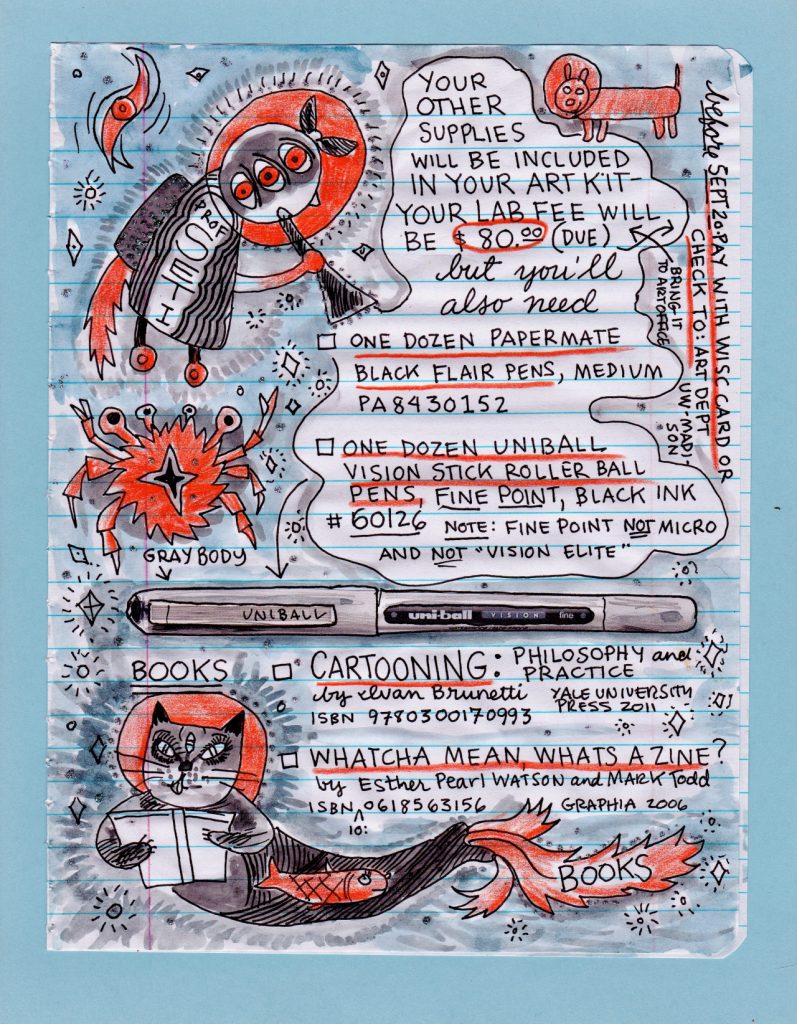
As in pre­vi­ous class­es, the syl­labus, above, spells out a high­ly spe­cial­ized set of required sup­plies, includ­ing a num­ber of items rarely called for at the col­lege lev­el.

barrysyll4


It’s become a time hon­ored tra­di­tion for Barry’s stu­dents to adopt new names by which to refer to each oth­er in-class, some­thing they’ll enjoy hear­ing spo­ken aloud. For “Mak­ing Comics,” Bar­ry is fly­ing under the han­dle Pro­fes­sor SETI (as in “search for extrater­res­tri­al intel­li­gence”), telling the class that “images are the ETI in SETI.”

The stu­dents have respond­ed with the fol­low­ing han­dles: Chef Boyardee, Gin­ger, Lois Lane, Rosie the Riv­et­er, Regi­na Pha­lange, Ara­bel­la, Snoopy, Skeeter, Tig­ger, Arya Stark, Nala, Nos­tal­gia, Aki­ra, Lapus Lazuli, The Buffalo,Mr. Novem­ber, The Short Giraffe, Nic­ki Minaj, Neko, Vin­cent Brooks, Reg­u­lar Sized Rudy, and Zef.

(Sounds like a rough and ready crew. What name would you choose, and why?)

LBarry 4

As usu­al, Bar­ry draws inspi­ra­tion from the dizzy­ing boun­ty of images avail­able on the net, bom­bard­ing her pupils with find­ings such as the lobed teeth of the crab-eater seal, above.

Sci­ence and music remain pet sub­jects–Afro­fu­tur­ist band­leader Sun Ra serves as class ora­cle this go round.

LBarry 5

LBarry 6

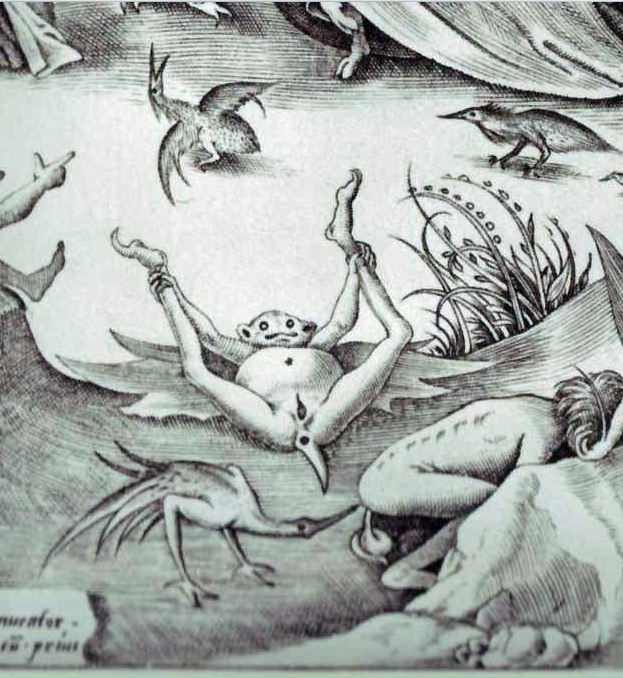
Pro­fes­sor SETI keeps the “graph­ic vice” of the class’ offi­cial title front and cen­ter with assign­ments per­tain­ing to the 7 dead­ly sins, ask­ing stu­dents to exam­ine mod­ern equiv­a­lents of the hor­rors depict­ed by Heron­imus Bosch above and 16th-cen­tu­ry engraver Pieter van der Hey­den, below.

LBarry 7

What to do with all of these images? Draw them, of course! As Bar­ry tells her stu­dents:

Draw­ing is a lan­guage. It’s hard to under­stand what that real­ly means until you’ve ‘spo­ken’ and ‘lis­tened’ to it enough in a reli­able reg­u­lar way like the reli­able reg­u­lar way we will have togeth­er this semes­ter.

That’s an impor­tant def­i­n­i­tion for those lack­ing con­fi­dence in their draw­ing abil­i­ties to keep in mind. Bar­ry may revere the inky blacks of comics leg­end Jaime Her­nan­dez, but she’s also a devo­tee of the wild, unbri­dled line that may be a beginner’s truest expres­sion. (Stick fig­ures, how­ev­er, “don’t cut it.”) To her way of think­ing, every­one is capa­ble of com­mu­ni­cat­ing flu­ent­ly in visu­al lan­guage. The cur­rent crop of stu­dent work reveals a range of train­ing and nat­ur­al tal­ent, but all are wor­thy when viewed through Barry’s lens.

The teacher’s phi­los­o­phy is the bind­ing ele­ment here, but don’t fret if you are unable to take the class in per­son:

We rarely speak direct­ly about the work we do in our class though we look at it togeth­er. We stare at it and some­times it makes us laugh or we silent­ly point out some part of it to the class­mate beside us.  To be able to speak this unspo­ken lan­guage we need to prac­tice see­ing (hear­ing) the way it talks.

LBarry 9

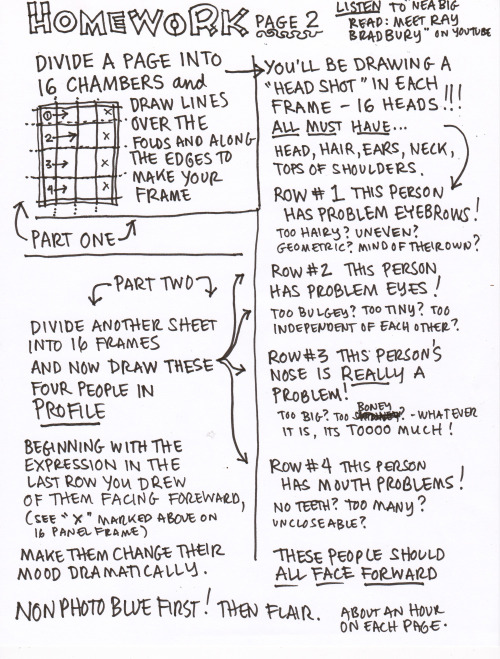
That ear­li­er-allud­ed-to rig­or is no joke. Dai­ly diary comics, 3 minute self por­traits on index cards, pages fold­ed to yield 16 frames in need of fill­ing, and found images copied while lis­ten­ing to pre­scribed music, lec­tures, and read­ings are a con­stant, non-nego­tiable expec­ta­tion of all par­tic­i­pants. Her method­ol­o­gy may sound goose‑y but it’s far from loose‑y.

In oth­er words, if you want to play along, pre­pare to set aside a large chunk of time to com­plete her week­ly assign­ments with the vig­or demand­ed of non-vir­tu­al stu­dents.

LBarry 10

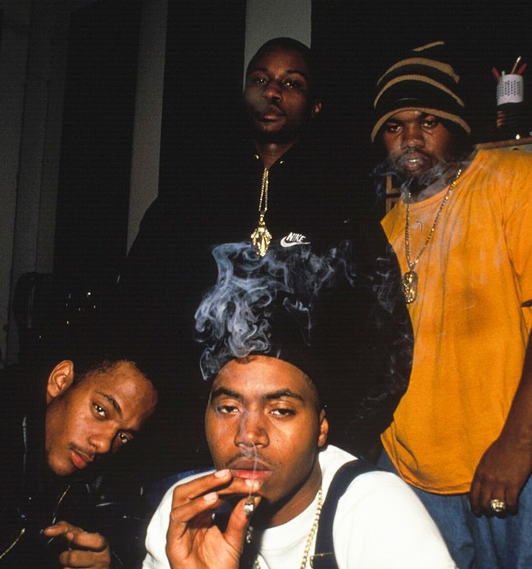
Those who aren’t able to com­mit to going the dis­tance at this time can recon­struct the class lat­er.  Bar­ry leaves both the assign­ments and exam­ples of stu­dent work on her Tum­blr for per­pe­tu­ity. (You can see an exam­ple here.) For now, try com­plet­ing the 20 minute exer­cise using the assigned image above, or by choos­ing from one of her “extra cred­it” images, below:

Set timer for three min­utes and begin this draw­ing using a yel­low col­or pen­cil. Try to draw as much of the draw­ing as you can in three min­utes. You can draw fast, and in a messy way, The impor­tant thing is to get as much cov­ered as you can in three min­utes. You can col­or things in if you like. Look for the dark­est areas of the pho­to and col­or those in.

Set a timer for anoth­er three min­utes and using your non-dom­i­nant hand, draw with orange or col­or pen­cil to draw the entire draw­ing again, draw­ing right on top of the first draw­ing lay­er. The lines don’t have to match or be right on top of each oth­er, you can change your mind as you add this lay­er. You can move a bit to the right rather than try to draw direct­ly onto the first set of lines.

Set a timer for anoth­er 3 min­utes and use a red pen­cil and draw it again, using you dom­i­nant hand, adding anoth­er lay­er to the draw­ing. Again, you don’t have to fol­low your orig­i­nal lines. Just draw on top of them.

Set a timer for anoth­er 3 min­utes and use a dark green pen­cil to draw the entire draw­ing one more time on top of all the oth­ers. 

Set a timer for 8 min­utes and use a dark blue pen­cil to draw it one more time.

Spend the last 8 min­utes ink­ing the image in with your uni­ball pen. Remem­ber that sol­id black is the very last thing you’d do giv­en your time lim­it. You want to make sure to draw all the parts of the pic­ture first.

LBarry 11

LBarry 12

LBarry 14

LBarry 15

LBarry 16

LBarry 17

Relat­ed Con­tent:

Car­toon­ist Lyn­da Bar­ry Shows You How to Draw Bat­man in Her UW-Madi­son Course, “Mak­ing Comics”

Lyn­da Barry’s Won­der­ful­ly Illus­trat­ed Syl­labus & Home­work Assign­ments from Her UW-Madi­son Class, “The Unthink­able Mind”

Watch Lyn­da Barry’s Grad­u­a­tion Speech; Give a Shout Out to the Teach­ers Who Changed Your Life

1,700 Free Online Cours­es from Top Uni­ver­si­ties

Ayun Hal­l­i­day is an author, illus­tra­tor, and Chief Pri­ma­tol­o­gist of the East Vil­lage Inky zine. Fol­low her @AyunHalliday

Learn to Code with Star Wars: The Force Awakens and Minecraft

Code.org, a non-prof­it ded­i­cat­ed to expand­ing access to com­put­er sci­ence, has cre­at­ed a fun way for stu­dents to learn the basics of cod­ing. Team­ing up with Dis­ney and Lucas­film, they’ve launched Star Wars: Build­ing a Galaxy with Code, a tuto­r­i­al designed to teach stu­dents to write JavaScript as they guide Star Wars char­ac­ters through a fun mis­sion. The mod­ule is designed for kids 11 and up. (Adults, that could def­i­nite­ly apply to you.) There’s also a sep­a­rate begin­ner’s tuto­r­i­al for kids between the ages of 6 and 10.

If Star Wars does­n’t hold appeal, then you can always learn to code through the ever-pop­u­lar video game Minecraft. The Minecraft tuto­r­i­al, cre­at­ed in part­ner­ship with Microsoft, got some pret­ty nice reviews over on Moth­er­board.

More Code.org tuto­ri­als can be found here. And you’ll find oth­er intro­duc­to­ry cod­ing cours­es (some designed with an old­er demo­graph­ic in mind) in the Relat­eds below.

Relat­ed Con­tent:

Harvard’s Free Com­put­er Sci­ence Course Teach­es You to Code in 12 Weeks

Codecademy’s Free Cours­es Democ­ra­tize Com­put­er Pro­gram­ming

Free Online Com­put­er Sci­ence Cours­es

by | Permalink | Make a Comment ( 2 ) |

Citizen Maths: A Free Online Course That Teaches Adults the Math They Missed in High School

Many peo­ple still have a major fear of math­e­mat­ics, hav­ing suf­fered through school and not real­ly hav­ing been in the right frame of mind to grasp con­cepts that we’ve been told will come in handy in our future work­ing lives. When Britons get to the age of 16, many can choose to leave school, escap­ing the ter­ror of math (or, as they say, maths).

But we shouldn’t live in fear, so along comes Cit­i­zen Maths, a UK-based free online course that pur­ports to help adults catch up with Lev­el 2 math (aka what a 16-year-old should know) with­out get­ting hit with a ruler or a spit wad. The course is fund­ed by the UFI Char­i­ta­ble Trust, which focus­es on pro­vid­ing free edu­ca­tion for adults.

The Cit­i­zen Maths course cur­rent­ly con­sists of three units—Proportion, Uncer­tain­ty, and Rep­re­sen­ta­tion. Addi­tion­al sec­tions on Pat­tern and Mea­sure­ments will soon fol­low. All units come with videos and tests that take about an hour of the viewer’s time. As the nar­ra­tor says, you can “learn in safe­ty, with­out fear of being told off or exposed.” The full course takes, on aver­age, about 20 hours.

And the tuto­ri­als bring in the real world, not just the abstract. Ratios and odds are expe­ri­enced through roulette, horse rac­ing, and play­ing dice. Under­stand­ing insur­ance comes into the tuto­r­i­al on mak­ing deci­sions. Mod­el­ing is explained by try­ing to under­stand weath­er pat­terns. And pro­por­tion is explained through bak­ing recipes and mak­ing cock­tails.

You will need a Google Account to get start­ed, though, for those with­out one, there is a sim­ple guide to get you start­edThe tuto­ri­als fea­ture YouTube instruc­tion along with an embed­ded app called Scratch.

As of this post, three of the five sec­tions are avail­able, with the com­plete course due up by next year. You can find more advanced Math cours­es in our col­lec­tion of Free Online Math Cours­es.

via Boing­Bo­ing

Relat­ed Con­tent:

Free Online Math Cours­es

Free Math Text­books

The Unex­pect­ed Math Behind Van Gogh’s “Star­ry Night”

Ted Mills is a free­lance writer on the arts who cur­rent­ly hosts the FunkZone Pod­cast. You can also fol­low him on Twit­ter at @tedmills, read his oth­er arts writ­ing at tedmills.com and/or watch his films here.

Free Course: An Introduction to the Art of the Italian Renaissance

In 43 lec­tures, Dr. Vida Hull offers an intro­duc­tion to the art of the Ital­ian Renais­sance. Packed with slides of great paint­ings, the lec­tures (all stream­able above or avail­able indi­vid­u­al­ly here), cov­er painters like Masac­cio and Bot­ti­cel­liTit­ian, da Vin­ci, RaphaelMichelan­ge­lo and more. Hull, who taught the course at East Ten­nessee State, earned her Ph.D. at Bryn Mawr Col­lege. Her course has been added to the Art His­to­ry sec­tion of our col­lec­tion, 1,700 Free Online Cours­es from Top Uni­ver­si­ties.

If you would like to sign up for Open Culture’s free email newslet­ter, please find it here. It’s a great way to see our new posts, all bun­dled in one email, each day.

If you would like to sup­port the mis­sion of Open Cul­ture, con­sid­er mak­ing a dona­tion to our site. It’s hard to rely 100% on ads, and your con­tri­bu­tions will help us con­tin­ue pro­vid­ing the best free cul­tur­al and edu­ca­tion­al mate­ri­als to learn­ers every­where. You can con­tribute through Pay­Pal, Patre­on, and Ven­mo (@openculture). Thanks!

Relat­ed Con­tent:

Dis­cov­er 100 Great Works of Art with Videos Cre­at­ed by Khan Acad­e­my & Google Art Project

The British Library Puts 1,000,000 Images into the Pub­lic Domain, Mak­ing Them Free to Reuse & Remix

The Rijksmu­se­um Puts 125,000 Dutch Mas­ter­pieces Online, and Lets You Remix Its Art

The His­to­ry of West­ern Archi­tec­ture: From Ancient Greece to Roco­co (A Free Online Course)

by | Permalink | Make a Comment ( 12 ) |

Get a Free Subscription to the Beta Version of The Great Courses Plus (Space Limited)

We’ve told you about the Great Cours­es Plus (now called Won­dri­um) before–a new video sub­scrip­tion ser­vice that lets you watch free cours­es (about 8,000 lec­tures in total) across a wide range of sub­jects, all taught by some of the best lec­tur­ers in the coun­try. The top­ics cov­er every­thing from His­to­ry, Phi­los­o­phy, Lit­er­a­ture, and Eco­nom­ics, to Math, Sci­ence, Pro­fes­sion­al Devel­op­ment, Cook­ing, and Pho­tog­ra­phy. And you can binge-watch entire col­lege cours­es in a mat­ter of days by watch­ing videos on your TV, tablet, lap­top and smart phone, with the help of apps designed for Apple, Google Play, Kin­dle Fire, and Roku.

Inter­est­ed in try­ing out this ser­vice? Right now, the Great Cours­es Plus/Won­dri­um is offer­ing a spe­cial deal for Open Cul­ture read­ers. If you click here, and sign up for a free tri­al, you can use this ser­vice for 30 days … for free. And then, if you would like, you can con­tin­ue to sub­scribe and pay their nor­mal prices. If you have time on your hands, this is a great way to keep your mind engaged and stream what PC Mag­a­zine has called “an excel­lent library of col­lege-lev­el lec­tures.”

Note: The Great Cours­es is a part­ner with Open Cul­ture. So if you sign up for a free tri­al, it ben­e­fits not just you and Great Cours­es Plus. It ben­e­fits Open Cul­ture too. So con­sid­er it win-win-win.

by | Permalink | Make a Comment ( 13 ) |

Take a Free Course on Film Noir; Then Watch Oodles of Free Noir Films Online

tcm course

Cinephiles, if you have some spare time in the com­ing months and feel like watch­ing, say, over 100 film noir movies from the Turn­er Clas­sic Movie (TCM) vaults, then you will be delight­ed with Sum­mer of Dark­ness, which will devote every Fri­day, from June through July, to 24 hours of noir clas­sics and rar­i­ties. And sup­pose you’d like a reward, like a cer­tifi­cate that proves you not only watched those movies, but prop­er­ly stud­ied them? Well TCM has that cov­ered too, offer­ing a free nine-week course in “The Case of Film Noir” to run con­cur­rent with the series. It’s free to sign up, and the course runs June 1 — August 4. Says TCM:

This is the deep­est cat­a­log of film noir ever pre­sent­ed by the net­work (and per­haps any net­work), and pro­vides an unprece­dent­ed oppor­tu­ni­ty for those inter­est­ed in learn­ing more to watch over 100 clas­sic movies as they inves­ti­gate “The Case of Film Noir.”

The course is being taught by Richard L. Edwards, Ph.D. who co-hosts the Out of the Past: Inves­ti­gat­ing Film Noir pod­cast and also teach­es at Ball State Uni­ver­si­ty in Muncie, Indi­anapo­lis.

For those who don’t have TCM, or even cable, don’t wor­ry. The net­work promis­es to post links to online pub­lic domain films. Or, bet­ter yet, you could jump right into our col­lec­tion of 60 Free Noir Films Online, which fea­tures pub­lic domain clas­sics by Orson Welles, Fritz Lang, John Hus­ton, and many more.

Have a hazy, dan­ger­ous sum­mer and watch out for femme fatales!

via Fla­vor­wire

Relat­ed Content:

60 Free Film Noir Movies

The 5 Essen­tial Rules of Film Noir

25 Noir Films That Will Stand the Test of Time: A List by “Noir­chael­o­gist” Eddie Muller

Watch Scar­let Street, Fritz Lang’s Cen­sored Noir Film, Star­ring the Great Edward G. Robin­son (1945)

Kansas City Con­fi­den­tial: Did This 1952 Noir Film Inspire Quentin Tarantino’s Reser­voir Dogs?

Ted Mills is a free­lance writer on the arts who cur­rent­ly hosts the FunkZone Pod­cast. You can also fol­low him on Twit­ter at @tedmills, read his oth­er arts writ­ing at tedmills.com and/or watch his films here.

A Vintage Wine Course (UC Davis, 1973)

Rum­mage through our col­lec­tion of 1700 Free Online Cours­es, and you’ll find many recent­ly-record­ed cours­es from great uni­ver­si­ties, cov­er­ing top­ics like “How Han­ni­bal Crossed the Alps,” “Exis­ten­tial­ism in Lit­er­a­ture & Film,” and “Intro­duc­tion to Com­put­er Cod­ing.” But you’ll also find on our list of Free Online Cours­es some vin­tage lec­tures record­ed dur­ing gen­er­a­tions past.

Take for exam­ple Wal­ter Kauf­man­n’s Clas­sic Lec­tures on Niet­zsche, Kierkegaard and Sartre (1960), which sit nice­ly along­side Michel Fou­cault’s UC Berke­ley Lec­tures on Truth, Dis­course & The Self (cir­ca 1980). Or per­haps even Leo Strauss’ numer­ous polit­i­cal phi­los­o­phy cours­es record­ed at The Uni­ver­si­ty of Chica­go between 1959 and 1973. You can also dig into “Quan­tum Physics Made Rel­a­tive­ly Sim­ple,” a Mini Course from Nobel Prize-Win­ning Physi­cist Hans Bethe. Endear­ing­ly, Bethe pre­sent­ed the course at a retire­ment home in 1999 when he, him­self, was pret­ty long in the tooth.

Then, above, you can watch, UC Davis Pro­fes­sor May­nard Amer­ine present a course on Wine (YouTubeiTunes). It’s a vin­tage 1973.

Cal­i­for­nia is wine coun­try, and the place to study wine there is UC Davis. As for Pro­fes­sor Amer­ine, he was wide­ly con­sid­ered “the father of Amer­i­can wine,” an influ­en­tial sci­en­tist who taught gen­er­a­tions of wine­mak­ers and stu­dents how to eval­u­ate wine accord­ing to appear­ance, fla­vor and aro­ma. As he lec­tures on Cal­i­forn­ian, Ital­ian, and French wines, you can almost see the US com­ing into its own as a respectable wine-drink­ing, wine-pro­duc­ing nation.

Find Pro­fes­sor Amer­ine’s “Wine” course in our col­lec­tion, 1,700 Free Online Cours­es from Top Uni­ver­si­ties.

If you would like to sign up for Open Culture’s free email newslet­ter, please find it here. It’s a great way to see our new posts, all bun­dled in one email, each day.

If you would like to sup­port the mis­sion of Open Cul­ture, con­sid­er mak­ing a dona­tion to our site. It’s hard to rely 100% on ads, and your con­tri­bu­tions will help us con­tin­ue pro­vid­ing the best free cul­tur­al and edu­ca­tion­al mate­ri­als to learn­ers every­where. You can con­tribute through Pay­Pal, Patre­on, and Ven­mo (@openculture). Thanks!

Relat­ed Con­tent:

Harvard’s Free Com­put­er Sci­ence Course Teach­es You to Code in 12 Weeks

Take First-Class Phi­los­o­phy Cours­es Any­where with Free Oxford Pod­casts

Down­load 55 Free Online Lit­er­a­ture Cours­es: From Dante and Mil­ton to Ker­ouac and Tolkien

by | Permalink | Make a Comment ( 3 ) |

The Keys to Happiness: The Emerging Science and the Upcoming MOOC by Raj Raghunathan

Psy­chol­o­gy has made many advances in the past few decades, notably in cog­ni­tive sci­ence, neu­ro­science, and behav­ioral psy­chol­o­gy. A major new focus area in psy­chol­o­gy that draws upon these dis­ci­plines start­ed in 1998 when Mar­tin Selig­man, then pres­i­dent of the Amer­i­can Psy­cho­log­i­cal Asso­ci­a­tion, called on his col­leagues to start study­ing hap­pi­ness, rather than ill­ness­es, the tra­di­tion­al focus of psy­chol­o­gy. The result was an explo­sion of research, aca­d­e­m­ic depart­ments, and pop­u­lar books and the cre­ation of a new field of ‘pos­i­tive psy­chol­o­gy’. It is this field that Dr. Raj Raghu­nathan stud­ies, and he pas­sion­ate­ly teach­es his stu­dents about the sci­ence of hap­pi­ness at the McCombs School of Busi­ness  at the Uni­ver­si­ty of Texas at Austin. He also writes a blog col­umn for Psy­chol­o­gy Today. This sum­mer, Raghu­nathan, who is cur­rent­ly vis­it­ing pro­fes­sor at the Indi­an School of Busi­ness, will be offer­ing his MOOC, A Life of Hap­pi­ness and Ful­fill­ment, to the pub­lic on the Cours­era plat­form.

It may be sur­pris­ing that a course on hap­pi­ness is being offered in busi­ness school, the sup­posed fac­to­ry of bud­ding ruth­less cap­i­tal­ists. How­ev­er, times are chang­ing, and enlight­ened busi­ness schools can be a good set­ting to think about the social and eco­nom­ic means and ends in our cur­rent soci­ety. In fact, it was a busi­ness con­text which steered Raghu­nathan towards study­ing hap­pi­ness in the first place:

When I vis­it­ed India in 2007 I met up with my class­mates from 15 years ago and I dis­cov­ered two things. One, there’s very lit­tle cor­re­la­tion between aca­d­e­m­ic suc­cess and career suc­cess. The peo­ple who were at the top weren’t nec­es­sar­i­ly the ones who were doing well in their careers, which is, of course, quite well known in the research. But sec­ond, there was an even small­er cor­re­la­tion between career suc­cess and life suc­cess. The guys who were real­ly suc­cess­ful weren’t able to main­tain a con­ver­sa­tion with me and weren’t able to be present, they were con­stant­ly dis­tract­ed. They had bags under their eyes, had put on weight, and it was clear that they weren’t very hap­py.

Fast for­ward and you find Raghu­nathan, after obtain­ing a PhD at New York Uni­ver­si­ty, a tenured fac­ul­ty mem­ber at the McCombs School of Busi­ness, a top-20 U.S. busi­ness school, teach­ing stu­dents about hap­pi­ness. There are only a few tenure-track pro­fes­sors in the coun­try teach­ing a whole course on hap­pi­ness in U.S. busi­ness schools, so Raghu­nathan has been a trail­blaz­er. It is also a great tes­ta­ment to the Indi­an School of Busi­ness, a pre­mier busi­ness pro­gram in a rapid­ly indus­tri­al­iz­ing coun­try, that this sub­ject was cho­sen to be their first MOOC offer­ing in its new part­ner­ship with Cours­era.

Hap­pi­ness Sci­ence vs. the Wis­dom Lit­er­a­ture

As peo­ple have been con­cerned with hap­pi­ness from before the dawn of civ­i­liza­tion, we’ve had many sources to turn to with regard to hap­pi­ness: intu­ition, tra­di­tion, rea­son, but most­ly, reli­gious and spir­i­tu­al wis­dom. Now sci­ence has recent­ly added a new dimen­sion to our under­stand­ing. We can see, for exam­ple, which parts of the brain are active dur­ing dif­fer­ent emo­tion­al states, and under­stand bet­ter the role of neu­ro­trans­mit­ters, such as sero­tonin and dopamine. One very con­ve­nient, prac­ti­cal result for psy­chol­o­gy is that these changes in brain states are large­ly cor­re­lat­ed with self-report­ed answers of how hap­py peo­ple feel—so hap­pi­ness is fair­ly straight­for­ward to mea­sure (you can take a 20-minute hap­pi­ness test here if you are inter­est­ed). So what have we found out about hap­pi­ness? It turns out that many of the find­ings sup­port the religious/spiritual view­points. For exam­ple:

  • Mon­ey can­not buy you hap­pi­ness, unless you’re poor. Robust sur­veys among a broad array of peo­ple across coun­tries indi­cate that beyond a cer­tain thresh­old, peo­ple do not report being hap­pi­er. Specif­i­cal­ly, in the U.S., Daniel Kah­ne­man and Angus Deaton found through a robust sur­vey of 450,000 Amer­i­cans that once peo­ple reach an income thresh­old of around $75,000 per year, they tend not to be any hap­pi­er.
  •  Car­ing for oth­ers is one of the most impor­tant things you can do. Anoth­er spe­cif­ic find­ing that the sci­ence brings us is the val­ue of altru­ism. Stud­ies have shown, for exam­ple, that when giv­en a small sum of mon­ey, the peo­ple who give it to oth­ers, rather than spend­ing it on them­selves, actu­al­ly report being hap­pi­er. Raghu­nathan also adds that being altru­is­tic does­n’t have to mean being bor­ing, and he has his class­es exper­i­ment with fun ways to be altru­is­tic.

These find­ings are sim­i­lar to the teach­ings of many wis­dom tra­di­tions, but they also give more specifics and pro­vide insight into the under­ly­ing mech­a­nisms involved. These can result in prac­ti­cal sug­ges­tions and tips for man­ag­ing our­selves bet­ter through set­ting up help­ful habits, mind­sets, and trig­gers. But a puz­zling ques­tion has emerged: why do we often not pur­sue what we sup­pos­ed­ly want?

The Fun­da­men­tal Hap­pi­ness Para­dox

There is a phe­nom­e­non that most of us will prob­a­bly rec­og­nize, which Raghu­nathan calls the Fun­da­men­tal Hap­pi­ness Para­dox: we want to achieve hap­pi­ness, but often pur­sue things that clear­ly don’t lead to it. Raghu­nathan elab­o­rates:

On the one hand peo­ple think hap­pi­ness is very, very impor­tant to them, so there­fore you would think that they ought to be mak­ing deci­sions are con­sis­tent with that, but when we observe their deci­sions, a good 50–60 per­cent of the time they are sac­ri­fic­ing hap­pi­ness for the sake of oth­er things as they go about their dai­ly lives, in lit­tle small ways, and even in big ways.

The prob­lem is that we pur­sue hap­pi­ness through var­i­ous means, such as mon­ey, sta­tus, esteem, or health, but we some­times over­ly fix­ate on these means rather than the ends. As a soci­ety we do rec­og­nize this on some level—think of all the movies and tele­vi­sion shows that end with the pro­tag­o­nists real­iz­ing what’s real­ly impor­tant to them. Yet, it tells you some­thing if we keep hav­ing to remind our­selves about this con­stant­ly and repet­i­tive­ly in our cul­tur­al sto­ries. Psy­chol­o­gy has already explained why we eat the last few Chee­tos in a bowl, and in the future may help explain this mys­tery of why we don’t pur­sue our hap­pi­ness as direct­ly as we could.

Hap­pi­ness Comes in Threes

The Three Pil­lars of Hap­pi­ness

So what should we do to pur­sue hap­pi­ness? Raghu­nathan groups the research find­ings into three main pil­lars:

  1. Pur­sue mean­ing­ful work – Try to spend your ener­gy in ways that are mean­ing­ful to you, at work or at home. Mihaly Csik­szent­mi­haly has pop­u­lar­ized the notion of “flow”, those times when we are doing some­thing that so ful­ly absorbs our atten­tion that we lose track of time (I guess I must be in “flow” when­ev­er I’m watch­ing Grey’s Anato­my…). From a career stand­point, Raghu­nathan rec­om­mends mak­ing pas­sion a cri­te­ri­on for choos­ing your work: “you spend so much time at work you might as well make that a mean­ing­ful thing that you are doing in your life”. Per­haps this is not fea­si­ble for every­one at every point in their career, but it is sure­ly a sound guid­ing prin­ci­ple, as it has been echoed by Steve Jobs, Thore­au, Glo­ria Este­fan, and oth­ers.
  2. Main­tain close rela­tion­ships – Most peo­ple, upon reflec­tion, con­sid­er the rela­tion­ships they’ve devel­oped with fam­i­ly, friends, col­leagues, and oth­ers to be the most mean­ing­ful part of their lives. How­ev­er, we often don’t place a high pri­or­i­ty on build­ing or main­tain­ing these. Rela­tion­ships are like invest­ments that require time and atten­tion, and they are bonds that rep­re­sent com­mit­ments and expec­ta­tions, yet we are quick to down­play or dis­miss them. Social sci­ence offers tips and prac­ti­cal sug­ges­tions for improv­ing rela­tion­ships, such as: giv­ing your brain a cool­ing off peri­od when you are angry, see­ing for­give­ness as an inte­gral part of free­ing up your own mind, and cul­ti­vat­ing face-to-face time in our mobile con­nect­ed world.
  3. Have a spir­i­tu­al atti­tude – A strong sense of spir­i­tu­al­i­ty, whether reli­gious­ly or oth­er­wise sourced, has been asso­ci­at­ed with reduced stress lev­els, and we know we can’t be hap­py when we are over-stressed. There is also grow­ing evi­dence that med­i­ta­tion prac­tices have ben­e­fi­cial effects. In fact, in the MOOC, Raghu­nathan will have a cou­ple of experts lead­ing par­tic­i­pants through the steps of the med­i­ta­tion process.

Do these three pil­lars reveal any shock­ing sur­pris­es? No, and thank­ful­ly not–otherwise it would be a dec­la­ra­tion that pre­vi­ous gen­er­a­tions had missed the boat on under­stand­ing hap­pi­ness (though Raghu­nathan points out that few spir­i­tu­al tra­di­tions empha­size the first pil­lar –pur­su­ing mean­ing­ful work). Rather, the con­tri­bu­tion of sci­ence is in the details. We start to see what cog­ni­tive dri­vers and bar­ri­ers to hap­pi­ness are. From this under­stand­ing comes evi­dence-based tech­niques and frame­works we can use to help our­selves con­struct hap­pi­er lives.

There is some seri­ous research on hap­pi­ness, and it has the poten­tial to direct­ly impact our lives. Whether you are in busi­ness school or high school, on the farm or in city hall, in a cubi­cle or at a retire­ment home—why wouldn’t you want to know more about what makes us hap­py? And you have the oppor­tu­ni­ty to be guid­ed by Dr. Raghu­nathan by sign­ing up for his free MOOC: A Life of Hap­pi­ness and Ful­fill­ment, which starts this sum­mer.

Char­lie Chung is pas­sion­ate about the inter­sec­tion of learn­ing and tech­nol­o­gy. He is Chief Edi­tor at Class Cen­tral, a MOOC search engine and reviews site. Spe­cial thanks to Raj Raghu­nathan, who agreed to be inter­viewed for this arti­cle, the Indi­an School of Busi­ness, and Cours­era.

« Go BackMore in this category... »
Quantcast