Quick note: Whenever Apple releases a new version of iOS, Stanford eventually releases a course telling you how to develop apps in that environment. iOS 8 came out last fall, and now the iOS 8 app development course is getting rolled out this quarter. It’s free online, of course, on iTunes.
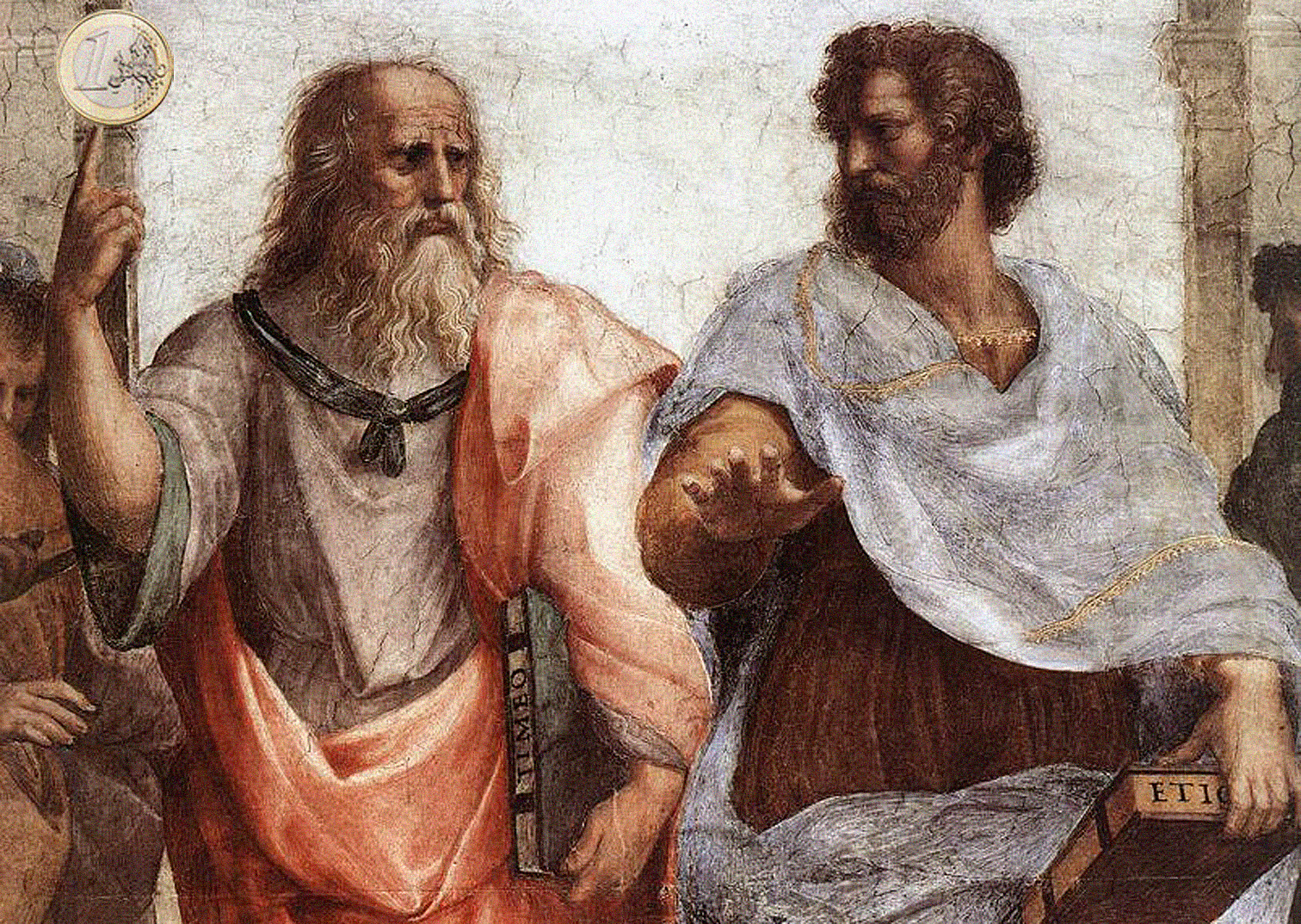
What is “Philosophy”? Yes, we know, the word comes from the Greek philosophia, which means “the love of wisdom.” This rote etymological definition does little, I think, to enhance our understanding of the subject, though it may describe the motivation of many a student. Like certain diseases, maybe philosophy is a spectrum, a collection of loosely related behaviors. Maybe a better question would be, “what are all the symptoms of this thing we call philosophy?” The medical metaphor is timely. We live in an age when the discipline of philosophy, like many of the humanities, gets treated like a pathology, in universities and in the wider culture. See, for example, popular articles on whether science has rendered philosophy (and religion) obsolete. There seems to be an underlying assumption in our society that philosophy is something to be eradicated, like smallpox.
Perhaps this sort of thing is just an empty provocation; after all, many logical positivists of the early 20th century also claimed to have invalidated large areas of philosophical inquiry by banishing every unclear concept to the dustbin. And yet, philosophy persists, infecting us with its relentless drive to define, inquire, critique, systematize, problematize, and deconstruct.
And of course, in a less technical sense, philosophy infects us with the drive to wonder. Without its tools, I maintain, we would not only lack the basis for understanding the world we live in, but we would also lack important means of imagining, and creating, a better one. If this sounds grandiose, wait till you encounter the thought of Plato, Spinoza, Hegel, Kant, Nietzsche, Kierkegaard, and jazz-futurist Sun Ra—all unaccustomed to thinking small and staying in their lane.
Some philosophers are more circumspect, some more precise, some more literary and imaginative, some more practical and technologically inclined. Like I said, many symptoms, one disease.
We at Open Culture have compiled a list of 140 free philosophy courses from as much of the wide spectrum as we could, spanning such diverse ways of thinking as University of Chicago’s Leo Strauss on Aristotle’s Ethics (Free Online Audio) and Plato’s Laws (Free Online Audio), to Columbia University Buddhist scholar Robert Thurman (Uma’s dad) on “The Central Philosophy of Tibet” (Free Online Audio). We have specific courses on Medical Ethics, taught by Notre Dame’s David Solomon (Free Online Audio) and the University of New Orlean’s Frank Schalow (Free iTunes Audio). We have hugely general courses like “The History of Philosophy Without Any Gaps,” from King’s College’s Peter Adamson (Free Course in Multiple Formats). We have philosophy courses on death, love, religion, film, law, the self, the ancients and the moderns…. See what I mean about the spectrum?
Perhaps philosophy incurs resentment because it roams at large and won’t be packaged into neatly salable—or jailable—units. Perhaps its amorphous nature, its tolerance of uncertainty and doubt, makes some kinds of people uncomfortable. Or perhaps some think it’s too abstruse and difficult to make sense of, or to matter. Not so! Visit our list of 140 philosophy courses and you will surely find a point of entry somewhere. One class will lead to another, and another, and before you know it, you’ll be asking questions all the time, of everything, and thinking rigorously and critically about the answers, and… well, by then it may be too late for a cure.
Santa left a new Kindle, iPad, Kindle Fire or other media player under your tree. He did his job. Now we’ll do ours. We’ll tell you how to fill those devices with free intelligent media — great books, movies, courses, and all of the rest. And if you didn’t get a new gadget, fear not. You can access all of these materials on the good old fashioned computer. Here we go:
Free eBooks: You have always wanted to read the great works. And now is your chance. When you dive into our Free eBooks collection you will find 700 great works by some classic writers (Dickens, Dostoevsky, Shakespeare and Tolstoy) and contemporary writers (F. Scott Fitzgerald, Philip K. Dick, Isaac Asimov, and Kurt Vonnegut). The collection also gives you access to the 51-volume Harvard Classics.
If you’re an iPad/iPhone user, the download process is super easy. Just click the “iPad/iPhone” links and you’re good to go. Kindle and Nook users will generally want to click the “Kindle + Other Formats links” to download ebook files, but we’d suggest watching these instructional videos (Kindle – Nook) beforehand.
Free Audio Books: What better way to spend your free time than listening to some of the greatest books ever written? This page contains a vast number of free audio books — 630 works in total — including texts by Arthur Conan Doyle, James Joyce, Jane Austen, Edgar Allan Poe, George Orwell and more recent writers — Italo Calvino, Vladimir Nabokov, Raymond Carver, etc. You can download these classic books straight to your gadgets, then listen as you go.
[Note: If you’re looking for a contemporary book, you can download one free audio book from Audible.com. Find details on Audible’s no-strings-attached deal here.]
Free Online Courses: This list brings together over 1100 free online courses from leading universities, including Stanford, Yale, MIT, UC Berkeley, Oxford and beyond.
These full-fledged courses range across all disciplines — history, physics, philosophy, psychology, business, and beyond. Most all of these courses are available in audio, and roughly 75% are available in video. You can’t receive credits or certificates for these courses (click here for courses that do offer certificates). But the amount of personal enrichment you will derive is immeasurable.
Free Movies: With a click of a mouse, or a tap of your touch screen, you will have access to 700 great movies. The collection hosts many classics, westerns, indies, documentaries, silent films and film noir favorites. It features work by some of our great directors (Alfred Hitchcock, Orson Welles, Andrei Tarkovsky, Stanley Kubrick, Jean-Luc Godard and David Lynch) and performances by cinema legends: John Wayne, Jack Nicholson, Audrey Hepburn, Charlie Chaplin, and beyond. On this one page, you will find thousands of hours of cinema bliss.
Free Language Lessons: Perhaps learning a new language is high on your list of New Year’s resolutions. Well, here is a great way to do it. Take your pick of 46 languages, including Spanish, French, Italian, Mandarin, English, Russian, Dutch, even Finnish, Yiddish and Esperanto. These lessons are all free and ready to download.
Free Textbooks: And one last item for the lifelong learners among you. We have scoured the web and pulled together a list of 200 Free Textbooks. It’s a great resource particularly if you’re looking to learn math, computer science or physics on your own. There might be a diamond in the rough here for you.
Thank Santa, maybe thank us, and enjoy that new device.…
If you would like to support the mission of Open Culture, consider making a donation to our site. It’s hard to rely 100% on ads, and your contributions will help us continue providing the best free cultural and educational materials to learners everywhere. You can contribute through PayPal, Patreon, and Venmo (@openculture). Thanks!
This month, The Institute of Art and Ideas (IAI), an organization committed to fostering “a progressive and vibrant intellectual culture in the UK,” launched IAI Academy — a new online educational platform that features courses in philosophy, science and politics. The initial lineup includes 12 courses covering everything from theoretical physics, the meaning of life, the future of feminism, the often vexed relationship between science and religion, and more.
IAI Academy offers its courses for free. But, like other course providers, they charge a nominal fee (right now about $25) if you would like a Verified Certificate when you’ve successfully completed a course. Here’s the initial lineup:
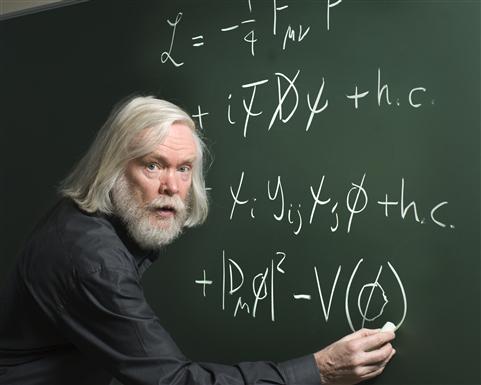
A Brief Guide to Everything — Web Video — John Ellis, King’s College London, CBE
The Meaning of Life — Web Video — Steve Fuller, University of Warwick
New Adventures in Spacetime — Web Video — Eleanor Knox, King’s College London
Minds, Morality and Agency — Web Video — Mark Rowlands, University of Miami
Nine Myths About Schizophrenia — Web Video — Richard Bentall, University of Liverpool
The History of Fear — Web Video — Frank Furedi, University of Kent
Physics: What We Still Don’t Know — Web Video — David Tong, Cambridge
Science vs. Religion — Web Video — Mark Vernon, Journalist/Philosopher
Sexuality and Power — Web Video — Veronique Mottier, University of Lausanne
The Infinite Quest — Web Video — Peter Cameron, Queen Mary University of London.
End of Equality — Web Video — Beatrix Campbell — Writer/Activist
Rethinking Feminism — Web Video — Finn Mackay — Feminist Activist & Researcher
Neil Young has a new book out — Special Deluxe: A Memoir of Life & Cars — which means he’s doing a quick media blitz. Tuesday morning, Young paid a 90 minute visit to the Stern Show, where they talked about, well, everything: polio, the rift with David Crosby, how he writes his music, the time he spent with Charles Manson, what went wrong at Woodstock, what’s gone wrong with music (and how the PonoPlayer will fix it), and how we’re trashing the environment. Young takes the environment and politics seriously. No doubt. But he could also work it all into a good joke. Just witness his performance later that day with Stephen Colbert.
In 2008, shortly after Bill Gates stepped down from his executive role at Microsoft, he often awoke in his 66,000-square-foot home on the eastern bank of Lake Washington and walked downstairs to his private gym in a baggy T‑shirt, shorts, sneakers and black socks yanked up to the midcalf. Then, during an hour on the treadmill, Gates, a self-described nerd, would pass the time by watching DVDs from the Teaching Company’s “Great Courses” series. On some mornings, he would learn about geology or meteorology; on others, it would be oceanography or U.S. history.
As Gates was working his way through the series, he stumbled upon a set of DVDs titled “Big History” — an unusual college course taught by a jovial, gesticulating professor from Australia named David Christian. Unlike the previous DVDs, “Big History” did not confine itself to any particular topic, or even to a single academic discipline. Instead, it put forward a synthesis of history, biology, chemistry, astronomy and other disparate fields, which Christian wove together into nothing less than a unifying narrative of life on earth.
Captivated by Dr. Christian’s ability to connect big and complex ideas, Gates thought to himself, “God, everybody should watch this thing!” And, soon enough, the philanthropist contacted the professor and suggested making “Big History” available as a course in high schools across the US (with Bill footing the bill.)
In 2011 the Big History Project, a course with a significant digital component, was piloted in five high schools. Now, a few years later, it’s being made freely available, says the Times, “to more than 15,000 students in some 1,200 schools, from the Brooklyn School for Collaborative Studies in New York to Greenhills School in Ann Arbor, Mich., to Gates’s alma mater, Lakeside Upper School in Seattle. And if all goes well, the Big History Project will be introduced in hundreds of more classrooms by next year and hundreds, if not thousands, more the year after that, scaling along toward the vision Gates first experienced on that treadmill.”
In my day job, I have the privilege of overseeing Stanford’s Continuing Studies program where we bring Stanford courses to the San Francisco Bay Area community, and increasingly the larger world. This fall, we’re presenting a pretty special course called The State of the Union 2014. Taught by Rob Reich (Political Science, Stanford), David Kennedy (History, Stanford), and James Steyer (CEO, Common Sense Media), the course examines “the abundant challenges and opportunities of major themes contributing to the health, or disease, of the United States body politic: inequality, energy and the environment, media and technology, the economy, and the 2014 midterm elections.” And to help sort through these complex questions, the professors will be joined by 18 distinguished guests, including Steven Chu (former Secretary of Energy), Reed Hastings (CEO of Netflix), Janet Napolitano (former Secretary of Homeland Security), Ruth Marcus (columnist for the Washington Post), Karl Eikenberry (former US Ambassador to Afghanistan) and Joel Benenson (chief pollster for President Barack Obama).
We’re filming the class sessions of this seven-week course and making them available on YouTube and iTunes. The first two sessions (each lasting about 90 minutes) can be viewed in the playlist above. The first session focuses on the Midterm elections; the second on the state of California. New sessions will be added each week, generally on Thursday or Friday.
Education
Technology and Social Change
If you live in the San Francisco Bay Area, make sure you check out the Continuing Studies program. It’s a tremendous resource for lifelong learners.
It ended in early April 149 years ago. But it begins again on Wednesday. Columbia University’s “The Civil War and Reconstruction,” the latest salvo in the MOOC wars, opens Wednesday, September 17, for free to the world – a 27-week series of three courses on the nonprofit edX platform taught by Eric Foner, the university’s Pulitzer-Prize winning history professor and one of the world’s leading experts on 19th-century America. You can enroll for free here.
“If you want to know where the world you’re living in today comes from,” Foner says in the series promotional trailer, “you need to know about the Civil War era.“ Headline issues of the moment – black-white race relations first among them, but also more general issues of equal justice under law, the power and proper role of government, and how lawmakers should deal with extremism, terror, and violence – all find roots in this conflict and its aftermath, a four-year war that saw approximately 700,000 Americans killed, and scores more injured, at the hands of their countrymen.
Foner’s general history books on the subject have sold thousands of copies – his new work on the underground railroad publishes in January – and he’s the author of the leading American history textbook taught in U.S. high schools. He’s crossed over from academe into mainstream media in other ways – with appearances on The Daily Show with John Stewart, The Colbert Report, The Charlie Rose Show, Bill Moyers’s Journal, and more.
Columbia’s effort in free history education on screen dates back decades – as Foner makes clear in the promo video. Columbia’s history professors Richard Hofstadter and James Patrick Shenton reached thousands of people in their books and lectures, with Shenton even teaching a 76-part survey course on WNET Public Television called “The Rise of the American Nation” – which premiered in 1963! But many of the great lecturers from this university – literary critics and scholars Jacques Barzun and Lionel Trilling, art historian Meyer Shapiro, and others – were never filmed systematically, and Foner, who will formally retire from teaching in a few years, was determined to ensure his courses were recorded, well-produced, and preserved for posterity – and available as educational resources to all.
The series, generously supported by Columbia’s provost, historian John Coatsworth, is produced by the Columbia Center for New Media Teaching and Learning (CCNMTL), coincidentally celebrating its 15th anniversary this year. It’s the university’s first set of online courses on edX, after more than a dozen MOOCs on Coursera – and with more to come on both. The course promises some tantalizing new perspectives on the world then and now – as the two highlights reels show above.
We're hoping to rely on loyal readers, rather than erratic ads. Please click the Donate button and support Open Culture. You can use Paypal, Venmo, Patreon, even Crypto! We thank you!
Open Culture scours the web for the best educational media. We find the free courses and audio books you need, the language lessons & educational videos you want, and plenty of enlightenment in between.