What other topics will the course cover as it unfolds? It’s all still TBD. But, again, you’re invited to help shape the syllabus. Bigger picture suggestions are being sought here.
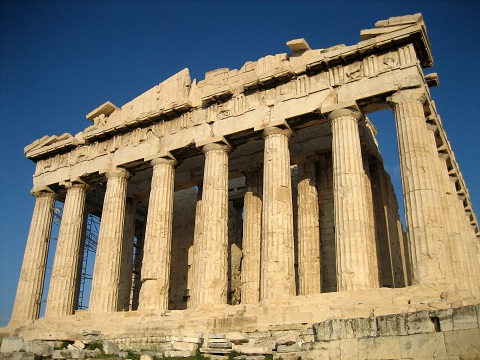
I know, it’s a dated reference now, but since I still watch the remade Battlestar Galactica series on Netflix, the mystical refrain—“All of this has happened before and will happen again”–still seems fresh to me. At any rate, it’s fresher than the clichéd “history repeats itself.” However you phrase it, the truism looks more and more like a genuine truth the more one studies ancient history, literature, and philosophy. The conflicts and concerns that feel so of the moment also occupied the minds and lives of people living hundreds, and thousands, of years ago, and whatever you make of that, it certainly helps put the present into perspective. Can we benefit from studying the wisdom, and the folly, of the ancients? To this question, I like to turn to an introductory essay C.S. Lewis penned to the work of a certain church father:
Every age has its own outlook. It is specially good at seeing certain truths and specially liable to make certain mistakes. We all, therefore, need the books that will correct the characteristic mistakes of our own period. And that means the old books. […] If we read only modern books […] where they are true they will give us truths which we half knew already. Where they are false they will aggravate the error with which we are already dangerously ill. The only palliative is to keep the clean sea breeze of the centuries blowing through our minds, and this can be done only by reading old books.
I may disagree with Lewis about many things, including that “clean sea breeze” of history, but I take to heart his point about reading the ancients to mitigate our modern biases and shine light on our blind spots. To that end, we present links to several excellent online courses on the ancients from institutions like Yale, NYU, and Stanford, free to peruse or take in full. See our master list—Free Courses in Ancient History, Literature & Philosophy—for 36 quality offerings. As always, certain courses provide more resources than others, and a few only offer their lectures through iTunes. These are decisions course administrators have made, not us! Even so, these free resources are invaluable to those wishing to acquaint, or reacquaint, themselves with the study of ancient humanities.
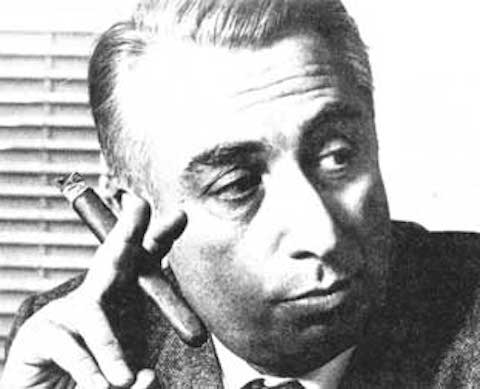
A key figure in such academic areas as semiology, structuralism, and post-structuralism, and author of such theoretical classics as Mythologies, The Pleasure of the Text, and S/Z, Roland Barthes is familiar to students across the humanities. His prolific output encompassed books on literary theory, philosophy, linguistics, anthropology, and theoretical essays on photography, music, fashion, sports, and love. In addition to his wide-ranging writings, Barthes lectured in the U.S., Switzerland, and at the Collège de France, where he was elected Chair of Semiology in 1977.
Barthes’ 1978–1980 lecture course at the Collège de France—titled The Preparation of the Novel—has been preserved in an English translation by Kate Briggs. Speakers of French, however, can hear Barthes himself deliver the lecture series in audio archived at Ubuweb. Listen to the first session from December, 1978 at the top of the post, and hear the fifth, with some musical accompaniment, above.
Delivered shortly after publication of the seminal texts mentioned above, these lectures, writes editor Nathalie Léger in her introduction, “form a diptych—the two parts can be accessed independently of each other, yet each one is indispensable to the other.” The last two lecture courses Barthes taught at the Collège de France, both, Léger writes, represent not a systematic theory, but “the peregrination of a quest,” exploring “one question and one question only: that of literary utopia.” Such probing investigations propelled Barthes’ entire career, and opened up new critical paths for a great many thinkers who dared to trace his winding intellectual steps and often intensely personal explorations.
Yesterday,E.O. Wilson’sLife on Earth was released asa free iBook on iTunes. It features “state-of-the-art digital media animations, video, and interactive modules in a comprehensive 41-chapter text covering standards-based biology curriculum.” Created under the direction of Pulitzer Prize-winning author and Harvard naturalist Edward O.Wilson, Life on Earth can be downloaded in 7 units on iTunes. The free book also comes with a free iTunesU course. In addition to reading assignments, the course “incorporates activities such as field observations, writing assignments, project-based learning exercises,” using apps and other materials. Combining information from the Smithsonian National Museum of Natural History, National Geographic, and the Encyclopedia of Life, the course covers a variety of important themes — citizen science, evolution, climate change, and protecting biodiversity. The first nine chapters of the iTunesU course are available now, and the remaining materials for the 41-chapter course will be released throughout 2014.
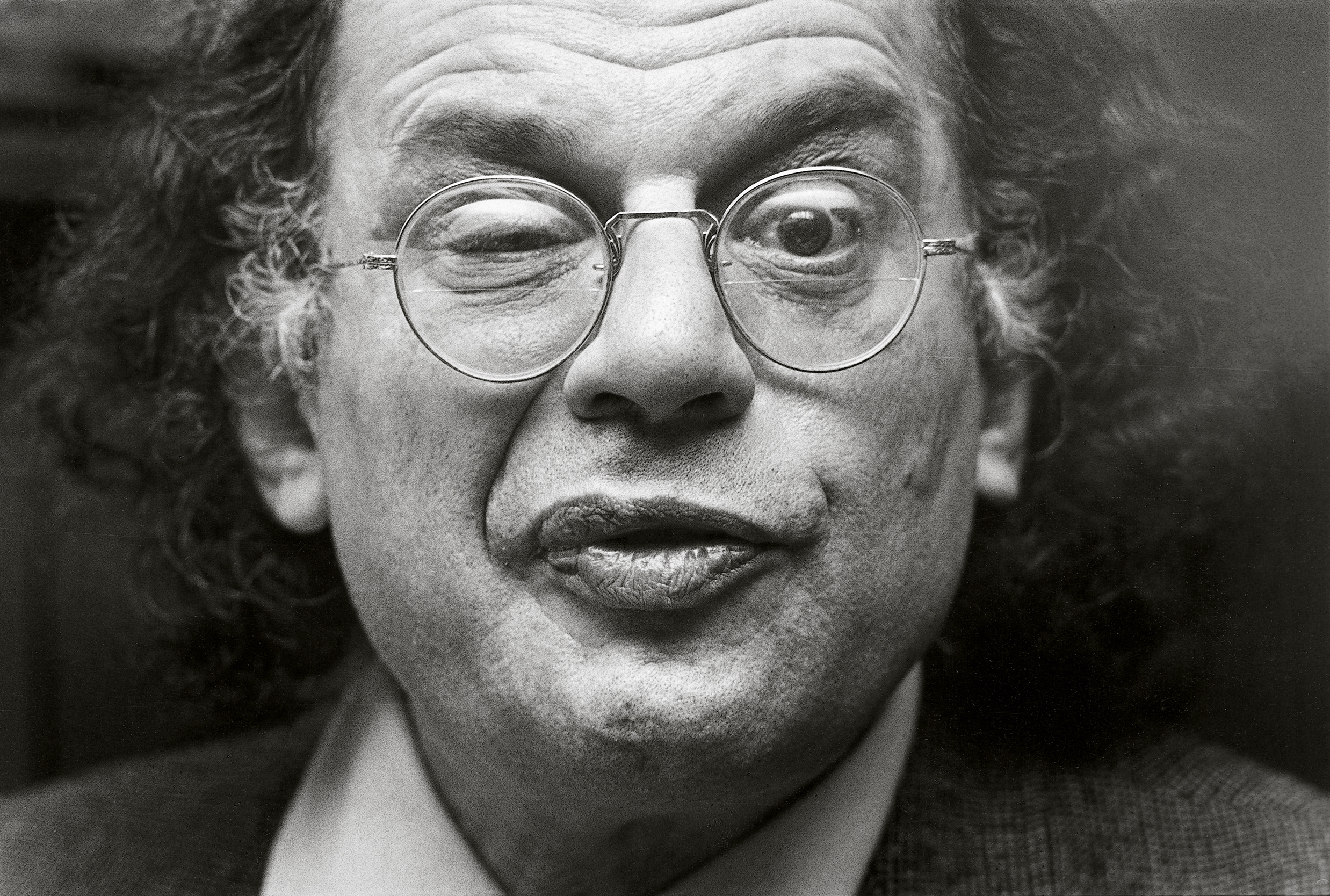
If you want to understand poetry, ask a poet. “What is this?” you ask, “some kind of Zen saying?” Obvious, but subtle? Maybe. What I mean to say is that I have found poetry one of those distinctive practices of which the practitioners themselves—rather than scholars and critics—make the best expositors, even in such seemingly academic subject areas as the history of poetry. Of course, poets, like critics, get things wrong, and not every poet is a natural teacher, but only poets understand poetry from the inside out, as a living, breathing exercise practiced the world over by every culture for all recorded history, linked by common insights into the nature of language and existence. Certainly Allen Ginsberg understood, and taught, poetry this way, in his summer lectures at the Jack Kerouac School of Disembodied poetics, which he co-founded with Anne Waldman at Chogyam Trungpa Rinpoche’s Naropa University in 1974.
We’ve previously featured some of Ginsberg’s Naropa lectures here at Open Culture, including his 1980 short course on Shakespeare’s The Tempest and his lecture on “Expansive Poetics” from 1981. Today, we bring you several selections from his lengthy series of lectures on the “History of Poetry,” which he delivered in 1975. Currently, thirteen of Ginsberg’s lectures in the series are available online through the Internet Archive, and they are each well worth an attentive listen. Actually, we should say there are twelve Ginsberg lectures available, since Ginsberg’s fellow Beat Gregory Corso led the first class in the series while Ginsberg was ill.
Corso taught the class in a “Socratic” style, allowing students to ask him any questions they liked and describing his own process and his relationships with other Beat poets. You can hear his lectures here. When Ginsberg took over the “History of Poetry” lectures, he began (above) with discussion of another natural poet-educator, the idiosyncratic scholar Ezra Pound, whose formally precise interpretation of the Anglo-Saxon poem “The Seafarer” introduced many modern readers to ancient alliterative Old English poetics. (Poet W.S. Merwin sits in on the lecture and offers occasional laconic commentary and correction.)
Ginsberg references Pound’s pithy text The ABC of Reading and discusses his penchant for “ransack[ing] the world’s literature, looking for usable verse forms.” Pound, says Ginsberg—“the most heroic poet of the century”—taught poetry in his own “cranky and personal” way, and Ginsberg, less cranky, does something similar, teaching “just the poems that I like (or the poems I found in my own ear,” though he is “much less systematic than Pound.” He goes on to discuss 18th and 19th century poetics and sound and rhythm in poetry. One of the personal quirks of Ginsberg’s style is his insistence that his students take meditation classes and his claim that “the English verse that was taught in high school” is very close to the “primary Buddhist understanding of transiency.” But one can leave aside Ginsberg’s Buddhist preoccupations—appropriate to his teaching at a Buddhist university, of course—and still profit greatly from his lectures. Below, find links to eleven more of Ginsberg’s “History of Poetry” lectures, with descriptions from the Internet Archive. Unfortunately, it appears that several of the lecture recordings have not been preserved, or at least haven’t made it to the archive, but there’s more than enough material here for a thorough immersion in Ginsberg’s historical poetics. Also, be sure to see AllenGinsberg.org for transcriptions of his “History of Poetry” lectures. You can find these lectures listed in our collection of Free Literature Courses, part of our larger list, 1,700 Free Online Courses from Top Universities.
Part 3: class on the history of poetry by Allen Ginsberg, in a series of classes in the Summer of 1975. Gregory Corso helps teach the class. Percy Bysshe Shelley and Thomas Hood are discussed extensively. The class reads from Shelley, and Ginsberg recites Shelley’s “Ode to the west wind.”
Part 10: A class on the history of poetry by Allen Ginsberg, in a series of classes from 1975. Ginsburg discusses William Shakespeare and Ben Johnson in detail. Putting poetry to music, and the poet James Shirley are also discussed.
Part 11: A class on the history of poetry by Allen Ginsberg, in a series of classes by Ginsberg in the summer of 1975. Ginsberg discusses the metaphysical poets during the seventeenth century, specifically John Donne and Andrew Marvell. Ginsberg reads and discusses several of Donne’s and Marvell’s poems. There is also a discussion of the metaphysical poets and Gnosticism.
Part 12: [Ginsberg continues his discussion of Gnosticism and talks about Milton and Wordsworth]
Part 14: Second half of a class on the history of poetry by Allen Ginsberg, from a series of classes during the summer of 1975. Ginsberg talks about the songs of the poet William Blake. He sings to the class accompanied with his harmonium, performing several selections from Blake’s “Songs of innocence” and “Songs of experience.”
Part 15: First half of a class on the history of poetry by Allen Ginsberg. from a series of classes during the summer of 1975. Ginsberg discusses the 19th century American poet, Walt Whitman, and a French poet of the same period, Arthur Rimbaud. He also discusses the poets’ biographies and their innovative approaches to style and poetics, followed by a reading by Ginsberg of a selection of Whitman’s and Rimbaud’s work.
Part 16: Second half of a class, and first half of the following class, on the history of poetry by Allen Ginsberg, from a class series during the summer of 1975. The first twenty minutes continues a class from the previous recording, on the work and innovation of the American poet Walt Whitman and the French poet Arthur Rimbaud. The remainder of the recording begins an introduction and analysis of the French poet Guillaume Apollinaire.
Part 17: A class on the history of poetry by Allen Ginsberg, from a series of classes during the summer of 1975. Ginsberg discusses the poets Guillaume Apollinaire, Vladimir Mayakovsky, and Federico Garcia Lorca. The New York School poet Frank O’Hara is also briefly discussed. Ginsberg reads a selection of poems from the their works, followed by a class discussion.
Part 18: First half of a class about the history of poetry by Allen Ginsberg, from a series of classes during the summer of 1975. Ginsberg discusses the American poet, and one of his mentors, William Carlos Williams. Ginsberg reads selections from Williams’ work, and discusses his style and background.
Part 19: Second half of a class on the history of poetry by Allen Ginsberg, from a series of classes during the summer of 1975. Ginsberg discusses the poets William Carlos Williams, Gregory Corso and Jack Kerouac. He includes several personal anecdotes about the poets and reads selections from their works. A class discussion follows.
Part 20: A snippet of material that may conclude a class on the history of poetry by Allen Ginsberg, from a class series during the summer of 1975. The recording includes three minutes and six seconds of Ginsberg talking about the morality of William Carlos Williams and the subject of poetry and perception
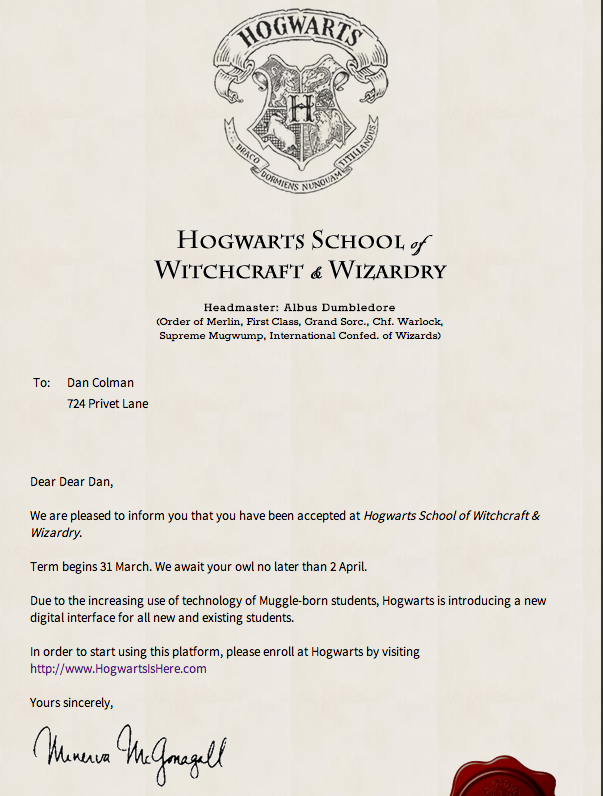
A group of dedicated Harry Potter fans have created a new educational website called Hogwarts is Here. The site is free — you only have to spend fake Galleons on the site — and it lets users enroll at the Hogwarts School of Witchcraft and Wizardry and work through a seven-year curriculum, taking the same courses that Harry, Ron and Hermione did in the great Harry Potter series. The first year consists of courses that will sound familiar to any Harry Potter reader: Charms, Potions, Defense Against the Dark Arts, Astronomy, Herbology, History of Magic, and Transfiguration. The 9‑week online courses feature homework assignment and quizzes. Students can also read digital textbooks, such as A Standard Book of Spells and A Beginner’s Guide to Transfiguration. We have yet to enroll in a course, so we would be curious get your feedback.
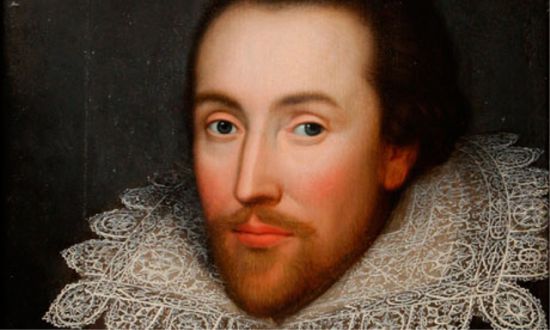
I had the great good fortune of having grown up just outside Washington, DC, where on a fifth grade class trip to the Folger Library and Theater, I fell in love with Shakespeare. This experience, along with a few visits to see his plays performed at nearby Wolftrap, made me think I might go into theater. Instead I became a student of literature, but somehow, my love of Shakespeare on the stage didn’t translate to the page until college. While studying for a sophomore-level “Histories & Tragedies” class, I sat, my Norton Shakespeare open, in front of the TV—reading along while watching Kenneth Branagh’s stylish film adaptation of Hamlet, which draws on the entire text of the play.
Only then came the epiphany: this language is music and magic. The rhythmic beauty, depths of feeling, humor broad and incisive, extraordinary range of human types.… If we are to believe pre-eminent Shakespeare scholar Harold Bloom, Shakespeare invented modern humanity. If this seems to go too far, he at least captured human complexity with greater inventive skill than any English writer before him, and possibly after. Is there any shame in finally “getting” Shakespeare’s language from the movies? None at all. One of the most excellent qualities of the Bard’s work—among so many reasons it endures—is its seemingly endless adaptability to every possible period, cultural context, and medium.
While engagement with any of the innumerable Shakespeare adaptations and performances promises reward, there’s little that enhances appreciation of the Bard’s work more than reading it under the tutelage of a trained scholar in the playwright’s Elizabethan language and history. Universal though he may be, Shakespeare wrote his plays in a particular time and place, under specific influences and working conditions. If you have not had the pleasure of studying the plays in a college setting—or if your memories of those long-ago English classes have faded—we offer a number of excellent free online courses from some of the finest universities. See a list below, all of which appear in our list of Free Online Literature Courses, part of our larger list of 875 Free Online Courses.
Also, speaking of the Folger, that venerable institution has just released all of Shakespeare’s plays in free, searchable online texts based on their highly-regarded scholarly print editions. And though some beg to differ, I still say you can’t go wrong with Branagh.
In high school, my physics teacher taught the class by having us listen to his long, monotonous lectures. After I realized that I couldn’t digest his verbal lessons, I stopped listening. Instead, I picked up a textbook and never looked back. I can only imagine how much better off I would have been had I taken a physics class like Brian Greene’s special relativity course on World Science U.
We featured Greene’s work two years ago, when the Columbia University physicist and mathematician launched his impressive PBS series, The Fabric of The Cosmos. Now, Greene and other scientists have created a new education platform called World Science U, and it promises to offer rich, rigorous and engaging courses in the sciences — for free. As Greene explains above, the free courses offered by World Science U take abstract concepts and represent them graphically, using a slew of interactive activities and real-world scenarios. Students receive immediate performance feedback on the problem sets they complete, and have access to a large number of video lectures. Theory is illustrated by way of intuitive animations, and exercises are paired with video solutions that take students through the ideal way to derive the answer.
Although later classes will tackle general relativity, quantum mechanics, and other subjects, World Science U has only two full courses available at present. The first is Greene’s brief conceptual class on special relativity that lasts 2–3 weeks, called Space, Time, and Einstein. There’s also a more advanced, university level course on the same topic called Special Relativity, which lasts about 10 weeks. Interested? We’ll let Greene himself tell you a little more about them in the video below.
We're hoping to rely on loyal readers, rather than erratic ads. Please click the Donate button and support Open Culture. You can use Paypal, Venmo, Patreon, even Crypto! We thank you!
Open Culture scours the web for the best educational media. We find the free courses and audio books you need, the language lessons & educational videos you want, and plenty of enlightenment in between.