Oxford’s Free Course A Romp Through Ethics for Complete Beginners Will Teach You Right from Wrong

Oxford Uni­ver­si­ty pro­fes­sor Mar­i­anne Tal­bot has a num­ber of excel­lent phi­los­o­phy pod­casts online, some of which we’ve pre­vi­ous­ly fea­tured on the site. Today, we bring you Tal­bot’s A Romp Through Ethics for Com­plete Begin­ners (WebiTune­sU — YouTube), which address­es one of phi­los­o­phy’s cen­tral ques­tions: what is the right way to con­duct your­self in life?

The prob­lem may, at first, seem some­what triv­ial. “Live whichev­er way you want, as long as you’re going to be a good per­son,” you might say, shrug­ging off the ques­tion. But it’s real­ly a great deal more com­pli­cat­ed than that. What does being a “good” per­son entail? Should we emu­late the actions of some­one wide­ly con­sid­ered vir­tu­ous?

Does being good mean liv­ing by absolute rules? Say, nev­er mur­der anoth­er human being? Or should we tai­lor our actions accord­ing to each sit­u­a­tion, with the aim of achiev­ing the great­est quan­ti­ty of good as our only hard-and-fast rule? If the pos­si­bil­i­ties are mak­ing your head spin, you’re not alone: philoso­phers have done their best to fig­ure out pre­cise­ly what con­sti­tutes moral rights and wrongs since the days of Socrates.

Luck­i­ly, Tal­bot is ready to guide us through the com­plex­i­ties. True to its title, A Romp Through Ethics for Com­plete Begin­ners walks stu­dents through sev­en com­pre­hen­sive lec­tures (watch them all above) on moral thought, pro­vid­ing a neat­ly-pack­aged sur­vey of the field. Tal­bot begins by dis­cussing some pre­con­di­tions to moral rea­son­ing, and then sets out Aristotle’s con­cep­tion of right­eous liv­ing, which con­sists of act­ing in a vir­tu­ous man­ner (if you smell some­thing fishy about that state­ment, you’re on the right track). Tal­bot then pro­ceeds to guide the class through some of philosophy’s most sig­nif­i­cant eth­i­cal par­a­digms, explain­ing Immanuel Kant’s idea of the invi­o­lable cat­e­gor­i­cal imper­a­tive and the moral cal­cu­lus behind John Stu­art Mill’s util­i­tar­i­an thought.

A Romp Through Ethics for Com­plete Begin­ners is cur­rent­ly avail­able on the Uni­ver­si­ty of Oxford web­site in both audio and video for­mats, and also on iTune­sU and YouTube. You can find it list­ed in our col­lec­tion of Free Online Phi­los­o­phy Cours­es, along­side class­es like Ancient and Medieval Phi­los­o­phy, Aris­to­tle: Ethics, and Bioethics: An Intro­duc­tion, all part of our col­lec­tion 1,700 Free Online Cours­es from Top Uni­ver­si­ties.

Ilia Blin­d­er­man is a Mon­tre­al-based cul­ture and sci­ence writer. Fol­low him at @iliablinderman, or read more of his writ­ing at the Huff­in­g­ton Post.

Relat­ed Con­tent:

Oxford’s Free Course Crit­i­cal Rea­son­ing For Begin­ners Will Teach You to Think Like a Philoso­pher

The Par­tial­ly Exam­ined Life: A Phi­los­o­phy Pod­cast

The His­to­ry of Phi­los­o­phy With­out Any Gaps – Peter Adamson’s Pod­cast Still Going Strong

Phi­los­o­phy Bites: Pod­cast­ing Ideas From Pla­to to Sin­gu­lar­i­ty Since 2007


Oxford’s Free Course Critical Reasoning For Beginners Will Teach You to Think Like a Philosopher

Oxford_University,_Radcliffe_Camera,_a_Reading_room_of_Bodleian_libraryWhen I was younger, I often found myself dis­agree­ing with some­thing I’d read or heard, but could­n’t explain exact­ly why. Despite being unable to pin­point the pre­cise rea­sons, I had a strong sense that the rules of log­ic were being vio­lat­ed. After I was exposed to crit­i­cal think­ing in high school and uni­ver­si­ty, I learned to rec­og­nize prob­lem­at­ic argu­ments, whether they be a straw man, an appeal to author­i­ty, or an ad hominem attack. Faulty argu­ments are all-per­va­sive, and the men­tal bias­es that under­lie them pop up in media cov­er­age, col­lege class­es, and arm­chair the­o­riz­ing. Want to learn how to avoid them? Look no fur­ther than Crit­i­cal Rea­son­ing For Begin­ners, the top rat­ed iTune­sU col­lec­tion of lec­tures led by Oxford University’s Mar­i­anne Tal­bot.

Tal­bot builds the course from the ground up, and begins by explain­ing that argu­ments con­sist of a set of premis­es that, log­i­cal­ly linked togeth­er, lead to a con­clu­sion. She pro­ceeds to out­line the way to lay out an argu­ment log­i­cal­ly and clear­ly, and even­tu­al­ly, the basic steps involved in assess­ing its strengths and weak­ness­es. The six-part series, which was record­ed in 2009, shows no sign of wear, and Tal­bot, unlike some phi­los­o­phy pro­fes­sors, does a ter­rif­ic job of mak­ing the con­tent digestible. If you’ve got some time on your hands, the lec­tures, which aver­age just over an hour in length, can be fin­ished in less than a week. That’s peanuts, if you con­sid­er that all our knowl­edge is built on the foun­da­tions that this course estab­lish­es. If you haven’t had the chance to be exposed to a class on crit­i­cal thought, I can’t rec­om­mend Crit­i­cal Rea­son­ing For Begin­ners with enough enthu­si­asm: there are few men­tal skills that are as under­ap­pre­ci­at­ed, and as cen­tral to our dai­ly lives, as crit­i­cal think­ing.

Crit­i­cal Rea­son­ing For Begin­ners is cur­rent­ly avail­able on the Uni­ver­si­ty of Oxford web­site in both audio and video for­mats, and also on iTune­sU and YouTube. You can find it list­ed in our col­lec­tion of Free Online Phi­los­o­phy Cours­es, part of our col­lec­tion of 1100 Free Online Cours­es.

Ilia Blin­d­er­man is a Mon­tre­al-based cul­ture and sci­ence writer. Fol­low him at @iliablinderman, or read more of his writ­ing at the Huff­in­g­ton Post.

Relat­ed Con­tent:

The Par­tial­ly Exam­ined Life: A Phi­los­o­phy Pod­cast

The His­to­ry of Phi­los­o­phy With­out Any Gaps – Peter Adamson’s Pod­cast Still Going Strong

Phi­los­o­phy Bites: Pod­cast­ing Ideas From Pla­to to Sin­gu­lar­i­ty Since 2007

How To Think Like a Psychologist: A Free Online Course from Stanford

free-course-how-to-think-like-a-psychologist-In ear­ly Jan­u­ary, we brought you a set of 15 tips to help you stick to your New Year’s res­o­lu­tions, straight from The Willpow­er Instincta best­selling book by Dr. Kel­ly McGo­ni­gal. Today, we’re high­light­ing a course that McGo­ni­gal orga­nized for Stanford’s Con­tin­u­ing Stud­ies Pro­gram, enti­tled How To Think Like a Psy­chol­o­gist. The premise is sim­ple: McGo­ni­gal intro­duces promi­nent Stan­ford psy­chol­o­gists, who pro­ceed to dis­cuss their research and explain pre­cise­ly why their field hap­pens to be so fas­ci­nat­ing, after which McGo­ni­gal leads a short dis­cus­sion with the guest. An audi­ence Q&A ses­sion fol­lows.

Each of the course’s six lec­tures is a neat­ly pack­aged primer on a researcher’s area of exper­tise: Greg Wal­ton gives a detailed talk about his work on aca­d­e­m­ic stig­ma, and the role it plays in the achieve­ment gap so evi­dent in Amer­i­can edu­ca­tion, while in lat­er lec­tures, James Gross dis­cuss­es his research on emo­tion­al reg­u­la­tion, and Brid­get Mar­tin Hard explains the ben­e­fits of study­ing ani­mals to bet­ter under­stand humans. The strength of the course lies both in its acces­si­bil­i­ty, and its lev­el of depth: one does not need a back­ground in sci­ence to learn some­thing tan­gi­ble about cur­rent psy­cho­log­i­cal research. What’s more, one gets a sense of how rel­e­vant psy­chol­o­gy is as a prac­ti­cal sci­ence, gov­ern­ing every fleet­ing thought and social inter­ac­tion.

How To Think Like a Psy­chol­o­gist is cur­rent­ly avail­able on iTune­sU. You can find it list­ed in our col­lec­tion of Free Online Psy­chol­o­gy Cours­es, part of our col­lec­tion, 4,000+ Free Movies Online: Great Clas­sics, Indies, Noir, West­erns, Doc­u­men­taries & More.

Ilia Blin­d­er­man is a Mon­tre­al-based cul­ture and sci­ence writer. Fol­low him at @iliablinderman, or read more of his writ­ing at the Huff­in­g­ton Post.

Relat­ed Con­tent:

The Pow­er of Empa­thy: A Quick Ani­mat­ed Les­son That Can Make You a Bet­ter Per­son

Carl Gus­tav Jung Explains His Ground­break­ing The­o­ries About Psy­chol­o­gy in Rare Inter­view (1957)

Jacques Lacan’s Con­fronta­tion with a Young Rebel: Clas­sic Moment, 1972

New Ani­ma­tion Explains Sher­ry Turkle’s The­o­ries on Why Social Media Makes Us Lone­ly

“The Tolkien Professor” Presents Three Free Courses on The Lord of the Rings

tolkien prof

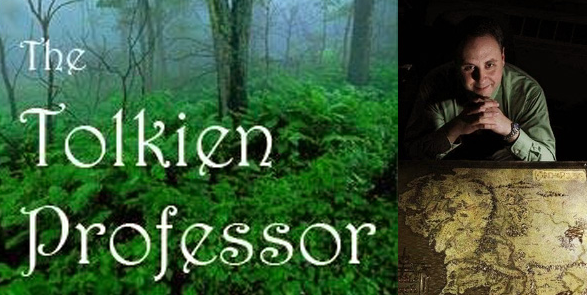
A quick update: Last year, we told you about Corey Olsen, an Eng­lish Pro­fes­sor at Wash­ing­ton Col­lege, who start­ed pub­lish­ing online lec­tures on the writ­ing of J.R.R. Tolkien. We ini­tial­ly fea­tured his lec­ture series on The Hob­bit. Now “The Tolkien Pro­fes­sor,” as Olsen is oth­er­wise known, presents a series of online cours­es on The Lord of the Rings tril­o­gy:

  • Lord of the Rings I: The Road Goes Ever OniTune­sU
  • Lord of the Rings II: The Two Tow­ersiTune­sU — Web
  • Lord of the Rings III: Return of the King - iTunes U — Web

As a bonus, you can access Olsen’s Under­grad­u­ate Sur­vey Course on Tolkien (avail­able on the web). The 14-week course was pre­sent­ed and record­ed at Wash­ing­ton Col­lege in the Spring of 2010.

All of Olsen’s cours­es are cat­a­logued in the Lit­er­a­ture sec­tion of our col­lec­tion of 825 Free Online Cours­es.

Relat­ed Con­tent:

Lis­ten to J.R.R. Tolkien Read a Lengthy Excerpt from The Hob­bit (1952)

Lis­ten to J.R.R. Tolkien Read Poems from The Fel­low­ship of the Ring, in Elvish and Eng­lish (1952)

Fan­tas­tic BBC Footage of J.R.R. Tolkien in 1968

Free Audio: Down­load the Com­plete Chron­i­cles of Nar­nia by C.S. Lewis

by | Permalink | Make a Comment ( 5 ) |

Download 100 Free Philosophy Courses and Start Living the Examined Life

rodin-thinker-philosophy-courses

The Phi­los­o­phy sec­tion of our big Free Online Cours­es col­lec­tion just went through anoth­er update, and it now fea­tures 100 cours­es. Enough to give you a soup-to-nuts intro­duc­tion to a time­less dis­ci­pline. You can start with one of sev­er­al intro­duc­to­ry cours­es.

Then, once you’ve found your foot­ing, you can head off in some amaz­ing direc­tions. As we men­tioned many moons ago, you can access cours­es and lec­tures by mod­ern day leg­ends – Michel Fou­caultBertrand Rus­sellJohn Sear­leWal­ter Kauf­mannLeo StraussHubert Drey­fus and Michael Sandel. Then you can sit back and let them intro­duce you to the think­ing of Aris­to­tle, Socrates, Pla­to, Hobbes, Hegel, Hei­deg­ger, Kierkegaard, Kant, Niet­zsche, Sartre and the rest of the gang. The cours­es list­ed here are gen­er­al­ly avail­able via YouTube, iTunes, or the web.

Explore our col­lec­tion, 1,700 Free Online Cours­es from Top Uni­ver­si­ties, to find top­ics in many oth­er dis­ci­plines — His­to­ry, Lit­er­a­ture, Physics, Com­put­er Sci­ence and beyond. As we like to say, it’s the most valu­able sin­gle page on the web.

Don’t miss any­thing from Open Cul­ture. Sign up for our Dai­ly Email or RSS Feed. And we’ll send qual­i­ty cul­ture your way, every day.

Relat­ed Con­tent:

Michel Fou­cault: Free Lec­tures on Truth, Dis­course & The Self

Take First-Class Phi­los­o­phy Lec­tures Any­where with Free Oxford Pod­casts

Wal­ter Kaufmann’s Lec­tures on Niet­zsche, Kierkegaard and Sartre (1960)

The His­to­ry of Phi­los­o­phy, from 600 B.C.E. to 1935, Visu­al­ized in Two Mas­sive, 44-Foot High Dia­grams

Leo Strauss: 15 Polit­i­cal Phi­los­o­phy Cours­es Online

by | Permalink | Make a Comment ( 10 ) |

Quantum Physics Made Relatively Simple: A Free Mini Course from Nobel Prize-Winning Physicist Hans Bethe

hans-bethe

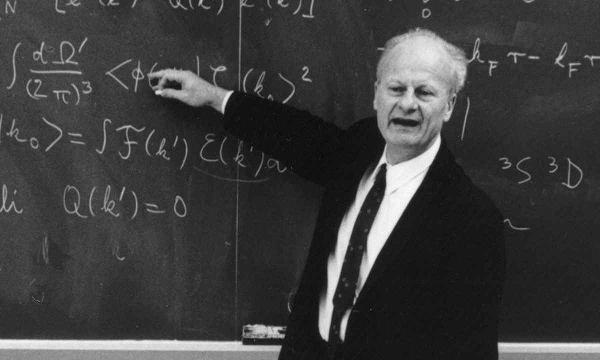
An émi­gré from Nazi Ger­many, Hans Bethe joined Cor­nel­l’s physics depart­ment back in 1935. There, he built a remark­able career for him­self. A nuclear physi­cist, Bethe made key con­tri­bu­tions to the Man­hat­tan Project dur­ing World War II. After the war, he brought stel­lar young physi­cists like Richard Feyn­man from Los Alam­os to Itha­ca and turned Cor­nel­l’s physics depart­ment into a top-notch pro­gram. In 1967, he won the Nobel Prize for “his ground­break­ing work on the the­o­ry of ener­gy pro­duc­tion in stars.”

As a trib­ute to Bethe, Cor­nell now hosts a web site called Quan­tum Physics Made Rel­a­tive­ly Sim­ple, where you can watch three lec­tures pre­sent­ed by Bethe in 1999. They’re a lit­tle dif­fer­ent from the usu­al lec­tures you encounter online. In these videos, Bethe is 93 years old, old­er than your aver­age prof. And he presents the lec­tures not in a Cor­nell class­room, but at the Kendal of Itha­ca retire­ment com­mu­ni­ty, which gives them a cer­tain charm. You can watch them here:

Lec­ture 1: Here Bethe “intro­duces quan­tum the­o­ry as ‘the most impor­tant dis­cov­ery of the twen­ti­eth cen­tu­ry’ and shows that quan­tum the­o­ry gave us ‘under­stand­ing and tech­nol­o­gy.’ He cites com­put­ers as a dra­mat­ic real­iza­tion of applied quan­tum physics.”

Lec­ture 2: “By the 1920s, physi­cists were dri­ving to syn­the­size ear­ly quan­tum ideas into a con­sis­tent the­o­ry. In Lec­ture 2, Pro­fes­sor Bethe relates the excit­ing the­o­ret­i­cal and exper­i­men­tal break­throughs that led to mod­ern quan­tum mechan­ics.”

Lec­ture 3:  In the last lec­ture, “Pro­fes­sor Bethe recalls work on the inter­pre­ta­tion of the wave func­tion, the Heisen­berg Uncer­tain­ty Prin­ci­ple, and the Pauli Exclu­sion Prin­ci­ple. He shows how quan­tum the­o­ry forced dis­cus­sion of issues such as deter­min­ism, phys­i­cal observ­ables, and action-at-a-dis­tance.”

You can watch an intro­duc­tion to the lec­ture series here. You can also find Bethe’s lec­tures list­ed in our col­lec­tion of Free Online Physics Cours­es, part of our col­lec­tion 1,700 Free Online Cours­es from Top Uni­ver­si­ties

via Kot­tke

Relat­ed Con­tent:

Richard Feyn­man Presents Quan­tum Elec­tro­dy­nam­ics for the Non­Sci­en­tist

‘The Char­ac­ter of Phys­i­cal Law’: Richard Feynman’s Leg­endary Lec­ture Series at Cor­nell, 1964

Leonard Susskind Teach­es You “The The­o­ret­i­cal Min­i­mum” for Under­stand­ing Mod­ern Physics

by | Permalink | Make a Comment ( 3 ) |

Developing iOS 7 Apps for iPhone and iPad: A Free Online Course by Stanford

ios7

FYI: Apple offi­cial­ly released iOS7,  the lat­est oper­at­ing sys­tem for the iPhone and iPad, on Sep­tem­ber 18. Almost simul­ta­ne­ous­ly, Stan­ford began offer­ing a course teach­ing stu­dents how to design apps in the new envi­ron­ment. Although the course is still in progress, the ini­tial video lec­tures are now avail­able online, you guessed it, on iTune­sU.

This course, along with oth­er top-flight cod­ing cours­es, appears in the Com­put­er Sci­ence sec­tion of our big col­lec­tion of 775 Free Online Cours­es, where you’ll also find cours­es on Phi­los­o­phyHis­to­ryPhysics and oth­er top­ics.

Look­ing for tuto­ri­als on build­ing apps in Android? Find them here.

Relat­ed Con­tent:

Learn to Code with Harvard’s Intro to Com­put­er Sci­ence Course And Oth­er Free Tech Class­es

Codecademy’s Free Cours­es Democ­ra­tize Com­put­er Pro­gram­ming

The Art of Liv­ing: A Free Stan­ford Course Explores Time­less Ques­tions

Biol­o­gy That Makes Us Tick: Free Stan­ford Course by Robert Sapol­sky

by | Permalink | Make a Comment ( 1 ) |

MOOC Providers Take Flight in Britain and Germany: Introducing Future Learn and Iversity

They may be a lit­tle late to the MOOC par­ty, but two new­ly-launched Euro­pean open course plat­forms might still be able to carve out a niche.

Cours­era and edX, the two main play­ers in the US at this point, have been up and run­ning for almost 18 months. And although both ven­tures have a long list of inter­na­tion­al part­ners, the ris­ing cost of high­er edu­ca­tion is build­ing inter­est in MOOCs in Europe and the UK. The founders of new Euro­pean plat­forms  — Future Learn in the UK, and iver­si­ty in Ger­many — are bet­ting they can still make head­way in an increas­ing­ly crowd­ed mar­ket.

A sub­sidiary of the British Open Uni­ver­si­ty, Future Learn is in its beta stage, but it’s already boast­ing part­ner­ships with uni­ver­si­ties across Britain, Ire­land, and Aus­tralia. And come this Novem­ber, it will be rolling out cours­es across mul­ti­ple dis­ci­plines. Take for exam­ple:

Mean­while Berlin-based start­up iver­si­ty recent­ly relaunched itself as a MOOC plat­form. This week, iversity’s first six cours­es begin. Four are in Ger­man and two are in Eng­lish: Con­tem­po­rary Archi­tec­ture and Dark Mat­ter in Galax­ies. A total of 115,000 stu­dents are cur­rent­ly enrolled.

Future Learn and iver­si­ty both seem to be aimed at audi­ences who are rel­a­tive­ly new to the MOOC con­cept. Both sites take care to explain what MOOCs are in very sim­ple terms—which may be a smart strat­e­gy for busi­ness­es set­ting out to con­vince Europe and Britain that the MOOC trend is for real.

You can find all cours­es by Future Learn and iver­si­ty list­ed in our big col­lec­tion of 600+ MOOCs from Top Uni­ver­si­ties.

Relat­ed Con­tent:

Mas­sive Open Online Cours­es (MOOCs) Go Inter­na­tion­al

625 Free MOOCs from Great Uni­ver­si­ties (Many Offer­ing Cer­tifi­cates)

The Big Prob­lem for MOOCs Visu­al­ized

Kate Rix writes about dig­i­tal media and edu­ca­tion. 

« Go BackMore in this category... »
Quantcast