How to Live a Good Life? Watch Philosophy Animations Narrated by Stephen Fry on Aristotle, Ayn Rand, Max Weber & More

We recent­ly fea­tured a series of ani­ma­tions from BBC Radio 4 script­ed by philoso­pher Nigel War­bur­ton, nar­rat­ed by writer, per­former, and all-around wit Stephen Fry, and deal­ing with a big ques­tion: what is the self? Those four short videos called upon the ideas of thinkers as var­i­ous as Sartre, Descartes, and Shake­speare. This new fol­low-up draws from the intel­lec­tu­al wells dug by the likes of Aris­to­tle, Max Weber, Ayn Rand, and the Bud­dha to address a still big, some­what less abstract, but a per­haps even more impor­tant prob­lem: how do I live a good life?

Rand, as her many detrac­tors nev­er hes­i­tate to put it, thought the answer lay in fol­low­ing the high­est man­date, our own self­ish­ness. Bud­dhism, for its part, puts its stock into four noble truths: the inescapa­bil­i­ty of suf­fer­ing, the ori­gin of that suf­fer­ing in our own minds, the pos­si­bil­i­ty of chang­ing our lives if we stop crav­ing so many things, and the use­ful­ness of the Bud­dhist “eight­fold path” in doing so. Max Weber argued that the “Protes­tant eth­ic,” as defined by Calvin­ism, made cap­i­tal­ism itself into the big deal it has become today. And Aris­to­tle rec­om­mend­ed liv­ing vir­tu­ous­ly as a means of attain­ing eudai­mo­nia, or flour­ish­ing.

Alas, for all the impor­tant work done by these and oth­er thinkers, the attain­ment of a good life can remain pret­ty elu­sive for us mod­ern folk. Maybe we can do no bet­ter than learn­ing what our pre­de­ces­sors have thought and said on the sub­ject as best we can, and decid­ing for our­selves from there. But for­tu­nate­ly for us mod­ern folk, we have videos like these at our fin­ger­tips which make it not just quick and easy to take a first step toward that state, but which get us laugh­ing along the way. As with the rest of these series of ani­ma­tions on life’s big ques­tions, the best jokes appear sub­tly, so you’ve got to stay atten­tive — sure­ly one of the more impor­tant virtues any­one, ancient or mod­ern, can cul­ti­vate.

Relat­ed Con­tent:

140 Free Online Phi­los­o­phy Cours­es

What is the Self? Watch Phi­los­o­phy Ani­ma­tions Nar­rat­ed by Stephen Fry on Sartre, Descartes & More

How Can I Know Right From Wrong? Watch Phi­los­o­phy Ani­ma­tions on Ethics Nar­rat­ed by Har­ry Shear­er

Learn Right From Wrong with Oxford’s Free Course A Romp Through Ethics for Com­plete Begin­ners

How Did Every­thing Begin?: Ani­ma­tions on the Ori­gins of the Uni­verse Nar­rat­ed by X‑Files Star Gillian Ander­son

What Makes Us Human?: Chom­sky, Locke & Marx Intro­duced by New Ani­mat­ed Videos from the BBC

Col­in Mar­shall writes on cities, lan­guage, Asia, and men’s style. He’s at work on a book about Los Ange­les, A Los Ange­les Primer, and the video series The City in Cin­e­maFol­low him on Twit­ter at @colinmarshall or on Face­book.

Read Noam Chomsky & Sam Harris’ “Unpleasant” Email Exchange

In 2013, we doc­u­ment­ed the acri­mo­nious exchange between Noam Chom­sky and Slavoj Žižek, which all start­ed when Chom­sky accused Žižek of “posturing–using fan­cy terms like poly­syl­la­bles and pre­tend­ing [to] have a the­o­ry when you have no the­o­ry what­so­ev­er.” To which Žižek respond­ed: “Chom­sky, … always empha­sizes how one has to be empir­i­cal, accu­rate… well I don’t think I know a guy who was so often empir­i­cal­ly wrong in his descrip­tions…” And so it con­tin­ued.

Two years lat­er, Chom­sky now finds him­self in anoth­er fraught exchange — this time, with Sam Har­ris, author of The End of Faith and Let­ter to a Chris­t­ian Nation. It’s a lit­tle hard to pin down when the dust-up first began. But, it at least goes back to Jan­u­ary, when Har­ris took Chom­sky to task  (hear an excerpt of a longer pod­cast above) for draw­ing a moral equiv­a­lence between U.S. mil­i­tary action and the vio­lence com­mit­ted by some of Amer­i­ca’s his­tor­i­cal foes (e.g., the Nazis dur­ing WWII and lat­er Al-Qae­da).

Over the past week, Chom­sky and Har­ris con­tin­ued the debate, trad­ing emails back and forth. Their corre­spon­dence runs some 10,000 words, but it only amounts to what Har­ris ulti­mate­ly calls “an unpleas­ant and fruit­less encounter” that demon­strates the “lim­its of dis­course.” It’s an exchange that Chom­sky seem­ing­ly pre­ferred to keep pri­vate (his per­mis­sion to print the emails was grudg­ing at best), and Har­ris saw some virtue in mak­ing pub­lic. The final email by Har­ris reads:

May 1, 2015

From: Sam Har­ris
To: Noam Chom­sky

Noam—

I’ve now read our cor­re­spon­dence through and have decid­ed to pub­lish it (www.samharris.org). I under­stand your point about “exhi­bi­tion­ism,” but I dis­agree in this case.

You and I prob­a­bly share a mil­lion read­ers who would have found a gen­uine con­ver­sa­tion between us extreme­ly use­ful. And I trust that they will be dis­ap­point­ed by our fail­ure to pro­duce one, as I am. How­ev­er, if pub­lish­ing this exchange helps any­one to bet­ter com­mu­ni­cate about these top­ics in the future, our time won’t have been entire­ly wast­ed.

Sam

Whether Sam is right about that (is there some­thing par­tic­u­lar­ly instruc­tive here?), you can decide. Here’s the entire exchange.

If you would like to sign up for Open Culture’s free email newslet­ter, please find it here. It’s a great way to see our new posts, all bun­dled in one email, each day.

If you would like to sup­port the mis­sion of Open Cul­ture, con­sid­er mak­ing a dona­tion to our site. It’s hard to rely 100% on ads, and your con­tri­bu­tions will help us con­tin­ue pro­vid­ing the best free cul­tur­al and edu­ca­tion­al mate­ri­als to learn­ers every­where. You can con­tribute through Pay­Pal, Patre­on, and Ven­mo (@openculture). Thanks!

Relat­ed Con­tent:

Noam Chom­sky Slams Žižek and Lacan: Emp­ty ‘Pos­tur­ing’

Slavoj Žižek Responds to Noam Chom­sky: ‘I Don’t Know a Guy Who Was So Often Empir­i­cal­ly Wrong’

Clash of the Titans: Noam Chom­sky & Michel Fou­cault Debate Human Nature & Pow­er on Dutch TV, 1971

Read 9 Free Books By Noam Chom­sky Online

by | Permalink | Make a Comment ( 57 ) |

Animated Philosophers Presents a Rocking Introduction to Socrates, the Father of Greek Philosophy

Would there be such a thing as phi­los­o­phy had there been no such person—or lit­er­ary char­ac­ter, at least—as Socrates? Sure­ly peo­ple the world over have always asked ques­tions about the nature of real­i­ty, and come up with all sorts of spec­u­la­tive answers. But the par­tic­u­lar form of inquiry known as the Socrat­ic method—a blan­ket pre­sump­tion of ignorance—would not have become the dom­i­nant force in West­ern intel­lec­tu­al his­to­ry with­out its name­sake. And that is, of course, not all. In the work of Socrates’ high­ly imag­i­na­tive stu­dent, inter­preter, and biog­ra­ph­er Pla­to, we find, as Alfred North White­head sug­gest­ed, a “wealth of gen­er­al ideas” that have made for “an inex­haustible mine of sug­ges­tion” for philoso­phers since antiq­ui­ty.

As blues­man Robert John­son did for rock and roll, Socrates more or less sin­gle-hand­ed­ly invent­ed the for­mu­las of West­ern thought. He might be called the first philo­soph­i­cal rock star—and judg­ing by the Guns N’ Ros­es sound­track to the ani­mat­ed video above, the pro­duc­ers of the Greek Pub­lic Tele­vi­sion series Ani­mat­ed Philoso­phers seem to feel the same. Dubbed into Eng­lish, and with char­ac­ter ani­ma­tion that owes more than a lit­tle to South Park, this episode makes the case for Socrates’ impor­tance to phi­los­o­phy as tan­ta­mount to Christ’s in Chris­tian­i­ty. Over­stat­ed? Per­haps, but the argu­ment is by no means a thin one.

To make the point, writer, edi­tor, and host George Chatzi­vasileiou inter­views Greek philoso­phers like Vasilis Kara­ma­n­is and Vasilis Kalfas, who basi­cal­ly agree with Roman ora­tor Cicero’s char­ac­ter­i­za­tion of Socrates bring­ing “phi­los­o­phy down from the heav­ens to the earth”… as well as, says Kalfas, “into the city” as a “teacher of the cit­i­zen” in a mod­ern demo­c­ra­t­ic city-state. A key part of Socrates’ appeal is that he “did not take any­thing for grant­ed, no mat­ter how obvi­ous it may have seemed.” Though this atti­tude is as much a per­for­mance as it is a gen­uine admis­sion of igno­rance, the Socrat­ic approach nonethe­less set the stan­dards of intel­lec­tu­al integri­ty in the West.

The com­par­i­son with Christ is rel­e­vant in more ways than one. The fathers of the Chris­t­ian church relied as much on Pla­to and his stu­dent Aris­to­tle—some­times it seems even more so—as they did on the Bible. Per­haps chief among ear­ly the­olo­gians, Bish­op Augus­tine of Hip­po receives the ani­mat­ed rock star treat­ment above in anoth­er episode of Ani­mat­ed Philoso­phers, this one sub­ti­tled in Eng­lish. The many oth­er episodes in the series—on Pla­to, Aris­to­tle, Dem­ocri­tus, Empe­do­cles, Par­menides, Plot­i­nus, Epi­cu­rus, Her­a­cli­tus, and Pythagoras—are all avail­able on Youtube, but only in the orig­i­nal Greek with no titles or dub­bing. It’s no great sur­prise the series focus­es almost exclu­sive­ly on Greek philoso­phers. And yet, nation­al pride notwith­stand­ing, the ancient civ­i­liza­tion does have legit­i­mate claim to the ori­gins of the dis­ci­pline, espe­cial­ly in that most influ­en­tial fig­ure of them all, Socrates.

Relat­ed Con­tent:

140 Free Online Phi­los­o­phy Cours­es

A His­to­ry of Ideas: Ani­mat­ed Videos Explain The­o­ries of Simone de Beau­voir, Edmund Burke & Oth­er Philoso­phers

The His­to­ry of Phi­los­o­phy … With­out Any Gaps

Allan Bloom’s Lec­tures on Socrates (Boston Col­lege, 1983) 

Josh Jones is a writer and musi­cian based in Durham, NC. Fol­low him at @jdmagness

What is the Self? Watch Philosophy Animations Narrated by Stephen Fry on Sartre, Descartes & More

If you’ve fol­lowed our recent phi­los­o­phy posts, you’ve heard Gillian Ander­son (The X‑Files) speak on what makes us humanthe ori­gins of the uni­verse, and whether tech­nol­o­gy has changed us, and Har­ry Shear­er speak on ethics — or rather, you’ve heard them nar­rate short edu­ca­tion­al ani­ma­tions from the BBC script­ed by Phi­los­o­phy Bites’ Nigel War­bur­ton. Now anoth­er equal­ly dis­tinc­tive voice has joined the series to explain an equal­ly impor­tant philo­soph­i­cal top­ic. Behold Stephen Fry on the Self.

These four videos draw on Socrates’s work on what it means to know one­self (and the lim­its of one’s knowl­edge); Erv­ing Goff­man’s (The Pre­sen­ta­tion of Self in Every­day Life) Shake­speare­an obser­va­tion that we all play roles on this stage of a world; Rene Descartes’ famous dec­la­ra­tion “I think, there­fore I am”; and Jean-Paul Sartre’s con­cept of human exis­tence pre­ced­ing human essence (which, if it sounds a bit fog­gy, the video will clar­i­fy). Whichev­er of these thinkers’ claims sound most plau­si­ble to you, you’ll come out feel­ing a bit sur­er that, what­ev­er con­sti­tutes our selves — if indeed we have them — it isn’t what you might have assumed going in.

If the notions that we know noth­ing, that we have no fixed iden­ti­ties, that we cre­ate our­selves (and/or our selves) by our own actions, and that a trick­ster demon may be con­trol­ling your thoughts even as you read this seem too detached from every­day expe­ri­ence to eas­i­ly grasp, at least we have a sen­si­ble Eng­lish voice like Fry’s to guide us through them. The stereo­types may say that the peo­ple of that prac­ti­cal-mind­ed land don’t go in for this kind of talk. But I pro­pose a refu­ta­tion: specif­i­cal­ly, a refu­ta­tion in the form of a return by Fry to talk about two of his fel­low Britons, David Hume and George Berke­ley. They had a few things to say about the self — to put it mild­ly.

Relat­ed Con­tent:

Down­load 130 Free Phi­los­o­phy Cours­es: Tools for Think­ing About Life, Death & Every­thing Between

A His­to­ry of Ideas: Ani­mat­ed Videos Explain The­o­ries of Simone de Beau­voir, Edmund Burke & Oth­er Philoso­phers

How Did Every­thing Begin?: Ani­ma­tions on the Ori­gins of the Uni­verse Nar­rat­ed by X‑Files Star Gillian Ander­son

What Makes Us Human?: Chom­sky, Locke & Marx Intro­duced by New Ani­mat­ed Videos from the BBC

Has Tech­nol­o­gy Changed Us?: BBC Ani­ma­tions Answer the Ques­tion with the Help of Mar­shall McLuhan

How Can I Know Right From Wrong? Watch Phi­los­o­phy Ani­ma­tions on Ethics Nar­rat­ed by Har­ry Shear­er

Col­in Mar­shall writes on cities, lan­guage, Asia, and men’s style. He’s at work on a book about Los Ange­les, A Los Ange­les Primer, and the video series The City in Cin­e­maFol­low him on Twit­ter at @colinmarshall or on Face­book.

Slavoj Žižek Calls Political Correctness a Form of “Modern Totalitarianism”

Opin­ions on what we gen­er­al­ly mean by the phrase “polit­i­cal cor­rect­ness” vary wide­ly. Does it refer to the ways we try to main­tain basic polite­ness and com­mon decen­cy in what we like to think of as a plu­ral­is­tic, egal­i­tar­i­an soci­ety? Or is it a form of Orwellian, state-spon­sored mind con­trol that squash­es dis­sent and ban­ish­es unpop­u­lar ideas from pub­lic dis­course? On the one hand, sto­ries of unac­cept­ably abu­sive behav­ior in work­places, class­rooms, and gov­ern­ment build­ings abound, seem­ing to require plac­ing rea­son­able lim­its on speech. On the oth­er hand, extreme exam­ples of ram­pant “trig­ger warn­ings” and oth­er such qual­i­fiers—on col­lege lit­er­a­ture syl­labi, for exam­ple—can seem hyper­sen­si­tive, patron­iz­ing, and sil­ly at best.

In the Big Think video above, Marx­ist the­o­rist, cul­tur­al crit­ic, and pro­fes­sion­al provo­ca­teur Slavoj Žižek approach­es the term as a kind of enforced nice­ness that obscures oppres­sive pow­er rela­tion­ships. He begins with an exam­ple, of a so-called “post­mod­ern, non-author­i­tar­i­an father,” who uses a sub­tle form of emo­tion­al coer­cion, play­ing on feel­ings of guilt, to enforce love and respect for a grand­par­ent. This mod­el, says Žižek, is “par­a­dig­mat­ic” of “mod­ern total­i­tar­i­an­ism”:

This is why the for­mu­la of mod­ern total­i­tar­i­an­ism is not “I don’t care what you think, just do it.” This is tra­di­tion­al author­i­tar­i­an­ism. The total­i­tar­i­an for­mu­la is, “I know bet­ter than you what you real­ly want.”

“In this sense,” says Žižek, “I am hor­ri­fied by this new cul­ture of experts.” In his typ­i­cal­ly ani­mat­ed style, he leaps from case to case—the ban­ning of pub­lic e‑cigarette smok­ing, for example—to show how con­cerns about pub­lic health or racism give way to mean­ing­less, cul­tur­al­ly stul­ti­fy­ing mor­al­iz­ing. His point that polit­i­cal cor­rect­ness can be a humor­less “self-dis­ci­pline” is per­sua­sive. Whether his exam­ples of “pro­gres­sive racism”—or the social release valve of obscene or racist jokes—translate to an Amer­i­can con­text is debat­able. (Trig­ger warn­ing: Žižek drops a cou­ple n‑words).

Does the uncouth Žižek get a pass because he dis­avows per­son­al prej­u­dice, even as he makes light of it? Is there real­ly a “great art” to the racist joke that can bring peo­ple clos­er togeth­er? Do we need a “tiny exchange of friend­ly obscen­i­ties” to estab­lish “real con­tact” with oth­er peo­ple? I for one wouldn’t want to live in a soci­ety with­out obscene humor and hon­est, open con­ver­sa­tion. But whether all forms of polit­i­cal cor­rect­ness— what­ev­er it is—are “mod­ern total­i­tar­i­an­ism,” I leave to you to decide. It does seem to me that if we can’t have polit­i­cal debates with­out fear and shame then we real­ly have lost some mea­sure of free­dom; but if we’re unable to debate with good will and sen­si­tiv­i­ty, then we’ve lost some impor­tant mea­sure of our human­i­ty.

Relat­ed Con­tent:

Slavoj Žižek: What Full­fils You Cre­ative­ly Isn’t What Makes You Hap­py

Slavoj Žižek on the Feel-Good Ide­ol­o­gy of Star­bucks

Slavoj Žižek’s Pervert’s Guide to Ide­ol­o­gy Decodes The Dark Knight and They Live

Josh Jones is a writer and musi­cian based in Durham, NC. Fol­low him at @jdmagness

The Contributions of Women Philosophers Recovered by the New Project Vox Website

project vox

“If I am con­demned, I shall be anni­hi­lat­ed to noth­ing: but my ambi­tion is such, as I would either be a world, or noth­ing.” — Mar­garet Cavendish (1623–1673)

A phi­los­o­phy can­di­date or fem­i­nist schol­ar ven­tur­ing into Duke Uni­ver­si­ty’s new Project Vox web­site may expe­ri­ence a sen­sa­tion akin to dis­cov­er­ing King Tut’s tomb.

Such trea­sures! Not just a scrap here and a morsel there, but a seri­ous trove of infor­ma­tion about phi­los­o­phy writ by females!

Lady Damaris Masham (1658–1708), Mar­garet Cavendish (1623–1673), Vis­count­ess Anne Con­way (1631–1679), and Émi­lie Du Châtelet were high­ly thought of in their day, and praised by male con­tem­po­raries includ­ing John Locke.

Project Vox seeks to res­ur­rect their over­looked-to-the-point-of-undis­cov­ered con­tri­bu­tions by pub­lish­ing their long out of print texts, some trans­lat­ed into Eng­lish for the first time. Bio­graph­i­cal infor­ma­tion and sec­ondary resources will pro­vide a sense of each philoso­pher as well as her phi­los­o­phy.

Even­tu­al­ly, the site will include a forum where teach­ers can share les­son plans and arti­cles. Male phi­los­o­phy doc­tor­ates cur­rent­ly out­num­ber their female coun­ter­parts by an over­whelm­ing num­ber, but that may change as young women begin to see them­selves reflect­ed in the cur­ricu­lum.

Edu­ca­tors! Edu­cate thy­selves! Project Vox is the Guer­ril­la Girl of ear­ly mod­ern phi­los­o­phy!

Relat­ed Con­tent:

Take First-Class Phi­los­o­phy Cours­es Any­where with Free Oxford Pod­casts

Down­load 110 Free Phi­los­o­phy eBooks: From Aris­to­tle to Niet­zsche & Wittgen­stein

44 Essen­tial Movies for the Stu­dent of Phi­los­o­phy

Han­nah Arendt Dis­cuss­es Phi­los­o­phy, Pol­i­tics & Eich­mann in Rare 1964 TV Inter­view

Ayun Hal­l­i­day is an author, illus­tra­tor, and Chief Pri­ma­tol­o­gist of the East Vil­lage Inky zine. Fol­low her @AyunHalliday

Teacher Calls Jacques Derrida’s College Admission Essay on Shakespeare “Quite Incomprehensible” (1951)

derrida shakespeare
Click here for larg­er image, then click again to zoom in.

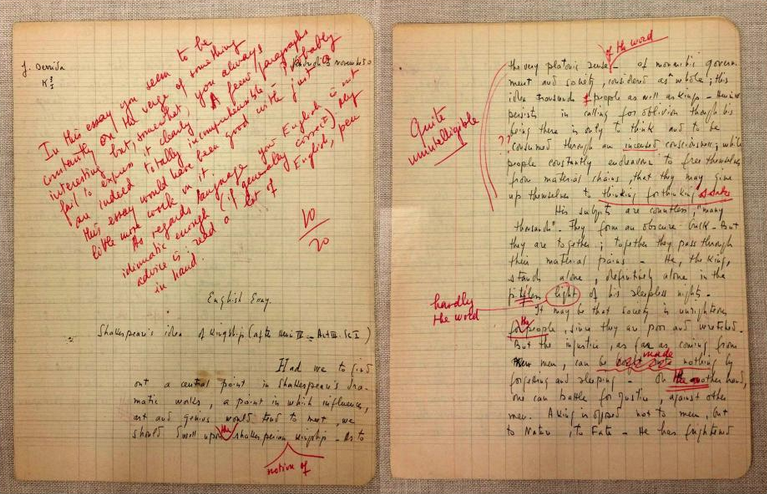
Back­sto­ries of famous­ly accom­plished peo­ple seem incom­plete with­out some past dif­fi­cul­ty or fail­ure to be over­come. In nar­ra­tive terms, these inci­dents pro­vide biogra­phies with their dra­mat­ic ten­sion. We see Abra­ham Lin­coln rise to the high­est office in the land despite the hum­blest of ori­gins; Albert Ein­stein rewrites the­o­ret­i­cal physics against all aca­d­e­m­ic odds, giv­en his sup­posed ear­ly child­hood hand­i­caps. In many cas­es, these sto­ries are apoc­ryphal, or exag­ger­at­ed for effect. But what­ev­er their accu­ra­cy, they always seem to reflect unde­ni­able char­ac­ter traits of the per­son in ques­tion.

In the case of influ­en­tial philoso­pher Jacques Der­ri­da, prog­en­i­tor of the both beloved and reviled crit­i­cal the­o­ry known as “Decon­struc­tion,” the sto­ries of aca­d­e­m­ic strug­gle and great men­tal suf­fer­ing are well-doc­u­ment­ed. Fur­ther­more, their details accord per­fect­ly well with the mature thinker who, remarks the site Crit­i­cal The­o­ry, “can’t answer a sim­ple god-damned ques­tion.” The good-natured snark on dis­play in this descrip­tion more or less sums up the feed­back Der­ri­da received dur­ing some for­ma­tive years of school­ing while he pre­pared for his entrance exams to France’s uni­ver­si­ty sys­tem in 1951 at the age of 20.

Der­ri­da may have “left as big a mark on human­i­ties depart­ments as any sin­gle thinker of the past forty years,” writes The New York Review of Books, but dur­ing this peri­od of his life, he failed his exams twice before final­ly gain­ing admit­tance. Once, he “choked and turned in a blank sheet of paper. The same month, he was award­ed a dis­mal 5 out of 20 on his qual­i­fy­ing exam for a license in phi­los­o­phy.” One essay he sub­mit­ted on Shake­speare, writ­ten in Eng­lish (above), received a 10 out of 20. The feed­back from Derrida’s instruc­tor will sound very famil­iar to per­plexed read­ers of his work. “Quite unin­tel­li­gi­ble,” writes the eval­u­a­tor in one mar­gin­al com­ment. The main com­ment at the top of the paper reads in part:

In this essay you seem to be con­stant­ly on the verge of some­thing inter­est­ing but, some­what, you always fail to explain it clear­ly. A few para­graphs are indeed total­ly incom­pre­hen­si­ble.

Anoth­er exam­in­er—points out the NYRB—left a com­ment on his work “that has since become a com­mon­place”:

An exer­cise in vir­tu­os­i­ty, with unde­ni­able intel­li­gence, but with no par­tic­u­lar rela­tion to the his­to­ry of phi­los­o­phy… Can come back when he is pre­pared to accept the rules and not invent where he needs to be bet­ter informed.

As it turns out, Der­ri­da was not par­tic­u­lar­ly inter­est­ed in the rules, but in invent­ing a new method. Even if his “apos­ta­sy” caused him great men­tal anguish—“nausea, insom­nia, exhaus­tion, and despair” (all nor­mal fea­tures of any high­er edu­ca­tion­al experience)—it’s prob­a­bly fair to say he could not do oth­er­wise. Although his intel­lec­tu­al biog­ra­phy, like the his­to­ry of any revered fig­ure, is unlike­ly to offer a blue­print for suc­cess, there is per­haps at least one les­son we may draw: What­ev­er the dif­fi­cul­ties, you’re prob­a­bly bet­ter off just being your­self.

via Crit­i­cal The­o­ry

Relat­ed Con­tent:

130+ Free Online Phi­los­o­phy Cours­es

Philoso­pher Jacques Der­ri­da Inter­views Jazz Leg­end Ornette Cole­man: Talk Impro­vi­sa­tion, Lan­guage & Racism (1997)

8‑Bit Phi­los­o­phy: Pla­to, Sartre, Der­ri­da & Oth­er Thinkers Explained With Vin­tage Video Games

Jacques Der­ri­da Decon­structs Amer­i­can Atti­tudes

Josh Jones is a writer and musi­cian based in Durham, NC. Fol­low him at @jdmagness

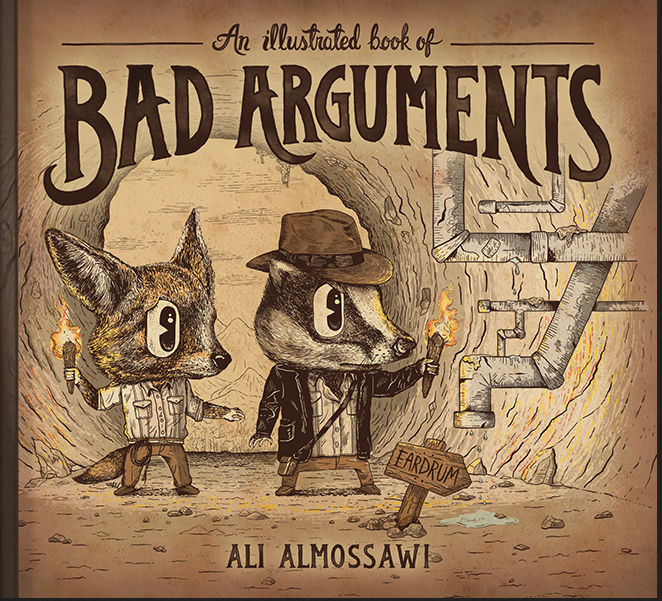
Read An Illustrated Book of Bad Arguments: A Fun Primer on How to Strengthen, Not Weaken, Your Arguments

bad arguments.jpg

The sci­ence of argu­men­ta­tion can seem com­pli­cat­ed, but in day-to-day terms, it quite often comes down to com­pet­ing emo­tions. Polit­i­cal dis­agree­ments thrive on dis­gust and fear; we shut down our rea­son­ing when we feel stressed or angry; and it is dif­fi­cult to get oppo­nents to hear us, whether they agree or not, if we do not exhib­it any sym­pa­thy for their posi­tion, hard as that may be.

How­ev­er, sub­jects in tests told not to feel any­thing about an issue before view­ing media about it tend to be more sup­port­ive. They’ve had some oppor­tu­ni­ty to access high­er order think­ing skills and to over­ride knee-jerk reac­tions. Most argu­ments take place in the fray—family din­ners, online forum wars—but even in these cas­es, apply­ing the best of our rea­son­ing, before, dur­ing, or after, can put us in bet­ter stead. As Ali Almos­sawi, author of An Illus­trat­ed Book of Bad Argu­ments (read online ver­sion here) puts it in his pref­ace:

… for­mal­iz­ing one’s rea­son­ing [can] lead to use­ful ben­e­fits such as clar­i­ty of thought and expres­sion, objec­tiv­i­ty and greater con­fi­dence. The abil­i­ty to ana­lyze argu­ments also help[s] pro­vide a yard­stick for know­ing when to with­draw from dis­cus­sions that would most like­ly be futile.

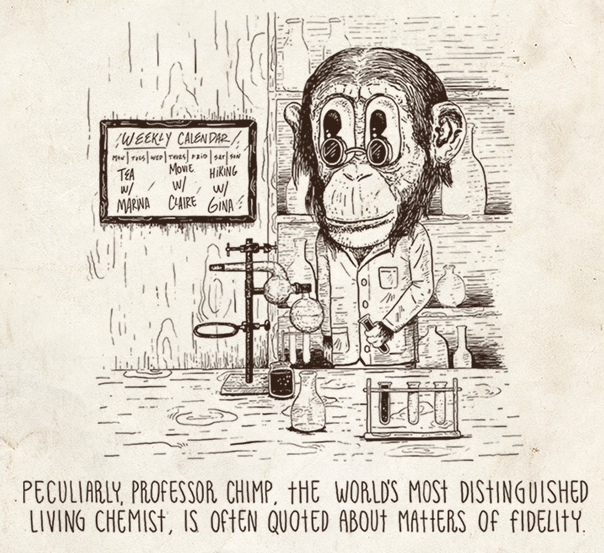
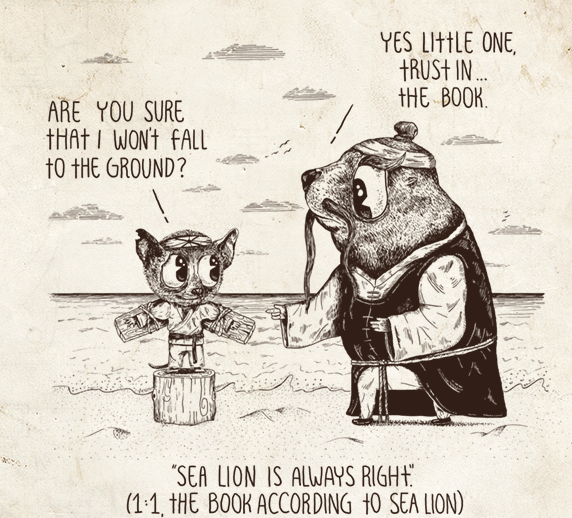
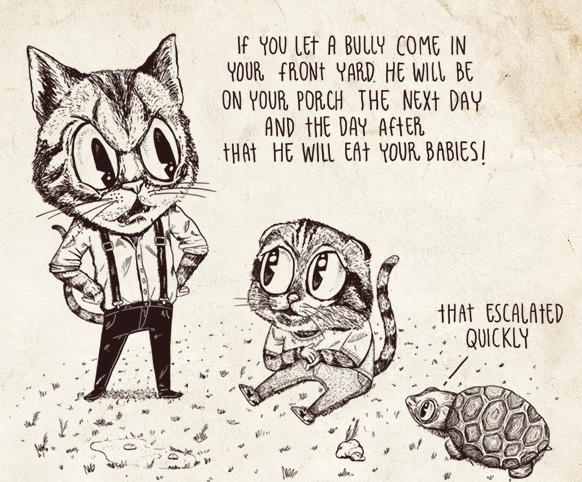
Almossawi’s strat­e­gy to mit­i­gate bad, or wast­ed, think­ing comes in the form of an inoc­u­la­tion. He quotes Stephen King, who “describes his expe­ri­ence of read­ing a par­tic­u­lar­ly ter­ri­ble nov­el as, ‘the lit­er­ary equiv­a­lent of a small­pox vac­ci­na­tion.’” Rather than a Ciceron­ian trea­tise on what makes a good argu­ment, Almos­sawi presents us with nine­teen exam­ples of the bad: infor­mal log­i­cal fal­lac­i­es we may be famil­iar with—Appeal to Author­i­ty (below), Cir­cu­lar Rea­son­ing (fur­ther down), Slip­pery Slope (bottom)—as well as many we may not be.

Appeal to Authority

The twist here is in Ale­jan­dro Giraldo’s play­ful illus­tra­tions, and the mem­o­rable exam­ples that fol­low Almossawi’s descrip­tions. Inspired part­ly by “alle­gories such as Orwell’s Ani­mal Farm and part­ly by the humor­ous non­sense of works such as Lewis Carroll’s sto­ries and poems,” the draw­ings are also high­ly rem­i­nis­cent, if not very much inspired by, the baroque car­toons of Tony Mil­lion­aire. The art is rich and full of sur­pris­es; the sam­ple argu­ments sil­ly but effec­tive at mak­ing the point.

Circular Reasoning

The next time you find your­self melt­ing down over a dis­agree­ment, it will like­ly help to take a time out and refresh your­self with this use­ful primer. If noth­ing else, it will give you some insight into the short­com­ings of your own argu­ments, and maybe some mea­sure of when to drop the sub­ject alto­geth­er. As Richard Feynman—quoted in an epi­logue to the book—once remarked, “The first prin­ci­ple is that you must not fool your­self and you are the eas­i­est per­son to fool.”  Find the book online here, or pur­chase a copy here.

Slippery Slope

Relat­ed Con­tent:

130+ Free Online Phi­los­o­phy Cours­es

A Guide to Log­i­cal Fal­lac­i­es: The “Ad Hominem,” “Straw­man” & Oth­er Fal­lac­i­es Explained in 2‑Minute Videos

Philoso­pher Daniel Den­nett Presents Sev­en Tools For Crit­i­cal Think­ing

Oxford’s Free Course Crit­i­cal Rea­son­ing For Begin­ners Will Teach You to Think Like a Philoso­pher

Josh Jones is a writer and musi­cian based in Durham, NC. Fol­low him at @jdmagness

« Go BackMore in this category... »
Quantcast