Humans of New York: Street Photography as a Celebration of Life

These days any yahoo with a cell phone and access to the Inter­net fan­cies him or her­self a Hen­ri Carti­er-Bres­son, Ruth Orkin or Helen Levitt, but true street pho­tog­ra­phy involves more than just being in the right place at the right time. Bran­don Stan­ton, the self-taught cre­ator of the wild­ly pop­u­lar Humans of New York blog, has the ded­i­ca­tion as well as the eye and the tech­ni­cal mas­tery. His curios­i­ty and com­pas­sion are abun­dant, but what real­ly sets his work apart is its 21st cen­tu­ry imme­di­a­cy.

Dai­ly, Stan­ton wan­ders the streets of New York, approach­es strangers and asks if he can take some pic­tures. A few hours lat­er, those pho­tos light up Face­book, with cap­tions drawn from the brief col­lab­o­ra­tion between sub­ject and pho­tog­ra­ph­er. In short order, each post gar­ners hun­dreds of likes and com­ments. Nasty feed­back is a rar­i­ty. Stan­ton’s fans seem con­tent to fol­low his lead, find­ing much to cel­e­brate in straight­for­ward pos­es of par­ents with chil­dren, fes­tive­ly attired seniors, and proud odd­balls.

Cer­tain inter­ac­tions beg longer nar­ra­tives, which Stan­ton relates in the “Sto­ries” sec­tion of his web­site. These pieces offer char­ac­ter insights, and often doc­u­ment how the pho­to­graph came to be.

dragonmaster

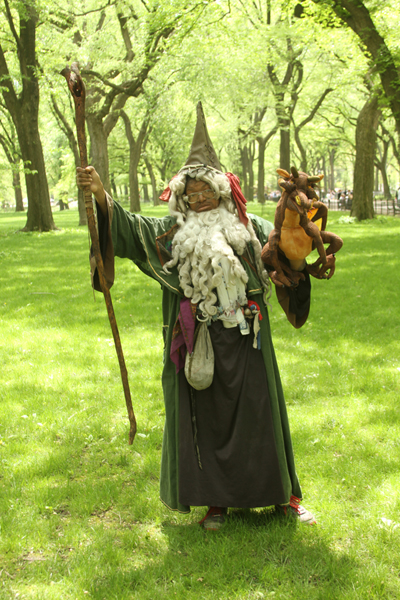
His gift for empa­thy is best exem­pli­fied in his por­trait of Black Wolf, The Drag­on­mas­ter. I’ve run into this dude every­where from the Coney Island Mer­maid Parade to Cen­tral Park, but con­fess that I found his visu­al pre­sen­ta­tion off putting. Unlike me, Stan­ton looked until he found some­thing uni­ver­sal in the delib­er­ate freak­ish­ness.

…we all need to feel impor­tant. Not New York impor­tant, nec­es­sar­i­ly, but impor­tant. We all need to know that there’s a place in this world that only we can fill. Some peo­ple need big­ger places than oth­ers, but every­one needs a place—a hole in the uni­verse that only they can fill. This need is so deep and food-like and so human that we will do any­thing to fill it. We’ll go crazy to feel impor­tant. A pro­tec­tive, evo­lu­tion­ary sort of crazy. When the body has no food, it will break down mus­cle to feed itself. When the ego has no food, it will break down the mind to feed itself. If we have no place in this world, we’ll with­draw from this world, and inhab­it one where we have a place.

Stan­ton’s lens pro­vides the import, yield­ing images so arrest­ing, they stop us in our tracks. Appre­ci­ate his col­lec­tion of extra­or­di­nary humans, then chal­lenge your­self to notice such spec­i­mens in the wild on a dai­ly basis.

Relat­ed Con­tent:

Find­ing Vivian Maier: New Doc­u­men­tary Reveals the Vision of Obscure Chica­go Street Pho­tog­ra­ph­er

Watch as Nation­al Geo­graph­ic Pho­tog­ra­ph­er Steve McCur­ry Shoots the Very Last Roll of Kodachrome

Stan­ley Kubrick’s Jazz Pho­tog­ra­phy and The Film He Almost Made About Jazz Under Nazi Rule

Ayun Hal­l­i­day hopes every Glam­our Don’t will some­day find her­self a Human of New York. Fol­low her @AyunHalliday

Stanley Kubrick’s Jazz Photography and The Film He Almost Made About Jazz Under Nazi Rule

35mm_11169_ 009

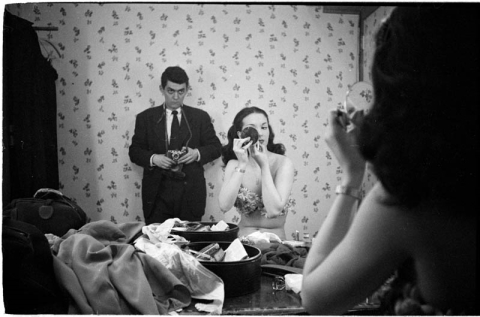
Stan­ley Kubrick (look­ing like a creepy Rowan Atkin­son above) came of age as a chess-hus­tling pho­tog­ra­ph­er in the jazz-sat­u­rat­ed New York City of the 1940s. He began tak­ing pic­tures at the age of thir­teen, when his father bought him a Graflex cam­era. Dur­ing his teenage years, Kubrick flirt­ed with a career as a jazz drum­mer but aban­doned the pur­suit, instead join­ing Look Mag­a­zine as its youngest staff pho­tog­ra­ph­er right out of high school in 1945. His regard for jazz music and cul­ture did not abate, how­ev­er, as you can see from pho­tographs like Jazz Nights below.

Jazz nights Kubrick

Kubrick worked for Look until 1950 (when he left to begin mak­ing films); he cap­tured a wide vari­ety of New York scenes, but often returned to jazz clubs and show­girls, two favorite sub­jects. I’ve often won­dered why Kubrick’s home­town plays so small a role in his films. Unlike also NYC-bred Mar­tin Scors­ese, Kubrick seemed eager to get as far away as he could from the city of his youth, but the filmmaker’s love of for­ties-era jazz nev­er left him. Accord­ing to long­time assis­tant, Tony Frewin, “Stan­ley was a great swing-era jazz fan,” par­tic­u­lar­ly of Ben­ny Good­man.

“He had some reser­va­tions about mod­ern jazz. I think if he had to dis­ap­pear to a desert island, it’d be a lot of swing records he’d take, the music of his child­hood: Count Basie, Duke Elling­ton, Har­ry James.”

Frewin is quot­ed in this Atlantic piece about a film Kubrick almost made but didn’t: an explo­ration of jazz in Europe under the Third Reich. The project began when Kubrick encoun­tered a book in 1985, Swing Under the Nazis, writ­ten by anoth­er jazz enthu­si­ast, Mike Zwerin, who left music for jour­nal­ism and spent years col­lect­ing sto­ries of jazz preser­va­tion­ists in Ger­many and for­mer­ly occu­pied Europe. One of those stories—of Nazi offi­cer Diet­rich Schulz-Koehn—struck Kubrick as Strangelove-ian and noir-ish. Schulz-Koehn pub­lished an ille­gal under­ground newslet­ter report­ing back from var­i­ous jazz scenes in Europe under the pen name, “Dr. Jazz,” the title Kubrick chose for the film project. As Frewin claims:

“Stan­ley thought there was a kind of noir side to this mate­r­i­al…. Per­haps an approach like Dr. Mabuse would have suit­ed the sto­ry. Stan­ley said, ‘If only he were alive, we could have found a role for Peter Lorre.’ ”

Zwerin’s book—and pre­sum­ably Kubrick’s ideas for a fic­tion­al­ized take—traced clan­des­tine con­nec­tions between Nazi Ger­many, Paris, and the Unit­ed States, between black and Jew­ish musi­cians and Nazi music-lovers. We’ll have to imag­ine the odd angles and warped per­spec­tives Kubrick would have found in those sto­ries; his fas­ci­na­tion with Nazis led him to drop Dr. Jazz for a dif­fer­ent project, Aryan Papers, anoth­er unmade film with its own intrigu­ing back­sto­ry.

Relat­ed Con­tent:

Napoleon: The Great­est Movie Stan­ley Kubrick Nev­er Made

Stan­ley Kubrick’s Very First Films: Three Short Doc­u­men­taries

Rare 1960s Audio: Stan­ley Kubrick’s Big Inter­view with The New York­er

Josh Jones is a writer, edi­tor, and musi­cian based in Wash­ing­ton, DC. Fol­low him @jdmagness

Climb Three of the World’s Highest Peaks on Google Street View

Google Peak

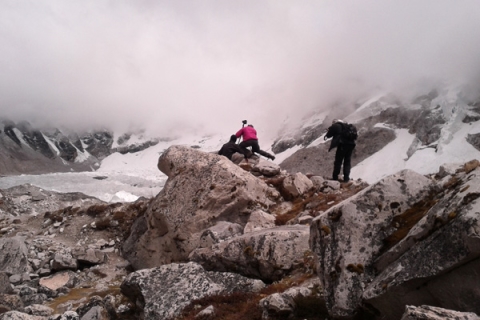
What’s sur­pris­ing about Ever­est Base Camp is the col­or. It’s a flinty, gray place lit­tered with shards of Himalayan sand­stone and shale. Here and there appears a vivid green pool of alpine water. And then there’s the red, blue and green prayer flags hung by Himalayans to blow bless­ings in the wind.

Google Street View’s lat­est project, the World’s High­est Peaks, takes us to Ever­est and two oth­er moun­tains includ­ed in the Sev­en Summits—the high­est moun­tains on each of the sev­en con­ti­nents.

Teams of moun­taineers tot­ed dig­i­tal cam­eras on treks to the top of each moun­tain and inte­grat­ed their images into Google maps so we can trek along with them from the com­fort of our lap­tops, iPhones or Android devices. Like Google Street View’s Ocean gallery, the moun­tain images bring us to places we may nev­er see with our own eyes.

It’s easy to imag­ine the dry, cold cli­mate at Camp Col­era, where hik­ers wait for the weath­er to per­mit a climb of Aconagua, the high­est moun­tain in the Andes. The views of Tan­za­nia from Arrow Glac­i­er are breath­tak­ing. Hik­ers camp here before mak­ing the treach­er­ous ascent to Uhu­ru—the “rooftop of Africa” and the sum­mit of Mt. Kil­i­man­jaro.

One of the things Google does real­ly well is cre­ate gal­leries of images that are the kind we might take our­selves, not fil­tered-lens pro­fes­sion­al shots that belong on cal­en­dars. We see moun­taineers rest­ing and hang­ing out at the frosty Casa de Piedra, on the way up to Aconagua, hik­ers pic­nick­ing at Lemosho Glades as they switch from jeep to foot on the climb up Kil­i­man­jaro, and the weird, aban­doned diesel bar­rels that serve as shel­ter for folks climb­ing Mount Elbrus in Rus­sia.

As usu­al, Google lets us in on the process of col­lect­ing all these images with a fun blog writ­ten by the pho­tog­ra­phers.

Relat­ed Con­tent:  

Reef View: Google Gives Us Stun­ning Under­wa­ter Shots of Great Coral Reefs

Google Presents an Inter­ac­tive Visu­al­iza­tion of 100,000 Stars

Google Street View Takes You on a Panoram­ic Tour of the Grand Canyon

Kate Rix writes about dig­i­tal media and edu­ca­tion. Read more of her work at .

The Life and Controversial Work of Photographer Robert Mapplethorpe Profiled in 1988 Documentary

In March 1988, the BBC’s Are­na turned its lens toward pho­tog­ra­ph­er Robert Map­plethor­pe. The tele­vi­sion doc­u­men­tary series had already spent well over a decade cul­ti­vat­ing a rep­u­ta­tion for cov­er­ing every­thing—Super­man, Philip K. Dick, the fall­en Sovi­et empire, the Ford Cortina—but some view­ers must still have felt a bit star­tled by the choice of such a con­tro­ver­sial artist, let alone by how mild and non-threat­en­ing he ulti­mate­ly seems. Map­plethor­pe had made his name both in por­trai­ture, espe­cial­ly of musi­cians, and in high­ly charged erot­ic imagery. This lat­ter cur­rent in his work, did not, of course, please every­body. By the time the Are­na pro­file aired, Map­plethor­pe, suf­fer­ing from AIDS, would have only one year of life remain­ing, with the worst of the high-pro­file bat­tles over his artis­tic val­ue and/or “obscen­i­ty” still to come.

Though wary of extin­guish­ing the mys­tery of his pho­tographs by say­ing too much about them, Map­plethor­pe does reveal what sounds like an impor­tant ele­ment of his moti­va­tion, espe­cial­ly in the face of the obscen­i­ty charges: “I want­ed to retain the for­bid­den feel­ing of pornog­ra­phy and make an art state­ment, to make some­thing unique­ly my own.” We see the man at work, and we hear a good deal more from him in an on-cam­era inter­view. Nov­el­ist Edmund White appears to pro­vide con­text and com­men­tary, as do sev­er­al of the peo­ple Map­plethor­pe pho­tographed, both those who sought fame and those who oth­er­wise avoid­ed it. Cov­er­ing Map­plethor­pe’s life as much as it does his work, the broad­cast nat­u­ral­ly includes a con­ver­sa­tion with Pat­ti Smith, not­ed rock­er and per­haps the pho­tog­ra­pher’s clos­est friend. For ide­al sup­ple­men­tary read­ing, have a look at Smith’s Map­plethor­pe-cen­tric mem­oir Just Kids, about which we’ve post­ed before.

Relat­ed con­tent:

Pat­ti Smith Remem­bers Robert Map­plethor­pe

Pat­ti Smith Reads Her Final Words to Robert Map­plethor­pe

Col­in Mar­shall hosts and pro­duces Note­book on Cities and Cul­ture and writes essays on lit­er­a­ture, film, cities, Asia, and aes­thet­ics. He’s at work on a book about Los Ange­les, A Los Ange­les Primer. Fol­low him on Twit­ter at @colinmarshall.

FOUND: A New Collection of Rare Photos from the National Geographic Archives

NGS Picture ID:114038

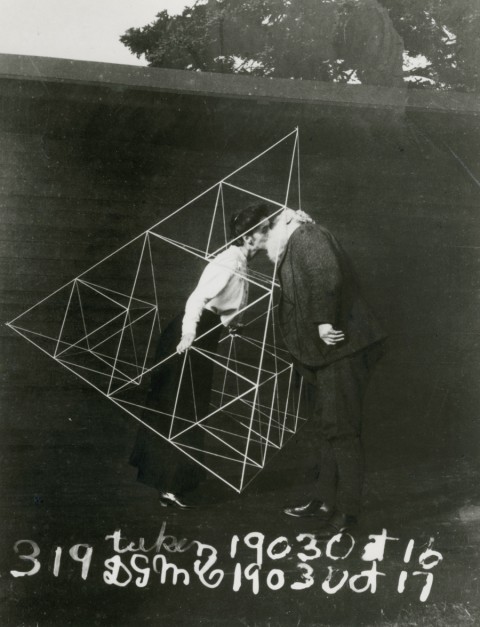
Ladies and gen­tle­men, we present FOUND, a new site that fea­tures a curat­ed col­lec­tion of pho­tog­ra­phy from the Nation­al Geo­graph­ic archives. Launched as part of Nat­Geo’s 125th anniver­sary cel­e­bra­tion (hope­ful­ly we’re around in anoth­er 119 years too!), FOUND show­cas­es “pho­tographs that reveal cul­tures and moments of the past.” Many of these rare pho­tos have nev­er been pub­lished. We picked an imme­di­ate favorite from the col­lec­tion: Alexan­der Gra­ham Bell and his wife Mabel kiss­ing with­in a tetra­he­dral kite, one of his many inven­tions, in Octo­ber 1903. You can start perus­ing the pho­to archive here.

via Kot­tke

Fol­low us on Face­bookTwit­ter and Google Plus and we’ll make it easy to share intel­li­gent media with your friends! 

Drift: Passenger Shoots Striking Short Film Out of Airplane Window

Film­mak­er Tim Sessler got a lit­tle bored on his flight from San Fran­cis­co to Salt Lake City, to Philadel­phia. He says: “After read­ing through the in-flight mag­a­zine, the Sky Mall and the air­plane secu­ri­ty details from front to back, upside down and back­wards, I felt it was the right moment to pull out my cam­era” and start tak­ing aer­i­al footage of the cross-coun­try voy­age. The cam­era? It’s a Canon 5d mk3 with a 24–105mm and Nikon 50mm 1.2 lens (Tim tells us).  The chal­lenge? To keep the cam­era sta­ble, using his knee, the seat, the win­dow, etc., “while avoid­ing any vibra­tion that would cre­ate some nasty rolling-shut­ter-wob­ble.” A good deal more sta­bi­liza­tion took place in post-pro­duc­tion. When you’re done watch­ing Drift, you can check out Sessler’s pri­or attempt at shoot­ing aer­i­al art here.

via Mefi

by | Permalink | Make a Comment ( 8 ) |

Discover Ansel Adams’ 226 Photos of U.S. National Parks (and Another Side of the Legendary Photographer)

Ansel Adams

Amer­i­cans ven­er­ate the work of Ansel Adams but tend to get over­ex­posed to the usu­al Adams prints in den­tists’ wait­ing rooms, cor­po­rate offices, and oth­er anes­thet­ic spaces. At least that’s been my expe­ri­ence. It’s easy to for­get how much Adams’ work vital­ly defined the 20th cen­tu­ry per­cep­tion of the Amer­i­can West, as much as Fred­er­ic Rem­ing­ton’s defined that of the 19th.

Wednes­day, in hon­or of what would have been Adams 111th birth­day, we post­ed a fas­ci­nat­ing 1958 doc­u­men­tary to rein­tro­duce you to the Adams you may have thought you knew—“musician, moun­taineer, writer, teacher, pho­tog­ra­ph­er.” In the midst of redis­cov­er­ing Adams our­selves, we stum­bled upon an incred­i­ble trove of images at the Nation­al Archives—226, to be exact—taken at the behest of the Nation­al Park Ser­vice in 1941.

The pur­pose was to cre­ate a pho­to mur­al for the Depart­ment of the Inte­ri­or Build­ing in Wash­ing­ton, DC with the theme “nature as exem­pli­fied and pro­tect­ed in the U.S. Nation­al Parks.” While WWII put a stop to the project, the pho­to archive Adams left behind still makes an excel­lent case for the fed­er­al preser­va­tion of these land­scapes (or what’s left of them today). This is the kind of pro­pa­gan­da I can get behind.

The image above is 79-AAB‑1 in the archive, or more pro­saical­ly, “Boul­der Dam, 1941.” Adams pho­tographed grand land- and desertscapes all over the West and South­west, includ­ing the Grand Canyon, Mesa Verde, Death Val­ley, Yel­low­stone, Yosemite, Carls­bad Cav­erns, and land belong­ing to Nava­jo and Pueblo Indians—such as image #79-AAA‑6 (below), or “Church, Aco­ma Pueblo,” tak­en in Aco­ma Pueblo, New Mex­i­co.

Ansel Adams2

Like most of Adams’ work, these images are mon­u­men­tal­ly breath­tak­ing in all their high-con­trast vast­ness. Most of them are signed or cap­tioned by Adams. You can browse the archives, view all of the pho­tos, and order prints through the Nation­al Archives web­site.

Relat­ed Con­tent:

Extreme Pho­tog­ra­phy: Shoot­ing Big Climbs at Yosemite

Alfred Stieglitz: The Elo­quent Eye, a Reveal­ing Look at “The Father of Mod­ern Pho­tog­ra­phy”

Watch as Nation­al Geo­graph­ic Pho­tog­ra­ph­er Steve McCur­ry Shoots the Very Last Roll of Kodachrome

Josh Jones is a writer, edi­tor, and musi­cian based in Wash­ing­ton, DC. Fol­low him @jdmagness

The Photographer Reveals the Philosophy, Techniques & Artistry of Edward Weston (1948)

He’s been gone 55 years, but the Amer­i­can West we see in our mind’s eye still owes much to Edward West­on’s pho­to­graph­ic eye. Yet because he worked in more or less every one of the known forms of his day — por­trait, land­scape, still-life, scenes in a vari­ety of tones, and beyond — we tend to think we know West­on’s work when we’ve only seen a frac­tion of it. You can get a sense of the scope of his career by watch­ing The Pho­tog­ra­ph­er above. Pro­duced in 1948, the final year of West­on’s career, the half-hour doc­u­men­tary can thus exam­ine near­ly his entire body of work. The true West­on afi­ciona­do should note that it also exam­ines his home and his cats. (The lat­ter get into the for­mer by way of a cat door made from an old lens board.)

If you have an inter­est in twen­ti­eth-cen­tu­ry Amer­i­can pho­tog­ra­phy, West­on’s name often comes up. But you may also rec­og­nize the name of the film’s direc­tor, Willard Van Dyke. A one­time appren­tice of West­on’s, Van Dyke made the intro­duc­tion between the mas­ter and Ansel Adams, thus form­ing a con­nec­tion between two men who visu­al­ly defined Amer­i­ca. Along with fel­low San Fran­cis­co pho­tog­ra­ph­er Imo­gen Cun­ning­ham, the three would form the Mod­ernist Group f/64. Van Dyke made The Pho­tog­ra­ph­er under the ban­ner of the Unit­ed States Infor­ma­tion Agency, and it has the feel of faint­ly pro­pa­gan­dis­tic opti­mism you’d thus expect, but the film has much to show and say about West­on’s meth­ods and the Cal­i­forn­ian nat­ur­al world he so strik­ing­ly cap­tured.

You will find The Pho­tog­ra­ph­er list­ed in our col­lec­tion of Free Doc­u­men­taries Online, part of our col­lec­tion 4,000+ Free Movies Online: Great Clas­sics, Indies, Noir, West­erns, Doc­u­men­taries & More.

Relat­ed con­tent:

The Cre­ative Process of Ansel Adams Revealed in 1958 Doc­u­men­tary

Hen­ri Carti­er-Bres­son and the Deci­sive Moment

Errol Mor­ris: Two Essen­tial Truths About Pho­tog­ra­phy

Col­in Mar­shall hosts and pro­duces Note­book on Cities and Cul­ture and writes essays on lit­er­a­ture, film, cities, Asia, and aes­thet­ics. He’s at work on a book about Los Ange­les, A Los Ange­les Primer. Fol­low him on Twit­ter at @colinmarshall.

« Go BackMore in this category... »
Quantcast