Read Pablo Picasso’s Poetry: Modernist Meditations on Making Art, World War, Dogs & More

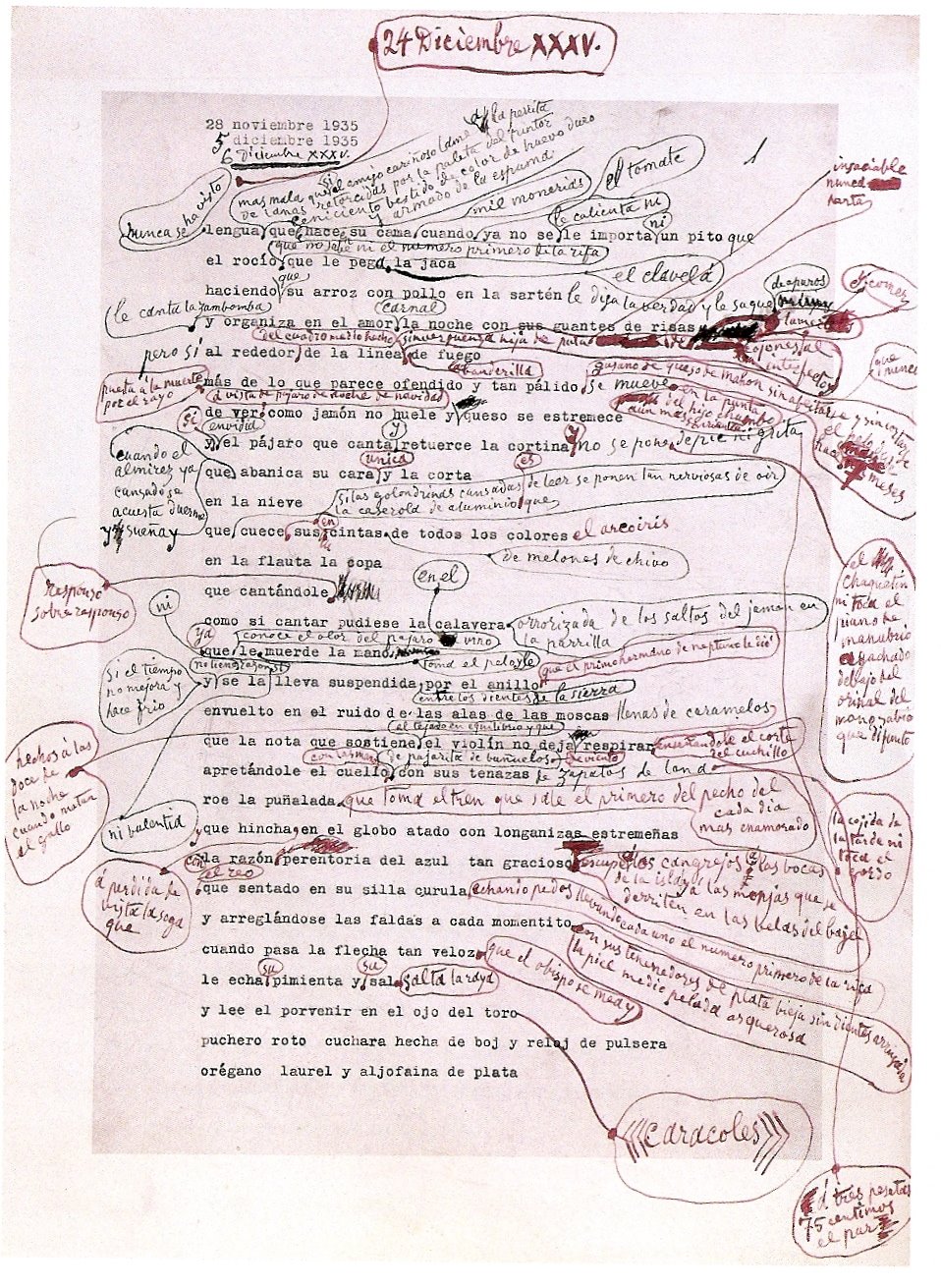
Picasso, annotated poem manuscript, December 24, 1935

What makes Pablo Picas­so such a rep­re­sen­ta­tive 20th-cen­tu­ry artist? Most of it has to do with his par­tic­u­lar achieve­ments, such as the visu­al ground he broke with his Cubist paint­ing, sure, but some of it also has to do with the fact that his inter­ests extend­ed so far beyond paint­ing. We think of cre­ators who could cre­ate across var­i­ous domains as “Renais­sance men,” but con­di­tions a few cen­turies on from the Renais­sance enabled such artists to exert their will across an even wider range of forms. Picas­so, for instance, worked in not just paint­ing but sculp­ture, print­mak­ing, ceram­ics, and let­ters.

That last even includes poet­ry, to which Picas­so announced his com­mit­ment in 1935, at the age of 53. At that point, writes Dan­ger­ous Minds’ Paul Gal­lagher, “he began writ­ing poems almost every day until the sum­mer of 1959,” begin­ning “by daub­ing col­ors for words in a note­book before mov­ing on to using words to sketch images,” ulti­mate­ly pro­duc­ing hun­dreds of poems com­posed pri­mar­i­ly of “stream of con­scious­ness, unpunc­tu­at­ed word asso­ci­a­tion with star­tling jux­ta­po­si­tion of images and at times an obses­sion with sex, death and excre­ment.”

If this sounds like your cup of tea, you can find plen­ty of Picas­so poet­ry over at Ubuweb, which offers A Picas­so Sam­pler: Excerpts from the Bur­ial of the Count of Orgaz & Oth­er Poems free for the view­ing. “Picas­so, like any poet of con­se­quence, is a man ful­ly into his time and into the ter­rors that his time presents,” writes the col­lec­tion’s edi­tor Jerome Rothen­berg. His words reflect “the state of things between the two world wars — the first one still fresh in mind and the rum­blings of the sec­ond start­ing up,” a time and place “where poet­ry becomes — for him as for us — the only lan­guage that makes sense.”

Before div­ing into that col­lec­tion, you can also get a sense of Picas­so’s poet­ry by hav­ing a look at some of his short­er poems col­lect­ed at the site of artist Jef Borgeau, such as “the artist & his mod­el”:

turn your back
but stay in view at the same time
(now look away,
any­thing else con­fus­es)

stand still with­out say­ing a word

you can’t see but this is how
i sep­a­rate day from night

and the star­less sky

from the emp­ty heart

“dogs”:

dogs eat at the night
buried in the yard
they chase the moon in a pack
the white of their teeth
com­pared to stars

the win­dows close against them
iron bars in trans­paren­cy

life clos­es against them

the morn­ing will crush them to dust
with only the wind left
to stir them up

And “the morn­ing of the world”:

i have a face cut from ice
a heart pierced in a thou­sand places
so to remem­ber
always the same voice
the same ges­tures
and my laugh­ter
heavy
as a wall
between you and me

the ones who are most alive
seem the most still

behind the milky way
a shad­ow dances

our gaze climbs toward the stars

Relat­ed Con­tent:

Picas­so Paint­ing on Glass

Pablo Picasso’s Two Favorite Recipes: Eel Stew & Omelette Tor­tilla Niçoise

The Post­cards That Picas­so Illus­trat­ed and Sent to Jean Cocteau, Apol­li­naire & Gertrude Stein

Col­in Mar­shall writes on cities, lan­guage, Asia, and men’s style. He’s at work on a book about Los Ange­les, A Los Ange­les Primer, and the video series The City in Cin­e­ma. Fol­low him on Twit­ter at @colinmarshall or on Face­book.

The Women of the Avant-Garde: An Introduction Featuring Audio by Gertrude Stein, Kathy Acker, Patti Smith & More

stein avant garde

The sto­ry of the avant-garde is nev­er just one sto­ry. But it tends to get told that way, and we tend to think we know how mod­ernist and post-mod­ern lit­er­a­ture and music have tak­en shape: through a series of great men who thwart­ed con­ven­tion and remade lan­guage and sound in ways their pre­de­ces­sors nev­er dreamed. Arthur Rim­baud, Claude Debussy, Ezra Pound, T.S. Eliot, Arnold Schoen­berg, John Cage… We could make many such lists, and we do, all the time, occa­sion­al­ly includ­ing the names of a few women—Yoko Ono, for exam­ple, Gertrude Stein, Vir­ginia Woolf….

But we might write it dif­fer­ent­ly, indeed, for the sim­ple rea­son that women have shaped the avant-garde just as much as men have, as promi­nent poets and com­posers, not sim­ply spous­es of famous men or guest stars in a most­ly male revue. You can hear one ver­sion of such a sto­ry here, thanks to Ubuweb, “the learned and vari­etous online repos­i­to­ry” of “all things avant-garde.” Their pod­cast Avant-Garde All the Time offers us two episodes called “The Women of the Avant-Garde,” host­ed by poet Ken­neth Gold­smith, who admits the sur­vey is a cor­rec­tive for the podcast’s own blind spots. Through a small but select num­ber of poets and musi­cians, Gold­smith aims “to show that there are dozens and dozens of great women artists on Ubuweb”—and every­where else art lives.

Instead of a his­to­ry, Gold­smith gives us some­thing of a con­stel­la­tion of artists, many of them clus­tered tight­ly togeth­er in time and space. New York poets, writ­ers, and musi­cians who came of age in the 70s and 80s—Kathy Ack­er, Lydia Lunch, Lau­rie Ander­son, Pat­ti Smith, Eileen Myles—all fea­ture in Goldsmith’s account. Theirs was a time and place the poet Myles has described as “a moment” that was “very uncen­sored and real­ly excit­ed and it just made you feel like there was room for more.”

It’s a moment that saw a revival in the 90s, when riot grrrl arose to chal­lenge the patri­ar­chal estab­lish­ment. Around this time, artists work­ing in a more aca­d­e­m­ic con­text direct­ly and indi­rect­ly engaged with lit­er­ary his­to­ry ancient and mod­ern. Schol­ar and poet Anne Car­son has twist­ed and trans­lat­ed the texts of Ovid, Aeschy­lus, Sopho­cles, and the writ­ers (and trans­la­tors) of the King James Bible. And Ger­man-Nor­we­gian-French exper­i­men­tal poet Car­o­line Bergvall, whom Gold­smith dis­cuss­es in episode one above, rewrote Chaucer and rearranged Dante.

In episode two, Gold­smith reach­es some­what fur­ther back—to Yoko Ono and Denise Lev­er­tov—and far­ther away from New York, with work from Iran­ian poet and film­mak­er Forugh Far­rokhzad. Promi­nent­ly fea­tured in this sec­ond part of the series, and for good rea­son, is fierce patroness of ear­ly twen­ti­eth cen­tu­ry avant-garde art and writ­ing, Gertrude Stein. Stein’s own poet­ry rad­i­cal­ly dis­rupt­ed the accept­ed, and accept­able, codes of speech and writing—setting a prece­dent for sev­er­al decades of fem­i­nist writ­ers and artists whose appear­ance in archives like Ubuweb, Gold­smith notes, increas­ing­ly come to match or out­weigh those of their male coun­ter­parts. Hear Stein read from her own work at anoth­er such archive, PennSound, and vis­it the Poet­ry Foun­da­tion to stream and down­load more episodes of Ubuweb’s Avant-Garde all the Time, includ­ing an episode devot­ed to Stein called “Almost Com­plete­ly Under­stand­ing.”

Relat­ed Con­tent:

74 Essen­tial Books for Your Per­son­al Library: A List Curat­ed by Female Cre­atives

Watch Pat­ti Smith Read from Vir­ginia Woolf, and Hear the Only Sur­viv­ing Record­ing of Woolf’s Voice

Yoko Ono Lets Audi­ence Cut Up Her Clothes in Con­cep­tu­al Art Per­for­mance (Carnegie Hall, 1965)

Josh Jones is a writer and musi­cian based in Durham, NC. Fol­low him at @jdmagness

Emily Dickinson’s Handwritten Coconut Cake Recipe Hints at How Baking Figured Into Her Creative Process

Emily Dickinson Coconut Cake

The Emi­ly Dick­in­son Muse­um will tell you that “The kitchen appears to be one of the rooms where [Emi­ly] Dick­in­son felt most com­fort­able, per­haps most at home.” But the “many drafts of poems writ­ten on kitchen papers tell us also that this was a space of cre­ative fer­ment for her, and that the writ­ing of poet­ry mixed in her life with the mak­ing of del­i­cate treats.”

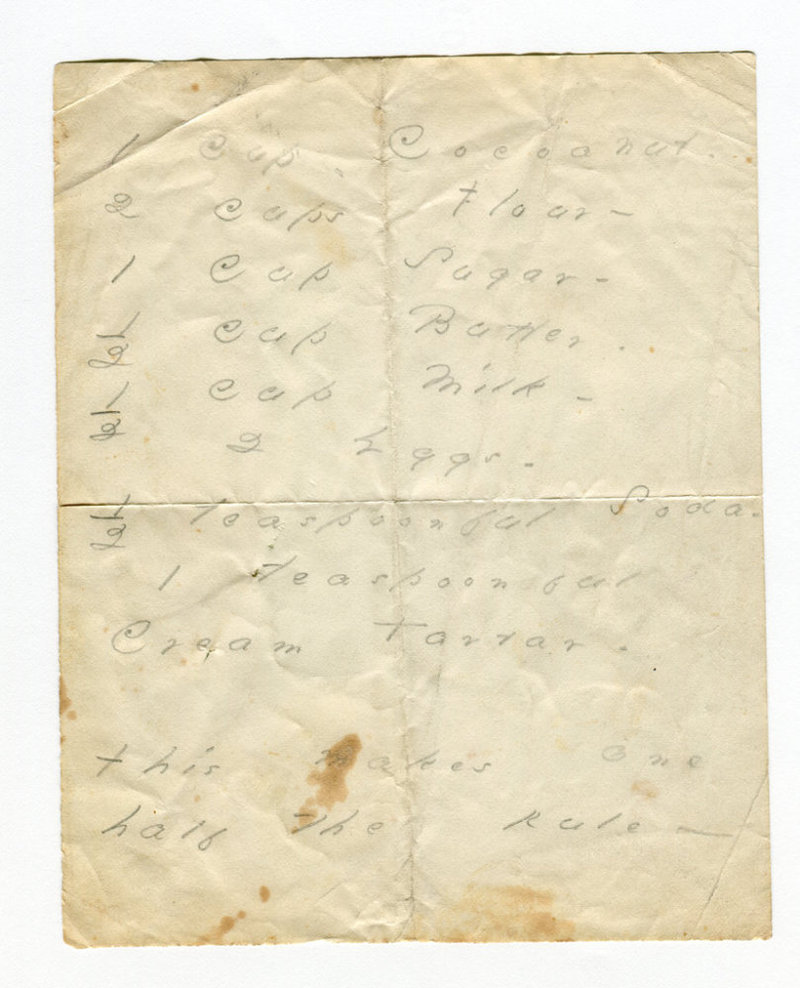
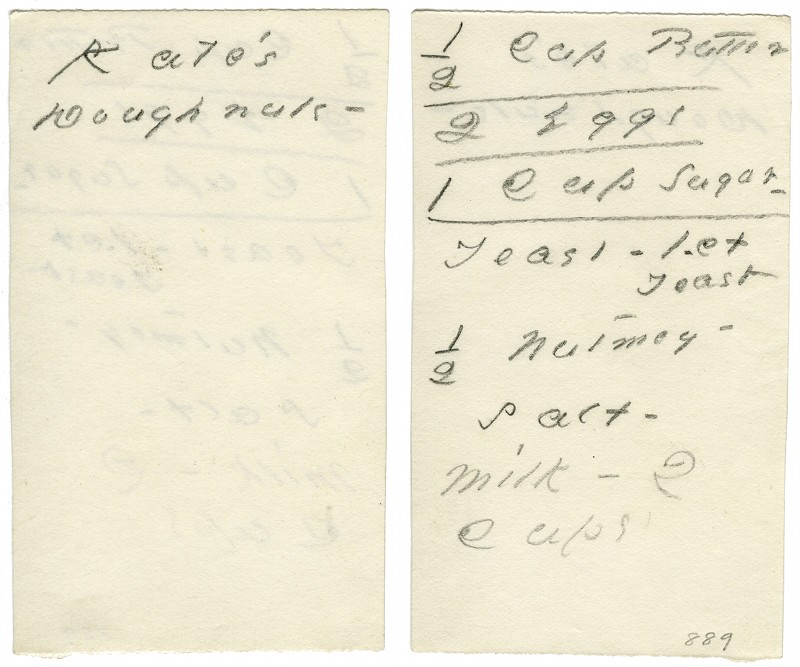
We still have access to Dick­in­son’s gin­ger­bread and dough­nut recipes. But if you want to see an exam­ple of how bak­ing nour­ished her cre­ative process, then look no fur­ther than Emi­ly’s recipe for Coconut Cake. The image above shows the ingre­di­ents scratched out in her hand­writ­ing:

1 cup coconut
2 cups flour
1 cup sug­ar
1/2 cup but­ter
1/2 cup milk
2 eggs
1/2 tea­spoon soda
1 tea­spoon cream of tar­tar

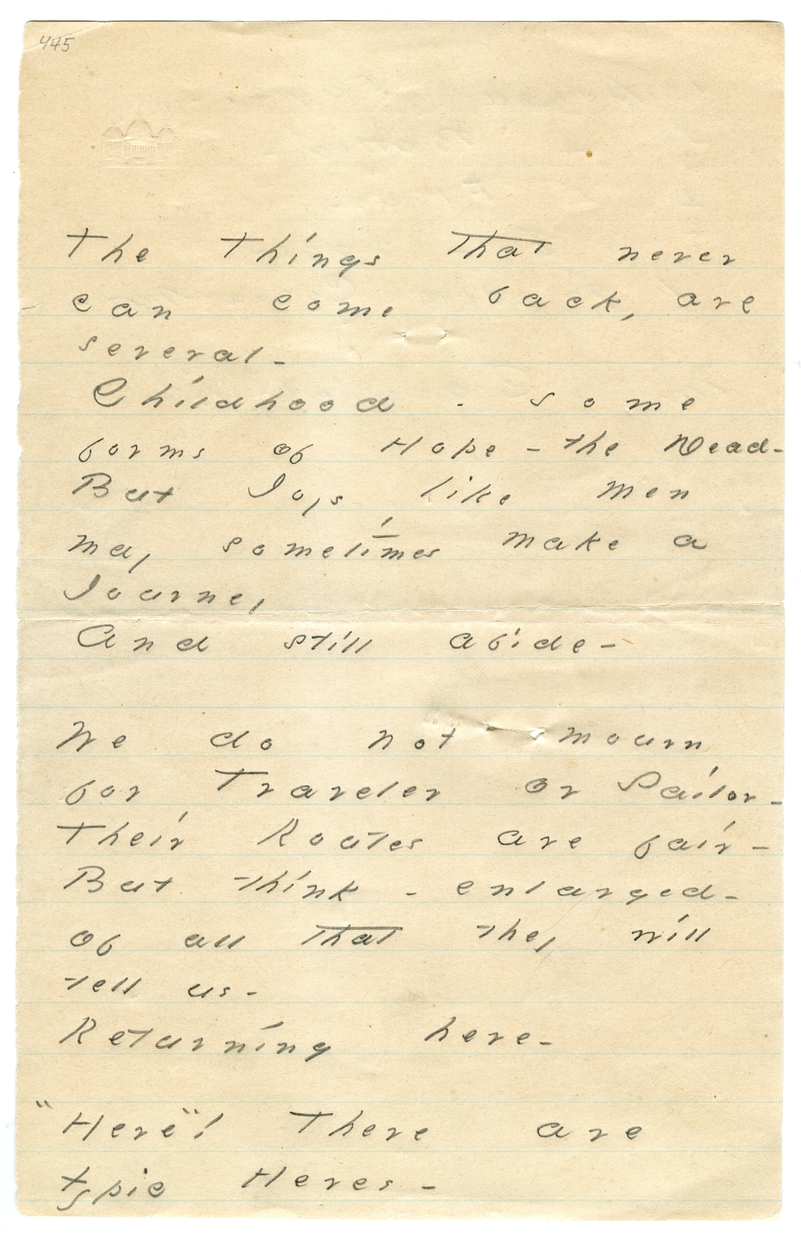
On the flip side of the recipe, Dick­in­son then wrote the begin­ning of a poem, “The Things that nev­er can come back, are sev­er­al” (read the tran­script here). Pre­sum­ably the recipe inspired the poem, but per­haps it was the oth­er way around?

rsz_2things_that_never_can_come_back_are_several

If you’re look­ing for your own source of cre­ative inspi­ra­tion, you can try out Dick­in­son’s recipes for Black Cake and also Rye and Indi­an Bread here. (Accord­ing to The Pub­lic Domain Review, “her loaf of Indi­an and Rye won sec­ond prize in the Amherst Cat­tle Show of 1856.”) And you can even head up to the Emi­ly Dick­in­son Muse­um in Amherst, MA and take part in their annu­al bak­ing con­test.

Over at NPR, Dick­in­son schol­ar Nel­ly Lam­bert has more on the poet­’s rela­tion­ship to bak­ing and food.

Relat­ed Con­tent:

The Online Emi­ly Dick­in­son Archive Makes Thou­sands of the Poet’s Man­u­scripts Freely Avail­able

The Sec­ond Known Pho­to of Emi­ly Dick­in­son Emerges

Watch an Ani­mat­ed Film of Emi­ly Dickinson’s Poem ‘I Start­ed Early–Took My Dog’

by | Permalink | Make a Comment ( 4 ) |

Free: Hours of Jack Kerouac Reading Beat Poems & Verse

kerouac albums

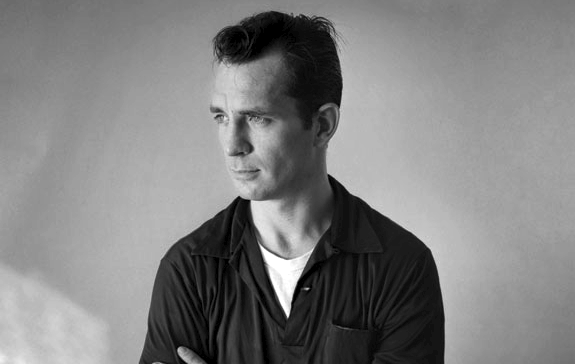
Image by Tom Palum­bo, via Wiki­me­dia Com­mons

A high school friend who paid me a vis­it last week­end said she still does­n’t know whether read­ing Jack Ker­ouac saved or ruined her life. I, for one, could think of no high­er praise for a writer. I believe she entered that dis­solute Beat­’s lit­er­ary whirl­wind through the por­tal of a sec­ond-hand copy of his Amer­i­ca-criss­cross­ing nov­el On the Road, as many young peo­ple do, but since then the inter­net has made it much eas­i­er to get into Ker­ouac through a vari­ety of oth­er media as well.

Long-play­ing records, for instance: if you hap­pen to use Spo­ti­fy (and if you don’t yet, you can down­load the free soft­ware to get onboard here), you already have access to a good deal of mate­r­i­al deliv­ered in Ker­ouac’s own voice, some­times against music. On 1959’s Poet­ry for the Beat Gen­er­a­tion (above), an album he put togeth­er with Steve Allen (on whose talk show he famous­ly appeared), he reads his work while Allen accom­pa­nies him on the piano. That same year saw the release of Blues and Haikus, fea­tur­ing that same Ker­ouac voice and sen­si­bil­i­ty, but backed this time by jazz sax­o­phon­ists Al Cohn and Zoot Sims.

On 1960’s Read­ings by Jack Ker­ouac on the Beat Gen­er­a­tion (bot­tom), his final spo­ken-word album, Ker­ouac goes with­out jazzmen entire­ly. But then, some of his die-hard fans might argue that he does­n’t need them, that his use of the Eng­lish lan­guage con­sti­tutes more than enough wild, impro­vi­sa­tion­al, but some­how still dis­ci­plined music by itself. That may sound like a bit much, but Ker­ouac actu­al­ly had a lot in com­mon with his fel­low Amer­i­can icons in the realm of jazz, not least a lifestyle that led him into an ear­ly grave and a lega­cy as a fig­ure both trag­ic and inspir­ing in equal mea­sure. Maybe you hear it in his prose; maybe you’ll hear it in his voice.


As a final bonus, you can stream a fourth album, On the Beat Gen­er­a­tion.

Relat­ed Con­tent:

Down­load 55 Free Online Lit­er­a­ture Cours­es: From Dante and Mil­ton to Ker­ouac and Tolkien

An 18-Hour Playlist of Read­ings by the Beats: Ker­ouac, Gins­berg & Even Bukows­ki Too

Jack Ker­ouac Reads from On the Road (1959)

Jack Kerouac’s Hand-Drawn Map of the Hitch­hik­ing Trip Nar­rat­ed in On the Road

Col­in Mar­shall writes on cities, lan­guage, Asia, and men’s style. He’s at work on a book about Los Ange­les, A Los Ange­les Primer, and the video series The City in Cin­e­ma. Fol­low him on Twit­ter at @colinmarshall or on Face­book.

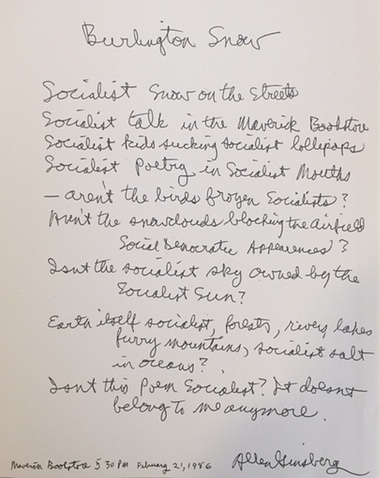
Allen Ginsberg’s Handwritten Poem For Bernie Sanders, “Burlington Snow” (1986)

Ginsberg Sanders

Spe­cial Col­lec­tions, Uni­ver­si­ty of Ver­mont Libraries

No mat­ter how much of a polit­i­cal junkie you are, you must sure­ly have had enough of the spec­ta­cle that is the 2016 cam­paign for the pres­i­den­cy. At cur­rent count, we are faced with an astound­ing 15 can­di­dates for the Repub­li­can nom­i­na­tion, one of whom is doing his best to revive the ugli­est nativism of the 19th cen­tu­ry. On the oth­er side of our bina­ry par­ty sys­tem, we have only One. Or so it would seem if you were to pay atten­tion to much of the media cov­er­age, which only rarely men­tions the hand­ful of oth­er Demo­c­ra­t­ic con­tenders and most­ly ignores the ris­ing tide of sup­port for Bernie Sanders.

The Sen­a­tor from Ver­mont has unabashed­ly referred to him­self, through­out his long polit­i­cal career, as a demo­c­ra­t­ic social­ist or, on occa­sion, sim­ply a “socialist”—a word that strikes fear into the heart of many an Amer­i­can, and res­onates wide­ly with anoth­er por­tion of the elec­torate. Debates over what this means rage on. George Will calls Sanders’ social­ism a “cha­rade.” Thor Ben­son in the New Repub­lic accus­es him of play­ing “loose with the ter­mi­nol­o­gy.” The his­to­ry and cur­rent state of “social­ism” is so long and com­plex that no one def­i­n­i­tion seems to suit. Its polit­i­cal bag­gage in Amer­i­can dis­course, how­ev­er, is unde­ni­able.

This was just as true in 1986, when Allen Gins­berg wrote a poem in praise of Sanders, then may­or of Burling­ton, Ver­mont. Gins­berg play­ful­ly draws on the loose asso­ci­a­tions we have with the word, ham­mer­ing it home with tongue-in-cheek rep­e­ti­tion, then turn­ing reflec­tive.

Social­ist snow on the streets
Social­ist talk in the Mav­er­ick book­store
Social­ist kids suck­ing social­ist lol­lipops
Social­ist poet­ry in social­ist mouths
—aren’t the birds frozen social­ists?
Aren’t the snow­clouds block­ing the air­field
Social Demo­c­ra­t­ic Appear­ances?
Isn’t the social­ist sky owned by
the social­ist sun?
Earth itself social­ist, forests, rivers, lakes
fur­ry moun­tains, social­ist salt
in oceans?
Isn’t this poem social­ist? It does­n’t
belong to me any­more.

Call­ing it “Burling­ton Snow,” Gins­berg com­posed the poem—equal parts goofy and sincere—on a vis­it to the city, one of many pil­grim­ages made by left-wing writ­ers and artists after Sanders’ string of attempt­ed for­eign pol­i­cy inter­ven­tions. You can read all about the opti­mistic socialist—or demo­c­ra­t­ic social­ist, or whatever—in Paul Lewis’ Guardian por­trait.

via Moth­er Jones

Relat­ed Con­tent:

Allen Gins­berg & The Clash Per­form the Punk Poem “Cap­i­tal Air,” Live Onstage in Times Square (1981)

‘The Bal­lad of the Skele­tons’: Allen Ginsberg’s 1996 Col­lab­o­ra­tion with Philip Glass and Paul McCart­ney

The First Record­ing of Allen Gins­berg Read­ing “Howl” (1956)

Josh Jones is a writer and musi­cian based in Durham, NC. Fol­low him at @jdmagness

Hear Dylan Thomas Read Three Poems by W.H. Auden, Including “September 1, 1939”

Sep­a­rat­ed by only sev­en years, Dylan Thomas and W.H. Auden had what might be called a friend­ly rivalry—at least, that is, from Thomas’ point of view. The hard-drink­ing Welsh poet once wished Auden a hap­py sev­en­ti­eth birthday—on his thir­ti­eth. It’s a typ­i­cal com­ment, writes biog­ra­ph­er Wal­ford Davies, expressed “with the attrac­tive brio of a younger broth­er.” Thomas wrote of his admi­ra­tion for “the mature, reli­gious, and log­i­cal fight­er,” but dep­re­cat­ed “the boy bushranger” in the old­er, more reserved Auden.

Whether we take these appraisals as gen­tle rib­bing or—as anoth­er Thomas biog­ra­ph­er Andrew Lycett writes—“disdain,” it does not seem that Thomas felt such antipa­thy for Auden’s poet­ry. One would think the con­trary lis­ten­ing to him read Auden’s “As I Walked Out One Evening,” above. Thomas, Lycett tells us, “approved of Auden’s propen­si­ty for rad­i­cal cul­tur­al change” but dis­ap­proved of the way his “polit­i­cal tub thump­ing got in the way of his poet­ry.”

Thomas uses his sonorous voice in a the­atri­cal way that well-suits Auden’s state­ly verse. That voice became a reg­u­lar fea­ture for sev­er­al years on the BBC for whom Thomas record­ed broad­cast after broad­cast of read­ings and radio plays in the late 1940s. As we’ve detailed in a pre­vi­ous post, he made many record­ings of his own work as well, includ­ing of his most well known poem, “Do Not Go Gen­tle into that Good Night,” which he reads in somber, mea­sured tones. Above, in a read­ing of Auden’s “Sep­tem­ber 1, 1939,” Thomas takes a strained, almost affect­ed, tone, per­haps evinc­ing some aver­sion to the “polit­i­cal tub-thump­ing” in Auden’s poem. His breath­ing is labored, and he was, in all like­li­hood, drunk. He usu­al­ly was, and he did suf­fer from a breath­ing con­di­tion. Thomas sad­ly drank him­self to death, while Auden, who didn’t quite see sev­en­ty, lived on twen­ty more years, and record­ed his own read­ings of “As I Went Walk­ing” and “Sep­tem­ber 1, 1939.”

Both the lat­ter Auden poem and the one Thomas reads above, “Song of the Mas­ter and Boatswain,” begin in bars: the speak­er in “Sep­tem­ber 1” sits “in one of the dives / on Fifty-Sec­ond Street.” “Song of the Mas­ter and the Boatswain” opens “At Dirty Dick­’s and Slop­py Joe’s” where “we drank our liquor straight.” Aside from these set­tings nei­ther has any­thing at all in com­mon. “Mas­ter and Boatswain” is almost bawdy, but ends on a cyn­i­cal note. Writ­ten days after the event and dense with philo­soph­i­cal and clas­si­cal allu­sions, “Sep­tem­ber 1” laments Germany’s inva­sion of Poland, the effec­tive begin­ning of what would become World War II. Thomas was a more anar­chic, less restrained poet, and Auden, the more edu­cat­ed, and dis­ci­plined, of the two. But it can cer­tain­ly be said that they shared a sim­i­lar sen­si­bil­i­ty in a taste for the trag­ic.

You can immerse your­self in Auden and Thomas’ poet­ry by pick­ing up copies of Col­lect­ed Poems: Auden and The Col­lect­ed Poems of Dylan Thomas: The Orig­i­nal Edi­tion.

Relat­ed Con­tent:

Dylan Thomas Recites ‘Do Not Go Gen­tle into That Good Night’ and Oth­er Poems

“Sep­tem­ber 1, 1939″ by W.H. Auden

Josh Jones is a writer and musi­cian based in Durham, NC. Fol­low him at @jdmagness

Every Grateful Dead Song Annotated in Hypertext: Web Project Reveals the Deep Literary Foundations of the Dead’s Lyrics

Dead Last Show Poster

Just about twen­ty years ago, on July 9, 1995, the Grate­ful Dead played their last show with Jer­ry Gar­cia. Nei­ther the fans, nor the band knew this would be so, but any­one pay­ing atten­tion could have seen it com­ing. Gar­ci­a’s cocaine and hero­in use had long dom­i­nat­ed his life; despite inter­ven­tions by his band­mates, a few stints in rehab, a dia­bet­ic coma, and the death of key­boardist Brent Myd­land, the singer and gui­tarist con­tin­ued to relapse. Exact­ly one month after that final con­cert, he died of a heart attack.

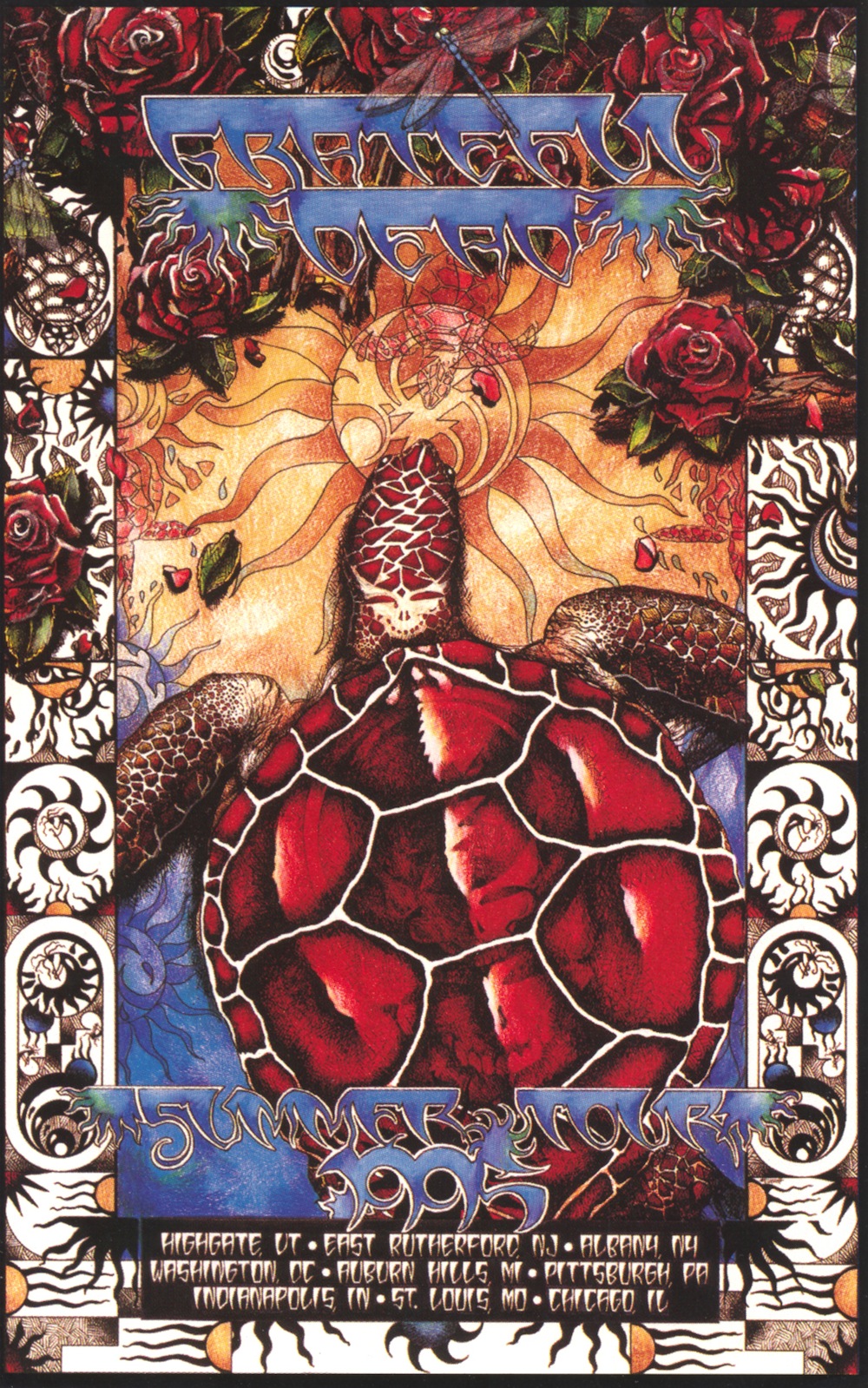
And what a poignant show it was. (See the tour poster above, hear the entire set below, and see a setlist here), open­ing with the band’s come­back hit “Touch of Grey” and clos­ing with a fire­works dis­play set to Hen­drix’s “Star Span­gled Ban­ner.”

Gar­cia sounds frail, his voice a bit thin and ragged, and the lyrics—penned by Robert Hunter—strike a painful­ly iron­ic note: “I will get by… I will sur­vive.” Just last night, twen­ty years after that moment, fans once again said good­bye to the Dead, as they played their last of three final con­certs with­out Jer­ry at Chicago’s Sol­dier’s Field, the same venue where Gar­cia last sang “Touch of Grey“ ‘s fate­ful words.

The Grate­ful Dead­’s offi­cial out­put may have been uneven at times, marred by excess and tragedy, but the band’s words remained con­sis­tent­ly inspired and inspir­ing, each song a poet­ic vignette filled with oblique ref­er­ences and wit­ty, heart­felt turns of phrase. We most­ly have Robert Hunter to thank for those hun­dreds of mem­o­rable vers­es. An accom­plished poet and trans­la­tor of Rain­er Maria Rilke’s Duino Ele­gies and Son­nets to Orpheus, Hunter served, writes Rolling Stone, as the band’s “pri­ma­ry in-house poet.” In a rare and mov­ing inter­view with the mag­a­zine, the reclu­sive writer mus­es on his for­mer role, and hedges on the mean­ing of his songs: “I’m open to ques­tions about inter­pre­ta­tion, but I gen­er­al­ly skate around my answers because I don’t want to put those songs in a box.”

Hunter’s reluc­tance to inter­pret his lyrics has­n’t stopped fans and schol­ars of the Dead from doing so. There have been uni­ver­si­ty exhibits and aca­d­e­m­ic con­fer­ences devot­ed to the Grate­ful Dead. And true stu­dents of the band can study the many lit­er­ary ref­er­ences and allu­sions in their song­writ­ing with The Anno­tat­ed Grate­ful Dead Lyrics, an online project begun in 1995 by UC San­ta Cruz Research Asso­ciate David Dodd, and turned into a book in 2005. The exten­sive hyper­text ver­sion of the project includes edi­to­r­i­al foot­notes explain­ing each song’s ref­er­ences, with sources. Also includ­ed in these gloss­es are “notes from read­ers,” who weigh in with their own spec­u­la­tions and schol­ar­ly adden­da.

If you have any doubt about just how steeped in poet­ic his­to­ry the pre-emi­nent hip­pie band’s cat­a­log is, see for exam­ple the anno­tat­ed “Ter­rapin Sta­tion,” a song that reach­es back to Homer and alludes to Lewis Car­roll, William Blake, Pla­to, and T.S. Eliot. Or, so, at least, say Dodd and his read­ers, though some of their inter­pre­ta­tions may seem a bit ten­u­ous. Hunter him­self told Rolling Stone, “peo­ple think I have a lot more inten­tion at what I do because it sounds very focused and inten­tion­al. Some­times I just write the next line that occurs to me, and then I stand back and look at it and say, ‘This looks like it works.’ ” But just because a poet isn’t con­scious­ly quot­ing Homer does­n’t mean he isn’t, espe­cial­ly a poet as dense­ly allu­sive as Robert Hunter.

Take, for exam­ple, “Uncle John’s Band,” which con­tains the line “Ain’t no time to hate.” One read­er, Aaron Bibb, points us toward these lines of Emi­ly Dick­in­son:

I had no time to Hate—
Because
The Grave would hin­der Me—
And Life was not so
Ample I
Could finish—Enmity—

Woven through­out the song are ref­er­ences to Amer­i­can poet­ry and folk music—from Robert Frost’s “Fire and Ice,” to the Gads­den Flag, to an Appalachi­an rag. Anoth­er of the band’s most pop­u­lar songs, “Friend of the Dev­il,” cribs its title and cho­rus from Amer­i­can folk singer Bill Mor­ris­sey’s song “Car and Driver”—and also ref­er­ences Don McLean’s “Amer­i­can Pie.” Draw­ing as much on the West­ern lit­er­ary canon as on the Amer­i­can song­book, Hunter’s writ­ing sit­u­ates the Dead­’s Amer­i­cana in a tra­di­tion stretch­ing over cen­turies and con­ti­nents, giv­ing their music depth and com­plex­i­ty few oth­er rock bands can claim.

The online anno­tat­ed Grate­ful Dead also includes “The­mat­ic Essays,” a bib­li­og­ra­phy and “bib­li­og­ra­phy of song­books,” films and videos, and discogra­phies for the band and each core mem­ber. There may be no more exhaus­tive a ref­er­ence for the band’s out­put con­tained all in one place, though read­ers of this post may know of com­pa­ra­ble guides in the vast sea of Grate­ful Dead com­men­tary and com­pendi­ums online, in print, and on tape. The band may have played its last show twen­ty years ago, and again just last night with­out its beloved leader, but the pro­lif­er­at­ing, seri­ous study of their songcraft and lyri­cal genius shows us that they will, indeed, sur­vive.

Relat­ed Con­tent:

The Grate­ful Dead’s “Rip­ple” Played by Musi­cians Around the World

10,173 Free Grate­ful Dead Con­cert Record­ings in the Inter­net Archive

The Grate­ful Dead’s “Ulti­mate Boot­leg” Now Online & Added to the Library of Con­gress’ Nation­al Record­ing Reg­istry

Josh Jones is a writer and musi­cian based in Durham, NC. Fol­low him at @jdmagness

A Day in the Life of Zen Monk Leonard Cohen: A 1996 Documentary

I don’t think any­body real­ly knows why they’re doing any­thing. If you stop some­one on the sub­way and say, “Where are you going — in the deep­est sense of the word?” you can’t real­ly expect an answer. I real­ly don’t know why I’m here. It’s a mat­ter of “What else would I be doing?” Do I want to be Frank Sina­tra, who’s real­ly great, and do I want to have great ret­ro­spec­tives of my work? I’m not real­ly inter­est­ed in being the old­est folksinger around. 

- Leonard Cohen, speak­ing to author Pico Iyer in April 1998


One need not have lived a rock n’ roll lifestyle to be famil­iar with its plea­sures and pit­falls. That heady mix of drugs, sex, and pub­lic adu­la­tion isn’t sus­tain­able. Some can’t sur­vive it. Some retire to a more staid domes­tic scene while oth­ers are left chas­ing a spot­light that’s unlike­ly to favor them twice. But rarely do you find one who choos­es to give it all up to become a Bud­dhist monk.

Well, not all.

As direc­tor Armelle Brusq’s 1996 doc­u­men­tary, above, shows, singer-songwriter—and yes—Zen monk Leonard Cohen’s rou­tine at the Mount Baldy Zen Cen­ter out­side Los Ange­les extend­ed beyond the usu­al mind­ful­ness prac­tice. His sim­ple quar­ters were out­fit­ted with a com­put­er, print­er, radio, and a Tech­nics KN 3000 syn­the­siz­er. He some­times doffed his robes to enter the record­ing stu­dio or enjoy a bowl of soup at Canter’s Deli. Com­par­a­tive­ly, his world­ly attach­ments were few, divvied between the pro­fes­sion­al­ly nec­es­sary and the fond. Still, call­ing his daugh­ter, Lor­ca, to pass along a veterinarian’s update, Cohen sounds every inch the dot­ing Jew­ish dad.

Celebri­ty devo­tion to Kab­bal­ah or var­i­ous East­ern spir­i­tu­al prac­tices often stinks of the super­fi­cial, a pass­ing fan­cy that won’t last more than a year or two. Cohen’s rela­tion to Zen Bud­dhism is endur­ing, a gift from his long­time friend and teacher, Mount Baldy’s Roshi, Kyozan Joshu Sasa­ki, who died last year at the age of 107.

One of Cohen’s respon­si­bil­i­ties was help­ing Roshi with the myr­i­ad small details the elder­ly abbot would have had dif­fi­cul­ty nav­i­gat­ing on his own. Cohen seems entire­ly at peace in the road­ie role, keep­ing track of lug­gage while on tour, and fetch­ing cones for the entire par­ty from a near­by ice cream truck.

The poem Cohen penned in hon­or of Roshi’s 89th birth­day is of a piece with his most endur­ing work. Think Suzanne’s oranges were the only fruit? Not so:

His stomach’s very hap­py

The prunes are work­ing well

There’s no one left in heav­en

And there’s no one going to hell

Film­mak­er Brusq is chiefly con­cerned with doc­u­ment­ing Cohen’s spir­i­tu­al real­i­ty, but she toss­es in a few treats for those hun­gry for pop iconog­ra­phy, par­tic­u­lar­ly the impromp­tu show-and-tell at the 25-minute mark, when the crew peeks into the leg­end’s mem­o­ra­bil­ia-filled LA office.

The sound­track, too, is music to a Cohen fan’s ears, and lyri­cal­ly inspired giv­en the sub­ject:

Wait­ing for The Mir­a­cle

Teach­ers

A Thou­sand Kiss­es Deep 

Democ­ra­cy

The Future

Suzanne

Dance Me to the End of Love

Clos­ing Time

Nev­er Any Good

Relat­ed Con­tent:

How Leonard Cohen’s Stint As a Bud­dhist Monk Can Help You Live an Enlight­ened Life

Leonard Cohen Nar­rates Film on The Tibetan Book of the Dead, Fea­tur­ing the Dalai Lama (1994)

Ladies and Gen­tle­men… Mr. Leonard Cohen: The Poet-Musi­cian Fea­tured in a 1965 Doc­u­men­tary

200 Free Doc­u­men­taries Online

Ayun Hal­l­i­day is an author, illus­tra­tor, and Chief Pri­ma­tol­o­gist of the East Vil­lage Inky zine. Hap­py 18th birth­day to her favorite for­mer­ly-17-year-old play­wright! Fol­low her @AyunHalliday

« Go BackMore in this category... »
Quantcast