The Liberal Arts Can Make People Less Susceptible to Authoritarianism, a New Study Finds

“Cor­re­la­tion does not equal cau­sa­tion” isn’t always a fun thing to say at par­ties, but it is always a good phrase to keep in mind when approach­ing sur­vey data. Does the study real­ly show that? Might it show the oppo­site? Does it con­firm pre-exist­ing bias­es or fail to acknowl­edge valid coun­terev­i­dence? A lit­tle bit of crit­i­cal think­ing can turn away a lot of trou­ble.

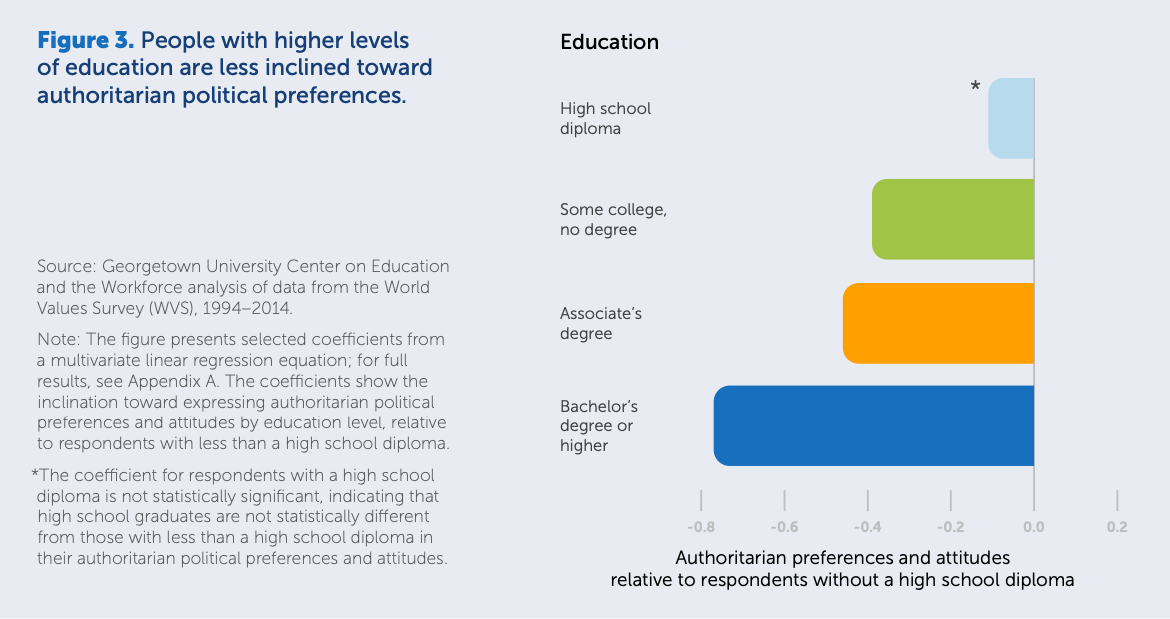
I’ll admit, a new study, “The Role of Edu­ca­tion in Tam­ing Author­i­tar­i­an Atti­tudes,” con­firms many of my own bias­es, sug­gest­ing that high­er edu­ca­tion, espe­cial­ly the lib­er­al arts, reduces author­i­tar­i­an atti­tudes around the world. The claim comes from George­town University’s Cen­ter on Edu­ca­tion and the Work­force, which ana­lyzed and aggre­gat­ed data from World Val­ues Sur­veys con­duct­ed between 1994 and 2016. The study takes it for grant­ed that ris­ing author­i­tar­i­an­ism is not a social good, or at least that it pos­es a dis­tinct threat to demo­c­ra­t­ic republics, and it aims to show how “high­er edu­ca­tion can pro­tect democ­ra­cy.”

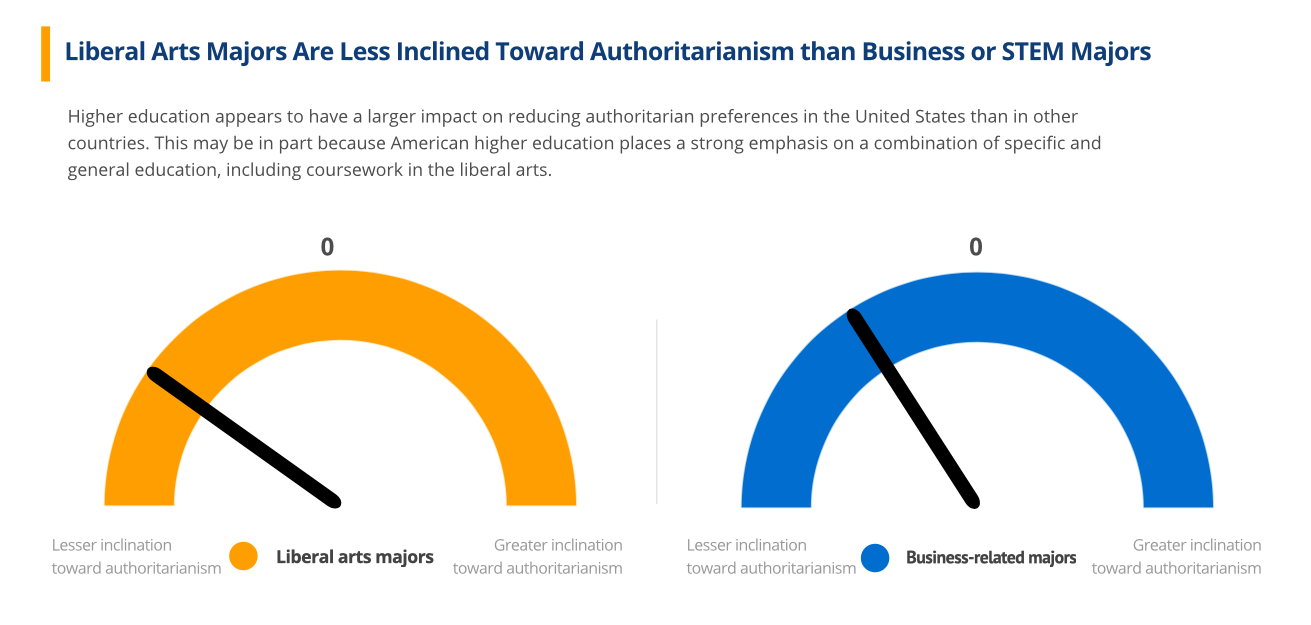
Authoritarianism—defined as enforc­ing “group con­for­mi­ty and strict alle­giance to author­i­ty at the expense of per­son­al freedoms”—seems vast­ly more preva­lent among those with only a high school edu­ca­tion. “Among col­lege grad­u­ates,” Eliz­a­beth Red­den writes at Inside High­er Ed, “hold­ers of lib­er­al art degrees are less inclined to express author­i­tar­i­an atti­tudes and pref­er­ences com­pared to indi­vid­u­als who hold degrees in busi­ness or sci­ence, tech­nol­o­gy, engi­neer­ing and math­e­mat­ics fields.”

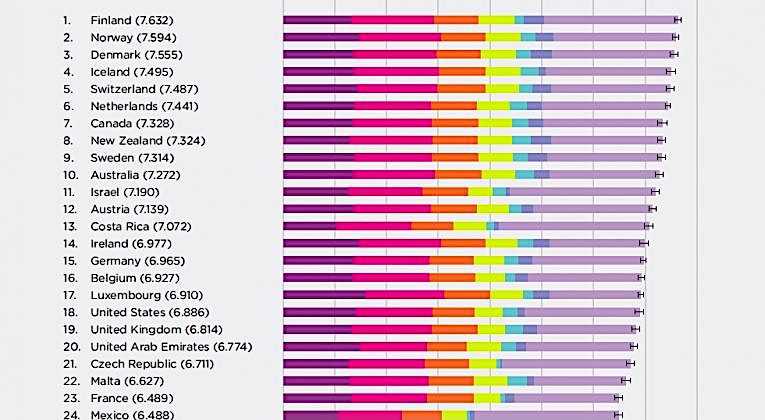
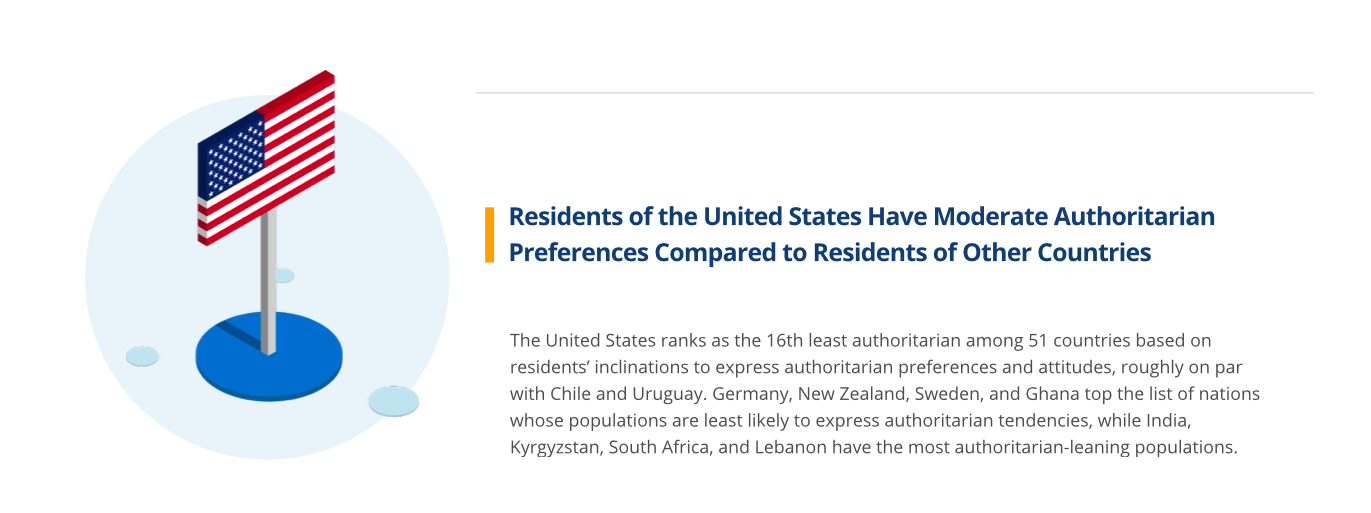
The “valu­able bul­wark” of the lib­er­al arts seems more effec­tive in the U.S. than in Europe, per­haps because “Amer­i­can high­er edu­ca­tion places a strong empha­sis on a com­bi­na­tion of spe­cif­ic and gen­er­al edu­ca­tion,” the full report spec­u­lates. “Such gen­er­al edu­ca­tion includes expo­sure to the lib­er­al arts.” The U.S. ranks at a mod­er­ate lev­el of author­i­tar­i­an­ism com­pared to 51 oth­er coun­tries, on par with Chile and Uruguay, with Ger­many rank­ing the least author­i­tar­i­an and India the most—a 6 on a scale of 0–6.

High­er edu­ca­tion also cor­re­lates with high­er eco­nom­ic sta­tus, sug­gest­ing to the study authors that eco­nom­ic secu­ri­ty reduces author­i­tar­i­an­ism, which is expressed in atti­tudes about par­ent­ing and in a “fun­da­men­tal ori­en­ta­tion” toward con­trol over auton­o­my.

The full report does go into greater depth, but per­haps it rais­es more ques­tions than it answers, leav­ing the intel­lec­tu­al­ly curi­ous to work through a dense bib­li­og­ra­phy of pop­u­lar and aca­d­e­m­ic sources. There is a sig­nif­i­cant amount of data and evi­dence to sug­gest that study­ing the lib­er­al arts does help peo­ple to imag­ine oth­er per­spec­tives and to appre­ci­ate, rather than fear, dif­fer­ent cul­tures, reli­gions, etc. Lib­er­al arts edu­ca­tion encour­ages crit­i­cal think­ing, read­ing, and writ­ing, and can equip stu­dents with tools they need to dis­tin­guish reportage from pure pro­pa­gan­da.

But we might ask whether these find­ings con­sis­tent­ly obtain under actu­al­ly exist­ing author­i­tar­i­an­ism, which “tends to arise under con­di­tions of threat to social norms or per­son­al secu­ri­ty.” In the 2016 U.S. elec­tion, for exam­ple, the can­di­date espous­ing open­ly author­i­tar­i­an atti­tudes and pref­er­ences, now the cur­rent U.S. pres­i­dent, was elect­ed by a major­i­ty of vot­ers who were well-edu­cat­ed and eco­nom­i­cal­ly secure, sub­se­quent research dis­cov­ered, rather than stereo­typ­i­cal­ly “work­ing class” vot­ers with low lev­els of edu­ca­tion. How do such find­ings fit with the data George­town inter­prets in their report? Is it pos­si­ble that those with high­er edu­ca­tion and social sta­tus learn bet­ter to hide con­trol­ling, intol­er­ant atti­tudes in mixed com­pa­ny?

Learn more at this report sum­ma­ry page here and read and down­load the full report as a PDF here.

Relat­ed Con­tent: 

How a Lib­er­al Arts Edu­ca­tion Helped Derek Black, the God­son of David Duke, Break with the White Nation­al­ist Move­ment

20 Lessons from the 20th Cen­tu­ry About How to Defend Democ­ra­cy from Author­i­tar­i­an­ism, Accord­ing to Yale His­to­ri­an Tim­o­thy Sny­der

Why We Need to Teach Kids Phi­los­o­phy & Safe­guard Soci­ety from Author­i­tar­i­an Con­trol

Crit­i­cal Think­ing: A Free Course

Josh Jones is a writer and musi­cian based in Durham, NC. Fol­low him at @jdmagness

Is Mail-In Voting New in the United States?: It Actually Goes Back to the Civil War

Let’s say you go home for the hol­i­days. Anything’s pos­si­ble, who knows. It’s a wild world. Let’s say you get there and some­one starts lay­ing on you that trip about how Q Con­tin­u­um said mail-in vot­ing was orches­trat­ed by satan­ic cables from Anar­chist HQ. Let’s say you over­hear some­thing more down-to-earth, like how if mail-in vot­ing hap­pens, bil­lions of peo­ple will vote ille­gal­ly… even more peo­ple than live in the coun­try, which is how you’ll know….

Maybe you’ll want to speak up and say, hey I know some­thing about this top­ic, except then maybe you real­ize you don’t actu­al­ly know much, but you know some­thing ain’t right with this talk and maybe it’s prob­a­bly good to have a func­tion­ing Postal Ser­vice and maybe peo­ple should be able to vote. In such sit­u­a­tions (who can say how often these things hap­pen), you might wish to have a lit­tle infor­ma­tion at the ready, to edu­cate your­self and share with oth­ers.

You might share infor­ma­tion about how mail-in vot­ing has been around since 1775. It has worked pret­ty well at scale since “about 150,000 of the 1 mil­lion Union sol­diers were able to vote absen­tee in the 1864 pres­i­den­tial elec­tion in what became the first wide­spread use of non-in per­son vot­ing in Amer­i­can his­to­ry,” Alex Seitz-Wald explains at NBC News. Since the fed­er­al gov­ern­ment has man­aged to make mail-in vot­ing work for sol­diers serv­ing away from home for over 150 years, “it’s now eas­i­er in some ways for a Marine in Afghanistan to vote than it is for an Amer­i­can stuck at home dur­ing the COVID-19 lock­down.”

“Some part of the mil­i­tary has been vot­ing absen­tee since the Amer­i­can Rev­o­lu­tion,” Don­ald Inbody, for­mer Navy Cap­tain turned polit­i­cal sci­ence pro­fes­sor at Texas State Uni­ver­si­ty, tells NBC News. Inbody refers to one of the first doc­u­ment­ed instances, when Con­ti­nen­tal Army sol­diers vot­ed in a town meet­ing by proxy in New Hamp­shire. But his­to­ry is com­pli­cat­ed, and “mail-in vot­ing has worked just fine so shut up” needs some nuance.

In the very same elec­tion in which 150,000 Union sol­diers mailed their bal­lots, Lin­coln urged Sher­man to send troops sta­tioned in Demo­c­ra­t­ic-con­trolled Indiana—which had banned absen­tee voting—back to their home states so that they could vote. The prac­tice has always had its vocal crit­ics and suf­fered accu­sa­tions of fraud from all sides, though lit­tle evi­dence seems to have emerged. Absen­tee vot­ing helped win the Civ­il War, Blake Stil­well argues at Military.com, in spite of a con­spir­a­cy the­o­ry alleg­ing fraud that might have unseat­ed Lin­coln.

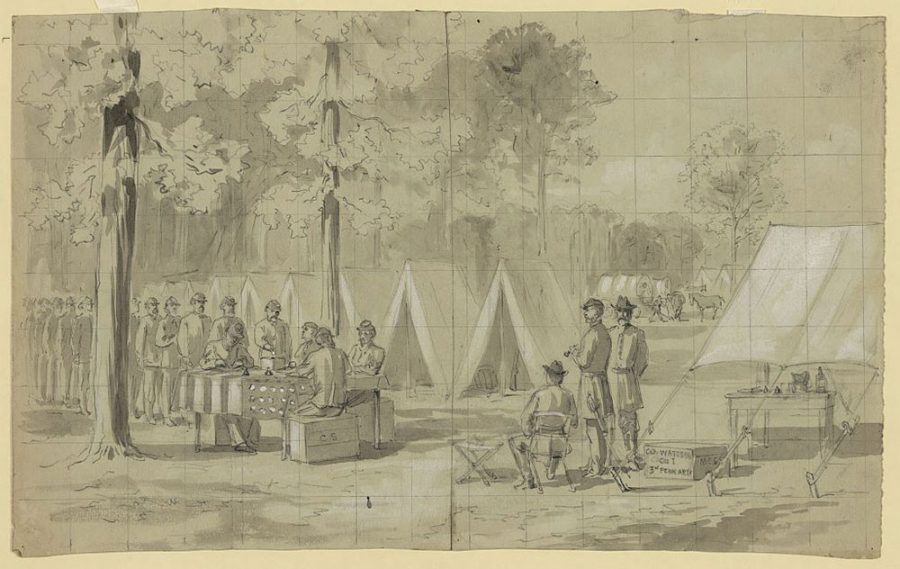
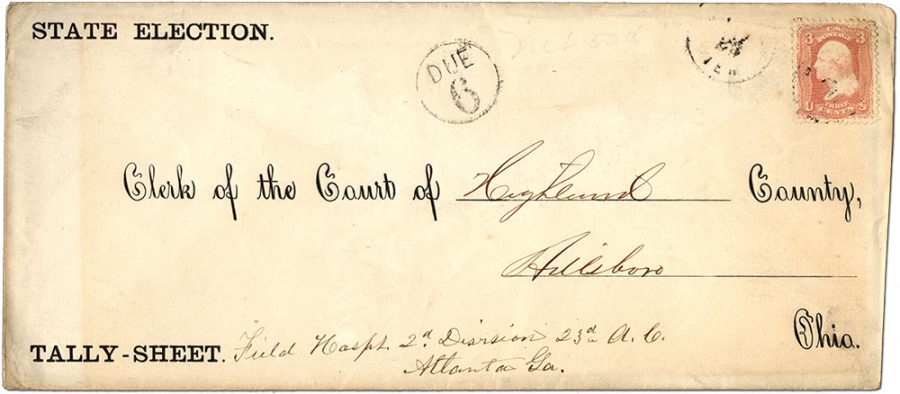
There are sev­er­al rem­nants from the time of care­ful record-keep­ing, like the pre-print­ed enve­lope above that “con­tained a tal­ly sheet of votes from the sol­diers of High­land Coun­ty the Field Hos­pi­tal 2nd Divi­sion 23rd Army Corps,” notes the Smith­son­ian Nation­al Postal Muse­um. (The draw­ing at the top shows Penn­syl­va­nia sol­diers vot­ing in 1864.) And this is all fas­ci­nat­ing stuff. But sol­diers are actu­al­ly absent, which is why they vote absen­tee, right? I mean, if you’re at home, why can’t you just go to the polling place in the glob­al pan­dem­ic in your city that closed all the polling places?

It’s true that civil­ian mail-in vot­ing often works dif­fer­ent­ly from mil­i­tary absen­tee vot­ing. While every state offers some ver­sion, some restrict it to vot­ers tem­porar­i­ly out of state or suf­fer­ing an ill­ness. Cur­rent­ly, only “30 states have adopt­ed ‘no-excuse absen­tee bal­lot­ing,’ which allows any­one to request an absen­tee bal­lot,” Nina Strochlic reports at Nation­al Geo­graph­ic. State laws vary fur­ther among those 30.

“In 2000,” for exam­ple, “Ore­gon became the first state to switch to ful­ly vote-by-mail elec­tions.” Things have rapid­ly changed, how­ev­er. “In the face of the coro­n­avirus pan­dem­ic, vot­ers in every state but Mis­sis­sip­pi and Texas were allowed to vote by mail or by absen­tee bal­lot in this year’s pri­maries.” If you live in the U.S. (or out­side it) and don’t know what hap­pened next… bless you. It involves defund­ing the post office instead of the police.

Vot­ing by mail has expand­ed to meet major crises through­out his­to­ry, says Alex Keyssar, his­to­ry pro­fes­sor at the Kennedy School of Gov­ern­ment at Har­vard. “That’s the log­i­cal tra­jec­to­ry” and “we are not in nor­mal times.” If a high­ly infec­tious dis­ease that has killed at least 200,000 Amer­i­cans on top of ongo­ing vot­er sup­pres­sion and an elec­tion secu­ri­ty cri­sis and mas­sive civ­il unrest and eco­nom­ic tur­moil aren’t rea­sons enough to expand the vote-by-mail fran­chise to every state, I couldn’t say what is.

Should only sol­diers have the abil­i­ty to vote eas­i­ly? I imag­ine some­one might say YES, loud­ly over the cen­ter­piece, because vot­ing is a priv­i­lege not a right!

You, empow­ered pur­vey­or of accu­rate infor­ma­tion, under­stander of absen­tee vot­ing his­to­ry, change-mak­er, will pull out your pock­et Con­sti­tu­tion and ask some­one to find the word “priv­i­lege” in amend­ments that start with “The right of cit­i­zens of the Unit­ed States to vote shall not be denied or abridged by the Unit­ed States or by any State,” etc. That’ll show ’em. But if the gam­bit fails to impress, you’ve still got a bet­ter under­stand­ing of why vot­ing by mail may not be one of the signs of the end times.

Relat­ed Con­tent:

Take The Near Impos­si­ble Lit­er­a­cy Test Louisiana Used to Sup­press the Black Vote (1964)

Three Pub­lic Ser­vice Announce­ments by Frank Zap­pa: Vote, Brush Your Teeth, and Don’t Do Speed

Sal Khan & the Mup­pets’ Grover Explain the Elec­toral Col­lege

The Psy­chol­o­gy That Leads Peo­ple to Vote for Extrem­ists & Auto­crats: The The­o­ry of Cog­ni­tive Clo­sure

Josh Jones is a writer and musi­cian based in Durham, NC. Fol­low him at @jdmagness

Ruth Bader Ginsburg’s Favorite Opera Recordings (and Her First Appearance in an Opera)

U.S. Supreme Court jus­tice Ruth Bad­er Ginsburg’s death has thrown an unbear­ably fraught polit­i­cal year into fur­ther dis­ar­ray, a fact that has sad­ly over­shad­owed memo­ri­al­iza­tion of her inspir­ing life and career. Gins­burg was a per­son­al hero for mil­lions of activists and students—from grade school to law school; an icon casu­al­ly iden­ti­fied by her ini­tials by those who felt like they knew her. “For many women, and many girls,” Sheryl Gay Stol­berg writes in a New York Times trib­ute, her loss is “deeply per­son­al.”

How should we remem­ber such a fig­ure at such a time? If you hap­pen to find the news numb­ing, full of ener­vat­ing ran­cor and alarm…. If you want to bring the focus back to the per­son we have lost, might we sug­gest a sound­track? The sug­ges­tions come from Gins­burg her­self, from the art form—opera—closest to her heart. “She was our great­est advo­cate and our great­est spokesper­son,” says Francesca Zam­bel­lo, direc­tor of the Wash­ing­ton Nation­al Opera, “the ide­al attendee… who knows every­thing but is open to inter­pre­ta­tions.”

Ginsburg’s com­mit­ment to the opera spans decades. She and her hus­band Mar­ty were in the audi­ence when Leon­tyne Price made her debut at the Met in 1961. Forty-sev­en years lat­er, the Jus­tice had occa­sion to hon­or Pryce at a 2008 Nation­al Endow­ment for the Arts lun­cheon. Also in atten­dance: Antonin Scalia, Ginsburg’s noto­ri­ous rival. The only thing the two may have agreed on was a pas­sion for the opera. It formed the basis of a frag­ile peace, and the sub­ject of its own opera, Scalia v. Gins­burg, that explores extreme judi­cial dif­fer­ences through “Ver­di, Puc­ci­ni, Christ­mas car­ols, ‘The Star-Span­gled Ban­ner,’ and jazz.”

Scalia v. Gins­berg com­pos­er Der­rick Wang heard the grandios­i­ty of opera when he read the fierce­ly oppos­ing writ­ten opin­ions of the two jus­tices. It’s safe to assume that both were lis­ten­ing to their favorite works while they com­posed. In 2012, Gins­burg gave her list of favorites to Alex Ross at The New York­er, who points to oth­er Gins­burg con­nec­tions to the clas­si­cal world like her son, James Gins­burg, “pro­pri­etor of Cedille Records, an inde­pen­dent clas­si­cal label based in Chica­go.” (Read their state­ment on Ginsburg’s pass­ing here.)

There is far too much to say about Ruth Bad­er Ginsburg’s judi­cial influ­ence, and about the pow­er vac­u­um left behind by her loss. But if we want to under­stand what mat­tered to her most as an indi­vid­ual, we should turn to the music she most loved. “Her life was about under­stand­ing people’s sto­ries,” says Zam­bel­lo. The kinds of cas­es “she made her career of are the stuff of opera.” At the top, see Ginsburg’s first appear­ance onstage, in a non-singing role as the Duchess of Krak­en­thor­pe in the The Daugh­ter of the Reg­i­ment at the Kennedy Cen­ter. Just below, see her list of favorite works, pep­pered with occa­sion­al com­men­tary from the late, beloved R.B.G. her­self. This list orig­i­nal­ly comes from The New York­er. If you have a Spo­ti­fy account, you can stream the music in this 30-hour playlist.

Ver­di, “Aida”; Zin­ka Milanov, Jus­si Björ­ling, Leonard War­ren, Fedo­ra Bar­bi­eri, Boris Christoff, Jonel Per­lea con­duct­ing the Rome Opera Orches­tra and Cho­rus (RCA).

Ver­di, “Otel­lo”; Plá­ci­do Domin­go, Rena­ta Scot­to, Sher­rill Milnes, James Levine con­duct­ing the Nation­al Phil­har­mon­ic and Ambrosian Opera Cho­rus (RCA).

Dvořák, “Rusal­ka”; Renée Flem­ing, Ben Hep­p­n­er, Dolo­ra Zajick, Franz Hawla­ta, Charles Mack­er­ras con­duct­ing the Czech Phil­har­mon­ic and Kühn Mixed Choir (Dec­ca).

Han­del, “Julius Cae­sar”; Nor­man Trei­gle, Bev­er­ly Sills, Mau­reen For­rester, Bev­er­ly Wolff, Julius Rudel con­duct­ing the New York City Opera Orches­tra and Cho­rus (RCA).

Jus­tice Gins­burg com­ments: “Lis­tened to LP record­ing many times. Pro­duc­tion was Julius Rudel’s tri­umph, opened in the State The­atre the year the Met moved to Lin­coln Cen­ter. Met opened with the not at all tri­umphant pro­duc­tion of Barber’s ‘Antony and Cleopa­tra.’ Next, my two best-loved operas.”

Mozart, “Don Gio­van­ni”; Cesare Siepi, Fer­nan­do Core­na, Suzanne Dan­co, Lisa Del­la Casa, Anton Der­mo­ta, Hilde Gue­den, Wal­ter Berry, Kurt Böhme, Josef Krips con­duct­ing the Vien­na Phil­har­mon­ic and Vien­na State Opera Cho­rus (Dec­ca).

Mozart, “The Mar­riage of Figaro”; Samuel Ramey, Lucia Popp, Thomas Allen, Kiri Te Kanawa, Fred­er­i­ca von Stade, Kurt Moll, Robert Tear, Georg Solti con­duct­ing the Lon­don Phil­har­mon­ic and Lon­don Opera Cho­rus (Dec­ca).

Strauss, “Der Rosenkava­lier”; Elis­a­beth Schwarzkopf, Christa Lud­wig, Tere­sa Stich-Ran­dall, Otto Edel­mann, Eber­hard Wächter, Lju­ba Welitsch, Nico­lai Ged­da, Her­bert von Kara­jan con­duct­ing the Phil­har­mo­nia Orches­tra and Cho­rus (EMI).

Tchaikovsky, “Eugene One­gin”; Thomas Allen, Mirella Freni, Neil Shicoff, Anne Sofie von Otter, James Levine con­duct­ing the Dres­den Staatskapelle and Leipzig Radio Cho­rus (DG).

Puc­ci­ni, “Tosca”; Maria Callas, Giuseppe Di Ste­fano, Tito Gob­bi, Vic­tor de Saba­ta con­duct­ing the La Scala orches­tra and cho­rus (EMI).

Menot­ti, “The Medi­um”; Joyce Cas­tle, Patrice Michaels, Lawrence Rapchak con­duct­ing the Chica­go Opera The­atre (Cedille).

Kur­ka, “The Good Sol­dier Schweik”; Jason Collins, Marc Embree, Kel­li Har­ring­ton, Buffy Bag­gott, Alexan­der Platt con­duct­ing the Chica­go Opera The­atre (Cedille).

Jus­tice Gins­burg com­ments: “Glim­mer­glass Opera lat­er mount­ed ‘Schweik’ with per­fect-for-the-part Antho­ny Dean Grif­fey.”

Stravin­sky, “The Rake’s Progress”; Philip Lan­gridge, Samuel Ramey, Cathryn Pope, Stafford Dean, Sarah Walk­er, John Dob­son, Astrid Var­nay, Ric­car­do Chail­ly con­duct­ing the Lon­don Sin­foni­et­ta and Cho­rus (Dec­ca).

Brit­ten, “Bil­ly Budd”; Nathan Gunn, Ian Bostridge, Gidon Saks, Daniel Hard­ing con­duct­ing the Lon­don Sym­pho­ny Orches­tra and Cho­rus (Vir­gin Clas­sics).

Jus­tice Gins­burg com­ments: “Two Lieder record­ings I now and then play when work­ing at home: **Schu­bert, ‘An mein Herz,’ with Matthias Goerne; and songs by Brahms, with Ange­li­ka Kirch­schlager.”

via The New York­er

Relat­ed Con­tent:

Acclaimed Ruth Bad­er Gins­burg Doc­u­men­tary, RBG, Air­ing Tonight on CNN

When Vladimir Nabokov Taught Ruth Bad­er Gins­burg, His Most Famous Stu­dent, To Care Deeply About Writ­ing

The Opera Data­base: Find Scores, Libret­ti & Syn­opses for Thou­sands of Operas Free Online

Josh Jones is a writer and musi­cian based in Durham, NC. Fol­low him at @jdmagness

Free Jazz Musicians Intentionally Play Terrible Music to Drown Out the Noise of a Danish Far-Right Politician

Art makes a way where pol­i­tics fail. I don’t mean that in any mawk­ish sense. Sure, art brings peo­ple togeth­er, encour­ages empa­thy and com­mon val­ues. Those can be won­der­ful things. But they are not always nec­es­sar­i­ly social goods. Vio­lent nation­al­ism brings peo­ple togeth­er around com­mon val­ues. Psy­chopaths can feel empa­thy if they want to.

When faced with fas­cism, or neo-fas­cism, or what­ev­er we want to call the 21st cen­tu­ry equiv­a­lent of fas­cism, those who pre­sume good faith in their oppo­nents pre­sume too much. Val­ues like respect for human rights or rules of log­i­cal debate or use of force, for exam­ple, are not in play. Direct con­fronta­tion usu­al­ly pro­vokes more vio­lence, and cor­re­spond­ing state repres­sion against anti-fas­cists.

Cre­ative thinkers have devised oth­er kinds of tactics—methods for meet­ing spec­ta­cle with spec­ta­cle, dis­rupt­ing and scat­ter­ing con­cen­trat­ed fear and hate by use of what William S. Bur­roughs called “mag­i­cal weapons.” Bur­roughs meant the phrase lit­er­al­ly when he aimed his occult audio/visual mag­ic at a gen­tri­fy­ing Lon­don cof­fee bar. But he used the very same ideas in his nov­els and man­u­als for over­throw­ing cor­rupt gov­ern­ments.

One might say some­thing sim­i­lar about the pio­neers of free jazz, a prod­uct of Black Pow­er pol­i­tics expressed in music. Coltrane drew on Mal­colm X when he divest­ed him­self of west­ern musi­cal con­straints; Ornette Cole­man estab­lished “har­molod­ic democ­ra­cy” in place of Euro­cen­tric struc­tures. These were inher­ent­ly rev­o­lu­tion­ary forms, respond­ing to repres­sive times in new lan­guages. They were not, as many peo­ple thought then, just jazz played bad­ly.

But, as it turns out… free jazz delib­er­ate­ly played bad­ly makes quite an effec­tive rejoin­der to fas­cism, too. So a group of Dan­ish jazz musi­cians dis­cov­ered when they began crash­ing the staged events of far-right politi­cian Ras­mus Palu­dan, founder of the Stram Kurs (Hard Line) par­ty. As Vice reports:

[Palu­dan] is noto­ri­ous for organ­is­ing “demon­stra­tions” in neigh­bour­hoods with large immi­grant pop­u­la­tions, where he burns, throws, and stomps on Qurans behind walls of police offi­cers. A self-pro­claimed “guardian of free­dom” and “light of the Danes,” Palu­dan con­sid­ers immi­grants and Islam ene­mies of the Dan­ish peo­ple, as well as the country’s val­ues, tra­di­tions and gen­er­al way of life.

Does one respect­ful­ly argue with such a per­son? Try to breach the line of cops and knock them out? Hear out their point of view as they inspire acts of vio­lence? Or show up “armed with trum­pets, bon­go drums and sax­o­phones” and play right in his face, or at least “loud­ly enough to drown out his voice or draw atten­tion away from him”?

The col­lec­tive “Free Jazz Against Palu­dan” takes the mag­i­cal weapon of Sit­u­a­tion­ist free jazz pub­lic and rad­i­cal­izes har­molod­ic democ­ra­cy (done very, very obnox­ious­ly bad­ly on pur­pose, we must empha­size) for street action. “We’re fight­ing noise with noise,” one sax­o­phon­ist and self-described “old man turned activist” says. “I’m of the opin­ion that rhetoric like his should not be ignored. You have to protest against it, but in a way that is not destruc­tive and vio­lent.” Except that it is destructive—to Paludan’s weaponized igno­rance. [Palu­dan was recent­ly sen­tenced to jail on racism and defama­tion.] The revolv­ing col­lec­tive of activist musi­cians makes this plain, stat­ing on their Face­book page, “Any­one can join, with the excep­tion of just him. He can­not.”

What gives them the right to exclude him! one might cry indig­nant­ly. That’s the game Palu­dan wants to play. “What he wants is to get beat­en up by some immi­grants, get some close-ups of a soap eye or a bro­ken arm—that’d be great for him,” says pro­tes­tor Jørn Tol­strup. “So this is great, because here we have an idiot who won’t shut up, and now we’ve found a way to take his foot off the ped­al.” It’s cre­ative de-esca­la­tion and redi­rec­tion. And, we might say, not so much a pub­lic “can­celling” as the free expres­sion of oppos­ing ideas.

via Vice

Relat­ed Con­tent:

How Ornette Cole­man Freed Jazz with His The­o­ry of Har­molod­ics

How William S. Bur­roughs Used the Cut-Up Tech­nique to Shut Down London’s First Espres­so Bar (1972)

William S. Bur­roughs’ Man­i­festo for Over­throw­ing a Cor­rupt Gov­ern­ment with Fake News and Oth­er Prophet­ic Meth­ods: It’s Now Pub­lished for the First Time

How Music Unites Us All: Her­bie Han­cock & Kamasi Wash­ing­ton in Con­ver­sa­tion

Josh Jones is a writer and musi­cian based in Durham, NC. Fol­low him at @jdmagness.

Watch Bob Dylan Perform “Only A Pawn In Their Game,” His Damning Song About the Murder of Medgar Evers, at the 1963 March on Washington

Trau­ma is rep­e­ti­tion, and the Unit­ed States seems to inflict and suf­fer from the same deep wounds, repeat­ed­ly, unable to stop, like one of the ancient Bib­li­cal curs­es of which Bob Dylan was so fond. The Dylan of the ear­ly 1960s adopt­ed the voice of a prophet, in var­i­ous reg­is­ters, to tell sto­ries of judg­ment and gen­er­a­tional curs­es, sym­bol­ic and his­tor­i­cal, that have beset the coun­try from its begin­nings.

The vers­es of “Blowin’ in the Wind,” from 1963’s The Free­wheel­in’ Bob Dylan, enact this rep­e­ti­tion, both trau­mat­ic and hyp­not­ic. In its dual refrains—“how many times…?” and “the answer is blowin’ in the wind” (ephemer­al, impos­si­ble to grasp)—the song cycles between earnest Lamen­ta­tions and the acute, world-weary res­ig­na­tion of Eccle­si­astes. “This ambi­gu­i­ty is one rea­son for the song’s broad appeal,” as Peter Dreier writes at Dis­sent.

Just three months after its release, when Dylan per­formed at the March on Wash­ing­ton for Jobs and Free­dom on August 28, 1963, “Blowin’ in the Wind” had become a mas­sive civ­il rights anthem. But he had already ced­ed the song to Peter, Paul & Mary, who played their ver­sion that day. Dylan ignored his sopho­more album entire­ly to play songs from the upcom­ing The Times They Are a‑Changing—songs that stand out for their indict­ments of the U.S. in some very spe­cif­ic terms.

Dylan played three songs from the new album: “When the Ship Comes In” with Joan Baez, “Only a Pawn in Their Game,” and “With God on Our Side.” (He also played the pop­u­lar folk song “Keep Your Eyes on the Prize.”) In con­trast to his vague­ly allu­sive pop­u­lar anthems, “Only a Pawn in Their Game”—about the mur­der of Medgar Evers—isn’t coy about the cul­prits and their crimes. We might say the song offers an astute analy­sis of insti­tu­tion­al racism, white suprema­cy, and sto­chas­tic ter­ror­ism.

A bul­let from the back of a bush
Took Medgar Evers’ blood
A fin­ger fired the trig­ger to his name
A han­dle hid out in the dark
A hand set the spark
Two eyes took the aim
Behind a man’s brain
But he can’t be blamed
He’s only a pawn in their game

A South politi­cian preach­es to the poor white man
“You got more than the blacks, don’t com­plain
You’re bet­ter than them, you been born with white skin, ” they explain
And the Negro’s name
Is used, it is plain
For the politi­cian’s gain
As he ris­es to fame
And the poor white remains
On the caboose of the train
But it ain’t him to blame
He’s only a pawn in their game

The deputy sher­iffs, the sol­diers, the gov­er­nors get paid
And the mar­shals and cops get the same
But the poor white man’s used in the hands of them all like a tool
He’s taught in his school
From the start by the rule
That the laws are with him
To pro­tect his white skin
To keep up his hate
So he nev­er thinks straight
‘Bout the shape that he’s in
But it ain’t him to blame
He’s only a pawn in their game

From the pover­ty shacks, he looks from the cracks to the tracks
And the hoof­beats pound in his brain
And he’s taught how to walk in a pack
Shoot in the back
With his fist in a clinch
To hang and to lynch
To hide ‘neath the hood
To kill with no pain
Like a dog on a chain
He ain’t got no name
But it ain’t him to blame
He’s only a pawn in their game

Today, Medgar Evers was buried from the bul­let he caught
They low­ered him down as a king
But when the shad­owy sun sets on the one
That fired the gun
He’ll see by his grave
On the stone that remains
Carved next to his name
His epi­taph plain
Only a pawn in their game

These lyrics have far too much rel­e­vance to cur­rent events, and they’re indica­tive of the chang­ing tone of Dylan’s muse. His refrains drip with irony. The killer of Medgar Evers “can’t be blamed”—an eva­sion of respon­si­bil­i­ty that becomes a pow­er­ful force all its own.

Dylan revis­its the themes of gen­er­a­tional trau­ma and mur­der in “With God on Our Side” (hear him sing it with Baez at New­port, above). The song is a sharp satire of his his­tor­i­cal edu­ca­tion, with its inevitable rep­e­ti­tions of war and slaugh­ter. Here, Dylan presents the expo­nen­tial­ly gross, exis­ten­tial­ly dread­ful, con­se­quences of a nation­al abdi­ca­tion of blame for his­tor­i­cal vio­lence.

Oh my name it ain’t noth­in’
My age it means less
The coun­try I come from
Is called the Mid­west
I was taught and brought up there
The laws to abide
And that land that I live in
Has God on its side

Oh, the his­to­ry books tell it
They tell it so well
The cav­al­ries charged
The Indi­ans fell
The cav­al­ries charged
The Indi­ans died
Oh, the coun­try was young
With God on its side

The Span­ish-Amer­i­can
War had its day
And the Civ­il War, too
Was soon laid away
And the names of the heroes
I was made to mem­o­rize
With guns in their hands
And God on their side

The First World War, boys
It came and it went
The rea­son for fight­ing
I nev­er did get
But I learned to accept it
Accept it with pride
For you don’t count the dead
When God’s on your side

The Sec­ond World War
Came to an end
We for­gave the Ger­mans
And then we were friends
Though they mur­dered six mil­lion
In the ovens they fried
The Ger­mans now, too
Have God on their side

I’ve learned to hate the Rus­sians
All through my whole life
If anoth­er war comes
It’s them we must fight
To hate them and fear them
To run and to hide
And accept it all brave­ly
With God on my side

But now we got weapons
Of chem­i­cal dust
If fire them, we’re forced to
Then fire, them we must
One push of the but­ton
And a shot the world wide
And you nev­er ask ques­tions
When God’s on your side

Through many a dark hour
I’ve been thinkin’ about this
That Jesus Christ was
Betrayed by a kiss
But I can’t think for you
You’ll have to decide
Whether Judas Iscar­i­ot
Had God on his side.

So now as I’m leav­in’
I’m weary as Hell
The con­fu­sion I’m feel­in’
Ain’t no tongue can tell
The words fill my head
And fall to the floor
That if God’s on our side
He’ll stop the next war

Dylan’s race/class analy­sis in “Only a Pawn in the Game” and his suc­cinct People’s His­to­ry of Chris­t­ian Nation­al­ism in “With God on Our Side” stand out as inter­est­ing choic­es for the March for sev­er­al rea­sons. For one thing, it’s as though he had writ­ten these songs express­ly to take the polit­i­cal, eco­nom­ic, and reli­gious mech­a­nisms and mytholo­gies of racism apart. This was rad­i­cal speech in an event that was policed by its orga­niz­ers to tone down inflam­ma­to­ry rhetoric for the cam­eras.

23-year-old John Lewis, for exam­ple, was forced to tem­per his speech, in which he meant to say, “We will march through the South, through the heart of Dix­ie, the way Sher­man did. We shall pur­sue our own scorched earth pol­i­cy and burn Jim Crow to the ground — non­vi­o­lent­ly. the rev­o­lu­tion is at hand, and we must free our­selves of the chains of polit­i­cal and eco­nom­ic slav­ery.” As a pop­u­lar white artist, rather than a poten­tial­ly sedi­tious Black orga­niz­er, Dylan had far more license and could “use his priv­i­lege,” as they say, to describe the sys­tems of polit­i­cal and eco­nom­ic oppres­sion Lewis had want­ed to name.

Dylan’s per­for­mance was one of a hand­ful of mem­o­rable musi­cal appear­ances. Most of the singers made a far big­ger impres­sion, like Mahalia Jack­son, Mar­i­an Ander­son, and Baez her­self, whose “We Shall Over­come” cre­at­ed a leg­endary moment of har­mo­ny. No one sang along to Dylan’s new songs—they wouldn’t have known the words. But Dylan was nev­er care­less. He chose these words for the moment, hop­ing to have some impact in the only way he could.

The 1963 March’s pur­pose has been over­shad­owed by a few pas­sages in Mar­tin Luther King, Jr.‘s pow­er­ful “I Have a Dream” speech, co-opt­ed by every­one and reduced to meme-able quotes. But the protest “remains one of the most suc­cess­ful mobi­liza­tions ever cre­at­ed by the Amer­i­can Left,” his­to­ri­an William P. Jones writes. “Orga­nized by a coali­tion of trade union­ists, civ­il rights activists, and feminists–most of them African Amer­i­can and near­ly all of them social­ists.”

Dylan sang sto­ries of how the coun­try got to where it was, through a his­to­ry of vio­lence still play­ing out before the marchers’ eyes. What­ev­er polit­i­cal ten­sions there were among the var­i­ous orga­niz­ers and speak­ers did not dis­tract them from push­ing through the 1964 Civ­il Rights Act and the Fair Employ­ment Prac­tices clause ban­ning dis­crim­i­na­tion on the basis of race, reli­gion, nation­al ori­gin, or sex—protections that have been broad­ened since that time, and also chal­lenged, threat­ened, and stripped away.

Fifty-sev­en years lat­er, as the RNC con­ven­tion ends and anoth­er March on Wash­ing­ton hap­pens, we might reflect on Dylan’s small but pre­scient con­tri­bu­tions in 1963, in which he apt­ly char­ac­ter­ized the trau­mat­ic rep­e­ti­tions we’re still con­vul­sive­ly expe­ri­enc­ing over half a cen­tu­ry lat­er.

Relat­ed Con­tent:

The Moment When Bob Dylan Went Elec­tric: Watch Him Play “Maggie’s Farm” at the New­port Folk Fes­ti­val in 1965

A Mas­sive 55-Hour Chrono­log­i­cal Playlist of Bob Dylan Songs: Stream 763 Tracks

James Bald­win Talks About Racism in Amer­i­ca & Civ­il Rights Activism on The Dick Cavett Show (1969)

Josh Jones is a writer and musi­cian based in Durham, NC. Fol­low him at @jdmagness

A New Digital Archive Preserves Black Lives Matter & COVID-19 Street Art

Image by Aman­da-Lee Har­ris Gibbs, “Floyd & Tay­lor Trib­ute” 

What hap­pens when anti-racist pro­test­ers gath­er in the streets and are not met with tear gas, rub­ber bul­lets, and batons? For one thing, they make art and graf­fi­ti. Lots of it, on walls, streets, side­walks, cour­t­house doors, the ply­wood of board­ed-up win­dows, wher­ev­er. Pub­lic activist art serves not only as a memo­r­i­al for vic­tims of state oppres­sion, but as a way to imag­ine what the future needs and visu­al­ly occu­py the space to make it hap­pen. In the inter­twin­ing “mutu­al rela­tions of the polit­i­cal and the aes­thet­ic,” sym­bols can begin to call real con­di­tions into exis­tence.

The streets of cities around the coun­try have become tem­po­rary gal­leries of art­works that remem­ber vic­tims of sys­tem­i­cal­ly racist police vio­lence and call for jus­tice, even as they imag­ine what a more just world might look like: one where peo­ple are not trapped in cycles of pover­ty by aus­ter­i­ty and state vio­lence. Such dis­plays have pro­lif­er­at­ed espe­cial­ly in Min­neapo­lis, where George Floyd was killed. There, the “memo­r­i­al… is con­stant­ly chang­ing. In the days fol­low­ing Floyd’s mur­der by the police, street art, flow­ers, hand­writ­ten notes, and more” appeared.

Now the site “has become a liv­ing space,” Todd Lawrence, a pro­fes­sor at the Uni­ver­si­ty of St. Thomas, tells Leah Feiger at Hyper­al­ler­gic. “The state of flux char­ac­ter­izes much of Minneapolis’s street art scene in the wake of recent protests,” Feiger writes. “The own­er­ship of the phys­i­cal art is con­tentious,” and tem­po­rary instal­la­tions become sites of long-term debate. The Uni­ver­si­ty of St. Thomas has decid­ed to pre­serve these ephemer­al state­ments in a data­base called Urban Art Map­ping: George Floyd & Anti-Racist Street Art. The project began with a focus on Min­neapo­lis and has “steadi­ly expand­ed with every new sub­mis­sion.”

The project includes in its wider scope a data­base of COVID-19 street art, with many an acknowl­edge­ment of how gov­ern­ment fail­ures in response to the pan­dem­ic con­nect to the will­ful dis­re­gard for human life the Black Lives Mat­ter move­ment calls out. “Artists and writ­ers pro­duc­ing work in the streets—including tags, graf­fi­ti, murals, stick­ers, and oth­er instal­la­tions on walls, pave­ment, and signs—are in a unique posi­tion to respond quick­ly and effec­tive­ly in a moment of cri­sis,” notes the COVID-19 Street Art site. As we lim­it our move­ment through pub­lic space, that space itself trans­forms, respond­ing in direct ways to a mul­ti­tude of inter­sect­ing crises none of us can afford to ignore.

Make sub­mis­sions to the COVID-19 Street Art archive here and to the George Floyd & Anti-Racist Street Art archive here.

via Hyper­al­ler­gic

Relat­ed Con­tent:

Pub­lic Ene­my Releas­es a Fiery Anti-Trump Protest Song (NSFW)

Hear a 4 Hour Playlist of Great Protest Songs: Bob Dylan, Nina Simone, Bob Mar­ley, Pub­lic Ene­my, Bil­ly Bragg & More

How Jazz Helped Fuel the 1960s Civ­il Rights Move­ment

Josh Jones is a writer and musi­cian based in Durham, NC. Fol­low him at @jdmagness

Winston Churchill Praises the Virtue of “Brevity” in Memos to His Staff: Concise Writing Leads to Clearer Thinking

George Orwell and Win­ston Churchill didn’t agree on much. For exam­ple, while Orwell wrote with deep sym­pa­thy about coal min­ers in The Road to Wigan Pier, Churchill, as home sec­re­tary, bru­tal­ly crushed a miner’s strike in Wales. Orwell’s ear­ly years as “an appa­ratchik in the last days of the empire… left him with a hatred of author­i­ty and impe­ri­al­ism,” writes Richard Eil­ers. Churchill was a com­mit­ted impe­ri­al­ist all his life, instru­men­tal in pro­long­ing a famine in British India that killed “at least three mil­lion peo­ple.”

Impor­tant­ly for history’s sake, they agreed on the need to con­front, rather than appease, the Nazis, against both the British left and right of the 1930s. “At a time not unlike today,” says jour­nal­ist Tom Ricks, “when peo­ple were won­der­ing whether democ­ra­cy was sus­tain­able, when a lot of peo­ple thought you need­ed author­i­tar­i­an rule, either from the right or the left, Orwell and Churchill, from their very dif­fer­ent per­spec­tives, come togeth­er on a key point. We don’t have to have author­i­tar­i­an gov­ern­ment.”

Maybe some­what less important—but stren­u­ous­ly agreed upon nonethe­less by these two figures—was the need for clear, con­cise prose that avoids obfus­ca­tion. In Pol­i­tics and the Eng­lish Lan­guage—an essay rou­tine­ly taught in col­lege com­po­si­tion classes—Orwell describes polit­i­cal­ly mis­lead­ing writ­ing as over­stuffed with “pre­ten­tious dic­tion” and “mean­ing­less words.” These are, he writes, signs of a “deca­dent… civ­i­liza­tion.” Churchill has had at least as much influ­ence as Orwell on a cer­tain kind of polit­i­cal writ­ing, though not the kind most of us read often.

In 1940, Churchill issued a memo to his staff titled “Brevi­ty.” He did not express con­cerns about creep­ing fas­cism in bureau­crat­ic com­mu­niques, but decried the prob­lem of wast­ed time, “while ener­gy has to be spent in look­ing for the essen­tial points.” He ends up, how­ev­er, say­ing some of the same things as Orwell, in few­er words.

I ask my col­leagues and their staffs to see to it that their Reports are short­er.

  1. The aim should be Reports which set out the main points in a series of short, crisp para­graphs.
  2. If a Report relies on detailed analy­sis of some com­pli­cat­ed fac­tors, or on sta­tis­tics, these should be set out in an Appen­dix.
  3. Often the occa­sion is best met by sub­mit­ting not a full-dress Report, but an Aide-mem­oire con­sist­ing of head­ings only, which can be expand­ed oral­ly if need­ed.
  4. Let us have an end of such phras­es as these: “It is also of impor­tance to bear in mind the fol­low­ing con­sid­er­a­tions…,” or “Con­sid­er­a­tion should be giv­en to the pos­si­bil­i­ty of car­ry­ing into effect….” Most of these wool­ly phras­es are mere padding, which can be left out alto­geth­er, or replaced by a sin­gle word. Let us not shrink from using the short expres­sive phrase, even if it is con­ver­sa­tion­al.

Reports drawn up on the lines I pro­pose may at first seem rough as com­pared with the flat sur­face of offi­cialese jar­gon. But the sav­ing in time will be great, while the dis­ci­pline of set­ting out the real points con­cise­ly will prove an aid to clear­er think­ing.

The mes­sage “cas­cad­ed through the civ­il ser­vice,” writes Lau­ra Cowdry at the UK Nation­al Archives. A 1940 arti­cle in the Times picked up the sto­ry. But the prob­lem per­sist­ed, as it does today and maybe will till the end of time (or until machines start to do all our writ­ing for us). Frus­trat­ed, Churchill issued anoth­er admo­ni­tion, short­er even than the first, in 1951.

Offi­cial papers are too long and too dif­fuse. In 1940 I called for brevi­ty. Evi­dent­ly I must do so again. I ask my col­leagues to read what I wrote then… and to make my wish­es known to their staffs.

These mem­os, Cowdry notes, “may shed some light onto gov­ern­ment com­mu­ni­ca­tions work of the past,” and on the Churchillian style that may have tak­en hold for decades in gov­ern­ment doc­u­ments, as well as—of course—far beyond them. His emphat­ic state­ments also artic­u­late “key ele­ments of good com­mu­ni­ca­tion that would res­onate with the think­ing of any mod­ern com­mu­ni­ca­tor,” whether Orwell, Kurt Von­negut, or Cor­mac McCarthy, who has become a sought-after sci­en­tif­ic edi­tor for his strict min­i­mal­ism.

Churchill did not seem over­ly con­cerned with wordi­ness as a polit­i­cal prob­lem. Orwell did not approach the prob­lem philo­soph­i­cal­ly. That task fell to the Log­i­cal Pos­i­tivists of the ear­ly 20th cen­tu­ry. In his attempt to explain the wordi­ness of both under­grad­u­ates and world-renowned thinkers, “neo-Pos­i­tivist” philoso­pher David Stove goes so far as to ascribe over­writ­ing to “defects of char­ac­ter… such things as an inabil­i­ty to shut up; deter­mi­na­tion to be thought deep; hunger for pow­er; fear, espe­cial­ly the fear of an indif­fer­ent uni­verse….”

Some­thing to con­sid­er, maybe, when you’re look­ing at your next draft email, Face­book com­ment, or Slack mes­sage, and won­der­ing whether it actu­al­ly needs to be an essay….

via Bob Rae

Relat­ed Com­ment:

George Orwell’s Six Rules for Writ­ing Clear and Tight Prose

Nov­el­ist Cor­mac McCarthy Gives Writ­ing Advice to Sci­en­tists … and Any­one Who Wants to Write Clear, Com­pelling Prose

Kurt Von­negut Explains “How to Write With Style”

Josh Jones is a writer and musi­cian based in Durham, NC. Fol­low him at @jdmagness

James Baldwin Talks About Racism in America & Civil Rights Activism on The Dick Cavett Show (1969)

There are many rea­sons, some quite lit­er­al, that it can be painful to talk about racism in the U.S. For one thing, it often seems that writ­ers like W.E.B. Du Bois, Ida B. Wells, Angela Davis, Audre Lorde, or James Bald­win, have already con­front­ed ques­tions of racial vio­lence with­out hedg­ing or equiv­o­ca­tion. Yet each time racist vio­lence hap­pens, there seems to be a deco­rous need in pol­i­tics and media to pre­tend to be sur­prised by what’s right in front of us, to pre­tend to have dis­cov­ered the place for the first time, and yet to already have a sup­ply of ready­made plat­i­tudes and denun­ci­a­tions at hand.

For exam­ple, just recent­ly, a for­mer white U.S. Pres­i­dent just dis­missed an impor­tant civ­il rights leader at the funer­al of anoth­er civ­il rights leader, while the oppres­sive con­di­tions both lead­ers fought against are ampli­fied to mil­i­tary grade in cities around the coun­try. Sports fans demand that elite Black ath­letes shut up and enter­tain them. The fans will be the ones to say what ges­tures are accept­able, like stand­ing for the nation­al anthem at a tele­vised for-prof­it sport­ing event that has more to do with gam­bling than patri­o­tism.

Maybe stand­ing and kneel­ing are both spec­ta­cles, but they do not car­ry equal weight. When New Orleans Saints quar­ter­back Drew Brees refused to sup­port his team­mates’ mild protest against mur­der, he tried to make it right by post­ing on social media a stock pho­to of a black hand and a white hand clasped togeth­er. In his N+1 essay “Such Things Have Done Harm,” a wor­thy appli­ca­tion of Baldwin’s furi­ous log­ic to the present, Blair McClen­don writes:

The spec­ta­cle of rec­on­cil­i­a­tion is irre­sistible. There may be a war in the streets, but from time to time there is a Christ­mas truce and we are to take those as visions of a bet­ter, calmer future. Here is the com­ing peace with­out all the gris­ly details that pre­vent us from get­ting there…. Hold­ing up a pic­ture of black and white peo­ple togeth­er inti­mate­ly, in cama­raderie, or even just mutu­al recog­ni­tion and respect, as proof of some­thing “pos­si­ble” implies an oth­er­wise bru­tal vision of the world “as it is”… We should be will­ing to demand more than fel­low feel­ing.

The fore­clo­sure of con­flict, the bypass­ing of real­i­ty with sen­ti­men­tal fan­tasies of har­mo­ny, lies at the heart of the excep­tion­al­ism argu­ment that seems to make so many peo­ple irra­tional­ly angry with Black ath­letes. You are high­ly paid, suc­cess­ful enter­tain­ers, and we con­sid­er that a sign of progress, there­fore we judge this protest ille­git­i­mate. For Bald­win, as Ellen Gutoskey writes at Men­tal Floss, this stan­dard mea­sure­ment of progress “is only progress as defined by white peo­ple of priv­i­lege.”

When Dick Cavett voiced the ques­tion to Bald­win in 1969—citing those who point to the suc­cess of “the ris­ing num­ber of Black Amer­i­cans in sports, pol­i­tics, and entertainment”—Baldwin explained the real prob­lem: No one has asked for this opin­ion, and cer­tain­ly not at that time, as Gutoskey points out, “with the vio­lence of 1968—Mar­tin Luther King Jr.’s and Robert F. Kennedy’s assas­si­na­tions, a riotous Demo­c­ra­t­ic Nation­al Con­ven­tion, count­less civ­il rights protests, and so on—still very fresh in the pub­lic con­scious­ness.” Bald­win puts is plain­ly:

Inso­far as the Amer­i­can pub­lic wants to think there has been progress, they over­look one very sim­ple thing: I don’t want to be giv­en any­thing by you. I just want you to leave me alone so I can do it myself. And it also over­looks anoth­er very impor­tant thing: Per­haps I don’t think that this repub­lic is the sum­mit of human civ­i­liza­tion. Per­haps I don’t want to become like Ronald Rea­gan or like the pres­i­dent of Gen­er­al Motors. Per­haps I have anoth­er sense of life… Per­haps I don’t want what you think I want.

Repeat­ed­ly, the hal­lowed demo­c­ra­t­ic notion of self-deter­mi­na­tion has been denied Black Americans—perhaps the sin­gle most endur­ing thread that runs through the country’s his­to­ry. The denial of agency is com­pli­cat­ed, how­ev­er, by the neces­si­ty of assign­ing blame to peo­ple deemed not ful­ly human: “I have noth­ing to say about the idea that peo­ple who are the descen­dants of prop­er­ty are bound to respect the prop­er­ty rights of Guc­ci or CVS beyond the desire to point out its obscen­i­ty,” Blair McClen­don writes. “What was called vio­lence and chaos in any oth­er cir­cum­stance would be read as some­thing much sim­pler: self-defense.”

Again and again, those who resist the most bru­tal conditions—including out­right mur­der in the streets, in qui­et homes at night, in cars, at play­grounds, by agents of the state—are called vil­lains and insur­rec­tion­ists. Cavett asks Bald­win to explain rad­i­cal lead­ers like H. Rap Brown and Stoke­ly Carmichael, “who fright­en us the most” (mak­ing the word “us” do a lot of work here). Bald­win responds, “[When] any white man in the world says ‘Give me lib­er­ty, or give me death,’ the entire white world applauds. When a Black man says exact­ly the same thing, word for word, he is judged a crim­i­nal and treat­ed like one….”

I doubt the irony of quot­ing Patrick Hen­ry (also known for say­ing “If this be trea­son, make the most of it!”) was in any way lost on Bald­win. As one recent biog­ra­ph­er puts it, Hen­ry was the first Amer­i­can rev­o­lu­tion­ary “to call for inde­pen­dence, for rev­o­lu­tion against Britain, for a bill of rights, and for as much free­dom as pos­si­ble from government—American as well as British.” Patrick Hen­ry was also a slave­own­er, some­thing he con­sid­ered, in his own words, a “lam­en­ta­ble evil.”

Hen­ry wrote, “I will not, I can­not jus­ti­fy [own­ing slaves],” but he was “not con­flict­ed enough to actu­al­ly set any­one free,” writes Michael Schaub at NPR. Dec­la­ra­tions of high moral prin­ci­ples, while one open­ly com­mits, or ignores, what one admits is “evil,” still fea­ture promi­nent­ly in offi­cial sto­ries of the moment. Bald­win, writes McClen­don, “knew what a sto­ry was, he knew what a film was, he knew what a rev­o­lu­tion was and he may have known for­give­ness, too.”

Bald­win did not know will­ful for­get­ting, how­ev­er, except to call it out when he saw it used as a weapon. Raoul Peck­’s excel­lent, apt­ly-titled film I Am Not Your Negro begins with the Cavett inter­view, then unrav­els a “rad­i­cal, up-to-the-minute exam­i­na­tion of race in Amer­i­ca,” writes YouTube Movies, who offers the film free to screen online, “using Bald­win’s orig­i­nal words and a flood of rich archival mate­r­i­al” to recon­struct his last unfin­ished book, Remem­ber This House.

Relat­ed Con­tent:

Watch the Famous James Bald­win-William F. Buck­ley Debate in Full, With Restored Audio (1965)

Why James Baldwin’s Writ­ing Stays Pow­er­ful: An Art­ful­ly Ani­mat­ed Intro­duc­tion to the Author of Notes of a Native Son

W.E.B. Du Bois Dev­as­tates Apol­o­gists for Con­fed­er­ate Mon­u­ments and Robert E. Lee (1931)

Josh Jones is a writer and musi­cian based in Durham, NC. Fol­low him at @jdmagness

« Go BackMore in this category... »
Quantcast