Sinclair Lewis’ Chilling Play, It Can’t Happen Here: A Read-Through by the Berkeley Repertory Theatre

As a num­ber of com­men­ta­tors have not­ed, it has already hap­pened here in the past—that is, the fer­vid nativism, immi­gra­tion bans, and mass depor­ta­tions, the nation­al­ist, fanat­i­cal­ly reli­gious, anti-demo­c­ra­t­ic mil­i­tan­cy… many of the char­ac­ter­is­tics of Amer­i­can author­i­tar­i­an­ism, in oth­er words. In the polit­i­cal cli­mate we face today, these strains have come togeth­er in some very overt ways, under the lead­er­ship of a pur­port­ed­ly charis­mat­ic leader who swayed mil­lions of fol­low­ers with the promise of renewed “great­ness.”

The ques­tions that now arise are those once asked by It Can’t Hap­pen Here, the 1935 nov­el by Sin­clair Lewis that imag­ined the elec­tion of a charis­mat­ic leader who promis­es great­ness, “then quick­ly becomes a dic­ta­tor,” writes the Amer­i­can Library Association’s Pub­lic Pro­grams Office, “enact­ing mar­tial law and throw­ing dis­senters into labor camps.” The nov­el res­onat­ed with a pub­lic increas­ing­ly con­cerned about ris­ing dic­ta­tor­ships in Europe, as well as the grow­ing pow­er of the pres­i­den­cy at home. “Short­ly after it was pub­lished,” the ALA notes, “the nov­el was recre­at­ed as a play and opened in 21 cities nation­wide on Octo­ber 27, 1936.”

You can see some still images of an orig­i­nal It Can’t Hap­pen Here pro­duc­tion in the video above about the Fed­er­al The­ater Project. Last year—almost eighty years after the play’s debut and just days before the pres­i­den­tial election—several dozen the­aters, uni­ver­si­ties, and libraries across the coun­try held read­ings of Lewis’ the­atri­cal adap­ta­tion. See one such read­ing at the top of the post, per­formed on Octo­ber 24 at the Yolo Coun­ty Library in North­ern Cal­i­for­nia by the Berke­ley Reper­to­ry The­atre, who at the time also staged a full, two part pro­duc­tion of It Can’t Hap­pen Here that was both “thrilling and grim,” as Alexan­der Nazaryan writes at The New York­er. (See a trail­er below)

The Berke­ley Rep’s pro­duc­tion sig­nif­i­cant­ly rewrote Lewis’ adap­ta­tion, which they decid­ed was “ter­ri­ble.” But the nov­el itself is not quite a lit­er­ary mas­ter­piece. “Lewis was nev­er much of an artist,” Nanaryan notes, “but what he lacked in style he made up for with social obser­va­tion.” While his skills as a close observ­er of Amer­i­can polit­i­cal ten­den­cies may still be unmatched, the pre­science of his nov­el in imag­in­ing the sit­u­a­tion we find our­selves in today may have as much to do with Lewis’ abil­i­ties as with the recur­rence of cer­tain depress­ing themes in Amer­i­can polit­i­cal life. As Alex Wag­n­er writes at The Atlantic, the mass depor­ta­tions and raids on immi­grant pop­u­la­tions that have now increased in cities nation­wide saw a chill­ing prece­dent in the 1920s and 30s, “a time of eco­nom­ic strug­gle, racial resent­ment and increas­ing xeno­pho­bia.”

Then, Her­bert Hoover, “promised jobs for Americans—and made good on that promise by slash­ing immi­gra­tion by near­ly 90 per­cent” and deport­ing as many as “1.8 mil­lion men, women and chil­dren” of Mex­i­can descent or with “a Mex­i­can-sound­ing name.” As many as six­ty per­cent of those deport­ed were U.S. cit­i­zens. We’ve seen in recent months numer­ous com­par­isons of our cur­rent polit­i­cal sit­u­a­tion to Nazi Ger­many and Fas­cist Italy. While these may be war­rant­ed in many respects, they may also be super­flu­ous. To under­stand the ori­gins of racist author­i­tar­i­an­ism in Amer­i­ca, we need only look back to sev­er­al moments in our own his­to­ry, those that Lewis close­ly observed and sat­i­rized in a nov­el that once again shows us an image of the coun­try that many peo­ple have cho­sen not to see.

This read­ing will be added to our list, 1,000 Free Audio Books: Down­load Great Books for Free.

Relat­ed Con­tent:

How to Rec­og­nize a Dystopia: Watch an Ani­mat­ed Intro­duc­tion to Dystopi­an Fic­tion

George Orwell’s Final Warn­ing: Don’t Let This Night­mare Sit­u­a­tion Hap­pen. It Depends on You!

Philoso­pher Richard Rorty Chill­ing­ly Pre­dicts the Results of the 2016 Elec­tion … Back in 1998

1,000 Free Audio Books: Down­load Great Books for Free

Josh Jones is a writer and musi­cian based in Durham, NC. Fol­low him at @jdmagness

Banksy Opens a Hotel with the Worst View in the World: Visit the Walled Off Hotel in Bethlehem

Quirky, artist-cus­tomized guest rooms equipped with wifi, fridge, and safes…

Leather couch­es and “an air of unde­served author­i­ty” in the com­mu­nal areas…

VIPs who spring for the Pres­i­den­tial suite will enjoy access to a tiki bar, library, and Dead Sea min­er­als for use in a plunge bath spa­cious enough for four…

Sounds like the sort of hotel cater­ing to well-heeled hip­sters in San Fran­cis­co, Brook­lyn, or Shored­itch…

…but Beth­le­hem?

The artist Banksy’s lat­est mas­sive-scale project may nev­er find its way onto Palestine’s offi­cial tourism site, but it’s no joke. The ful­ly func­tion­ing hotel is set to open for online book­ings on March 11.

Vis­i­tors should be pre­pared to put a $1000 deposit on their cred­it cards at check in, a secu­ri­ty mea­sure aimed at those who might be tempt­ed to walk off with art­work by Sami Musa, Dominique Petrin, or the hotel’s famous founder.

Guests are also cau­tioned to con­tain their excite­ment about their upcom­ing stay when pass­ing through cus­toms at Tel Aviv air­port, where trav­el­ers who blab about their inten­tions to vis­it the West Bank are often sub­ject­ed to extra scruti­ny. One won­ders how many Tel Aviv TSA offi­cers would get the appeal of stay­ing in a hotel that boasts of its ter­ri­ble views of the wall divid­ing Pales­tine from Israel.

The hotel’s prox­im­i­ty to the wall pro­vides both its name and its raison‑d’etre. Banksy is mark­ing the cen­te­nary of British con­trol of Pales­tine by entic­ing vis­i­tors to edu­cate them­selves, using his cus­tom­ary humor and lack of polemic as the launch­ing pad.

To that end, a muse­um and gallery on the premis­es will be open to the pub­lic, offer­ing “a warm wel­come to peo­ple from all sides of the con­flict and across the world.” (The hotel’s FAQ coun­ters the notion that the project is an anti-Semit­ic state­ment, issu­ing a zero-tol­er­ance pol­i­cy where fanati­cism is con­cerned.)

One of the hotel’s most orig­i­nal ameni­ties is its in-house graf­fi­ti sup­plies store, staffed by experts ready to dis­pense “local advice and guid­ance” to vis­i­tors eager to con­tribute to the Wall’s pro­lif­er­at­ing street art. (For inspi­ra­tion, refer to Banky’s work from a 2015 trip to Gaza, below.)

Arm­chair trav­el­ers can check out Banksy’s Walled Off Hotel here.

The online reser­va­tions desk will open for busi­ness on March 11, the same day the gallery and muse­um open to the pub­lic.

Relat­ed Con­tent:

The Always Bank­able Banksy

Watch Dis­ma­land — The Offi­cial Unof­fi­cial Film, A Cin­e­mat­ic Jour­ney Through Banksy’s Apoc­a­lyp­tic Theme Park

Banksy Cre­ates a Tiny Repli­ca of The Great Sphinx Of Giza In Queens

Ayun Hal­l­i­day is an author, illus­tra­tor, and the­ater mak­er.  Her play Zam­boni Godot is now play­ing in New York City. Fol­low her @AyunHalliday.

Kurt Vonnegut Gives a Sermon on the Foolishness of Nuclear Arms: It’s Timely Again (Cathedral of St. John the Divine, 1982)

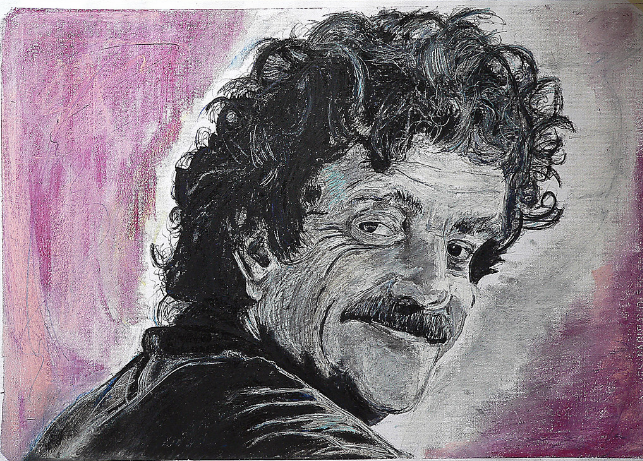
Image by Daniele Prati, via Flickr Com­mons

Many writ­ers recoil at the notion of dis­cussing where they get their ideas, but Kurt Von­negut spoke on the sub­ject will­ing­ly. “I get my ideas from dreams,” he announced ear­ly in one speech, adding, “the wildest dream I have had so far is about The New York­er mag­a­zine.” In this dream, “the mag­a­zine has pub­lished a three-part essay by Jonathan Schell which proves that life on Earth is about to end. I am sup­posed to go to the largest Goth­ic cathe­dral in the world, where all the peo­ple are wait­ing, and say some­thing won­der­ful — right before a hydro­gen bomb is dropped on the Empire State Build­ing.”

It stands to rea­son that a such a vivid, fright­en­ing, and some­how fun­ny sce­nario would unfold in the uncon­scious mind of a man who wrote such vivid, fright­en­ing, and some­how fun­ny nov­els. (Von­negut’s own inter­pre­ta­tion? “I con­sid­er myself an impor­tant writer, and I think The New York­er should be ashamed that it has nev­er pub­lished me.”) As it hap­pens, he did deliv­er these words in a cathe­dral, name­ly New York City’s Cathe­dral of St. John the Divine in the spring of 1982.

This was just months after Schel­l’s three-part essay “The Fate of the Earth” (all three parts of it still avail­able online) real­ly ran in The New York­er, and Cold War fears about the prob­a­bil­i­ty of a hydro­gen bomb real­ly drop­ping on Amer­i­ca ran high. Von­negut’s speech was one of a series of Sun­day ser­mons the Cathe­dral had lined up on the sub­ject of nuclear dis­ar­ma­ment, assem­bling the rest of the ros­ter from mil­i­tary, sci­en­tif­ic, and activist fields. The author of Cat’s Cra­dleSlaugh­ter­house-Five, and Break­fast of Cham­pi­onsfresh off a trip to the Gala­pa­gos Islands with the St. John the Divine’s Bish­op Paul Moore—presumably rep­re­sent­ed the realm of let­ters.

“At the time, NYPR Archives Direc­tor Andy Lanset cov­ered the Von­negut ser­mon as a vol­un­teer for the WNYC News Depart­ment,” wrote WNY­C’s William Rod­ney Allen in 2014 on the redis­cov­ery and post­ing of Lanset’s record­ing. (The same pub­lic radio sta­tion, inci­den­tal­ly, would fif­teen or so years lat­er com­mis­sion Von­negut for a series of reports from the after­life.) Now we can not only read but also hear Von­negut, in his own voice, try­ing to imag­ine aloud a series of “fates worse than death.” Why? Not sim­ply to indulge his famous sense of gal­lows humor, but in order to put the nuclear threat, and the anx­i­eties it gen­er­at­ed, into the prop­er con­text.

“I am sure you are sick and tired of hear­ing how all liv­ing things siz­zle and pop inside a radioac­tive fire­ball,” Von­negut says, going on to assure his audi­ence that “sci­en­tists, for all their cre­ativ­i­ty, will nev­er dis­cov­er a method for mak­ing peo­ple dead­er than dead. So if some of you are wor­ried about being hydro­gen-bombed, you are mere­ly fear­ing death. There is noth­ing new in that. If there weren’t any hydro­gen bombs, death would still be after you.”

In any event, despite hav­ing shuf­fled through sev­er­al can­di­dates (“Life with­out petro­le­um?”), Von­negut can come up with no fate believ­ably worse than death besides cru­ci­fix­ion. But giv­en that non-cru­ci­fied human beings near­ly always and every­where pre­fer life to death, per­haps “we might pray to be res­cued from our inven­tive­ness” which gave us the abil­i­ty to destroy all life on Earth. But “the inven­tive­ness which we so regret now may also be giv­ing us, along with the rock­ets and war­heads, the means to achieve what has hith­er­to been an impos­si­bil­i­ty, the uni­ty of mankind.”

Von­negut sees this promise main­ly in tele­vi­sion, whose ter­ri­bly real­is­tic sounds and images ensure that “the peo­ple of every indus­tri­al­ized nation are nau­se­at­ed by war by the time they are ten years old.” A vet­er­an of the Sec­ond World War, he him­self remem­bers a very dif­fer­ent time, back when “it used to be nec­es­sary for a young sol­dier to get into fight­ing before he became dis­il­lu­sioned about war,” back when “it was unusu­al for an Amer­i­can, or a per­son of any nation­al­i­ty, for that mat­ter, to know much about for­eign­ers.”

Even before the 1980s, “thanks to mod­ern com­mu­ni­ca­tions, we have seen sights and heard sounds from vir­tu­al­ly every square mile of the land mass on this plan­et,” and so “know for cer­tain that there are no poten­tial human ene­mies any­where who are any­thing but human beings almost exact­ly like our­selves. They need food. How amaz­ing. They love their chil­dren. How amaz­ing. They obey their lead­ers. How amaz­ing. They think like their neigh­bors. How amaz­ing.”

Mod­ern com­mu­ni­ca­tions have, of course, come aston­ish­ing­ly far in the 35 years since Von­negut’s Sun­day ser­mon, but our fears about nuclear anni­hi­la­tion have had a way of resur­fac­ing. In recent months, the Amer­i­can peo­ple have even heard talk of a rein­vig­o­rat­ed nuclear arms race from their new pres­i­dent, a man whose rise detrac­tors part­ly blame on mod­ern com­mu­ni­ca­tion tech­nol­o­gy — not a lack of it, but an excess.

“The glob­al vil­lage that was once the inter­net has been replaced by dig­i­tal islands of iso­la­tion that are drift­ing fur­ther apart each day,” writes Mostafa M. El-Bermawy in a Wired piece on the threat social-media “fil­ter bub­bles” pose to democ­ra­cy. “We need to remind our­selves that there are humans on the oth­er side of the screen who want to be heard and can think and feel like us while at the same time reach­ing dif­fer­ent con­clu­sions.” Recent devel­op­ments would prob­a­bly dis­ap­point Von­negut (not that they would sur­prise him), but he’d sure­ly get a kick, as he always did, out of the irony of it all.

Relat­ed Con­tent:

Kurt Von­negut: Where Do I Get My Ideas From? My Dis­gust with Civ­i­liza­tion

In 1988, Kurt Von­negut Writes a Let­ter to Peo­ple Liv­ing in 2088, Giv­ing 7 Pieces of Advice

22-Year-Old P.O.W. Kurt Von­negut Writes Home from World War II: “I’ll Be Damned If It Was Worth It”

Hear Kurt Von­negut Vis­it the After­life & Inter­view Dead His­tor­i­cal Fig­ures: Isaac New­ton, Adolf Hitler, Eugene Debs & More (Audio, 1998)

Bene­dict Cum­ber­batch Reads Kurt Vonnegut’s Incensed Let­ter to the High School That Burned Slaugh­ter­house-Five

Based in Seoul, Col­in Mar­shall writes and broad­casts on cities and cul­ture. He’s at work on a book about Los Ange­les, A Los Ange­les Primer, the video series The City in Cin­e­ma, the crowd­fund­ed jour­nal­ism project Where Is the City of the Future?, and the Los Ange­les Review of Books’ Korea Blog. Fol­low him on Twit­ter at @colinmarshall or on Face­book.

Alexis De Tocqueville’s Democracy in America: An Animated Introduction to the Most Insightful Study of American Democracy

We can­not right­ly see our­selves with­out hon­est feed­back. Those who sur­round them­selves with syco­phants and peo­ple just like them only hear what they want to hear, and nev­er get an accu­rate sense of their capa­bil­i­ties and short­com­ings. And so the best feed­back often comes from peo­ple out­side our in-groups. This can be as true of nations as it can be of indi­vid­u­als, pro­vid­ed our crit­ics are char­i­ta­ble, even when unspar­ing­ly hon­est, and that they take a gen­uine inter­est in our well-being.

These qual­i­ties well describe one of the sharpest crit­ics of the Unit­ed States in the past two cen­turies. Alex­is de Toc­queville, aris­to­crat­ic French lawyer, his­to­ri­an, and polit­i­cal philoso­pher, who trav­eled to the fledg­ling coun­try in 1831 to observe a nation then in the grip of a pop­ulist fever under Andrew Jack­son, a pres­i­dent who became noto­ri­ous for his expro­pri­a­tion of indige­nous land, ruth­less relo­ca­tion poli­cies, and embrace of South­ern slav­ery. But the groups who flour­ished under Jackson’s rule did so with a tremen­dous enthu­si­asm that the French thinker admired but also viewed with a very skep­ti­cal eye.

De Toc­queville pub­lished his obser­va­tions and analy­ses of the Unit­ed States in a now-famous book, Democ­ra­cy in Amer­i­ca. Though we’ve come to take the idea of democ­ra­cy for grant­ed, for the young French­man, a child of Napoleon­ic Europe, it was “a high­ly exot­ic and new polit­i­cal option,” as Alain de Bot­ton tells us in his ani­mat­ed video intro­duc­tion above. De Toc­queville “pre­scient­ly believed that democ­ra­cy was going to be the future all over the world, and so he want­ed to know, ‘what would that be like?’”

With a grant from the French gov­ern­ment, De Toc­queville trav­eled the coun­try (then less than half its cur­rent size) for nine months, get­ting to know its peo­ple and cus­toms as best he could, and mak­ing a series of gen­er­al obser­va­tions that would form the vignettes and argu­ments in his book. He was “par­tic­u­lar­ly alive to the prob­lem­at­ic and dark­er sides of democ­ra­cy.” De Bot­ton dis­cuss­es five crit­i­cal insights from Democ­ra­cy in Amer­i­ca. See three of them below, with quotes from De Toc­queville him­self.

1. Democ­ra­cy Breeds Mate­ri­al­ism.

For De Toc­queville one kind of materialism—the exces­sive pur­suit of wealth—disposed the coun­try to anoth­er, “a dan­ger­ous sick­ness of the human mind”—the denial of a spir­i­tu­al or intel­lec­tu­al life. “While man takes plea­sure in this hon­est and legit­i­mate pur­suit of well-being,” he wrote, “it is to be feared that in the end he may lose the use of his most sub­lime fac­ul­ties, and that by want­i­ng to improve every­thing around him, he may in the end degrade him­self.”

De Toc­queville, says De Bot­ton, observed that “mon­ey seemed to be quite sim­ply the only achieve­ment that Amer­i­cans respect­ed” and that “the only test of good­ness for any item was how much mon­ey it hap­pens to make.”

2. Democ­ra­cy Breeds Envy & Shame

“When all the pre­rog­a­tives of birth and for­tune have been abol­ished,” wrote De Toc­queville, “when every pro­fes­sion is open to every­one, an ambi­tious man may think it is easy to launch him­self on a great career and feel that he has been called to no com­mon des­tiny. But this is a delu­sion which expe­ri­ence quick­ly cor­rects.” Unable to rise above his cir­cum­stances, and yet believ­ing that he should be equal to his neigh­bors in achieve­ments, such a per­son may blame him­self and feel ashamed, or suc­cumb to envy and ill will.

De Toc­queville was far too opti­mistic about the abol­ish­ment of “pre­rog­a­tives of birth and for­tune,” but many Amer­i­cans might rec­og­nize them­selves still in his gen­er­al pic­ture, in which “the sense of unlim­it­ed oppor­tu­ni­ty could ini­tial­ly encour­age a sur­face cheer­ful­ness.” And yet, De Bot­ton notes, “as time passed and the major­i­ty failed to raise them­selves, Toc­queville not­ed that their mood dark­ened, that bit­ter­ness took hold and choked their spir­its, and that their hatred of them­selves and their mas­ters grew fierce.”

3. Tyran­ny of the Major­i­ty

De Toc­queville, De Bot­ton says, thought that “demo­c­ra­t­ic cul­ture… often ends up demo­niz­ing any asser­tion of dif­fer­ence, and espe­cial­ly cul­tur­al supe­ri­or­i­ty, even though such atti­tudes might be con­nect­ed with real mer­it.” In such a state, “soci­ety has an aggres­sive lev­el­ing instinct.”

It wasn’t only attacks on high cul­ture that De Toc­queville feared, but what he called the “Omnipo­tence of the Major­i­ty,” a phrase he used to denote the pow­er of pub­lic opin­ion as an almost total­i­tar­i­an means of social con­trol. In vol­ume two of his study, pub­lished in 1840, De Toc­queville devot­ed par­tic­u­lar atten­tion to “the pow­er which that major­i­ty nat­u­ral­ly exer­cis­es over the mind…. By what­ev­er polit­i­cal laws men are gov­erned in the ages of equal­i­ty, it may be fore­seen that faith in pub­lic opin­ion will become for them a species of reli­gion, and the major­i­ty its min­is­ter­ing prophet.”

From this pre­dic­tion, De Toc­queville fore­saw “two ten­den­cies; one lead­ing the mind of every man to untried thoughts, the oth­er pro­hibit­ing him from think­ing at all.”

De Bot­ton goes on to dis­cuss two close­ly relat­ed cri­tiques: democracy’s sus­pi­cion of all author­i­ty and its under­min­ing of free thought. Rather than encoun­ter­ing the kind of mar­ket­place of ideas the coun­try prides itself on fos­ter­ing, he found in few places “less inde­pen­dence of mind, and true free­dom of dis­cus­sion, than in Amer­i­ca.” The crit­i­cism is harsh, and De Toc­queville did not flat­ter his hosts often, and yet for all of its “inher­ent draw­backs,” De Bot­ton writes at the School of Life, the French­man “isn’t anti-demo­c­ra­t­ic.”

His aim is “to get us to be real­is­tic” about demo­c­ra­t­ic soci­ety and its ten­den­cies to inhib­it rather than enlarge many free­doms. As Arthur Gold­ham­mer observes at The Nation, De Toc­queville believed that “True free­dom lay not in the pur­suit of indi­vid­u­al­is­tic aims, but “in ‘slow and tran­quil’ action in con­cert with oth­ers shar­ing some col­lec­tive pur­pose.”

Relat­ed Con­tent:

Why Socrates Hat­ed Democ­ra­cies: An Ani­mat­ed Case for Why Self-Gov­ern­ment Requires Wis­dom & Edu­ca­tion

20 Lessons from the 20th Cen­tu­ry About How to Defend Democ­ra­cy from Author­i­tar­i­an­ism, Accord­ing to Yale His­to­ri­an Tim­o­thy Sny­der

Bertrand Russell’s Ten Com­mand­ments for Liv­ing in a Healthy Democ­ra­cy

Josh Jones is a writer and musi­cian based in Durham, NC. Fol­low him at @jdmagness

How Machiavelli Really Thought We Should Use Power: Two Animated Videos Provide an Introduction

Nice guys, so they say, fin­ish last. Many of us might instinc­tive­ly label such a world­view “Machi­avel­lian,” par­tial­ly for good rea­son and par­tial­ly not. It stands as a tes­ta­ment to the insights of the Renais­sance-era Flo­ren­tine polit­i­cal philoso­pher Nic­colò Machi­avel­li, expressed with great clar­i­ty and suc­cinct­ness in his books The Prince and the Dis­cours­es on Livy, not just that his name became an adjec­tive, but that it became one that remains in wide use near­ly 500 years after his death. But like oth­er such terms — “Kafkaesque” and “Orwellian” come to mind — its mod­ern usage tends to come detached from its name­sake writer’s orig­i­nal ideas.

So what did Machi­avel­li actu­al­ly have to say to human­i­ty? “Machi­avel­li’s Advice for Nice Guys,” a new ani­mat­ed video from Alain de Bot­ton’s School of Life, high­lights the core insight of his work: “that the wicked tend to win. And they do so because they have a huge advan­tage over the good: they are will­ing to act with the dark­est inge­nu­ity and cun­ning to fur­ther their cause. They are not held back by those rigid oppo­nents of change: prin­ci­ples.

They will be pre­pared to out­right lie, twist facts, threat­en or get vio­lent. They will also – when the sit­u­a­tion demands it – know how to seduc­tive­ly deceive, use charm and hon­eyed words, bedaz­zle and dis­tract. And in this way, they con­quer the world.”

This line of think­ing, put in such stark terms, can make Machi­avel­li seem like an off­putting­ly harsh (if quite intel­li­gent) char­ac­ter. But his writ­ing is more nuanced: he advo­cates not using flat-out lies and vio­lence to achieve one’s ends, but indeed to be nice — just “nev­er to be over­ly devot­ed to act­ing nice­ly,” an atti­tude he thought the West­’s pop­u­lar read­ings of the sto­ry of Jesus of Nazareth too often advo­cat­ed —  while always know­ing “how to bor­row – when need be – every sin­gle trick employed by the most cyn­i­cal, das­tard­ly, unscrupu­lous and nas­ti­est peo­ple who have ever lived.” Nice guys, in short, have no choice but to learn from their ene­mies.

You can learn more about the some­times har­row­ing expe­ri­ences that taught Machi­avel­li all this in the School of Life’s intro­duc­tion to his polit­i­cal the­o­ry just above. He reck­oned, more mem­o­rably than any oth­er, “the price of deal­ing with the world as it is, and not as we feel it should be. The world has con­tin­ued to love and hate Machi­avel­li in equal mea­sure for insist­ing on this uncom­fort­able truth.” Machi­avel­li, as Salman Rushdie put it in a clip we fea­tured a few years ago, lived in a time when Italy’s rul­ing fam­i­lies behaved “in the most ruth­less way, and he wrote this lit­tle trea­tise about not what he would like things to be like, but how pow­er actu­al­ly works, which he observed.” Rushdie calls the neg­a­tive asso­ci­a­tions with the philoso­pher’s name “a clas­sic case of shoot­ing the mes­sen­ger” — some­thing, alas, even the most good-inten­tioned ruler may find him­self forced to do once in a while.

Relat­ed Con­tent:

Salman Rushdie: Machiavelli’s Bad Rap

Intro­duc­tion to Polit­i­cal Phi­los­o­phy: A Free Yale Course

Allan Bloom’s Lec­tures on Machi­avel­li (Boston Col­lege, 1983)

6 Polit­i­cal The­o­rists Intro­duced in Ani­mat­ed “School of Life” Videos: Marx, Smith, Rawls & More

Based in Seoul, Col­in Mar­shall writes and broad­casts on cities and cul­ture. He’s at work on a book about Los Ange­les, A Los Ange­les Primer, the video series The City in Cin­e­ma, the crowd­fund­ed jour­nal­ism project Where Is the City of the Future?, and the Los Ange­les Review of Books’ Korea Blog. Fol­low him on Twit­ter at @colinmarshall or on Face­book.

375+ Episodes of William F. Buckley’s Firing Line Now Online: Features Talks with Chomsky, Borges, Kerouac, Ginsberg & More

On most issues, I’m clear about where I stand and why, and I used to find it enlight­en­ing to debate informed peo­ple who felt strong­ly about oppos­ing posi­tions. Some­times we would get each oth­er to budge a lit­tle bit, or—at the very least—sharpen the artic­u­la­tion of our views. These days, I often find myself in echo cham­bers, preach­ing to choirs, and oth­er clichés about epis­temic clo­sure. It’s a sit­u­a­tion that alarms me, and yet I find even more alarm­ing the lev­els of cyn­i­cism, invec­tive, bad faith, threats, and mis­in­for­ma­tion that per­vade so much par­ti­san debate.

I know I’m not alone in this lament. What we’ve lost—among oth­er human­ist virtues—is what philoso­phers and rhetori­cians call the “prin­ci­ple of char­i­ty,” gen­er­al­ly defined as mak­ing the clear­est, most intel­lec­tu­al­ly hon­est inter­pre­ta­tion we can of an opponent’s views and argu­ing against them on those mer­its. The prin­ci­ple of char­i­ty allows us to have civ­il dis­agree­ments with peo­ple whose ethics we may dis­like, and it there­by fur­thers dis­cus­sion rather than sti­fles it.

We may all have our own sto­ry about who is to blame for the break­down of the dis­course, but before we start yelling at each oth­er all over again, we could per­haps take some time to learn from exam­ples of polit­i­cal debate done well. One long-run­ning exam­ple involves a fig­ure whose views I’ve usu­al­ly found abhor­rent (and some of which he him­self lat­er called “rep­re­hen­si­ble”), but whose abil­i­ty to defend them in char­i­ta­ble spar­ring match­es with peo­ple from every pos­si­ble place on the spec­trum (or horse­shoe), I’ve found very com­pelling.

I write here of William F. Buck­ley, the well-heeled, Ivy League-edu­cat­ed (many have said elit­ist) founder of the Nation­al Review. What­ev­er per­son­al strengths or flaws we wish to ascribe to Buck­ley, we should agree on a few facts: Dur­ing his tenure as the host of Fir­ing Line—an often oppo­si­tion­al inter­view pro­gram in which Buck­ley chat­ted up con­ser­v­a­tive fel­low trav­el­ers and sparred with left­ist intel­lec­tu­als, artists, and activists—we see over and over again that he made an effort to actu­al­ly read his oppo­nents’ views first­hand; to clar­i­fy his under­stand­ing of them; and to base his dis­agree­ment on the the argu­ments rather than the real or imag­ined moti­va­tions of the mes­sen­ger.

Over 375 episodes of Fir­ing Line have been made avail­able on YouTube by the Hoover Insti­tu­tion at Stan­ford Uni­ver­si­ty. You can find com­plete episodes on Hoover’s YouTube chan­nel here (there are prob­a­bly more to come), and see their web site for an archive of full pro­grams and tran­scripts avail­able online.

Buck­ley did­n’t always engage in rea­soned debate: he issued many ugly per­son­al and racial attacks in print. He threat­ened to punch both Gore Vidal and Noam Chom­sky (jok­ing­ly, per­haps). But Fir­ing Line wasn’t only about its host: its suc­cess depend­ed also on the for­mat, the audi­ence, and the qual­i­ty of the dis­cus­sion and the guests. Take the few exam­ples here. At the top of the post, Buck­ley dis­cuss­es the Viet­nam War with Chom­sky. The lat­ter may be inca­pable of rais­ing his voice, but notice also Buckley’s cool exte­ri­or. While his gen­teel man­ner­isms rubbed many the wrong way, whether or not we like his demeanor, he con­sis­tent­ly employs meth­ods of clar­i­fi­ca­tion and argu­men­ta­tion rather than per­son­al attack (stray threats of punch­ing aside).

Nowhere in evi­dence is the cur­rent style of scream­ing over guests with whom the host dis­agrees. We find  sim­i­lar recep­tive­ness in Buck­ley’s inter­view with Allen Gins­berg, and even with Black Pan­ther Eldridge Cleaver, whom Buck­ley obvi­ous finds dis­taste­ful, and whose vio­lent rhetoric and vio­lent past may war­rant the reac­tion in many peo­ple’s esti­ma­tion. Nev­er­the­less, even in this extreme case, we see how the dis­cus­sion tracks along in such a way that view­ers actu­al­ly learn some­thing about the views on offer. Some may be unable to coun­te­nance either par­tic­i­pan­t’s ideas, and yet may come still away from the exchange exam­in­ing the basis of their own posi­tion.

Buck­ley didn’t only debate pol­i­tics. As in his inter­view with Gins­berg, many of his foils were lit­er­ary fig­ures, and many of them pri­mar­i­ly dis­cussed writ­ing. Fir­ing Line brought us great tele­vi­sion like the dis­cus­sions fur­ther up with Jorge Luis Borges, with Eudo­ra Wel­ty and Walk­er Per­cy above, and, below, with Nor­man Mail­er. The show ran from 1966 to 1999 and owed much of its pres­tige to the two pub­lic tele­vi­sion stations—from New Jer­sey and South Car­oli­na, respectively—who host­ed it and allowed for its rar­i­fied audi­ence.

Though it may not have been wide­ly viewed, Fir­ing Line’s influ­ence res­onat­ed wide­ly in its impact on oth­er cul­tur­al fig­ures and venues. Grant­ed, we see Buck­ley’s bias­es on dis­play. Make what you will of the fact that—although the peri­od of the show’s air­ing saw at least two waves of feminism—Buckley rarely inter­viewed women unless they already agreed with him. On the whole, how­ev­er, through­out the show’s 33-year run its host lis­tened to, engaged hon­est­ly with, and attempt­ed to under­stand oth­er points of view.

h/t Emer­son

Relat­ed Con­tent:

James Bald­win Bests William F. Buck­ley in 1965 Debate at Cam­bridge Uni­ver­si­ty

William F. Buck­ley Flogged Him­self to Get Through Atlas Shrugged

William F. Buck­ley v. Gore Vidal – 1968

Josh Jones is a writer and musi­cian based in Durham, NC. Fol­low him at @jdmagness

Hunter S. Thompson Gets in a Gunfight with His Neighbor & Dispenses Political Wisdom: “In a Democracy, You Have to Be a Player”

What would Hunter S. Thomp­son, in many ways the ulti­mate Amer­i­can, have made of his coun­try’s polit­i­cal scene today? Hav­ing lived, in the words of his 2005 sui­cide note, “17 years past 50. 17 more than I need­ed or want­ed,” the self-styled and always uncom­pro­mis­ing “gonzo jour­nal­ist” did­n’t stick around to observe much of the 21st cen­tu­ry, and even as grim­ly vivid a polit­i­cal imag­i­na­tion as his could hard­ly have fore­seen many of its devel­op­ments. Yet like the longer-gone Alex­is de Toc­queville, also very much a man of his own time, Thomp­son’s per­spec­tive on democ­ra­cy in Amer­i­ca has in some sense only grown more rel­e­vant over the years with­out him.

Thomp­son would, in life, offer this per­spec­tive on any and all occa­sions, includ­ing dur­ing a shootout with his neigh­bor. In his final decades, his bio­graph­i­cal blurbs ref­er­enced both a love of firearms and a 42.5‑acre “for­ti­fied com­pound,” known as Owl Farm, in Woody Creek, Col­orado.

One might assume that such a remote and seclud­ed loca­tion would rule out the pos­si­bil­i­ty of con­flicts with neigh­bors, but Thomp­son’s expe­ri­ence (as often it did) proved an excep­tion. In the recent­ly released footage above, we see him exchang­ing gun­fire with a new­ly arrived res­i­dent in a dis­pute hav­ing some­thing to do with live­stock. “If this son of a bitch wants to bitch about his cows over here and shoot at me, well… it’s our coun­try. It’s not theirs. It’s not a bunch of used car deal­ers from south­ern Cal­i­for­nia.”

No mat­ter how impul­sive or reck­less it might seem, Thomp­son’s behav­ior arose organ­i­cal­ly, from a foun­da­tion­al polit­i­cal phi­los­o­phy. “The peo­ple who did this Dec­la­ra­tion of Inde­pen­dence and the Con­sti­tu­tion were, uh, good peo­ple,” he says in voiceover as we watch him assume a com­bat stance and fire off a few rounds. “And it’s a good place. Here we are in the mid­dle of it, up on the moun­tain,” from his perch on which he came to see him­self as a kind of ultra-lib­er­tar­i­an defend­er of the mis­sion of the Found­ing Fathers, or at least the mis­sion of the Found­ing Fathers as he inter­pret­ed it. The author of Fear and Loathing in Las Vegas ends by remind­ing Amer­i­cans of some­thing they tend to for­get until plunged into one cri­sis or anoth­er: “In a democ­ra­cy, you have to be a play­er.”

via red­dit

Relat­ed Con­tent:

Hunter S. Thomp­son Sets His Christ­mas Tree on Fire, Near­ly Burns His House Down (1990)

Play­ing Golf on LSD With Hunter S. Thomp­son: Esquire Edi­tor Remem­bers the Odd­est Game of Golf

Hunter S. Thompson’s Har­row­ing, Chem­i­cal-Filled Dai­ly Rou­tine

Hunter S. Thomp­son, Exis­ten­tial­ist Life Coach, Gives Tips for Find­ing Mean­ing in Life

Read 10 Free Arti­cles by Hunter S. Thomp­son That Span His Gonzo Jour­nal­ist Career (1965–2005)

Based in Seoul, Col­in Mar­shall writes and broad­casts on cities and cul­ture. He’s at work on a book about Los Ange­les, A Los Ange­les Primer, the video series The City in Cin­e­ma, the crowd­fund­ed jour­nal­ism project Where Is the City of the Future?, and the Los Ange­les Review of Books’ Korea Blog. Fol­low him on Twit­ter at @colinmarshall or on Face­book.

Did Plato’s Republic Predict the Rise of Donald Trump?: A Chilling Animated Video Narrated by Andrew Sullivan

We stand, per­haps, at the thresh­old of the sin­gu­lar­i­ty, that great event when machine intel­li­gence over­takes our own. The writhing of late cap­i­tal­ism may in fact be the death throes of West­ern moder­ni­ty and, for both good and ill, much of its Enlight­en­ment lega­cy. Insti­tu­tions like the press and the polling indus­try have stum­bled bad­ly. No amount of denial­ism will stop the cli­mate cri­sis. Some­thing entire­ly new seems poised for its emer­gence into the world, though what it might be no one seems ful­ly equipped to say. Why, then, should we look back to Pla­to to explain our epoch, a philoso­pher who had no famil­iar­i­ty with mod­ern weapon­ry, arti­fi­cial intel­li­gence, or infor­ma­tion sys­tems?

Per­haps a bet­ter ques­tion is: do we and should we still val­ue the con­tri­bu­tions of Euro­pean phi­los­o­phy in con­tem­po­rary life? If so, then we must allow that Pla­to may be per­pet­u­al­ly rel­e­vant to learned dis­course. Alfred North White­head famous­ly char­ac­ter­ized “the Euro­pean philo­soph­i­cal tra­di­tion” as “a series of foot­notes to Pla­to.” Sug­gest­ing his agree­ment with the sen­ti­ment, Mas­si­mo Pigli­uc­ci titled his reg­u­lar col­umn at The Philosopher’s Mag­a­zine, “Foot­notes to Pla­to.” Though he did not invent his mode of inquiry, and often got it very wrong, Pla­to, he writes, “is a tow­er­ing fig­ure for an entire way of think­ing about fun­da­men­tal ques­tions.”

There may be few ques­tions more fun­da­men­tal than those we now ask in the U.S. about tyran­ny, its ori­gins and remedy—about how we arrived at where we are and what eth­i­cal and prac­ti­cal mat­ters lie in the hands of the cit­i­zen­ry. These ques­tions were cen­tral to the thought of Socrates, Plato’s men­tor and pri­ma­ry char­ac­ter in his dia­logues, who had some sur­pris­ing­ly con­trar­i­an ideas on the mat­ter in The Repub­lic. Here, as Andrew Sul­li­van tells us in the BBC News­night video above, Socrates the­o­rizes that “Tyran­ny is prob­a­bly estab­lished out of no oth­er regime than democ­ra­cy.”

The state­ment shocks us, but it also ran counter to the Athen­ian sen­ti­ments of Plato’s day. The pic­ture Socrates paints of democracy’s ills finds its echo in the con­tem­po­rary conservative’s world­view, but we should point out that Sul­li­van mis­rep­re­sents the text he reads as one con­tin­u­ous pas­sage, when it is actu­al­ly a series of excerpt­ed quo­ta­tions. And as always, we should be care­ful not to try and see our own par­ti­san divides in ancient thought. Socrates also had many oth­er things to say the mod­ern right finds tru­ly objec­tion­able.

The prob­lem with democ­ra­cy, Socrates thought, was too much free­dom. Its “free­doms mul­ti­ply,” he says,

until it becomes a many-col­ored clock dec­o­rat­ed in all hues. Men are inter­change­able with women, and all their nat­ur­al dif­fer­ences for­got­ten. Ani­mals have rights. For­eign­ers can come and work just like cit­i­zens. Chil­dren boss their par­ents around. Teach­ers are afraid of their stu­dents. The rich try to look just like the poor.

Soon every kind of inequal­i­ty is despised. The wealthy are par­tic­u­lar­ly loathed. And elites in gen­er­al are treat­ed as sus­pect, per­pet­u­at­ing inequal­i­ty and rep­re­sent­ing injus­tice.

Under such pre­sum­ably deca­dent con­di­tions, “a would-be tyrant would seize his moment”:

He is usu­al­ly of the elite but is in tune with the time. Giv­en over to ran­dom plea­sures and whims. Feast­ing on food, and espe­cial­ly sex.

He makes his move by tak­ing over a par­tic­u­lar­ly obe­di­ent mob, and attack­ing his wealthy peers as cor­rupt. He is a trai­tor to his class, and soon his elite ene­mies find a way to appease him or are forced to flee.

Even­tu­al­ly he stands alone, offer­ing the addled, dis­tract­ed, self-indul­gent cit­i­zens a kind of relief from democ­ra­cy’s end­less choic­es and inse­cu­ri­ties.

He rides a back­lash to suc­cess. Too much free­dom seems to change into noth­ing but too much slav­ery. He offers him­self as the per­son­i­fied answer to all prob­lems. To replace the elites, and rule alone on behalf of the mass­es. And as the peo­ple thrill to him as a kind of solu­tion, a democ­ra­cy will­ing­ly, impetu­ous­ly, repeals itself.

The grim, dra­mat­ic ani­mat­ed video that accom­pa­nies Sullivan’s nar­ra­tion of this chill­ing­ly pre­scient ancient text is not sub­tle about the mod­ern par­al­lels. We can hearti­ly debate the diag­no­sis of “too much free­dom” as the cause of democracy’s yield­ing to tyran­ny. But what­ev­er democ­ra­cy’s fail­ings, the effects Pla­to describes above are as evi­dent today as they were almost 2300 years ago, though we may flat­ter our­selves in think­ing that the mechan­ics of our polit­i­cal sys­tems have evolved since then. In any case, our tech­no­log­i­cal evo­lu­tion means that unlike in Pla­to’s day, the rise of a tyrant like Don­ald Trump, as Sul­li­van wrote last year, may be “an extinc­tion-lev­el event.”

Relat­ed Con­tent:

Why Socrates Hat­ed Democ­ra­cies: An Ani­mat­ed Case for Why Self-Gov­ern­ment Requires Wis­dom & Edu­ca­tion

Intro­duc­tion to Polit­i­cal Phi­los­o­phy: A Free Yale Course 

Phi­los­o­phy Bites: Pod­cast­ing Ideas From Pla­to to Sin­gu­lar­i­ty Since 2007

Josh Jones is a writer and musi­cian based in Durham, NC. Fol­low him at @jdmagness

« Go BackMore in this category... »
Quantcast