How to Spot Bullshit: A Primer by Princeton Philosopher Harry Frankfurt

We live in an age of truthi­ness. Come­di­an Stephen Col­bert coined the word to describe the Bush administration’s ten­den­cy to fudge the facts in its favor.

Ten years after the Amer­i­can Dialect Soci­ety named it Word of the Year, for­mer pres­i­dent Bush’s cal­en­dar is packed with such leisure activ­i­ties as golf and paint­ing por­traits of world lead­ers, but “truthi­ness” remains on active duty.

It’s par­tic­u­lar­ly ger­mane in this elec­tion year, though politi­cians are far from its only prac­ti­tion­ers.

Take glob­al warm­ing. NASA makes a pret­ty rock sol­id case for both its exis­tence and our role in it:

97 per­cent or more of active­ly pub­lish­ing cli­mate sci­en­tists agree: Cli­mate-warm­ing trends over the past cen­tu­ry are extreme­ly like­ly due to human activ­i­ties. In addi­tion, most of the lead­ing sci­en­tif­ic orga­ni­za­tions world­wide have issued pub­lic state­ments endors­ing this posi­tion.

In view of such num­bers, its under­stand­able that a sub­ur­ban Joe with a freez­er full of fac­to­ry-farmed beef and mul­ti­ple SUVs in his garage would cling to the posi­tion that glob­al warm­ing is a lie. It’s his last resort, real­ly.

But such self-ratio­nal­iza­tions are not truth. They are truthi­ness.

Or to use the old-fash­ioned word favored by philoso­pher Har­ry Frank­furt, above: bull­shit!

Frank­furt–a philoso­pher at Prince­ton and the author of On Bull­shitallows that bull­shit artists are often charm­ing, or at their very least, col­or­ful. They have to be. Achiev­ing their ends involves engag­ing oth­ers long enough to per­suade them that they know what they’re talk­ing about, when in fact, that’s the oppo­site of the truth.

Speak­ing of oppo­sites, Frank­furt main­tains that bull­shit is a dif­fer­ent beast from an out-and-out lie. The liar makes a spe­cif­ic attempt to con­ceal the truth by swap­ping it out for a lie.

The bull­shit artist’s approach is far more vague. It’s about cre­at­ing a gen­er­al impres­sion.

There are times when I admit to wel­com­ing this sort of manure. As a mak­er of low bud­get the­ater, your hon­est opin­ion of any show I have Lit­tle Red Hen’ed into exis­tence is the last thing I want to hear upon emerg­ing from the cramped dress­ing room, unless you tru­ly loved it.

I’d also encour­age you to choose your words care­ful­ly when dash­ing a child’s dreams.

But when it comes to mat­ters of pub­lic pol­i­cy, and the pub­lic good, yes, trans­paren­cy is best.

It’s inter­est­ing to me that film­mak­ers James Nee and Chris­t­ian Brit­ten trans­formed a por­tion of their learned subject’s thoughts into voiceover nar­ra­tion for a light­ning fast stock footage mon­tage. It’s divert­ing and fun­ny, fea­tur­ing such omi­nous char­ac­ters as Nos­fer­atu, Bill Clin­ton, Char­lie Chaplin’s Great Dic­ta­tor, and Don­ald Trump, but isn’t it also the sort of mis­di­rec­tion sleight of hand at which true bull­shit­ters excel?

Frank­furt expands upon his thoughts on bull­shit in his apt­ly titled best­selling book, On Bull­shit and its fol­lowup On Truth.

Relat­ed Con­tent:

Noam Chom­sky Schools 9/11 Truther; Explains the Sci­ence of Mak­ing Cred­i­ble Claims

Young T.S. Eliot Writes “The Tri­umph of Bullsh*t” and Gives the Eng­lish Lan­guage a New Exple­tive (1910)

Stephen Col­bert Explains How The Col­bert Report Is Made in a New Pod­cast

Ayun Hal­l­i­day is an author, illus­tra­tor, and Chief Pri­ma­tol­o­gist of the East Vil­lage Inky zine. Fol­low her @AyunHalliday

Noam Chomsky on Whether the Rise of Trump Resembles the Rise of Fascism in 1930s Germany

No mat­ter where you are in the world, you must by now be well-acquaint­ed with the polit­i­cal chaos in the Unit­ed States. No one can con­fi­dent­ly pre­dict what’s going to hap­pen next. A cer­tain priv­i­leged few still find the sit­u­a­tion amus­ing; a cer­tain few have found a tremen­dous oppor­tu­ni­ty to increase prof­it and stand­ing, embrac­ing the mad­ness by embrac­ing Don­ald Trump, the celebri­ty real estate mogul some on the right have dubbed their “Great White Hope.”

A col­umn last week by the far-right nation­al­ist Pat Buchanan— whom Trump once denounced as a “Hitler-Lover”—ran with the idea, express­ing the para­noiac fan­tasies of thou­sands of white suprema­cists who have ral­lied behind the Repub­li­can nom­i­nee. Rhetoric like Buchanan’s and David Duke’s—anoth­er sup­port­er Trump once dis­avowed (then famous­ly didn’t, then even­tu­al­ly did again)—has demol­ished the “Over­ton win­dow,” we hear. America’s racist table talk is now a major par­ty plat­form: the prover­bial crank uncle who immis­er­ates Christ­mas din­ner with wild con­spir­a­cy the­o­ries now airs griev­ances 24 hours a day on cable news, unbound by “polit­i­cal cor­rect­ness” or stan­dards of accu­ra­cy of any kind.

Grant­ed, a major­i­ty of the elec­torate is hard­ly thrilled by the like­ly alter­na­tive to Trump, but as even con­ser­v­a­tive author P.J. O’Rourke quipped in his back­hand­ed endorse­ment of Hillary Clin­ton, “She’s wrong about absolute­ly every­thing, but she’s wrong with­in nor­mal para­me­ters.” There’s noth­ing “nor­mal” about Don­ald Trump’s can­di­da­cy. Its freak­ish­ness enthralls his ador­ing fans. But the mil­lions of Amer­i­cans who aren’t among them have legit­i­mate cause for alarm.

Com­par­isons to Hitler and Mus­soli­ni may have worn out their use­ful­ness in elec­tions past—frivolous as they often were—but the Trump campaign’s overt dem­a­goguery, vicious misog­y­ny, racism, vio­lent speech, actu­al vio­lence, com­plete dis­re­gard for truth, threats to free speech, and sim­plis­tic, macho cult of per­son­al­i­ty have prompt­ed plau­si­ble shouts of fas­cism from every cor­ner.

For­mer Repub­li­can Mass­a­chu­setts gov­er­nor (and recent­ly reject­ed Lib­er­tar­i­an vice-pres­i­den­tial can­di­date) William Weld equat­ed Trump’s immi­gra­tion plan with Kristall­nacht, an anal­o­gy, writes Peter Bak­er in The New York Times that is “not a lone­ly one.” (“There is nobody less of a fas­cist than Don­ald Trump,” the can­di­date retort­ed.) Like­wise, con­ser­v­a­tive colum­nist Robert Kagan recent­ly penned a Times op-ed denounc­ing Trump as a fas­cist, a posi­tion, he writes, with­out a “coher­ent ide­ol­o­gy” except its nation­al­ist attacks on racial and reli­gious oth­ers and belief in “the strong­man, the leader (Il Duce, Der Führer), in whom could be entrust­ed the fate of the nation.”

On the lib­er­al left, fig­ures like for­mer labor sec­re­tary Robert Reich and actor and Demo­c­ra­t­ic Par­ty orga­niz­er George Clooney have made the charge, as well as colum­nists in the New Repub­lic and else­where. In the video above from Democ­ra­cy Now, Mex­i­can pres­i­dent Enrique Pena Nieto com­pares Trump to Hitler, and Colum­bia Uni­ver­si­ty’s Robert Pax­ton—who has writ­ten arti­cles and a book on his the­o­ry of fascism—discusses the pos­si­bil­i­ty of Trump-as-fas­cist.

At the top of the post, Noam Chom­sky (MIT pro­fes­sor and author of the new book, Who Rules the World?) weighs in, with his analy­sis of the “gen­er­al­ized rage” of “main­ly work­ing class, mid­dle class, and poor white males” and their “tra­di­tion­al fam­i­lies” coa­lesc­ing around Trump. (Any­one who objects to Chomsky’s char­ac­ter­i­za­tion of Trump as a cir­cus clown should take a moment to revis­it his real­i­ty show career and per­for­mance in the WWE ring, not to men­tion those debates.)

In Chomsky’s assess­ment, we need only look to U.S. his­to­ry to find the kind of “strong” racial­ized nativism Trump espous­es, from Ben­jamin Franklin’s aver­sion to Ger­man and Swedish immi­grants, who were “not pure Anglo-Sax­ons like us,” to lat­er par­ties like the 19th cen­tu­ry Know Noth­ings. Per­haps, as John Cas­sidy wrote in The New York­er last year, that’s what Trump rep­re­sents.

The his­to­ry of nativism, Chom­sky goes on, “con­tin­ues into the 20th cen­tu­ry. There’s a myth of Anglo-Sax­on­ism. We’re pure Anglo-Sax­ons. (If you look around, it’s a joke.)” Now, there’s “the pic­ture of us being over­whelmed by Mus­lims and Mex­i­cans and the Chi­nese. Some­how, they’ve tak­en our coun­try away.” This notion (which peo­ple like David Duke call “white geno­cide”) is

Based on some­thing objec­tive. The white pop­u­la­tion is pret­ty soon going to become a minor­i­ty (what­ev­er ‘white’ means)…. The response to this is gen­er­al­ized anger at every­thing. So every time Trump makes a nasty com­ment about who­ev­er, his pop­u­lar­i­ty goes up. Because it’s based on hate, you know. Hate and fear. And it’s unfor­tu­nate­ly kind of rem­i­nis­cent of some­thing unpleas­ant: Ger­many, not many years ago.

Chom­sky dis­cuss­es Germany’s plum­met from its cul­tur­al and polit­i­cal heights in the 20s—when Hitler received 3% of the vote—to the decay of the 30s, when the Nazis rose to pow­er. Though the sit­u­a­tions are “not iden­ti­cal,” they are sim­i­lar enough, he says, to war­rant con­cern. Like­wise, the eco­nom­ic destruc­tion of Greece, says Chom­sky may (and indeed has) lead to the rise of a fas­cist par­ty, a phe­nom­e­non we’ve wit­nessed all over Europe.

The fall of the Weimar Repub­lic has a com­pli­cat­ed his­to­ry whose gen­er­al out­lines most of us know well enough. Ger­many’s defeat in WWI and the puni­tive, post-Treaty of Ver­sailles’ repa­ra­tions that con­tributed to hyper­in­fla­tion and total eco­nom­ic col­lapse do not par­al­lel the cur­rent state of affairs in the U.S.—anxious and agi­tat­ed as the coun­try may be. But Hitler’s rise to pow­er is instruc­tive. Ini­tial­ly dis­missed as a clown, he strug­gled for polit­i­cal pow­er for many years, and his par­ty bare­ly man­aged to hold a major­i­ty in the Reich­stag in the ear­ly 30s. The his­tor­i­cal ques­tion of why few—in Ger­many or in the U.S.—took Hitler seri­ous­ly as a threat has become a com­mon­place. (Part­ly answered by the amount of tac­it sup­port both there and here.)

Hitler’s strug­gle for dom­i­nance tru­ly cat­alyzed when he allied with the coun­try’s con­ser­v­a­tives (and Chris­tians), who made him Chan­cel­lor. Thus began his pro­gram of Gle­ich­schal­tung—“syn­chro­niza­tion” or “bring­ing into line”—during which all for­mer oppo­si­tion was made to ful­ly endorse his plans. In sim­i­lar fash­ion, Trump has fought for polit­i­cal rel­e­vance on the right for years, using xeno­pho­bic big­otry as his pri­ma­ry weapon. It worked. Now that he has tak­en over the Repub­li­can Party—and the reli­gious right—we’ve seen near­ly all of Trump’s oppo­nents on the right, from politi­cians to media fig­ures, com­plete­ly fold under and make fawn­ing shows of sup­port. Even some Bernie Sanders sup­port­ers have found ways to jus­ti­fy sup­port­ing Trump.

But Trump is “not Hitler,” as his wife Mela­nia claimed in his defense after his sup­port­ers swarmed jour­nal­ist Julia Ioffe with grotesque anti-Semit­ic attacks. Although he has an obvi­ous affin­i­ty for white nation­al­ists and neo-Nazis (see his activ­i­ty on social media and else­where) and per­haps a fond­ness for Hitler’s speech­es, the com­par­i­son has seri­ous draw­backs. Trump is some­thing else—something per­haps more far­ci­cal and bum­bling, but maybe just as dan­ger­ous giv­en the forces he has uni­fied and ele­vat­ed domes­ti­cal­ly, and the dan­gers of such an unsta­ble, pet­ty, vin­dic­tive per­son tak­ing over the world’s largest mil­i­tary, and nuclear arse­nal.

Per­haps he’s just a taste­less, cyn­i­cal con-man enter­tain­er using hate as anoth­er means of self-advance­ment. He has non-white and Jew­ish sup­port­ers!, his vot­ers claim. He holds “cor­rupt and lib­er­al New York val­ues”! say con­ser­v­a­tive detrac­tors. These objec­tions ring hol­low giv­en all Trump has said and done in recent years. His cam­paign, and the response it has drawn, looks enough like those of pre­vi­ous far-right racist lead­ers that call­ing Trump a fas­cist doesn’t seem far-fetched at all. That should seri­ous­ly alarm any hon­est per­son who isn’t a far-right xeno­pho­bic nation­al­ist.

Relat­ed Con­tent:

Noam Chom­sky Defines What It Means to Be a Tru­ly Edu­cat­ed Per­son

Noam Chom­sky Slams Žižek and Lacan: Emp­ty ‘Pos­tur­ing’

How to Spot Bull­shit: A Primer by Prince­ton Philoso­pher Har­ry Frank­furt

Rare 1940 Audio: Thomas Mann Explains the Nazis’ Ulte­ri­or Motive for Spread­ing Anti-Semi­tism

Josh Jones is a writer and musi­cian based in Durham, NC. Fol­low him at @jdmagness

Ta-Nehisi Coates’ List of 13 Recommended Books

Ta-Nehisi Coates has been rid­ing a wave so high these past few years that most hon­est writ­ers would con­fess to at least some small degree of envy. And yet anyone—writer or reader—who appre­ci­ates Coates’ rig­or­ous schol­ar­ship, styl­is­tic mas­tery, and enthralling per­son­al voice must also admit that the acco­lades are well-earned. Win­ner of the Nation­al Book Award for his sec­ond auto­bi­o­graph­i­cal work, Between the World and Me and recip­i­ent of a MacArthur “Genius Grant,” Coates is fre­quent­ly called on to dis­cuss the seem­ing­ly intractable racism in the U.S., both its long, grit­ty his­to­ry and con­tin­u­a­tion into the present. (On top of these cre­den­tials, Coates, an unabashed com­ic book nerd, is now pen­ning the revived Black Pan­ther title for Mar­vel, cur­rent­ly the year’s best-sell­ing com­ic.)

As a senior edi­tor at The Atlantic, Coates became a nation­al voice for black Amer­i­ca with arti­cles on the para­dox­es of Barack Oba­ma’s pres­i­den­cy and the boot­straps con­ser­vatism of Bill Cos­by (pub­lished before the comedian’s pros­e­cu­tion). His arti­cle “The Case for Repa­ra­tions,” a lengthy, his­tor­i­cal exam­i­na­tion of Redlin­ing, brought him fur­ther into nation­al promi­nence. So high was Coates’ pro­file after his sec­ond book that Toni Mor­ri­son declared him the heir to James Baldwin’s lega­cy, a man­tle that has weighed heav­i­ly and sparked some back­lash, though Coates court­ed the com­par­i­son him­self by styling Between the World and Me after Baldwin’s The Fire Next Time. In doing so, writes Michael Eric Dyson, “Coates did a dar­ing thing… waged a bet that the Amer­i­can pub­lic could absorb even more of the epis­to­lary device, and wrote a book-length essay to his son.”

Not only did Amer­i­ca “absorb” the device; the nation’s read­ers mar­veled at Coates’ deft mix­ture of exis­ten­tial tough­ness and emo­tion­al vul­ner­a­bil­i­ty; his intense, unsen­ti­men­tal take on U.S. racist ani­mus and his mov­ing, lov­ing por­traits of his close friends and fam­i­ly. As a let­ter from a father to his son, the book also works as a teach­ing tool, and Coates lib­er­al­ly salts his per­son­al nar­ra­tive with the sources of his own edu­ca­tion in African Amer­i­can his­to­ry and pol­i­tics from his father and his years at Howard Uni­ver­si­ty. In the wake of the fame the book has brought him, he has con­tin­ued what he seems to view as a pub­lic mis­sion to edu­cate, and inter­views and dis­cus­sions with the writer fre­quent­ly involve digres­sions on his sources of infor­ma­tion, as well as the books that move and moti­vate him.

So it was when Coates sat down with New York Times Mag­a­zine and ProP­ub­li­ca reporter Nikole Han­nah-Jones at New York’s Schom­burg Cen­ter for Research in Black Cul­ture last year. You can watch the full inter­view at the top of the post. Dur­ing the course of the hour-long talk, Coates men­tioned the books below, in the hopes, he says, that “folks who read” Between the World and Me “will read this book, and then go read a ton of oth­er books.” He both began and end­ed his rec­om­men­da­tions with Bald­win.

1. “The Fire Next Time” in Col­lect­ed Essays by James Bald­win.

2. The Night of the Gun: A Reporter Inves­ti­gates the Dark­est Sto­ry of His Life, His Own by David Carr

3. The Half Has Nev­er Been Told: Slav­ery and the Mak­ing of Amer­i­can Cap­i­tal­ism by Edward E. Bap­tist

4. Bat­tle Cry of Free­dom: The Era of the Civ­il War by James McPher­son

5. Mak­ing the Sec­ond Ghet­to: Race and Hous­ing in Chica­go, 1940–1960 by Arnold R. Hirsch

6. Fam­i­ly Prop­er­ties: Race, Real Estate, and the Exploita­tion of Black Urban Amer­i­ca by Beryl Sat­ter

7. Con­fed­er­ate States of Amer­i­ca — Dec­la­ra­tion of the Imme­di­ate Caus­es Which Induce and Jus­ti­fy the Seces­sion of South Car­oli­na from the Fed­er­al Union from Aval­on Project, Lil­lian Gold­man Law Library, Yale Law School

8. Show­down: Thur­good Mar­shall and the Supreme Court nom­i­na­tion That Changed Amer­i­ca by Wil Hay­good

9. Amer­i­can Slav­ery, Amer­i­can Free­dom: The Ordeal of Colo­nial Vir­ginia by Edmund S. Mor­gan

10. Race­craft: The Soul of Inequal­i­ty in Amer­i­can Life by Karen E. Fields and Bar­bara J. Fields

11. When and Where I Enter: The Impact of Black Women on Race and Sex in Amer­i­ca by Paula Gid­dings

12. Ida: A Sword Among Lions: Ida B. Wells and the Cam­paign against Lynch­ing by Paula J. Gid­dings

13. Out of the House of Bondage: The Trans­for­ma­tion of the Plan­ta­tion House­hold by Thavo­lia Glymph

Final­ly, Coates ref­er­ences the famous debate between James Bald­win and William F. Buck­ley at Cam­bridge Uni­ver­si­ty in 1965, which you can read about and watch in full here.

via The New York Pub­lic Library

Relat­ed Con­tent:

Toni Mor­ri­son Dis­pens­es Writ­ing Wis­dom in 1993 Paris Review Inter­view

James Bald­win Bests William F. Buck­ley in 1965 Debate at Cam­bridge Uni­ver­si­ty

Stephen King Cre­ates a List of 96 Books for Aspir­ing Writ­ers to Read

Ernest Hem­ing­way Cre­ates a Read­ing List for a Young Writer, 1934

Michael Stipe Rec­om­mends 10 Books for Any­one Marooned on a Desert Island

Josh Jones is a writer and musi­cian based in Durham, NC. Fol­low him at @jdmagness

Jon Stewart Resurfaces and Breaks Down the 2016 Election: The “Man Baby” v. the “Inauthentic”

It’s a farce of an elec­tion, and the only thing that could make it bear­able is The Dai­ly Show with Jon Stew­art. (Sor­ry Trevor Noah.) But, alas, Stew­art retired from the show ear­li­er this year, leav­ing us starv­ing for some inci­sive com­ic relief.

But here’s a momen­tary respite.

Two days ago, Stew­art appeared on “The Axe Files,” a pod­cast host­ed by David Axel­rod, once the Chief Strate­gist for Barack Oba­ma’s pres­i­den­tial cam­paigns, and now the Direc­tor of the Insti­tute of Pol­i­tics at the Uni­ver­si­ty of Chica­go. The pod­cast fea­tures intel­li­gent con­ver­sa­tions with key fig­ures in the polit­i­cal world. And they often put a human face on polit­i­cal fig­ures you might oth­er­wise dis­dain. If you want to feel a lit­tle bet­ter about Amer­i­can pol­i­tics, you can lis­ten to archived episodes here.

If you would like to sign up for Open Culture’s free email newslet­ter, please find it here. It’s a great way to see our new posts, all bun­dled in one email, each day.

If you would like to sup­port the mis­sion of Open Cul­ture, con­sid­er mak­ing a dona­tion to our site. It’s hard to rely 100% on ads, and your con­tri­bu­tions will help us con­tin­ue pro­vid­ing the best free cul­tur­al and edu­ca­tion­al mate­ri­als to learn­ers every­where. You can con­tribute through Pay­Pal, Patre­on, and Ven­mo (@openculture). Thanks!

by | Permalink | Make a Comment ( 1 ) |

Al Jaffee, the Longest Working Cartoonist in History, Shows How He Invented the Iconic “Folds-Ins” for Mad Magazine

Keep copy­ing those Sun­day fun­nies, kids, and one day you may beat Al Jaf­fee’s record to become the Longest Work­ing Car­toon­ist in His­to­ry.

You’ll need to take extra good care of your health, giv­en that the Guin­ness Book of World Records noti­fied Jaf­fee, above, of his hon­orif­ic on his 95th birth­day.

Much of his leg­endary career has been spent at Mad Mag­a­zine, where he is best known as the father of Fold-ins.

Con­ceived of as the satir­i­cal inverse of the expen­sive-to-pro­duce, 4‑color cen­ter­folds that were a sta­ple of glossier mags, the first Fold-In spoofed pub­lic per­cep­tion of actress Eliz­a­beth Tay­lor as a man-eater. Jaffe had fig­ured it as a one-issue gag, but edi­tor Al Feld­stein had oth­er ideas, demand­ing an imme­di­ate fol­low up for the June 1964 issue.

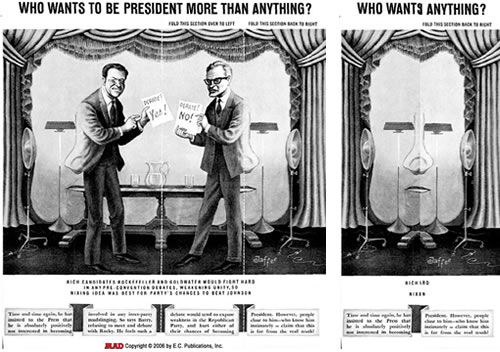
Jaffe oblig­ed with the Richard Nixon Fold-in, which set the tone for the oth­er 450 he has hand ren­dered in sub­se­quent issues.

Al Jaffee Mad

For those who made it to adult­hood with­out the sin­gu­lar plea­sure of creas­ing Mad’s back cov­er, you can dig­i­tal­ly fold-in a few sam­ples using this nifty inter­ac­tive fea­ture, cour­tesy of The New York Times.

With all due respect, it’s not the same, just enough to give a feel for the thrill of draw­ing the out­er­most pan­el in to reveal the visu­al punch­line lurk­ing with­in the larg­er pic­ture. The print edi­tion demands pre­ci­sion fold­ing on the reader’s part, if one is to get a sat­is­fac­to­ry answer to the rhetor­i­cal text posed at the out­set.

Jaffe must be even more pre­cise in his cal­cu­la­tions. In an inter­view with Sean Edgar of Paste Mag­a­zine, he described how he turned a Repub­li­can pri­ma­ry stage shared by Nel­son Rock­e­feller and Bar­ry Gold­wa­ter into a sur­prise por­trait of the man who would become pres­i­dent five years hence:

The first thing I did was draw Richard Nixon’s face, not in great detail, just a very rough estab­lish­ment of where the eyes, nose and mouth would be, and the gen­er­al shape. I did an exag­ger­at­ed car­i­ca­ture of Nixon and then I cut it in half, and moved it apart. Once the face was cut in half, it didn’t have the integri­ty of a face any­more — it was sort of a half of face. Then I looked at what the eyes were like, and I said, ‘what can I make out of the eyes?’ He had these heavy eye­brows. I played around with many things, but I had to keep in mind all the time what the big pic­ture was. So there they (Gold­wa­ter and Rock­e­feller) were up on a stage some­where, doing a debate, and I thought, ‘What kind of stage prop can I put along­side these guys that would seem nat­ur­al there?’ I decid­ed that I could make eyes out of the lamps, and as far as the nose was con­cerned, that could come out of the fig­ures — their cloth­ing. Then I fig­ured the mouth; I could use some sort of table that could give me those two sides. That’s how it all came about. You have to have some kind of visu­al imag­i­na­tion to see the pos­si­bil­i­ties. I had to con­cen­trate on stuff that looked nat­ur­al on a stage.

Each Fold-In is a reflec­tion of the zeit­geist. Past pre­oc­cu­pa­tions have includ­ed Viet­nam, fem­i­nism, ille­gal drug use and, more recent­ly, the Jer­sey Shore.

via Gothamist

Relat­ed Con­tent:

A Gallery of Mad Magazine’s Rol­lick­ing Fake Adver­tise­ments from the 1960s

Watch Mad Magazine’s Edgy, Nev­er-Aired TV Spe­cial (1974)

A Look Inside Char­lie Heb­do, Their Cre­ative Process & the Mak­ing of a Fate­ful Car­toon

Chuck Jones’ 9 Rules For Draw­ing Road Run­ner Car­toons, or How to Cre­ate a Min­i­mal­ist Mas­ter­piece

Car­toon­ists Draw Their Famous Car­toon Char­ac­ters While Blind­fold­ed (1947)

Ayun Hal­l­i­day is an author, illus­tra­tor, and Chief Pri­ma­tol­o­gist of the East Vil­lage Inky zine. Fol­low her @AyunHalliday

Hermeneutics of Toilets by Slavoj Žižek: An Animation About Finding Ideology in Unlikely Places

It’s been part of Slavoj Žižek’s schtick for years. He’s men­tioned it in talks about Don­ald Rums­feld and Amer­i­ca’s mis­ad­ven­tures in Iraq. In lec­tures about archi­tec­ture in Spain. In Eng­lish-lan­guage talks. And oth­er lan­guages too. Maybe you’ve nev­er heard Žižek’s spiel about find­ing ide­ol­o­gy in the unlike­li­est of places. Yes, toi­lets. If you’ve missed out, this new ani­ma­tion has you cov­ered.

If you would like to sign up for Open Culture’s free email newslet­ter, please find it here. It’s a great way to see our new posts, all bun­dled in one email, each day.

If you would like to sup­port the mis­sion of Open Cul­ture, con­sid­er mak­ing a dona­tion to our site. It’s hard to rely 100% on ads, and your con­tri­bu­tions will help us con­tin­ue pro­vid­ing the best free cul­tur­al and edu­ca­tion­al mate­ri­als to learn­ers every­where. You can con­tribute through Pay­Pal, Patre­on, and Ven­mo (@openculture). Thanks!

via Phi­los­o­phy Mat­ters 

Relat­ed Con­tent:

Slavoj Žižek Calls Polit­i­cal Cor­rect­ness a Form of “Mod­ern Total­i­tar­i­an­ism”

Slavoj Žižek: What Ful­fils You Cre­ative­ly Isn’t What Makes You Hap­py

Slavoj Žižek Names His Favorite Films from The Cri­te­ri­on Col­lec­tion

by | Permalink | Make a Comment ( 5 ) |

President Obama’s 2016 Stand-Up Comedy Routine

One thing I’ll miss about Pres­i­dent Oba­ma is his abil­i­ty to deliv­er a good joke at the White House Cor­re­spon­dents’ Din­ner. My favorite line from Sat­ur­day night:

And then there’s Ted Cruz. Ted had a tough week. He went to Indi­ana –- Hoosier coun­try –- stood on a bas­ket­ball court, and called the hoop a “bas­ket­ball ring.” What else is in his lex­i­con? Base­ball sticks? Foot­ball hats? But sure, I’m the for­eign one.

Bern!

And it’s always nice to see John Boehn­er and Oba­ma shar­ing a good joke around a smoke. Fast for­ward to the 27 minute mark for that.

Below, we also have Lar­ry Wilmore’s cut­ting rou­tine:

Relat­ed Con­tent:

Hear 30 of the Great­est Standup Com­e­dy Albums: A Playlist Cho­sen by Open Cul­ture Read­ers

Lenny Bruce: Hear the Per­for­mances That Got Him Arrest­ed (NSFW)

Richard Pry­or Does Ear­ly Stand-Up Com­e­dy Rou­tine in New York, 1964

Sein­feld, Louis C.K., Chris Rock, and Ricky Ger­vais Dis­sect the Craft of Com­e­dy (NSFW)

Download 834 Radical Zines From a Revolutionary Online Archive: Globalization, Punk Music, the Industrial Prison Complex & More

OfficeSupplyYouth5_0000

Whatcha mean, “what’s a zine”?

Some say Thomas Paine orig­i­nat­ed the con­cept in 1776, when he self-pub­lished the pam­phlet, Com­mon Sense… an asser­tion author and cul­tur­al crit­ic Greil Mar­cus would like­ly find a “spu­ri­ous” attempt to con­fer legit­i­ma­cy on a move­ment that occu­pies the soci­etal fringes by def­i­n­i­tion.

No mat­ter how many read­ers they attract, the cre­ators of these small-cir­cu­la­tion labors of love take their agen­das very seri­ous­ly. Whether the ulti­mate goal is to inform, to agi­tate, to smear or to cel­e­brate, their con­tents are as raw as the cut-and-paste aes­thet­ic that pro­vid­ed their defac­to look, pre-Etsy.

zine archive

While some zinesters are good about pre­serv­ing mas­ter copies and donat­ing back issues to zine libraries, many oth­ers’ titles fall through the cracks of his­to­ry, as the mak­ers age out of the prac­tice, or move on to oth­er inter­ests.

Indi­vid­ual zines’ best chance at sur­vival lies in acad­e­mia, where expe­ri­enced archivists and fleets of interns have the time and resources to cat­a­logue and dig­i­tize thou­sands of poor­ly pho­to­copied, often hand­writ­ten pages.

Psycho Bunny

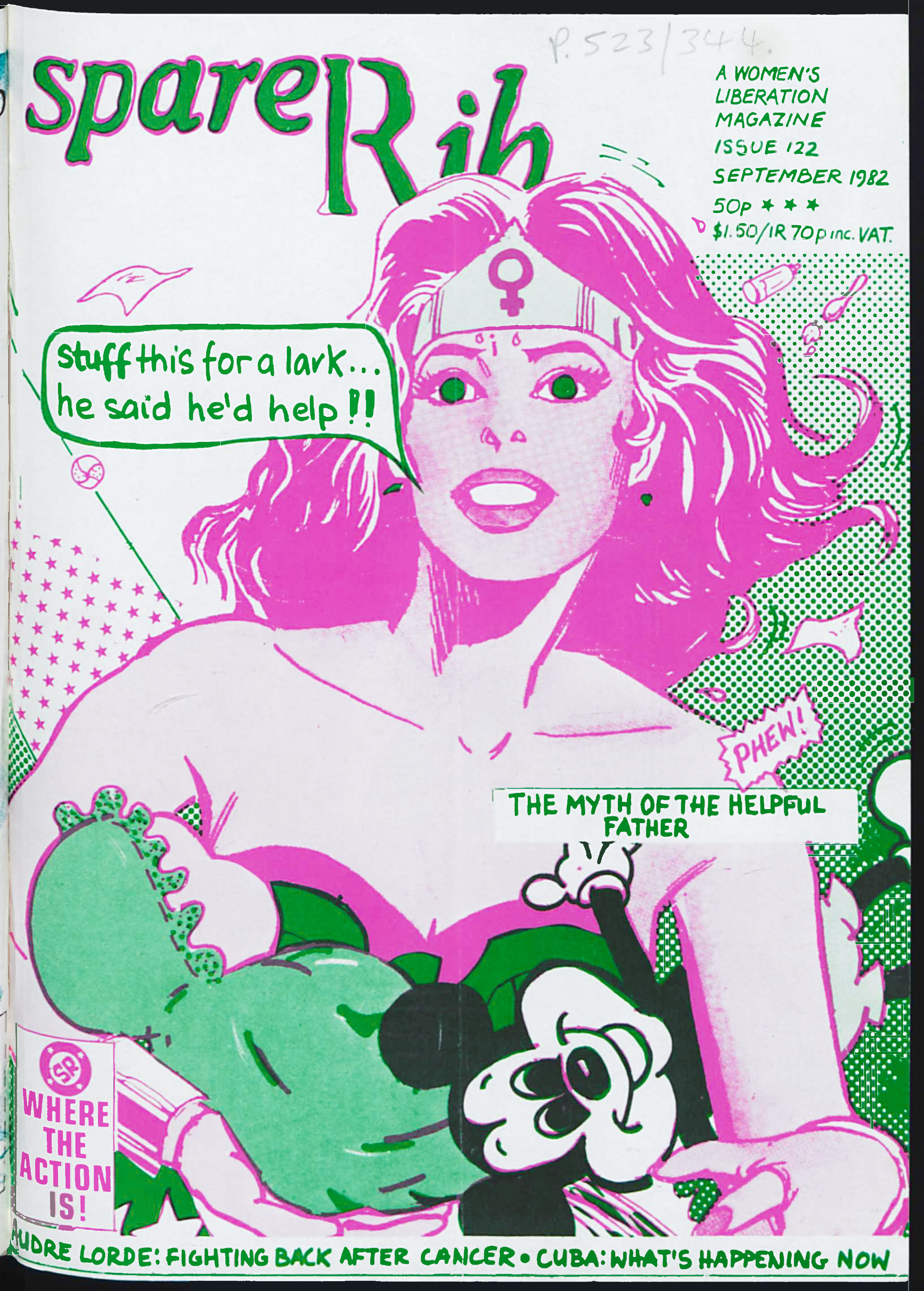
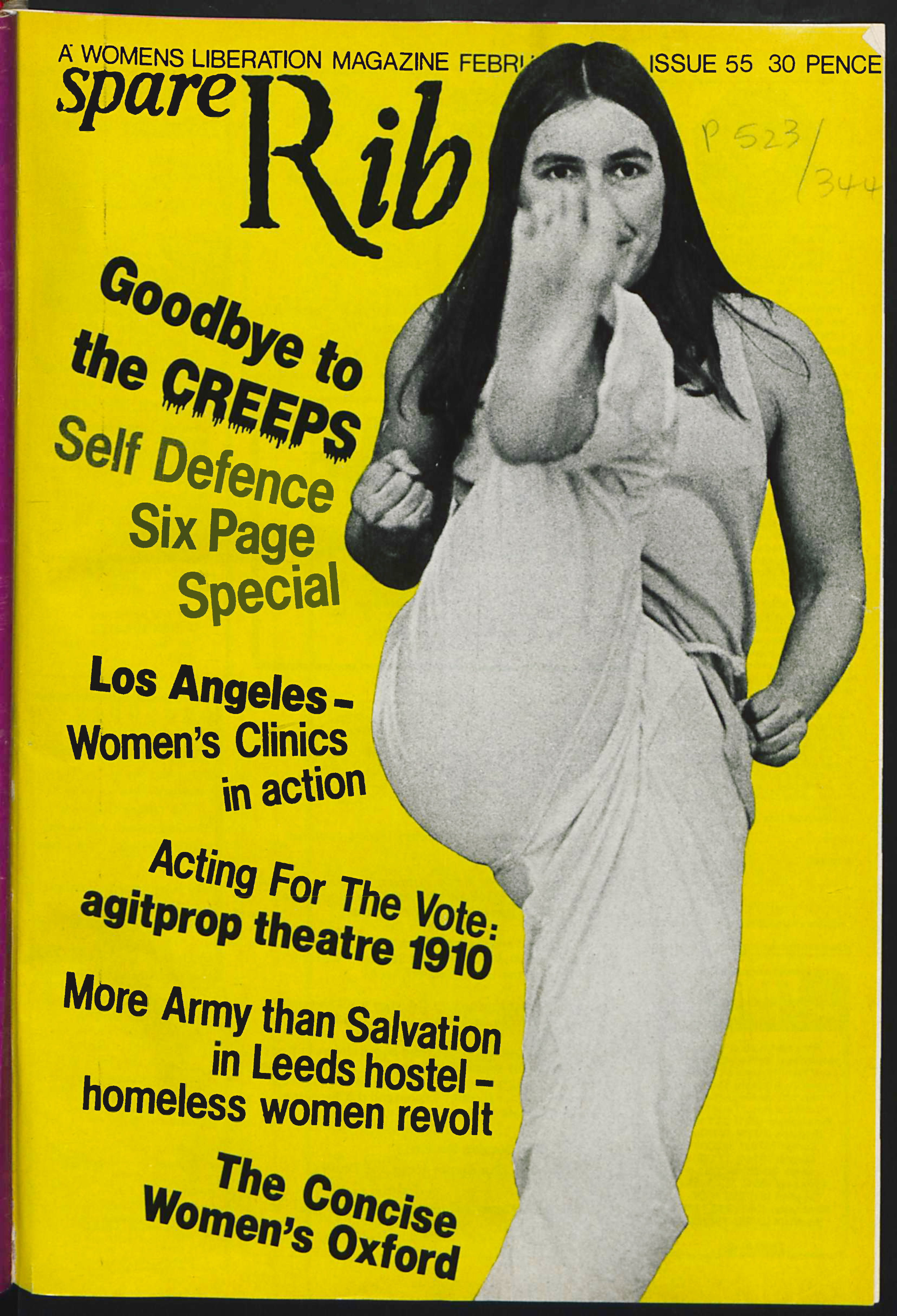
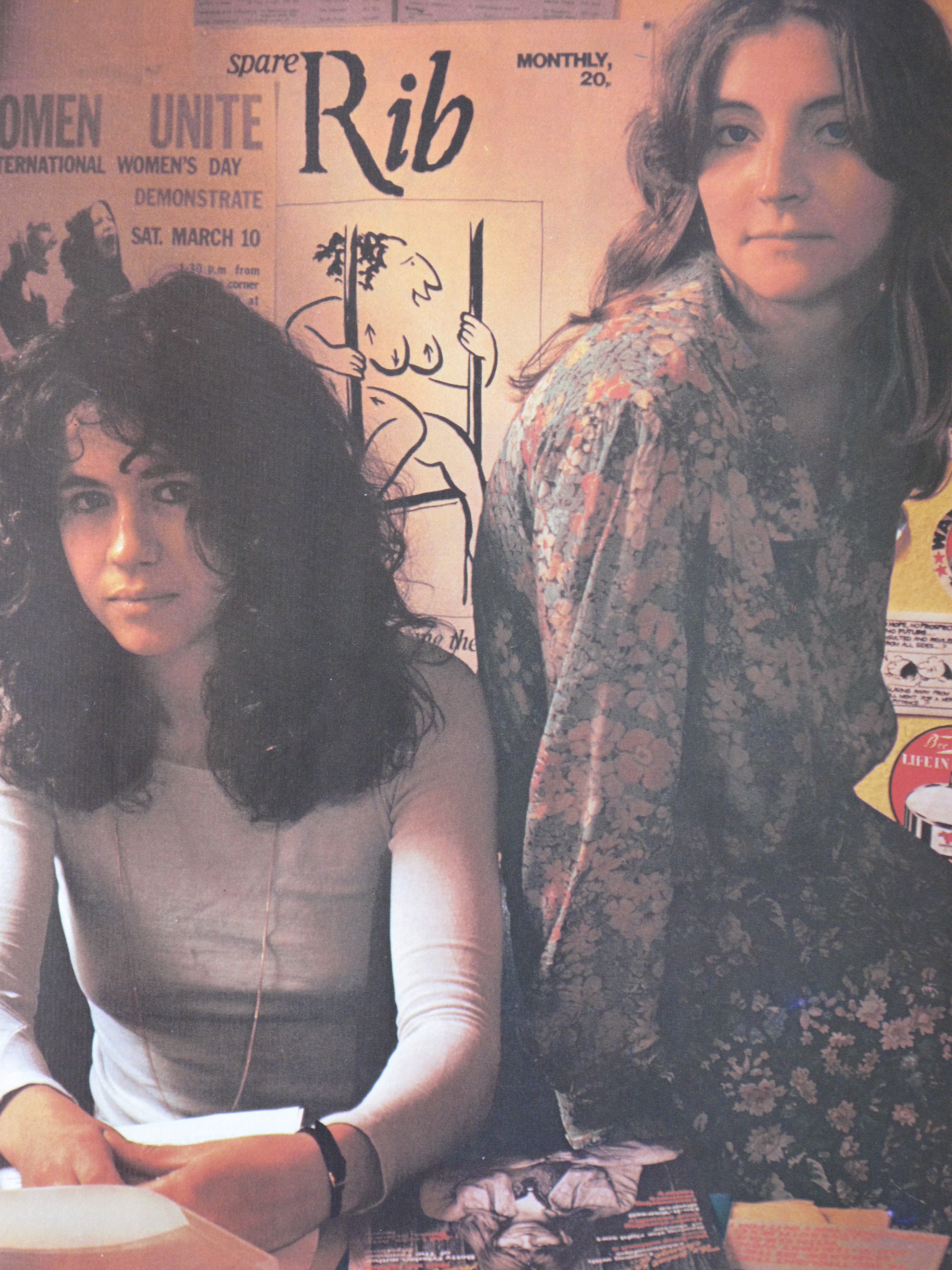
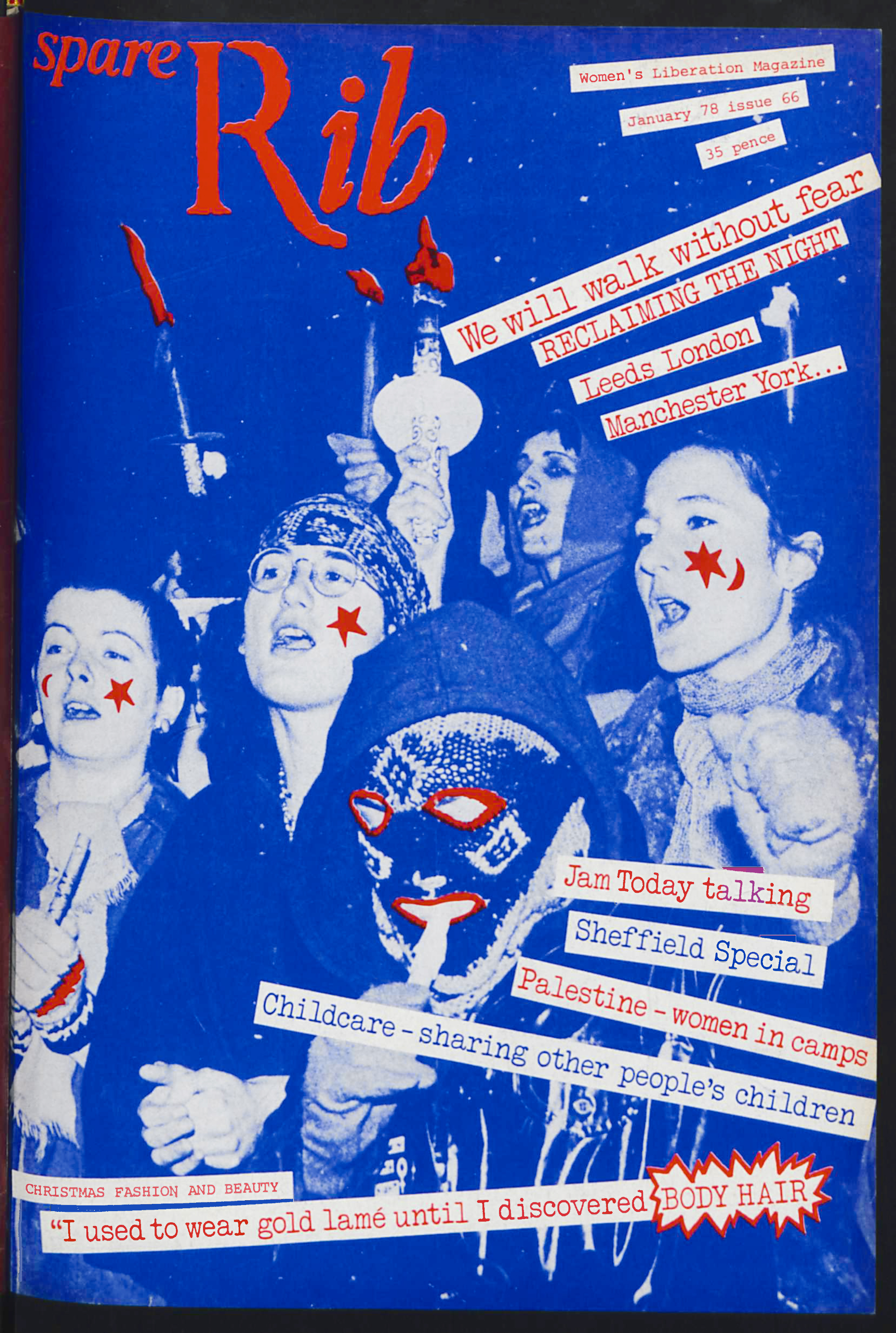
Duke University’s Sal­lie Bing­ham Cen­ter for Women’s His­to­ry and Cul­ture boasts over 4000 fem­i­nist zines.

Tem­ple University’s Sci­ence Fic­tion Fanzine Col­lec­tion takes up near­ly 100 box­es (or 46.5 lin­ear feet).

zine archive 2

The most recent archive is a 1000-title-strong rad­i­cal col­lec­tion that land­ed at the Uni­ver­si­ty of Kansas. Donat­ed by the Sol­i­dar­i­ty! Rev­o­lu­tion­ary Cen­ter and Rad­i­cal Library, a still-active, non-hier­ar­chi­cal, infor­ma­tion-shar­ing col­lec­tive in Lawrence, these zines cov­er a wide spec­trum of activist his­to­ry and con­cerns. You can now find and down­load about 834 of these zines online.

Camp Trans Gender

HellYeah-consent-basedQueerPorn_0000

Titles such as Camp Trans: Gen­der Camp Zine, Hell Yeah! Con­sent Based Queer Porn and CoEx­ist were pro­vid­ing a clear, first-per­son win­dow on the LGBTQ world years before the main­stream media thought to fol­low suit.

TheFemmenstruationRitesRag_0025

HerbalAbortion-theFruitOfTheTreeOfKnowledge_0000

TheInvisibilityOfWomenPrisonersResistanceByVikkiLaw_0000

Sis­ter­hood is not just pow­er­ful, but pal­pa­ble in Fem­men­stru­a­tion Rites Rag, Herbal Abor­tion: The Fruit of the Tree of Knowl­edge, and The Invis­i­bil­i­ty of Women Pris­on­ers’ Resis­tance.

UrbanPermaculture-aReaderCompiledForTheDiySkillshare_0000

10StepsToDeliciousSoymilk_0000

DearMotorist..._0000

Sus­tain­abil­i­ty starts at home with Urban Per­ma­cul­ture, Ten Steps to Deli­cious Soymilk! and Dear Motorist….

Oth­er top­ics include race, glob­al­iza­tion, veg­an­ism, ani­mal rights, and anar­chy.

Unsur­pris­ing­ly, the largest num­ber of titles falls into the Music cat­e­go­ry. Before the Inter­net, punk shows were the most reli­able chan­nel of zine­ly dis­tri­b­u­tion, and few of these fanzines are devoid of polit­i­cal con­tent.

PunksBeforeProfits10_0000

Below, Kansas Uni­ver­si­ty Eng­lish pro­fes­sor Frank Farmer (who arranged for the dona­tion) and archivist Becky Schulte dis­cuss the impor­tance of “counter-pub­lic doc­u­ments” and zine cul­ture.

You can explore 830 dig­i­tized exam­ples from the Sol­i­dar­i­ty archives online here.

via Hyper­al­ler­gic

Relat­ed Con­tent:

The Whole Earth Cat­a­log Online: Stew­art Brand’s “Bible” of the 60s Gen­er­a­tion

The Online Knit­ting Ref­er­ence Library: Down­load 300 Knit­ting Books Pub­lished From 1849 to 2012

Exten­sive Archive of Avant-Garde & Mod­ernist Mag­a­zines (1890–1939) Now Avail­able Online

Ayun Hal­l­i­day is an author, illus­tra­tor, and Chief Pri­ma­tol­o­gist of the East Vil­lage Inky zine. A large por­tion of her zine col­lec­tion and papers are being processed by the Sal­lie Bing­ham Cen­ter at Duke Uni­ver­si­ty and will be avail­able for research lat­er this year. Fol­low her @AyunHalliday

« Go BackMore in this category... »
Quantcast