Allen Ginsberg Teaches You How to Meditate with a Rock Song Featuring Bob Dylan on Bass

dylan ginsberg meditation

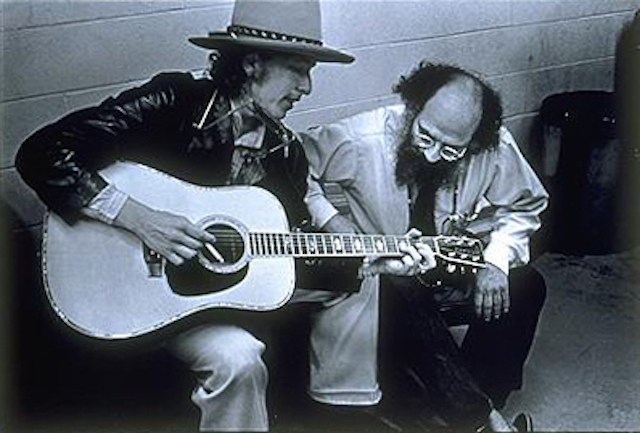
Image via Elisa Dor­man, Wiki­me­dia Com­mons

What­ev­er oth­er cri­te­ria we use to lump them together—shared aims of psy­che­del­ic con­scious­ness-expand­ing through drugs and East­ern reli­gion, frank explo­rations of alter­na­tive sex­u­al­i­ties, anti-estab­lish­ment cred—the Beats were each in their own way true to the name in one very sim­ple way: they all col­lab­o­rat­ed with musi­cians, wrote song or poems as songs, and saw lit­er­a­ture as a pub­lic, per­for­ma­tive art form like music.

And though I sup­pose one could call some of their for­ays into record­ed music gim­micky at times, I can’t imag­ine Jack Kerouac’s career mak­ing a whole lot of sense with­out Bebop, or Bur­roughs’ with­out psy­che­del­ic rock and tape and noise exper­i­men­ta­tion, or Gins­berg’ with­out… well, Gins­berg got into a lit­tle bit of every­thing, didn’t he? Whether writ­ing calyp­sos about the CIA, per­form­ing and record­ing with The Clash, show­ing up on MTV with Philip Glass and Paul McCart­ney…. He nev­er worked with Kanye, but I imag­ine he prob­a­bly would have.

For each of these artists, the medi­um deliv­ered a mes­sage. Kerouac’s odes to jazz, lone­li­ness, and wan­der­lust; Bur­roughs’ dark, para­noid prophe­cies about gov­ern­ment con­trol; and Ginsberg’s anti-war jere­mi­ads and insis­tent pleas for peace, free­dom, tol­er­ance, and enlight­en­ment. Ever the trick­ster and teacher, Gins­berg often used humor to dis­arm his audi­ence, then went in for the kill, so to speak. We may find no more point­ed an exam­ple of this comedic ped­a­gogy than his 1981 song, “Do the Med­i­ta­tion Rock,” record­ed in 1982 as a sham­bling folk-rock jam below with gui­tarist Steven Tay­lor, and mem­bers of Bob Dylan’s tour­ing band—including Dylan him­self mak­ing a rare appear­ance on bass.

As the sto­ry goes, accord­ing to Hank Shteam­er at Rolling Stone, Gins­berg was in Los Ange­les and “eager to book some stu­dio time. Dylan oblig­ed, and agreed to foot the bill for the stu­dio costs on the con­di­tion that Gins­berg would pay the musi­cians. The two met at Dylan’s San­ta Mon­i­ca stu­dio and, as Tay­lor remem­bers it, jammed for 10 hours.” Many more record­ings from that ses­sion made it onto the recent­ly released The Last World on First Blues, which also includes con­tri­bu­tions from Jack Kerouac’s musi­cal part­ner David Amram, folk leg­end Hap­py Traum, and exper­i­men­tal cel­list, singer, and dis­co pro­duc­er Arthur Rus­sell.

See Gins­berg, Tay­lor, Rus­sell, and Ginsberg’s part­ner Peter Orlovsky (med­i­tat­ing), per­form the song above on a PBS spe­cial called “Good Morn­ing, Mr. Orwell,” cre­at­ed in 1984 by Kore­an video artist Naim June Paik. As Gins­berg explains it in the lin­er notes to his col­lec­tion Holy Soul, Jel­ly Roll, the song came togeth­er after his own med­i­ta­tion train­ing in the late sev­en­ties, when the poet got the okay from his Bud­dhist teacher Chogyam Trung­pa Rin­poche (founder of Naropa Uni­ver­si­ty) to “show basic med­i­ta­tion in his tra­di­tion­al class­rooms or groups at poet­ry readings”—his goal, he says, to “knock all the poets out with sug­ar-coat­ed dhar­ma.”

Christ­mas Eve, I stopped in the mid­dle of the block at a stoop and wrote the words down, note­book on my knee. I fig­ured that if any­one lis­tened to the words, they’d find com­plete instruc­tions for clas­si­cal sit­ting prac­tice, Samatha-Vipas­sana (“Qui­et­ing the mind and clear see­ing”). Some humor in the form, it does­n’t have to be tak­en over-seri­ous­ly, yet it’s pre­cise.

You may have noticed the famil­iar cadence of the cho­rus; it’s a take-off, he says, on “I Fought the Law,” record­ed in 1977 by his soon-to-be musi­cal part­ners, The Clash. In the live ver­sion below at New York’s Ukran­ian Nation­al Home, the song gets a more stripped-down, punk rock treat­ment with Tom Rogers on gui­tar. Like many a wan­der­ing bard, Gins­berg changes and adapts the lyrics slight­ly to the venue and occa­sion. See the Allen Gins­berg Project for sev­er­al pub­lished ver­sions of the lyrics and his changes in this ren­di­tion.

Apart from the basic med­i­ta­tion instruc­tions, which are easy to fol­low in writ­ing and song, Ginsberg’s “Do the Med­i­ta­tion Rock” had anoth­er mes­sage, spe­cif­ic to his under­stand­ing of the pow­er of med­i­ta­tion; it can change the world, in spite of “a holo­caust” or “Apoc­a­lypse in a long red car.” As Gins­berg speak/sings, “If you sit for an hour or a minute every day / you can tell the Super­pow­er, sit the same way / you can tell the Super­pow­er, watch and wait.” No mat­ter how bad things seem, he says, “it’s nev­er too late to stop and med­i­tate.” Hear anoth­er record­ed ver­sion of the song below from Holy Soul, Jel­ly Roll, record­ed live in Kansas City by William S. Bur­roughs in 1989.

Relat­ed Con­tent:

Allen Gins­berg Record­ings Brought to the Dig­i­tal Age. Lis­ten to Eight Full Tracks for Free

Allen Gins­berg & The Clash Per­form the Punk Poem “Cap­i­tal Air,” Live Onstage in Times Square (1981)

‘The Bal­lad of the Skele­tons’: Allen Ginsberg’s 1996 Col­lab­o­ra­tion with Philip Glass and Paul McCart­ney

Hear All Three of Jack Kerouac’s Spo­ken-World Albums: A Sub­lime Union of Beat Lit­er­a­ture and 1950s Jazz

Josh Jones is a writer and musi­cian based in Durham, NC. Fol­low him at @jdmagness

Octavia Butler’s 1998 Dystopian Novel Features a Fascistic Presidential Candidate Who Promises to “Make America Great Again”

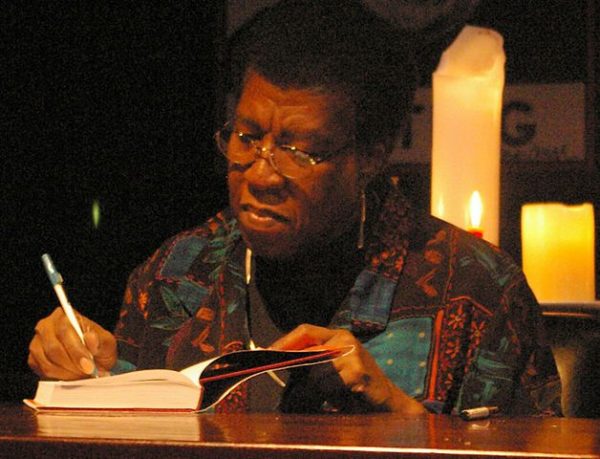
628px-Butler_signing

Image by Niko­las Couk­ouma, via Wiki­me­dia Com­mons

The Inter­net has been abuzz and atwit­ter these past few months with sto­ries about prophet­ic pre­dic­tions of the rise of Trump, buried in ancient texts like Back to the Future II, and an episode of The Simp­sons from 2000. Then there’s Mike Judge’s now ten-year-old satire Idioc­ra­cy. While not specif­i­cal­ly mod­eled after a Trump pres­i­den­cy, its depic­tion of the coun­try as a vio­lent, back­ward dystopia, armed and cor­po­rate-brand­ed to the teeth, sure does resem­ble the kind of place many imag­ine Trump and his sup­port­ers might build. These allu­sions and direct ref­er­ences don’t nec­es­sar­i­ly pro­vide evi­dence of the writ­ers’ clair­voy­ance; after all, Trump has threat­ened us with his can­di­da­cy since 1988, with most­ly unse­ri­ous state­ments. But they do show us that we’ve seen this ver­sion of the future com­ing for the last thir­ty years or so.

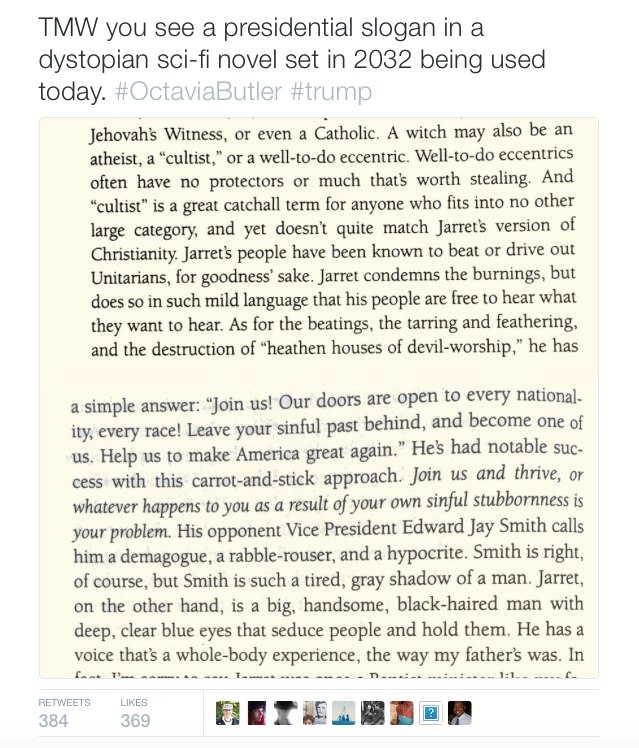
One pre­dic­tion you may have missed, how­ev­er, offers us a much more sober take on the rise of a fright­en­ing neo-fas­cist dur­ing a time of fear and civ­il unrest. As Twit­ter user @oligopistos point­ed out, in the sec­ond book of her Earth­seed series, The Para­ble of the Tal­ents (1998), Hugo and Neb­u­la-award win­ning sci­ence fic­tion writer Octavia But­ler gave us Sen­a­tor Andrew Steele Jar­ret, a vio­lent auto­crat in the year 2032 whose “sup­port­ers have been known… to form mobs.” Jarret’s polit­i­cal oppo­nent, Vice Pres­i­dent Edward Jay Smith, “calls him a dem­a­gogue, a rab­ble-rouser, and a hyp­ocrite,” and—most presciently—Jarret ral­lies his crowds with the call to “make Amer­i­ca great again.”

butler tweet
Though Trump has trade­marked it, the slo­gan did not orig­i­nate with him, nor even with Butler’s Jar­ret character—the 1980 Rea­gan-Bush cam­paign used it, as Matt Taib­bi point­ed out Rolling Stone last year. (His­to­ri­ans have even shown that anoth­er of Trump’s slo­gans, “Amer­i­ca First,” was used by Charles Lind­bergh and “Nazi-friend­ly Amer­i­cans in the 1930s.”) Again, pro­to-Trump­ism has been in the zeit­geist for a long time. While But­ler may have used “Make Amer­i­can Great Again” from her mem­o­ry of Rea­gan’s first cam­paign, the way her char­ac­ter employs it speaks to our moment for a num­ber of rea­sons.

It’s true that Sen­a­tor Jar­ret dif­fers from Trump in some sig­nif­i­cant ways: “Jarret’s beef is with Cana­da instead of Mex­i­co,” writes Fusion, and “instead of busi­ness acu­men as his main cre­den­tial, reli­gion is Jarret’s stump. He’s the head of a group called Chris­t­ian Amer­i­ca, which is intol­er­ant of oth­er reli­gious views, and whose sup­port­ers burn ‘witches’—meaning Mus­lims, Jews, Hin­dus and Buddhists—at the stake.” Our cur­rent can­di­date may have co-opt­ed the reli­gious right, but he doesn’t speak their lan­guage at all. Nonethe­less, he has made promis­es that give sec­u­lar­ists and non-Chris­tians chills, and reli­gious intol­er­ance has formed the back­bone of his cam­paign and of the rhetoric that has dri­ven his par­ty to the far right.

Jar­ret and the fanati­cism he inspires become cen­tral the nov­el­’s sto­ry, but the cru­cial back­ground in Butler’s 1998 depic­tion of a post-apoc­a­lyp­tic 2032 are the con­di­tions she iden­ti­fies as giv­ing rise to the Sen­a­tor’s rule (and which she described in the first book, Para­ble of the Sow­er). In Tal­ents, the narrator’s father Tay­lor Franklin Bankole writes,

I have read that the peri­od of upheaval that jour­nal­ists have begun to refer to as “the Apoc­a­lypse” or more com­mon­ly, more bit­ter­ly, “the Pox” last­ed from 2015 through 2030—a decade and a half of chaos…. I have also read that the Pox was caused by acci­den­tal­ly coin­cid­ing cli­mat­ic, eco­nom­ic, and soci­o­log­i­cal crises. It would be more hon­est to say that the Pox was caused by our own refusal to deal with obvi­ous prob­lems in those areas. We caused the prob­lems: then we sat and watched as they grew into crises.

In Butler’s fic­tion, the rise of Sen­a­tor Jar­ret and his mobs is an out­come of the same kinds of impend­ing crises we face now, and that far too many of our lead­ers duti­ful­ly ignore as they stage increas­ing­ly acri­mo­nious and bizarre forms of polit­i­cal the­ater. Butler’s indi­rect warn­ing to us in Para­ble of the Tal­ents may be less about the dem­a­gog­ic leader and his cult—though they pose the most dire exis­ten­tial threat in the book—than about the caus­es and con­di­tions that cre­at­ed “the Pox,” the kind of social col­lapse that Kurt Von­negut warned of ten years before But­ler in his time-cap­sule let­ter to the peo­ple of 2088, vague­ly iden­ti­fy­ing sim­i­lar kinds of “cli­mat­ic, eco­nom­ic, and soci­o­log­i­cal” crises to come. Would that we could aban­don emp­ty spec­ta­cle and heed these Cas­san­dras of the near future.

via The Huff­in­g­ton Post

Relat­ed Con­tent:

In 1988, Kurt Von­negut Writes a Let­ter to Peo­ple Liv­ing in 2088, Giv­ing 7 Pieces of Advice

Isaac Asi­mov Pre­dicts in 1964 What the World Will Look Like Today

Noam Chom­sky on Whether the Rise of Trump Resem­bles the Rise of Fas­cism in 1930s Ger­many

Josh Jones is a writer and musi­cian based in Durham, NC. Fol­low him at @jdmagness

New Web Comic Revisits the Artists & Writers at the Bloody ’68 Convention: Jean Genet, William S. Burroughs & More

chicago-68-burroughs

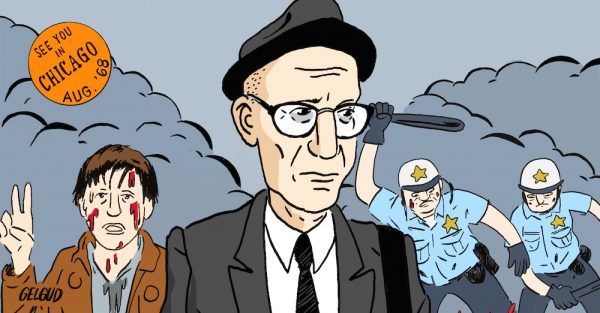
Draw­ing of William S. Bur­roughs by Nathan Gelgud/The Paris Review

Amer­i­ca’s polit­i­cal cir­cus will soon roll through Cleve­land and then Philadelphia–the sites of the Repub­li­can and Demo­c­ra­t­ic Nation­al Con­ven­tions. And, not with­out some mer­it, there’s con­cern that the car­ni­vals could turn vio­lent, as hap­pened in 1968, when Chicago’s may­or Richard Daley, backed by 23,000 police and Nation­al Guards­men, assault­ed pro­test­ers in the streets. A fed­er­al report lat­er called it a dis­play of “unre­strained and indis­crim­i­nate police vio­lence.”

This week, that tumul­tuous ’68 con­ven­tion is being com­mem­o­rat­ed in a com­ic over at The Paris Review. Issued in dai­ly install­ments by illus­tra­tor Nathan Gel­gud, the comic–simply titled “Uncon­ven­tion­al”–looks at the writ­ers, artists, and demon­stra­tors who attend­ed the con­ven­tion. Part 1 fea­tures poet, singer, activist Ed Sanders. Part 2 puts Jean Genet cen­ter stage (who knew he was there?). Part 3 focus­es on Nor­man Mail­er, who was always ready for a fight. Part 4 gives us the inim­itable William S. Bur­roughs, and Part 5, Ter­ry South­ern. You can fol­low the series here.

To learn more about what hap­pened at that his­toric con­ven­tion, you can read Bat­tle­ground Chica­go: The Police and the 1968 Demo­c­ra­t­ic Nation­al Con­ven­tion.

If you would like to sign up for Open Culture’s free email newslet­ter, please find it here. It’s a great way to see our new posts, all bun­dled in one email, each day.

If you would like to sup­port the mis­sion of Open Cul­ture, con­sid­er mak­ing a dona­tion to our site. It’s hard to rely 100% on ads, and your con­tri­bu­tions will help us con­tin­ue pro­vid­ing the best free cul­tur­al and edu­ca­tion­al mate­ri­als to learn­ers every­where. You can con­tribute through Pay­Pal, Patre­on, and Ven­mo (@openculture). Thanks!

Free: Hear 24 Hours of Noam Chomsky’s Lectures & Talks on the Powers That Subvert Our Democracies

Noam Chom­sky is opti­mistic. Yes, the world seems to teeter on the brink of… well, name your dystopi­an sce­nario, but Noam Chom­sky is opti­mistic. The same Chom­sky who, for decades, has sought to show the myr­i­ad ways our most revered insti­tu­tions are large­ly sham oper­a­tions behind which pow­er­ful elites con­duct secret wars, pro­pa­gan­da cam­paigns, envi­ron­men­tal destruc­tion, and con­cert­ed efforts to defraud the peo­ple and dis­able demo­c­ra­t­ic process­es… well, he tells us, in a recent inter­view with James Resnick, that we too “can be very opti­mistic. Things like this have hap­pened before and they’ve been over­come.”

By “things like this,” the renowned lin­guist and anar­chist polit­i­cal philoso­pher specif­i­cal­ly means astound­ing lev­els of wealth inequal­i­ty and the ascen­den­cy, once again, of far-right extrem­ism in Europe and the U.S., a phe­nom­e­non he first observed in the years pri­or to World War II. Chom­sky began his career of social and polit­i­cal cri­tique in 1938 at the age of 10, “writ­ing arti­cles for the school news­pa­per on the rise of fas­cism in Europe and the threats to the world as I saw them.”

He went on to com­plete­ly rev­o­lu­tion­ize the field of lin­guis­tics, an achieve­ment that, stun­ning­ly, can seem sec­ondary to his polit­i­cal writ­ing and activism, giv­en the sheer num­ber of his books, essays, inter­views, and speech­es crit­i­cal of state pow­er, war, and media manip­u­la­tion over the past sev­er­al decades. (Some of his books you can read free online here.) I sup­pose if Chom­sky weren’t some­thing of an opti­mist, he would have giv­en up a long time ago. He tells Resnik what keeps him going:

The things I con­sid­er inspir­ing is see­ing peo­ple strug­gling: poor suf­fer­ing peo­ple, with lim­it­ed resources, strug­gling to real­ly achieve any­thing. Some of them are very inspir­ing. For exam­ple, a remote very poor vil­lage in south­ern Colom­bia orga­niz­ing to try to pre­vent a Cana­di­an gold-min­ing oper­a­tion from destroy­ing their water sup­ply and the envi­ron­ment; mean­while, fend­ing off para-mil­i­tary and mil­i­tary vio­lence and so on. That kind of thing which you see all over the world is very inspir­ing.

Are you inspired? Maybe it depends on how many of these grass­roots strug­gles you’ve wit­nessed. The world­wide, ground-lev­el resis­tance Chom­sky describes—and refers to again and again in his polit­i­cal work—is large­ly hid­den from us, by a mass media that sees no dol­lar val­ue in it, or per­haps obscures it for more sin­is­ter rea­sons. As Chom­sky has argued since the sixties—most com­pre­hen­sive­ly in his 1988 Man­u­fac­tur­ing Con­sent with Edward S. Herman—the cam­paigns of war and eco­nom­ic depre­da­tion con­duct­ed by the West against minori­ties, indige­nous peo­ple, and small nations around the world most­ly occur with the con­sent of West­ern peo­ple: a con­sent man­u­fac­tured by a mas­sive pro­pa­gan­da oper­a­tion called the Free Press.

His posi­tion should not sound espe­cial­ly con­tro­ver­sial to any­one who has paid the least bit of atten­tion in the last few years. The seem­ing col­lu­sion of respect­ed news orga­ni­za­tions like The Wash­ing­ton Post and The New York Times in the push for the sec­ond Iraq War led to well over a decade of post-hoc intro­spec­tion by jour­nal­ists. Recent months have seen those same organs—for per­haps more bald­ly prof­it-seek­ing motives—provide a cou­ple of bil­lion dol­lars-worth of free PR for Don­ald Trump, a can­di­date who has on mul­ti­ple occa­sions threat­ened to retal­i­ate against the press for any crit­i­cism, and who recent­ly revoked the Post’s cre­den­tials to cov­er his events. (A recent Har­vard study con­clud­ed that dur­ing this pro­tract­ed, ugly pri­ma­ry sea­son, “the press became [Trump’s] depend­able if unwit­ting ally.”)

As in these exam­ples, the role of the British press in spread­ing fear and mis­in­for­ma­tion pri­or to this month’s Brex­it vote has become its own sig­nif­i­cant sto­ry. We con­stant­ly see the press turn­ing in ago­nized cir­cles, try­ing to come to grips with its com­plic­i­ty in push­ing var­i­ous agen­das. Whether or not main­stream media orga­ni­za­tions take direct orders from gov­ern­ment bod­ies or eco­nom­ic elites, they accede to the inter­ests of the pow­er­ful all the same, and they wield enor­mous influ­ence over a vot­ing pub­lic who depend upon them for infor­ma­tion. The sit­u­a­tion presents a seri­ous prob­lem for the health of a func­tion­ing democ­ra­cy, which itself depends upon an informed and edu­cat­ed elec­torate.

But as Chom­sky has often argued—drawing as always on pri­ma­ry sources and direct­ly quot­ing the West’s most influ­en­tial polit­i­cal philoso­phers, pol­i­cy archi­tects, and busi­ness leaders—elites since the 17th and 18th cen­turies have inten­tion­al­ly thwart­ed the abil­i­ty of the pub­lic to make informed deci­sions, and have shut the pop­u­lace out of the most impor­tant deci­sion-mak­ing process­es. As he wrote in his 1999 cri­tique of Neolib­er­al­ism, Prof­it Over Peo­ple, “the gen­er­al pop­u­la­tion must be exclud­ed entire­ly from the eco­nom­ic are­na, where what hap­pens in the soci­ety is large­ly deter­mined. Here the pub­lic is to have no role, accord­ing to pre­vail­ing demo­c­ra­t­ic the­o­ry.”

Chom­sky fol­lows this line of rea­son­ing in his talk “When Elites Fail,” at the top of the post, deliv­ered as the keynote address for the Eco­con­ver­gence Con­fer­ence in Port­land, Ore­gon in 2009. You can also hear this talk, along with 19 oth­ers, in the Spo­ti­fy playlist just above—a total of 24 hours of Chom­skyan social, polit­i­cal, and eco­nom­ic analy­sis, deliv­ered by the man him­self in his calm, mea­sured, under­stat­ed way. (If you need Spo­ti­fy’s free soft­ware, down­load it here.) Chom­sky address­es “The Tyran­ny of Cor­po­ra­tions,” the “U.S. Media as Pro­pa­gan­da Sys­tem,” “Pol­i­tics and Lan­guage,” “Iraq: The For­ev­er War,” and more—levying crit­i­cisms against the sys­tems of pow­er, whether Repub­li­can, Demo­c­ra­t­ic, or inter­na­tion­al, that dogged­ly seek to increase their domains and, in the approv­ing words of James Madi­son, to “pro­tect the minor­i­ty of the opu­lent against the major­i­ty.”

Relat­ed Con­tent:

Noam Chom­sky on Whether the Rise of Trump Resem­bles the Rise of Fas­cism in 1930s Ger­many

Clash of the Titans: Noam Chom­sky & Michel Fou­cault Debate Human Nature & Pow­er on Dutch TV, 1971

Read 9 Free Books By Noam Chom­sky Online

Josh Jones is a writer and musi­cian based in Durham, NC. Fol­low him at @jdmagness

Brexit 101: The UK’s Stunning Vote Explained in 4 Minutes

The Brex­it votes have been count­ed. The Brits have decid­ed to leave the Euro­pean Union. And the finan­cial mar­kets are tak­ing it hard. Right now, futures on the Lon­don stock exchange are down 8%. The pound is down 9.8 per­cent, more than dou­ble its pre­vi­ous record decline of 4.1 per­cent. We’re liv­ing in inter­est­ing times.

No doubt, some of you are sud­den­ly won­der­ing, what exact­ly is Brex­it? And what’s at stake? Up top, you can watch a four-minute primer cre­at­ed by The Wall Street Jour­nal. Bloomberg has its own two-minute ver­sion here (or view below). The Toron­to Star breaks down Brex­it in 13 points. And The Guardian went so far as to cre­ate a guide just for Amer­i­cans. (For any­one who wants to dis­sect the pro­pa­gan­da for leav­ing Brex­it, you can watch the fea­ture-length doc­u­men­tary film, Brex­it: The Moviereleased last month.) Please feel free to add oth­er primers in the com­ments below.

For Amer­i­cans read­ing this, I’d point out that Brex­it and Trump share some impor­tant things in com­mon: they’re both about putting up walls, plac­ing blame on immi­grants and minori­ties; exploit­ing the resent­ments of the eco­nom­i­cal­ly dis­ad­van­taged; dis­miss­ing experts and estab­lish­ment fig­ures; and risk­ing upend­ing a frag­ile world order. How Eng­land looks on June 24th is per­haps a small pre­view of how Amer­i­ca might look on Novem­ber 9th. Only there will be tril­lions more at stake.

If you would like to sign up for Open Culture’s free email newslet­ter, please find it here. It’s a great way to see our new posts, all bun­dled in one email, each day.

If you would like to sup­port the mis­sion of Open Cul­ture, con­sid­er mak­ing a dona­tion to our site. It’s hard to rely 100% on ads, and your con­tri­bu­tions will help us con­tin­ue pro­vid­ing the best free cul­tur­al and edu­ca­tion­al mate­ri­als to learn­ers every­where. You can con­tribute through Pay­Pal, Patre­on, and Ven­mo (@openculture). Thanks!

by | Permalink | Make a Comment ( 12 ) |

R Crumb, the Father of Underground Comix, Takes Down Donald Trump in a NSFW 1989 Cartoon

trump-crumbTrump Crumb

Nature’s way is to take away from those that have too much and give to those that have too lit­tle. Man’s way, on the con­trary, is to take away from those who have too lit­tle to give more to those who already have too much. 

Lao Tzu, Tao Te Ching, cir­ca 500 BC

Two and a half thou­sand years lat­er, the ancient sage’s quote con­tin­ues to res­onate, espe­cial­ly in this elec­tion year.

Lest we get too gloomy, there is anoth­er quote I would like to sub­mit:

And isn’t this a nut­ty kin­da coun­try where you can draw any irrev­er­ent, degrad­ing thing about the most pow­er­ful peo­ple and nobody cares! You don’t get jailed. You don’t get per­se­cut­ed. They just ice you out of the mar­ket­place. 

- R Crumb, Hup, 1989

Crumb is to under­ground comix as Lao Tzu was to Tao­ism, but the fame Crumb achieved in the late 60s and ear­ly 70s did not pro­tect him from the 80s, “an awful decade” as he told the Observ­er. His aston­ish­ing cre­ative out­put nev­er flagged, but he hat­ed the cul­ture and strug­gled to make ends meet:

…it all grad­u­al­ly fell apart through the 70s, and by the 80s with the rise of the yup­pies, Reagan’s elec­tion and the real estate boom. In Cal­i­for­nia it was always about real estate ever since the Gold Rush, but the 80’s saw a new explo­sion of it. They went crazy. Every­body was get­ting their real estate license. They kept on build­ing these hideous hous­ing devel­op­ments where we lived. It used to be farm­land there when we first arrived, then every­thing became a fight. Dow Chem­i­cal tried to come there, we fought that. Then the Super Col­lid­er, we fought that. It was this con­stant bat­tle against these forces of devel­op­ment and busi­ness. 

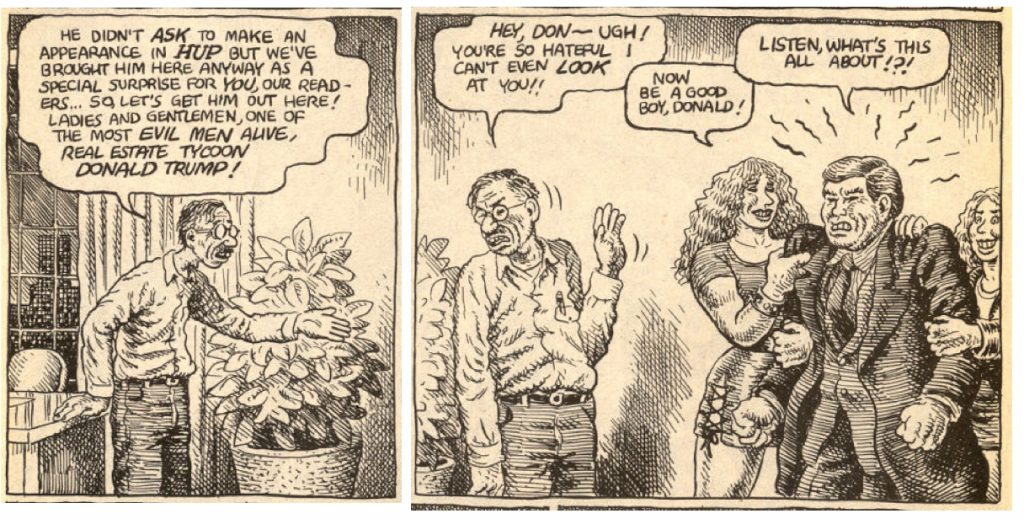
In 1991, he fled Amer­i­ca for a small vil­lage in South­ern France, a pre­scient move, giv­en “Point the Fin­ger,” a com­ic pub­lished two years ear­li­er in his short-lived Hup series. The semi-fic­tion­al five-pager pits Crumb him­self against real estate devel­op­er Don­ald Trump, billed as “one of the more vis­i­ble big time preda­tors who feed on soci­ety,” as well as “one of the most evil men alive.”

The then-42-year-old Trump is quick to take Crum­b’s bait, pil­ing on some insults of his own. He may not be famil­iar with the car­toon­ist’s work, but he knows how to mount an attack, with labels like “crass,” “venal,” “some kind of self-styled ter­ror­ist,” “the pic­ture of neg­a­tiv­i­ty,” and “filled with hate.” Had Crumb set this smack down on a beach, Trump would be the bul­ly kick­ing sand in the scrawny nerd’s face, as a cou­ple of hot babes look on, admir­ing­ly.

In fact, the com­ic comes very close to end­ing on such a note. Two of Crumb’s char­ac­ter­is­ti­cal­ly pow­er­ful­ly-thigh­ed females are on hand, osten­si­bly as mem­bers of his camp. Their heads are quick­ly turned, how­ev­er, by an invi­ta­tion to Mar-a-Lago, Trump’s lav­ish Palm Beach estate. The Don­ald starts look­ing pret­ty good to Tra­cy and Marny, bedaz­zled by the promise of ban­quets, man­i­cures, world-class enter­tain­ment, and a hedo­nis­tic after-hours romp with Trump and his then-wife Ivana.

The car­toon­ist, defeat­ed, com­pares the tycoon to Tri­mal­chio, the vul­gar but loaded host of Petro­n­ius’ Satyri­con, before prepar­ing to take things out with the Lao Tzu quote at the top of this post.

It’s here that things take a turn for the meta, as Stan “the Man” Shnoot­er, the self-assured fic­tion­al pro­duc­er of Hup, ral­lies Crumb to assert autho­r­i­al con­trol.

Crumb rewinds to a piv­otal moment. In this redo, Tra­cy and Marny remain stead­fast. The bul­ly is frog­marched to the toi­let to be giv­en a taste of his own med­i­cine. The saga draws to a close with the sort of acro­bat­ic, ques­tion­ably con­sen­su­al, NSFW sex that has rained fem­i­nist ire on Crumb for years, as the unlike­ly con­quer­er savors vic­to­ry in his pre­ferred style.

Is it fan­ta­sy? Real­i­ty? All just a dream?

(Any way you slice it, I’m pret­ty sure Tra­cy and Marny aren’t the win­ners…)

You can check out Crumb’s 1989 Trump com­ic in its extreme­ly NSFW entire­ty here or buy Hup, Issue 3 to read it the old fash­ioned way. Some of the tamer pan­els can be sam­pled here.

Relat­ed Con­tent:

R. Crumb Shows Us How He Illus­trat­ed Gen­e­sis: A Faith­ful, Idio­syn­crat­ic Illus­tra­tion of All 50 Chap­ters

R. Crumb Describes How He Dropped LSD in the 60s & Instant­ly Dis­cov­ered His Artis­tic Style

Noam Chom­sky on Whether the Rise of Trump Resem­bles the Rise of Fas­cism in 1930s Ger­many

Ayun Hal­l­i­day is an author, illus­tra­tor, and Chief Pri­ma­tol­o­gist of the East Vil­lage Inky zine. Fol­low her @AyunHalliday

Filmmaker Ken Burns Urges Stanford Graduates to Defeat Trump & the Retrograde Forces Threatening the U.S.

This time of year, we see grad­u­a­tion speech­es pop­ping up all over the web. The com­mence­ment address as a genre focus­es on the oppor­tu­ni­ties, chal­lenges, and respon­si­bil­i­ties grad­u­ates will face post-col­lege, and often espous­es time­less life lessons and philoso­phies. But this year, as you may have seen, esteemed doc­u­men­tary film­mak­er Ken Burns took the oppor­tu­ni­ty of his grad­u­a­tion speech, pre­sent­ed to the 2016 class at Stan­ford Uni­ver­si­ty, to address the timeli­est of issues: the upcom­ing pres­i­den­tial elec­tion and the threat of “an incip­i­ent pro­to-fas­cism.” The grad­u­a­tion just hap­pened to fall on the same day as the dead­liest mass-shoot­ing in recent Amer­i­can his­to­ry.

Vot­ers are angry at the sys­tem, we’re told again and again, and frankly the over­whelm­ing major­i­ty of us have every rea­son to be. But anger can be intox­i­cat­ing, and the seg­ment of the elec­torate that car­ried Don­ald Trump to pow­er seems drunk with rage and hos­til­i­ty. The promise of Trump­ism puts me in mind of his­to­ri­an and crit­ic Richard Slotkin’s clas­sic study of U.S. mythol­o­gy, Regen­er­a­tion Through Vio­lence, which describes the nation’s com­pul­sion to purge the coun­try of threat­en­ing oth­ers in order to restore some myth of lost inno­cence. “I will give you every­thing, I’m the only one,” the can­di­date vows, while scape­goat­ing group after group for the coun­try’s prob­lems.

In his Stan­ford com­mence­ment speech on Sun­day, Burns decried “the dic­ta­to­r­i­al ten­den­cies of the can­di­date with zero expe­ri­ence in the much maligned but sub­tle art of gov­er­nance; who is against lots of things, but doesn’t seem to be for any­thing, offer­ing only bom­bas­tic and con­tra­dic­to­ry promis­es and ter­ri­fy­ing Orwellian state­ments.” The Repub­li­can can­di­date for pres­i­dent is “a per­son,” Burns said in his impas­sioned speech, “who eas­i­ly lies, cre­at­ing an envi­ron­ment where truth doesn’t seem to mat­ter.”

As a stu­dent of his­to­ry, I rec­og­nize this type. He emerges every­where and in all eras. We see nur­tured in his cam­paign an incip­i­ent pro­to-fas­cism, a nativist anti-immi­grant Know Noth­ing-ism, a dis­re­spect for the judi­cia­ry, the prospect of women los­ing author­i­ty over their own bod­ies, African-Amer­i­cans again asked to go to the back of the line, vot­er sup­pres­sion glee­ful­ly pro­mot­ed, jin­go­is­tic saber-rat­tling, a total lack of his­tor­i­cal aware­ness, a polit­i­cal para­noia that, pre­dictably, points fin­gers, always mak­ing the oth­er wrong. These are all vir­u­lent strains that have at times infect­ed us in the past. But they now loom in front of us again — all hap­pen­ing at once. We know from our his­to­ry books that these are the dis­eases of ancient and now fall­en empires. The sense of com­mon­wealth, of shared sac­ri­fice, of trust, so much a part of Amer­i­can life, is erod­ing fast, spurred along and ampli­fied by an amoral inter­net that per­mits a lie to cir­cle the globe three times before the truth can get start­ed.

We no longer have the lux­u­ry of neu­tral­i­ty or “bal­ance,” or even of bemused dis­dain. Many of our media insti­tu­tions have large­ly failed to expose this char­la­tan, torn between a nag­ging respon­si­bil­i­ty to good jour­nal­ism and the big rat­ings a media cir­cus always deliv­ers. In fact, they have giv­en him the abun­dant air­time he so des­per­ate­ly craves, so much so that it has actu­al­ly worn down our nat­ur­al human revul­sion to this kind of behav­ior. Hey, he’s rich; he must be doing some­thing right. He is not. Edward R. Mur­row would have exposed this naked emper­or months ago. He is an insult to our his­to­ry. Do not be deceived by his momen­tary “good behav­ior.” It is only a spoiled, mis­be­hav­ing child hop­ing some­how to still have dessert.

And do not think that the tragedy in Orlan­do under­scores his points. It does not. We must “dis­en­thrall our­selves,” as Abra­ham Lin­coln said, from the cul­ture of vio­lence and guns. And then “we shall save our coun­try.”

The words of Lin­coln that Burns quotes come from the president’s annu­al remarks to con­gress in 1862, in which Lin­coln made the case for the Eman­ci­pa­tion Procla­ma­tion, one month before sign­ing it. (A doc­u­ment, iron­i­cal­ly, that Slotkin says “rad­i­cal­ly expand­ed the exist­ing pow­ers of the pres­i­den­cy” in its pur­suit of a just cause.) In his address, Lin­coln makes a force­ful moral argu­ment, all the more elo­quent for its char­ac­ter­is­tic brevi­ty.

Fel­low-cit­i­zens, we can­not escape his­to­ry. We of this Con­gress and this admin­is­tra­tion, will be remem­bered in spite of our­selves. No per­son­al sig­nif­i­cance, or insignif­i­cance, can spare one or anoth­er of us.

Like­wise, Burns—addressing future lead­ers at an elite institution—makes his case for heed­ing the lessons of his­to­ry, con­sid­er­ing pos­ter­i­ty, and reject­ing Trump, inde­pen­dent of par­ti­san inter­ests: “This is not a lib­er­al or con­ser­v­a­tive issue, a red state-blue state divide. This is an Amer­i­can issue.” He also implores “those ‘Vichy Repub­li­cans’ who have endorsed him to please, please recon­sid­er.” The hor­rif­ic mass mur­der in Orlan­do has fur­ther inflamed what Burns calls “the trou­bling, unfil­tered Tourette’s of [Trump’s] tribalism”—with renewed calls for bans on all Mus­lims, more inflam­ma­to­ry insin­u­a­tions that the pres­i­dent col­ludes with ter­ror­ists, and bizarre alle­ga­tions that a Clin­ton aide is a Sau­di agent.

Trump did not invent this rhetoric of big­otry, con­spir­a­cy, and para­noia, but he has manip­u­lat­ed and exploit­ed it more effec­tive­ly than any­one else, to poten­tial­ly dis­as­trous effect. “The next few months of your ‘com­mence­ment,’ ” Burns says, “that is to say, your future, will be crit­i­cal to the sur­vival of our repub­lic.” He urges the grad­u­at­ing Stan­ford class to take action: “before you do any­thing with your well-earned degree, you must do every­thing you can to defeat the ret­ro­grade forces that have invad­ed our demo­c­ra­t­ic process.” Those process­es may already be deeply com­pro­mised by mon­eyed inter­ests, but destroy­ing the edi­fice on which they’re built, Burns sug­gests, will hard­ly restore any sup­pos­ed­ly lost “great­ness.” Watch Burns’ full com­mence­ment speech above.

Relat­ed Con­tent:

Ken Burns on the Art of Sto­ry­telling: “It’s Lying Twen­ty-Four Times a Sec­ond”

Noam Chom­sky on Whether the Rise of Trump Resem­bles the Rise of Fas­cism in 1930s Ger­many

Prince­ton His­to­ri­an Sean Wilentz on How Trump May Change (If Not Destroy) the GOP

J.K. Rowl­ing Defends Don­ald Trump’s Right to Be “Offen­sive and Big­ot­ed”

Josh Jones is a writer and musi­cian based in Durham, NC. Fol­low him at @jdmagness

Download Issues of Landmark UK Feminist Magazine Spare Rib Free Online

spare-rib-front-cover -Issue122-0001

The fem­i­nism we asso­ciate with the myth­i­cal­ly bra-burn­ing six­ties and seventies—with Bet­ty Friedan and Glo­ria Steinem—falls under the so-called Sec­ond Wave of the move­ment. And it has some­times been cast by its crit­ics and suc­ces­sors since the 1980s as over­whelm­ing­ly white and mid­dle class, exclud­ing from its canons work­ing class women, women of col­or, and the LGBTQ com­mu­ni­ty.

Advo­cates of intersectionality—the term coined by law pro­fes­sor Kim­ber­lé Cren­shaw in the 80s to describe, writes the New States­man, “how dif­fer­ent pow­er struc­tures inter­act in the lives of minorities”—have made con­cert­ed efforts to broad­en and diver­si­fy the move­ment. But as Cren­shaw her­self admits, the con­cept is not a new one. Its antecedents are “as old as Anna Julia Coop­er, and Maria Stew­art in the 19th cen­tu­ry in the US, all the way through Angela Davis and Deb­o­rah King.”

spare-rib-front-cover -Issue55-0001

We can see many of these dis­cus­sions and debates around inter­sec­tion­al­i­ty in Sec­ond Wave fem­i­nism and beyond first­hand in British fem­i­nist mag­a­zine Spare Rib, which is now avail­able online. The Guardian offers a con­cise sum­ma­ry of the magazine’s attempts to “pro­vide an alter­na­tive to tra­di­tion­al gen­der roles” by cov­er­ing

…sub­jects such as “lib­er­at­ing orgasm,” “kitchen sink racism,” anorex­ia and the prac­tice of “cliterec­to­my,” now called female gen­i­tal muti­la­tion. Cov­er head­lines includ­ed “Doctor’s Nee­dles Not Knit­ting Nee­dles” and “Cellulie—the slim­ming fraud” and arti­cles fea­tured women such as coun­try and west­ern singer Tam­my Wynette and US polit­i­cal activist Angela Davis.

Found­ed in ’72 by Mar­sha Rowe and Rosie Boy­cott (pic­tured below), and run as a col­lec­tive, the mag­a­zine fea­tured a “breadth of voic­es.” Ear­ly issues “involved big-name con­trib­u­tors includ­ing Bet­ty Friedan, Ger­maine Greer, Mar­garet Drab­ble and Alice Walk­er, but along­side these were the voic­es of ordi­nary women telling their sto­ries.” As we see in hun­dreds of pages of Spare Rib, the often very heat­ed argu­ments around issues of race, class, and sex­u­al­i­ty in the fem­i­nist com­mu­ni­ty were no less heat­ed in the past than today.

Marsha-Rowe-and-Rosie-Boycott-in-the-Spare-Rib-offices-1972-Photograph-by-David Wilkerson

One woman who helped push the bound­aries of the con­ver­sa­tion before Spare Rib’s “con­scious effort to diver­si­fy the col­lec­tive mem­ber­ship” was Roisin Boyd, an Irish broad­cast­er and writer who joined in 1980. Boyd describes some of the magazine’s chal­lenges in a British Library ret­ro­spec­tive essay, “Race, place and class: who’s speak­ing for who?” “Over the three years I worked on the col­lec­tive,” she writes, “I was often puz­zled by the fact that although we were all women and all fem­i­nists, how dif­fi­cult it was for us to nego­ti­ate our dif­fer­ences, let alone recog­nise them.”

Boyd found that “some col­lec­tive mem­bers were upper class and wealthy” and “dis­tanced from the real­i­ty of post colo­nial­ism.” Like­wise, The Guardian describes many of the debates in the mag­a­zine as “acri­mo­nious,” giv­en its rep­re­sen­ta­tion of “so many dif­fer­ent threads of fem­i­nism.” Spare Rib “reflect­ed the some­times ‘painful’ dis­cus­sions between the col­lec­tive on how best to tack­le issues such as sex­u­al­i­ty and racism.”

spare-rib-front-cover -Issue66-0001

In spite of, or per­haps because of, these dis­agree­ments, the mag­a­zine “was a high­ly vis­i­ble part of the Women’s Lib­er­a­tion move­ment,” says for­mer col­lec­tive mem­ber Sue O’Sullivan, “and a tool for reach­ing thou­sands of women every sin­gle month for over 20 years.” Now with the dig­i­ti­za­tion of its cat­a­log, it can be “a won­der­ful resource for younger his­to­ri­ans and fem­i­nist activists, researchers and all the women (and men) who won­der what their moth­ers, aunts, grannies and old­er friends got up to all those years ago.” Known for its irrev­er­ent humor, intel­li­gence, and eye-catch­ing cov­ers, Spare Rib pre­serves a record of the many ways fem­i­nist issues and debates have changed over the decades—as well as the many ways they haven’t.

Relat­ed Con­tent:

11 Essen­tial Fem­i­nist Books: A New Read­ing List by The New York Pub­lic Library

Simone de Beau­voir Tells Studs Terkel How She Became an Intel­lec­tu­al and Fem­i­nist (1960)

The First Fem­i­nist Film, Ger­maine Dulac’s The Smil­ing Madame Beudet (1922)

Josh Jones is a writer and musi­cian based in Durham, NC. Fol­low him at @jdmagness

« Go BackMore in this category... »
Quantcast