The Neuroscience of Bass: New Study Explains Why Bass Instruments Are Fundamental to Music

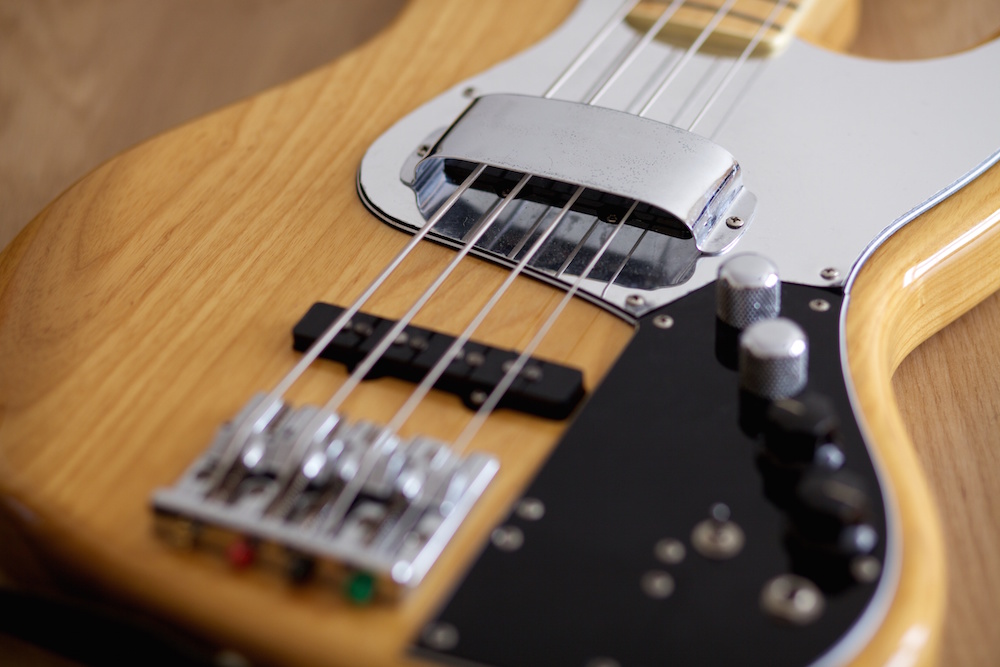
Fender Marcus Miller Jazz Bass with authentic Marcus Miller signature under the pickguard. Serial no. Q074671 Made in Japan Features: - Natural - Maple fingerboard - 3 pick guards: original 3-ply black, white and chrome - Two-band active EQ - Badass® Bass II™ bridge More information: http://www.fender.com/en-NL/series/artist/marcus-miller-jazz-bass-maple-fingerboard-natural-3-ply-black-pickguard

Pho­to by Sebas­ti­aan term Burg via Wiki­me­dia Com­mons

At the low­er range of hear­ing, it’s said humans can hear sound down to about 20 Hz, beneath which we encounter a murky son­ic realm called “infra­sound,” the world of ele­phant and mole hear­ing. But while we may not hear those low­est fre­quen­cies, we feel them in our bod­ies, as we do many sounds in the low­er fre­quen­cy ranges—those that tend to dis­ap­pear when pumped through tin­ny ear­buds or shop­ping mall speak­ers. Since bass sounds don’t reach our ears with the same excit­ed ener­gy as the high fre­quen­cy sounds of, say, trum­pets or wail­ing gui­tars, we’ve tend­ed to dis­miss the instruments—and players—who hold down the low end (know any famous tuba play­ers?).

In most pop­u­lar music, bass play­ers don’t get near­ly enough credit—even when the bass pro­vides a song’s essen­tial hook. As Led Zeppelin’s John Paul Jones joked at his Rock and Roll Hall of Fame induc­tion cer­e­mo­ny in 1995, “thank you to my friends for remem­ber­ing my phone num­ber.” And yet, writes Tom Barnes at Mic, “there’s sci­en­tif­ic proof that bassists are actu­al­ly one of the most vital mem­bers of any band…. It’s time we start­ed treat­ing bassists with the respect they deserve.” Research into the crit­i­cal impor­tance of low fre­quen­cy sound explains why bass instru­ments most­ly play rhythm parts and leave the fan­cy melod­ic noodling to instru­ments in the upper range. The phe­nom­e­non is not spe­cif­ic to rock, funk, jazz, dance, or hip hop. “Music in diverse cul­tures is com­posed this way,” says psy­chol­o­gist Lau­rel Train­or, direc­tor of the McMas­ter Uni­ver­si­ty Insti­tute for Music and the Mind, “from clas­si­cal East Indi­an music to Game­lan music of Java and Bali, sug­gest­ing an innate ori­gin.”

Train­or and her col­leagues have recent­ly pub­lished a study in the Pro­ceed­ings of the Nation­al Acad­e­my of Sci­ences sug­gest­ing that per­cep­tions of time are much more acute at low­er reg­is­ters, while our abil­i­ty to dis­tin­guish changes in pitch gets much bet­ter in the upper ranges, which is why, writes Nature, “sax­o­phon­ists and lead gui­tarists often have solos at a squeal­ing reg­is­ter,” and why bassists tend to play few­er notes. (These find­ings seem con­sis­tent with the physics of sound waves.) To reach their con­clu­sions, Train­er and her team “played peo­ple high and low pitched notes at the same time.” Par­tic­i­pants were hooked up to an elec­troen­cephalo­gram that mea­sured brain activ­i­ty in response to the sounds. The psy­chol­o­gists “found that the brain was bet­ter at detect­ing when the low­er tone occurred 50 MS too soon com­pared to when the high­er tone occurred 50 MS too soon.”

The study’s title per­fect­ly sum­ma­rizes the team’s find­ings: “Supe­ri­or time per­cep­tion for low­er musi­cal pitch explains why bass-ranged instru­ments lay down musi­cal rhythms.” In oth­er words, “there is a psy­cho­log­i­cal basis,” says Train­or, “for why we cre­ate music the way we do. Vir­tu­al­ly all peo­ple will respond more to the beat when it is car­ried by low­er-pitched instru­ments.” Uni­ver­si­ty of Vien­na cog­ni­tive sci­en­tist Tecum­seh Fitch has pro­nounced Train­or and her co-authors’ study a “plau­si­ble hypoth­e­sis for why bass parts play such a cru­cial role in rhythm per­cep­tion.” He also adds, writes Nature:

For loud­er, deep­er bass notes than those used in these tests, peo­ple might also feel the res­o­nance in their bod­ies, not just hear it in their ears, help­ing us to keep rhythm. For exam­ple, when deaf peo­ple dance they might turn up the bass and play it very loud, he says, so that “they can lit­er­al­ly ‘feel the beat’ via tor­so-based res­o­nance.”

Painful­ly awk­ward rev­el­ers at wed­dings, on cruise ships, at high school reunions—they just can’t help it. Maybe even this danc­ing owl can’t help it. Some of us keep time bet­ter than oth­ers, but most of us feel and respond phys­i­cal­ly to low-fre­quen­cy rhythms.

Bass instru­ments don’t only keep time; they also play a key role in a song’s har­mon­ic and melod­ic struc­ture. In 1880, an aca­d­e­m­ic music text­book informed its read­ers that “the bass part… is, in fact, the foun­da­tion upon which the melody rests and with­out which there could be no melody.” As true as this was at the time—-when acoustic pre­cur­sors to elec­tric bass, syn­the­siz­ers, and sub-bass ampli­fi­ca­tion pro­vid­ed the low end—it’s just as true now. And bass parts often define the root note of a chord, regard­less of what oth­er instru­ments are doing. As a bass play­er, notes Sting, “you con­trol the har­mo­ny,” as well as anchor­ing the melody. It seems the impor­tance of rhythm play­ers, though over­looked in much pop­u­lar appre­ci­a­tion of music, can­not be over­stat­ed.

Relat­ed Con­tent:

How Drums & Bass Make the Song: Iso­lat­ed Tracks from Led Zep­pelin, Rush, The Pix­ies, The Bea­t­les to Roy­al Blood

Hear Iso­lat­ed Tracks From Five Great Rock Bassists: McCart­ney, Sting, Dea­con, Jones & Lee

The Sto­ry of the Bass: New Video Gives Us 500 Years of Music His­to­ry in 8 Min­utes

7 Female Bass Play­ers Who Helped Shape Mod­ern Music: Kim Gor­don, Tina Wey­mouth, Kim Deal & More

The Neu­ro­science of Drum­ming: Researchers Dis­cov­er the Secrets of Drum­ming & The Human Brain

Josh Jones is a writer and musi­cian based in Durham, NC. Fol­low him at @jdmagness


Charles Darwin’s Kids Draw on Surviving Manuscript Pages of On the Origin of Species

darwin kid 2

Charles Dar­win not only cre­at­ed the the­o­ry of evo­lu­tion, but he appar­ent­ly dab­bled often in human biol­o­gy and sex­u­al­i­ty. To wit: he fathered 10 chil­dren with his cousin Emma Wedg­wood, six boys and four girls. It was this bois­ter­ous brood that filled the Darwin’s house in rur­al Kent, Eng­land, while Charles worked in his study on the first draft of On the Ori­gin of Species by Means of Nat­ur­al Selec­tion, or the Preser­va­tion of Favoured Races in the Strug­gle for Life, his ground­break­ing, world-chang­ing work.

darwin kid 1

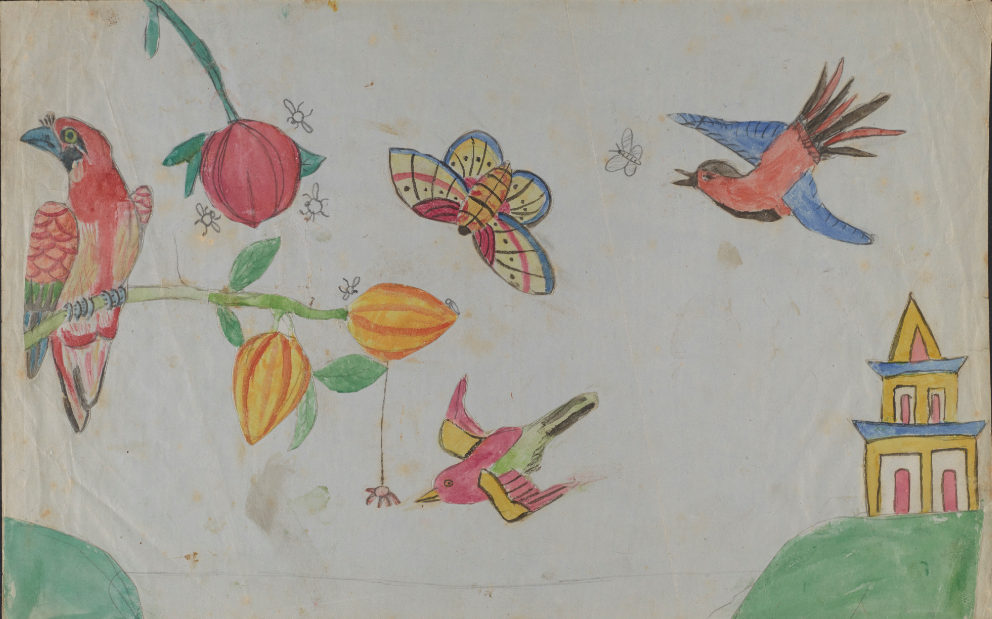
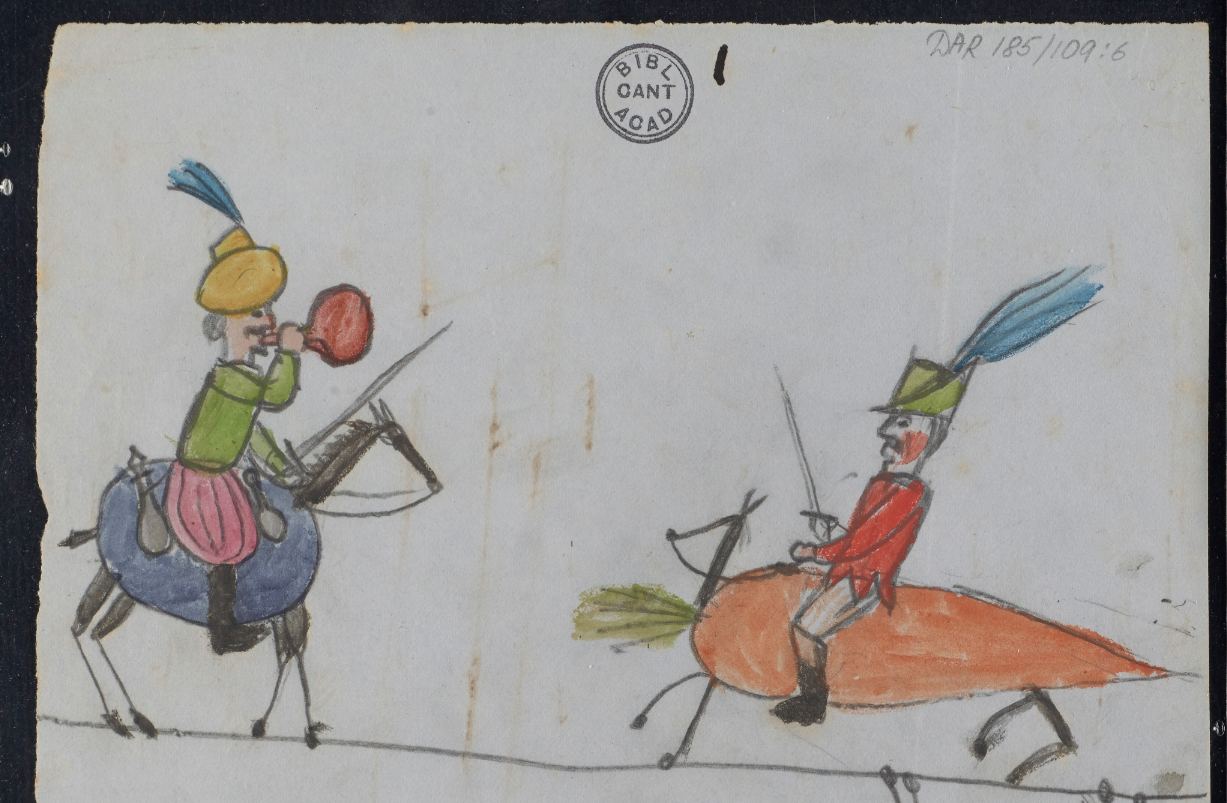
Last year we report­ed on the huge effort to dig­i­tize 30,000 pages of the scientist’s writ­ing at the Dar­win Man­u­scripts Project at the Amer­i­can Muse­um of Nat­ur­al His­to­ry. Among Dar­win’s many papers, one thing the dig­i­tiz­ers have found, curi­ous­ly enough, is art­work drawn by his chil­dren, often on pages of Dar­win’s man­u­scripts.

Dar­win had no real use for the orig­i­nal man­u­script once gal­ley proofs came back from the pub­lish­er. So one can imag­ine father Charles giv­ing his kids the only worth­while paper in the house to draw on. It seems flip­pant now, but at the time, it was per­fect­ly nor­mal.

darwin kid 3

Accord­ing to the New York­er, they’ve found 57 draw­ings in total, nine of them on the back of pages from Ori­gin of Species. Only 45 man­u­script pages out of 600 from that book sur­vive, and those nine are because of his kids. You can find a whole sec­tion at the Dar­win Man­u­scripts project web­site ded­i­cat­ed to the draw­ings of the Dar­win kids.

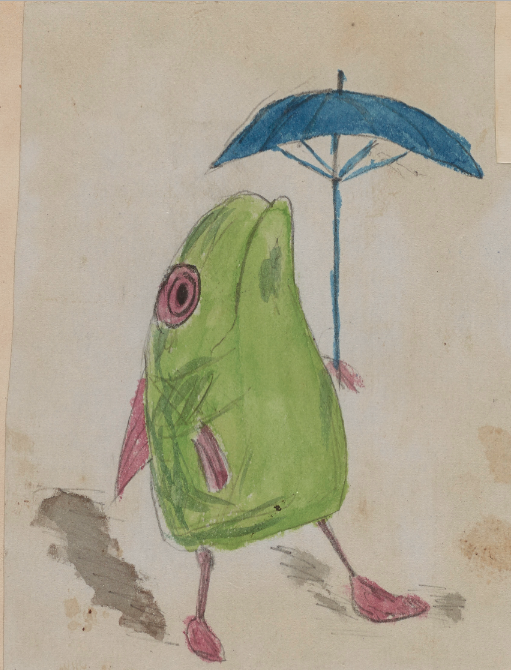
Researchers sur­mise that the major­i­ty of the art comes from three of the 10 chil­dren, Fran­cis, George, and Horace, all of whom went into the sci­ences as adults. The illus­tra­tions are col­or­ful and wit­ty, drawn in pen­cil and some­times col­ored in water­col­or. Birds and but­ter­flies are drawn and col­ored with atten­tion to detail. Some crea­tures are imag­i­nary, like the green fish with legs car­ry­ing an umbrel­la, and there are short sto­ries about fairies and bat­tles too.

Over­all, the draw­ings show a Dar­win who was a fam­i­ly man and not a reclu­sive sci­en­tist. We’re just glad that the kids let dad do his work in rel­a­tive silence.

Relat­ed Con­tent:

The British Library Puts Online 1,200 Lit­er­ary Trea­sures From Great Roman­tic & Vic­to­ri­an Writ­ers
What Did Charles Dar­win Read? See His Hand­writ­ten Read­ing List & Read Books from His Library Online

19th Cen­tu­ry Car­i­ca­tures of Charles Dar­win, Mark Twain, H.M. Stan­ley & Oth­er Famous Vic­to­ri­ans (1873)

Ted Mills is a free­lance writer on the arts who cur­rent­ly hosts the artist inter­view-based FunkZone Pod­cast. You can also fol­low him on Twit­ter at @tedmills, read his oth­er arts writ­ing at tedmills.com and/or watch his films here.

What Is Déjà Vu? Michio Kaku Wonders If It’s Triggered by Parallel Universes

I’ve spent the past week on a road trip across Amer­i­ca, and, dur­ing it, expe­ri­enced per­haps my most intense case of déjà vu ever. Rolling into Mem­phis for the first time in my life, I walked into the lob­by of the hotel at which I’d reserved a room for the night and imme­di­ate­ly felt, in every fiber of my being, that I’d walked into that lob­by before. But I then real­ized exact­ly why: it fol­lowed the same floor plan, to the last detail — the same front desk, the same busi­ness cen­ter com­put­ers, the same café with the same chalk­board ask­ing me to “Try Our Clas­sic Oat­meal” — of the one I’d vis­it­ed the pre­vi­ous day in Okla­homa City.

Should we chalk this up to gener­ic Amer­i­can place­mak­ing at its most effi­cient, or can we find a more inter­est­ing psy­cho­log­i­cal phe­nom­e­non at work? Michio Kaku, though best known for his work with physics, has some ideas of his own about what we expe­ri­ence when we expe­ri­ence déjà vu. “There is a the­o­ry,” says Kaku in the Big Think video above,“that déjà vu sim­ply elic­its frag­ments of mem­o­ries that we have stored in our brain, mem­o­ries that can be elicit­ed by mov­ing into an envi­ron­ment that resem­bles some­thing that we’ve already expe­ri­enced.”

But wait! “Is it ever pos­si­ble on any scale,” he then tan­ta­liz­ing­ly asks, “to per­haps flip between dif­fer­ent uni­vers­es?” And does déjà vu tell us any­thing about our posi­tion in those uni­vers­es, giv­ing us signs of the oth­ers even as we reside in just one? Kaku quotes an anal­o­gy first made by physi­cist Steven Wein­berg which frames the notion of a “mul­ti­verse” in terms of our vibrat­ing atoms and the fre­quen­cy of a radio’s sig­nal: “If you’re inside your liv­ing room lis­ten­ing to BBC radio, that radio is tuned to one fre­quen­cy. But in your liv­ing room there are all fre­quen­cies: radio Cuba, radio Moscow, the Top 40 rock sta­tions. All these radio fre­quen­cies are vibrat­ing inside your liv­ing room, but your radio is only tuned to one fre­quen­cy.” And some­times, for what­ev­er rea­son, we hear two sig­nals on our radio at once.

Giv­en that, then, maybe we feel déjà vu when the atoms of which we con­sist “no longer vibrate in uni­son with these oth­er uni­vers­es,” when “we have decou­pled from them, we have deco­hered from them.” It may relieve you to know there won’t be an exam on all this. While Kaku ulti­mate­ly grants that “déjà vu is prob­a­bly sim­ply a frag­ment of our brain elic­it­ing mem­o­ries and frag­ments of pre­vi­ous sit­u­a­tions,” you may get a kick out of putting his mul­ti­verse idea in con­text with some more tra­di­tion­al expla­na­tions, such as the ones writ­ten about in venues no less depend­able than Sci­en­tif­ic Amer­i­can and Smith­son­ian. But in any case, I beg you, Mar­riott Court­yard hotels: change up your designs once in a while.

Relat­ed Con­tent:

Philip K. Dick The­o­rizes The Matrix in 1977, Declares That We Live in “A Com­put­er-Pro­grammed Real­i­ty”

Free Online Physics Cours­es

Michio Kaku Explains the Physics Behind Absolute­ly Every­thing

Michio Kaku: We’re Born Sci­en­tists But Switch to Invest­ment Bank­ing (and More Cul­ture Around the Web)

Michio Kaku Schools a Moon Land­ing-Con­spir­a­cy Believ­er on His Sci­ence Fan­tas­tic Pod­cast

Col­in Mar­shall writes else­where on cities, lan­guage, Asia, and men’s style. He’s at work on a book about Los Ange­les, A Los Ange­les Primer, the video series The City in Cin­e­maand the crowd­fund­ed jour­nal­ism project Where Is the City of the Future? Fol­low him on Twit­ter at @colinmarshall or on Face­book.

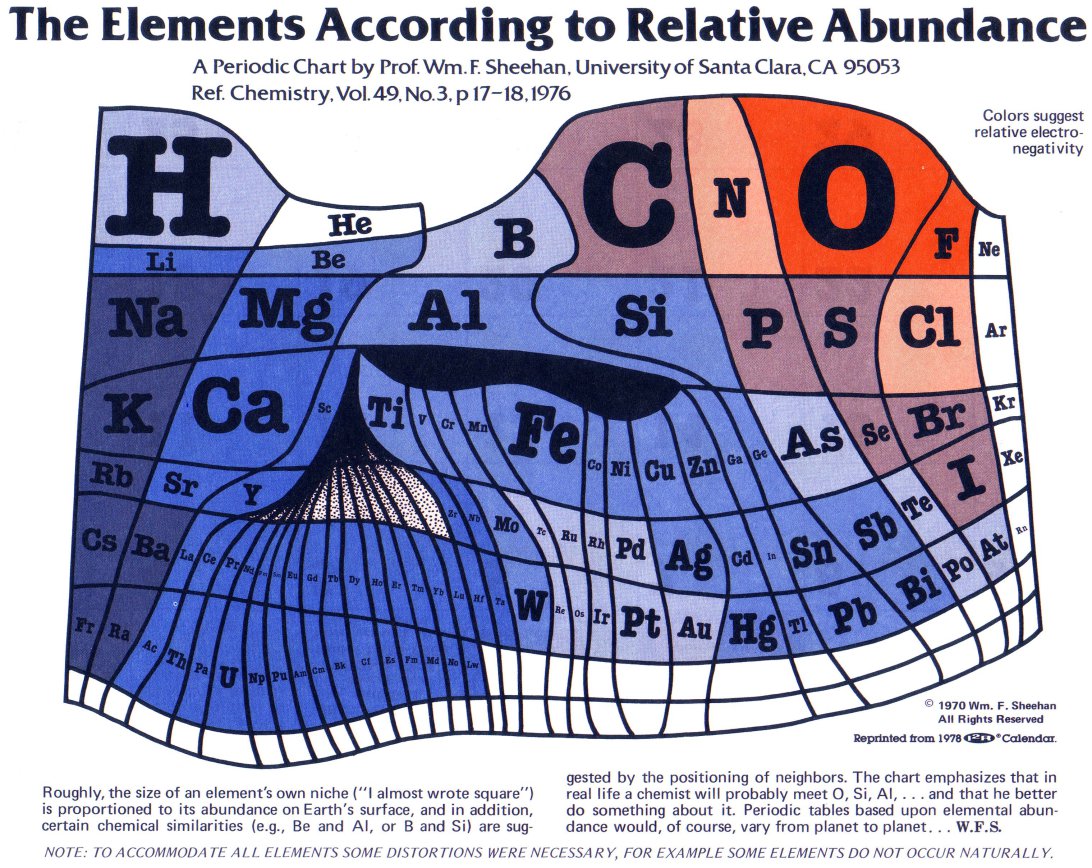
The Periodic Table of Elements Scaled to Show The Elements’ Actual Abundance on Earth

elements_relative_abundance

When you learned about The Peri­od­ic Table of Ele­ments in high school, it prob­a­bly did­n’t look like this. Above, we have a dif­fer­ent way of visu­al­iz­ing the ele­ments. Cre­at­ed by Pro­fes­sor William F. Shee­han at San­ta Clara Uni­ver­si­ty in 1970, this chart takes the ele­ments (usu­al­ly shown like this) and scales them rel­a­tive to their abun­dance on the Earth­’s sur­face. In the small print beneath the chart, Shee­han notes “The chart empha­sizes that in real life a chemist will prob­a­bly meet O, Si, Al [Oxy­gen, Sil­i­con and Alu­minum] and that he bet­ter do some­thing about it.” Click here to see the chart — and the less abun­dant ele­ments — in a larg­er for­mat. Below we have a few more cre­ative takes on the Peri­od­ic Table.

Fol­low Open Cul­ture on Face­book and Twit­ter and share intel­li­gent media with your friends. Or bet­ter yet, sign up for our dai­ly email and get a dai­ly dose of Open Cul­ture in your inbox.

via Pick­over

Relat­ed Con­tent:

“The Peri­od­ic Table Table” — All The Ele­ments in Hand-Carved Wood

World’s Small­est Peri­od­ic Table on a Human Hair

“The Peri­od­ic Table of Sto­ry­telling” Reveals the Ele­ments of Telling a Good Sto­ry

Chem­istry on YouTube: “Peri­od­ic Table of Videos” Wins SPORE Prize

Free Online Chem­istry Cours­es


by | Permalink | Make a Comment ( 16 ) |

Watch Noam Chomsky & Lawrence Krauss Talk About Education, Political Activism, Technology & More Before a Sold-Out Crowd

Found­ed and direct­ed by physi­cist Lawrence Krauss, Ari­zona State’s Ori­gins Project has for sev­er­al years brought togeth­er some of the biggest minds in the sci­ences and human­i­ties for friend­ly debates and con­ver­sa­tions about “the 21st Century’s great­est chal­lenges.” Pre­vi­ous all-star pan­els have includ­ed Krauss, Neil DeGrasse Tyson, Bill Nye, Bri­an Greene, and Richard Dawkins. Stephen Hawk­ing has graced the ASU Ori­gins Project stage, as has actor and sci­ence com­mu­ni­ca­tor Alan Alda. And this past March, in a sold-out, high­ly-antic­i­pat­ed Ori­gins Project event, Krauss wel­comed Noam Chom­sky to the stage for a lengthy inter­view, which you can watch above.

Although Krauss says he’s wary of hero wor­ship in his lauda­to­ry intro­duc­tion, he nonethe­less finds him­self ask­ing “What Would Noam Chom­sky Do” when faced with a dilem­ma. He also points out that Chom­sky has been “mar­gin­al­ized in U.S. media” for his anti-war, anar­chist polit­i­cal views. Those views, of course, come wide­ly into play dur­ing the con­ver­sa­tion, which ranges from the the­o­ry and pur­pose of education—a sub­ject Chom­sky has expound­ed on a great deal in books and inter­views—to the fate of polit­i­cal dis­si­dents through­out his­to­ry.

Chom­sky also gives us his views on sci­ence and tech­nol­o­gy, par­tic­u­lar­ly in the Q&A por­tion of the talk above, in which he answers ques­tions about arti­fi­cial intel­li­gence—anoth­er sub­ject he’s touched on in the past—and ani­mal exper­i­men­ta­tion, among a great many oth­er top­ics. Krauss most­ly hangs back dur­ing the ini­tial dis­cus­sion but takes a more active role in the ses­sion above, offer­ing views on med­ical and sci­en­tif­ic ethics that will be famil­iar to those who fol­low his athe­ist activism and cham­pi­oning of ratio­nal­i­ty over reli­gious dog­ma.

What you won’t see in the video above is a con­ver­sa­tion Chom­sky and Krauss had with Moth­er­board’s Daniel Ober­haus, who caught up with both thinkers dur­ing the ASU event to get their take on what he calls “anoth­er great space race.” As Ober­haus makes clear, the cur­rent com­pe­ti­tion is not nec­es­sar­i­ly between glob­al super­pow­ers, but—as with so much mod­ern research and development—between pub­lic and pri­vate enti­ties, such as NASA and Space X. As we briefly dis­cussed in a post yes­ter­day on the huge amount of pub­lic domain space pho­tog­ra­phy freely avail­able for use, pri­vate space explo­ration makes research pro­pri­etary, mit­i­gat­ing the poten­tial pub­lic ben­e­fits of gov­ern­ment pro­grams.

As Chom­sky puts it, “the envi­ron­ment, the com­mons… they’re a com­mon pos­ses­sion, but space is even more so. For indi­vid­u­als to allow insti­tu­tions like cor­po­ra­tions to have any con­trol over it is dev­as­tat­ing in its con­se­quences. It will also almost cer­tain­ly under­mine seri­ous research.” He refers to the exam­ple of most mod­ern computing—developed under pub­licly-fund­ed gov­ern­ment pro­grams, then mar­ket­ed and sold back to us by cor­po­ra­tions. Krauss makes a case for unmanned space explo­ration as the cost-effec­tive option, and both thinkers dis­cuss the prob­lem of mil­i­ta­riz­ing space, the ulti­mate goal of Cold War space pro­grams before the fall of the Sovi­et Union. The con­ver­sa­tion is rich and reveal­ing and makes an excel­lent sup­ple­ment to the already rich dis­cus­sion Krauss and Chom­sky have in the videos above.

Relat­ed Con­tent:

The Ori­gins Project Brings Togeth­er Neil DeGrasse Tyson, Richard Dawkins, Lawrence Krauss, Bill Nye, Ira Fla­tow, and More on One Stage

Noam Chom­sky Spells Out the Pur­pose of Edu­ca­tion

Noam Chom­sky Explains Where Arti­fi­cial Intel­li­gence Went Wrong

Josh Jones is a writer and musi­cian based in Durham, NC. Fol­low him at @jdmagness

8,400 Stunning High-Res Photos From the Apollo Moon Missions Are Now Online

21472223270_710757a21b_z

The Apol­lo pro­gram, launched in 1961 by John F. Kennedy, flew its first manned mis­sion in 1968, and the fol­low­ing sum­mer, Neil Arm­strong, Michael Collins, and Buzz Aldrin met the pro­gram’s man­date, mak­ing their his­toric Apol­lo 11 Moon Land­ing. In the ensu­ing few years, sev­er­al more space­craft and crews either orbit­ed or land­ed on the Moon, and for a brief moment, pop­u­lar mag­a­zines and news­pa­pers reg­u­lar­ly fea­tured pho­tographs of those expe­di­tions on their cov­ers and front pages. Look­ing every bit the authen­tic vin­tage Has­sel­blad pho­tos they are, the images you see here were tak­en by Apol­lo astro­nauts on their var­i­ous mis­sions and sent home in rolls of hun­dreds of sim­i­lar pic­tures.

Earthrise

These astro­nauts snapped pho­tos inside and out­side the space­craft, in orbit and on the moon’s sur­face, and in 2004 NASA began dig­i­tiz­ing the result­ing cache of film. Luck­i­ly for the pub­lic, devot­ed space enthu­si­ast and archivist, Kipp Teague—an IT direc­tor at Lynch­burg Col­lege in Virginia—has post­ed a huge num­ber of these pho­tos (8,400 to be exact) on his Project Apol­lo Archive Flickr account.

Apollo Archive 3

Teague ini­tial­ly began acquir­ing the pho­tos in col­lab­o­ra­tion with Eric Jones’ Apol­lo Lunar Sur­face Jour­nal, “a record of the lunar sur­face oper­a­tions con­duct­ed by the six pairs of astro­nauts who land­ed on the Moon from 1969 to 1972.” Under­stand­ably, so many peo­ple expressed inter­est in the pho­tographs that Teague refor­mat­ted them in high­er res­o­lu­tion and gave them their own home on the web. The Plan­e­tary Soci­ety informs us, “every pho­to tak­en on the lunar sur­face by astro­nauts with their chest-mount­ed Has­sel­blad cam­eras is includ­ed in the col­lec­tion.”

Apollo Archive 1

While Teague and Jones’ oth­er sites use pho­tos that have been processed to increase their clar­i­ty, light­ing, and col­or, the pho­tos on Project Apol­lo Archive remain in their orig­i­nal state. “Brows­ing the entire set,” writes the Plan­e­tary Soci­ety, “takes on the feel­ing of look­ing through an old fam­i­ly pho­to album.” Indeed, espe­cial­ly if you grew up in the late-six­ties/ear­ly-sev­en­ties at the height of the space pro­gram’s pop­u­lar­i­ty.

21943951215_7e855a8d8b_z

A good many of the pho­tos are rather pro­ce­dur­al shots of craters and clouds, espe­cial­ly those from ear­li­er mis­sions. But quite a few frame the breath­tak­ing vis­tas, tech­ni­cal details, and awestruck, if exhaust­ed, faces you see here. So many pho­tos were tak­en and uploaded in suc­ces­sion that click­ing rapid­ly through a pho­to­stream can pro­duce an almost flip­book effect. You can browse the archive by album, each one rep­re­sent­ing a reel from dif­fer­ent Apol­lo missions—including that famous 11th (top, and below)—though Teague has yet to post high res­o­lu­tion images from Apol­lo 8 and 13.

21634076726_e9aa434f3a_z

It seemed after Apollo’s demise in the mid-sev­en­ties that pho­tographs like these doc­u­ment­ed a lost age of NASA explo­ration, and that the once-great gov­ern­ment agency would cede its inno­v­a­tive role to pri­vate com­pa­nies like Elon Musk’s Space X, who have been much less forth­com­ing about releas­ing media to the pub­lic, mak­ing pro­pri­etary claims over their space pho­tog­ra­phy in par­tic­u­lar. But thanks in part to Space X and the coop­er­a­tion of Cana­di­an, Euro­pean, Russ­ian, and Japan­ese space pro­grams, NASA’s Inter­na­tion­al Space Sta­tion has raised the agency’s pub­lic pro­file con­sid­er­ably in the past sev­er­al years. Though still painful­ly under­fund­ed, NASA’s cool again.

Apollo Archive 4

Even more pro­file-rais­ing is the Mars Rover pro­gram, whose recent find­ing of water has refu­eled spec­u­la­tions about life on the Red Plan­et. As films like the recent, astro­naut-approved The Mar­t­ian and a raft of oth­ers show, our col­lec­tive imag­i­na­tion has long bent toward human explo­ration of Mars. Estab­lish­ing a base on Mars, after all, is Space X’s stat­ed mis­sion. Look­ing at these stun­ning vin­tage pho­tos of the Apol­lo Lunar mis­sions makes me long to see what the first astro­nauts to walk on Mars send back. We prob­a­bly won’t have to wait long once they’re up there. We’ll like­ly get Insta­gram uploads, maybe even some with fake vin­tage Has­sel­blad fil­ters. It won’t be quite the same; few cur­rent events can com­pete with nos­tal­gia. But I like to think we can look for­ward in the near future to a renais­sance of manned—and woman-ed—space explo­ration.

Apollo Archive 5

See many hun­dreds more Apol­lo Lunar Mis­sion pho­tos at Project Apol­lo Archive and fol­low the archive on Face­book for updates.

via The Plan­e­tary Soci­ety

Relat­ed Con­tent:

Land­ing on the Moon: July 20, 1969

Mankind’s First Steps on the Moon: The Ultra High Res Pho­tos

Neil Arm­strong, Buzz Aldrin & Michael Collins Go Through Cus­toms and Sign Immi­gra­tion Form After the First Moon Land­ing (1969)

Josh Jones is a writer and musi­cian based in Durham, NC. Fol­low him at @jdmagness

Adam Savage’s Animated Lesson on the Simple Ideas That Lead to Great Scientific Discoveries

Edu­ca­tor, indus­tri­al design fab­ri­ca­tor and Myth Busters cohost Adam Sav­age is dri­ven by curios­i­ty.

Sci­ence gets his wheels turn­ing faster than the notched disc Hip­poly­te Fizeau used to mea­sure the speed of light in 1849.

In his TED-Ed talk on how sim­ple ideas lead to sci­en­tif­ic dis­cov­er­ies, above, Sav­age zips across the cen­turies to share the work of three game chang­ers — Fizeau, Eratos­thenes, and Richard Feyn­man (one of the de fac­to patron saints of sci­ence-relat­ed TED talks).

I found it dif­fi­cult to wrap my head around the sheer quan­ti­ties of infor­ma­tion Sav­age shoe­horns into the sev­en minute video, giv­ing sim­i­lar­ly vol­u­ble and omniv­o­rous math­mu­si­cian Vi Hart a run for her mon­ey. Clear­ly, he under­stands exact­ly what he’s talk­ing about, where­as I had to take the review quiz in an attempt to retain just a bit of this new-to-me mate­r­i­al.

I’m glad he glossed over Feynman’s child­hood fas­ci­na­tion with iner­tia in order to spend more time on the less­er known of his three sub­jects. Lit­tle Feynman’s obser­va­tion of his toy wag­on is charm­ing, but the Nobel Prize winner’s life became an open book to me with Jim Otta­viani and Leland Myrick’s excel­lent graph­ic biog­ra­phy. What’s left to dis­cov­er?

How about Eratos­thenes? I’d nev­er before heard of the Alexan­dri­an librar­i­an who cal­cu­lat­ed the Earth­’s cir­cum­fer­ence with aston­ish­ing accu­ra­cy around 200 BC. (It helped that he was good at math and geog­ra­phy, the lat­ter of which he invent­ed.) Inspi­ra­tion fuels the arts, much as it does sci­ence, and I’d like to learn more about him.

Dit­to Fizeau, whom Sav­age describes as a less sexy sci­en­tif­ic swash­buck­ler than method­i­cal fact check­er, which is what he was doing when he wound up crack­ing the speed of light in 1849. Two cen­turies ear­li­er Galileo used lanterns to deter­mine that light trav­els at least ten times faster than sound. Fizeau put Galileo’s num­ber to the test, exper­i­ment­ing with his notched wheel, a can­dle, and mir­rors and ulti­mate­ly set­ting the speed of light at a much more accu­rate 313,300 Km/s. Today’s mea­sure­ment of 299792.458 km/s was arrived at using tech­nol­o­gy unthink­able even a few decades ago.

Per­son­al­ly, I would nev­er think to mea­sure the speed of light with some­thing that sounds like a zoetrope, but I might write a play about some­one who did.

Relat­ed Con­tent:

Neil deGrasse Tyson Deliv­ers the Great­est Sci­ence Ser­mon Ever

The Feyn­man Lec­tures on Physics, The Most Pop­u­lar Physics Book Ever Writ­ten, Now Com­plete­ly Online

Sam Har­ris: Sci­ence Can Answer Moral Ques­tions

Ayun Hal­l­i­day is an author, illus­tra­tor, and Chief Pri­ma­tol­o­gist of the East Vil­lage Inky zine. Her play, Fawn­book, opens in New York City lat­er this fall. Fol­low her @AyunHalliday

The Drawings & Paintings of Richard Feynman: Art Expresses a Dramatic “Feeling of Awe”

feynman-art 1

I first encoun­tered bon­go-play­ing physi­cist Richard Feyn­man in a col­lege com­po­si­tion class geared toward sci­ence majors. I was not, mind you, a sci­ence major, but a dis­or­ga­nized sopho­more who reg­is­tered late and grabbed the last avail­able seat in a required writ­ing course. Skep­ti­cal, I thumbed through the read­ing in the col­lege book­store. As I browsed Sure­ly You’re Jok­ing, Mr. Feyn­man!—the first of many pop­u­lar mem­oirs released by the affa­ble con­trar­i­an scientist—the human­ist in me perked up. Here was a guy who knew how to write; a the­o­ret­i­cal physi­cist who spoke the lan­guage of every­day peo­ple.

feynmanart 3

Feyn­man cul­ti­vat­ed his pop­ulist per­sona to appeal to those who might be oth­er­wise turned off by abstract, abstruse sci­en­tif­ic con­cepts. Like Carl Sagan and Neil deGrasse Tyson, his name has come to stand for the best exam­ples of pop­u­lar sci­ence com­mu­ni­ca­tion. It is often through one of Feynman’s acces­si­ble, non-spe­cial­ist books or pre­sen­ta­tions that peo­ple learn of his work with the Man­hat­tan project, his con­tri­bu­tions to quan­tum mechan­ics, and his Nobel Prize. But Feynman’s extracur­ric­u­lar pursuits—from safe-crack­ing to drum­ming to exper­i­ment­ing with LSD—were also gen­uine expres­sions of his idio­syn­crat­ic char­ac­ter, as was anoth­er of his pas­sions for which he is not very well known: art.

feynmanart282

Feyn­man took up the pur­suit at the age of 44, and con­tin­ued to draw and paint for the rest of his life, sign­ing his work “Ofey.” Many of his draw­ings dis­play the awk­ward, off-kil­ter per­spec­tive of the begin­ner, and a great many oth­ers look very accom­plished indeed. In an intro­duc­to­ry essay to a pub­lished col­lec­tion of his art­work, Feyn­man describes what moti­vat­ed him to take up this par­tic­u­lar avo­ca­tion:

I want­ed very much to learn to draw, for a rea­son that I kept to myself: I want­ed to con­vey an emo­tion I have about the beau­ty of the world. It’s dif­fi­cult to describe because it’s an emo­tion. It’s anal­o­gous to the feel­ing one has in reli­gion that has to do with a god that con­trols every­thing in the uni­verse: there’s a gen­er­al­i­ty aspect that you feel when you think about how things that appear so dif­fer­ent and behave so dif­fer­ent­ly are all run ‘behind the scenes’ by the same orga­ni­za­tion, the same phys­i­cal laws. It’s an appre­ci­a­tion of the math­e­mat­i­cal beau­ty of nature, of how she works inside; a real­iza­tion that the phe­nom­e­na we see result from the com­plex­i­ty of the inner work­ings between atoms; a feel­ing of how dra­mat­ic and won­der­ful it is. It’s  — of sci­en­tif­ic awe — which I felt could be com­mu­ni­cat­ed through a draw­ing to some­one who had also had that emo­tion. I could remind him, for a moment, of this feel­ing about the glo­ries of the uni­verse.

As you can see above, he took his work seri­ous­ly. Most of his draw­ings con­sist of por­traits and nudes, with the occa­sion­al land­scape or still life. You can see more exten­sive gal­leries of Feynman’s art at Amus­ing­Plan­etMuse­um Syn­di­cate and Brain Pick­ings.

feynmanart102

Feynman’s preoccupation—and full immersion—in the rela­tion­ship between the arts and sci­ences marks him as a Renais­sance man in per­haps the purest def­i­n­i­tion of the term: his approach close­ly resem­bles that of Leonar­do da Vin­ci, a like­ness that comes to the fore in the work below, which is either a col­lec­tion of sketch­es doo­dled over with for­mu­lae, or a col­lec­tion of for­mu­lae cov­ered with doo­dles. Either way, it’s a per­fect rep­re­sen­ta­tion of the vision­ary mind of Feyn­man and his regard for ordi­nary lan­guage, peo­ple, and objects—and for “sci­en­tif­ic awe.”

feynmanart 4

Relat­ed Con­tent:

Free Online Physics Cours­es

The Feyn­man Lec­tures on Physics, The Most Pop­u­lar Physics Book Ever Writ­ten, Now Com­plete­ly Online

Richard Feynman’s Let­ter to His Depart­ed Wife: “You, Dead, Are So Much Bet­ter Than Any­one Else Alive” (1946)

Learn How Richard Feyn­man Cracked the Safes with Atom­ic Secrets at Los Alam­os

‘The Char­ac­ter of Phys­i­cal Law’: Richard Feynman’s Leg­endary Course Pre­sent­ed at Cor­nell, 1964

Josh Jones is a writer and musi­cian based in Durham, NC. Fol­low him at @jdmagness

« Go BackMore in this category... »
Quantcast