Humans Fall for Optical Illusions, But Do Cats?

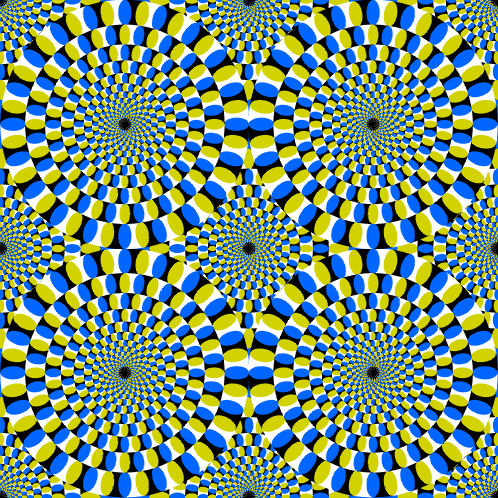
Peripheral Drift Illusion

Most “opti­cal illu­sions” are not real­ly opti­cal. They have less to do with the way the eyes work than with the way the brain process­es the infor­ma­tion sent to it from the eyes. For this rea­son, many sci­en­tists pre­fer to call them visu­al illu­sions. So if visu­al illu­sions are a trick of the brain, and human brains dif­fer from the brains of oth­er ani­mals, does that mean our visu­al illu­sions are unique­ly human?

The answer would appear to be no, judg­ing from the cute video below from YouTube. The kit­ten is falling for the “rotat­ing snakes illu­sion” devel­oped in 2003 by Japan­ese psy­chol­o­gist Akiyoshi Kitao­ka. The rotat­ing snakes (click here to view in a larg­er for­mat) are an exam­ple of the â€śperiph­er­al drift illu­sion,” a phe­nom­e­non first described in 1999 by Joce­lyn Faubert and Andrew Her­bert of the Uni­ver­si­ty of Mon­tre­al. Cats are very adept at per­ceiv­ing motion in their periph­er­al vision. It helps them elude preda­tors and home in on their own prey. But this kit­ty is thrown for a loop by the illu­so­ry motion of the rotat­ing snakes.

The periph­er­al drift illu­sion occurs when cir­cu­lar­ly repeat­ing fig­ures with reg­u­lar saw­tooth pat­terns of light and dark are viewed in the periph­ery. You’ll find that if you move your eyes around the var­i­ous cir­cles, for exam­ple going from cen­ter point to cen­ter point, the cir­cles in your periph­er­al vision will appear to be mov­ing but the one you are focused on will not. If you stop mov­ing your eyes, a moment lat­er the cir­cles will all appear to stop mov­ing. In the abstract of their 1998 paper (open PDF), Faubert and Her­bert write:

Illu­so­ry motion is per­ceived in a dark-to-light direc­tion, but only when one’s gaze is direct­ed to dif­fer­ent loca­tions around the stim­u­lus, a point out­side the dis­play is fix­at­ed and the observ­er blinks, or when the stim­u­lus is sequen­tial­ly dis­played at dif­fer­ent loca­tions whilst the observ­er fix­ates one point. We pro­pose that the illu­sion is pro­duced by the inter­ac­tion of three fac­tors: (i) intro­duc­ing tran­sients as a result of eye move­ments or blinks; (ii) dif­fer­ing laten­cies in the pro­cess­ing of lumi­nance; and (iii) spa­tiotem­po­ral inte­gra­tion of the dif­fer­ing lumi­nance sig­nals in the periph­ery.

via Stephen Law

New Heat Map Reveals the Creation of Our Infant Universe

Planck Light

This map shows the old­est light in our uni­verse, as detect­ed by the Planck mis­sion. Click on the map for a larg­er image.

By now the Big Bang the­o­ry is wide­ly accept­ed sci­en­tif­i­cal­ly. The idea is that the uni­verse began to expand rapid­ly about 14 bil­lion years ago from a dense, hot state and con­tin­ues to expand to this day.

One of the most telling fin­ger­prints left behind by the Big Bang is cos­mic microwave back­ground radi­a­tion. This ther­mal radi­a­tion was thought to be left over from the Big Bang itself. It fills the uni­verse almost com­plete­ly.

A new map of cos­mic radi­a­tion ques­tions some of the core con­cepts of the Big Bang. What if, this pre­cise heat map sug­gests, the Uni­verse expe­ri­enced a long, pre-Bang phase? What if the Big Bang wasn’t the first burp of cre­ation after all?

The Euro­pean Space Agency’s Planck space­craft mea­sures between infra-red and radio waves, mak­ing it pos­si­ble to see back in time to the first light ever pro­duced.

Cos­mol­o­gists released the new images of the ear­ly uni­verse this week. What sur­pris­es them is that Planck detect­ed stronger light sig­nals on one half of the sky than the oth­er and picked up a series of anom­alies or “cold spots.” While this doesn’t chal­lenge the Big Bang the­o­ry as a whole, it does height­en the mys­tery around the universe’s birth and devel­op­ment.

The data is still com­ing in. Like the Human Genome Project, Planck stands to gen­er­ate dou­ble the amount of data it has pro­duced so far.

Planck two

This full-sky map from the Planck mis­sion shows mat­ter between Earth and the edge of the observ­able uni­verse. Regions with more mass show up as lighter areas while regions with less mass are dark­er. The grayed-out areas are where light from our own galaxy was too bright, block­ing Planck­’s abil­i­ty to map the more dis­tant mat­ter. Click the map for a larg­er image.

Some oth­er sur­pris­es from the Planck space­craft data:

• The uni­verse is about 100 mil­lion years old­er and appears to be expand­ing much slow­er than pre­vi­ous­ly thought

•  There is less dark ener­gy and more mat­ter in the uni­verse than pre­vi­ous research showed.

Relat­ed Con­tent:

Leonard Nimoy Nar­rates Short Film About NASA’s Dawn: A Voy­age to the Ori­gins of the Solar Sys­tem

Carl Sagan, Stephen Hawk­ing & Arthur C. Clarke Dis­cuss God, the Uni­verse, and Every­thing Else

Google Presents an Inter­ac­tive Visu­al­iza­tion of 100,000 Stars

Kate Rix writes about dig­i­tal media and edu­ca­tion. Con­tact her and learn more about her work at .

Thomas Edison and Nikola Tesla Face Off in “Epic Rap Battles of History”

We’ve writ­ten a fair amount on the var­i­ous facets of Thomas Edison’s career, and some­what less on his less-famous for­mer employ­ee-become-rival Niko­la Tes­la (who seems to polar­ize peo­ple in ways Edi­son doesn’t). Both inven­tors pro­voke all kinds of seri­ous spec­u­la­tion, com­men­tary, and debate. But even peo­ple hav­ing fun with these larg­er-than-life char­ac­ters feel the need to pick sides. For exam­ple, there’s web­com­ic The Oatmeal’s “Why Niko­la Tes­la was the great­est geek who ever lived,” which obvi­ous­ly comes down hard in favor of Tes­la. Then there’s Tet­suya Kuro­sawa Bio­graph­i­cal com­ic Thomas Edi­son: Genius of the Elec­tric Age, which gives the edge to Edi­son.

Now, in anoth­er show­down between the pio­neer­ing genius­es of the elec­tric age, we have Epic Rap Bat­tles of His­to­ry, Sea­son 2, with Edi­son and Tes­la spit­ting rhymes to prove who should wear the top inventor’s crown. Pre­vi­ous Epic Rap Bat­tles of His­to­ry episodes pit Gand­hi against Mar­tin Luther King, Oba­ma vs. Rom­ney, and Steve Jobs vs. Bill Gates. They’re all pret­ty great, but this one goes out to the sci­ence his­to­ry nerds (who have a sense of humor). The lyrics hit the high points of Edi­son and Tesla’s careers—Edison’s intel­lec­tu­al prop­er­ty theft, end­less string of patents, use of direct cur­rent, and “stack­ing rich­es”; Tesla’s almost reli­gious belief in the pow­er of elec­tric­i­ty, dis­in­ter­est in busi­ness, griev­ances with Edison—and there are plen­ty of per­son­al insults thrown into the mix.

Whether you’re a par­ti­san of Edi­son or Tes­la, or couldn’t care less either way, no doubt you’ll get a kick out of this. And for an added bonus, check out the “mak­ing of” video below.

Relat­ed Con­tent:

Magi­cian Mar­co Tem­pest Daz­zles a TED Audi­ence with “The Elec­tric Rise and Fall of Niko­la Tes­la”

A Brief, Ani­mat­ed Intro­duc­tion to Thomas Edi­son (and Niko­la Tes­la)

Thomas Edi­son Recites “Mary Had a Lit­tle Lamb” in Ear­ly Voice Record­ing

Hayek vs. Keynes Rap

Josh Jones is a writer, edi­tor, and musi­cian based in Wash­ing­ton, DC. Fol­low him @jdmagness


Magnifying the Universe: Move From Atoms to Galaxies in HD


Copy­right 2012. Mag­ni­fy­ing the Uni­verse by Num­ber Sleuth.

Before you do any­thing else, click on the image above and then move lit­tle slid­er (along the bot­tom of the image) from left to right. Now watch the uni­verse fly by, going from macro to micro. Pret­ty cool, no? Now read on:

This dynam­ic info­graph­ic comes to us via Num­ber Sleuth, who describes their won­der­ful cre­ation as fol­lows:

This inter­ac­tive info­graph­ic accu­rate­ly illus­trates the scale of over 100 items with­in the observ­able uni­verse rang­ing from galax­ies to insects, neb­u­lae and stars to mol­e­cules and atoms. Numer­ous hot points along the zoom slid­er allow for direct access to plan­ets, ani­mals, the hydro­gen atom and more. As you scroll, a handy dial spins to show you your present mag­ni­fi­ca­tion lev­el.

While oth­er sites have tried to mag­ni­fy the uni­verse, no one else has done so with real pho­tographs and 3D renderings.…We hope you have a blast mag­ni­fy­ing the uni­verse, know that each time you zoom in a depth, you’re mag­ni­fy­ing the uni­verse 10x … and every time you zoom out, the big­ger objects are 1/10th of their pri­or size. If you zoom from the biggest object, The Observ­able Uni­verse, all the way down to the hydro­gen atom­’s pro­ton nucle­us, you will have zoomed in over 100,000,000,000,000,000,000,000,000,000,000,000,000,000x! Unbe­liev­able isn’t it? Our uni­verse real­ly is immense­ly mas­sive and sur­pris­ing­ly small.

If you’re famil­iar with the work of Ray and Charles Eames, this info­graph­ic will almost cer­tain­ly remind you of Pow­ers of Ten, the Eames’ 1977 film. That’s some­thing we’re going to talk about more on Mon­day. For more info on how to use Mag­ni­fy­ing the Uni­verse, please see the instruc­tions here

via @coudal

by | Permalink | Make a Comment ( 10 ) |

Carl Sagan, Stephen Hawking & Arthur C. Clarke Discuss God, the Universe, and Everything Else

Name the three fig­ures, liv­ing or dead, with whom you would most like to sit down to din­ner. Though per­haps a lit­tle tired, the chal­lenge still reveals some­thing worth know­ing about the respon­den­t’s per­son­al­i­ty. If I know the per­son­al­i­ties of Open Cul­ture read­ers at all, I’d wager that more than a few of you would choose to set places at the table for Carl Sagan, Stephen Hawk­ing, and Arthur C. Clarke. Any­one inter­est­ed in ask­ing the big, exis­ten­tial ques­tions and under­stand­ing the sci­ence under­neath them would have the time of their lives at such a meal, espe­cial­ly if astro­phys­i­cal­ly inclined. But until a genie grants you this wish, may we offer God, the Uni­verse, and Every­thing Else?

Pre­sent­ed by Mag­nus Mag­nus­son, long­time host of the BBC’s Mas­ter­mind, this pro­gram brings the three togeth­er to dis­cuss “the Big Bang the­o­ry, God, our exis­tence as well as the pos­si­bil­i­ty of extrater­res­tri­al life.” Hawk­ing, of course, talks through his sig­na­ture speech syn­the­siz­er, and Sagan joins up through a satel­lite link — beamed through, yes, the very sort of float­ing mir­a­cles of engi­neer­ing that Clarke wrote about in his nov­els. With minds like these, you can rest assured that the con­ver­sa­tion won’t stray far from what Sagan calls “the fun­da­men­tal ques­tions,” nor will it come unteth­ered from estab­lished human knowl­edge and float into the realms of wild spec­u­la­tion and wish­ful think­ing. And of course, in such con­ver­sa­tions, a sense of humor like Hawk­ing’s â€” a man who, not expect­ed to reach age thir­ty, would nev­er­the­less live to see more advance­ment in human knowl­edge than any­one else on the broad­cast — nev­er goes amiss.

Relat­ed Con­tent:

Carl Sagan and Stephen Hawk­ing Remixed

Watch Errol Mor­ris’ Trib­ute to Stephen Hawk­ing, A Brief His­to­ry of Time

Sev­en Ques­tions for Stephen Hawk­ing: What Would He Ask Albert Ein­stein & More

Col­in Mar­shall hosts and pro­duces Note­book on Cities and Cul­ture and writes essays on lit­er­a­ture, film, cities, Asia, and aes­thet­ics. He’s at work on a book about Los Ange­les, A Los Ange­les Primer. Fol­low him on Twit­ter at @colinmarshall.

Download the Universe: A Discerning Curator for Science eBooks

download the universe

We all need guides for the over­whelm­ing world of the Inter­net. Dig­i­tal cura­tors are essen­tial to sift­ing through the vast and expand­ing sup­ply of online con­tent because they find the good stuff that’s worth check­ing out.

When Down­load the Uni­verse launched a year ago, the dig­i­tal world gained a smart and dis­cern­ing cura­tor for the grow­ing num­ber of sci­ence ebooks. What a boon for sci­ence lovers. Sci­ence lends itself unique­ly to apps and ebook pub­lish­ing. And doing what dig­i­tal pub­lish­ing does best, a good ebook can bring con­tent to life like no paper­back or hard­cov­er can.

fragile earth

Take Harp­er Collins’ Frag­ile Earth ($2.99 on iTunes), which came out orig­i­nal­ly as a glossy cof­fee table book. Loaded with before and after pho­tos of places on the plan­et scarred by defor­esta­tion and cli­mate change, the book was visu­al­ly stun­ning, if pedan­tic. But when released as an ebook, the whole expe­ri­ence unfold­ed like a beau­ti­ful, heart­break­ing origa­mi.

As Down­load the Uni­verse’s review of the Frag­ile Earth ebook  points out, the app ver­sion ben­e­fits from dig­i­tal tech­nol­o­gy, lay­ing before and after satel­lite images over one anoth­er, rather than side by side, mak­ing the expe­ri­ence of see­ing them  even more pro­found.

color uncovered

Here’s anoth­er one: Col­or Uncov­ered (free on iTunes), pro­duced by San Francisco’s Explorato­ri­um Muse­um, is a rich expe­ri­ence like a muse­um exhib­it itself. Com­bin­ing text with images and inter­ac­tive fea­tures, the ebook explores how the eye per­ceives col­or. The review­er, New York Times con­trib­u­tor Carl Zim­mer, uses his review to dis­cuss what the ebook expe­ri­ence shares with muse­um exhibits.

In the hands of Down­load the Uni­verse, it appears that ebook pub­lish­ing has matured into its own genre, with its own dis­tinct advan­tages.

blindsight

Some­times ebook pub­lish­ers don’t make good use of avail­able fea­tures. This review of Blind­sight by jour­nal­ist Chris Col­in notes that the book’s app ver­sion, telling the sto­ry of a tele­vi­sion direc­tor who suf­fers a brain injury, should have includ­ed neu­ro­log­i­cal back­ground infor­ma­tion in the main sto­ry, not as a sep­a­rate fea­ture.

Down­load the Uni­verse only reviews ebooks in the dig­i­tal uni­verse, not spin-offs from tra­di­tion­al print books. They look at Kin­dle prod­ucts, self-pub­lished pdf man­u­scripts and apps, and they’ve got top-notch tal­ent review­ing this brave new world on our behalf. The edi­to­r­i­al board includes some names you may well rec­og­nize, like Sean Car­roll (Cal­tech physi­cist), Steve Sil­ber­man (Wired), Mag­gie Koerth-Bak­er (Boing Boing), Annalee Newitz (io9), and David Dobbs (NYTimes, Nat Geo, etc.).

Relat­ed Con­tent:

Neil deGrasse Tyson Lists 8 (Free) Books Every Intel­li­gent Per­son Should Read

NASA Presents “The Earth as Art” in a Free eBook and Free iPad App

375 Free eBooks: Down­load to Kin­dle, iPad/iPhone & Nook 

Kate Rix writes about dig­i­tal media and edu­ca­tion. Read more of her work at .

Captivating Collaboration: Artist Hubert Duprat Uses Insects to Create Golden Sculptures

Once upon a time, the lar­vae of the Cad­dis Fly were con­sid­ered pret­ty unas­sum­ing crea­tures, fresh­wa­ter dwellers whose appeal was lim­it­ed to trout and trout fish­er­men. That is until French artist Hubert Duprat came along with an aes­thet­ic offer they could­n’t refuse.

Left to their own devices, Cad­dis lar­vae con­struct pro­tec­tive cas­es from nat­ur­al mate­ri­als found in their habi­tat, patch­ing small pieces togeth­er with silken thread. A chance encounter with some prospec­tors at a riv­er in south­west­ern France led Duprat to won­der how the Cad­dis lar­vae might adapt if gold fig­ured more promi­nent­ly among their build­ing sup­plies. Thus began The Won­der­ful Cad­dis Worm: Sculp­tur­al Work in Col­lab­o­ra­tion with Tri­chopteras, an ongo­ing artis­tic exper­i­ment in a care­ful­ly con­trolled, sci­en­tif­ic set­ting.

Basi­cal­ly these birds are spin­ning their own gild­ed cages with what­ev­er lux­u­ry mate­ri­als Duprat intro­duces into their arti­fi­cial envi­ron­ment. The result­ing jew­el encrust­ed cre­ations would not be out of place in a Madi­son Avenue win­dow, though it’s pos­si­ble a near­sight­ed dowa­ger might mis­take the tiny jew­el­er for a cock­roach.

hubert-duprat

Whether or not one would opt to wear one of these blinged-out insect cas­ings were mon­ey no object, one has to admit their engi­neer­ing is a most unusu­al feat. It would make for one humdinger of a Sci­ence Fair project if only Duprat had­n’t patent­ed the tech­nique in 1983.

via Laugh­ing Squid

Relat­ed Con­tent:

Pi in the Sky: The World’s Largest Ephemer­al Art Instal­la­tion over Beau­ti­ful San Fran­cis­co

Artists Turn Weath­er Data into Swirling “Liv­ing Por­traits” of Con­ti­nen­tal U.S. Wind Pat­terns

Ayun Hal­l­i­day is slow­ly fig­ur­ing out how a writer home­schools a graph­ic nov­el enthu­si­ast in sub­jects of a sci­en­tif­ic nature. Fol­low her @AyunHalliday

Artists Turn Weather Data into Swirling “Living Portraits” of Continental U.S. Wind Patterns

Like an invis­i­ble sculp­tor, the wind slow­ly shapes the nat­ur­al world, bend­ing Mon­terey Pines along California’s coast to reach hor­i­zon­tal­ly towards the land, and whip­ping dry beach dunes into peaks.

Artists Fer­nan­da Vié­gas and Mar­tin Wat­ten­berg, work­ing as HintFM, used the aer­i­al view of wind blow­ing around the Unit­ed States as the tem­plate for a dynam­ic art piece, Wind Map. About every hour, Wind Map down­loads wind cir­cu­la­tion data from the Nation­al Dig­i­tal Fore­cast Data­base. The site’s image of the con­ti­nen­tal U.S. refresh­es with new data, show­ing the most cur­rent traces of wind pat­terns, in vary­ing shades of white depend­ing on wind speed.

Like grass on an expanse of hill­side, the wind becomes vis­i­ble against the dark back­ground of the coun­try. It’s pos­si­ble to see, vivid­ly, the wind’s strength as it swoops from the north west and the south, up into a sin­gle cor­ri­dor that blasts up from Mobile Bay in Louisiana to Chica­go and beyond.

HintFM calls the site a “liv­ing por­trait” of the wind’s foot­prints at any giv­en moment, but they make sure we know it’s art, not sci­ence. Please, they note, do not use the map or its data to fly a plane, sail a boat, or fight wild­fires.

But the Wind Map archive can’t help but offer mete­o­ro­log­i­cal val­ue. Watch the wind pat­terns as Hur­ri­cane Sandy brewed off the East­ern seaboard in Octo­ber and again when it hit land. Oth­er images in the archive gallery include days that pro­duced some beau­ti­ful whorls of wind.

The site includes links to infor­ma­tion about wind pow­er. Made vis­i­ble, the wind can be seen as the force it is, beau­ti­ful, pow­er­ful, har­ness­able.

Relat­ed Con­tent:

Watch a Cool and Creepy Visu­al­iza­tion of U.S. Births & Deaths in Real-Time

Per­pet­u­al Ocean: A Van Gogh-Like Visu­al­iza­tion of our Ocean Cur­rents

Kate Rix writes about dig­i­tal media and edu­ca­tion. Read more of her work at

« Go BackMore in this category... »
Quantcast