Charlie Chaplin & Buster Keaton Go Toe to Toe (Almost) in a Hilarious Boxing Scene Mash Up from Their Classic Silent Films

Coke or Pep­si?

Box­ers or briefs?

Char­lie Chap­lin or Buster Keaton?

A dif­fi­cult choice that usu­al­ly boils down to per­son­al taste…

In the case of the two silent screen greats, they evinced dif­fer­ent per­son­al­i­ties, but both were pos­sessed of phys­i­cal grace, a tremen­dous work eth­ic, and the abil­i­ty to make audi­ences root for the lit­tle guy.

Their endur­ing influ­ence on phys­i­cal com­e­dy is evi­dent in the box­ing scene mash up above, which pulls from Keaton’s star turn in 1926’s Bat­tling But­ler and Chaplin’s wide­ly cel­e­brat­ed City Lights from 1931.

Even cut up and spliced back togeth­er in alter­nat­ing shots, it’s a mas­ter class on build­ing antic­i­pa­tion, defy­ing expec­ta­tions, and the humor of rep­e­ti­tion.

Both films’ plots hinge on a mild fel­low going to extra­or­di­nary lengths to prove him­self wor­thy of the girl he loves.

Chap­lin, besot­ted with a blind flower-sell­er, is drawn into the ring by the prospect of prize mon­ey, which he would use to cov­er her unpaid rent.

His oppo­nent is played by Hank Mann, the brains behind the Key­stone Cops peri­od who went on to work with Jer­ry Lewis.

The pas de trois between the ref and the two box­ers rep­re­sents the pin­na­cle of Chaplin’s long affin­i­ty for the sport, fol­low­ing 1914’s Key­stone short, The Knock­out and 1915’s The Cham­pi­on.

Bat­tling But­ler is built on a case of delib­er­ate­ly mis­tak­en iden­ti­ty, after Keaton’s mil­que­toast rich boy impress­es his work­ing class sweetheart’s fam­i­ly by allow­ing them to think he is a famous box­er whose name he inci­den­tal­ly shares.

The fight scenes were filmed in LA’s brand new Olympic Audi­to­ri­um, aka the Punch Palace, which went on to serve as a loca­tion for the more recent box­ing clas­sics Rocky (1976) and Mil­lion Dol­lar Baby (2004).

The edi­tor who thought to score this mashup to Mari­achi Internacional’s cov­er of Zor­ba El Griego is cer­tain­ly a con­tender in their own right, but read­ers, what we real­ly want to know is in this cham­pi­onship round between Chap­lin and Keaton, who would you declare the win­ner?

Relat­ed Con­tent: 

Dis­cov­er the Cin­e­mat­ic & Comedic Genius of Char­lie Chap­lin with 60+ Free Movies Online

What Would the World of Char­lie Chap­lin Look Like in Col­or?: Watch a Col­or­ful­ly Restored Ver­sion of A Night at the Show (1915)

A Super­cut of Buster Keaton’s Most Amaz­ing Stunts

Ayun Hal­l­i­day is an author, illus­tra­tor, the­ater mak­er and Chief Pri­ma­tol­o­gist of the East Vil­lage Inky zine. Fol­low her @AyunHalliday.

Tony Hawk & Architectural Historian Iain Borden Tell the Story of How Skateboarding Found a New Use for Cities & Architecture

Would­n’t we enjoy see­ing our cities like an archi­tec­tur­al his­to­ri­an, in com­mand of deep knowl­edge about the tech­nol­o­gy, ide­ol­o­gy, and aes­thet­ics of the build­ings we pass by every day? For most of us, this would huge­ly enrich our expe­ri­ence of the urban envi­ron­ment. But then so, less obvi­ous­ly, would see­ing our cities like a skate­board­er, in com­mand of deep knowl­edge about how to glide, jump, and bounce along the streets, the build­ings, and all the myr­i­ad pieces of infra­struc­ture as a surfer rides the waves. The archi­tec­tur­al his­to­ri­an learns the city with his mind; the skater learns the city, no less painstak­ing­ly, with his body.

The Vox video above brings mind and body come togeth­er in the per­sons of Iain Bor­den, author of Skate­board­ing and the City: A Com­plete His­to­ry, and Tony Hawk, to whom even those whol­ly igno­rant of skate­board­ing need no intro­duc­tion. Their com­ple­men­tary inter­views reveal the his­to­ry of mod­ern skate­board­ing through the sport’s “leg­endary spots”: pub­lic-school cam­pus­es, aban­doned swim­ming pools, dry drainage ditch­es, for­got­ten sec­tions of con­crete pipe. In the main this selec­tion reflects the high­ly sub­ur­ban­ized 1970s in which skate­boards first came to pop­u­lar­i­ty in the Unit­ed States. But at its out­er lim­its, such as the Mt. Baldy pipeline in north­ern Cal­i­for­nia, it also shows how far skaters will go in search of the ide­al place to ride.

Though pur­pose-build skate parks do exist (their num­bers kept low by for­mi­da­ble insur­ance chal­lenges), seri­ous skaters pre­fer spaces not express­ly designed for skat­ing. This is thanks in large part to the inno­va­tions of a skater with less wider-world name recog­ni­tion than Hawk, but no less influ­ence with­in the sport: Natas Kau­pas. Hawk remem­bers the thoughts trig­gered by footage of the young Kau­pas skat­ing mas­ter­ful­ly through his neigh­bor­hood in the 1987 film Wheels of Fire: “Wow, you can skate curbs like that? You can skate bench­es? You can skate fire hydrants? The whole world is a skate park now.” Sud­den­ly, Bor­den adds, “you did­n’t need to be in Cal­i­for­nia, or in the Ari­zona desert, or in Flori­da any­more. You could be any­where.”

Review­ing Bor­den’s Skate­board­ing and the City, Jack Lay­ton in Urban Stud­ies high­lights its his­to­ry of “how the assem­blage of mate­ri­als that makes up cities has been – in count­less ways – re-imag­ined by the skate­board­er to cre­ate accel­er­a­tion, rota­tion, fric­tion and flow.” It’s easy to for­get, Lay­ton writes, that “along with facil­i­tat­ing com­merce, trans­port and habi­ta­tion, cities can be spaces that facil­i­tate play, exhil­a­ra­tion and plea­sure.” Despite often hav­ing been regard­ed as pub­lic nui­sances, skate­board­ers are “a con­stant reminder that our cities are cre­ative and rich places,” says Bor­den. With the excep­tion of the skate parks secret­ly con­struct­ed in hid­den urban spaces across the world, skaters, of course, don’t build the city — but they do show us some of its untapped poten­tial.

Relat­ed Con­tent:

Ful­ly Flared

3 Icon­ic Paint­ings by Fri­da Kahlo Get Reborn as Vans Skate Shoes

Sax­o­phon­ist Plays into Large Gas Pipes & Then Uses the Echo to Accom­pa­ny Him­self

Every­thing You Ever Want­ed to Know About the Beau­ty of Bru­tal­ist Archi­tec­ture: An Intro­duc­tion in Six Videos

Based in Seoul, Col­in Mar­shall writes and broad­casts on cities, lan­guage, and cul­ture. His projects include the book The State­less City: a Walk through 21st-Cen­tu­ry Los Ange­les and the video series The City in Cin­e­ma. Fol­low him on Twit­ter at @colinmarshall, on Face­book, or on Insta­gram.

Michael Jordan’s “The Last Dance” and Hero Worship: A Pretty Much Pop Culture Podcast Discussion (#50)

The 10-part ESPN doc­u­men­tary dis­sect­ing Michael Jor­dan and the Bulls’ six cham­pi­onships has pro­vid­ed some much need­ed sports dur­ing the pan­dem­ic, rop­ing in even sports haters with a mix of game high­lights and behind-the-scenes dra­ma.

Your hosts Bri­an Hirt, Eri­ca Spyres, and Mark Lin­sen­may­er are joined by Seth from The Par­tial­ly Exam­ined Life to inter­ro­gate the event: Was it actu­al­ly worth 10 hours of our time? Did its “time-jump­ing” struc­ture work? Its its treat­ment of Jor­dan real­ly “hagiog­ra­phy” sanc­ti­fy­ing the man, or is the pic­ture of grudge-hold­ing ultra-com­pet­i­tive­ness actu­al­ly pret­ty repul­sive? Why was he like that? Why are sports amenable to cre­at­ing cul­tur­al icons out of its heroes in a way that, say, physics isn’t? Are we going to see many more of these long-form treat­ments of sports heroes?

For more dis­cus­sion, here are some arti­cles we looked at:

If you enjoyed this, check out our episode #25 with sports­cast­er Dave Rev­sine.

Learn more at prettymuchpop.com. This episode includes bonus dis­cus­sion that you can only hear by sup­port­ing the pod­cast at patreon.com/prettymuchpop. This pod­cast is part of the Par­tial­ly Exam­ined Life pod­cast net­work.

Pret­ty Much Pop: A Cul­ture Pod­cast is the first pod­cast curat­ed by Open Cul­ture. Browse all Pret­ty Much Pop posts or start with the first episode.

Stream All 18 Hours of Ken Burns’ Baseball for Free on What Would Have Been Opening Day

Base­ball sea­son won’t start today, on what would have been Open Day. So here’s your next best bet. As Sam Barsan­ti writes at AV Club, “PBS and the world’s pre­em­i­nent direc­tor of extreme­ly watch­able and extreme­ly long doc­u­men­taries have a spe­cial treat: The entire­ty of Ken Burns’ Base­ball—over 18 hours—is now avail­able to stream for free on the PBS web­site and all of its relat­ed apps.”

It’s no coin­ci­dence that Burns’ doc­u­men­tary becomes free dur­ing COVID-19. On Twit­ter, Burns adds: “With events can­celed & so much closed, I asked @PBS to stream BASEBALL for free so we can par­tic­i­pate in the nation­al pas­time togeth­er. Watch at the link below or on any stream­ing device. And please look out for those with greater needs. Play ball.”

by | Permalink | Make a Comment ( 1 ) |

Sportscaster Dave Revsine (Big 10 Network) Joins Pretty Much Pop: A Culture Podcast to Discuss the Role of Sports in Pop Culture

How is spec­ta­tor sports dif­fer­ent from oth­er types of enter­tain­ment? Dave Rev­sine (lead stu­dio host for the Big Ten Net­work and for­mer ESPN anchor) joins your hosts Mark Lin­sen­may­er, Eri­ca Spyres, and Bri­an Hirt to dis­cuss the var­i­ous sources of appeal, team iden­ti­fi­ca­tion, exist­ing in a sports-filled world as a non-fan, watch­ing vs. play­ing, human inter­est sto­ries, sports films, and more.

Some of the arti­cles we looked at to pre­pare includ­ed:

The first two links above were part of a series of 2016 edi­to­ri­als in the Wash­ing­ton Post coin­cid­ing with March Mad­ness. As the whole series is def­i­nite­ly worth a look, just fol­low the links at the bot­tom of those arti­cles.

Dave wrote a book you might want to look at called The Open­ing Kick­off: The Tumul­tuous Birth of a Foot­ball Nation. Fol­low him on Twit­ter @BTNDaveRevsine.

This episode includes bonus dis­cus­sion that you can only hear by sup­port­ing the pod­cast at patreon.com/prettymuchpop. This pod­cast is part of the Par­tial­ly Exam­ined Life pod­cast net­work.

Pret­ty Much Pop: A Cul­ture Pod­cast is the first pod­cast curat­ed by Open Cul­ture. Browse all Pret­ty Much Pop posts or start with the first episode.

Watch Babe Ruth and Lou Gehrig Taking Batting Practice in Strikingly Restored Footage (1931)

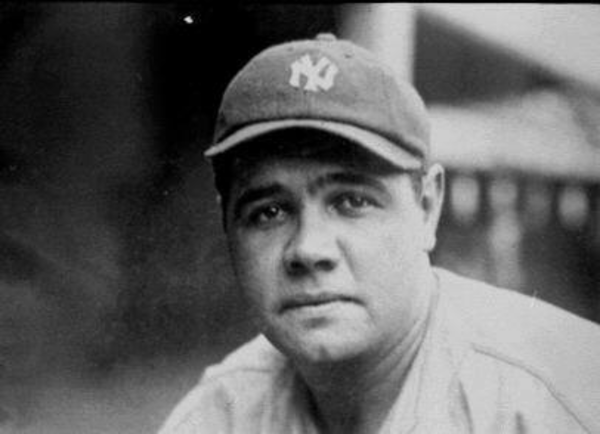
How would Babe Ruth, Lou Gehrig, and oth­er famous ballplay­ers of bygone eras fare if put on the dia­mond today? Vari­a­tions on that ques­tion tend to come up in con­ver­sa­tion among enthu­si­asts of base­ball and its his­to­ry, and dif­fer­ent peo­ple bring dif­fer­ent kinds of evi­dence to bear in search of an answer: sta­tis­tics, eye­wit­ness accounts, analo­gies between par­tic­u­lar his­tor­i­cal play­ers and cur­rent ones. But the fact remains that none of us have ever actu­al­ly seen the likes of Ruth, who played his last pro­fes­sion­al game in 1935, and Gehrig, who did so in 1939, in their prime. But now we can at least get a lit­tle clos­er by watch­ing the film clip above, which shows both of the titan­ic Yan­kees at bat­ting prac­tice on April 11, 1931.

What’s more, it shows them mov­ing at real-life speed. “Fox Movi­etone sound cam­eras made slow-motion cap­tures of Babe Ruth and Lou Gehrig at bat­ting prac­tice dur­ing an exhi­bi­tion prac­tice in Brook­lyn, New York,” writes uploader Guy Jones (whose oth­er base­ball videos include Ruth hit­ting a home run on open­ing day the same year and Ruth’s last appear­ance at bat a decade lat­er). “With mod­ern tech­nol­o­gy, we can wit­ness this footage adjust­ed to a nor­mal speed which results in a very high fram­er­ate.”

In oth­er words, the film shows Ruth and Gehrig not just mov­ing in the very same way they did in real life, but cap­tured with a smooth­ness uncom­mon in news­reel footage from the 1930s. For com­par­i­son, Jones includes at the end of the video “more footage of the prac­tice (shot at typ­i­cal fps) and the orig­i­nal un-edit­ed slow-mo cap­tures.”

Unfor­tu­nate­ly, what this film reveals does­n’t impress observers of mod­ern base­ball. “Ruth and Gehrig in no way look like a mod­ern ballplay­er,” writes The Big Lead­’s Kyle Koster. “Ruth is off-bal­ance, falling into his swing. Gehrig rou­tine­ly lifts his back foot off the ground. Again, it’s bat­ting prac­tice so the com­pet­i­tive juices weren’t flow­ing. But even by that stan­dard, the whole exer­cise looks slop­py and inef­fi­cient.” Cut4’s Jake Mintz gets harsh­er, as well as more tech­ni­cal: “Tell me Ruth’s cocka­mamie swing mechan­ics would enable him to hit a 98-mph heater.” As for the Iron Horse, his “hack is a lit­tle bet­ter,” but still “absurd­ly low” by today’s stan­dards. It goes to show, Mintz writes, that “these two leg­ends, while unde­ni­ably tran­scen­dent in their time, would be good Double‑A hit­ters at best if they played today.” We evolve, our tech­nolo­gies evolve, and so, it seems, do the games we play.

Relat­ed Con­tent:

Home Movies of Duke Elling­ton Play­ing Base­ball (And How Base­ball Coined the Word “Jazz”)

Read Online Haru­ki Murakami’s New Essay on How a Base­ball Game Launched His Writ­ing Career

Fritz Lang’s M: The Restored Ver­sion of the Clas­sic 1931 Film

Immac­u­late­ly Restored Film Lets You Revis­it Life in New York City in 1911

Based in Seoul, Col­in Mar­shall writes and broad­casts on cities, lan­guage, and cul­ture. His projects include the book The State­less City: a Walk through 21st-Cen­tu­ry Los Ange­les and the video series The City in Cin­e­ma. Fol­low him on Twit­ter at @colinmarshall or on Face­book.

Arnold Schoenberg, Avant-Garde Composer, Creates a System of Symbols for Notating Tennis Matches

This time each sum­mer, as the con­clu­sion of this year’s fort­night-long cham­pi­onship at Wim­ble­don approach­es, even the most pri­vate of the ten­nis enthu­si­asts in all of our cir­cles make them­selves known. Love of that par­tic­u­lar game runs down all walks of life, but seems to exist in par­tic­u­lar­ly high con­cen­tra­tions among cul­tur­al cre­ators: not just writ­ers like Mar­tin Amis, Geoff Dyer, and David Fos­ter Wal­lace, all of whose bod­ies of work con­tain elo­quent thoughts on ten­nis, but com­posers of music as well.

Take Arnold Schoen­berg, who well into his old age con­tin­ued not just to cre­ate the inno­v­a­tive music for which we remem­ber him, but to spend time on the court as well. Though born in Vien­na, Schoen­berg even­tu­al­ly land­ed in the right place to enjoy ten­nis on the reg­u­lar: south­ern Cal­i­for­nia, to which he fled in 1933 after being informed of how inhos­pitable his home­land would soon become to per­sons of Jew­ish her­itage. Few famous com­posers of that time had less in com­mon than Schoen­berg and George Gersh­win, but their shared enjoy­ment of ten­nis made them into fast part­ners.

Accord­ing to Howard Pol­lack­’s life of Gersh­win, fel­low com­pos­er Albert Sendrey left a “reveal­ing account” of one of the week­ly match­es between “the thir­ty-eight-year-old Gersh­win and the six­ty-two-year-old Schoen­berg, con­trast­ing the alter­nate­ly ‘ner­vous’ and ‘non­cha­lant,’ ‘relent­less’ and ‘chival­rous’ Gersh­win, ‘play­ing to an audi­ence,’ with the ‘over­ly eager’ and ‘chop­py’ Schoen­berg who ‘has learned to shut his mind against pub­lic opin­ion.’ ” Any par­al­lels between play­ing style and musi­cal sen­si­bil­i­ty are, of course, entire­ly coin­ci­den­tal.

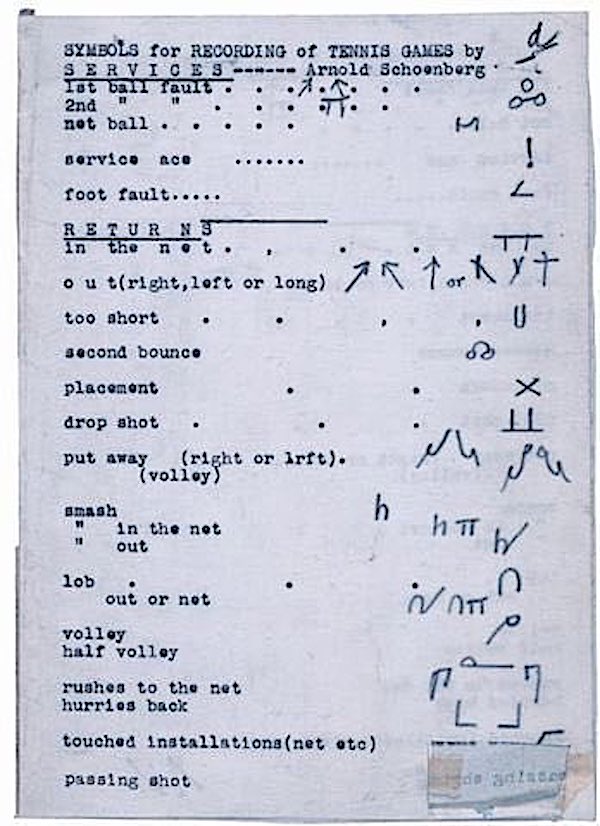
The cere­bral nature of Schoen­berg’s com­po­si­tions may not sug­gest a tem­pera­ment suit­ed for phys­i­cal activ­i­ty of any kind, but even in Aus­tria Schoen­berg had been a keen sports­man. And as a fair few ten­nis-lov­ing writ­ers have explained, the game does pos­sess an intel­lec­tu­al side, and one made more eas­i­ly ana­lyz­able, at least in the­o­ry, by a sys­tem of Schoen­berg’s inven­tion. “Toward the end of his life, Schoen­berg — always fas­ci­nat­ed by rules, analy­sis, and inven­tion — would come up with a form of nota­tion to tran­scribe the ten­nis match­es of his ath­lete son Ronald,” writes Mark Berry in Arnold Schoen­berg. You can see this sys­tem laid out on the sheet above, recent­ly post­ed on Twit­ter by Hen­ry Gough-Coop­er.

The marks look vague­ly sim­i­lar to those of cer­tain dance nota­tion sys­tems, a nat­ur­al enough resem­blance con­sid­er­ing the kind of foot­work ten­nis demands. But ide­al­ly, Schoen­berg’s nota­tion would also have ren­dered a game of ten­nis as com­pre­hen­si­ble as one of chess — anoth­er pur­suit to which Schoen­berg applied his mind. He came up with “an expand­ed four-play­er, ten-square ver­sion of the tra­di­tion­al game,” writes Berry, “involv­ing super­pow­ers and less­er pow­ers all com­pelled to forge alliances, with new pieces such as air­planes, tanks, sub­marines, and so forth.” Schoen­berg’s “coali­tion chess,” as he called it, seems to have caught on no more than his ten­nis nota­tion sys­tem did. But then, the man who pio­neered the twelve-tone tech­nique nev­er did go in for mass accep­tance.

via and Hen­ry Gough-Coop­er on Twit­ter

Relat­ed Con­tent:

Arnold Schoen­berg Cre­ates a Hand-Drawn, Paper-Cut “Wheel Chart” to Visu­al­ize His 12-Tone Tech­nique

Vi Hart Uses Her Video Mag­ic to Demys­ti­fy Stravin­sky and Schoenberg’s 12-Tone Com­po­si­tions

John Coltrane Draws a Pic­ture Illus­trat­ing the Math­e­mat­ics of Music

Nota­tions: John Cage Pub­lish­es a Book of Graph­ic Musi­cal Scores, Fea­tur­ing Visu­al­iza­tions of Works by Leonard Bern­stein, Igor Stravin­sky, The Bea­t­les & More (1969)

Bob Dylan and George Har­ri­son Play Ten­nis, 1969

Based in Seoul, Col­in Mar­shall writes and broad­casts on cities, lan­guage, and cul­ture. His projects include the book The State­less City: a Walk through 21st-Cen­tu­ry Los Ange­les and the video series The City in Cin­e­ma. Fol­low him on Twit­ter at @colinmarshall, on Face­book, or on Insta­gram.

A Wild 40-Minute Race Down Alpe D’Huez

Damien Oton, win­ner of last sum­mer’s Megavalanche, mount­ed a cam­era on his hel­met and record­ed his race down Alpe D’Huez. Buck­le in, and enjoy the exhil­a­rat­ing wild ride. Once you start, it’s hard to stop.

via Metafil­ter

If you would like to sup­port the mis­sion of Open Cul­ture, con­sid­er mak­ing a dona­tion to our site. It’s hard to rely 100% on ads, and your con­tri­bu­tions will help us con­tin­ue pro­vid­ing the best free cul­tur­al and edu­ca­tion­al mate­ri­als to learn­ers every­where. You can con­tribute through Pay­Pal, Patre­on, and Ven­mo (@openculture). Thanks!

« Go BackMore in this category... »
Quantcast