7 Tips from Edgar Allan Poe on How to Write Vivid Stories and Poems

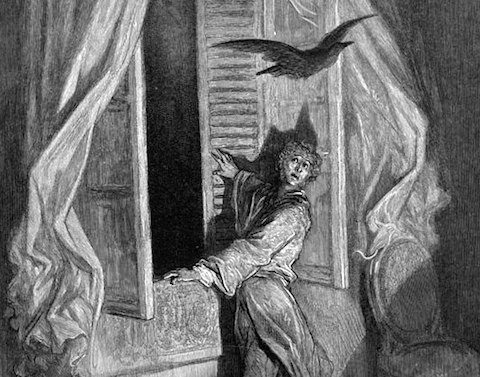
Paul_Gustave_Dore_Raven14

There may be no more a macabre­ly misog­y­nis­tic sen­tence in Eng­lish lit­er­a­ture than Edgar Allan Poe’s con­tention that “the death… of a beau­ti­ful woman” is “unques­tion­ably the most poet­i­cal top­ic in the world.” (His per­haps iron­ic obser­va­tion prompt­ed Sylvia Plath to write, over a hun­dred years lat­er, “The woman is per­fect­ed / Her dead / Body wears the smile of accom­plish­ment.”) The sen­tence comes from Poe’s 1846 essay “The Phi­los­o­phy of Com­po­si­tion,” and if this work were only known for its lit­er­ary fetishiza­tion of what Elis­a­beth Bron­fen calls “an aes­thet­i­cal­ly pleas­ing corpse”—marking deep anx­i­eties about both “female sex­u­al­i­ty and decay”—then it would indeed still be of inter­est to fem­i­nists and aca­d­e­mics, though not per­haps to the aver­age read­er.

But Poe has much more to say that does not involve a romance with dead women. The essay deliv­ers on its title’s promise. It is here that we find Poe’s famous the­o­ry of what good lit­er­a­ture is and does, achiev­ing what he calls “uni­ty of effect.” This lit­er­ary “total­i­ty” results from a col­lec­tion of essen­tial ele­ments that the author deems indis­pens­able in “con­struct­ing a sto­ry,” whether in poet­ry or prose, that pro­duces a “vivid effect.”

To illus­trate what he means, Poe walks us through an analy­sis of his own work, “The Raven.” We are to take for grant­ed as read­ers that “The Raven” achieves its desired effect. Poe has no mis­giv­ings about that. But how does it do so? Against com­mon­place ideas that writ­ers “com­pose by a species of fine frenzy—an ecsta­t­ic intu­ition,” Poe has not “the least dif­fi­cul­ty in recall­ing to mind the pro­gres­sive steps of any of my compositions”—steps he con­sid­ers almost “math­e­mat­i­cal.” Nor does he con­sid­er it a “breach of deco­rum” to pull aside the cur­tain and reveal his tricks. Below, in con­densed form, we have list­ed the major points of Poe’s essay, cov­er­ing the ele­ments he con­sid­ers most nec­es­sary to “effec­tive” lit­er­ary com­po­si­tion.

  1. Know the end­ing in advance, before you begin writ­ing.

“Noth­ing is more clear,” writes Poe, “than that every plot, worth the name, must be elab­o­rat­ed to its dénoue­ment before any thing be attempt­ed with the pen.” Once writ­ing com­mences, the author must keep the end­ing “con­stant­ly in view” in order to “give a plot its indis­pens­able air of con­se­quence” and inevitabil­i­ty.

  1. Keep it short—the “sin­gle sit­ting” rule.

Poe con­tends that “if any lit­er­ary work is too long to be read at one sit­ting, we must be con­tent to dis­pense with the immense­ly impor­tant effect deriv­able from uni­ty of impres­sion.” Force the read­er to take a break, and “the affairs of the world inter­fere” and break the spell. This “lim­it of a sin­gle sit­ting” admits of excep­tions, of course. It must—or the nov­el would be dis­qual­i­fied as lit­er­a­ture. Poe cites Robin­son Cru­soe as one exam­ple of a work of art “demand­ing of no uni­ty.” But the sin­gle sit­ting rule applies to all poems, and for this rea­son, he writes, Milton’s Par­adise Lost fails to achieve a sus­tained effect.

  1. Decide on the desired effect.

The author must decide in advance “the choice of impres­sion” he or she wish­es to leave on the read­er. Poe assumes here a tremen­dous amount about the abil­i­ty of authors to manip­u­late read­ers’ emo­tions. He even has the audac­i­ty to claim that the design of the “The Raven” ren­dered the work “uni­ver­sal­ly appre­cia­ble.” It may be so, but per­haps it does not uni­ver­sal­ly inspire an appre­ci­a­tion of Beau­ty that “excites the sen­si­tive soul to tears”—Poe’s desired effect for the poem.

  1. Choose the tone of the work.

Poe claims the high­est ground for his work, though it is debat­able whether he was entire­ly seri­ous. As “Beau­ty is the sole legit­i­mate province of the poem” in gen­er­al, and “The Raven” in par­tic­u­lar, “Melan­choly is thus the most legit­i­mate of all poet­i­cal tones.” What­ev­er tone one choos­es, how­ev­er, the tech­nique Poe employs, and rec­om­mends, like­ly applies. It is that of the “refrain”—a repeat­ed “key-note” in word, phrase, or image that sus­tains the mood. In “The Raven,” the word “Nev­er­more” per­forms this func­tion, a word Poe chose for its pho­net­ic as much as for its con­cep­tu­al qual­i­ties.

Poe claims that his choice of the Raven to deliv­er this refrain arose from a desire to rec­on­cile the unthink­ing “monot­o­ny of the exer­cise” with the rea­son­ing capa­bil­i­ties of a human char­ac­ter. He at first con­sid­ered putting the word in the beak of a par­rot, then set­tled on a Raven—“the bird of ill omen”—in keep­ing with the melan­choly tone.

  1. Deter­mine the theme and char­ac­ter­i­za­tion of the work.

Here Poe makes his claim about “the death of a beau­ti­ful woman,” and adds, “the lips best suit­ed for such top­ic are those of a bereaved lover.” He choos­es these par­tic­u­lars to rep­re­sent his theme—“the most melan­choly,” Death. Con­trary to the meth­ods of many a writer, Poe moves from the abstract to the con­crete, choos­ing char­ac­ters as mouth­pieces of ideas.

  1. Estab­lish the cli­max.

In “The Raven,” Poe says, he “had now to com­bine the two ideas, of a lover lament­ing his deceased mis­tress and a Raven con­tin­u­ous­ly repeat­ing the word ‘Nev­er­more.’” In bring­ing them togeth­er, he com­posed the third-to-last stan­za first, allow­ing it to deter­mine the “rhythm, the metre, and the length and gen­er­al arrange­ment” of the remain­der of the poem. As in the plan­ning stage, Poe rec­om­mends that the writ­ing “have its beginning—at the end.”

  1. Deter­mine the set­ting.

Though this aspect of any work seems the obvi­ous place to start, Poe holds it to the end, after he has already decid­ed why he wants to place cer­tain char­ac­ters in place, say­ing cer­tain things. Only when he has clar­i­fied his pur­pose and broad­ly sketched in advance how he intends to acheive it does he decide “to place the lover in his cham­ber… rich­ly fur­nished.” Arriv­ing at these details last does not mean, how­ev­er, that they are after­thoughts, but that they are suggested—or inevitably fol­low from—the work that comes before. In the case of “The Raven,” Poe tells us that in order to car­ry out his lit­er­ary scheme, “a close cir­cum­scrip­tion of space is absolute­ly nec­es­sary to the effect of insu­lat­ed inci­dent.”

Through­out his analy­sis, Poe con­tin­ues to stress—with the high degree of rep­e­ti­tion he favors in all of his writing—that he keeps “orig­i­nal­i­ty always in view.” But orig­i­nal­i­ty, for Poe, is not “a mat­ter, as some sup­pose, of impulse or intu­ition.” Instead, he writes, it “demands in its attain­ment less of inven­tion than nega­tion.” In oth­er words, Poe rec­om­mends that the writer make full use of famil­iar con­ven­tions and forms, but vary­ing, com­bin­ing, and adapt­ing them to suit the pur­pose of the work and make them his or her own.

Though some of Poe’s dis­cus­sion of tech­nique relates specif­i­cal­ly to poet­ry, as his own prose fic­tion tes­ti­fies, these steps can equal­ly apply to the art of the short sto­ry. And though he insists that depic­tions of Beau­ty and Death—or the melan­choly beau­ty of death—mark the high­est of lit­er­ary aims, one could cer­tain­ly adapt his for­mu­la to less obses­sive­ly mor­bid themes as well.

Relat­ed Con­tents:

Gus­tave Doré’s Splen­did Illus­tra­tions of Edgar Allan Poe’s “The Raven” (1884)

Edgar Allan Poe’s “The Raven,” Read by Christo­pher Walken, Vin­cent Price, and Christo­pher Lee

H.P. Love­craft Gives Five Tips for Writ­ing a Hor­ror Sto­ry, or Any Piece of “Weird Fic­tion”

Josh Jones is a writer and musi­cian based in Durham, NC. Fol­low him at @jdmagness

How Famous Writers Deal With Writer’s Block: Their Tips & Tricks

Near­ly everyone—from the most min­i­mal­ly edu­cat­ed to the most aca­d­e­m­i­cal­ly accomplished—has expe­ri­enced at least once that pan­icked loss for words col­lo­qui­al­ly known as “writer’s block.” Faced with the glacial expanse of a blank page, or screen, the fin­gers fum­ble, heart races, and the brain seizes up. And, for those who write for a liv­ing, for whom writ­ing is a defin­ing char­ac­ter­is­tic of their very exis­tence, it can seem like one’s very soul becomes imper­iled, aban­doned by the mus­es or what­ev­er fick­le per­son­i­fi­ca­tion of cre­ative inspi­ra­tion.

The mal­a­dy is seem­ing­ly uni­ver­sal, even, writes The Inde­pen­dent, among “some of history’s most famous, and prodi­gious­ly flu­ent, authors,” like Leo Tol­stoy, Vir­ginia Woolf, Ernest Hem­ing­way, and Joseph Con­rad. One par­tic­u­lar­ly per­fec­tion­is­tic strain of writer’s block—the search for le mot juste—is for­ev­er asso­ci­at­ed with Madame Bovary author Gus­tave Flaubert, who described the sick­ness to a friend as “stay[ing] a whole day with your head in your hands, try­ing to squeeze your unfor­tu­nate brain so as to find a word.” Clear­ly, such illus­tri­ous names as the above found some sort of cure for the block, or we may not know their names at all.

Some writ­ers deny the very exis­tence of writer’s block. Nov­el­ist Kathy Lette belit­tles the notion as sound­ing like a “prison wing for authors who make too many puns—a puni­ten­tiary,” and she claims that “women writ­ers don’t have time for writer’s block.” Jef­frey Archer says he has nev­er had writer’s block, even though he named his Major­ca home “Writer’s Block.” I diag­nose these authors with a severe form of psy­cho­log­i­cal repres­sion, per­haps brought on by extreme and trau­mat­ic bouts of writer’s block.

From even a cur­so­ry sur­vey of those who open­ly admit to the pain of run­ning out of things to say from time to time, it seems there are as many ways to get going again as there are writ­ers. The Inde­pen­dent quotes nov­el­ists like Philip Hen­sh­er, who takes “the Tube to the end of the line,” then walks back into cen­tral London—a very geo­graph­i­cal­ly exclu­sive fix, to be sure. A Fla­vor­wire list brings us reme­dies from Maya Angelou, who would “write for two weeks ‘the cat sat on the mat, that is that, not a rat’” until the muse returned to save her from insan­i­ty. Neil Gaiman takes an entire­ly dif­fer­ent approach—he gets up and walks away to “do oth­er things.” Though it may seem in moments of severe writer’s block that noth­ing else could pos­si­bly mat­ter, his tac­tic—research sug­gests—may be just the thing to get the cre­ative uncon­scious going again.

Speak­ing of the uncon­scious, Anne Lam­ott rec­om­mends to her stu­dents that they com­mit to writ­ing three hun­dred words on how much they hate writ­ing, then “on bad days and weeks, let things go at that… Your uncon­scious can’t work when you are breath­ing down its neck. You’ll sit there going, ‘Are you done in there yet, are you done in there yet?’” Not help­ful. In the videos above, see how pop­u­lar best-sell­ing nov­el­ist Dan Brown deals with a lag­gard­ly uncon­scious. Love, hate, or be indif­fer­ent to his work, but you must admit, his is a very nov­el method: Every hour, Brown gets up and does some pushups and sit-ups to “get the blood mov­ing,” since it’s very hard to write the kind of “fast-paced plots” he does “if your blood pressure’s dropped too far.” Brown also gives his brain a dai­ly sup­ply of fresh blood by hang­ing upside down each day, either in grav­i­ty boots or, as The Tele­graph video direct­ly above details, an “inver­sion table.”

Strange, but no more so than many oth­er writ­ers’ rit­u­als. Lau­rence Sterne, the eigh­teenth cen­tu­ry author of Tris­tram Shandy, had what may be my favorite design for con­quer­ing writer’s block: he would shave his beard, change his shirt and coat, send for a “bet­ter wig,” put on a topaz ring, and dress “after his best fash­ion.” Mock if you must, but it seems to me that no method of com­bat­ing writer’s block is too out­landish for those whose lives and liveli­hoods depend upon turn­ing out the words. We may not always like what we write—some days we may pos­i­tive­ly hate it—but there may be no worse, more use­less, feel­ing for a writer than being unable to write any­thing at all.

If you have your own sug­ges­tions for get­ting over writer’s block, please let us know in the com­ments below. We’d love to try them out.

Relat­ed Con­tent:

Why You Do Your Best Think­ing In The Show­er: Cre­ativ­i­ty & the “Incu­ba­tion Peri­od”

Writ­ing Tips by Hen­ry Miller, Elmore Leonard, Mar­garet Atwood, Neil Gaiman & George Orwell

Ray Brad­bury Gives 12 Pieces of Writ­ing Advice to Young Authors (2001)

Sev­en Tips From Ernest Hem­ing­way on How to Write Fic­tion

Josh Jones is a writer and musi­cian based in Durham, NC. Fol­low him at @jdmagness

Kurt Vonnegut Gives Advice to Aspiring Writers in a 1991 TV Interview

Remem­ber when tele­vi­sion was the big goril­la poised to put an end to all read­ing?

Then along came the mir­a­cle of the Inter­net. Blogs begat blogs, and thus­ly did the peo­ple start to read again!

Of course, many a great news­pa­per and mag­a­zine fell before its mighty engine. So it goes.

So did tele­vi­sion in the old fash­ioned sense. So it goes.

Fun­ny to think that these fast-mov­ing devel­op­ments weren’t even part of the land­scape in 1991, when author Kurt Von­negut swung by his home­town of Indi­anapo­lis to appear on the local pro­gram, Across Indi­ana.

Host Michael Atwood point­ed out the irony of a tele­vi­sion inter­view­er ask­ing a writer if tele­vi­sion was to blame for the decline in read­ing and writ­ing. After which he lis­tened polite­ly while his guest answered at length, com­par­ing read­ing to an acquired skill on par with “ice skat­ing or play­ing the French horn.”

Gee… irony elic­its a more fre­net­ic approach in the age of Buz­zFeed, Twit­ter, and YouTube. (Nailed it!)

Irony and human­i­ty run neck and neck in Vonnegut’s work, but his appre­ci­a­tion for his Hoosier upbring­ing was nev­er less than sin­cere:

When I was born in 1922, bare­ly a hun­dred years after Indi­ana became the 19th state in the Union, the Mid­dle West already boast­ed a con­stel­la­tion of cities with sym­pho­ny orches­tras and muse­ums and libraries, and insti­tu­tions of high­er learn­ing, and schools of music and art, rem­i­nis­cent of the Aus­tro-Hun­gar­i­an Empire before the First World War. One could almost say that Chica­go was our Vien­na, Indi­anapo­lis our Prague, Cincin­nati our Budapest and Cleve­land our Bucharest.

To grow up in such a city, as I did, was to find cul­tur­al insti­tu­tions as ordi­nary as police sta­tions or fire hous­es. So it was rea­son­able for a young per­son to day­dream of becom­ing some sort of artist or intel­lec­tu­al, if not a police­man or fire­man. So I did. So did many like me.

Such provin­cial cap­i­tals, which is what they would have been called in Europe, were charm­ing­ly self-suf­fi­cient with respect to the fine arts. We some­times had the direc­tor of the Indi­anapo­lis Sym­pho­ny Orches­tra to sup­per, or writ­ers and painters, and archi­tects like my father, of local renown.

I stud­ied clar­inet under the first chair clar­inetist of our orches­tra. I remem­ber the orchestra’s per­for­mance of Tchaikovsky’s 1812 Over­ture, in which the can­nons’ roars were sup­plied by a police­man fir­ing blank car­tridges into an emp­ty garbage can. I knew the police­man. He some­times guard­ed street cross­ings used by stu­dents on their way to or from School 43, my school, the James Whit­comb Riley School.  

Vonnegut’s views were shaped at Short­ridge High School, where he num­bered among the many not-yet-renowned writ­ers hon­ing their craft on The Dai­ly Echo. Thought he did­n’t bring it up in the video above, the Echo also yield­ed his nick­name: Snarf.

Von­negut agreed with inter­view­er Atwood that the dai­ly prac­tice of keep­ing a jour­nal is an excel­lent dis­ci­pline for begin­ning writ­ers. He also con­sid­ered jour­nal­is­tic assign­ments a great train­ing ground. He made a point of men­tion­ing that Mark Twain and Ring Lard­ner got their starts as news­pa­per reporters. It may be hard­er for aspir­ing writ­ers to find pay­ing work these days, but the Inter­net is replete with oppor­tu­ni­ties for those who crave a dai­ly assign­ment.

It’s also over­flow­ing with bul­let point­ed lists on how to become a writer, but if you’re like me, you’ll pre­fer to receive this advice from Von­negut, him­self, on a set fes­tooned with farm­ing imple­ments, quilts, and dipped can­dles.

The inter­view con­tin­ues in the remain­ing parts:

Part 2

Part 3

Part 4

Relat­ed Con­tent:

Kurt Von­negut Reads Slaugh­ter­house-Five

Kurt Von­negut: Where Do I Get My Ideas From? My Dis­gust with Civ­i­liza­tion

Kurt Von­negut Explains “How to Write With Style”

Kurt Von­negut Dia­grams the Shape of All Sto­ries in a Master’s The­sis Reject­ed by U. Chica­go

Ayun Hal­l­i­day is an author, home­school­er, and Chief Pri­ma­tol­o­gist of the East Vil­lage Inky zine. Like Von­negut, she’s a native of Indi­anapo­lis, and her moth­er was the edi­tor of the Short Ridge Dai­ly Echo. Fol­low her @AyunHalliday

H.P. Lovecraft Highlights the 20 “Types of Mistakes” Young Writers Make

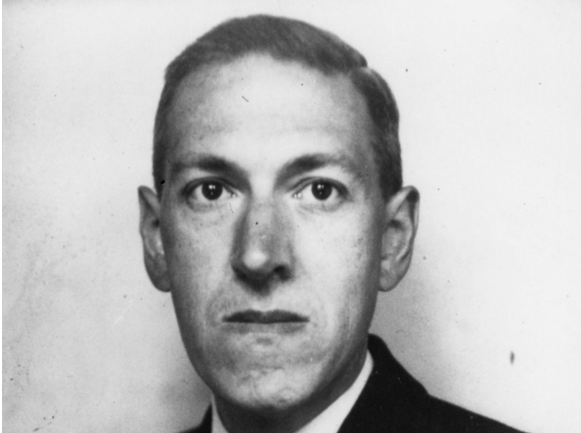
lovecraft hp

Image by Lucius B. Trues­dell, via Wiki­me­dia Com­mons

H.P. Love­craft is remem­bered as a bril­liant fan­ta­sist, a cre­ator of a com­plete­ly unique uni­verse of hor­ror. He’s also remem­bered, unfor­tu­nate­ly, as a big­ot. But the author whose head—to the cha­grin of some—provided the mod­el for the World Fan­ta­sy Award is not often remem­bered as a par­tic­u­lar­ly good writer. Or rather, I should say, a par­tic­u­lar­ly good styl­ist. His writ­ing can sound sti­fling­ly archa­ic, over­stuffed with Vic­to­ri­anisms. “His prose, “writes Scott Malt­house, “can be turgid and adjec­tives suf­fo­cat­ing,” and “his char­ac­ters tend to be as thin as the paper they’re print­ed on.”

Writ­ers love him, Malt­house argues, because he was such an orig­i­nal “world builder,” not because he was a fine artist. Eliz­a­beth Bear at Tor echoes the sen­ti­ment, writ­ing that Love­craft’s work is “crit­i­cized for its style, for its pur­ple­ness and den­si­ty and fail­ures of struc­ture,” yet still evokes such a potent response that “the Love­craft­ian uni­verse must be con­sid­ered a col­lab­o­ra­tive effort at this point,” since so many writ­ers have fur­thered his “appeal­ing­ly bleak” vision. You can down­load a good part of his col­lect­ed works in ebook and audio­book for­mats here.

So per­haps he isn’t such a bad writer after all? In any case, he’s cer­tain­ly a very dis­tinc­tive one whose style, like Joseph Conrad’s, say, or even William Faulkner’s, endears read­ers pre­cise­ly for its fever­ish excess­es. Love­craft him­self was very self-con­scious about his craft and took writ­ing very seriously—enough to have pub­lished a lengthy, high­ly detailed essay called “Lit­er­ary Com­po­si­tion” which tack­les in sev­er­al para­graphs a host of issues the writer must con­tend with: gram­mar, “read­ing,” vocab­u­lary, “ele­men­tal phras­es,” descrip­tion, nar­ra­tion, “fic­tion­al nar­ra­tion,” “uni­ty, mass, coher­ence,” and “forms of com­po­si­tion.” We won’t recite the whole of his advice here—you can read the whole thing for your­self. But to give you some of the fla­vor of Lovecraft’s ped­a­gogy, we bring you his list of twen­ty “types of mis­takes” young writ­ers make.

See his com­plete list below.

  1. Erro­neous plu­rals of nouns, as val­lies or echos.
  2. Bar­barous com­pound nouns, as view­point or upkeep.
  3. Want of cor­re­spon­dence in num­ber between noun and verb where the two are wide­ly sep­a­rat­ed or the con­struc­tion involved
  4. Ambigu­ous use of pro­nouns.
  5. Erro­neous case of pro­nouns, as whom for who, and vice ver­sa, or phras­es like “between you and I,” or “Let we who are loy­al, act prompt­ly.”
  6. Erro­neous use of shall and will, and of oth­er aux­il­iary verbs.
  7. Use of intran­si­tive for tran­si­tive verbs, as “he was grad­u­at­ed from col­lege,” or vice ver­sa, as “he ingra­ti­at­ed with the tyrant.”
  8. Use of nouns for verbs, as “he motored to Boston,” or “he voiced a protest,”
  9. Errors in moods and tens­es of verbs, as “If I was he, I should do oth­er­wise”, or “He said the earth was
  10. The split infini­tive, as “to calm­ly ”
  11. The erro­neous per­fect infini­tive, as “Last week I expect­ed to have met
  12. False verb-forms, as “I pled with him.”
  13. Use of like for as, as “I strive to write like Pope wrote.”
  14. Mis­use of prepo­si­tions, as “The gift was bestowed to an unwor­thy object,” or “The gold was divid­ed between the five men.”
  15. The super­flu­ous con­junc­tion, as “I wish for you to do this.”
  16. Use of words in wrong sens­es, as “The book great­ly intrigued me”, “Leave me take this”, “He was obsessed with the idea”, or “He is a metic­u­lous
  17. Erro­neous use of non-Angli­cised for­eign forms, as “a strange phe­nom­e­na”, or “two stratas of clouds”.
  18. Use of false or unau­tho­rised words, as bur­glarise or supremest.
  19. Errors of taste, includ­ing vul­garisms, pompous­ness, rep­e­ti­tion, vague­ness, ambigu­ous­ness, col­lo­qui­al­ism, bathos, bom­bast, pleonasm, tau­tol­ogy, harsh­ness, mixed metaphor, and every sort of rhetor­i­cal awk­ward­ness.
  20. Errors of spelling and punc­tu­a­tion, and con­fu­sion of forms such as that which leads many to place an apos­tro­phe in the pos­ses­sive pro­noun its.

Most of this is sol­id, com­mon sense writ­ing advice. Some of it isn’t. As with all things Love­craft, you would be wise to use your dis­cre­tion. A full read of Lovecraft’s trea­tise on com­po­si­tion will give you some sense of how to begin writ­ing your own Love­craft pas­tiche. For even more of his advice on the writ­ing of fiction—particularly, as he called it, “weird fic­tion,” see his list of five tips for hor­ror writ­ing, which we fea­tured in Octo­ber.

Relat­ed Con­tent:

H.P. Love­craft Gives Five Tips for Writ­ing a Hor­ror Sto­ry, or Any Piece of “Weird Fic­tion”

H.P. Lovecraft’s Clas­sic Hor­ror Sto­ries Free Online: Down­load Audio Books, eBooks & More

Love­craft: Fear of the Unknown (Free Doc­u­men­tary)

Stephen King’s Top 20 Rules for Writ­ers

Writ­ing Tips by Hen­ry Miller, Elmore Leonard, Mar­garet Atwood, Neil Gaiman & George Orwell

Josh Jones is a writer and musi­cian based in Durham, NC. Fol­low him at @jdmagness

Lynda Barry’s Wonderfully Illustrated Syllabus & Homework Assignments from Her UW-Madison Class, “The Unthinkable Mind”

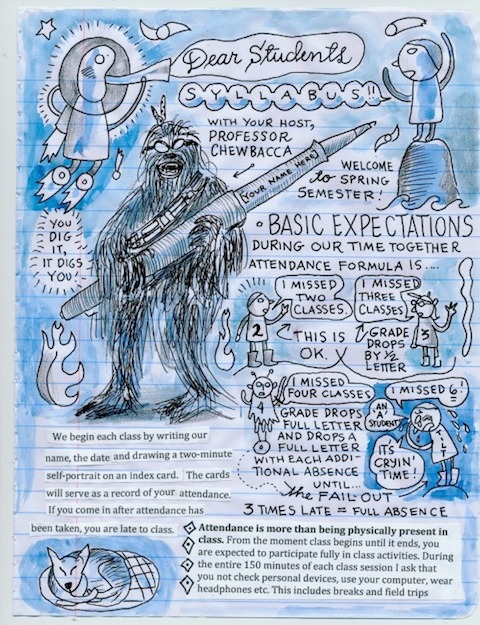
Lynda Barry Syllabus

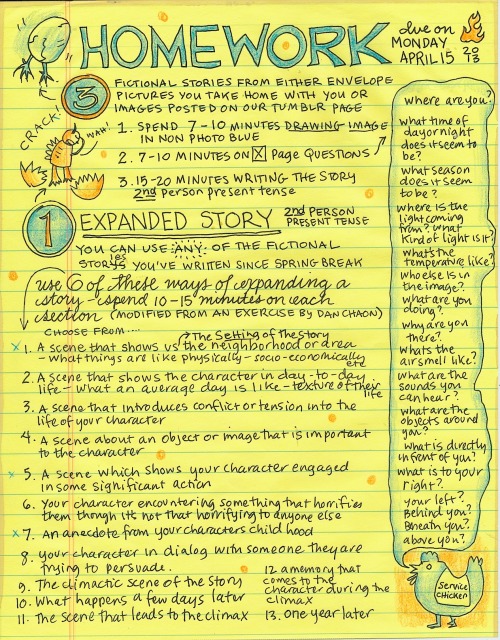
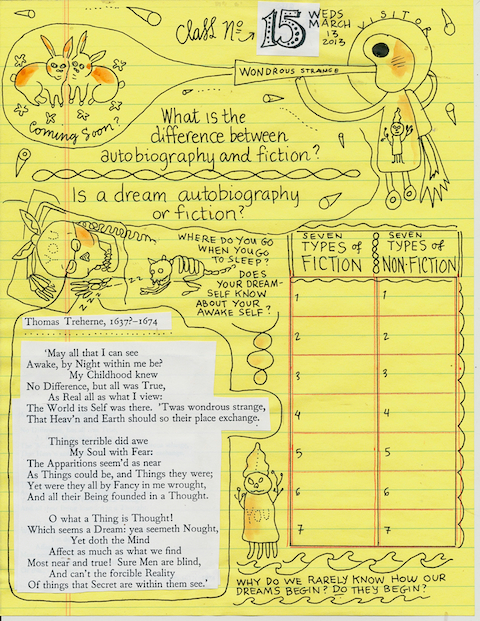
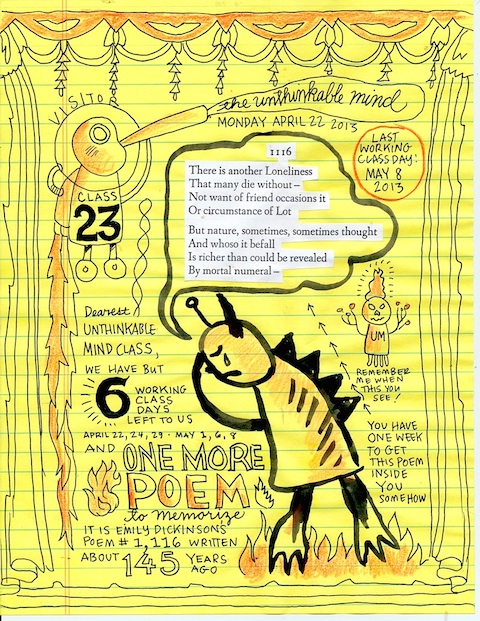
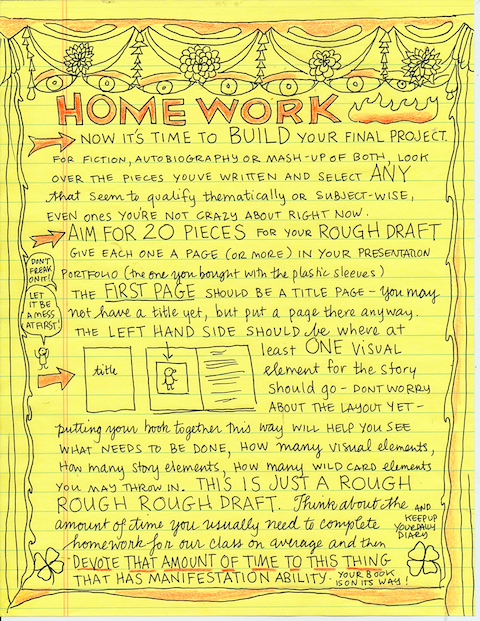
Our rev­er­ence for car­toon­ist Lyn­da Bar­ry, aka Pro­fes­sor Chew­bac­ca, aka The Near Sight­ed Mon­key is no secret. We hope some­day to expe­ri­ence the plea­sure of her live teach­ings. ’Til then, we creep on her Tum­blr page, fol­low­ing with home­work assign­ments, writ­ing exer­cis­es and les­son plans intend­ed for stu­dents who take her class, “The Unthink­able Mind,” at the Uni­ver­si­ty of Wis­con­sin.

And now, those course mate­ri­als have been col­lect­ed as Syl­labus: Notes from an Acci­den­tal Pro­fes­sor, an old fash­ioned, tan­gi­ble book. It’s like a paper MOOC!

(Yes, we know, MOOCs are free. This will be too, if you add it to your hol­i­day wish list, or insist that your local library orders a copy.)

Barry 2

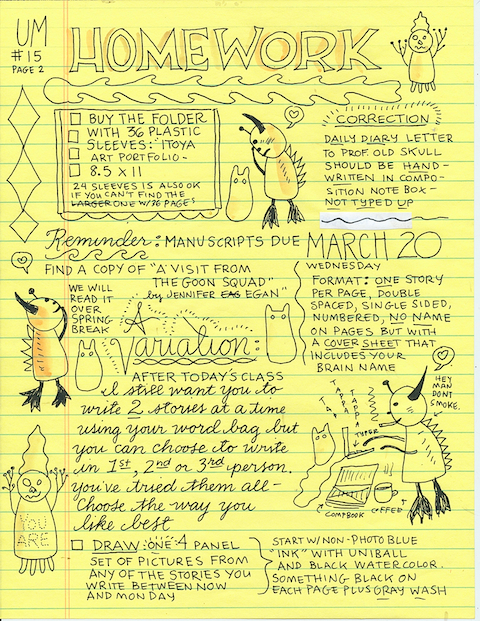
Barry’s march­ing orders are always to be exe­cut­ed on paper, even when they have been retrieved on smart­phones, tablets, and a vari­ety of oth­er screens. They are the antithe­sis of dry. A less acci­den­tal pro­fes­sor might have dis­pensed with the doo­dle encrust­ed, lined yel­low legal paper, after pri­vate­ly out­lin­ing her game plan. Barry’s choice to pre­serve and share the method behind her mad­ness is a gift to stu­dents, and to her­self.

barry homework

As Hillary L. Chute notes in Graph­ic Women: Life Nar­ra­tive and Con­tem­po­rary Comics:

 The decon­tex­tu­al­iza­tion of cheap, com­mon, or util­i­tar­i­an paper (which also harkens back to the his­tor­i­cal avant-garde) may be under­stood as a trans­val­u­a­tion of the idea of work­ing on “waste” –a know­ing, iron­ic acknowl­edg­ment on Barry’s part that her life nar­ra­tive, itself per­haps con­sid­ered insignif­i­cant, is visu­al­ized in an acces­si­ble pop­u­lar medi­um, comics, that is still large­ly viewed as “garbage.”

Work­ing on “garbage” must come as a relief for some­one like Bar­ry, who has talked about grow­ing up under a hos­tile moth­er who saw her daughter’s cre­ative impuls­es as a “waste” of paper:

I got screamed at a lot for using up paper. The only blank paper in the house was hers, and if she found out I touched it she’d go crazy. I some­times stole paper from school and even that made her mad. I think it’s why I hoard paper to this day. I have so much blank paper every­where, in every draw­er, on every shelf, and still when I need a sheet I look in the garbage first. I ago­nize over using a “good” sheet of paper for any­thing. I have good draw­ing paper I’ve been drag­ging around for twen­ty years because I’m not good enough to use it yet. Yes, I know this is insane.

Sam­ple assign­ments from “The Unthink­able Mind” are above and below, and you will find many more in Syl­labus: Notes from an Acci­den­tal Pro­fes­sor. Let us know if Pro­fes­sor Chew­bac­ca’s neu­ro­log­i­cal assump­tions are cor­rect. Does draw­ing and writ­ing by hand release the mon­sters from the id and squelch the inter­nal edi­tor who is the ene­my of art?

Barry 1

Barry 3

Barry 4

Relat­ed Con­tent:

Join Car­toon­ist Lyn­da Bar­ry for a Uni­ver­si­ty-Lev­el Course on Doo­dling and Neu­ro­science

Car­toon­ist Lyn­da Bar­ry Reveals the Best Way to Mem­o­rize Poet­ry

Lyn­da Bar­ry, Car­toon­ist Turned Pro­fes­sor, Gives Her Old Fash­ioned Take on the Future of Edu­ca­tion

1,700 Free Online Cours­es from Top Uni­ver­si­ties

Ayun Hal­l­i­day is an author, home­school­er, and Chief Pri­ma­tol­o­gist of the East Vil­lage Inky zine. Fol­low her @AyunHalliday

Naropa Archive Presents 5,000 Hours of Audio Recordings of William Burroughs, Allen Ginsberg & Other Beat Writers

Image via Chris­ti­aan Ton­nis

Schools like Har­vard, Oxford, and the Sor­bonne sure­ly have qual­i­ties to rec­om­mend them, but to my mind, noth­ing would feel quite as cool as say­ing your degree comes from the Jack Ker­ouac School of Dis­em­bod­ied Poet­ics. If you aspire to say it your­self, you’ll have to apply to Naropa Uni­ver­si­ty, which Tibetan Bud­dhist teacher (and, inci­den­tal­ly, Oxford schol­ar) Chö­gyam Trung­pa estab­lished in Boul­der, Col­orado in 1974. This rare, accred­it­ed, “Bud­dhist-inspired” Amer­i­can school has many unusu­al qual­i­ties, as you’d expect, but, as many of us remem­ber from our teenage years, your choice of uni­ver­si­ty has as much to do with who has passed through its halls before as what you think you’ll find when you pass through them. Naropa, besides nam­ing a school after the late Ker­ouac has host­ed the likes of Allen Gins­berg, Anne Wald­man, William S. Bur­roughs, Gre­go­ry Cor­so, Philip Whalen, and Lawrence Fer­linghet­ti.

But you don’t actu­al­ly have to attend Naropa to par­take of its Beat lega­cy. At the Naropa Poet­ics Audio Archives, freely brows­able at the Inter­net Archive, you can hear over 5000 hours of read­ings, lec­tures, per­for­mances, sem­i­nars, pan­els, and work­shops record­ed at the school and fea­tur­ing the afore­men­tioned lumi­nar­ies and many oth­ers. “The Beat writ­ers had inter­vened on the cul­ture,” says Wald­man in an inter­view about her book Beats at Naropa. “It wasn’t just a mat­ter of sim­ply offer­ing the usu­al kind of writ­ing work­shops, but read­ing and think­ing lec­tures, pan­els, pre­sen­ta­tions as well. The Beat writ­ers have been excep­tion­al as polit­i­cal and cul­tur­al activists, inves­tiga­tive work­ers, trans­la­tors, Bud­dhists, envi­ron­men­tal activists, fem­i­nists, seers. There’s so much leg­endary his­to­ry here.” Empha­sis — I repeat, 5000 hours — on so much.

To help you dive into this leg­endary his­to­ry, we’ve round­ed up today some pre­vi­ous­ly fea­tured high­lights from Naropa. Begin here, and if you keep going, you’ll dis­cov­er vari­eties of Beat expe­ri­ence even we’ve nev­er had — and maybe you’ll even con­sid­er putting in a Ker­ouac School appli­ca­tion, and doing some cul­tur­al inter­ven­tion of your own.

Enter the Naropa Audio Archive here.

Relat­ed Con­tent:

Allen Gins­berg Reads His Famous­ly Cen­sored Beat Poem, Howl (1959)

Take First-Class Phi­los­o­phy Cours­es Any­where with Free Oxford Pod­casts

Sci­ence & Cook­ing: Har­vard Profs Meet World-Class Chefs in Unique Online Course

Col­in Mar­shall hosts and pro­duces Note­book on Cities and Cul­ture and writes essays on cities, lan­guage, Asia, and men’s style. He’s at work on a book about Los Ange­les, A Los Ange­les Primer. Fol­low him on Twit­ter at @colinmarshall or on Face­book.

David Foster Wallace’s Syllabus for His 2008 Creative Nonfiction Course: Includes Reading List & Footnotes

The_best_people_you_will_ever_know

Pho­to cour­tesy of Clau­dia Sher­man.

The term “cre­ative non­fic­tion” has picked up a great deal of trac­tion over the past decade — per­haps too much, depend­ing upon how valid or invalid you find it. Mean­ing­ful or not, the label has come into its cur­rent pop­u­lar­i­ty in part thanks to the essays of nov­el­ist David Fos­ter Wal­lace: whether writ­ing non­fic­tion­al­ly about the Illi­nois State Fair, David Lynch, pro­fes­sion­al ten­nis, or a sev­en-night Caribbean cruise, he did it in a way unlike any oth­er man or woman of let­ters. While nobody can learn to write quite like him — this we’ve seen when Wal­lace-imi­ta­tors write pas­tich­es of their own — he did spend time teach­ing the art of cre­ative non­fic­tion as he saw it,

a broad cat­e­go­ry of prose works such as per­son­al essays and mem­oirs, pro­files, nature and trav­el writ­ing, nar­ra­tive essays, obser­va­tion­al or descrip­tive essays, gen­er­al-inter­est tech­ni­cal writ­ing, argu­men­ta­tive or idea-based essays, gen­er­al-inter­est crit­i­cism, lit­er­ary jour­nal­ism, and so on. The term’s con­stituent words sug­gest a con­cep­tu­al axis on which these sorts of prose works lie. As non­fic­tion, the works are con­nect­ed to actu­al states of affairs in the world, are “true” to some reli­able extent. If, for exam­ple, a cer­tain event is alleged to have occurred, it must real­ly have occurred; if a propo­si­tion is assert­ed, the read­er expects some proof of (or argu­ment for) its accu­ra­cy. At the same time, the adjec­tive cre­ative sig­ni­fies that some goal(s) oth­er than sheer truth­ful­ness moti­vates the writer and informs her work. This cre­ative goal, broad­ly stat­ed, may be to inter­est read­ers, or to instruct them, or to enter­tain them, to move or per­suade, to edi­fy, to redeem, to amuse, to get read­ers to look more close­ly at or think more deeply about some­thing that’s worth their atten­tion… or some combination(s) of these.

This comes straight from the syl­labus of Eng­lish 183D, a work­shop Wal­lace taught at Pomona Col­lege in the spring of 2008, which you can read in its entire­ty at Salon (reprint­ed from The David Fos­ter Wal­lace Read­er). As you may remem­ber from the pre­vi­ous Wal­lace syl­labus we fea­tured, from a 1994 semes­ter of Eng­lish 102 — Lit­er­ary Analy­sis I: Prose Fic­tion at Illi­nois State Uni­ver­si­ty, the man could real­ly assem­ble a read­ing list. For his cre­ative non­fic­tion course, he had stu­dents read Jo Ann Beard’s “Wern­er,” Stephen Elliott’s “Where I Slept,” George Orwell’s clas­sic “Pol­i­tics and the Eng­lish Lan­guage,” Don­na Steiner’s “Cold,” David Gessner’s “Learn­ing to Surf,” Kathryn Harrison’s “The For­est of Mem­o­ry,” Hes­ter Kaplan’s “The Pri­vate Life of Skin,” and George Saunders’s “The Brain­dead Mega­phone.”

In some ways, Wal­lace syl­labi them­selves count as pieces of cre­ative non­fic­tion. What oth­er pro­fes­sor ever had the prose chops to make you actu­al­ly want to read any­thing under the “Class Rules & Pro­ce­dures” head­ing? In the ninth of its thir­teen points, he lays out the work­shop’s oper­a­tive belief:

that you’ll improve as a writer not just by writ­ing a lot and receiv­ing detailed crit­i­cism but also by becom­ing a more sophis­ti­cat­ed and artic­u­late crit­ic of oth­er writ­ers’ work. You are thus required to read each of your col­leagues’ essays at least twice, mak­ing help­ful and spe­cif­ic com­ments on the man­u­script copy wher­ev­er appro­pri­ate. You will then com­pose a one-to-three-page let­ter to the essay’s author, com­mu­ni­cat­ing your sense of the draft’s strengths and weak­ness­es and mak­ing clear, spe­cif­ic sug­ges­tions for revi­sion.

But what­ev­er the rig­ors of Eng­lish 183D, Wal­lace would have suc­ceed­ed, to my mind, if he’d instilled noth­ing more than this in the minds of his depart­ing stu­dents:

In the grown-up world, cre­ative non­fic­tion is not expres­sive writ­ing but rather com­mu­nica­tive writ­ing. And an axiom of com­mu­nica­tive writ­ing is that the read­er does not auto­mat­i­cal­ly care about you (the writer), nor does she find you fas­ci­nat­ing as a per­son, nor does she feel a deep nat­ur­al inter­est in the same things that inter­est you.

True to form, DFW’s syl­labus comes com­plete with foot­notes.

1 (A good dic­tio­nary and usage dic­tio­nary are strong­ly rec­om­mend­ed. You’re insane if you don’t own these already.)

You can read the Cre­ative Non­fic­tion syl­labus in full here.

Relat­ed Con­tent:

30 Free Essays & Sto­ries by David Fos­ter Wal­lace on the Web

David Fos­ter Wallace’s 1994 Syl­labus: How to Teach Seri­ous Lit­er­a­ture with Light­weight Books

Read David Fos­ter Wallace’s Notes From a Tax Account­ing Class, Tak­en to Help Him Write The Pale King

David Fos­ter Wal­lace Breaks Down Five Com­mon Word Usage Mis­takes in Eng­lish

Col­in Mar­shall hosts and pro­duces Note­book on Cities and Cul­ture and writes essays on cities, lan­guage, Asia, and men’s style. He’s at work on a book about Los Ange­les, A Los Ange­les Primer. Fol­low him on Twit­ter at @colinmarshall or on Face­book.

Kurt Vonnegut Explains “How to Write With Style”

vonnegut-how-to-write-with-style

If you feel the need for tips on devel­op­ing a writ­ing style, you prob­a­bly don’t look right to the Insti­tute of Elec­tri­cal and Elec­tron­ics Engi­neers’ jour­nal Trans­ac­tions on Pro­fes­sion­al Com­mu­ni­ca­tions. You cer­tain­ly don’t open such a pub­li­ca­tion expect­ing such tips from nov­el­ist Kurt Von­negut, a writer with a style of his own if ever there was one.

But in a 1980 issue, the author of Slaugh­ter­house-FiveJail­bird, and Cat’s Cra­dle does indeed appear with advice on “how to put your style and per­son­al­i­ty into every­thing you write.” What’s more, he does it in an ad, part of a series from the Inter­na­tion­al Paper Com­pa­ny called “The Pow­er of the Print­ed Word,” osten­si­bly meant to address the need, now that “the print­ed word is more vital than ever,” for “all of us to read bet­ter, write bet­ter, and com­mu­ni­cate bet­ter.”

This arguably holds much truer now, giv­en the explo­sion of tex­tu­al com­mu­ni­ca­tion over the inter­net, than it did in 1980. And so which of Von­negut’s words of wis­dom can still help us con­vey our words of wis­dom? You can read the full PDF of this two-page piece of ad-uca­tion here, but some excerpt­ed points fol­low:

  • Find a sub­ject you care about. “Find a sub­ject you care about and which you in your heart feel oth­ers should care about. It is this gen­uine car­ing, and not your games with lan­guage, which will be the most com­pelling and seduc­tive ele­ment in your style. I am not urg­ing you to write a nov­el, by the way — although I would not be sor­ry if you wrote one, pro­vid­ed you gen­uine­ly cared about some­thing. A peti­tion to the may­or about a pot­hole in front of your house or a love let­ter to the girl next door will do.”
  • Keep it sim­ple. “As for your use of lan­guage: Remem­ber that two great mas­ters of lan­guage, William Shake­speare and James Joyce, wrote sen­tences which were almost child­like when their sub­jects were most pro­found. ‘To be or not to be?’ asks Shake­speare’s Ham­let. The longest word is three let­ters long. Joyce, when he was frisky, could put togeth­er a sen­tence as intri­cate and as glit­ter­ing as a neck­lace for Cleopa­tra, but my favorite sen­tence in his short sto­ry ‘Eve­line’ is this one: ‘She was tired.’ At that point in the sto­ry, no oth­er words could break the heart of a read­er as those three words do.”
  • Sound like your­self. “Eng­lish was Con­rad’s third lan­guage, and much that seems piquant in his use of Eng­lish was no doubt col­ored by his first lan­guage, which was Pol­ish. And lucky indeed is the writer who has grown up in Ire­land, for the Eng­lish spo­ken there is so amus­ing and musi­cal. I myself grew up in Indi­anapo­lis, where com­mon speech sounds like a band saw cut­ting gal­va­nized tin, and employs a vocab­u­lary as unor­na­men­tal as a mon­key wrench. [ … ] No mat­ter what your first lan­guage, you should trea­sure it all your life. If it hap­pens to not be stan­dard Eng­lish, and if it shows itself when your write stan­dard Eng­lish, the result is usu­al­ly delight­ful, like a very pret­ty girl with one eye that is green and one that is blue. I myself find that I trust my own writ­ing most, and oth­ers seem to trust it most, too, when I sound most like a per­son from Indi­anapo­lis, which is what I am. What alter­na­tives do I have?”
  • Say what you mean. “My teach­ers wished me to write accu­rate­ly, always select­ing the most effec­tive words, and relat­ing the words to one anoth­er unam­bigu­ous­ly, rigid­ly, like parts of a machine. They hoped that I would become under­stand­able — and there­fore under­stood. And there went my dream of doing with words what Pablo Picas­so did with paint or what any num­ber of jazz idols did with music. If I broke all the rules of punc­tu­a­tion, had words mean what­ev­er I want­ed them to mean, and strung them togeth­er hig­gledy-pig­gledy, I would sim­ply not be under­stood. Read­ers want our pages to look very much like pages they have seen before. Why? This is because they them­selves have a tough job to do, and they need all the help they can get from us.”

While easy to remem­ber, Von­negut’s plain­spo­ken rules could well take an entire career to mas­ter. I’ll cer­tain­ly keep writ­ing on the sub­jects I care most about — many of them on dis­play right here on Open Cul­ture — keep­ing it as sim­ple as I can bear, say­ing what I mean, and sound­ing like… well, a root­less west-coast­er, I sup­pose, but one ques­tion sticks in my mind: which cor­po­ra­tion will step up today to turn out writ­ing advice from our most esteemed men and women of let­ters?

via Bib­liok­lept

Relat­ed Con­tent:

Toni Mor­ri­son Dis­pens­es Writ­ing Wis­dom in 1993 Paris Review Inter­view

Kurt Vonnegut’s Eight Tips on How to Write a Good Short Sto­ry

Ray Brad­bury Offers 12 Essen­tial Writ­ing Tips and Explains Why Lit­er­a­ture Saves Civ­i­liza­tion

Stephen King’s Top 20 Rules for Writ­ers

The Best Writ­ing Advice Pico Iyer Ever Received

Col­in Mar­shall hosts and pro­duces Note­book on Cities and Cul­ture and writes essays on cities, lan­guage, Asia, and men’s style. He’s at work on a book about Los Ange­les, A Los Ange­les Primer. Fol­low him on Twit­ter at @colinmarshall or on Face­book.

« Go BackMore in this category... »
Quantcast