Watch 450 NPR Tiny Desk Concerts: Intimate Performances from The Pixies, Adele, Wilco, Yo-Yo Ma & Many More
In times past, happening upon just the right radio station, record store, or tape trading community were some of the few serendipitous ways of discovering new music. And in those days, one faithful curator of innovative new sounds, BBC DJ John Peel, never disappointed. Because of a law limiting the amount of recorded music radio could play, his name became synonymous with the hundreds of intimate performances punk, new wave, reggae, and other bands recorded live in his studio. While the “Peel Sessions” will forever live in legend (stream some here), the man himself passed away in 2004, and the musical landscape he helped create has changed irrevocably.
And yet, Peel’s animating spirit lives on, most especially in NPR’s Tiny Desk Concerts, live in-studio performances recorded “at the desk of All Songs Considered host Bob Boilen.” Since 2008, Boilen has invited established and up-and-coming artists alike to his desk, capturing loose, unguarded, stripped-down, performances that sound like they’re happening in your living room.
Guitarists unplug, drummers trade their sticks for brushes, and we not only get to listen to old and new favorites; we get to watch them—like the Pixies at the top—up close as well. This performance, from 2014, garnered “the largest crowd we’d ever assembled for a Tiny Desk Concert,” writes Boilen, and featured newest member Paz Lenchantin trading her bass for violin.
Where the Pixies usually fill arenas with their eerily-quiet-to-deafeningly-loud songs, the group further up, Dirty Dozen Band, can easily fill public squares, football fields, and parade routes without stacks of overdriven amps. Hearing them explode in Boilen’s office with their rambunctious funk is a real treat, as is the larger-than-life voice of Adele, above, scaled down to college coffeehouse levels of closeness.
Though Tiny Desk Concerts often showcase pop, hip-hop, folk, country, and indie stars—like Wilco, below—and even classical stars like Yo-Yo Ma, above, it just as often introduces us to musicians we’ve never heard, or seen, before, and gives us the chance to get to know them without the usual trappings of marketing and boilerplate PR, or loud, crowded clubs with bad acoustics and no visibility.
The current homepage features a handful of incredibly talented musicians you’re unlikely to run across in most major venues. At least for now. Had he lived to see Tiny Desk Concerts, and its preservation of a radio curatorial tradition, John Peel, I think, would have been proud. See more performances from The National, Susan Vega, Yusuf Islam/Cat Stevens, Steve Earle, and many, many more—450 concerts in all—at NPR Music on Youtube.
Related Content:
Hear a 9‑Hour Tribute to John Peel: A Collection of His Best “Peel Sessions”
Josh Jones is a writer and musician based in Durham, NC. Follow him at @jdmagness
Read More...A Farewell To Arms: A Vintage Radio Drama (1948)
NBC University Theatre took to the radio airwaves from 1948 to 1950 and featured adaptations of classic novels. Incorporated into college home-study courses (for example at the University of Louisville and Washington State College), the radio show adapted such classics as Don Quixote, For Whom the Bell Tolls, and Great Expectations. Above you can hear a dramatized version of Ernest Hemingway’s 1929 novel, A Farewell to Arms.
This recording will be added to our collection, 1,000 Free Audio Books: Download Great Books for Free. You can learn more about NBC University Theatre and hear more audio plays via this post in our archive:
Looking for free, professionally-read audio books from Audible.com? Here’s a great, no-strings-attached deal. If you start a 30 day free trial with Audible.com, you can download two free audio books of your choice. Get more details on the offer here.
Read More...Download Animals and Ethics 101: Thinking Critically About Animal Rights (Free)
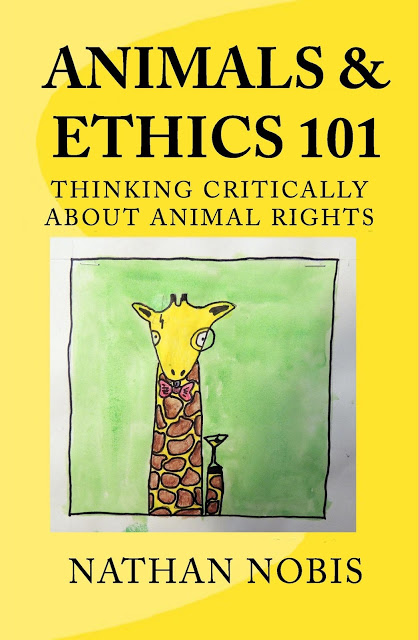
FYI: Nathan Nobis, a philosophy professor at Morehouse College in Atlanta, recently published Animals and Ethics 101: Thinking Critically About Animal Rights. A well-reviewed introduction to animal ethics, the textbook (created to accompany an online course on the same subject) evaluates the arguments for and against various uses of animals, including:
- Is it morally wrong to experiment on animals? Why or why not?
- Is it morally permissible to eat meat? Why or why not?
- Are we morally obligated to provide pets with veterinary care (and, if so, how much)? Why or why not?
You can buy the paperback on Amazon for $5.99 or Kindle for $2.99. But Nobis has also made the text available free online, under a Creative Commons license. You can download it in multiple formats here.
Ethics 101: Thinking Critically About Animal Rights will be added to our list of Free Textbooks.
Related Content:
Watch Glass Walls, Paul McCartney’s Case for Going Vegetarian
Free Online Philosophy Courses
Read More...Hear Prince’s Personal Playlist of Party Music: 22 Tracks That Will Bring Any Party to Life
Many years ago, I took a job as a wedding DJ for a few months to knit ends together in college. Whatever you picture about the job of a wedding DJ, I can assure you that it’s even less glamorous than that. But among the late hours, low pay, and endless schlepping lay at least one pearl-like perk—at every function, when the mood began to ebb along with my sanity, I would put on Prince’s “Controversy,” turn up the speakers as loud as I could, and for the next seven minutes, all would be well. (See him play the song in 2010, above, to an audience in Antwerp.)
For the rest of the night and the rest of the week, I’d be lost in mid-nod to that perfect distillation of funk, the greatest distillation of funk to include the Lord’s Prayer that was ever put to tape.
Prince wrote perfect party songs—dozens of them, including the definitive party song, “1999,” which Martin Schneider at Dangerous Minds calls “a supreme signifier for a Sixteen Candles level blowout celebration”… for a certain cohort at least.
An entire mixtape of Prince tunes would do right by any party, but what would the man himself put on? Surely he didn’t just play his own music, although… why not? We do know he kept it raw and funky for Paisley Park gatherings. In a playlist he provided to the TV show The New Girl in 2013 for an episode featuring a fictional Prince party, he opens with the midtempo stomp of The Staples Singers’ 1974 Stax Recording “City in the Sky.” Before long we’re onto the stone cold groove of Stevie Wonder’s “Higher Ground” and the dirty funk of Ohio Player’s “Skin Tight” a song about a “bad, bad missus” in “skin tight britches.”
The Prince party playlist (available on Spotify, YouTube, or stream it all below) has just the right mix of erotic, romantic, and spiritual—with the psychedelic funk of Shuggie Otis thrown in, naturally—some of the most finely-tuned soul the seventies produced. One of the latest recordings on the playlist, Chaka Khan’s “I Was Made to Love Him” came out in 1978, the same year as Prince’s first album, so we can take a fairly good guess at what he was listening to when he made his debut. In fact, we might look at the playlist as a snapshot of the funk-rock-soul genius from Minneapolis’ original inspirations, which still resonate like cosmic radiation in his late digital-era recordings.
With the Prince vault opened and hundreds of never-before-heard songs set for release, we’ll have years of opportunity to play spot-the-influence. In the meantime, get some people over and put on the mix above. If you sense a lull, drop “Controversy” and watch the most awkward guests come alive with moves they never knew they had.
Related Content:
Read Prince’s First Interview, Printed in His High School Newspaper (1976)
The Life of Prince in a 24-Page Comic Book: A New Release
Josh Jones is a writer and musician based in Durham, NC. Follow him at @jdmagness
Read More...Slavoj Žižek Expounds on His Hatred of Teaching, Grading Papers, and Particularly Holding Office Hours
“Those who can, do,” so we often used to hear, “and those who can’t, teach.” Nowadays the situation seems to have transformed into something more like, “Those who can, do, at least in the occasional free moments when they don’t have to teach.” At first you just take a teaching gig on the side to supplement your real career, and before you know it teaching has usurped that real career almost entirely. We’ve all heard complaints from academic friends about the seemingly unbreakable cycle of lecturing, grading, and holding office hours, but how many have put it in terms as stark as Slavoj Žižek does in the interview above?
“I hate, I hate, I hate — okay, talks are okay, but I hate giving classes,” says the Slovenian philosopher-critic-showman at a 2014 University of Cincinnati College of Design, Architecture, Art and Planning conference devoted to his work. “I’m proud to say, I did teach a couple of semesters here, and all the grading was pure bluff. I even openly told the students. I told them, I remember — at the New School, for example, in New York, ‘If you don’t give me any of your shitty papers, you’ll get an A. If you give me a paper, I may read it and not like it, you can get a lower grade.’ And it worked — I got no papers.” And so he solves the problem of grading.
But what of office hours? These he calls “the main reason I don’t want to teach,” because “students, they’re like other people; the majority are boring idiots, so I cannot imagine a worse experience than some idiot comes and starts to ask you questions.” In other countries one might find a way to endure it, but “the problem is, here in United States, students tend to be so open that if you’re kind to them, they even start to ask you personal questions, like private problems, could you help them, and so on. What should I tell them? ‘I don’t care. Kill yourself. Not my problem.’ ”
These teaching experiences led Žižek’s to one conclusion: “I like universities without students.” But not everyone cheers his pronouncement: “Whenever something like this pops up, I worry that some people will see it and say, ‘You see? That’s what I’ve been saying about those ivory tower types all along,’ ” writes one anonymous academic in response. “Žižek is an outlier, in terms of both his stature and his attitude. Most working academics can’t get away with being dismissive of students, and even if we could, almost all of us wouldn’t.”
Slate’s Rebecca Schuman argues that the “real problem with Žižek isn’t that he feels this way or that he says these things aloud. It’s that he does so and people think it’s hilarious. It’s that his view is, believe it or not, a common ‘superstar’ view of students — so common, in fact, that if you work at a research university and actually like teaching, you should maybe pretend you don’t, lest you appear not ‘serious’ enough about your research.” A semi-frequent critic of Žižek, most recently of his endorsement of Donald Trump (“after all, the two thrice-married, outspoken older gentlemen do have quite a bit in common, a fact that would surely horrify them both”), Schuman knows that the fault lies never so much with the provocateur himself as it does with our tendency to take his provocations at face value.
Related Content:
Slavoj Žižek Answers the Question “Should We Teach Children to Believe in Santa Claus?”
Slavoj Žižek Calls Political Correctness a Form of “Modern Totalitarianism”
Based in Seoul, Colin Marshall writes and broadcasts on cities and culture. He’s at work on a book about Los Angeles, A Los Angeles Primer, the video series The City in Cinema, the crowdfunded journalism project Where Is the City of the Future?, and the Los Angeles Review of Books’ Korea Blog. Follow him on Twitter at @colinmarshall or on Facebook.
Read More...How Machiavelli Really Thought We Should Use Power: Two Animated Videos Provide an Introduction
Nice guys, so they say, finish last. Many of us might instinctively label such a worldview “Machiavellian,” partially for good reason and partially not. It stands as a testament to the insights of the Renaissance-era Florentine political philosopher Niccolò Machiavelli, expressed with great clarity and succinctness in his books The Prince and the Discourses on Livy, not just that his name became an adjective, but that it became one that remains in wide use nearly 500 years after his death. But like other such terms — “Kafkaesque” and “Orwellian” come to mind — its modern usage tends to come detached from its namesake writer’s original ideas.
So what did Machiavelli actually have to say to humanity? “Machiavelli’s Advice for Nice Guys,” a new animated video from Alain de Botton’s School of Life, highlights the core insight of his work: “that the wicked tend to win. And they do so because they have a huge advantage over the good: they are willing to act with the darkest ingenuity and cunning to further their cause. They are not held back by those rigid opponents of change: principles.
They will be prepared to outright lie, twist facts, threaten or get violent. They will also – when the situation demands it – know how to seductively deceive, use charm and honeyed words, bedazzle and distract. And in this way, they conquer the world.”
This line of thinking, put in such stark terms, can make Machiavelli seem like an offputtingly harsh (if quite intelligent) character. But his writing is more nuanced: he advocates not using flat-out lies and violence to achieve one’s ends, but indeed to be nice — just “never to be overly devoted to acting nicely,” an attitude he thought the West’s popular readings of the story of Jesus of Nazareth too often advocated — while always knowing “how to borrow – when need be – every single trick employed by the most cynical, dastardly, unscrupulous and nastiest people who have ever lived.” Nice guys, in short, have no choice but to learn from their enemies.
You can learn more about the sometimes harrowing experiences that taught Machiavelli all this in the School of Life’s introduction to his political theory just above. He reckoned, more memorably than any other, “the price of dealing with the world as it is, and not as we feel it should be. The world has continued to love and hate Machiavelli in equal measure for insisting on this uncomfortable truth.” Machiavelli, as Salman Rushdie put it in a clip we featured a few years ago, lived in a time when Italy’s ruling families behaved “in the most ruthless way, and he wrote this little treatise about not what he would like things to be like, but how power actually works, which he observed.” Rushdie calls the negative associations with the philosopher’s name “a classic case of shooting the messenger” — something, alas, even the most good-intentioned ruler may find himself forced to do once in a while.
Related Content:
Salman Rushdie: Machiavelli’s Bad Rap
Introduction to Political Philosophy: A Free Yale Course
Allan Bloom’s Lectures on Machiavelli (Boston College, 1983)
Based in Seoul, Colin Marshall writes and broadcasts on cities and culture. He’s at work on a book about Los Angeles, A Los Angeles Primer, the video series The City in Cinema, the crowdfunded journalism project Where Is the City of the Future?, and the Los Angeles Review of Books’ Korea Blog. Follow him on Twitter at @colinmarshall or on Facebook.
Read More...An Introduction to the Life & Thought of Hannah Arendt: Presented by the BBC Radio’s In Our Time
Unsettling historical parallels between the newly-developing world order and the terrors that scourged Europe in the 1930s and 40s now seem undeniable to most informed observers of contemporary geopolitics. Europeans have their own political crises to weather, but all eyes currently seem trained on the military behemoth that is my own country. “These are not normal times,” admits Jane Chong at Lawfare. Though she critiques Nazi comparisons as needlessly alarmist, she “sees no reason for optimism.” While references to history’s greatest villain abound, we’ve also seen Australian scientist Alan Finkel compare the U.S. leader to Joseph Stalin for the suppression and censorship of environmental data.
The devastation Hitler and Stalin visited upon Western and Eastern Europe can hardly be overstated—and we still find it nearly impossible to comprehend. But not soon after the end of World War II, one of the 20th century’s most probing analysts of political thought attempted to do just that.
Hannah Arendt’s 1951 The Origins of Totalitarianism remains one of “several seminal works on tyranny and oppression that have recently gained popularity among readers,” notes Alison Griswold at Quartz. And Arendt’s 1963 classic Eichmann in Jerusalem also continues to inform the moment, offering a “sobering reflection,” writes Maria Popova, on what Arendt called “the fearsome, word-and-thought-defying banality of evil.”
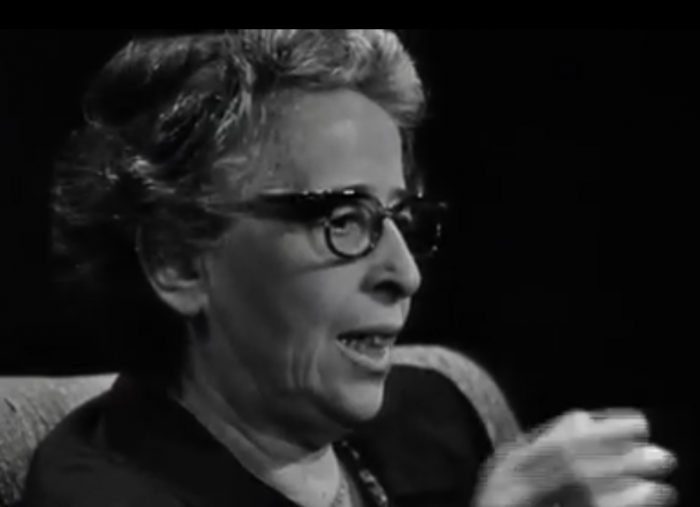
Arendt’s renewed relevance recently prompted Melvyn Bragg, host of the excellent BBC Radio program In Our Time, to bring three guest philosophy professors—Robert Eaglestone, Frisbee Sheffield, and Lyndsey Stonebridge—on air to discuss her ideas and influence. Bragg begins with a brief outline of Arendt’s biography, then turns to Sheffield, a lecturer at Girton College, Cambridge, for elaboration. They immediately address one of the most controversial aspects of Arendt’s young life, her affair with her mentor, Martin Heidegger, who joined the Nazi party and remained a true believer in its ideology.
But the conversation quickly moves on from there to encompass Arendt’s multi-dimensional thought. “There’s a great range to her writings,” says Sheffield. A trained classicist, Arendt wrote her dissertation on the idea of love in St. Augustine. Her most philosophical work, The Human Condition, drew on classical concepts to rank human activity into a hierarchy of labor, work, and action. She “wrote on a great range of topics,” Sheffield notes, though “there is a consistent interest in politics and political themes throughout her work.”
Yet Arendt rejected the label of political philosopher and is herself “hard to pin down” politically. Her 1963 book On Revolution, critiqued leftist and Marxist thought and praised the American Revolution for its constitutionalism. She was skeptical of the notion of universal human rights, and her essay On Violence made the argument that violence appears only in the absence of political power, not its ascendency. As we learn from listening to Bragg’s assembled panel of guests, Arendt consistently emphasized two classical concepts: the value of a civic and political order and the importance of the “life of the mind,” also the title of a two-volume work published posthumously in 1978.
In Our Time’s short, lively conversation provides an excellent introduction to Arendt’s life and work. To dive more deeply into the Arendt corpus, visit Bard College’s Hannah Arendt Center for Politics and Humanities, browse the Library of Congress’s Hannah Arendt Papers, and read Lyndsey Stonebridge’s short online essay “Hannah Arendt’s Refugee History.” You’ll also find an extensive reading list of primary and secondary sources at the In Our Time BBC page.
Related Content:
Hannah Arendt Discusses Philosophy, Politics & Eichmann in Rare 1964 TV Interview
Hannah Arendt’s Original Articles on “the Banality of Evil” in the New Yorker Archive
Josh Jones is a writer and musician based in Durham, NC. Follow him at @jdmagness
Read More...Free Coloring Books from World-Class Libraries & Museums: The Met, New York Public Library, Smithsonian & More
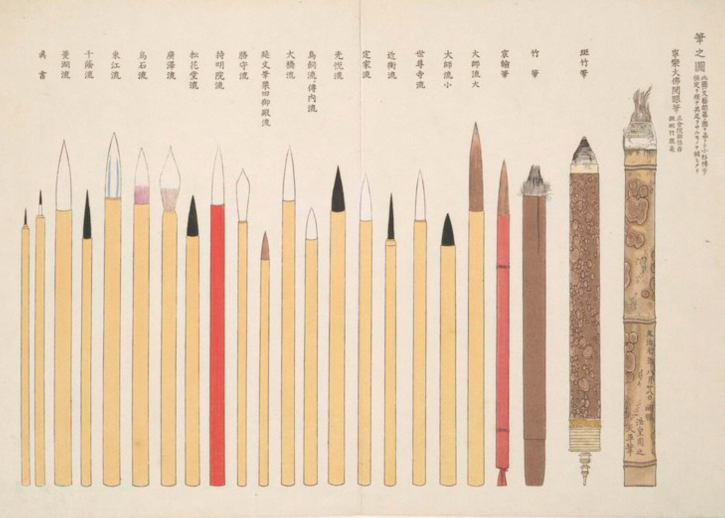
Calling all coloring book lovers. You can now take part in #ColorOurCollections 2017–a campaign where museums and libraries worldwide will make available free coloring books, letting you color artwork from their collections and then share it on Twitter and other social media platforms. When sharing, use the hashtag #ColorOurCollections.
Below you can find a collection of free coloring books, which you can download and continue to enjoy. If you see any that we’re missing, please let us know in the comments, and we’ll do our best to update the page. To see the free coloring books that were offered up in 2016, click here.
Color Our Collections is organized by The New York Academy of Medicine Library. So please give them thanks.
- New York Academy of Medicine
- The New York Botanical Garden Coloring Book
- The New York Public Library Coloring Book
- Smithsonian Libraries Coloring Book
- Cambridge University Library Coloring Book
- Chemical Heritage Foundation Coloring Book
- The Metropolitan Museum of Art Coloring Book
- Newberry Library Coloring Book
- American Bookbinders Museum Coloring Book
- Auraria Library Coloring Book
- Bibliothèque interuniversitaire de Santé, Paris Coloring Book
- Biodiversity Heritage Library Coloring Book Part 1
- Biodiversity Heritage Library Coloring Book Part 2
- Biodiversity Heritage Library Coloring Book Part 3
- Biodiversity Heritage Library Coloring Book Part 4
- Biodiversity Heritage Library Coloring Book Part 5
- Bodleian Library at Oxford University
- Brooklyn Public Library, Brooklyn Collection Coloring Sheets
- Dittrick Medical History Center Coloring Book
- Digital Library@Villanova University Coloring Books
- Digita Vaticana Coloring Book
- Europeana Art Nouveau Color Book
- Europeana Colouring Book
- Frances Willard Memorial Library and Archives Coloring Sheet
- Health Sciences Library, University of North Carolina at Chapel Hill Coloring Book
- Hunter College Libraries – City University of New York Coloring Book
- The Huntington Library, Art Collections, and Botanical Gardens
- James Madison University Libraries Coloring Book
- Marian Library, University of Dayton
- National Library of Medicine Coloring Book
- National Museum Wales Coloring Book
- New York Academy of Medicine Famous Women Coloring Sheet
- OHSU Historical Collections & Archives Coloring Sheets
- Royal College of Physicians
- Special Collections and Archives, Trexler Library, Muhlenberg College Coloring Books
- The Rosenbach Coloring Sheets
- University of Calgary Libraries and Cultural Resources
- University of Houston Special Collections Coloring Book
- University of Oregon Coloring Book
- University of Scranton Archives and McHugh Special Collections Coloring Book
- University of Puget Sound, Collins Memorial Library, Archives & Special Collections Coloring Book
- University of Reading Museums and Collections Coloring Book
- Wangensteen Historical Library of Biology and Medicine, University of Minnesota Libraries
- Williams College Libraries Coloring Sheets
Looking for free, professionally-read audio books from Audible.com? Here’s a great, no-strings-attached deal. If you start a 30 day free trial with Audible.com, you can download two free audio books of your choice. Get more details on the offer here.
If you would like to support the mission of Open Culture, consider making a donation to our site. It’s hard to rely 100% on ads, and your contributions will help us continue providing the best free cultural and educational materials to learners everywhere. You can contribute through PayPal, Patreon, and Venmo (@openculture). Thanks!
Related Content:
The First Adult Coloring Book: See the Subversive Executive Coloring Book From 1961
Download 15,000+ Free Golden Age Comics from the Digital Comic Museum
Dr. Seuss Draws Anti-Japanese Cartoons During WWII, Then Atones with Horton Hears a Who!
Read More...Discover the 1126 Books in John Cage’s Personal Library: Foucault, Joyce, Wittgenstein, Virginia Woolf, Buckminster Fuller & More
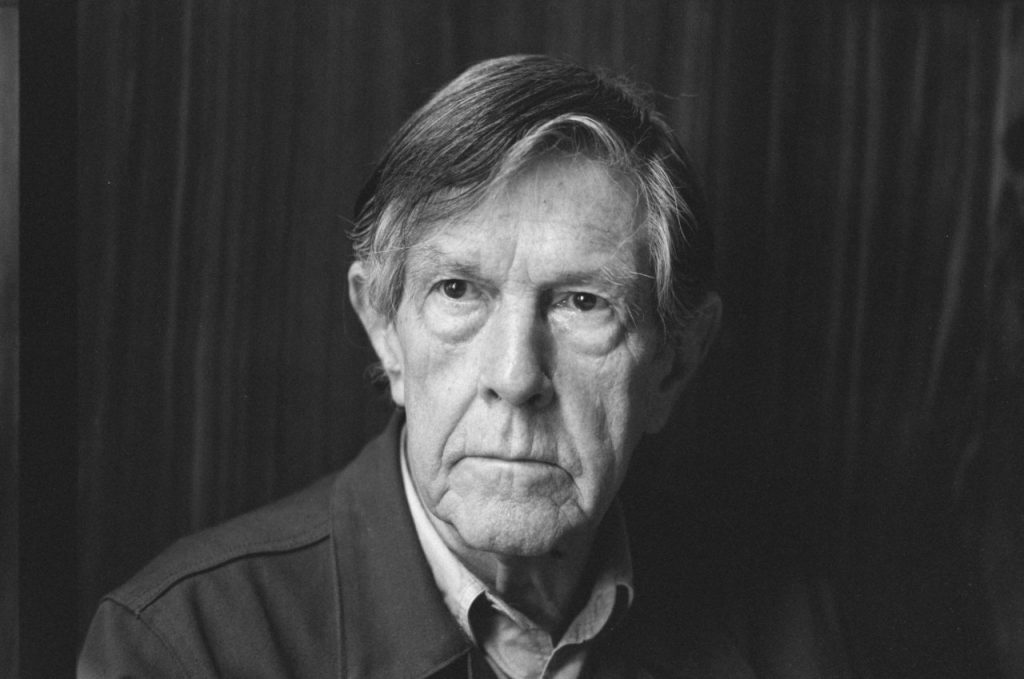
Image by or Rob Bogaerts/Fotocollectie Anefo
To properly honor your cultural role models, don’t try to do what they did, or even to think what they thought, but to think how they thought. This goes at least double for John Cage, the experimental composer whose innovative works can be, and often are, re-staged (go on, have four minutes and 33 seconds of silence to yourself), but it takes a different kind of effort altogether to cultivate the kind of mind that would come up with them in the first place. As a means of activating your own inner Cageness, you could do much worse than read through his personal library, a list of whose books you’ll find at johncage.org.
The volumes number 1126 in total, and if you load the library’s main page, it will present you with a list of ten randomly selected books. (You can get a list of all of them by selecting the “See Entire Library” option on the left sidebar.)
Hitting refresh a few times will give you a sense of the breadth of Cage’s reading: Emma Goldman on anarchism, Chinese poetry gathered by Kenneth Rexroth, M. Conrad Hyers’ Zen and the Comic Spirit (two of Cage’s driving forces if ever I’ve heard them), How to Play Backgammon, essays on Ulysses (an interest shared with Marilyn Monroe), and even essays on John Cage. Here we’ve assembled a list of ten books from Cage’s library of particular interest to the Open Culture reader:
- Fundamentals of Music Composition by Arnold Schoenberg
- Education Automation: Freeing the Scholar to Return to His Studies by R. Buckminster Fuller
-
Aveline Kushi’s Complete Guide to Macrobiotic Cooking by Aveline Kushi
-
A Skeleton Key to Finnegans Wake by Joseph Campbell and Henry Morton Robinson
- The Virginia Woolf Poems edited by Jackson Mac Low
- Alice in Wonderland & Through the Looking Glass by Lewis Carroll
- Philosophical Investigations by Ludwig Wittgenstein
- An Introduction to Metaphysics by Martin Heidegger
- The Narrow Road to the Deep North and Other Travel Sketches by Matsuo Basho
- The Poetics of Indeterminacy: Rimbaud to Cage by Marjorie Perloff
- Dubliners by James Joyce
- The Notebooks of Leonardo Da Vinci by Leonard Da Vinci
- The Order of Things: An Archaeology of the Human Sciences by Michel Foucault
To those who know anything of Cage’s life and interests, his shelves on healthy eating—on which Dining Naturally in Japan: A Restaurant Guide to Wholesome Food also appears, as, naturally given the era and Cage’s acquired northern-Californianness, The Tassajara Bread Book—and especially the eating of mushrooms, come as no surprise, nor might his inclination toward philosophy. But we should note what looks like a particular fascination with the work of Ludwig Wittgenstein, evidenced by 22 of the books in his library: his best-known works like the Tractatus Logico-Philosophicus, but also his letters, lectures, and notebooks, as well as biographies, commentaries, and Wittgenstein and Buddhism, which Cage must have considered an exciting find indeed.
In one of his most quotable quotes, Cage describes college as “two hundred people reading the same book. An obvious mistake. Two hundred people can read two hundred books.” And indeed, 1126 people can read 1126 books—or many more people can each read a different subset of those books. While you could methodically read your way through Cage’s entire library, and would surely learn a great deal in the process, wouldn’t making use of the unthinking guidance of the ten-random-books function, surrendering the direction of this informal education to the kind of chance that places Paul Bowles next to the common fungi of North American and Charles Ives next to Italian futurism, be a much more Cagean way of going about it?
(h/t @lrlarson)
Related Content:
The Music of Avant-Garde Composer John Cage Now Available in a Free Online Archive
John Cage Unbound: A New Digital Archive Presented by The New York Public Library
Jorge Luis Borges Selects 74 Books for Your Personal Library
The 430 Books in Marilyn Monroe’s Library: How Many Have You Read?
Darwin’s Personal Library Goes Digital: 330 Books Online
Based in Seoul, Colin Marshall writes and broadcasts on cities and culture. He’s at work on a book about Los Angeles, A Los Angeles Primer, the video series The City in Cinema, the crowdfunded journalism project Where Is the City of the Future?, and the Los Angeles Review of Books’ Korea Blog. Follow him on Twitter at @colinmarshall or on Facebook.
Read More...Pakistani Immigrant Goes to a Led Zeppelin Concert, Gets Inspired to Become a Musician & Then Sells 30 Million Albums
Salman Ahmad, the guitarist who founded the acclaimed Sufi rock band Junoon, has sold over 30 million albums worldwide, performed at the Nobel Peace Prize ceremony, and continued making music despite threats from The Taliban. He also teaches courses on Muslim music and poetry at Queens College of the City University of New York.
Above, in a video produced by The Moth, the boundary-breaking musician recounts his inspirational life story. Born in Lahore, Pakistan, he moved to New York at the age of 11. Being the “only overweight, brown, Muslim kid” in school, he lived in relative isolation–that is until Dan Spitz (later the guitarist of Anthrax) urged him “to get cool.” Cool came in the form of a ticket to a Led Zeppelin concert at Madison Square Garden, which kicked off, oddly enough, with “Kashmir.”
I’ll let Ahmad tell the rest of his story. It’s also a story about how America does good (for the world and itself) when it remains open in heart, mind, and law.
To get better acquainted with Ahmad’s journey, read his recent book, Rock & Roll Jihad: A Muslim Rock Star’s Revolution.
To keep America open, make a donation to the ACLU.
Related Content
Pakistani Musicians Play a Delightful Version of Dave Brubeck’s Jazz Classic, “Take Five”
Pakistani Orchestra Plays Enchanting Rendition of The Beatles’ “Eleanor Rigby”
Read More...Support Us
We're hoping to rely on loyal readers, rather than erratic ads. Please click the Donate button and support Open Culture. You can use Paypal, Venmo, Patreon, even Crypto! We thank you!

About Us

Open Culture scours the web for the best educational media. We find the free courses and audio books you need, the language lessons & educational videos you want, and plenty of enlightenment in between.
Advertise With Us
FREE UPDATES!
GET OUR DAILY EMAIL
Get the best cultural and educational resources on the web curated for you in a daily email. We never spam. Unsubscribe at any time.
FOLLOW ON SOCIAL MEDIA
Open Culture editor Dan Colman scours the web for the best educational media. He finds the free courses and audio books you need, the language lessons & movies you want, and plenty of enlightenment in between.
Advertise With Us


.jpg)