The Theater Dictionary: A Free Video Guide to Theatre Lingo
It’s 11 o’clock. Do you know where your showstoppers are? Or, more to the point, do you know why a musical-comedy writing team seeks to orient its showstopping number at “eleven o’clock”?
The Theater Development Fund’s Theatre Dictionary is an ongoing attempt to define and document theater terms for both the rabble and any budding practitioners who’ve yet to master the lingo.
Each term is accompanied by a loopy slapdash skit. Not all of the performers exhibit the pedigree Veronica J. Kuehn and Nick Kohn of Avenue Q bring to “Eleven O’Clock Number,” above, but casting administrators and ticket booth reps in starring roles lend a homey egalitarianism, such as when students from the Yale School of Drama’s Department of Dramaturgy and Dramatic Criticism are given free license to explore the origins of “vom.”
(This loosey goosey approach also allows for uncredited appearances by other theatrical tropes—the marathon rehearsals where popcorn constitutes lunch and one actor repeatedly complains that his work has been insufficiently acknowledged.)
A “What Does This Word Mean” tab for each term anchors the video silliness, providing historical and anecdotal context. It’s in keeping with the Dictionary’s greater goal of bringing theater to the people, letting everyone play with the toys.
Some of the definitions are practical shorthand…
Others are couched in longtime, possibly archaic theater lore…
I’d exercise caution with some of this lingo. Even though many of these terms are born of practicality, overusing them may cause others to view you as the most obnoxious of self-declared Triple Threats, the kid in the comedy-tragedy mask sweatshirt, prone to belting out the entire soundtrack of CATS at the slightest provocation. (“Thanks, 5!!!”)
Some of these terms have unexpected crossover appeal, most recently Ghost Light, above. Knowing the meaning of the term will help you better appreciate the power of the Ghostlight Project, a post-election coming together of theater artists and audiences in defense and support of vulnerable communities.
You can browse the Theater Dictionary complete glossary here or watch the videos on TDF’s Youtube channel.
The Theater Dictionary’s FAQ contains information on how professional theatre companies and organizations and college-level theatre programs can apply to contribute a video.
Related Content:
100,000+ Wonderful Pieces of Theater Ephemera Digitized by The New York Public Library
Take a “Breath” and Watch Samuel Beckett’s One-Minute Play
Ayun Halliday is an author, illustrator, theater maker and Chief Primatologist of the East Village Inky zine. Her play Zamboni Godot is opening in New York City in March 2017. Follow her @AyunHalliday.
Read More...Read Prince’s First Interview, Printed in His High School Newspaper (1976)
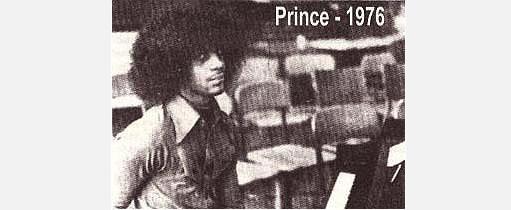
Two years before Prince released his first album For You and before he began his ascent into the funk-rock-pop pantheon, he was a very talented, very ambitious, and occasionally frustrated high school senior at Central High in Minneapolis. That’s where the school newspaper got him to sit for an interview, more of a character sketch, to talk about his hopes for a musical career. You can read it below.
If Prince was charismatic enough to be picked up on the high school paper’s radar, he doesn’t let it show in the article.
Mostly, he rues the location of his home town.
“I think it is very hard for a band to make it in this state, even if they’re good. Mainly because there aren’t any big record companies or studios in this state. I really feel that if we would have lived in Los Angeles or New York or some other big city, we would have gotten over by now.”
By the ‘80s, of course, he had made Minneapolis the center of his own musical empire, and Paisley Park became his home, compound, and music studio, the place where he would eventually pass away.
But he did like high school, according to him, because the music teachers let him do his own thing. Already a multi-instrumentalist, the article finds Prince just starting to explore singing. This might be the most surprising part of the piece. Prince’s range and the amount of character (and literally characters, male, female, or a mix) in his songs would lead you to believe that his voice came first.
Maybe some of the humility came from his status in the high school band. The name Grand Central was inspired by Prince’s obsession with Graham Central Station, whose bass player Larry Graham would later join Prince’s ‘90s band and also convert him to become a Jehovah’s Witness. Competing for attention was Morris Day and André Cymone, who Prince would write for and produce after he got his record contract. It was friendly but serious competition.
To round out the article, Prince—who plays by ear—gets asked if he has any advice for fellow students: “I advise anyone who wants to learn guitar to get a teacher unless they are very musically inclined. One should learn all their scales too. That is very important.”
You can read the full article below:
Nelson Finds It “Hard To Become Known”
“I play with Grand Central Corporation. I’ve been playing with them for two years,” Prince Nelson, senior at Central, said. Prince started playing piano at age seven and guitar when he got out of eighth grade.
Prince was born in Minneapolis. When asked, he said, “I was born here, unfortunately.” Why? “I think it is very hard for a band to make it in this state, even if they’re good. Mainly because there aren’t any big record companies or studios in this state. I really feel that if we would have lived in Los Angeles or New York or some other big city, we would have gotten over by now.”
He likes Central a great deal, because his music teachers let him work on his own. He now is working with Mr. Bickham, a music teacher at Central, but has been working with Mrs. Doepkes.
He plays several instruments, such as guitar, bass, all keyboards, and drums. He also sings sometimes, which he picked up recently. He played saxophone in seventh grade but gave it up. He regrets he did. He quit playing sax when school ended one summer. He never had time to practice sax anymore when he went back to school. He does not play in the school band. Why? “I really don’t have time to make the concerts.”
Prince has a brother that goes to Central whose name is Duane Nelson, who is more athletically enthusiastic. He plays on the basketball team and played on the football team. Duane is also a senior.
Prince plays by ear. “I’ve had about two lessons, but they didn’t help much. I think you’ll always be able to do what your ear tells you, so just think how great you’d be with lessons also,” he said.
“I advise anyone who wants to learn guitar to get a teacher unless they are very musically inclined. One should learn all their scales too. That is very important,” he continued.
Prince would also like to say that his band is in the process of recording an album containing songs they have composed. It should be released during the early part of the summer.
“Eventually I would like to go to college and start lessons again when I’m much older.”
via That Eric Alper
Related Content:
Hear Prince and Miles Davis’ Rarely-Heard Musical Collaborations
Prince Plays Mind-Blowing Guitar Solos On “While My Guitar Gently Weeps” and “American Woman”
Ted Mills is a freelance writer on the arts who currently hosts the FunkZone Podcast. You can also follow him on Twitter at @tedmills, read his other arts writing at tedmills.com and/or watch his films here.
Read More...Hear Jeremy Irons Read the Poetry of T.S. Eliot (Available for a Limited Time)
We may have come nearly to the end of January already, but we can still call 2017 a new year — at least until we’ve listened to the poetry of T.S. Eliot to properly ring it in. “There’s surely no better poet than Eliot to help us confront the problem of finding meaning in a world where old certainties are being troubled,” says Martha Kearney, host of BBC Radio 4’s New Year’s series celebrating his work.
“Our lives are so busy now that we need some help from the season to just take stock, both of where we’ve been and where we might like to go to,” says the first episode’s guest, novelist Jeanette Winterson. We need to inhabit “that inward moment that poetry’s so good at,” and that Eliot made entirely his own. The bulk of that broadcast comprises a reading of Eliot’s “The Love Song of J. Alfred Prufrock” by Jeremy Irons, surely one of the poet’s ideal living interpreters. (Note: you can stream all of the episodes in the series here.)
Irons reads more in the second, which includes a discussion with Winterson and Anthony Julius, Chair of Law and the Arts and University College London, about the opening of “Gerontion” and the “ugly references” made in Eliot’s other poems. The discussion in the third, in which Irons takes on Eliot’s immortal “The Waste Land,” looks for the source of the power of its “poetry of fragments” with former Archbishop of Canterbury Rowan Williams and Scots Makar (something like a Poet Laureate of Scotland) Jackie Kay.
“The Waste Land” continues as a subject in part four, as its guest, the actress Fiona Shaw, has drawn acclaim for her own reading of the poem, but the Irons section of the broadcast offers various other selections, including “The Hollow Men,” “Ash Wednesday,” and “Journey of the Magi.” Finally, in part five, Kearney and Rory Stewart, Member of Parliament and man of letters, talk about and hear Irons deliver Eliot’s “Four Quartets,” whose language Stewart memorized on a walk through Nepal and which he later used during his political campaign.
This poetic, conversational, and performative radio feast comes to nearly four hours (listen to all of the episodes here), but you’ve got only the next six days to stream it. Otherwise you’ll have to wait until Radio 4’s next, as yet announced calendar-appropriate celebration of Eliot. They’ve used his work to refresh audiences after a troubling year; perhaps they’ll use it again to get us through the cruelest month of this one.
Related Content:
Listen to T.S. Eliot Recite His Late Masterpiece, the Four Quartets
Bob Dylan Reads From T.S. Eliot’s Great Modernist Poem The Waste Land
Based in Seoul, Colin Marshall writes and broadcasts on cities and culture. He’s at work on a book about Los Angeles, A Los Angeles Primer, the video series The City in Cinema, the crowdfunded journalism project Where Is the City of the Future?, and the Los Angeles Review of Books’ Korea Blog. Follow him on Twitter at @colinmarshall or on Facebook.
Read More...Watch Eero Saarinen: The Architect Who Saw the Future: Free for a Limited Time
A quick heads up. For the next few days (until January 27) you can watch Eero Saarinen: The Architect Who Saw the Future, the latest installment from the PBS American Masters series. Here’s the PBS blurb for the episode.
Best known for designing National Historic Landmarks such as St. Louis’ iconic Gateway Arch and the General Motors Technical Center, Saarinen also designed New York’s TWA Flight Center at John F. Kennedy International Airport, Yale University’s Ingalls Rink and Morse and Ezra Stiles Colleges, Virginia’s Dulles Airport, and modernist pedestal furniture like the Tulip chair.
In the film, Saarinen’s son, Eric Saarinen, “visits the sites of his father’s work on a cathartic journey, shot in 6K with the latest in drone technology that showcases the architect’s body of timeless work for the first time. The documentary also features rare archival interviews with Eero and his second wife, The New York Times art critic Aline Saarinen, as well as letters and quotations from Aline’s memoirs voiced respectively by Peter Franzén and Blythe Danner.”
You can get more background on the film here. Copies of the film can be purchased online here.
Related Content:
32,000+ Bauhaus Art Objects Made Available Online by Harvard Museum Website
Roman Architecture: A Free Online Course from Yale University
Read More...
12 Million Declassified CIA Documents Now Free Online: Secret Tunnels, UFOs, Psychic Experiments & More

Image by Duffman, via Wikimedia Commons
“The United States Government has not yet made any official reply to the Soviet and East German allegations and protests concerning the 300-yard tunnel that American intelligence operatives are said to have built underneath the border between West and East Berlin for espionage purposes,” says a Washington Post article from 1956 headlined “The Tunnel of Love.” The Communists’ excitement about their discovery even had them conducting “special propaganda tours through the tunnel and to have exhibited the wiretapping and other recording apparatus that the Americans are supposed to have installed inside it.”
This amusing chapter of Cold War history might have seemed, to America at the time, like the kind of foiled effort — though one of an ingenuity admired on both sides of the Iron Curtain — best buried at the back of the espionage archives. But now, thanks to an executive order requiring the Central Intelligence Agency to release “nonexempt historically valuable records 25 years or older” as well as the dogged efforts of journalist Michael Best, you can read over 12 million pages of previously classified documents at CREST, the CIA Records Search Tool. In addition to the files on the “Berlin Tunnel” operation, it offers copious material on much else, such as vintage espionage techniques like writing with invisible ink and undetectably opening sealed letters and CIA research into spiritualist healing, telepathy, and other psychic powers.
For quite some time before now, you technically could have looked up all of this information yourself, provided you felt like going to the National Archives in College Park, Maryland, and pulling it up on one of the four computers made available to do so — but only between the hours of 9 a.m. and 4:30 p.m. The fact that you can now do it from the comfort of your browser owes in large part to the efforts of Best, who raised $15,000 on Kickstarter to go manually print out all (or at least some) of those twelve million pages and upload them to the internet, thereby prodding the CIA to save the ink-and-paper money and just do it themselves.
Some of the project’s backers, no doubt, wanted specifically to see what the CIA’s archives have to say about space aliens, a stock of information you may recall that we featured here just last year. “The publication of the files represents a potential motherlode of background material for researchers, journalists and curious hobbyists,” write the New York Times’ Daniel Victor and Erin McCann, not long before admitting that “most of the files are pretty boring,” a result of “regular bureaucratic collation.” But then, that kind of methodical gathering and organizing of information has long constituted most of the work of national intelligence: even the short-lived “Tunnel of Love” gathered enough data to keep its processors busy for years after it became a Soviet tourist spot.
Related Content:
History Declassified: New Archive Reveals Once-Secret Documents from World Governments
75 Years of CIA Maps Now Declassified & Made Available Online
Based in Seoul, Colin Marshall writes and broadcasts on cities and culture. He’s at work on a book about Los Angeles, A Los Angeles Primer, the video series The City in Cinema, the crowdfunded journalism project Where Is the City of the Future?, and the Los Angeles Review of Books’ Korea Blog. Follow him on Twitter at @colinmarshall or on Facebook.
Read More...David Bowie Offers Advice for Aspiring Artists: “Go a Little Out of Your Depth,” “Never Fulfill Other People’s Expectations”
January 10th, 2017–David Bowie died one year ago today. Revisiting my own memories of him, it so often seemed impossible that he could grow old, much less pass away, even as we all watched him age over the decades. He did it much better than most, that’s for sure, and grew into the role of elder statesman with incredible poise and grace, though he also didn’t let that role be his last one.
What else should we have expected from the artist who wrote “Changes”—the definitive creative statement on facing time and mortality—at the age of 24, before he’d even achieved the international superstardom that Ziggy Stardust brought him? Bowie was always an old soul. “It’s not age itself,” he told the BBC in 2002. “Age doesn’t bother me. So many of my heroes were older guys.… I embrace that aspect of it.” And so, in his later years, he became an older guy hero to millions.
In 1997, after his drum and bass-inspired Earthling, Bowie gave an interview in which he offered the timeless wisdom to younger artists in the clip above:
Never play to the gallery.… Never work for other people in what you do. Always remember that the reason that you initially started working was that there was something inside yourself that you felt that if you could manifest in some way, you would understand more about yourself and how you co-exist with the rest of society.… I think it’s terribly dangerous for an artist to fulfill other people’s expectations.
It’s advice we’ve likely heard some version of before—perhaps even from one of Bowie’s own older-guy heroes, William S. Burroughs (here by way of Patti Smith). But I’ve never heard it stated so succinctly and with so much conviction and feeling. We naturally associate David Bowie with artful inauthenticity, with a succession of masks. He encouraged that impression at every turn, even telling a graduating Berklee College of Music class in 1999, “it seemed that authenticity and the natural form of expression wasn’t going to be my forte.”
But in hindsight, and especially in the rapt, posthumous attention paid to Bowie’s final work, Blackstar, it can seem that his embrace of poses was often itself a pose. Bowie has always been candid, in various moments of self-reflection, about his missteps and excesses. But not to have taken the risks he did, not to have placed himself in uncomfortable situations, would have meant impoverishing his work. “The other thing I would say,” he goes on, “is that if you feel safe in the area you’re working in, you’re not working in the right area. Always go a little further into the water than you feel you are capable of being in. Go a little bit out of your depth. When you don’t feel that your feet are quite touching the bottom, you’re just about in the right place to do something exciting.”
If you would like to support the mission of Open Culture, consider making a donation to our site. It’s hard to rely 100% on ads, and your contributions will help us continue providing the best free cultural and educational materials to learners everywhere. You can contribute through PayPal, Patreon, and Venmo (@openculture). Thanks!
Related Content:
The Story of Ziggy Stardust: How David Bowie Created the Character that Made Him Famous
Patti Smith Shares William S. Burroughs’ Advice for Writers and Artists
Josh Jones is a writer and musician based in Durham, NC. Follow him at @jdmagness
Read More...Learn Islamic & Indian Philosophy with 107 Episodes of the History of Philosophy Without Any Gaps Podcast
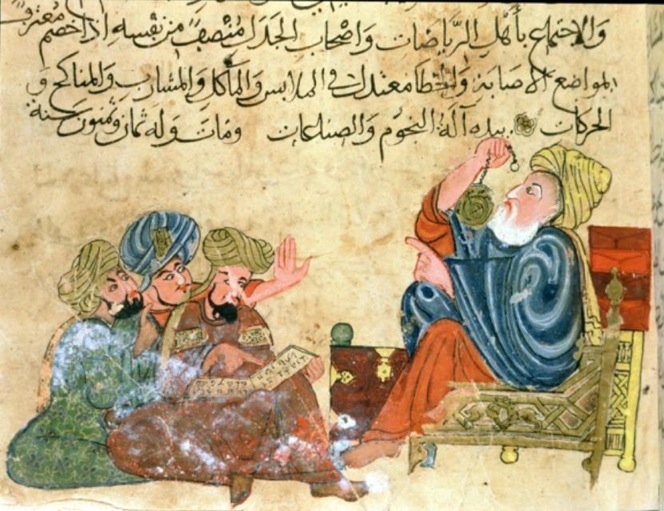
We post copious resources for the study of philosophy on this site, such that you can obtain a full college-level survey understanding of the subject on your own by taking the many free classes, listening to the many free lectures and podcasts, and reading the many free texts, ebooks and commentaries you’ll find here. But several of our posts have met with a similar reader objection: where is the Eastern philosophy?
The question could also be put to almost any academic department of philosophy. One answer I’ve often heard dismisses it altogether. Philosophy, some say, developed in the West, first in ancient Greece, then in Rome, the succeeding Christian empire, and the secular age that followed. It is a European pursuit and tradition. Other culturally partial critics, who wish to appear enlightened, are willing to concede that “the world’s Muslims,” as Richard Dawkins tweeted a few years back, “did great things in the Middle Ages,” at least providing a critical bridge between the fall of the Roman Empire and the rise of Scholasticism.
Islamic philosophers like Avicenna and Averroes kept in dialogue with the Greeks after Europe had forgotten them, and preserved the only work of Aristotle we have. But that was then. What have they done for us lately? Attitudes like this, argues philosophy professor Peter Adamson, are prejudices with little basis in fact, and part of the reason for a dearth of high-quality, accessible Eastern philosophy resources in English. Adamson, who has made significant contributions to the study of philosophy online with his podcast, History of Philosophy Without Any Gaps, fills in the gap with his series on Islamic and Indian philosophy in several parts.
Formative Period—25 episodes
Philosophy in Andalusia—25 episodes
Eastern Traditions—25 episodes
Beginning with philosophy in the Islamic world in Episode 171, “Eastern Traditions,” at the top, Adamson covers “influential thinkers of the twelfth century like Fakhr al-Dīn al-Rāzī and Suhrawardī, focusing on their legacy in the Eastern realms of central Asia and Persia, moving on to the Ottoman, Safavid and Mughal empires, and ending with developments in twentieth century philosophy.” Against dismissive claims like Dawkins’ that these centuries were “a time of intellectual and scientific decline in Islamic civilization,” Adamson argues they were “in fact a time of remarkable achievement in fields like logic and astronomy as well as the various disciplines of philosophy.” See all three parts of the Islamic Philosophy series above.
Adamson shares the introduction to Indian philosophy, just above, with NYU’s Jonardon Ganeri, and the two lay out a case for the tradition as “primarily a way of life and search for the highest good.” As usual, Adamson brings on guest scholars and provides a list for further reading on the podcast’s site. And as usual, his historical frameworks are rigorous and very well-researched. This series breaks into two main categories (below). The second part of the series focuses on the development of a formal tradition, the “sūtra (literally ‘thread’)… a genre of writing in which ideas were set forth in brief, aphoristic form. Various sūtras were taken as authoritative and foundational for numerous schools of Indian thought, which devoted further commentaries to the sūtras.”
Origins—17 episodes
Age of Sutra—15 episodes
As he has done with many of his other series, Adamson has adapted the Islamic Philosophy podcasts in book form, Philosophy in the Islamic World: A history of philosophy without any gaps, Volume 3. His even-handedness and erudition make this series a joy to listen to, though he’d also encourage us to read the philosophers he discusses, if possible. If you’re new to reading philosophy, or to Adamson’s podcast, you’d do well to read his recently posted All 20 ‘Rules for History of Philosophy,’ which he has brought together in one place as “guidelines encapsulating what I see as good practice in studying the history of philosophy.” (Rule 8: “Read the whole text.”)
Many of these guidelines rub up against the current orthodoxies, assumptions and, frankly, snobberies of some contemporary academic philosophy. Among these, “Rule 14: Take religion seriously” and “Rule 15: Be broadminded about what counts as ‘philosophy.’” And for those who not only dismiss but also embrace entire cultures’ philosophical traditions for one defining reason—Indian thought is “spiritual” or “non-violent”; Islamic thought is “tolerant” or “intolerant”—Adamson offers Rule 18: “don’t essentialize.” As becomes clear on even a cursory listen to the podcasts in these series, what we tend to believe about “non-western” philosophy operates far in excess of what most of us actually know about it.
Related Content:
The History of Philosophy … Without Any Gaps
Learn The History of Philosophy in 247 Podcasts (With More to Come)
A History of Philosophy in 81 Video Lectures: From Ancient Greece to Modern Times
The History of Philosophy Visualized
Josh Jones is a writer and musician based in Durham, NC. Follow him at @jdmagness
Read More...Why We Need to Teach Kids Philosophy & Safeguard Society from Authoritarian Control
Several friends and relatives of mine teach philosophy, writing, and critical thinking to undergraduate college students. And many of those people have confessed their dismay in recent months. Threats and McCarthyite attacks on higher educators have increased (and in places like Turkey escalated to full-on war against academics). Many educators are also filled with doubt about the meaning of their profession. How can they stand in the pulpits of higher learning, many wonder, extolling the virtues of clear expression, logic, reason and evidence, ethics, etc., when the world outside the classroom seems to be telling their students none of these things matter?
But then there are some with a more optimistic bent, who see more reason than ever to extol said virtues, with even more rigor and urgency. Philosophy improves our mental and emotional lives in every possible situation. While millions of people in supposedly democratic countries have decided to put their trust in autocratic, authoritarian leaders, millions more have determined to resist the curtailing of civil liberties, democratic rights, and social progress. Educators see the tools of language and critical thinking as integral to those of political action and civil disobedience. And not only do college students need these tools, argue the executives of UK’s Philosophy Foundation, but children do as well, and for many of the same reasons.
Created in 2007 to conduct “philosophical enquiry in schools, communities, and workplaces,” the Foundation works with both children and adults. In the Aeon Magazine video above, COO and CEO Emma and Peter Worley explain the special appeal of philosophy for kids, making the case for teaching “thinking well” at a young age. Rather than lecturing on the history of ideas or presenting a thesis, their approach involves getting children “thinking about things together, working together collaboratively, coming up with counter-examples… really doing philosophy in the true sense.” Young students see problems for themselves and apply their own philosophical solutions, using the nascent reasoning faculties most of us can access as soon as we’ve reached school age.
The Foundation has shown that the teaching of philosophy to children “has an impact on affective skills and also on cognitive skills.” In other words, kids become more emotionally intelligent as they become better thinkers, developing what Socrates called “the silent dialogue” with themselves. These benefits are goods in their own right, argues Emma Worley, and as valuable as the arts in our lives. “We need philosophy because it’s a human thing to do,” she says, “to think, to reason, to reflect.” But there is a decided social utility as well. Philosophy can “safeguard against the ways in which education might sometimes be used to control people,” says Peter Worley: “If we have something like philosophy within the system, something that steps outside that system and asks questions about it, then we have something to protect us” against authoritarian means of thought and language control.
via Aeon
Related Content:
Free Online Philosophy Courses, a subset of our collection 1,700 Free Online Courses from Top Universities
Noam Chomsky Defines What It Means to Be a Truly Educated Person
Henry Rollins Pitches Education as the Key to Restoring Democracy
Josh Jones is a writer and musician based in Durham, NC. Follow him at @jdmagness
Read More...Watch Nina Simone Sing the Black Pride Anthem, “To Be Young, Gifted and Black,” on Sesame Street (1972)
In her brief 34 years, Lorraine Hansberry left a formidable legacy as the first African-American and the youngest playwright to win the coveted New York Critics’ Circle Award for A Raisin in the Sun. (It was also the first play by a black writer to be produced on Broadway.) What’s more, Hansberry was a committed civil rights campaigner, from a family who had fought housing segregation in the Supreme Court. She herself organized with Martin Luther King, Jr., Harry Belafonte, Lena Horne, James Baldwin, and many others; wrote for Paul Robeson’s Freedom; and joined the first lesbian civil rights organization, the Daughters of Bilitis, contributing to their magazine, The Ladder.
Hansberry was indeed “Young, Gifted, and Black,” which also happens to be the title of an autobiography published after her death from pancreatic cancer in 1965, and of a posthumously produced play. But the title has maybe most famously lived on in a tribute to Hansberry by her friend, the prodigiously gifted Nina Simone. Among Simone’s many mentors, Hansberry “offered her a special bond,” writes Claudia Roth Pierpont at The New Yorker, and pushed her into activism. “We never talked about men or clothes,” Simone wrote in her memoir, I Put a Spell on You, “It was always Marx, Lenin and revolution—real girls’ talk.” After the 1963 Baptist Church bombing in Birmingham, Simone dedicated herself to the movement with a passion for justice and liberation.
And yet, “for every lyric about lynchings and the struggle for equality,” notes the Blanton Museum, “Simone would write another about freedom and black pride, reinforcing her belief that African American men and women should know the beauty of their blackness.” As she put it in an interview, “My job is to somehow make [black people] curious enough, or persuade them, by hook or crook, to get them more aware of themselves and where they came from and what is already there.” What was already there included the work of friends like James Baldwin and Lorraine Hansberry, from whom Simone drew “To Be Young, Gifted and Black,” one of the “most triumphant anthems of the black pride movement of the 1970s.”
At the top of the post, you can see Simone sing the song to four young kids on a 1972 episode of Sesame Street, bringing them the news: “There’s a world waiting for you.” As she announces in the song itself, “We must begin to tell our young” the importance of their culture and history. The young responded with gratitude for Simone’s advocacy. In the short Sesame Street clip, the four adorable kids look on admiringly, and one girl sings along. The inspiration for the song came not only from Hansberry’s influence on Simone’s political consciousness, but also from a photograph of Hansberry she saw in the New York Times.
The picture, “caught hold of me,” Simone says in the brief interview clip above, “I remember getting a feeling in my body.… I knew what I wanted it to say in essence.… I really think that she gave it to me.” After the short interview, you can see Simone perform the song in a 1969 session at Morehouse College, to rapturous applause from the audience. “To Be Young, Gifted and Black” has been covered by duo Bob & Marcia, Donny Hathaway, Aretha Franklin, and—most recently, Solange Knowles. Though none of these artists have had the intimate, personal connection to the lyrics and their inspiration that Nina Simone did, all of them have helped transmit her message. Even in the face of gross injustice and seemingly implacable opposition to equality and civil rights, “There’s a world waiting for you / This is a quest that’s just begun.”
Related Content:
Nina Simone Sings Her Breakthrough Song, ‘I Loves You Porgy,’ in 1962
Watch a New Nina Simone Animation Based on an Interview Never Aired in the U.S. Before
Josh Jones is a writer and musician based in Durham, NC. Follow him at @jdmagness
Read More...A History of Philosophy in 81 Video Lectures: A Free Course That Explores Philosophy from Ancient Greece to Modern Times
Above, you can watch 81 video lectures tracing the history of philosophy, moving from Ancient Greece to modern times. Arthur Holmes presented this influential course at Wheaton College for decades, and now it’s online for you. The lectures are all streamable above, or available through this YouTube playlist.
Philosophers covered in the course include: Plato, Aquinas, Hobbes Descartes, Spinoza, Hume, Kant, Hegel, Nietzsche, Sartre and more.
A History of Philosophy has been added to our list of Free Online Philosophy courses, a subset of our meta collection, 1,700 Free Online Courses from Top Universities.
If you would like to support the mission of Open Culture, consider making a donation to our site. It’s hard to rely 100% on ads, and your contributions will help us continue providing the best free cultural and educational materials to learners everywhere. You can contribute through PayPal, Patreon, and Venmo (@openculture). Thanks!
Related Content:
Oxford’s Free Course Critical Reasoning For Beginners Teaches You to Think Like a Philosopher
Introduction to Political Philosophy: A Free Online Course from Yale University
Free Online Philosophy Courses
Michael Sandel’s Free Course on Justice, the Most Popular Course at Harvard, Is Now Online
Read More...
Support Us
We're hoping to rely on loyal readers, rather than erratic ads. Please click the Donate button and support Open Culture. You can use Paypal, Venmo, Patreon, even Crypto! We thank you!

About Us

Open Culture scours the web for the best educational media. We find the free courses and audio books you need, the language lessons & educational videos you want, and plenty of enlightenment in between.
Advertise With Us
FREE UPDATES!
GET OUR DAILY EMAIL
Get the best cultural and educational resources on the web curated for you in a daily email. We never spam. Unsubscribe at any time.
FOLLOW ON SOCIAL MEDIA
Open Culture editor Dan Colman scours the web for the best educational media. He finds the free courses and audio books you need, the language lessons & movies you want, and plenty of enlightenment in between.
Advertise With Us


