Dear Monsieur Picasso: A Free eBook
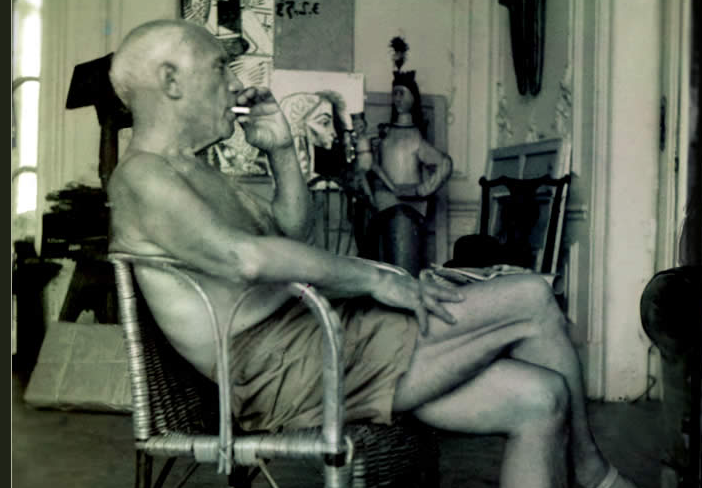
In the summer of 1955, Frederick Baldwin, a college student at Columbia University, set out on a pilgrimage of sorts, hoping to meet Pablo Picasso. Baldwin traveled first to Le Havre (presumably by boat), then headed south, down to Vallauris and Cannes, until he eventually reached Picasso’s home on the Riviera, known as Villa la Californie. It took a little craftiness and moxie, but the young American gained entrance into Picasso’s studio. And there he was, the great painter himself, wearing shorts, sandals and not much else.
More than five decades later, Baldwin has produced an elegant e‑book (available for free right here) that uses photographs and text to preserve the memory of this defining moment. After meeting Picasso, Baldwin became a professional photographer, working for Audubon, LIFE, National Geographic, Smithsonian Magazine, and The New York Times, among other magazines. And, later, he looked to “replicate the Picasso experience professionally,” always controlling his own agenda, never taking a job where he wasn’t making his own decisions. You can download the 22 page e‑book, Dear Monsieur Picasso, right here. Find more great texts in our collection of Free eBooks.
Related Content:
Free: The Guggenheim Puts 65 Modern Art Books Online
Read More...The Big Cheat
There’s high drama in the classroom at the University of Central Florida. Richard Quinn, a longtime business instructor, gives 600 students their mid-term exam. Then comes the anonymous tip that cheating is rampant. Forensic analysis bears that out. Ultimatums are made. Moral lessons drawn. Soon the confessions – all 200 of them – follow. A rough day for all involved.
Postscript: We poked around a bit more and read the student newspaper at UCF. It’s possible that the cheating ring may be less devious than it first appears, but it’s still not entirely clear.
via Kottke.org
Read More...Jane Austen’s Fiction Manuscripts Online
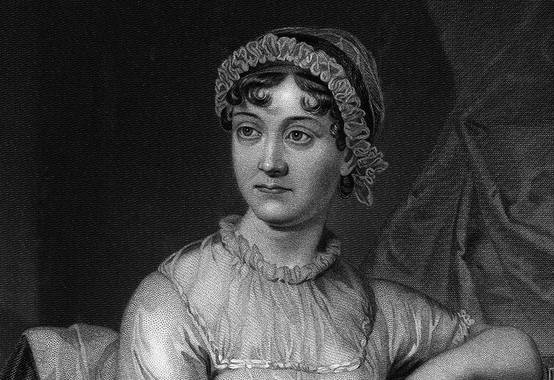
Together, Oxford University and King’s College London are leading a three year effort to unite in one digital archive the surviving manuscripts of Jane Austen’s fiction. Since 1845, these texts have been dispersed among libraries and private collections. Now, they’re getting back together, at least virtually. When finished, the digital collection will include every manuscript Austen produced, starting during her youth (around 11 years old) and ending with her death at age 41. You can start reviewing some of the first manuscripts brought online here, and get more background on the project here. Good find by Kottke.
Related Content:
Dominic West (aka Jimmy McNulty) Reads Jane Austen
Read More...Paradise Lost
It’s one part Bambi, nine parts Looney Tunes, and runs just under three minutes. Dilla, as the film is called, was created by four students at the Ringling College of Art and Design in Sarasota, Florida. It was apparently their senior project completed earlier this year. Nice work Mike, Stanley, Dominic and Mikey …
Read More...China’s Open Courses & Other Tech Dispatches from Asia
Back in 2003, the Chinese government launched its answer to MIT’s OpenCourseWare project. The “National Quality Course Plan” scoured China’s vast university system and selected 3,000 best-of-breed courses in various subject areas. Then, millions of dollars were earmarked to put lectures and related course materials online, with the hope that other professors could draw inspiration from these resources. But, things didn’t go so well. Apparently roughly 50% of these materials never made their way online. And the materials that did were rarely updated. (More on that here.) Will the project get renewed? Jeff Young, a reporter for The Chronicle of Higher Education, went to China to find out. His report (read it here) is part of a month long series of dispatches that takes you inside Asia’s wired classrooms and high-tech research labs. You can read Jeff’s daily posts from Singapore, China, South Korea, and India throughout this entire month.
Update: One of our readers wrote a thesis on China’s opencourseware initiative and offers much more detail on what went right, and what went wrong. You can download Stian Håklev’s thesis (for free) here, and be sure to check out Stian’s other brainchild, Peer2Peer University, otherwise known more simply as P2PU.
Read More...William S. Burroughs Reviews a Led Zeppelin Concert for Crawdaddy! Magazine (1975)
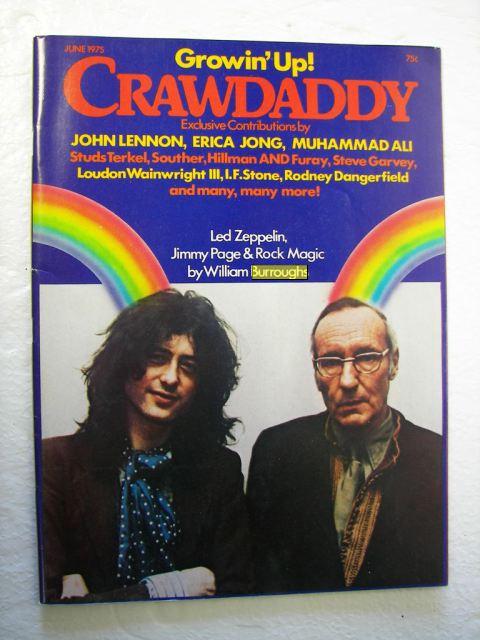
Crawdaddy! It was the first US magazine of rock music criticism, preceding both Rolling Stone and Creem. Paul Williams, then a student at Swarthmore College, first launched the magazine in 1966. And by the 1970s, Crawdaddy! hit its stride, publishing exclusive contributions by John Lennon, Joseph Heller, and Studs Terkel, to name a few. On one occasion, the self-described “first magazine to take rock and roll seriously” sent William S. Burroughs, the great beat writer, to a Led Zeppelin concert. He came back in June 1975 with a rather offbeat concert review. There’s a strange innocence, even naivete, to the whole piece (though we know better than to confuse Burroughs himself with innocence). We give you an excerpt right below, and the rest here.
So there we sat, I decline earplugs; I am used to loud drum and horn music from Morocco, and it always has, if skillfully performed, an exhilarating and energizing effect on me. As the performance got underway I experienced this musical exhilaration, which was all the more pleasant for being easily controlled, and I knew then that nothing bad was going to happen. This was a safe and friendly area–but at the same time highly charged. There was a palpable interchange of energy between the performers and the audience which was never frantic or jagged. The special effects were handled well and not overdone.
A few special effects are much better than too many. I can see the laser beams cutting dry ice smoke, which drew an appreciative cheer from the audience. Jimmy Page’s number with the broken guitar strings came across with a real impact, as did John Bonham’s drum solo and the lyrics delivered with unfailing vitality by Robert Plant. The performers were doing their best, and it was very good. The last number, “Stairway to Heaven”, where the audience lit matches and there was a scattering of sparklers here and there, found the audience well-behaved and joyous, creating the atmosphere of a high school Christmas play. All in all a good show; neither low nor insipid. Leaving the concert hall was like getting off a jet plane.
The Burroughs piece continues here.
Related Content:
‘Stairway to Heaven’: Watch a Moving Tribute to Led Zeppelin at The Kennedy Center
Led Zeppelin Plays One of Its Earliest Concerts (Danish TV, 1969)
Hear Led Zeppelin’s Mind-Blowing First Recorded Concert Ever (1968)
Read More...Where to Find Free Textbooks
 Lifehacker just ran a new feature today “Five Best Places to Buy Cheap Textbooks.” Cheap is good, no doubt. But free is even better. So we figured why not take the wraps off of a new Open Culture collection: 100+ Free Textbooks: A Meta Collection.
This new and growing collection pulls together an assortment of free textbooks available online. The list is mostly slanted toward science and math (that’s what is out there), and the texts are almost entirely written by college professors or qualified high school teachers. In some instances, these texts were originally published in book format, and now the authors have decided to publish them online. In other cases, authors joining the “open textbook” movement (see Flat World Knowledge, CK-12, Curriki, etc.) have published their works for the first time in electronic format, often under a Creative Commons license. We will update the list continually. But if you see good texts missing, please feel free to ping us. You can access 100+ Free Textbooks: A Meta Collection here, and please forward the link to any young students or lifelong learners who might benefit…
P.S. This collection will always appear in the top navigation of the web site. Just look for “Textbooks” in the top nav bar.
Read More...Is TED the New Harvard?
Next month’s edition of Fast Company (available online now) brings you a big, glowing tribute to TED and its TED Talks. It’s a lovefest in print, the kind that sells magazines. And, along the way, Anya Kamenetz (author of DIY U) makes some big claims for TED. Let me start with this one:
I would go so far as to argue that [TED’s] creating a new Harvard — the first new top-prestige education brand in more than 100 years.
Of course TED doesn’t look like a regular Ivy League college. It doesn’t have any buildings; it doesn’t grant degrees. It doesn’t have singing groups or secret societies, and as far as I know it hasn’t inspired any strange drinking games.
Still, if you were starting a top university today, what would it look like? You would start by gathering the very best minds from around the world, from every discipline. Since we’re living in an age of abundant, not scarce, information, you’d curate the lectures carefully, with a focus on the new and original, rather than offer a course on every possible topic. You’d create a sustainable economic model by focusing on technological rather than physical infrastructure, and by getting people of means to pay for a specialized experience. You’d also construct a robust network so people could access resources whenever and from wherever they like, and you’d give them the tools to collaborate beyond the lecture hall. Why not fulfill the university’s millennium-old mission by sharing ideas as freely and as widely as possible?
TED, the new Harvard. The new university. It’s a nice idea … until you think about it for a few moments. Will watching 18 minute lectures – ones that barely scratch the surface of an expert’s knowledge – really teach you much? And when the 18 minutes are over, will the experts stick around and help you become a critical thinker, which is the main undertaking of the modern university after all? (Will they assign the papers where you grapple with the difficult ideas? Will they make sure your arguments are sound? That your writing is lucid? Or will they even expand on their brief lectures and teach you something in-depth?) Nope, you’ll get none of that. The experts will give their 18 minute talks, and then they’re gone. Ultimately, Kamenetz seems to know she’s overreaching. She eventually circles around to say, “Sure, these talks have their limits as an educational medium. An 18-minute presentation, no matter how expert, can’t accommodate anything overly theoretical or technical — the format is more congenial to Freakonomics than economics.” And so the whole initial, catchy premise falls apart. (Maura Johnston rightly makes this point too, among other good ones, in her must-read reaction to the “breathless” Fast Company article.)
I have no beef with TED. Quite the contrary, I’m a big fan of their open lectures. (Get the full list here.) And you can’t blame TED when others read too much into what they do. But, echoing points made last week, I do have an issue with commentators reducing education to watching TV. So a quick request to the “edupunks” and “edupreneurs” out there. As you’re democratizing education and lowering tuition through technology, could you make sure that whatever you’re finally offering is an education in more than mere name? You feel me?
NOTE: Anya Kamenetz, the author of the Fast Company article, offers a response in the comments below. In fairness to her, please give them a read. We also have a little follow up.
Read More...200 Free Textbooks: A Meta Collection
Free textbooks (aka open textbooks) written by knowledgable scholars are a relatively new phenomenon. Below, find a meta list of 200 Free Textbooks, and check back often for new additions. Also see our online collection, 1,700 Free Online Courses from Top Universities.
Art History
- A Textbook of the History of Painting by John Charles Van Dyke, Rutgers
Biology
- Anatomy and Physiology — Edited by various profs at OpenStax
- Biology — Edited by various profs at OpenStax
- Biochemistry Free For All 1.3 — Kevin, Indira and Taralyn
- Biochemistry Free and Easy — Kevin Ahern and Dr. Indira Rajagopal, Oregon State
- Botany Online: The Internet Hypertextbook by multiple scholars.
- Cells: Molecules and Mechanisms. Published by the Axolotl Academic Publishing Co.
- CK-12 Biology I (Grades 9–12) edited by Douglas Wilkin, Chair, Dept of Science, Los Angeles Unified School District
- CK-12 Life Science (Grades 9–12) edited by Douglas Wilkin, Chair, Dept of Science, Los Angeles Unified School District
- Concepts of Biology — Edited by various profs at OpenStax
- Fundamentals of Cell Biology — Lauren Dalton and Robin Young
- Guide to Getting into Med School — Kevin Ahern and Dr. Indira Rajagopal, Oregon State
- Life on Earth (iBook) — E.O. Wilson, Harvard
Business and Management
- Business Ethics by Jose A. Cruz-Cruz, William Frey, University of Puerto Rico — Mayaguez
- Business Fundamentals by the Global Text Project
- Core Concepts of Marketing by John Burnett
- Corporate Finance by Ivo Welch, UCLA
- CREATE OR PERISH: The Case for Inventions and Patents by Robert Rines, MIT
- Electronic Commerce by Multiple authors, University of Georgia, Bentley College, and Simon Fraser University
- Guidelines for Improving the Effectiveness of Boards of Directors of Nonprofit Organizations by Vic Murray and Yvonne Harrison, SUNY, Albany
Chemistry
- Chemistry Virtual Textbooks by Stephen Lower, Simon Fraser University
- CK-12 Chemistry (Grades 9–12) by multiple authors. Covers high school chemistry curriculum in California.
- Concept Development Studies in Chemistry by John S. Hutchinson, Rice University
- Concepts in Physical Chemistry by Peter Atkins, Oxford
- Organic Chemistry (with a Biological Emphasis) by Tim Soderberg, University of Minnesota, Morris
- Virtual Textbook of Organic Chemistry. Presented by Michigan State
Classics
- Cicero, On Pompey’s Command (De Imperio), 27–49. Latin Text, Study Aids with Vocabulary, Commentary, and Translation, by Ingo Gildenhard, Louise Hodgson, et al, Cambridge University.
- Tacitus, Annals, 15.20-23, 33-45. Latin Text, Study Aids with Vocabulary, and Commentary, by Mathew Owen and Ingo Gildenhard, Cambridge University
- Virgil, Aeneid, 4.1–299. Latin Text, Study Questions, Commentary and Interpretative Essays by Ingo Gildenhard, by Cambridge University
- Cicero, Against Verres, 2.1.53–86. Latin Text with Introduction, Study Questions, Commentary and English Translation, by Ingo Gildenhard, Cambridge University
Computer Science & Information Systems
- A Byte of Python, by Swaroop C H
- A First Course in Electrical and Computer Engineering by Louis Scharf, Colorado State
- Artificial Intelligence: Foundations of Computational Agents by David Poole and Alan Mackworth, University of British Columbia
- Bits, Signals, and Packets: An Introduction to Digital Communications and Networks by Hari Balakrishnan, Christopher Terman, and George Verghese, MIT
- Code Like a Pythonista: Idiomatic Python, by David Goodger
- Computational Geometry by Nicholas M. Patrikalakis, Takashi Maekawa, MIT
- Dive into Python 3, by Mark Pilgrim
- Foundations of Computer Science by Al Aho (Columbia) and Jeff Ullman (Stanford)
- How to Design Programs: An Introduction to Computing and Programming, Multiple Authors
- High Performance Computing by Charles Severance, University of Michigan
- How to Think Like a Computer Scientist: C ++ ( PDF) by Allen B. Downey, Olin College
- How to Think Like a Computer Scientist: Java by Allen B. Downey, Olin College
- How to Think Like a Computer Scientist: Python by Allen B. Downey, Olin College
- How to Think Like a Computer Scientist: Learning with Python 3 by Peter Wentworth, Jeffrey Elkner, Allen B. Downey, and Chris Meyers.
- Implementing a One Address CPU in Logisim by Charles W. Kann III, Gettysburg College
- Information Technology and the Networked Economy by Patrick McKeown, University of Georgia
- Information Theory, Inference, and Learning Algorithms by David MacKay, Cambridge
- Introduction To MIPS Assembly Language Programming by Charles W. Kann III, Gettysburg College
- Neural Networks and Deep Learning, by Michael Nielsen, Research Fellow at the Recurse Center
- Patterns for Beginning Programmers (with Examples in Java), by David Bernstein, James Madison University
- Philosophy of Computer Science by William J. Rapaport, University at Buffalo, The State University of New York
- Principles of Computer System Design: An Introduction (Part 1 and Part II) by Jerome Saltzer and M. Frans Kaashoek.
- Principles of Programming Languages by Grad Students, Johns Hopkins
- Programming Languages: Application and Interpretation by Dr. Shriram Krishnamurthi, Brown University.
- Prolog and Natural-Language Analysis by Fernando C. N. Pereira and Stuart M. Shieber, U Penn & Harvard
- Python for Informatics: Exploring Information by Charles Severance, University of Michigan
- Structure and Interpretation of Computer Programs by Jerry Sussman & Julie Sussman
- Teach Yourself WordPerfect Mac by John Rethorst
- The Princeton Bitcoin Textbook by Arvind Narayanan (Princeton) and colleagues
Earth Science
- CK-12 Earth Science for Middle School by multiple authors.
- Introduction to Physical Oceanography by Dr. Robert Stewart, Texas A&M University
Economics & Finance
- Principles of Macroeconomics by Libby Rittenberg and Timothy Tregarthen, Colorado College
Education
- Educational Psychology by Kevin Seifert and Rosemary Sutton, University of Manitoba and Cleveland State
Electrical Engineering
- Digital Circuit Projects: An Overview of Digital Circuits Through Implementing Integrated Circuits by Charles W. Kann, Gettysburg College
- Electromagnetics and Applications by David Staelin, MIT
- Electromechanical Dynamics by Herbert H. Woodson and James R. Melcher, MIT
- Fundamentals of Electrical Engineering I by Don Johnson, Rice University
- Introduction to Nanoelectronics by Marc Baldo, MIT
- Introduction to Physical Electronics by William Wilson, Rice University
- Introduction to Statics and Dynamics by Andy Ruina and Rudra Pratap, Cornell University
- Lessons In Electric Circuits by Tony R. Kuphaldt, Bellingham Technical College
- Operational Amplifiers: Theory and Practice by James K. Roberge, MIT
- Signals, Systems and Inference by MIT
- Signals and Systems, by Alan Oppenheim and Alan Willsky, MIT
- System Design for Uncertainty, by Michael S. Triantafyllou, MIT
- The Art of Insight in Science and Engineering: Mastering Complexity, by Prof. Sanjoy Mahajan
Engineering
- Analysis of Structural Member Systems by Jerome Connor, MIT
- Engineering: An Introduction for High School (9–12) by multiple authors
- Maneuvering and Control of Surface and Underwater Vehicles, by Michael S. Triantafyllou, MIT
- Mechanics of Materials by MIT
History
- US History Learner English (ESL) by The Learner English Series
- U.S. History since 1877 by James Ross-Nazzal, Houston Community College
Languages
- Deutsch im Blick by the University of Texas
- German for Reading Knowledge by Howard Martin, revised and expanded as an open online textbook by Alan Ng, University of Wisconsin-Madison
- Hindi: An Active Introduction by DN Sharma & James Stone, Foreign Service Institute
- Learning Chinese: A Foundation Course in Mandarin by Julian Wheatley, MIT
- My Korean 1 and 2 by Young‑A Cho, In-Jung Cho, Monash University (Australia)
- Español I (free for iPad) by David Nance, ADE Distance Learning Center
- French: Familiarization and Short-Term Training by Foreign Service Institute
- Spanish: Familiarization and Short Term Training by Foreign Service Institute
Law
- Open Intellectual Property Casebook by James Boyle and Jennifer Jenkins, Duke
Linguistics
- How Language Works: The Cognitive Science of Linguistics by Mike Gasser, Indiana University
Mathematics
- Abstract Algebra: The Basic Graduate Year by Robert B. Ash, University of Illinois
- Abstract Algebra: Theory and Applications by Thomas W. Judson, Stephen F. Austin State University
- Advanced Algebra II by Kenny Felder, Raleigh Charter High School
- Advanced Calculus by Sternberg Shlomo and Lynn Loomis, Harvard University
- Algebra 1 (Grades 9 & 10) by Andrew and Anne Gloag, High Tech High in San Diego, California
- Algebra and Analysis for Computer Science by Jean Gallier, University of Pennsylvania.
- Applied Probability by Paul Pfeiffer, Rice University
- Basic Analysis by Jiří Lebl, University of Illinois at Urbana-Champaign
- Basic Concepts of Mathematics by Elias Zakon, The University of Windsor
- Basic Probability Theory by Robert B. Ash, University of Illinois
- Basic Probability and Statistics by Brenda Meery, high school mathematics teacher in Glace Bay, Nova Scotia
- Book of Proof by Dr. Richard Hammack, Virginia Commonwealth University
- Calculus for Beginners and Artists by MIT
- Calculus Online Textbook, by Gilbert Strang, MIT
- Calculus (PDF) by David Guichard, Whitman College.
- Calculus (PDF) by Gilbert Strang, MIT
- Calculus 1 by Paul Dawkins, Lamar University
- Calculus 2 by Paul Dawkins, Lamar University
- Calculus 3 by Paul Dawkins, Lamar University
- Calculus with Applications, by Daniel Kleitman, MIT
- CK-12 Geometry (Grades 10–12) by multiple authors. Covers California curriculum.
- CK-12 Single Variable Calculus (Grades 11–12) by Multiple authors. Covers California curriculum.
- CK-12 Trigonometry — Second Edition (Grades 10–12) by multiple authors. Covers California curriculum.
- Collaborative Statistics by Barbara Illowsky, Ph.D and Susan Dean, De Anza College
- College Algebra by Paul Dawkins, Lamar University
- Complex Analysis by George Cain, Georgia Institute of Technology
- Complex Variables by Robert B. Ash, University of Illinois
- Computational Geometry by Nicholas M. Patrikalakis, Takashi Maekawa, MIT
- A Computational Introduction to Number Theory and Algebra by Victor Shoup, NYU
- A Course In Algebraic Number Theory by Robert B. Ash, University of Illinois
- A Course In Commutative Algebra by Robert B. Ash, University of Illinois
- Design of Comparative Experiments by R. A. Bailey, University of London
- Difference Equations to Differential Equations: An Introduction to Calculus by Dan Sloughter, Furman University
- Differential Equations by Paul Dawkins, Lamar University
- Discrete Mathematics: An Open Introduction by Oscar Levin, University of Northern Colorado
- Dynamical Systems by S. Sternberg, Harvard University
- Electronic Statistics Textbook by T. Hill & P. Lewicki.
- Elementary Abstract Algebra by W. Edwin Clark, University of Southern Florida
- Elementary Calculus: An Infinitesimal Approach by H. Jerome Keisler, University of Wisconsin-Madison
- Elementary Differential Equations (PDF) by William F. Trench, Trinity University
- Elementary Differential Equations with Boundary Value Problems (PDF) by William F. Trench, Trinity University
- Student Solutions Manual for Elementary Differential Equations and Elementary Differential Equations with Boundary Value Problems (PDF) by William F. Trench, Trinity University
- Elementary Linear Algebra by Keith Matthews, University of Queensland
- Elementary Number Theory by W. Edwin Clark, University of Southern Florida
- Elements of Abstract and Linear Algebra by Edwin H. Connell, University of Miami
- First Course in Complex Analysis by Matthias Beck, Gerald Marchesi, and Dennis Pixton, SUNY — Binghamton
- First Course in Linear Algebra by Dr. Robert Beezer, University of Puget Sound
- Functions Defined by Improper Integrals (PDF) by William F. Trench, Trinity University
- GeneratingFunctionology by Herbert Wilf, University of Pennsylvania
- Introduction to Matrix Algebra by Autar K Kaw, University of South Florida
- Introduction to Probability (PDF) by Charles Grinstead & J. Laurie Snell, Swarthmore & Dartmouth Colleges
- Introduction to Probability, Statistics, and Random Processes by Hossein Pishro-Nik, UMass Amherst
- Introduction to Real Analysis (PDF) by William F. Trench, Trinity University
- Introduction to Social Network Methods by Robert A. Hanneman and Mark Riddle, UC Riverside
- Introduction to Statistical Thought by Michael Lavine, UMASS
- Introductory Statistics: Concepts, Models, and Applications by David W. Stockburger, Missouri State
- Introduction to the Theory of Numbers by Leo Moser, McGill
- Lectures on Probability, Statistics and Econometrics by Marco Taboga, Economist, Bank of Italy
- Lectures on Statistics by Robert B. Ash, University of Illinois
- Linear Algebra (PDF) by Jim Hefferon, Saint Michael’s College
- Linear Algebra by Paul Dawkins, Lamar University
- Math Alive by Ingrid Daubechies, Princeton University
- Math in Society by David Lipmann, Pierce College
- Math, Numerics, and Programming (for Mechanical Engineers) by Masayuki Yano, MIT
- Mathematical Methods of Engineering Analysis (PDF) by Erhan Çinlar and Robert J. Vanderbei, Princeton University
- Multivariable Calculus by George Cain & James Herod, Georgia Tech
- Proofs and Concepts: The Fundamentals of Abstract Mathematics by Dave Witte Morris and Joy Morris, University of Lethbridge
- Real Variables with Basic Metric Space Topology by Robert B. Ash, University of Illinois
- Statistics by Philip B. Stark, University of California — UC Berkeley
- A Summary of Calculus by Karl Heinz Dovermann, University of Hawaii
- The Book “A=B” by Marko Petkovsek, Herbert Wilf and Doron Zeilberger, Univ. of Pennsylvania and Rutgers
- The Method of Lagrange Multipliers (PDF) by William Trench, Trinity University
- The Calculus of Functions of Several Variables by Dan Sloughter, Furman University
- Yet Another Calculus Text by Dan Sloughter, Furman University
Music
- Beyond Slonimsky: Melodic Patterns for Guitar — by Rich Cochrane (Find alternate version here)
- Music Fundamentals 1: Pitch and Major Scales and Keys — by Terry B. Ewell, Towson University
- Music Fundamentals 3: Minor Scales and Keys — by Terry B. Ewell, Towson University
- Music Fundamentals 5: Triads, Chords, Introduction to Roman Numerals by Terry B. Ewell, Towson University
- Scale and Arpeggio Resources: A Guitar Encyclopedia by Rich Cochrane (Find alternate version here)
- Sound Reasoning (Introductory Music course) by Anthony Brandt, Rice University
- Understanding Basic Music Theory, Edited by Catherine Schmidt-Jones
Philosophy
- Animals and Ethics 101: Thinking Critically About Animal Rights by Nathan Nobis, Morehouse College
- A Modern Formal Logic Primer by Paul Teller, UC Davis
- Arguments: Deductive Logic Exercises, by H. Pospesel and D. Marans, UC Davis
- forall x: An Introduction to Formal Logic by PD Magnus, University at Albany, State University of New York
- forallx: Cambridge by P.D. Magnus; modified for Cambridge by Tim Button
- Metatheory for truth-functional logic by Tim Button, Cambridge University
Physics
- Age of Einstein, by Frank W. K. Firk, Yale University.
- Calculus-Based Physics by Jeffrey W. Schnick, Saint Anselm College
- College Physics (introductory, algebra-based, two-semester college physics book) by OpenStax
- Conceptual Physics by Benjamin Crowell, Fullerton College
- Conservation Laws by Benjamin Crowell, Fullerton College
- Essential Physics 1, Frank W.K. Firk, Yale University
- Fields by Warren Siegel, SUNY
- General Relativity by Benjamin Crowell, Fullerton College
- Introduction to Groups, Invariants & Particles, by Frank W. K. Firk, Yale University
- Introduction to Statics and Dynamics by Andy Ruina and Rudra Pratap, Cornell University
- Introduction to String Field Theory by Warren Siegel, SUNY
- Mountain Motion by Dr. Christoph Schiller PhD, trained at Université Libre de Bruxelles
- Optics by Benjamin Crowell, Fullerton College
- Programming Languages: Application and Interpretation by Dr. Shriram Krishnamurthi, Brown University
- Simple Nature: An Introduction to Physics for Engineering and Physical Science Students by Ben Crowell, Fullerton College
- Superspace: One Thousand and One Lessons in Supersymmetry by Warren Siegel. Jim Gates, Marc Grisaru, and Martin Rocek, SUNY, McGill, University of Maryland
- The Feynman Lectures on Physics by Richard Feynman, Robert B. Leighton and Matthew Sands
- The Light and Matter Series (Six texts) by Benjamin Crowell, Fullerton College
- Vibrations and Waves by Benjamin Crowell, Fullerton College
- The Modern Revolution in Physics by Benjamin Crowell, Fullerton College
- The People’s Physics Book by James H. Dann, UC Santa Cruz
- 21st Century Physics Flexbook: A Compilation of Contemporary and Emerging Technologies, by the Secretaries of Education and Technology and the Department of Education in the state of Virginia
Psychology
- Educational Psychology by Kevin Seifert and Rosemary Sutton, University of Manitoba and Cleveland State
Sociology
- American Society: How It Actually Works by By Erik Olin Wright & Joel Rogers, University of Wisconsin
- Introduction to Sociology by multiple professors
System Theory
- Introduction to the Modeling and Analysis of Complex Systems by Hiroki Sayama, Binghamton University, State University of New York.
Find more texts in our Free eBooks and Free Audio Books collections
Read More...Bill Gates: The Internet Will Displace the Traditional University in 5 Years
Speaking at the Techonomy conference in Lake Tahoe last week, Bill Gates argued that the cost of college needs to come down, and the only way to accomplish this is through technology and lessening the importance of “place-based” colleges. That’s how you keep college education open to all. During the talk, he went further and asserted, “Five years from now, on the Web for free, you’ll be able to find the best lectures in the world. It will be better than any single university.”
To be sure, I don’t dispute this particular point. You can already find hundreds of free courses online, and that’s part of our reason for being. But, as I have frequently reminded people, listening to lectures doesn’t mean you’re getting a rounded education. Lectures inform you. They’re great in that way. But you get an education when you couple lectures with readings, when you chew over ideas in a discussion section, when you analyze the lectures and readings in critical papers, when you take exams that force you to synthesize everything you’ve learned during the entire semester, etc. Right now, it is very hard to accomplish this online. On a relative basis, e‑learning tools have evolved strikingly slowly during the past decade. The widely deployed tools are often still klunky and rudimentary. And it still takes considerable time, money and labor to produce a truly excellent online course. (At least that’s what I have found during my ten years in the space.) Will we make progress here? Yes. Would I welcome it? Of course. But will we offer a substantive and highly scalable online alternative in five years? Very doubtful, unless a catalyst comes along who can dramatically sweep away the existing major players (who just bog things down) and introduce some serious innovation. Mr. Gates, are you that catalyst?
via Wired Campus
Read More...Support Us
We're hoping to rely on loyal readers, rather than erratic ads. Please click the Donate button and support Open Culture. You can use Paypal, Venmo, Patreon, even Crypto! We thank you!

About Us

Open Culture scours the web for the best educational media. We find the free courses and audio books you need, the language lessons & educational videos you want, and plenty of enlightenment in between.
Advertise With Us
FREE UPDATES!
GET OUR DAILY EMAIL
Get the best cultural and educational resources on the web curated for you in a daily email. We never spam. Unsubscribe at any time.
FOLLOW ON SOCIAL MEDIA
Open Culture editor Dan Colman scours the web for the best educational media. He finds the free courses and audio books you need, the language lessons & movies you want, and plenty of enlightenment in between.
Advertise With Us

