14 Easy Ways You Can Be An Everyday Environmentalist
The Nature Conservancy asked its staff and leading environment bloggers how you can make “personal, science-based choices to help save the planet.” Here are their 14 suggestions.
Read More...
Is Morality Hardwired in Us?
Is morality a sixth sense that’s in all of us, and is it perhaps a product of our biological evolution? Writing recently in The New York Times Magazine, Harvard psychology professor Steven Pinker suggests that morality may well be hardwired. And he points to fascinating new research that backs up this belief. Pinker’s article covers pretty much the same ground as does this engaging Radio Lab podcast (MP3 — iTunes — Feed — Web Site). Taking an hour-long look at the “science of morality,” the program gets into some fascinating stuff. It gets into the great Trolley moral dilemma, into what brain scans (MRI’s) reveal when human brains grapple with moral questions, and into how scientists think that we inherited moral instincts from our primate ancestors. You’ll learn all about how morality is our “inner chimp.” If this is not enough, you can also listen to Pinker’s interview yesterday on NPR’s Talk of the Nation. Get it here.
See our collection of Science Podcasts and Subscribe to Our Feed
Read More...Turn Your iPod into a Travel Guide: 20 Travel Podcasts
Over the past year, we’ve seen a steady supply of new travel podcasts coming online. Some are produced by the publishers of major travel guides; others by passionate individual travelers. Many are in video, some even in HD. These podcasts will generally help you travel much more knowledgeably. And, in most cases, they’ll say something about a travel destination that a traditional guide never could. This collection will grow over time. You can find it housed permanently in our Podcast Library located on the top right of each page. (There you can also find our collection of Free Language Lessons, which will be handy, too, for your travels.)
- A Year in Europe iTunes Feed Web Site
- A well reviewed podcast. “Scott and Sheryl quit their jobs and sold their home. Now they’re on a year-long excursion through Europe where they’re exploring the places they’ve read about and dreamed of visiting. Follow them on their journey as they experience the cultures, art and history they find fascinating.”
- Amateur Travel Podcast — Video iTunes Feed Web Site
- Focuses on travel stories with a dash of travel news, travel tips and travel resources. And, yes, as the title suggests, it’s in video.
- Anthony Bourdain — No Reservations iTunes Web Site
- Produced by the Travel Channel, this video podcast combines travel with the love of food.
- Beautiful Places (iPod/iTunes) iTunes Download Web Site
- This video podcast focuses on the great outdoors. Destinations explored here include Big Sur, Yosemite, Rocky Mountain National Park, etc. You can find an HD version of the podcast here.
- Big in Taiwan HD iTunes Feed Web Site
- These videos highlight the people, culture, sights & sounds of Taiwan.
- Copenhagen Podwalks iTunes Web Site
- Podcasts that will get you around Denmark’s capital.
- Discover France with Sebastien iTunes Feed Web Site
- Gives you a good look at French towns. In video.
- Finding America iTunes Feed Web Site
- See the real America in video. Travel every major road in the USA and see the country from something other than a glossy, manufactured perspective.
- Frommer’s Podcast iTunes Feed Web Site
- Travel info from Kelly Regan, editorial director of Frommer’s Travel Guides, and David Lytle, editorial director of Frommers.com. So far audio only. (It’s curious that the big publishers are producing less dynamic podcasts than the small guys are.)
- Inside Grand Canyon iTunes Feed Web Site
- Learn about Grand Canyon National Park with a park ranger as your guide. This is a video podcast.
- iPod Traveler iTunes Feed Web Site
- Two Londoners give you their personal look at Europe. This audio podcast was discontinued in 2007, but the extensive archive remains.
- Italy From the Inside iTunes Web Site
- A native Italian tells first-time travelers how to make the most of Italy. Some in audio; some in video.
- Italy Travel Guide: Rome, Venice & Florence iTunes Feed Web Site (Also HD movies here)
- A close look at Italy’s great cities.
- Let’s Travel Radio iTunes Feed Web Site
- An internet travel radio show that takes you to the four corners of the world. Features talks with globetrotters, artists, chefs and musicians.
- Lonely Planet Travelcasts iTunes Feed Web Site
- Produced by one of the leading travel guide publishers, these podcasts are very international in scope. Audio only.
- Samantha Brown: Passport to Latin America iTunes Web Site
- Produced by the Travel Channel, this well-reviewed video podcast often focuses on Central and South America, which is something that’s hard to find .… at least so far.
- Travel in 10 iTunes Feed Web Site
- A 10 minute travel podcast that takes listeners to destinations around the globe to present soundscapes and audiotours from hip hotels, great restaurants, concerts, festivals and events.
- Travel with Rick Steves iTunes Feed Web Site
- Produced by one of the bigger names in the travel industry, these audio podcasts give you good global coverage. I should mention that Steves has some other focused podcasts including: Rick Steves’ Europe in Video; Rick Steves’ Italy Audio Tours; and Rick Steves’ France Audio Tours.
- Unabellavista: How to Tour Italy iTunes Feed Web Site
- Learn about Italy’s art, history, architecture, food, and language. In audio.
- Walks of a Lifetime iTunes Feed Web Site
- Produced by National Geographic Traveler. “Stroll across the world, from crowded city centers to rustic country routes, with travel expert Rudy Maxa in National Geographic Traveler magazine’s selection of the world’s greatest walking tours.” In audio.

Stay in Bed & Grow Your Hair: John Lennon and Yoko Ono Protesting the Vietnam War
This looks like it’s the real deal — Yoko Ono’s tribute to John Lennon on YouTube. Among the video clips housed in the collection, you’ll find footage that recaptures the “bed-ins” that John and Yoko famously staged in Montreal and Amsterdam in 1969 to protest the Vietnam War. As Lennon puts it, there’s no better way to protest the war than to “stay in bed and grow your hair.” That’s a form of protest that the lost slacker in me can appreciate.
The footage is accompanied by the song, “Give Peace a Chance,” which was written during the bed-in. It was followed later that year by “War is Over! If You Want It — Happy Christmas From John and Yoko.” The heartbreaking YouTube video set to this song has over one million views.
Related Content:
- The Beatles: Podcasts From Yesterday
- What New Yorkers Heard on the Radio the Night John Lennon was Shot
- The Grey Video: Mixing The Beatles with Jay‑Z
- The Complete Beatles in One Hour (and The Sopranos in Seven Minutes)
 Subscribe to Our Feed and Sign up for our YouTube Playlist
Earthrise & Earthset in HD
In November, Japan’s Kaguya spacecraft orbited the moon with a high-def camera onboard. You can see the first HD footage of an “earthrise” and “earthset” by checking out these still images (Earthrise and Earthset) or watching the video footage below, which has also been added to our YouTube playlist.

Obama Speaks at Martin Luther King’s Church
The celebration of Martin Luther King’s birthday was a little different this year. It had a political edge to it, and unavoidably so. Dr. King’s work made possible what we’re finally seeing today — a black candidate making a serious run at the American presidency. So it seemed entirely appropriate that Barack Obama spoke Sunday before the congregation at Ebenezer Baptist Church in Atlanta, where MLK preached long ago. In this 34-minute speech, you get a perfect reminder of King’s legacy and also a stump speech delivered in an oratorical style that King would appreciate. The video clip below has been viewed close to 450,000 times on YouTube. It’s also been added to our YouTube playlist.

A Slew of New Audiobooks (for Free)
Librivox is on a roll lately. Since December, the provider of free, public domain audiobooks has released a number of classic works on audio. Below, we’ve listed some of the highlights, which we’ve also included in our AudioBook Podcast Collection. (Here, you’ll also find free audiobooks by other providers.) For Librivox’s complete catalogue, click here.
2 B R 0 2 B, Kurt Vonnegut (MP3 File)
A Child’s History of England, Charles Dickens (Full Zip — Individual MP3s)
A Short History of the United States by Edward Channing (Full Zip — Individual MP3 Files)
Hans Brinker by Mary Mapes Dodge, (Full Zip — Individual MP3 Files)
History of the United States, Vol. IV, Charles Beard (Full Zip — Individual MP3 Files)
Meditations on First Philosophy, Rene Descartes (Full Zip - Individual MP3 Files)
The History of the Decline and Fall of the Roman Empire, Vol. II, Edward Gibbon (The Full Zip — Individual MP3s)
The Life of Charlemagne, Einhard (Full Zip — Individual Files)
The Master of the World, Jules Verne (Full Zip — Individual Files)
The Problems of Philosophy, Bertrand Russell (Full Zip — Individual MP3 Files)
The Three Musketeers, Alexandre Dumas (Full Zip — Individual MP3 Files)
The Works of Tacitus (Full Zip — Individual Files)
Read More...
Comments We Love to Hear
In one of our recent pieces, we highlighted a video that featured law professor Cass Sunstein interpreting the second amendment and questioning whether it conferred the right to bear arms. In response, one of our readers offered this comment:
“Reeeeeally good talk. My friend and I sat down to watch it, and before we started, we laid out our positions, basically one on each side of the debate. Sunstein proceeds to explain how we’re both wrong. Awesome.”
I mention this simply because it’s great to see the media (videos/podcasts) featured here being used in this way. It’s great to see readers really engaging with the material and allowing it to shape their views. It’s the ultimate compliment in some ways. Thanks Ben.
Read More...
The Future of Ideas: Download Your Free Copy (and More)
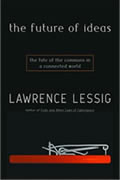 In 2001, Stanford law professor Lawrence Lessig published The Future of Ideas: The Fate of the Commons in a Connected World. Here, Lessig launched a campaign against American copyright law, arguing that it has become so restrictive that it stifles cultural innovation and social progress .… which undermines the original point of copyright law. Back in 1787, the founding fathers included the “copyright clause” in the American constitution, looking to give authors a short-term incentive to innovate and ultimately contribute to the public good. (Article I, Section 8 empowers Congress “To promote the Progress of Science and useful Arts, by securing for limited Times to Authors and Inventors the exclusive Right to their respective Writings and Discoveries.”). At the outset, copyright law protected forms of expression — and let authors profit from them — for a minimum of 14 years and a maximum of 28. Then, the material went into the public domain. But over time, the protections placed on cultural expression have been extended, and now works are protected so long as an author is alive, and then another 70 years. That’s potentially up to 140 years or more. All of this has happened because Congress has been successfully lobbied by large media corporations (e.g. Disney), wanting to monetize their media assets (think, Mickey Mouse) indefinitely.
Anyway, this is a long way of telling you that you can now download The Future of Ideas for free. Lessig persuaded Random House to release the book under a “Creative Commons” license, using the argument that free e‑books will actually stimulate sales of paper copies. (Do you really want to read 350 pages on your computer screen?)
This is not the first time that Lessig has worked with this model. One of his previous books, Free Culture: How Big Media Uses Technology and the Law to Lock Down Culture and Control Creativity, was also made freely available in digital format. (You can download a free audiobook version or buy the paper version here.)
As a final note, I should mention that Lessig will be leaving behind his focus on these copyright issues, and turning his sights to corruption in Washington. Below you can watch him outline the problem that he’s looking to tackle.

Resolving the Omnivore’s Dilemma: Pollan’s New Book
Coming off of the runaway success of Omnivore’s Dilemma, Michael Pollan has just published a logical sequel — In Defense of Food: An Eater’s Manifesto. His new book tells us what to eat, what not to eat, and how to stay healthy. Generally speaking, his advice can be boiled down to a few words: “Eat food. Not too much. Mostly plants.” But there is obviously much more to it than that. To fill in the gaps, you can buy the book or listen to two recent interviews with Pollan:
1.) The Leonard Lopate Show (January 9) : MP3 — iTunes — Feed — Web Site
2.) Science Friday (January 4): MP3 — iTunes — Feed — Web Site
Read More...
Support Us
We're hoping to rely on loyal readers, rather than erratic ads. Please click the Donate button and support Open Culture. You can use Paypal, Venmo, Patreon, even Crypto! We thank you!

About Us

Open Culture scours the web for the best educational media. We find the free courses and audio books you need, the language lessons & educational videos you want, and plenty of enlightenment in between.
Advertise With Us
FREE UPDATES!
GET OUR DAILY EMAIL
Get the best cultural and educational resources on the web curated for you in a daily email. We never spam. Unsubscribe at any time.
FOLLOW ON SOCIAL MEDIA
Open Culture editor Dan Colman scours the web for the best educational media. He finds the free courses and audio books you need, the language lessons & movies you want, and plenty of enlightenment in between.
Advertise With Us