One Trillion Frames Per Second: The Science of Capturing Light in Motion
Ramesh Raskar joined the MIT Media Lab in 2008, where he heads up the Lab’s Camera Culture research group. For some time, the researcher has drawn inspiration from another MIT professor, Harold Edgerton, a pioneer of stop-action photography, who famously photographed a bullet moving through an apple in 1964. Decades later, Raskar and his MIT crew have taken photography to a new level, creating imaging hardware and software that can capture light as it moves. They can visualize pictures as if they were recorded at a rate of one trillion frames per second. His cutting edge work in femto-photography is all on display above.
If you want to get deeper into Raskar’s world, you can check out his free MIT course, Computational Camera and Photography, which is located in the Computer Science/Artificial Intelligence section of our collection of Free Online Courses.
via Roger Ebert
Read More...Bob Dylan and Allen Ginsberg Visit the Grave of Jack Kerouac (1975)
Above you can watch a rare 1975 meeting, of sorts, of three hugely influential twentieth-century cultural minds: Bob Dylan, Allen Ginsberg, and — in spirit, anyway — Jack Kerouac, who died six years before. This clip, though brief, would be fascinating enough by itself, but Sean Wilentz provides extensive backstory in “Penetrating Aether: The Beat Generation and Allen Ginsberg’s America,” an essay fron the New Yorker. “On a crisp scarlet-ocher November afternoon at Edson Cemetery in Lowell,” as he describes it, “Bob Dylan and Allen Ginsberg visited Kerouac’s grave, trailed by a reporter, a photographer, a film crew, and various others (including the young playwright Sam Shepard).” There “Ginsberg recited not from Kerouac’s prose but from poetry out of Mexico City Blues [ … ] invoking specters, fatigue, mortality, Mexico, and John Steinbeck’s boxcar America, while he and Dylan contemplated Kerouac’s headstone.” Why that particular collection? “Someone handed me Mexico City Blues in St. Paul in 1959,” Wilentz quotes Dylan as having told Ginsberg. “It blew my mind.”
In the piece, which comes adapted from his book Bob Dylan in America, Wilentz goes into great detail describing Dylan as a link between two sometimes compatible and sometimes antagonistic subcultures in midcentury America: the folk music movement and the Beat generation. “I came out of the wilderness and just naturally fell in with the Beat scene, the bohemian, Be Bop crowd, it was all pretty much connected,” Wilentz quotes Dylan as saying in 1985. “It was Jack Kerouac, Ginsberg, Corso, Ferlinghetti … I got in at the tail end of that and it was magic … it had just as big an impact on me as Elvis Presley.” Wilentz describes Dylan relating to Kerouac as “a young man from a small declining industrial town who had come to New York as a cultural outsider more than twenty years earlier—an unknown bursting with ideas and whom the insiders proceeded either to lionize or to condemn, and, in any case, badly misconstrue.” The Beats showed Dylan a path to maintaining his cultural relevance, a trick he’s managed over and over again in the decades since. “Even though Dylan invented himself within one current of musical populism that came out of the 1930s and 1940s,” Wilentz writes, “he escaped that current in the 1960s—without ever completely rejecting it—by embracing anew some of the spirit and imagery of the Beat generation’s entirely different rebellious disaffiliation and poetic transcendence.”
Note: Do you want to hear Sean Wilentz read Bob Dylan in America for free? (Find an audio sample here.) Just head over to Audible.com and register for a 30-day free trial. You can download any audiobook for free. Then, when the trial is over, you can continue your Audible subscription, or cancel it, and still keep the audio book. The choice is entirely yours. And, in full disclosure, let me tell you that we have a nice arrangement with Audible. Whenever someone signs up for a free trial, it helps support Open Culture.
Related content:
Allen Ginsberg Reads His Classic Beat Poem, Howl
Two Legends Together: A Young Bob Dylan Talks and Plays on The Studs Terkel Program, 1963
Colin Marshall hosts and produces Notebook on Cities and Culture. Follow him on Twitter at @colinmarshall.
Read More...William S. Burroughs’ Class on Writing Sources (1976)
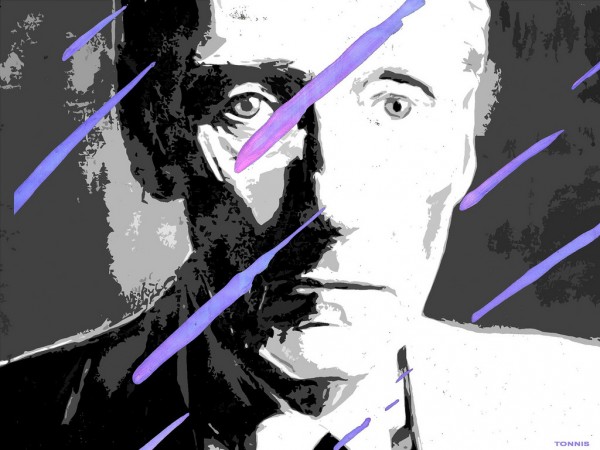
Image by Christiaan Tonnis, via Wikimedia Commons
These lectures were recorded in July 1976 at Naropa University in Boulder, CO.
The first half of a class with William S. Burroughs discusses various sources for writing, including dreams, voices (external and internal), and cut-up, giving examples from his own work. Burroughs emphasizes the importance of egolessness to the writer and presents his sources as a means to that end. In the course of the discussion, Burroughs airs many of his ideas about consciousness. There are questions and answers halfway through the session.
End of a class with William S. Burroughs, finishing with a question and answer session with Burroughs responding to remarks about women, non-referential images, non-linear thinking, and telepathy. (Continued from 76p020-021.) Keywords: Beat Movement, Experimental Writing, Aural Poetry, Consciousness and Literature.
Read More...Mnozil Brass: Europe’s Most Imaginative Brass Band
Here’s something fun. And a bit weird. Mnozil Brass is an Austrian septet that combines musical virtuosity with absurdist theatre. The group’s name means “nozzle,” and refers to the Mnozil Pub, a little place near the Vienna College of Music where the founding members used to get together to drink and play music. Since forming in 1992, and the group’s entertaining mixture of music and clowning has grown steadily in popularity. Above is a skit called “Slow Motion” from Mnozil Brass’s new DVD, Magic Moments. Think of it as a sort of “spaghetti western music recital.” There are several more samples below, to give you a sense of the lunacy:
The William Tell Overture:
Lonely Boy:
Bohemian Rhapsody:
Read More...
William S. Burroughs’ Short Class on Creative Reading

These lectures were recorded in August 1979 at Naropa University in Boulder, CO
Part 1 — The first half of a William S. Burroughs lecture on creative reading. The lecture mentions a wide variety of authors, including Alistair Crowley, Paul Bowles, and many others. The class also discusses science fiction, non-fiction, general semantics, scriptwriting, cloning, rotten ectoplasm, and judgment in cut-ups, as well as Burroughs’s novel, The Soft Machine.
Part 2 — The second half of a William S. Burroughs lecture on creative reading. The lecture mentions a wide variety of authors, including Alistair Crowley, Paul Bowles, and many others. The class also discusses science fiction, non-fiction, general semantics, scriptwriting, cloning, rotten ectoplasm, and judgment in cut-ups, as well as Burroughs’s novel, The Soft Machine.
You can find the course listed in the Literature section of our big collection, 1,700 Free Online Courses from Top Universities.
If you would like to support the mission of Open Culture, consider making a donation to our site. It’s hard to rely 100% on ads, and your contributions will help us continue providing the best free cultural and educational materials to learners everywhere. You can contribute through PayPal, Patreon, and Venmo (@openculture). Thanks!
Read More...The Joy of Making Artistic Homemade Guitars
We’ve shown you the Art of Making a Flamenco Guitar, how Fender electric guitars were made way back in 1959, and what goes into building the Hofner bass guitar made famous by Paul McCartney. Next up: a mini documentary on Mark Nilsen and his artistic, homemade guitars. Much like Dan Philips, an artist who builds sustainable homes out of everyday materials (see our post from yesterday), Nilsen makes instruments with materials found in our local environment. It is all part of his belief that if you make your own guitars, you’ll make yourself a better musician.
This video comes from Guitarkadia’s mini documentary series available here.
via The Atlantic
Related Content:
Read More...
‘The Right of the People to Rule’: Listen to Theodore Roosevelt Speaking 100 Years Ago Today
On this day 100 years ago, Theodore Roosevelt recorded his great speech, “The Right of the People to Rule.” The political circumstances surrounding the speech bear some resemblance to those of today: 1912 was a presidential election year, and the country was divided.
The Republican Party, though, was especially divided. Roosevelt had already served two terms as president under the Republican banner, but by 1912 he had become deeply disappointed in what he saw as the reactionary drift of his successor and one-time friend, William Howard Taft. He decided to challenge Taft for the Republican nomination. When Roosevelt lost at the convention he pressed ahead anyway, forming the Progressive (“Bull Moose”) Party.
Taft knew he was no match for the charismatic Roosevelt in a popular election, but he saw his role in the situation as being the guardian of the conservative character of the Republican Party. With only 24% of the vote, Taft came in third place in the November election, behind the Democrat Woodrow Wilson (41%) and Roosevelt (27%). It was an embarrassing outcome for a sitting president, but in one sense Taft won: The Republican party took a conservative turn, and stayed on that course.
Roosevelt’s speech was recorded on an Edison cylinder at his Sagamore Hill Estate in Oyster Bay, New York on August 16, 1912, during a brief lull in the campaign following the Progressive Party Convention. It was one of several campaign speeches that were recorded and then distributed around the country before the general election. It’s based partly on a speech he gave on March 20, 1912 at Carnegie Hall.
In the recorded version, Roosevelt speaks for the need to find a political middle ground, warning against the danger of ultra-conservatism. “It would be well,” he says, “if our people would study the history of a sister republic. All the woes of France for a century and a quarter have been due to the folly of her people in splitting into the two camps of unreasonable conservatism and unreasonable radicalism. Had pre-Revolutionary France listened to men like Turgot, and backed them up, all would have gone well. But the beneficiaries of privilege, the Bourbon reactionaries, the shortsighted ultra-conservatives, turned down Turgot; and found that instead of him they had obtained Robespierre.”
Near the end, Roosevelt sounds an impassioned call:
Friends, our task as Americans is to strive for social and industrial justice, achieved through the genuine rule of the people. This is our end, our purpose. The methods for achieving the end are merely expedients, to be finally accepted or rejected according as actual experience shows that they work well or ill. But in our hearts we must have this lofty purpose, and we must strive for it in all earnestness and sincerity, or our work will come to nothing. In order to succeed we need leaders of inspired idealism, leaders to whom are granted great visions, who dream greatly and strive to make their dreams come true; who can kindle the people with the fire from their own burning souls.
If you would like to read along as you listen to Roosevelt’s voice, click here to open the full text in a new window.
Read More...
“Expansive Poetics” by Allen Ginsberg: A Free Course from 1981
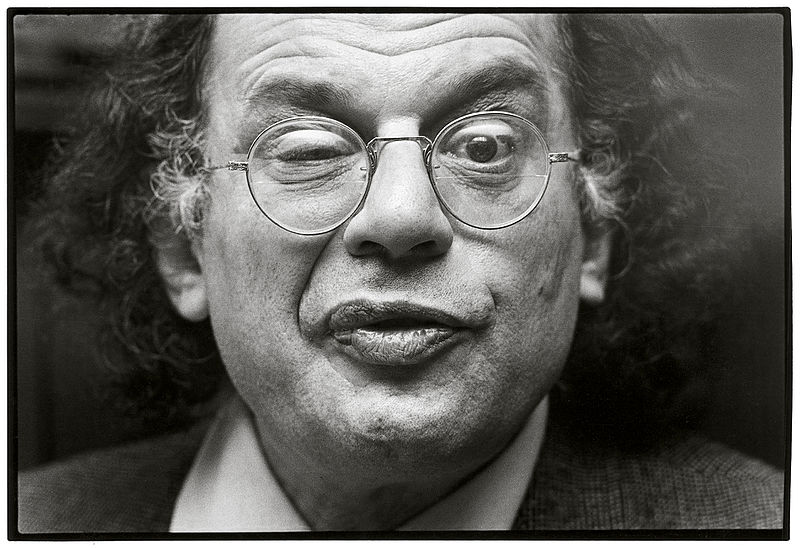
Image by Michiel Hendryckx, via Wikimedia Commons
These lectures were recorded at Naropa University in Boulder, CO in the summer of 1981.
Tape 1 — The first class in an Allen Ginsberg course on Expansive Poetics. Ginsberg opens the class with a brief history of the topics of courses he has taught in the past. He then explains his expectations for this course and the material he plans to cover in the sourcebook/anthology he is compiling. He then reads Geza Roheim’s Children of the desert, Shelley’s Hymn to intellectual beauty, Ode to the West Wind and the end of Adonais. The class discusses rhythm and the expansive breath and how it influences one’s work.
Tape 2 in an 11 tape series of a class taught by Allen Ginsberg on Expansive Poetics. Subject matter includes background on the Russian Futurists as well as the reading of works by Paul Klebnikov.
Tape 3 in an 11 tape series of a class taught by Allen Ginsberg on Expansive Poetics. Subject matter includes some discussion of the Russian Futurists and two short readings by Russian Futurist writers.
Tape 4 of an 11 Tape series of a class taught by Allen Ginsberg on Expansive Poetics. Subject matter includes background on the Futurists, Dadaists, and other literary movents as well as readings of work by such writers as Vladamir Klebnikov and Kurt Schwitters.
Tape 5 of an 11 tape series of a class taught by Allen Ginsberg on Expansive Poetics. Subject matter includes background on such movements as the Futurists, Acmeists, and Imaginists as well as readings of work by various artists including Osip Mandelstam, Jorge Ivanov, Nikolai Gumilev, William Carlos Williams, and Anna Akhmatova.
Tape 6 of an 11 tape series of a class taught by Allen Ginsberg on Expansive Poetics. Ginsberg discusses the lives and writing of Anna Akhmatova and Sergey Yesenin.
Tape 7 Not available. (But we’re looking into it.)
Tape 8 of an 11 tape series of Allen Ginsbergs class on Expansive Poetics. Subject matter includes background on Surrealism and concepts of language and the imagination as well as readings of works by such writers as Tristan Tzara, Philip Lamantia, Andre Breton, Robert Desnos, Vitezslav Nezval, Philippe Soupeau, Francis Picabia, and Benjamin Perret.
Tape 9 Not available.
Tape 10 Not available.
Tape 11 of an 11 tape series of Allen Ginsberg’s class on Expansive Poetics. Subject matter includes background on such Russian writers as Kaysin Kuliev and Sergei Yesenin. Also included are readings of work by Gordon McVay, Vladimir Klebnikov, and Sergei Yesenin.
You can find the course listed in the Literature section of our big collection, 1,700 Free Online Courses from Top Universities.
Read More...“Glitch” Artists Compose with Software Crashes and Corrupted Files
A theory: one of the drivers of our current wave of nostalgia—lo-fi analog hiss and pop in music and readymade vintage filters in digital photography—is the loss of imperfection. Increasingly powerful technologies render sound and vision too slickly pristine, glossy, hyperreal, and thus impersonal and alien. The latest episode of PBS Arts’ “Off Book” series (above) features a trend toward disrupting digital overproduction by deliberately exploiting the weaknesses in new technologies. Glitch artists makes use of “naturally occurring” (so to speak) corruptions of software, or create their own corruptions in a process called “databending”—opening images as text files, for example, and adding and/or deleting information from the image.
Unlike punk rock, to which glitch is compared by one of the artists above, some glitch art requires a fairly sophisticated understanding of digital technologies. For example, video artist Anton Marini describes how he writes his own software to produce glitch effects. But since virtually anyone can access a pc and standard text and image-editing software, it remains a fairly democratic aesthetic, similar to the bedroom technologies that enable almost anyone to produce and distribute their own musical compositions. There are sites offering tutorials on how to create your own glitch art and even a Flickr account called Glitchbot that will automatically generate glitch images for you, like Hipstamatic or Instagram will convert your careless snapshots into intriguing vintage artifacts. Sound too easy? Maybe, but so was Duchamp’s urinal. Context, as always, matters, and whether glitch art is “art” may ultimately become a historical question. At the moment, glitch images, video and music offer a way to humanize all-too-inhuman corporate products and technologies.
Josh Jones is a doctoral candidate in English at Fordham University and a co-founder and former managing editor of Guernica / A Magazine of Arts and Politics.
Read More...Dan Philips Presents Sustainable Housing with Wildly Creative Designs
“Unique” is an overused word, so much so that it appears in overqualified redundancies like “completely” or “very unique.” But, what the hell, I’m going to go ahead and call Dan Philips very unique. Philips, who has worked in army intelligence, and as a dance instructor and antiques dealer, seems to have finally found his calling at age 64: building custom houses out of up to 80 percent salvaged and recycled materials—from construction castoffs like old doors and odd-shaped beams to cattle bones, wine bottles, and license plates. In the TED talk above, Philips, a very witty and engaging speaker with a slight build and bushy handlebar mustache, walks an audience through some of his idiosyncratic designs, remarking on details like eggshells as decorative buttons, salvaged vintage appliances, his own low-tech solutions for laundry chutes and bathtubs, and a surprisingly tasteful “Budweiser House.”
If any of this sounds a bit quirk-for-quirk’s sake, it’s not (entirely). Philips is a man with a serious purpose. As a New York Times profile put it, he is “fervently committed to his vision of building for low-income people,” especially poor, single mothers (Philips’ father abandoned his family when he was 17). A self-taught plumber, carpenter, and electrician, his vision—articulated through his Huntsville, TX company Phoenix Commotion—includes housing that is not only structurally sound, but also architecturally beautiful. “I think mobile homes are a blight on the planet,” he says. “Attractive, affordable housing is possible and I’m out to prove it.” While many of his buyers defaulted on their mortgages during the recent crises, and some of his houses have been “gentrified”—sold to upper middle-class families attracted by the design features and energy efficiency—Philips is still pleased that his construction represents the reality of sustainable design with recycled materials and a building philosophy that transcends the endless vistas of bland nouveau colonials, ranch homes, and shoddy tract housing that seems to stretch across every suburban landscape.
Click here for a slideshow of several of Philips’ creations.
Josh Jones is a doctoral candidate in English at Fordham University and a co-founder and former managing editor of Guernica / A Magazine of Arts and Politics.
Read More...Support Us
We're hoping to rely on loyal readers, rather than erratic ads. Please click the Donate button and support Open Culture. You can use Paypal, Venmo, Patreon, even Crypto! We thank you!

About Us

Open Culture scours the web for the best educational media. We find the free courses and audio books you need, the language lessons & educational videos you want, and plenty of enlightenment in between.
Advertise With Us

FREE UPDATES!
GET OUR DAILY EMAIL
Get the best cultural and educational resources on the web curated for you in a daily email. We never spam. Unsubscribe at any time.
FOLLOW ON SOCIAL MEDIA

Open Culture editor Dan Colman scours the web for the best educational media. He finds the free courses and audio books you need, the language lessons & movies you want, and plenty of enlightenment in between.
Advertise With Us


