Jack Nicholson Puts His Star Power Behind “Green” Cars, 1978
Long before anyone started talking about “green” or “sustainability,” Jack Nicholson put his money and star power behind a new alternative energy — solar-powered hydrogen. The year was 1978, and solar hydrogen, a limitless resource, promised to lower energy costs and pollution levels, all at once. Fast forward 30+ years, and we know one thing: hydrogen Chevys never saw the light of day … until 2007.
This clip has been added to our collection of 275 Cultural Icons, where you’ll find great artists and thinkers speaking in their own words, mostly on video. The collection includes footage of Tolstoy and Twain and, of course, more contemporary figures.
Get more cultural nuggets daily by following us on Facebook and Twitter.
Read More...Richard Dawkins Introduces His New Illustrated Book, The Magic of Reality
We told you about the book earlier this year, and now it’s just about here. Set for release on October 4th, The Magic of Reality will be unlike any book written by Richard Dawkins before. It is illustrated for starters, and largely geared toward young and old readers alike. Perfect, he says, for anyone 12 and up. When it comes to the structure and gist of the book, Dawkins does a pretty good job of explaining things. So let’s let the video roll…
Note: If you’re willing to tweet about the book, you can view the first 24 pages of The Magic of Reality here.
Related Content:
Richard Dawkins on the Awe of Life & Science
Richard Dawkins Plays the Piano: “Earth History in C Major”
Read More...The Sounds That Made Pop
Earlier this summer, the good folks at The Word assembled 40 Noises That Built Pop, a collection of distinctive pop music sounds that have “caused your ears to prick up, or your eyebrows to raise.” Some were originally created in quite calculated ways. Others were happy accidents. Either way, theses sounds are now part of the pop tradition. We have highlighted four sounds that speak to us. But you should really dive into and enjoy The Word’s collection that was clearly put together with loving care.
The Power Chord from The Kinks: You Really Got Me (1964)
“It’s the essential building block of rock; the root and the fifth of the chord played at substantial volume on guitar and distorted to taste. It’s also the musical equivalent of the poker face; with just the two notes, it’s neither a sunny-sounding major chord nor a gloomy minor… Without the power chord entire genres of metal simply wouldn’t exist.”
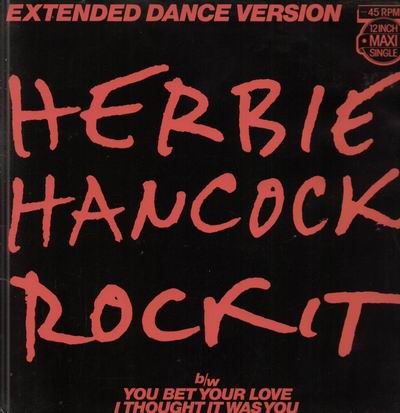
Vinyl Scratch from Herbie Hancock: Rockit (1983)
“Any DJ cueing up a record through one ear of a pair of headphones will have heard the sound of scratching, but it wasn’t until the early days of hip hop that it was incorporated into musical performance… Grandmaster Flash, Afrika Bambaataa and Kool Herc became the pioneers of “turntablism”, while Grand Mixer DXT’s work on Rockit propelled the sound into the mainstream and transformed the DJ into an unlikely frontman.”
Handclap from Kool & The Gang: Ladies Night (1979)
“As a percussive sound, [the handclap has] been used by everyone from flamenco dancers to Steve Reich, but it was in the mid-1970s when it found its true calling. Layered on top of the snare drum to emphasise the second and fourth beats of the bar, its formidable “crack” can be heard throughout disco and funk, and has since been employed by anyone wishing to hint at a party atmosphere…”
Guitar Feedback from Gang Of Four: Anthrax (1981)
“A classic case of rock music taking an undesirable noise and moulding it to suit its own purposes. The reason for feedback is simple: the guitar pickup “hears” itself being blasted out of a speaker cabinet, processes the sound and passes it to the speaker: noise piled upon noise. As rock music became less polite, more liberties were taken with feedback; while there’s an unintentional burst at the front end of I Feel Fine by The Beatles, the outro to The Who’s My Generation uses the sound more creatively.”
H/T Metafilter
And, on a totally unrelated note: Sun Ra and The Blues Project do Batman & Robin songs. Courtesy of the WFMU Blog Wayback Machine.
Read More...24 Hours of Reality: Learn About Our Climate Crisis in Real Time
Two scientific fields find themselves under attack in the United States. Evolutionary biology and climatology. No matter what the science shows, no matter how great the evidence, evangelicals dismiss the whole idea of evolution, and our free market dogmatists, operating under the assumption that “the business of America is business,” reject conclusions accepted by 98% of climate scientists — that human activities are warming the planet. Especially when it comes to climate change, we put dogma before science at our own peril. And that’s why The Reality Climate Project, led by Al Gore, is hosting today and tomorrow an online program called 24 Hours of Reality. Here’s what it’s all about:
24 Presenters. 24 Time Zones. 13 Languages. 1 Message. 24 Hours of Reality is a worldwide event to broadcast the reality of the climate crisis. It will consist of a new multimedia presentation created by Al Gore and delivered once per hour for 24 hours, representing every time zone around the globe. Each hour people living with the reality of climate change will connect the dots between recent extreme weather events — including floods, droughts and storms — and the manmade pollution that is changing our climate. We will offer a round-the-clock, round-the-globe snapshot of the climate crisis in real time. The deniers may have millions of dollars to spend, but we have a powerful advantage. We have reality.
Click here to find the location — or locations — where you would like to watch a presentation.
Read More...Atlas Shrugged Released as an iPad App
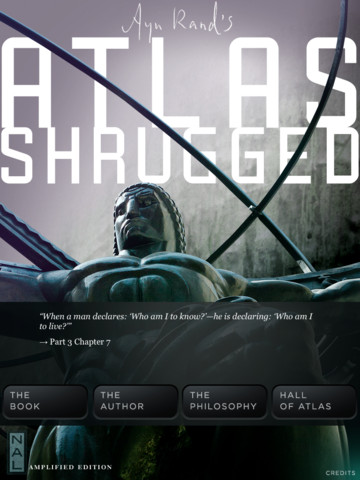
William F. Buckley famously said that he flogged himself to get through Atlas Shrugged, and now you can too in grand style. This week, Penguin released Ayn Rand’s politically-influential novel as an iPad app. It will run you $14.99, but it brings together “the classic, unabridged text and a treasury of rarely-seen archival materials,” including original manuscript pages, video of Rand’s talks, audio lectures elucidating the book, a photo gallery, and the rest. And, oh happy day, the app lets you share quotes from Atlas Shrugged on Facebook and Twitter too.
If Atlas Shrugged isn’t your cup of tea, if you’re looking for a different kind of meditation on freedom, then Penguin might have something else for you — the bible of the counter culture, Jack Kerouac’s On the Road, is now available as an “amplified” iPad app as well.
Finally, if you’re looking for a free angle here, you can always download these novels as free audiobooks if you start a no-strings-attached free trial with Audible.com.
H/T Media Bistro
Related Content:
Mike Wallace Interviews Ayn Rand (1959)
Ayn Rand Talks Atheism with Phil Donahue
Jack Kerouac Reads from On the Road (1959)
Read More...Tchaikovsky Puppet in Timelapse Film
Later this year, Barry JC Purves will debut a puppet animation film that interprets the life and work of Pyotr Ilyich Tchaikovsky, the great Russian composer. You can’t watch any final footage quite yet. But you can enjoy a timelapse video that brings you inside the actual animation process. Here’s a quick description of what you’re seeing, as written by Joe Clarke, the camera/lighting man on the film.
Whilst working on the film I shot this series of time-lapses with the help of students. Instead of just leaving the camera to click away at set intervals, we manually took a frame in synch with the frames Barry was taking as he animated, showing the puppet moving at his intended 25fps, almost!
You can find some excellent still images of the Tchaikovsky puppet on Clarke’s website here. And don’t miss the actual voice of Tchaikovsky Captured on an Edison Cylinder circa 1890 here.
via Neatorama
Read More...10 Free Lectures by “The Great Courses/Teaching Company” (in a Sea of Free Courses)

Note: The free lectures by The Great Courses have been taken offline. But no worries, you can find over 33,000 hours of free lectures from top universities in our collection, 1,700 Free Online Courses from Top Universities. They’ll keep you busy for years to come.
If you would like to support the mission of Open Culture, consider making a donation to our site. It’s hard to rely 100% on ads, and your contributions will help us continue providing the best free cultural and educational materials to learners everywhere. You can contribute through PayPal, Patreon, and Venmo (@openculture). Thanks!
Read More...Andy Warhol Quits Painting, Manages The Velvet Underground (1965)
During the early 1960s, Andy Warhol became an international celebrity when he produced his iconic Pop Art works — 32 Campbell’s Soup Cans, the Marilyn Monroe Diptych, Green Coca Cola Bottles and all of the rest. The provocative artist had achieved more than 15 minutes of fame — he coined that phrase too — and it was time for something new.
In ’65, Warhol took a break from painting, immersed himself in filmmaking and multimedia projects, then threw his influence behind the up-and-coming NYC band, The Velvet Underground. He became the band’s manager and “produced” their first album, which meant designing the album cover and giving the band members (Lou Reed, John Cale, Sterling Morrison, Maureen Tucker and Nico) the freedom to make whatever album they pleased. (Lou Reed has more on that here.) As Brian Eno later put it, the album, The Velvet Underground & Nico “only sold 10,000 copies, but everyone who bought it formed a band.” It was that influential.
The clip above comes from the PBS American Masters series, Andy Warhol — A Documentary Film and tells you more about Warhol’s patronage of VU.
Related Content:
Steven Spielberg Admits Swallowing a Transistor to Andy Warhol
Warhol’s Screen Tests: Lou Reed, Dennis Hopper, Nico, and More
Andy Warhol Eats a Burger, and We Watch … and Watch
Read More...Spenser and Milton (Free Course)

Taught by William Flesch at Brandeis University, Spenser and Milton are the two greatest non-dramatic English poets of the sixteenth and seventeenth centuries, and they even rival Shakespeare. Shakespeare read (and adopted) Spenser; Milton read and used Spenser as a way to think about poetic, aesthetic, religious and political issues in a non-Shakespearean way. This course covers all of Spenser’s great allegorical poem The Faerie Queene, and all of Milton’s major poetry, including Paradise Lost and Paradise Regained. Any complete editions of Spenser and Milton will suffice.
1) Spenser: Book I of the Faerie Queene and the Spenserian stanza: Audio
2) Allegory and character in Spenser: Audio
3) More on allegory and character, inner and outer, with the examples of Orgoglio and of Despayre in Book I: Audio
4) Spenser: Book II: Spenser and certainty. Guyon’s priggishness: Audio
5) Book II: Temperance and self-restraint. The pleasures of self-restraint. Mirth and Mammon: Audio
6) Book II: The Bower of Blisse and the Lovely Lay sung there: Audio
7) Book III: Why do Guyon and Britomart (Temperance and Chastity) fight?: Audio
8) Book III: Britomart and allegory: Audio
9) Book III: Allegory and human individuality: Audio
10) Book III: Amoret, Belphoebe and what the House of Busirane is for: Audio
11) What it’s like to live in the Land of Faery; the Garden of Adonis: Audio
12) Matter and Form in the Garden of Adonis: Audio
13) Book IV: Love and Friendship: Audio
14) Book IV: The Friend as Second Self: Audio
15) Book IV: Scudamor at the Temple of Venus: Audio
16) Book V: Varieties of Justice: Audio
17) Books V and VI: The relation of Justice to Courtesy: Audio
18) Variety and Uniformity in Books V and VI: Audio
19) Book VI as pastoral: Audio
20) Last, best class on the Faerie Queene: Scopophilia and narrative: Audio
21) Milton: Lycidas: Audio
22) Contrasts and Debates in Milton: Audio
23) Lycidas and Comus: Audio
24) Comus, rape, and freedom: Audio
25) Paradise Lost and freedom: Audio
26) Paradise Lost: The mind is its own place. The Lady from Comus and Satan: Audio
27) Paradise Lost as anti-allegorical poem. Invocation to Book 3: Audio
28) Paradise Lost: Who gets to judge God’s ways?: Audio
29) Paradise Lost: Warnings and failures to warn: Audio
30) Paradise Lost: Prayer and Invocation: Audio
31) Dreams, allegories, and other minds in Milton: Audio
32) Moral typologies in Paradise Lost: Audio
33) How humans think things through in Milton: Audio
34) Temptation in Paradise Lost, Areopagitica and Paradise Regained: Audio
35) Last class: Samson and his blindness. Closet drama: Audio
Read More...Back to School: Free Resources for Lifelong Learners Everywhere
With Labor Day behind us, it’s officially time to head back to school. That applies not just to kids, but to you. No matter what your age, no matter where you live, no matter what your prior level of education, you can continue deepening your knowledge in areas old and new. And it has never been easier. All you need is a computer or smart phone, an internet connection, some free time, and our free educational media collections. They’re available 24/7 and constantly updated:
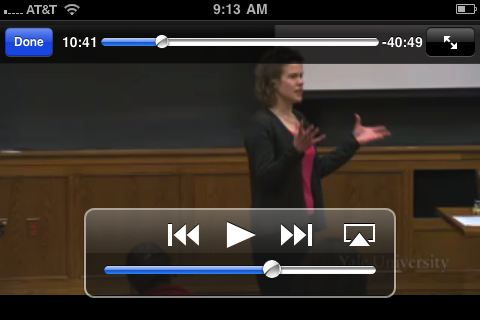
Free Online Courses: Right now, you can download free courses (some in video, some in audio) created by some of the world’s leading universities — Stanford, Oxford, Yale, Harvard, UC Berkeley, MIT and others. The courses cover pretty much every subject — from philosophy, literature and history, to physics, computer science, engineering and psychology. The collection features about 400 courses in total. And while you can’t take these courses for credit, the amount of personal enrichment offered by these lectures is endless.
Free Textbooks: Another tool for the lifelong learner. This collection brings together roughly 150 free textbooks authored by professors (and some high school teachers) across the globe. The collection will particularly benefit those interested in deepening their knowledge in economics, computer science, mathematics, physics and biology.
Free Language Lessons: Ours is an increasingly globalized world, and it certainly pays to know more than one language. With the free audio lessons listed here, you can learn the basics of Spanish, French and Italian (the languages traditionally taught in American schools). Or you can start boning up on Mandarin, Brazilian Portuguese and other languages spoken by the new world powers. Taken together, you can Learn 40 Languages for Free.
Free Audio Books: This free collection gives you the ability to download audio versions of important literary works. During your downtime, you can listen to short stories by Isaac Asimov, Raymond Carver, Jorge Luis Borges, and Philip K. Dick. Or you can settle into longer works by Jane Austen, F. Scott Fitzgerald, Friedrich Nietzsche and James Joyce.
Free eBooks: Once again, it’s free literary works. But this time you can download e‑texts to your computer or digital reader. Franz Kafka, George Orwell, Gertrude Stein, Edgar Allan Poe, Marcel Proust and Kurt Vonnegut. They’re all on the list. And so too are The Harvard Classics, a 51 volume series of enduring works.
Great Science Videos: This list pulls together some of our favorite science videos on the web. It features about 125 videos, covering astronomy & space travel, physics, psychology and neuroscience, religion, technology and beyond.
Intelligent YouTube Sites: Have you ever wanted to separate the wheat from the chaff on YouTube? This list will give you a start. It features over 100 YouTube channels that deliver high quality educational content. Along similar lines, you may want to visit our collection of Intelligent Video Sites. Same concept but applied to sites on the web.
Cultural Icons: If you’ve ever wanted to see great thinkers, artists and writers speaking on video in their own words, this list is for you. It has Borges and Bowie, Coltrane and Coppola, Ayn Rand and Noam Chomsky, Tolstoy and Thomas Edison, among others. 275 cultural icons in total.
Free Movies Online: What better way to get a cultural education than to watch some free cinematic masterpieces, including 15 films with Charlie Chaplin, 22 early films by Alfred Hitchcock, 25 Westerns with John Wayne, and a number of Soviet classics by Andrei Tarkovsky. The list of 400+ films goes on. And so does your cultural education.…
Get more cultural nuggets daily by following us on Facebook and Twitter.
Read More...Support Us
We're hoping to rely on loyal readers, rather than erratic ads. Please click the Donate button and support Open Culture. You can use Paypal, Venmo, Patreon, even Crypto! We thank you!

About Us

Open Culture scours the web for the best educational media. We find the free courses and audio books you need, the language lessons & educational videos you want, and plenty of enlightenment in between.
Advertise With Us

FREE UPDATES!
GET OUR DAILY EMAIL
Get the best cultural and educational resources on the web curated for you in a daily email. We never spam. Unsubscribe at any time.
FOLLOW ON SOCIAL MEDIA

Open Culture editor Dan Colman scours the web for the best educational media. He finds the free courses and audio books you need, the language lessons & movies you want, and plenty of enlightenment in between.
Advertise With Us


