Download 20 Popular High School Books Available as Free eBooks & Audio Books
Every year, thousands of American high school students read a common selection of great novels — classics loved by young and old readers alike. Today, we have selected 20 of the most popular books and highlighted ways that you can download versions for free, mostly as free audio books and ebooks, and sometimes as movies and radio dramas. You will find more great works — and sometimes other digital formats — in our twin collections: 600 Free eBooks for iPad, Kindle & Other Devices and 550 Free Audio Books. So please give them a good look over, and if we’re missing a novel you want, don’t forget Audible.com’s 14 day trial. It will let you download an audio book for free, pretty much any one you want.
1984 by George Orwell: Read Online
Although published in 1949, 1984 still captures our imagination generations later because it offers one of the best literary accounts of totalitarianism ever published. And it’s simply a great read.
Animal Farm by George Orwell: Read Online — Free Animated Movie
Orwell’s 1945 allegorical novella took aim at the corruption of the Soviet Union and its totalitarian rule. The short book, which almost never saw the light of day, appears on the Modern Library’s list of the 100 Best Novels of the 20th century.
Brave New World by Aldous Huxley: eText — Free Radio Dramatization (by Huxley himself)
Little known fact. Huxley once taught George Orwell French at Eton. And, years later his 1931 classic, Brave New World, is often mentioned in the same breath with 1984 when it comes to great books that describe a dystopian future.
Frankenstein by Mary Shelley - Free ebook — Free Audio Book (MP3) — Radio Drama version (1938) — Movie
Mary Shelley started writing the great monster novel when she was only 18 and completed it when she was 21. The 1823 gothic novel is arguably one of your first works of science fiction.
Heart of Darkness by Joseph Conrad: Free eBook — Free Audio Book (iTunes) — Radio Dramatization by Orson Welles (MP3)
More than 100 years after its publication (1902), Conrad’s novella still offers the most canonical look at colonialism and imperialism. So powerful was its influence that Orson Welles dramatized it in 1938, and the book also famously inspired Coppola’s Apocalypse Now in 1979.
Plays by William Shakespeare
No description needed. None given.
Romeo and Juliet — Free eBook — Free Audio Book (MP3s)
MacBeth — Free eBook — Free Audio Book (iTunes)
Hamlet — Free eBook — Free Audio Book (MP3s)
Julius Caesar — Free eBook — Free Audio Book (MP3s)
Note: You can find The Complete Works of Shakespeare here: Free eBook – Free version for the iPad
Pride & Prejudice by Jane Austen – Free eBook — Free Audio Book (iTunes)
Jane Austen’s 1813 novel remains as popular as ever. To date, it has sold more than 20 million copies, and, every so often, it finds itself adapted to a new film, TV or theater production. A must read.
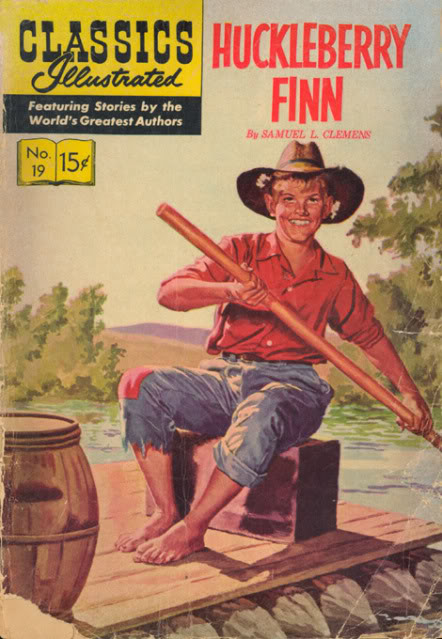
The Adventures of Huckleberry Finn by Mark Twain — Free eBook — Free Audio Book (iTunes)
When you think Huckleberry Finn, you think Great American Novel. It was controversial when it was first published in 1884, and it remains so today. But nonetheless Twain’s classic is a perennial favorite for readers around the world.
The Call of the Wild by Jack London — Free eBook — Free Audio Book (iTunes)
The Call of the Wild, first published in 1903, is regarded as Jack London’s masterpiece. It’s “a tale about unbreakable spirit and the fight for survival in the frozen Alaskan Klondike.”
The Crucible by Arthur Miller - Free Audio Book from Audible.com
Arthur Miller’s 1952 play used the Salem witch trials of 1692 and 1693 to offer a commentary on McCarthyism that tarnished America during the 1950s. Today, The Crucible occupies a central place in America’s literary canon.
The Grapes of Wrath by John Steinbeck — Free Audio Book from Audible.com
This 1939 novel won the Pulitzer Prize in 1940 and later helped Steinbeck win the Nobel Prize for Literature in 1962. It’s perhaps the most important book to give literary expression to the Great Depression.
The Great Gatsby by F. Scott Fitzgerald – Free eBook — Free Audio Book from Audible.com
It’s the classic portrait of the Jazz Age, a tale of decadence and excess. And today The Modern Library has called Fitzgerald’s 1925 masterpiece the 2nd best novel of the last century.
The Odyssey by Homer – Free eBook — Free Audio Book
The Western literary tradition begins with Homer’s epic poems The Iliad (etext here) and The Odyssey, both written some 2800 years ago. It has been said that “if the Iliad is the world’s greatest war epic, then the Odyssey is literature’s grandest evocation of everyman’s journey through life.” And that just about gets to the heart of the poem.
The Old Man and the Sea by Ernest Hemingway - Free Audio Book from Audible.com
It was Hemingway’s last major work of fiction (1951) and certainly one of his most popular, bringing many readers into contact with Hemingway’s writing for the first time.
The Red Badge of Courage by Stephen Crane — Free eBook — Free Audio Book (iTunes) — Free Movie
This Civil War novel won what Joseph Conrad called “an orgy of praise” after its publication in 1895, and inspired Ernest Hemingway and the Modernists later. The novel made Stephen Crane a celebrity at the age of 24, though he died only five years later.
The Scarlet Letter by Nathaniel Hawthorne – Free eBooks – Free Audio Book — Movie
Though set in Puritan Boston between 1642 and 1649, Hawthorne’s magnum opus explores “the moral dilemmas of personal responsibility, and the consuming emotions of guilt, anger, loyalty and revenge” that were relevant in 1850 (when the book was published). And they remain so today.
To Kill a Mockingbird by Harper Lee — Free Audio Book from Audible.com
Harper Lee’s 1960 novel takes an incisive look at attitudes toward race and class in the Deep South during the 1930s. It won the Pulitzer Prize a year later.
Note: We listed Audible.com as an option when books were still under copyright.
Meanwhile, educators don’t miss our collection of Free Courses. It features many free Literature courses, including courses on American literature.
Read More...Download Popular High School Books From Audible.com

Looking to download an audio copy of The Crucible, Brave New World, The Grapes of Wrath, or some other novel beloved by students? Here’s a great, no-strings-attached deal offered by Audible.com.
If you start a 30 day free trial with Audible.com (click here or the banner above), you can download two free audio books of your choice. They have over 180,000 books to choose from, which will play on almost any portable device or on your computer itself. You can even get courses from The Great Courses through Audible.
If you remain a subscriber to Audible.com’s service after the 30-day free trial, you will get 1 new audiobook per month and pay $14.95/month.
Just sign up, select the books you want, and begin your download. It’s that simple. (And if you have an Amazon.com username/password, the whole signup process takes a matter of seconds. Audible is part of Amazon.com)
At the end of your free trial, you can opt out of the program and still keep the books. Or you can stay with this valuable program, as I have, and keep enriching yourself whenever you want. To get started, click right here.
Read More...Jazz Toons: Allen Mezquida’s Journey from Bebop to Smigly
Allen Mezquida is an accomplished alto saxophonist. As a regular on the New York jazz scene in the 80s and 90s, he performed and recorded with many of the greatest musicians still playing at that time, like Art Blakey and Gerry Mulligan. His 1996 solo album, A Good Thing, was well-received by critics. In an earlier age it might have been the beginning of a glorious career. But as the 20th century came to a close, Mezquida was becoming increasingly disillusioned.
“I was more frustrated with jazz’s tiny place in the current cultural landscape than with my jazz career,” Mezquida told Open Culture. So he turned to another of his artistic passions. The visual arts–cartooning, in particular–had always attracted him. “Mad magazine, Chuck Jones and various art books held my attention alongside Miles, Coltrane and Stan Getz,” Mezquida said. He began experimenting with digital animation, and before long he moved to Los Angeles and began receiving work from Disney, Warner Brothers, Sony and PIXAR. He contributed to Aladdin and Toy Story.
Mezquida found himself where he wanted to be: at the very heart of America’s cultural landscape. Still, something wasn’t right. As he told The Daily Beast in 2010, “I was just holding an oar in the bowels of a Viking ship. And executing the ideas of morons that I didn’t respect.” Mezquida wanted cultural relevance and artistic freedom. As a consequence, Smigly was born.
Smigly is Mezquida’s alter ego, an Everyman adrift in a dehumanized, corporatized culture in which social media serve only to intensify a sense of social alienation. As an artist, Smigly faces a society less interested in art than in the degradation of artists. Like Charlie Chaplin, or Charlie Brown, there is something timeless about Smigly: a sensitive soul pouring his heart out to an indifferent, or hostile, world.
The trials and tribulations of Smigly are chronicled on Smigly.tv. The latest installment, Kind of Black and Blue, is shown above. The piece was commissioned by Gordon Goodwin’s Big Phat Band, but Mezquida was given complete creative control. Kind of Black and Blue moves like a Swiss watch, each part fitting tightly into place. A musician’s sense of timing is evident. “I spend a lot of time thinking about the clearest way to visually communicate an idea,” Mezquida said. “It brings people into the story faster. Gary Larson, PIXAR and Don Martin quickly come to mind as very precise visual storytellers. Coltrane made every note count. Same thing.”
Mezquida continues to play music, performing with several jazz groups in the Los Angeles area. And many of his cartoon episodes feature his saxophone playing. With his growing popularity on YouTube, Smigly has helped Mezquida find a new audience for his music. And so, Mezquida moves closer to that elusive combination of artistic independence and popular success. We asked him about his hopes for the future. “I want to experience a major existential crisis deciding what to do when a major corporation wants to sponsor Smigly,” he said. “I’m kidding. A little.”
For more Smigly, go directly to Smigly.tv or begin by checking out a few or our favorite episodes:
Read More...
Frank W. Buckles, The Last U.S. Veteran of World War I
Frank Woodruff Buckles was born on February 1st, 1901. At the age of 16, he enlisted in the U.S. Army by convincing recruiting officers that he was, in fact, 21. In this short film, Buckles recalls this time so long ago and the last year of the Great War. There are two particularly moving passages in this documentary: when he talks about the difficulties veterans experienced after returning home, and when Buckles voices his opinions on war in general, and particularly war today (“How did we get involved in this thing, Iraq? It was crazy, we have no damn business in there.”)
Frank died on February 27th, 2011, at the age of 110. The last surviving U.S. veteran of World War I, he was properly laid to rest at Arlington National Cemetery (find video of the ceremony here). There are two tributes to Mr Buckles that offer more insight into his life: a short video by the United States Department of Veterans Affairs and an obituary in the Washington Post.
By profession, Matthias Rascher teaches English and History at a High School in northern Bavaria, Germany. In his free time he scours the web for good links and posts the best finds on Twitter.
Read More...The Beatles’ Rooftop Concert: The Last Gig Filmed in January 1969
On a cold day in January 1969, The Beatles, who hadn’t played live since 1966, took to the rooftop of the headquarters of Apple Records, located at 3 Savile Row, in central London. And there they played an impromptu last gig, much to the delight of Londoners on nearby rooftops … and to the chagrin of the police.
At the time, The Beatles were recording their album, Let It Be, and the rooftop show let them run through various tracks from that last effort. Songs played during the set include “Get Back,” where the Beatles were accompanied by Billy Preston on the keyboards, and “Don’t Let Me Down,” “I’ve Got A Feeling,” “One After 909,” and “Danny Boy.” And finally “Dig A Pony” and another version of “Get Back.” We have the last song above. Watch a full playlist of videos here.
Famously, The Beatles’ live legacy ends with the police shutting down the show (it was a noise violation, you know?) and John Lennon uttering the immortal words, “I’d like to say thank you on behalf of the group and ourselves, and I hope we passed the audition.” That’s going out in style…
Footnote: It’s not clear which band played the first rooftop concert, but one thing is for sure. Jefferson Airplane played their own rooftop gig on December 7, 1968, and Jean-Luc Godard filmed it. Once again, the police pay a friendly visit. Watch it here.
Follow us on Facebook, Twitter and Google Plus and share intelligent media with your friends. Or better yet, sign up for our daily email and get a daily dose of Open Culture in your inbox.
Read More...The Aurora Borealis Viewed from Orbit (and What Creates Those Northern Lights?)
Earlier this week, NASA astronaut Clayton Anderson tweeted a 14 second time-lapse film of the Aurora Borealis taken from the International Space Station. The short clip called to mind a more extensive view of the Northern Lights shot by Don Pettit, also working in the ISS, back in 2008. (Watch above.) And it raised the basic question: What causes the Aurora Borealis anyway?
The beautiful natural phenomenon starts deep inside the core of the sun, and the rest of the story gets explained in a five minute animated video created by Norwegian filmmaker Per Byhring and the Physics Department at the University of Oslo.
Both clips now appear in our collection of 125 Great Science Videos.
via Coudal Partners Blended Feed and BrainPickings
Read More...Kenneth Branagh Stars in Radio Dramatization of Epic Soviet Novel, Life and Fate (Free Audio)
Le Monde has called Life and Fate “the greatest Russian novel of the twentieth century,” and Martin Amis once described its author, Vasily Grossman, as “the Tolstoy of the USSR.” Now, if you haven’t read the novel, you can begin to understand the reason for all of the high praise.
Starting this week, the BBC will air an eight-hour dramatization of the masterpiece that offered a sweeping account of the siege of Stalingrad, one of the bloodiest battles of World War II. Although originally written in 1959, the book was officially censored in the Soviet Union until 1988 because, in the estimation of the apparatchiks, it threatened to do more harm to the USSR than Pasternak’s Doctor Zhivago.
Kenneth Branagh and David Tennant star in the 13-episode series that will be broadcast from 18 to 25 September on Radio 4. You can access the audio files online or via iTues, RSS Feed, and other formats here.
For more dramatizations of literary classics, please visit:
Aldous Huxley Reads Dramatized Version of Brave New World
HG Wells’ The War of the Worlds Narrated by Orson Welles
Free Audio Books: Download Great Books for Free
50 Classic Russian Films (Including Tarkovsky’s Finest) Now Online
Read More...Foo Fighters “Perform” for Westboro Baptist Church
If you’re not familiar with The Westboro Baptist Church, it’s a hate group seemingly masquerading as a religious organization based in Topeka, Kansas. It has only 71 members, mostly from the same family, and they’re known for tastelessly traveling across the U.S. and protesting against homosexuality and gay rights at the funerals of fallen U.S. soldiers. A logical connection, right?
In late August, the “church” brought its members to Kansas City to protest at the Foo Fighters concert, citing the band’s support of “fornication, adultery, idolatry and fags.” And the band didn’t back down. Dave Grohl & Co. sang a mocking version of a homoerotic tune Keep It Clean (above), all while wearing the same trucker garb they had worn in a NSFW video to promote their “Hot Buns” tour. The “Hot Buns” video (below) was shot around the same time, seemingly also to tweak the Westboro clan. Watch the censored version below, and the uncensored version here.
via @jessebdylan
Read More...The Austin City Limits Music Festival & Miles Davis Streaming Online
A quick heads up. This weekend you can watch The Austin City Limits Music Festival streaming on YouTube. The 2011 lineup features Stevie Wonder, Arcade Fire, Coldplay, Kanye West, and Alison Krauss, among many others. Get the full list here.
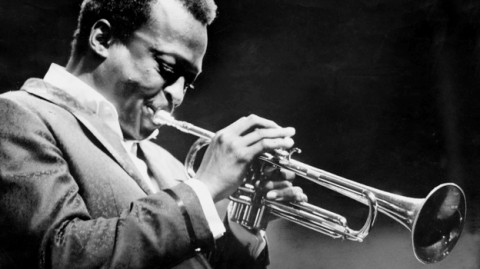
Also for a limited time, NPR is streaming Miles Davis, Live In Europe 1967: The Bootleg Series Vol. 1. Davis is backed by Herbie Hancock, Wayne Shorter, Ron Carter and Tony Williams. What more can a jazz fan ask for?
Follow us on Twitter and Facebook, and we’ll keep pointing you to free cultural goodies daily…
Read More...Duck and Cover: The 1950s Film That Taught Millions of Schoolchildren How to Survive a Nuclear Bomb
After the Soviet Union tested its first atomic bomb in August, 1949, American anxiety levels ran higher. The fear of nuclear war was in the air. And a young generation of Americans soon got its introduction to Duck and Cover, the little technique that would save lives if the U.S. ever endured a Hiroshima-style bombing. Or so it was believed.
In 1951, the US government, working with Archer Productions and students from Queens, NY, produced a short instructional film given the no-frills title Duck and Cover. Shown to millions of children nationwide over many years, the film became a centerpiece of the government’s emergency preparedness program. Since then, the film has been entered into the National Film Registry (2004) and has inspired various parodies, including this recent goof from the “Australian Board of Civil Defence.” Hope you get something from this nostalgia-inducing piece of film.…
If you would like to support the mission of Open Culture, consider making a donation to our site. It’s hard to rely 100% on ads, and your contributions will help us continue providing the best free cultural and educational materials to learners everywhere. You can contribute through PayPal, Patreon, and Venmo (@openculture). Thanks!
Related Content:
63 Haunting Videos of U.S. Nuclear Tests Now Declassified and Put Online
Haunting Unedited Footage of the Bombing of Nagasaki (1945)
53 Years of Nuclear Testing in 14 Minutes: A Time Lapse Film by Japanese Artist Isao Hashimoto
How a Clean, Tidy Home Can Help You Survive the Atomic Bomb: A Cold War Film from 1954
Read More...Support Us
We're hoping to rely on loyal readers, rather than erratic ads. Please click the Donate button and support Open Culture. You can use Paypal, Venmo, Patreon, even Crypto! We thank you!

About Us

Open Culture scours the web for the best educational media. We find the free courses and audio books you need, the language lessons & educational videos you want, and plenty of enlightenment in between.
Advertise With Us

FREE UPDATES!
GET OUR DAILY EMAIL
Get the best cultural and educational resources on the web curated for you in a daily email. We never spam. Unsubscribe at any time.
FOLLOW ON SOCIAL MEDIA

Open Culture editor Dan Colman scours the web for the best educational media. He finds the free courses and audio books you need, the language lessons & movies you want, and plenty of enlightenment in between.
Advertise With Us

