William Shatner Narrates Space Shuttle Documentary
After 30 years and 134 flights, America’s space shuttle program draws to a close. And it feels pitch perfect to wind things down with a documentary narrated by William Shatner. Of course, you know him as Captain Kirk from Star Trek, the iconic sci-fi TV show that ran from 1966 to 1969, smack in the middle of NASA’s heyday. (Note: Star Trek has just been added to Netflix’s streaming catalogue.)
The 80 minute documentary takes you through the history of the Space Shuttle program, which first got underway during the Nixon administration. The film spends ample time looking at the design challenges NASA engineers faced in trying to create a reusable shuttle, while also showing early prototypes. Once the design phase was complete, construction began on the first orbiter in June, 1974 and wrapped up two years later. NASA called its first craft Space Shuttle Enterprise, paying homage to the fictional Starship Enterprise. Next, it was time to boldly go where no one had gone before.
The doc is now added to our collection of Free Movies Online.
Related Content:
The Best of NASA Space Shuttle Videos (1981–2010)
Endeavour’s Launch Viewed from Booster Cameras
Read More...Stephen Fry on Philosophy and Unbelief
Comedian Stephen Fry has the classic British intellectual voice, much like philosopher Bryan McGee. It turns out that he knows something about philosophy, and this clip is a shortened version of a longer video called “The Importance of Unbelief.”
A more gentle version of George Carlin, Fry’s views appear heartfelt while partaking of serious irony. He claims that in order to properly appreciate our present lives, “even if it isn’t true, you must absolutely assume that there is no afterlife.” Choosing his positions to argue as much for their rhetorical audacity as anything else, he argues for polytheism in favor of monotheism, and he treats the issue of the divine presence in nature by referencing the life cycle of a parasitic worm. He seems an apt voice to add to the new atheist debates, at least as amusing as Dawkins and much moreso than Sam Harris. This clip is added to our collection of 250 Cultural Icons.
Related Content:
Stephen Fry: What I Wish I Had Known When I Was 18
Stephen Fry Gets Animated about Language
Mark Linsenmayer runs the Partially Examined Life philosophy podcast and blog. He also performs with the Madison, WI band New People.
Read More...Gertie the Dinosaur: The Mother of all Cartoon Characters (1914)
The artist and cartoon pioneer Winsor McCay (1869?-1934) did not make the world’s first animated film. That distinction goes to Emile Cohl and his 76-second long Fantasmagorie (1908). But McKay, who was also the author of the popular weekly Little Nemo comic strips, made a contribution to cartoons that is arguably even more important.
Sweet, mischievous Gertie, with her ready tears, excitable nature, and complete inability to miss a chance to get herself in trouble, is widely credited as the first character created specifically for animation, and the first to demonstrate a personality all of her own. Mickey Mouse, Bugs Bunny, Bambi, even Wall‑e… they all owe a debt to Gertie, the first of the line. One suspects the artist knew exactly what he was doing when he chose to draw her as an animal that is also our common ancestor.
The fetching brontosaurus may have been one of McCay’s most famous creations, but there was magic in every film he made. Be sure to check out How a Mosquito Operates (1912), The Sinking of the Lusitania (1921), and his brief but magnificent The Centaurs (1921). You can find them all in our Free Movie collection.
Related Content:
Early Experiments in Color Film (1895–1935)
How Walt Disney Cartoons are Made
Sheerly Avni is a San Francisco-based arts and culture writer. Her work has appeared in Salon, LA Weekly, Mother Jones, and many other publications. You can follow her on twitter at @sheerly.
Read More...The “Ask Sam Harris Anything” Hour
Sam Harris — he wrote the bestsellers The End of Faith and Letter to a Christian Nation. He’s also one-fourth of the New Atheist quartet informally called The Four Horsemen (where you’ll also find Richard Dawkins, Christopher Hitchens and Daniel Dennett.) And he has most recently argued that neuroscience can eventually answer all moral questions. Sam Harris is very much a public intellectual. He’s out there and in the mix. And he’s now answering questions from Reddit.com users. Give Harris 54 minutes and he’ll tell you how to promote public rationality, why meditation can change your life, and much, much more …
Related Content:
Christopher Hitchens Answers Reddit User Questions
Richard Dawkins Plays the Piano: “Earth History in C Major”
Read More...Gone With the Wind Turns 75, and Shows its Age
It’s with some discomfort that the author names Gone with the Wind, published exactly 75 years ago today, her favorite childhood book: It was thick, it was romantic — and perhaps most crucially for any awkward, bespectacled preteen girl — it featured a headstrong heroine whose appeal to the opposite sex derived more from her charm than her physical beauty.
Nonetheless, there’s no way around the profound failings of both the book and the MGM epic film based on it: Novel and film treated slavery as an incidental backdrop to the war; they glorified and misrepresented the actions of the Ku Klux Klan; and most egregiously, they portrayed the master-slave relationship as one which neither master nor slave should ever dream of altering. In the words of historian and sociologist Jim Loewen, author of Lies My Teacher Told Me: Everything Your High School History Textbook Got Wrong:
[Gone With The Wind] laments the passing of the slave era as “gone with the wind.” In the novel, Mitchell states openly that African Americans are “creatures of small intelligence.” And this book is by far the most popular book in the U.S. and has been for 60 years. The book is also profoundly wrong in its history. What it tells us about slavery, and especially reconstruction, did not happen…it is profoundly racist and profoundly wrong. Should we teach it? Of course. Should we teach against it? Of course.
Meanwhile, Hattie McDaniel took home a best supporting actress Oscar for her role as Scarlett O’Hara’s loyal house slave, Mammy. She was the first African-American woman to win an Academy Award. The fact that she was not allowed to attend the film’s premiere in Atlanta makes her acceptance speech (1940) even more poignant. It appears above.
Sheerly Avni is a San Francisco-based arts and culture writer. Her work has appeared in Salon, LA Weekly, Mother Jones, and many other publications. You can follow her on twitter at @sheerly.
Read More...The Perils of the Bike Lane: Pratfalls with a Purpose
Completely random. Can’t believe this guy (who happens to be an HBO filmmaker) didn’t wear a helmet. The best scene is saved for last.
via New York Times
Read More...Springsteen’s Eulogy for Clarence Clemons
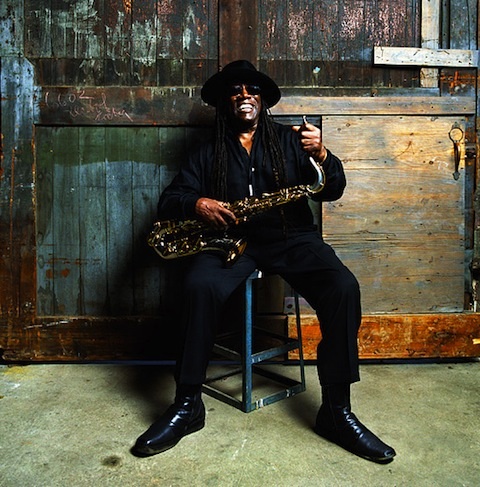 Today, Bruce Springsteen published on his web site a revised version of the eulogy he delivered last week for Clarence Clemons, his friend and band mate. It’s equal parts honest and moving. The talk builds momentum as it goes along, kind of like a Springsteen song, with the rhythm really picking up here:
I think perhaps “C” protected me from a world where it wasn’t always so easy to be an insecure, weird and skinny white boy either. But, standing together we were badass, on any given night, on our turf, some of the baddest asses on the planet. We were united, we were strong, we were righteous, we were unmovable, we were funny, we were corny as hell and as serious as death itself. And we were coming to your town to shake you and to wake you up. Together, we told an older, richer story about the possibilities of friendship that transcended those I’d written in my songs and in my music. Clarence carried it in his heart. It was a story where the Scooter and the Big Man not only busted the city in half, but we kicked ass and remadethe city, shaping it into the kind of place where our friendship would not be such an anomaly. And that… that’s what I’m gonna miss. The chance to renew that vow and double down on that story on a nightly basis, because that is something, that is the thing that we did together… the two of us. Clarence was big, and he made me feel, and think, and love, and dream big. How big was the Big Man? Too fucking big to die. And that’s just the facts. You can put it on his grave stone, you can tattoo it over your heart. Accept it… it’s the New World.
And finally the crescendo:
SO LADIES AND GENTLEMAN… ALWAYS LAST, BUT NEVER LEAST. LET’S HEAR IT FOR THE MASTER OF DISASTER, the BIG KAHUNA, the MAN WITH A PHD IN SAXUAL HEALING, the DUKE OF PADUCAH, the KING OF THE WORLD, LOOK OUT OBAMA! THE NEXT BLACK PRESIDENT OF THE UNITED STATES EVEN THOUGH HE’S DEAD… YOU WISH YOU COULD BE LIKE HIM BUT YOU CAN’T! LADIES AND GENTLEMEN, THE BIGGEST MAN YOU’VE EVER SEEN!… GIVE ME A C‑L-A-R-E-N-C‑E. WHAT’S THAT SPELL? CLARENCE! WHAT’S THAT SPELL? CLARENCE! WHAT’S THAT SPELL? CLARENCE! … amen.
Get the full text here.
H/T to @opedr
Read More...iPhone Magic by Techno-Illusionist Marco Tempest
No more top hat and handkerchief. Marco Tempest uses iPods and iPhones to create magic for the 21st century. He calls himself a techno-illusionist. “I explore the borders between technology and magic,” says Tempest, “between what’s incredibly real and incredibly not.” Originally from Switzerland, Tempest now lives in New York City. He was featured in the internationally syndicated television series, The Virtual Magician, and his work can be viewed on a YouTube channel of the same name. His newest release, “iPod Magic–Deceptions,” features an application he developed to synchronize video playback on multiple screens. The App is called “MultiVid.” You can download it for free here, and learn how to use it here.
via Darren Brown
Read More...The History of the English Language in Ten Animated Minutes
Yesterday, the Open University released ‘The History of English in 10 Minutes,’ a witty animated sequence that takes you through 1600 years of linguistic history. The Vikings gave us “give” and “take.” Shakespeare added another 2,000 words and expressions to the mix. The British Empire (see video above) then brought the evolving English language to new lands, creating new varieties of English worldwide. And so the story continues. You can find this series featuring the voice of Clive Anderson on iTunes or YouTube. We’ve included links to each YouTube chapter right below. Many thanks to Catherine for the heads up…
Related Content:
What’s Your English? British v. Canadian Rap Battle
Learn Languages for Free: Spanish, English, Chinese & 37 Other Languages
Read More...Google App Enhances Museum Visits; Launched at the Getty
Earlier this year, Google rolled out “Art Project,” a tool that lets you access 1,000 works of art appearing in 17 great museums across the world, from the Met in New York City to the Uffizi Gallery in Florence. (More on that here.) Now, as part of a broader effort to put art in your hands, the company has produced a new smartphone app (available in Android and iPhone) that enriches the museum-going experience, and it’s being demoed at the Getty Museum in Los Angeles.
The concept is pretty simple. You’re wandering through the Getty. You spot a painting that deeply touches you. To find out more about it, you open the Google Goggles app on your phone, snap a photo, and instantly download commentary from artists, curators, and conservators, or even a small image of the work itself. Sample this, and you’ll see what we mean. And, for more on the story, turn to Jori Finkel, the ace arts reporter for the LA Times.
Related Content:
Art in “Augmented Reality” at The Getty Museum
A Virtual Tour of the Sistine Chapel
MoMA Puts Pollock, Rothko & de Kooning on Your iPad
Read More...Support Us
We're hoping to rely on loyal readers, rather than erratic ads. Please click the Donate button and support Open Culture. You can use Paypal, Venmo, Patreon, even Crypto! We thank you!

About Us

Open Culture scours the web for the best educational media. We find the free courses and audio books you need, the language lessons & educational videos you want, and plenty of enlightenment in between.
Advertise With Us

FREE UPDATES!
GET OUR DAILY EMAIL
Get the best cultural and educational resources on the web curated for you in a daily email. We never spam. Unsubscribe at any time.
FOLLOW ON SOCIAL MEDIA

Open Culture editor Dan Colman scours the web for the best educational media. He finds the free courses and audio books you need, the language lessons & movies you want, and plenty of enlightenment in between.
Advertise With Us

