The Gettysburg Address Animated
On November 19, 1863, Abraham Lincoln delivered one of the best-known speeches in history: The Gettysburg Address. To pay homage to it, designer Adam Gault and illustrator Stefanie Augustine have rendered the immortal words in beautiful black-and-white typographic animation that visually captures the essence of Lincoln’s words as they are spoken.
For more on The Gettysburg Address, the Library of Congress has a fascinating exhibition of materials related to the address, including the earliest known draft and a short video on how the speech came to be. And for another visual treat, we recommend Jack Levin’s Abraham Lincoln’s Gettysburg Address Illustrated — a poignant and powerful selection of images which, coupled with Lincoln’s equally poignant and powerful words, are bound to put a lump in your throat.
Maria Popova is the founder and editor in chief of Brain Pickings, a curated inventory of eclectic interestingness and indiscriminate curiosity. She writes for Wired UK, GOOD Magazine, BigThink and Huffington Post, and spends a disturbing amount of time curating interestingness on Twitter.
Related Content:
Stephen Colbert & Louis CK Recite The Gettysburg Address, With Some Help from Jerry Seinfeld
Hear Johnny Cash Deliver Lincoln’s Gettysburg Address
Read More...Talking Literature with Great British Novelists

Image via Wikimedia Commons
For decades, the BBC has interviewed legendary British novelists, asking them how they create their memorable characters, paint their evocative settings with words, and develop plots that keep us turning pages. Now, these audio interviews appear online in a collection called In Their Own Words. The archive takes you back to 1937, to a conversation with Virginia Woolf, then moves you forward to interviews with Aldous Huxley, JRR Tolkien, Doris Lessing, Martin Amis, VS Naipaul, and Salman Rushdie, to name just a few. These recordings sit nicely alongside a giant archive of literary interviews recently published online by The Paris Review. (More on that here.) So, if you want to get into the “how” of literature, you can now tap instantly into the collective wisdom of the literary greats.
Follow Open Culture on Facebook and Twitter and share intelligent media with your friends. Or better yet, sign up for our daily email and get a daily dose of Open Culture in your inbox. And if you want to make sure that our posts definitely appear in your Facebook newsfeed, just follow these simple steps.
Read More...What A Glorious Space To Dwell
I can’t vouch for the claims being made in this “fun facts” song. (Nor do I know what’s up with the Jesus imagery.) But the video has some entertainment value, if not some good trivia. So enjoy…
Read More...In Praise of Copying: Get Your Free Copy
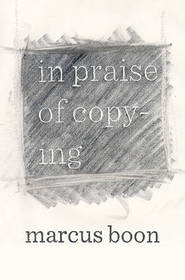 Just a quick fyi: If you head over to the Harvard University Press web site, you can grab a free copy of Marcus Boon’s new book, In Praise of Copying, which makes the case that “copying is an essential part of being human, that the ability to copy is worthy of celebration, and that, without recognizing how integral copying is to being human, we cannot understand ourselves or the world we live in.” Boon is a writer, journalist and Associate Professor in the English Literature department at York University, Toronto. You can download a free copy of his book in PDF format straight from this link. (Note that the text is formally released under a Creative Commons license.) Or you can always purchase a printed copy online.
P.S. The University of Chicago Press is offering up a free e‑book of its own: The Bourgeois Virtues (632 pages) by Deirdre N. McCloskey. Head here to get a copy.
Read More...iTunes U Introduces Free eBooks: Download Shakespeare’s Complete Works
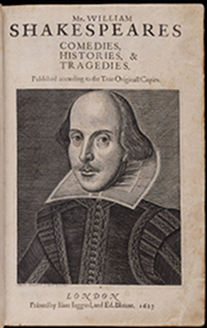 Perhaps you’re accustomed to downloading free lectures and courses on iTunes U. Now, you have a new option. Last week, Apple began introducing free eBooks to its media collection. And, to kick things off, they’re giving users access to 18 free textbooks sponsored by Connexions (a Rice University project); a series of 100 ebooks produced by the Open University, and then, courtesy of Oxford University, the complete collection of Shakespeare’s plays from the First Folio of 1623. You can download all of these texts in the open ePub format. And if you have an iPad (or an iPhone with a copy of iBooks), they easily sync to the device, and make for a great reading experience. But you’re not necessarily limited to using the iPad. I was able to read the texts in ebook readers created by Stanza and Barnes & Noble (the maker of the new color Nook). And, using this free online service and then following these general directions, I easily converted the ePub files to Amazon’s .mobi format and uploaded them to my Kindle. The bottom line? You can expect iTunes U to become a handy resource for free ebooks as the service matures – one best suited to the iPad, but certainly not limited to it. And, speaking of the iPad, you should give this story a read. “IPad Opens World to a Disabled Boy.” It’s a great way to start the week…
Note: If you want a simple html version of Shakespeare’s collected works, don’t miss MIT’s invaluable web site.
FYI. You can find more free eBooks in our ever-growing collection, 600 Free eBooks for iPad, Kindle & Other Devices.
Read More...“A Haunted House” by Virginia Woolf
Published first in 1921, then again in 1944, Virginia Woolf’s short story, “A Haunted House,” runs a mere 692 words – which makes it a Halloween treat that is short and sweet. We give you an appropriately somber reading of Woolf’s story above, with the accompanying text here. Or you can find an mp3 version in our collection of Free Audio Books. H/T to Mike, and enjoy the day.
Read More...Introduction to Computer Science & Programming: Free Courses
Nowadays, any well-rounded student must learn to master reading, writing and math. And then add something new to the mix: learning to code. If you didn’t learn to program software in school, not to worry. Free materials abound on the web, and we have made them easy to find. Above, you can start watching the first lecture of an MIT course (Introduction to Computer Science and Programming) that assumes no special knowledge of programming, and it sets out to teach you to think like a computer scientist. (Find the full set of lectures on YouTube, iTunes and MIT’s website.) Or alternatively, you can spend time with another course – Intensive Introduction to Computer Science Using C, PHP, and JavaScript – taught by David Malan at Harvard Extension. (Get it in multiple formats here.) And then don’t forget that Stanford University offers several introductory courses, all found under the Stanford Engineering Everywhere umbrella.
Once you have a good foundation in place, you can move in a variety of directions. Within our collection of Free Online Courses, we have listed 27 computer science courses where you can learn all about operating systems, computer graphics, artificial intelligence, building web sites, designing iPhone apps and beyond. The courses are all free. They’re available 24/7 on the web. You can get going any time…
Related Content:
Take Stanford Computer Science Courses This Fall: Free Worldwide
Read More...So You Want to Get a PhD in the Humanities?
So if you want the full case against getting a PhD in the humanities, here you go. Every argument the disillusioned academic can possibly make now packed into one semi-comic video. If you’re in the humanities, the litany of complaints, whether fair or not, will hardly be unfamiliar to you.
Now on a more serious note … Towards the end, the video references SUNY Albany’s recent decision to shutter its French, Italian, classics, Russian and theater programs. That event that triggered a much-discussed series of articles by Stanley Fish in The New York Times. If you’re looking for something that operates on a slightly higher intellectual plane, you might want to spend some time with “The Crisis of the Humanities Officially Arrives: Part 1 and Part 2.” Also don’t miss some of the reader comments. They bring a lot to the discussion. Thanks Jason for sending our way…
Related Content:
The Illustrated Guide to the PhD
Read More...Open Culture Goes Mobile: Your Feedback Requested
A quick note for our readers: This week, we soft launched a new mobile web site for Open Culture – one designed to give our readers the ability to access Open Culture content with far greater ease on their smartphones. If you have an iPhone, iPod Touch, Android phone (or any phone with an advanced web browser), you should be able to read our posts, watch videos, and listen to audio much more cleanly, no matter where you are. Simply pick up your phone, visit any page on openculture.com, and you will see what I mean.
This mobile site is still in “beta.” So if you experience any problems, or have any feedback, please send it our way. We want your input. And, if you don’t prefer the mobile site, you can always turn it off. Just scroll to the bottom of the mobile page and click “Switch to Standard View.”
Finally, as you can imagine, this project required some time and expense. If you can comfortably afford it, please consider making a donation via PayPal to support this initiative and others like it. And if you can’t swing it, that’s a‑okay. Maybe just tell a friend about the site (or about our Free iPhone app) and otherwise enjoy the ride.
Thanks for any feedback you might have, and hope you enjoy the mobile version of Open Culture.
Read More...Stephen Fry Gets Animated about Language
For a brief time in 2008, Stephen Fry, the popular British author, writer and comedian, produced a series of podcasts – called “Podgrams” – that drew on his writings, speeches and collective thoughts. (Find them on RSS and iTunes here). During one particular episode, Fry meditated on language (the English language & his own language) and a little on Barthes, Chomsky, Pinker and even Eddie Izzard. Then Matthew Rogers took that meditation and ran with it, producing a “kinetic typography animation” that artfully illustrates a six minute segment of the longer talk. Watch it above, and if you’re captivated by what Fry has to say, don’t miss his popular video, What I Wish I Had Known When I Was 18.
Read More...Support Us
We're hoping to rely on loyal readers, rather than erratic ads. Please click the Donate button and support Open Culture. You can use Paypal, Venmo, Patreon, even Crypto! We thank you!

About Us

Open Culture scours the web for the best educational media. We find the free courses and audio books you need, the language lessons & educational videos you want, and plenty of enlightenment in between.
Advertise With Us

FREE UPDATES!
GET OUR DAILY EMAIL
Get the best cultural and educational resources on the web curated for you in a daily email. We never spam. Unsubscribe at any time.
FOLLOW ON SOCIAL MEDIA

Open Culture editor Dan Colman scours the web for the best educational media. He finds the free courses and audio books you need, the language lessons & movies you want, and plenty of enlightenment in between.
Advertise With Us


