Malcolm Gladwell: Taxes Were High and Life Was Just Fine
Malcolm Gladwell, the bestselling author of The Tipping Point, Blink, and Outliers, has lost some friends lately among geeks (term used lovingly, if not self-referentially) and conservatives. First came the suggestion that Twitter hasn’t made human change agents obsolete. We still need MLKs and Gandhis to change the world. And then, speaking at The New Yorker Festival earlier this month, Gladwell had to remind us of an inconvenient historical fact. During the Eisenhower presidency, taxes on the wealthiest Americans peaked at 91% (more than double what they are today). And, even more galling, life in America was just fine, even downright good…
Thanks Mary for sending this our way. Always appreciate the good tips.
Read More...Art in “Augmented Reality” at The Getty Museum
We’re getting closer to a world where you can ask: why go to a museum when it can come to you? This summer, the Getty Museum used Augmented Reality (AR) technology to showcase one of the most complex objects in its collection – The Augsburg Display Cabinet (or Kabinettschrank) built around 1630. As shown above, the AR technology lets remote users view art in 3D, using just their web cam and a piece of paper to control the experience. You can watch the demo above, or better yet, test drive the whole experience with the instructions found here.
via @drszucker
Related Content:
Zooming into Italian Masterpieces
A Virtual Tour of the Sistine Chapel
Read More...OK Go & Kutiman: Live from the Guggenheim
On Thursday night, the Guggenheim Museum and YouTube unveiled the winners of a highly publicized video contest, YouTube Play: A Biennial of Creative Video. The contest originally generated 23,000 submissions from 91 countries, and, from there, Guggenheim curators culled a shortlist of 125 videos. Then the big moment: 20 winners were selected during an awards ceremony held last night at the museum.
The ceremony itself featured performances by artists who have made YouTube integral to their art – above we have Kutiman, the Israeli artist known for his mother of all funk remix, giving the audience something rather different: a live mashup of Brahms’ “Hungarian Dance,” accompanied by the Noname ensemble from the Julliard School and YouTube Symphony Orcherstra players. And to wrap things up OK Go, the unofficial kings of YouTube, performed ‘White Knuckles’ and ‘This too Shall Pass.’ Keep a close eye on the YouTube channel dedicated to the Biennial of Creative Video. The winning videos will almost certainly be coming online soon.
Read More...The Dalai Lama on the Neuroscience of Compassion
Last week, the Dalai Lama spent several days at Stanford University, where he made compassion his focus. He laid the foundation with a large public address before an audience of 7,000. (Watch an excerpt above or the full talk below.) Then things got more focused when the spiritual leader of Tibet participated in a daylong conference about the neurobiological underpinnings of compassion. Hosted by Stanford’s Center for Compassion and Altruism Research and Education, the conference brought together important scientists from many disciplines – psychology, neuroscience, medicine, and economics. You can watch a recording of the conference here. It’s all in video and ready to go.
If you would like to support the mission of Open Culture, consider making a donation to our site. It’s hard to rely 100% on ads, and your contributions will help us continue providing the best free cultural and educational materials to learners everywhere. You can contribute through PayPal, Patreon, and Venmo (@openculture). Thanks!
Read More...Sir Ken Robinson: A Creative Education
Do schools kill creativity? Sir Ken Robinson asked that question at the 2006 TED conference. And the talk resonated widely. His short presentation remains one of the most watched and “favorited” videos in TED’s large catalogue of inspiring videos. Quite an accomplishment.
Now, with the latest RSA video, Sir Ken returns to delve deeper into this basic question. He asks, Why do schools kill creativity? And why is this problem built into the modern educational system? And how can we bring a “paradigm” shift – one that will let schools foster creativity at long last?
Running 11 minutes, the creatively-animated video above (how fitting!) gives you some answers. But realize that the clip is an excerpt from a longer 52 minute lecture available in its entirety here.
A quick PS: Wired UK recently asked the big question: “What innovation would most improve education in the next decade?” You will find succinct answers by Ken Robinson, Chris Anderson (head of TED), yours truly and several others here.
Read More...David Lynch Talks Meditation with Paul McCartney
David Lynch has been practicing Transcendental Meditation for decades, and, last year, he interviewed another longtime TM practitioner – Sir Paul McCartney. The interview (find Part 1 above and Part 2 here) turned quickly to The Beatles, their involvement with the Maharishi Mahesh Yogi (guru of the TM movement), and their famous trip to his ashram in Rishikesh (India) in February 1968. There, among other things, they wrote 48 songs – many of which contributed to The White Album – before having a falling out with the guru and leaving town.
The filmmaker sat down with McCartney before a benefit concert staged by The David Lynch Foundation in April 2009. Lynch’s organization provides scholarships to schools so that students can learn TM. Both Paul and Ringo performed at benefit that night…
If you would like to support the mission of Open Culture, consider making a donation to our site. It’s hard to rely 100% on ads, and your contributions will help us continue providing the best free cultural and educational materials to learners everywhere. You can contribute through PayPal, Patreon, and Venmo (@openculture). Thanks!
Read More...Mickey Mouse Discovers Conspiracy Against Glenn Beck
Earlier this month, Jonathan McIntosh released a parody cartoon called “Donald Duck Meets Glenn Beck in Right Wing Radio Duck,” which artfully remixed 50 classic Disney cartoons from the 1930s to 1960s. And now comes the inevitable remixed response: “Mickey Mouse Discovers the Government Cartoon Conspiracy Against Glenn Beck.” The video ups the ante in a quick 1:26.
Read More...Prague Monument Doubles as Artist’s Canvas
The Astronomical Clock Tower, situated in Prague’s Old Town Square, just celebrated its 600th anniversary. And to help mark the occasion, artists projected visuals mappings onto the facade – ones that illuminated the history and symbolic significance of the tower for the crowd. These light shows are getting a little en vogue. Cambridge University recently punctuated its 800th anniversary celebration by turning its buildings into a canvas. And Ukraine marked its independence this year with a light show of its own.
via BoingBoing and lostinasupermarket
Read More...The Best American Essays 2010: The Free Route
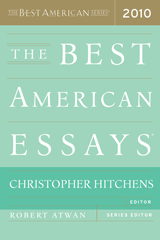 The Best American Essays, 2010, edited by Christopher Hitchens, has now hit the stands. The 300-page collection runs $10.47 online. However, know this: You can read most of the essays online for free. These essays were originally published on websites of major American journals & magazines, and there they still remain. Some notable mentions include The Murder of Leo Tolstoy: A Forensic Investigation by Elif Batuman, How Einstein Divided America’s Jews by Walter Isaacson, On John Updike by Ian McEwan, My Genome, My Self by Steven Pinker, and Guy Walks into a Bar by David Sedaris. Metafilter has pulled together a full list of available texts. Kudos to them. And if you want to read these essays later on (when you actually have some time) give Instapaper a try. It’s a wonderful way to read texts in a clean format on the iPad, iPhone, and Kindle. The trusty web browser is always an option too.
The World is Full of Interesting Things…
A noteworthy mention: The World is Full of Interesting Things packs together 106 works from the “creative internet” into one Google slideshow. It’s a visual grab bag of images, videos, mashups, apps and other items that have captured the collective online imagination. The diverse collection is more easily experienced than explained. So start flipping through and see what we mean here.
via @KarenTempler and Kottke
Read More...Support Us
We're hoping to rely on loyal readers, rather than erratic ads. Please click the Donate button and support Open Culture. You can use Paypal, Venmo, Patreon, even Crypto! We thank you!

About Us

Open Culture scours the web for the best educational media. We find the free courses and audio books you need, the language lessons & educational videos you want, and plenty of enlightenment in between.
Advertise With Us

FREE UPDATES!
GET OUR DAILY EMAIL
Get the best cultural and educational resources on the web curated for you in a daily email. We never spam. Unsubscribe at any time.
FOLLOW ON SOCIAL MEDIA

Open Culture editor Dan Colman scours the web for the best educational media. He finds the free courses and audio books you need, the language lessons & movies you want, and plenty of enlightenment in between.
Advertise With Us

