Last Minutes with ODEN
This past Saturday, Vimeo held its first annual awards ceremony in New York City. Films by nine finalists were screened (see the list below) and then came the big moment: the announcement of the Best Video Award, which went to Eliot Rausch, director of “Last Minutes with ODEN.” As an organizer of the Vimeo festival explains, the documentary (watch above) is about “redemption and transformation.” It’s about how Jason Wood, an ex-convict and drug addict, grows personally, even spiritually, through his relationship with Oden, a three-legged dog now stricken with cancer. The documentary takes us poignantly through their last day together.
Narrative: “Thrush” by Gabriel Bisset-Smith
Documentary: “Last Minutes with ODEN” by Eliot Rausch
Music Video: “Liars ‘Scissor’ ” by Andy Bruntel
Animation: “Between Bears” by Eran Hilleli
Original Series: “Break-ups The Series” by Ted Tremper
Experimental: “oops” by Chris Beckman
Motion Graphics: “TRIANGLE” by Onur Senturk
Captured: “Fluid Sculpture“by Charlie Bucket
Remix: “BREAKDOWN the video” by Kasumi
Dark Side of the Lens: A Poetic Short Film by Surf Photographer Mickey Smith
Dark Side of the Lens presents the art and inner voice of Irish surf photographer Mickey Smith. The six minute film lets you experience Smith’s aesthetics translated into beautiful practice. (“I wanna see waveriding documented the way I see it in my head, and the way I feel it in the sea.”) But then it rather poetically cracks open the personal philosophy of the artist:
I never set out to become anything in particular, only to live creatively and push the scope of my experience for adventure and for passion… The raw brutal cold coastlands for the right waveriders to challenge – this is where my heart beats hardest…
Most folk don’t even know who we are, and what we do or how we do it, let alone what they pay us for it. I never want to take this for granted so I try to keep motivation simple, real, and positive… If I only scrape a living, at least it’s a living where I’m scraping.… If there’s no future in it, this is a present worth remembering.
The aesthetic choices. The personal decisions. It’s all what’s happening behind the camera, the place no audience sees, the “dark side of the lens.” You can find the full transcript of Smith’s commentary after the jump…
A final note: Dark Side of the Lens was born out of a project called “Short Stories.” Established by Relentless Energy Drink, the UK-based project challenged filmmakers to create their own mini opus, to explore and celebrate “no half measures” in film. Find other shorts here.
If you would like to support the mission of Open Culture, consider making a donation to our site. It’s hard to rely 100% on ads, and your contributions will help us continue providing the best free cultural and educational materials to learners everywhere. You can contribute through PayPal, Patreon, and Venmo (@openculture). Thanks!
Read More...
Join the Legion of Creative Commons Superheroes!
Creative Commons has kicked off its Legion of Superheroes fundraising campaign saying, “Imagine a world where knowledge flows freely and can be built upon without limits. Imagine a world where culture, art and media are available to everyone, scientific content is shared by corporations and research institutions, and shared intelligence augments human rights efforts across borders.”
It’s not hard for us to imagine that world. We see it every day. Whether you know it or not, the enriching video/audio featured on Open Culture is often released with a Creative Commons license, which means that it can be shared freely across the globe. Our collection of free online courses offers a good example. Some of the world’s finest universities release their courses with a CC license, allowing an international audience to continue learning and growing. And we just help get the word out.
Right now, Creative Commons is working to raise $550,000 by the end of the year to support their work. I have included a little box below where you can make a contribution of any size. Or you can head over to their site and do the same. If you would like to support openness and innovation, please consider being a superhero and giving what you can.
Art Builds Upon Art: Nina Paley’s New Video
From the maker of Sita Sings the Blues comes a new short film that artistically delivers a simple message: “All creative work builds on what came before.” Using artifacts from the Metropolitan Museum of Art, Nina Paley draws the visual conclusion that art borrows and remixes – that nothing is really out of the box. This argument resonates for some. For others, it falls flat. Either way, the film is worth a watch. (You can download high-res and Ogg versions at the Internet Archive.)
Related Content:
Everything is a Remix (A Short Film)
Read More...Footage of the Coronation of the Last Russian Czar (1896)
The coronation of Nicholas II, the last Russian czar, took place in May 1896, an event captured in some of the oldest footage still in existence (above). The coronation was a high point, and, from there, it was largely downhill for Nicholas. In 1905, the czar lost a humiliating war against Japan, which then partly triggered an unsettling revolution later that year – one that forced the king to live within the constraints of a constitutional monarchy. But this was just the beginning. The real revolution came in 1917, and soon enough the Bolsheviks, led by Lenin, executed Nicholas II, his wife and son, his four daughters and domestic staff in July 1918. Bloody Nicholas – he had a fair amount of blood on his own hands – was dead. And now the new communist/Soviet era was underway…
Related note: The Library of Congress hosts online a big series of photos from the Russian Empire circa. 1905 — 1915. You can access them via the top level, or by jumping directly into the full collection of images here. (Thanks Michael for the tip here.)
via How Stuff Works
Read More...Revisiting JFK on YouTube
On September 26, 1960, John F. Kennedy and Richard Nixon appeared in America’s first nationally televised presidential debate, an event witnessed by some 70 million Americans. Although radio listeners thought that Nixon handily won the debate (48% v. 21%), television viewers gave the edge to Kennedy (30% v. 29%) – the eventual winner of the election. On that September night, presidential politics entered the television age and never looked back.
Thanks to the YouTube Channel sponsored by the JFK Presidential Library, you can now revisit this historical moment, along with other key footage from the Kennedy presidency. Taking a tour of the channel, you will find Kennedy giving his inaugural address, making the strong case for civil rights, confronting the reality of nuclear war, and urging America to win the race to the moon. The JFK video collection now appears on our growing list of Intelligent YouTube Channels.
Read More...David Sedaris Reads From New book, Squirrel Seeks Chipmunk

Squirrel Seeks Chipmunk: A Modest Bestiary, the new book by David Sedaris has hit the stands last week. And now thanks to The Guardian we get Sedaris himself reading a story/chapter from the collection, “The Mouse and the Snake.” It runs nearly 10 minutes. Start playing below…
Read More...Jeff Bezos: What Life Story Will You Write?
A quick bit of inspiration from the man who has changed the way we buy books, and now the way we’re reading them – Jeff Bezos (CEO, Amazon). Speaking at Princeton’s graduation last May, Bezos discussed the life choices that we all face: Will you follow dogma? Or be original? Will you play it safe? Or take good risks? Will you be a cynic? Or a builder? Will you be clever at the expense of others? Or will you be kind?
In short, your life story comes down to your choices. What story will you write? And how will it read when you’re 80?
Related Content:
Steve Jobs Talks Life at Stanford Graduation
Read More...Donald Duck Discovers Glenn Beck: A Remix
This week, Jonathan McIntosh (of Rebellious Pixels) released a new cartoon,“Right Wing Radio Duck,” that remixes dozens of classic Walt Disney cartoons from the 1930s to 1960s. The artistic work is seamless. The video is downright fun to watch. And the underlying message is entirely contemporary. A la Colbert: Keep Fear Alive.
The new video is released under a Creative Commons license, and, according to the artist, this transformative remix “constitutes a fair-use of any copyrighted material as provided for in section 107 of the US copyright law.” Will Disney, a company that exercises enormous power over American copyright law, agree? That remains to be seen.
To Glenn Beck fans who double as OC readers (if we have any), I apologize in advance.
via Alec Couros (aka @courosa)
Read More...Hear The Epic of Gilgamesh Read in the Original Akkadian and Enjoy the Sounds of Mesopotamia
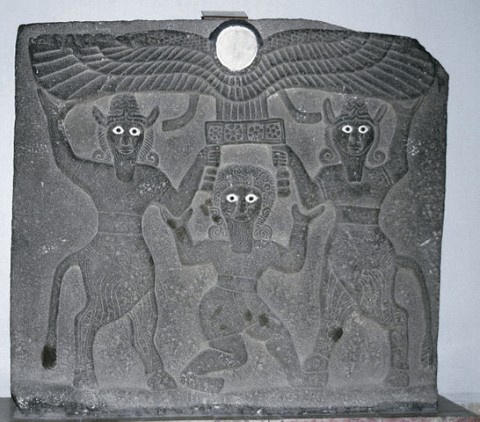
Long ago, in the ancient civilization of Mesopotamia, Akkadian was the dominant language. And, for centuries, it remained the lingua franca in the Ancient Near East. But then it was gradually squeezed out by Aramaic, and it faded into oblivion once Alexander the Great Hellenized (Greekified) the region.
Now, 2,000+ years later, Akkadian is making a small comeback. At Cambridge University, Dr. Martin Worthington, an expert in Babylonian and Assyrian grammar, has started recording readings of poems, myths and other texts in Akkadian, including The Epic of Gilgamesh. This clip gives you a taste of what Gilgamesh, one of the earliest known works of literature, sounds like in its mother tongue. Or, you can jump into the full collection of readings right here.
If you would like to support the mission of Open Culture, consider making a donation to our site. It’s hard to rely 100% on ads, and your contributions will help us continue providing the best free cultural and educational materials to learners everywhere. You can contribute through PayPal, Patreon, and Venmo (@openculture). Thanks!
via Heritage Key
Related Content:
World Literature in 13 Parts: From Gilgamesh to García Márquez
The Ancient History Learning Guide
What Ancient Greek Music Sounded Like: Hear a Reconstruction That is ‘100% Accurate’
Read More...Support Us
We're hoping to rely on loyal readers, rather than erratic ads. Please click the Donate button and support Open Culture. You can use Paypal, Venmo, Patreon, even Crypto! We thank you!

About Us

Open Culture scours the web for the best educational media. We find the free courses and audio books you need, the language lessons & educational videos you want, and plenty of enlightenment in between.
Advertise With Us

FREE UPDATES!
GET OUR DAILY EMAIL
Get the best cultural and educational resources on the web curated for you in a daily email. We never spam. Unsubscribe at any time.
FOLLOW ON SOCIAL MEDIA

Open Culture editor Dan Colman scours the web for the best educational media. He finds the free courses and audio books you need, the language lessons & movies you want, and plenty of enlightenment in between.
Advertise With Us

