How to Make Your Podcasts More Mobile
That sounds like a strange proposition. Podcasts are inherently mobile, so what can make them more mobile? Apparently myPodder can. It’s a free, cross-platform software package put out by Podcast Ready that has two notable advantages. Once you register and install their free software, you’ll no longer need to download podcasts first to your computer and then to your mp3 player. Instead, you’ll be able to download them directly to your MP3 player via the internet and cut out the middle step. Beyond that, myPodder lets you update your mp3 player from anywhere you can get an internet connection. Now, you’re no longer forced to update your podcast collection from one location (as is the case with iTunes). It’s all free, so give it a good look.
If you’re generally wondering how to work with podcasts in the first place, please see our Podcast Primer.
Read More...The Fifteen Minute Book Machine
A couple of years ago I met Jason Epstein in passing and he excitedly described his new project: a machine to print On Demand Books. The plan is finally bearing fruit: the Espresso Book Machine was demonstrated at the New York Public Library on Wednesday. Three of the machines are out in the wild, and I suspect many more will appear if the prototypes live up to the hype.
The idea of books on demand is a little eerie but eminently efficient. Publishers and booksellers waste millions of dollars, tons of fuel and forests of paper shipping, returning and trashing unsold books every year. And if a machine like this isn’t too expensive to run, it could revolutionize education in less accessible or wealthy parts of the world. The real question is whether such a machine might do to bookstores what Netflix has done to video rental stores. The Espresso machine can only print paperbacks, so for now I think Barnes and Noble is safe. And even if the shelves are replaced with digital browsing displays one day, many customers will still want to enjoy their purchases with an overpriced latte and pastry. The social spaces of book-reading have yet to be destroyed by Amazon.com or the blogosphere, so I think they’ll survive a new kind of espresso machine.
What Book Changed Your Life? Participate in a Group Project. Tell Us and Become Eligible for a Prize .
Check out our collection of free audiobooks.
Read More...What Books Made a Difference? (Yes, We’re Talking to You)
We’re trying out something a little different today, and we hope that you’ll participate because by giving more, you’ll get more in return. (So far we have 18 people participating, now it is your turn.)
We want to draw on the collective wisdom of our readers and find out what great books you’ve read, and which particular one made a difference in your life. That is, what book has led you to look differently at literature, thinking, career, love, friendship, death, or whatever you consider important?
At some point later next week, we’ll bundle the submissions and post them for you. We’re hoping that this will give everyone a list of great and important books to read.
If you’d like to participate, please make a submission in the comments below, or via email. In whatever you write, please list the name of the book and the author, and then mention why the book mattered to you. (Your explanation can be as brief or as long as you like.) When we post the replies, we won’t use your names unless you otherwise consent. And we’ll otherwise protect the privacy of your email addresses.
Finally, we’ll randomly select one name from all of the submissions, and send that contributor a nice $50 gift certificate from Amazon.com.
We look forward to hearing from you, and thanks for taking part.
Read More...
Straight Talk about Stem Cells: Another Stanford Course via Podcast
 Last week, we mentioned The Future of the Internet. This week it’s another course available as a free podcast : Straight Talk About Stem Cells (iTunes).
The course was taught by Christopher Scott, the Executive Director of Stanford’s Program on Stem Cells in Society and the author of Stem Cell Now: An Introduction to the Coming Medical Revolution. Originally taught within Stanford’s Continuing Studies program, the course was designed with the general public in mind. So it should be quite accessible. You can now download three of the total five lectures. Two more will be coming soon. (Get it on iTunes here.) Here is the original course description for the course.
Biology’s Brave New World: Straight Talk about Stem Cells
No area of science holds such promise for treating disease and improving human lives as stem cell research. But no area of science causes such fundamental ethical concern and such ferocious political conflict. In this short course, students will learn the fundamentals of stem cell biology, and study how these powerful cells could be used to make functional organs, treat diabetes or repair spinal cord injuries. With the science and technology firmly in hand, we will journey into the deep reaches of the controversy and examine the international explosion of stem cell research and how law and policy are affecting long-held American dominance in cell biology. New science often provokes a redefinition of ethical standards. Stem cells have reignited the debate about the embryo, abortion, and science run amok. We will leave the shrill rhetoric behind, discussing the question at the heart of the debate: How, as a society, do we balance our responsibilities to the unborn and the sick?
Check out our larger collection of free university courses.
Read More...
The Rise of the Cultureboxes, Part III: The iPhone
(Continued from Part II)
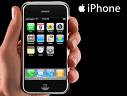 The most recent major foray into the world of cultureboxes comes in an entirely different size and market niche: the Apple iPhone. It may look different, but it has all the hallmarks of a culturebox. The iPhone wants to deliver video, audio and the best of the Web; it hopes to revolutionize its market; it requires monthly service fees and a hefty price-tag to use fully.
Just like Microsoft and Tivo, Apple has had some struggles in getting their new device to live up to its promises. The batteries on many of the iPhones are not living up to expectations and some standard phone features seem to be missing. The new phone purports to combine the roles of iPod and cell phone more elegantly than any other device.
Music. Video. Connection. The Tivo, Xbox and iPhone all want to sell us cultural services through an integrated system of digital control. Record or purchase content from the authorized digital store and watch it on the authorized device. All three companies know that the success of their product depends on maintaining a delicate balance between defending the walls of their digital kingdoms and allowing in enough outside content to remain flexible in uncertain markets. All three boxes can be hacked and manipulated, of course, but their manufacturers are counting on the vast majority of customers to play along and pay along.
Just as the box-makers struggle to cut deals with content producers to make their digital offerings appealing to consumers, the “traditional” culture industries are desperately struggling to embrace new forms. The New York Times reviews videogames as well as plays, and just about every major media institution has launched some kind of blog, web video service or podcast so you can connect with the critics on whatever culturebox you prefer.
Culture served up on boxes is very different from public performance or ephemeral newsprint. We can save up hours and hours of it; we can carry it around or duplicate it. When we build up a library of music and videos, we own cultural objects in a way that was never really possible before, when the best we could do was own perishable physical media. We can replay, reformat, share and collate favorites, and we can use our rankings and ratings to find new works. A lot of the most exciting technical advances have had to do with connecting cultureboxes, but that so far that connectivity mostly goes to providing better culture for solo viewing. The three devices discussed here all hope to change that.
The reign of cultureboxes is in many ways the personal, digital version of something that happened in the late 18th century: The birth of the modern museum. The idea was to gather art, knowledge and history together and frame them appropriately—saving up culture for you in vast marble boxes. Today’s personal cultureboxes will never replace theater or museum-going, but they extend the same promise of cultural literacy (have you finished The Sopranos yet?). These days the promise is affiliated with brand name digital emporia.
Like the Xbox, Tivo, and iPhone, many of the first museums wanted to be everything for everybody, offering visitors historical relics, biological specimens and strange devices in a mishmash of art, science and hokum. No wonder the Xboxes are on the fritz: they’re trying to capture all our totally conflicted interests in just one device. Eventually we’ll figure out what digital content really belongs in our pocket on a two-inch screen, what needs to stay in the living room, and what to keep out of the box entirely. I should have some time to think about it while my Xbox gets repaired.
Read More...The Rise of the Cultureboxes, Part 2: Tivo
The trouble is, nobody is quite sure what the culturebox should look like or what it should do. We can all agree on video, audio and some kind of storage function. But do we want our media pocket-sized or on a big screen? Is the goal to entertain us on the commute or to build up a library of cherished media objects? More importantly, when we say “culture” do we essentially mean television or the whole panoply of forms? Are cultureboxes just TV by other means or are there genuinely new cultural forms on the horizon?
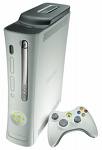
Last week Microsoft announced that Xbox 360s are failing in unprecedented numbers: A dramatic example of Culturebox Anxiety Syndrome. The new generation of videogame consoles allow us to do so much more than blasting aliens—video on demand, HD and Blu-Ray DVD playback, online chatting and music library management are just a few of the roles these particular cultureboxes want to serve. The complexity is clearly an overload: the New York Times argues that the $1 billion Microsoft is setting aside for this problem implies that between a third and half of Xbox 360 consoles could get the culturebox blues. Now a high-level Xbox executive has announced his resignation, though few people think it’s a punishment since the platform is generally selling well.
Perhaps I’m only writing because I use all these gadgets and my Xbox recently succumbed to “red ring of death” syndrome. Ironically, it only freezes up when I use it to load a videogame. But there is a broader issue here: the transformation of culture from something we experience in concert halls, movie theaters and other shared public spaces into something that we do on the couch or on the go.
Read More...The Rise of the Cultureboxes, Part 1: The Xbox
The trouble is, nobody is quite sure what the culturebox should look like or what it should do. We can all agree on video, audio and some kind of storage function. But do we want our media pocket-sized or on a big screen? Is the goal to entertain us on the commute or to build up a library of cherished media objects? More importantly, when we say “culture” do we essentially mean television or the whole panoply of forms? Are cultureboxes just TV by other means or are there genuinely new cultural forms on the horizon?
Last week Microsoft announced that Xbox 360s are failing in unprecedented numbers: A dramatic example of Culturebox Anxiety Syndrome. The new generation of videogame consoles allow us to do so much more than blasting aliens—video on demand, HD and Blu-Ray DVD playback, online chatting and music library management are just a few of the roles these particular cultureboxes want to serve. The complexity is clearly an overload: the New York Times argues that the $1 billion Microsoft is setting aside for this problem implies that between a third and half of Xbox 360 consoles could get the culturebox blues. Now a high-level Xbox executive has announced his resignation, though few people think it’s a punishment since the platform is generally selling well.
Perhaps I’m only writing because I use all these gadgets and my Xbox recently succumbed to “red ring of death” syndrome. Ironically, it only freezes up when I use it to load a videogame. But there is a broader issue here: the transformation of culture from something we experience in concert halls, movie theaters and other shared public spaces into something that we do on the couch or on the go.
Read More...The Future of the Internet: A New Stanford Course
Here is a new and free course to come out of a Stanford University program that (full disclosure) I help organize. It’s called The Future of the Internet: Architecture and Policy (iTunes), and it’s taught by Ramesh Johari. The course, designed for non-techies, gets into the important question of whether the internet will remain “neutral” and freely available to you and me. This course will appeal to anyone who has ever liked the work of Lawrence Lessig. (Please note that we’ll be rolling out a couple more lectures in this course on a rolling basis.)
Check out the complete course description below (and click here for many more free university courses):
“The Internet today has evolved a long way from its humble beginnings as a federally funded research project. As a society, we find ourselves increasingly dependent on the Internet for our daily routine; and yet, the future of the Internet remains a matter of vigorous political, economic, and academic debate. This debate centers around ownership: who will own the infrastructure, and who will own the content that the network delivers? Unfortunately, most of this debate does not involve a substantive discussion of the “architecture” of the network, or the role that architectural design will play in shaping the ownership of the future global network.
This course provides a non-technical introduction to the architecture of the Internet, present and future. Students will be taken on a tour through the inner workings of the network, with a view toward how these details inform the current debate about “network neutrality” and the ownership of the future Internet.”
Read More...Support Us
We're hoping to rely on loyal readers, rather than erratic ads. Please click the Donate button and support Open Culture. You can use Paypal, Venmo, Patreon, even Crypto! We thank you!

About Us

Open Culture scours the web for the best educational media. We find the free courses and audio books you need, the language lessons & educational videos you want, and plenty of enlightenment in between.
Advertise With Us

FREE UPDATES!
GET OUR DAILY EMAIL
Get the best cultural and educational resources on the web curated for you in a daily email. We never spam. Unsubscribe at any time.
FOLLOW ON SOCIAL MEDIA

Open Culture editor Dan Colman scours the web for the best educational media. He finds the free courses and audio books you need, the language lessons & movies you want, and plenty of enlightenment in between.
Advertise With Us

