Watch the New Trailer for Orson Welles’ Lost Film, The Other Side of the Wind: A Glimpse of Footage from the Finally Completed Film
Orson Welles died more than 30 years ago, and his last feature film F for Fake came out fifteen years before that. But we’ll now have to revise our notions of where his filmography ends, since his long-unfinished project The Other Side of the Wind just debuted at the Venice Film Festival in advance of its November 2nd release. Shot between 1970 and 1976, a process prolonged by numerous financial difficulties, the film was first thrust into limbo in its third year of editing by the Iranian Revolution, as some of its financing had come from the Shah’s brother-in-law. The light at the end of The Other Side of the Wind’s decades-long tunnel of ownership complications, when it finally appeared, took a form even Welles could never have imagined: Netflix.
The Other Side of the Wind stars acclaimed film director John Huston as an acclaimed film director named Jake Hannaford, recently returned to America after years of self-exile in Europe. An old-school relic in the 1970s’ “New Hollywood” era, a time when a younger generation of filmmakers like Martin Scorsese, Francis Ford Coppola, and Terrence Malick used the major studios to realize personal visions at a large cinematic scale, Hannaford tries to make a comeback with a counterculture picture of his own. Filled with long takes of vast landscapes, modern architecture, a lone motorcycle rider, and gratuitous nudity, this film-within-the-film, also called The Other Side of the Wind, takes its cues not just from the New Hollywood kids but from Michelangelo Antonioni and the other European filmmakers then in vogue as well.
The “real” The Other Side of the Wind, of which you can get a taste in the trailer above, takes a completely different tack, using documentary-style shooting, quick cutting, and oscillation between color and black and white. This layering of different styles comes with a layering of different eras, each commenting on the others: the 1930s and 1940s that shaped Welles as a filmmaker (and that Welles shaped as a period in cinema), the New-Hollywood 1970s, and the present day, when a company like Netflix has the clout to make projects happen for any director, living or dead. The collaboration to complete the film involved new participants as well as those who’d worked on it in the 1970s, like Welles associate Peter Bogdanovich, who played a filmmaker in The Other Side of the Wind not long after becoming a filmmaker himself.
Numerous other directors also appear in the film, from Golden-Age Hollywood journeyman Norman Foster to French New Wave figure Claude Chabrol to countercultural icon Dennis Hopper. As for Hannaford, a line in the trailer describes him as “the Hemingway of cinema,” the kind of macho artist who had long intrigued Welles, perhaps ever since he met and clashed with Hemingway himself. “He’s been rejected by all his old friends,” Welles once said of the Hannaford character in a previous version of the film. “He’s finally been shown up to be a kind of voyeur… a fellow who lives off other people’s danger and death.” He put it more bluntly to Huston in a quote that appears in Josh Karp’s book Orson Welles’s Last Movie: The Making of The Other Side of the Wind: “It’s a film about a bastard director. It’s about us, John. It’s a film about us.”
Related Content:
Watch Orson Welles’ First Ever Film, Directed at Age 19
Discover the Lost Films of Orson Welles
F for Fake: Orson Welles’ Short Film & Trailer That Was Never Released in America
Watch Orson Welles’ Trailer for Citizen Kane: As Innovative as the Film Itself
Orson Welles Remembers his Stormy Friendship with Ernest Hemingway
Based in Seoul, Colin Marshall writes and broadcasts on cities and culture. His projects include the book The Stateless City: a Walk through 21st-Century Los Angeles and the video series The City in Cinema. Follow him on Twitter at @colinmarshall or on Facebook.
Read More...Hear the Original, Never-Heard Demo of John Lennon’s “Imagine”
Imagining a “brotherhood of man” sounds Pollyannaish and painfully naïve when even an “uneasy truce of man” seems hardly possible. But when John Lennon sings about it with conviction in “Imagine,” we sit up and listen. Such is the power of “Imagine”’s utopian vision, and Lennon later admitted it “should be credited as a Lennon/Ono song,” since “a lot of it—the lyric and the concept—came from Yoko,” specifically from Grapefruit, her little book of whimsical “instructions.” For decades the pair’s collaborations have received withering scorn from Beatles fans, but no greater testament to their combined humanist vision exists than “Imagine,” a product of Ono’s conceptual dream verse and Lennon’s earnest songcraft.
So much has been said and written about the song, so many great and not-so-great covers performed since its 1971 release, that we might think we know all there is to know about it. We even have behind the scenes footage in the documentary Gimme Some Truth of the sometimes tense recording sessions. Yet it turns out that the original demo version Lennon recorded at his own Ascot Sound studios went unnoticed in a box of tapes for 45 years. We can celebrate its 2016 rediscovery and now hear it for ourselves, that eight-track tape transferred to digital and enhanced by engineer Paul Hicks, above.
The recording was discovered by Rob Stevens who found it, reports Jason Kottke, “while sifting through boxes upon boxes of the original tapes for Yoko Ono.” It seems that improper labeling damned the tape to decades of obscurity. “There’s a one-inch eight-track,” remembered Stevens, “that says nothing more on the ‘Ascot Sound’ label than John Lennon, the date, and the engineer (Phil McDonald), with DEMO on the spine. No indication of what material was on the tape.” The find was “true serendipity,” he remarks.
Hearing this moving, stripped-down solo version reminds me of David Bowie telling an audience in 1983—just before singing the song on his Serious Moonlight tour—of how Lennon approached his songwriting: “’It’s easy,’ he said, ‘you just say what you mean and put a backbeat to it.’” Even without the backbeat, “Imagine” says exactly what it means. Imagine all the people living for today.
A set of “Ultimate Mixes” of the Imagine album will be released in October (pre-order here) and will of course include the newly-unearthed demo along with many other demos and rarities. Till then, enjoy this amazing discovery, just above.
via Kottke
Related Content:
Watch David Bowie Perform “Imagine”: A Touching Tribute to His Friend John Lennon (1983)
Watch John Lennon’s Last Live Performance (1975): “Imagine,” “Stand By Me” & More
Josh Jones is a writer and musician based in Durham, NC. Follow him at @jdmagness
Read More...The Encyclopedia of Science Fiction: 17,500 Entries on All Things Sci-Fi Are Now Free Online
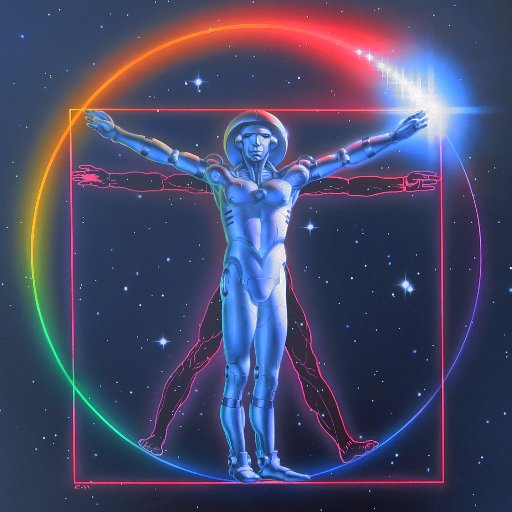
What turns people into science-fiction fans? Many enter through the gateway of Star Trek, an early 1960s television series “set on the worlds visited by a giant Spaceship, the U.S.S. Enterprise, and on the ship itself. Its crew is on a mission to explore new worlds and ‘to boldly go where no man has gone before.’ ” Though “not particularly successful in the ratings,” Star Trek nevertheless “attracted a hard core of devoted fans, ‘Trekkies,’ who made up in passionate enthusiasm what they lacked in numbers.” Perhaps creator Gene Roddenberry’s signature “blend of the mildly fantastic with the reassuringly familiar, and his use of an on the whole very likeable cast, attracted viewers precisely because its exoticism was manageable and unthreatening.”
Those quotes come from The Encyclopedia of Science Fiction, a free online resource featuring more than 17,500 entries explaining all things sci-fi, whether new or old, mainstream or obscure. Some of its pages deal with works of doubted status as science fiction at all: Star Wars, for example, “an entertaining pastiche that draws upon comic strips, old movie serials, Westerns, James Bond stories, The Wizard of Oz, Snow White, Errol Flynn swashbucklers and movies about World War Two” whose “gratifyingly spectacular – at the time – special effects and martial music hypnotized the audience into uncritical acceptance of the basically absurd, deliberately Pulp-magazine-style conflict between Good and Evil.”
That sort of thing is a long way indeed from the work of, say, a science-fiction grandmaster like Isaac Asimov, who wrote prolifically in “the clear unerring voice of a man speaking reason, uttering tales about how to solve the true world.” Some readers of Open Culture might well have found their way into science fiction through Ridley Scott’s Blade Runner, which despite its “many narrative flaws” remains “one of the most important sf movies made,” having showed “almost for the first time – though fans had spent years hoping – how visually sophisticated sf in film form can be.”
Blade Runner’s entry includes, of course, a reference to the script’s basis on Do Androids Dream of Electric Sheep? by Philip K. Dick, “a figure who helps define by contrast those identified in this Encyclopedia as Mainstream Writers of SF: writers, that is, whose comprehension of the significant literatures of the last century has sometimes seemed less than full. An author like Thomas Pynchon, who is not described in this encyclopedia as mainstream, will understand what he owes Dick; a mainstream author like Margaret Atwood has worked to make it clear that she does not.”
Stanley Kubrick’s 2001: A Space Odyssey, “the most ambitious sf film of the 1960s and perhaps ever,” has also done its part to propagate a sci-fi way of looking at the world, exploring as it does “the idea of human deficiency in the twenty-first century.” Kubrick developed it in collaboration with novelist Arthur C. Clarke, another of the genre’s titans, indeed “the very personification of sf. Never a ‘literary’ author, he nonetheless always wrote with lucidity and candour, often with grace, sometimes with a cold, sharp evocativeness that produced some of the most memorable images in sf.”
Other entries tell of writers not so closely associated with traditional science fiction but highly regarded and enduringly influential in the wider world of speculative literature: Jorge Luis Borges, for instance, with his “ ‘sense of ecstatic enclosedness in the Word Incarnate’ that may be uniquely intense in world literature,” or J.G. Ballard, “revered (and detested) for the corrosively inescapable vision of the late twentieth-century world, which his stories seemed not so much to reflect in a distorting mirror as (alarmingly) to reflect, for the first time, without defensive evasions.”
“Originally published in physical form in 1979,” writes Lithub’s MH Rowe, “the Encyclopedia of Science Fiction won a Hugo award for best nonfiction book in 1980. A second edition followed in 1993, with a CD-ROM supplement a few years later. The encyclopedia won another Hugo in 1994, and a decade later began its migration online, where it launched in 2011 as a precursor to its current digital form” — albeit a far cry from a crowdsourced, objectivity-oriented resource like Wikipedia. “Making no effort to avoid the partisanship that’s a hallmark of being a fan, the SFE possesses the kind of purity you can only get from corrupt endeavors. It’s by turns cranky, self-doubting, and ultra-confident, but it couldn’t be more deeply engaged with the genre of science fiction.” And if anything characterizes science-fiction fandom more than deep engagement, even the genre’s most powerful imaginations haven’t dreamed of it.
via Lithub
Related Content:
Free: 355 Issues of Galaxy, the Groundbreaking 1950s Science Fiction Magazine
100 Great Sci-Fi Stories by Women Writers (Read 20 for Free Online)
Isaac Asimov Recalls the Golden Age of Science Fiction (1937–1950)
The Art of Sci-Fi Book Covers: From the Fantastical 1920s to the Psychedelic 1960s & Beyond
Based in Seoul, Colin Marshall writes and broadcasts on cities and culture. His projects include the book The Stateless City: a Walk through 21st-Century Los Angeles and the video series The City in Cinema. Follow him on Twitter at @colinmarshall or on Facebook.
Read More...Tom Waits’ Many Appearances on David Letterman, From 1983 to 2015
From their beginnings as Late Night on NBC in 1982, to their end as the Late Show in 2015, David Letterman’s network talk show years were reliable guides for those who shared his distinctive musical tastes. His impeccable house band was legendary, and he developed an abiding love for the Foo Fighters in later years, who played him out on his last show over an emotional montage.
Other standout musical guests tended toward the more off-kilter. Frank Zappa and outsider singer-songwriter Warren Zevon were clear favorites, their wry humor rivaling Letterman’s own. Zevon may not have sold out stadiums but made a perfect musical foil for the host, even sitting in once for Paul Shaffer.
“When it comes to music,” said Letterman, introducing Zevon, “there’s just a handful of folks that I really love and adore.” Second only to Zevon was another songwriter with an even more vaudevillian sensibility: Tom Waits, who made his debut on Late Night in 1983 and came back every few years until one of Letterman’s final shows on May 14, 2015.
At the top, you can catch Waits’ debut appearance, promoting Swordfishtrombones and doing his very Bukowski-like spoken word bit “Frank’s Wild Years” and “On the Nickel,” from a little-known 1980 skid-row themed film. In-between performances, Waits proves himself an old hand at banter, his sandpaper-on-asphalt voice making him sound twice as old as his tender 34 years at the time.
Waits returned for a second time in 1986. Further up, see his third appearance the following year, promoting the Frank’s Wild Years, the album, a collection of songs written by Waits, his wife Kathleen Brennan, and bassist Greg Cohen for a play of the same name. (He was also coming off the production of Ironweed, in which he starred with Jack Nicholson and Meryl Streep.) Just above, see Waits on the Late Show in 1999 performing “Chocolate Jesus,” a “song for those of you in the audience,” he says, “who have trouble getting up on Sunday mornings and going to church.”
Waits came back again in 2002 and 2004. In 2006, he released his massive, three-disc Orphans: Brawlers, Bawlers & Bastards, which covered all of the musical territory he had explored over his long career, and then some. Just above, see him do “Lie to Me,” a classic jazz-blues stomper and high contrast to his final appearance on Letterman, below.
Waits released his last album, Bad as Me in 2011, and appeared on the show the next year. Though he’s been active since then, with acting roles and a collaboration with Keith Richards in 2013, he hasn’t released any new original music yet save a moving new song, “One Last Look,” performed exclusively on that 2015 appearance after his last interview with Letterman (and an interloping George Clooney).
Despite Letterman’s retirement announcement after the end of his Late Show run, we’ve seen him return to the small screen to do what he does best on his Netflix show My Next Guest Needs No Introduction. Let’s hope we haven’t also heard the last of Tom Waits. Maybe Letterman will have him on again soon to promote yet another brilliant record of the music only Tom Waits can make.
Related Content:
Stream All of Tom Waits’ Music in a 24 Hour Playlist: The Complete Discography
Tom Waits Sings and Tells Stories in Tom Waits: A Day in Vienna, a 1979 Austrian Film
Tom Waits and Keith Richards Sing Sea Song “Shenandoah” for New Pirate-Themed CD: Listen Online
Frank Zappa’s 1980s Appearances on The David Letterman Show
Josh Jones is a writer and musician based in Durham, NC. Follow him at @jdmagness
Read More...How David Lynch Got Creative Inspiration? By Drinking a Milkshake at Bob’s Big Boy, Every Single Day, for Seven Straight Years
“It is no secret that David Lynch, the writer-director-composer-painter, has an unusual relationship with Bob’s Big Boy,” begins a 1999 Los Angeles Times article on the auteur of films like Eraserhead and Blue Velvet. “For seven years in the 1980s he ate lunch there every day, ordering cup after cup of over-sweetened coffee and a single chocolate milkshake while scribbling notes on Bob’s little square napkins.” He took pains, notes reporter Amy Wallace, “to arrive at Bob’s at precisely 2:30 p.m. each day. The reason: It increased the odds that he would encounter perfection.”
“If you go earlier, at lunchtime, they’re making a lot of chocolate milkshakes. The mixture has to cool in a machine, but if it doesn’t sit in there long enough — when they’re serving a lot of them — it’s runny,” Wallace quotes Lynch as saying. “At 2:30, the milkshake mixture hasn’t been sitting there too long, but you’ve got a chance for it to be just great.”
For his pains, he received “only three perfect milkshakes out of more than 2,500. But that wasn’t the point. For Lynch, it was enough to know he had set the stage for excellence to occur,” believing that “whether with milkshakes or movies,” one “must make room for inspiration to strike — to lay the proper groundwork for greatness to take hold.”
When the 1980s British television series The Incredibly Strange Film Show devoted an episode to Lynch, it naturally went to Los Angeles not just to interview him but to shoot some footage at Bob’s, the sacred space itself. In the clip at the top of the post, you can see host Jonathan Ross, seated in one of the retro diner’s booths and Lynchianly dressed in a white shirt buttoned all the way up, describe how, after an “all-American lunch,” the director would embark on “marathon coffee-drinking sessions. Fueled by the caffeine and his excessive sugar intake, he’d then spend the afternoon writing down ideas for movies on the napkins helpfully provided by Bob.”
In the interview that follows, Lynch himself confirms all this. “I was into Bob’s halfway through Eraserhead,” he says, establishing the chronology. “The end of Dune” — his traumatic, failed experience with big-budget studio production — “was pretty much the end of Bob’s.” Even Lynch’s daughter Jennifer, for a time her father’s Bob’s-going companion, reminisces about “the drawing on napkins” and the “tons of coffee with lots of sugar.” In this late-80s interview, Lynch describes himself as “heavily into sugar. I call it ‘granulated happiness.’ It’s just a great help, a friend.”
Lynch’s reputation for drinking Bob’s milkshakes long outlasted his actual habit. Charlie Rose makes a point of asking about it in the clip in the middle of the post, prompting Lynch to explain the reasoning behind his daily trips — both literally and metaphorically, since when Rose asks if all the sugar got him high, Lynch admits that “it is like a drug, I suppose, because it revs you up.” Though by all accounts still a prodigious drinker of coffee and smoker of cigarettes, Lynch has grown more health-conscious in recent years, a shift that may well have begun when, for reasons of his own, he went behind his beloved Bob’s and climbed into its dumpster. “I found one of these cartons that milkshakes came from,” says Lynch in the more recent interview clip above. “Every ingredient ended in ‑zene or ‑ate. There was nothing natural anywhere near that carton.”
Even though that discovery put an end to Lynch’s 2:30 appearances, all his coffee-soaked, sugar-saturated afternoons spent at Bob’s had already filled him with ideas. One day, for example, “I saw a man come in. He came to the counter, and that’s all I remember of this man, but from seeing him came a feeling, and that’s where Frank Booth came from.” Blue Velvet’s psychotic, gas-huffing, Dennis Hopper-portrayed villain aside, Lynch fans who make their own pilgrimage to Bob’s Big Boy even today will understand how well its sensibility may have resonated with the filmmaker’s obvious attraction to midcentury Americana. But as we’ve learned from his life as well as his work, it’s best not to go around back.
Related Content:
The Surreal Filmmaking of David Lynch Explained in 9 Video Essays
An Animated David Lynch Explains Where He Gets His Ideas
Hear David Lynch Read from His New Memoir Room to Dream, and Browse His New Online T‑Shirt Store
Based in Seoul, Colin Marshall writes and broadcasts on cities and culture. His projects include the book The Stateless City: a Walk through 21st-Century Los Angeles and the video series The City in Cinema. Follow him on Twitter at @colinmarshall or on Facebook.
Read More...How Leonard Cohen Wrote a Love Song
So many songs take love as their topic, almost by default, that we hardly even think of the “love song” as a distinct type of musical work anymore. And when we do, we often do it out of a desire for alternatives: lyrics and compositions of a more complex, cerebral, and iconic nature, escapes from the simple paeans to infatuation, romance, and couplehood with which we can easily feel fed up. Few singer-songwriters in recent history would seem more capable of providing such escapes than Leonard Cohen, who never shied away from looking at life (and when the time came, death) straight on, refusing to shrink from its infinite emotional chiaroscuro.
But Leonard Cohen, too, wrote love songs now and again. In “How Leonard Cohen Writes a Love Song,” the video essay from Polyphonic above, we learn just how he tackled that most common of all musical subjects without abandoning his inimitable sensibility. It first examines Cohen’s song “Suzanne,” which has its origins in a poem he wrote in 1966 and appeared on his debut album Songs of Leonard Cohen the following year. Unlike almost all love songs, “Suzanne” deals with a Platonic relationship, in this case the one between Cohen and a woman with whom he regularly drank tea and took walks around his native Montreal.
From “Suzanne” the analysis moves on to “Famous Blue Raincoat” from Cohen’s 1971 album Songs of Love and Hate. The necessary balance between those forces implied in the album’s title reflects Cohen’s worldview, which in the 1970s led him into an involvement with Buddhism. But he’d also looked into Scientology, which explains the song’s then-cryptic question “Did you ever go clear?” That counts as only one of the many cultural references with which Cohen layers “Famous Blue Raincoat,” as he layered so much of his work; even a song ostensibly about love was also about much else in the world besides love.
After an unpromising initial release in 1984, “Hallelujah,” would go on to become Cohen’s signature song. (Malcolm Gladwell tells the story on his podcast Revisionist History). Despite the religious themes on its surface, “Hallelujah” has a deeper meaning, so the video reveals, as a love song, albeit a love song of a multivalent kind. Last comes “I’m Your Man,” the title track from Cohen’s uncharacteristically synthesizer-heavy 1988 album, and itself an uncharacteristically love song-like love song. But, in the words of Pitchfork’s Dorian Lynksey, it takes its “sentimental clichés — I’m addicted to love, I’ll do anything for love — to brutal extremes.” Though Cohen ultimately had to admit his inability to fully understand, much less tame, the forces of love, never did he give up trying to master it in song, approaching it in all the ways typical love songs teach us never to expect.
Related Content:
How Leonard Cohen & David Bowie Faced Death Through Their Art: A Look at Their Final Albums
Hear Leonard Cohen’s Final Interview: Recorded by David Remnick of The New Yorker
Listen to Nick Cave’s Lecture on the Art of Writing Sublime Love Songs (1999)
Based in Seoul, Colin Marshall writes and broadcasts on cities and culture. His projects include the book The Stateless City: a Walk through 21st-Century Los Angeles and the video series The City in Cinema. Follow him on Twitter at @colinmarshall or on Facebook.
Read More...Hear Singers from the Metropolitan Opera Record Their Voices on Traditional Wax Cylinders
Vinyl is back in a big way.
Music lovers who booted their record collections during the compact disc’s approximately 15 year reign are scrambling to replace their old favorites, even in the age of streaming. They can’t get enough of that warm analog sound.
Can a wax cylinder revival be far behind?
A recent wax cylinder experiment by Metropolitan Opera soprano Susanna Phillips and tenor Piotr Beczala, above, suggests no. This early 20th-century technology is no more due for a comeback than the zoetrope or the steam powered vibrator.
Beczala initiated the project, curious to know how his voice would sound when captured by a Thomas Edison-era device. If it yielded a faithful reproduction, we can assume that the voice modern listeners accept as that of a great such as Enrico Caruso, whose output predated the advent of the electrical recording process, is fairly identical to the one experienced by his live audiences.
Working together with the New York Public Library’s Rodgers and Hammerstein Archives of Recorded Sound and the Thomas Edison National Historical Park, the Met was able to set up a session to find out.
The result is not without a certain ghostly appeal, but the facsimile is far from reasonable.
As Beczala told The New York Times, the technological limitations undermined his intonation, diction, or performance of the quieter passages of his selection from Verdi’s Luisa Miller. In a field where craft and technique are under constant scrutiny, the existence of such a recording could be a liability, were it not intended as a curiosity from the get go.
Phillips, ear turned to the horn for playback, insisted that she wouldn’t have recognized this recording of “Per Pieta” from Mozart’s Così fan tutte as her own.
Learn more about wax cylinder recording technology and preservation here.
Related Content:
Tchaikovsky’s Voice Captured on an Edison Cylinder (1890)
Ayun Halliday is an author, illustrator, theater maker and Chief Primatologist of the East Village Inky zine. Follow her @AyunHalliday.
Read More...Frank Zappa’s 1980s Appearances on The David Letterman Show
I’ve never been a huge fan of Frank Zappa’s music and gravitated more toward the bizarre yet bluesy sonic world of his sometime collaborator and lifelong frenemy Captain Beefheart. But I get the appeal of Zappa’s wildly virtuoso catalog and his sardonic, even caustic, personality. The phrase may have devolved into cliché, but it’s still worth saying of Zappa: he was a real original, a truly independent musician who insisted on doing things his way. Most admirably, he had the talent, vision, and strength of will to do so for decades in a business that legendarily chews up and spits out artists with even the toughest of constitutions.
Zappa, notes the Rock and Roll Hall of Fame in its profile, “was rock and roll’s sharpest musical mind and most astute social critic… the most prolific composer of his age,” who “bridged genres—rock, jazz, classical, avant-garde and even novelty music—with masterful ease.” Recording “over sixty albums’ worth of material in his fifty-two years,” he famously discovered, nurtured, and collaborated with some of the most technically proficient and accomplished of players. He was indie before indie, and “confronted the corrupt politics of the ruling class” with ferocious wit and unsparing satire, holding “the banal and decadent lifestyles of his countrymen to unforgiving scrutiny.”
Needless to say, Zappa himself was not prone to banality or decadence. He stood apart from his contemporaries with both his utter hatred of trends and his commitment to sobriety, which meant that he was never less than totally lucid, if never totally clear, in interviews and TV appearances. Unsurprisingly, David Letterman, champion of other fiercely talented musical oddballs like Warren Zevon, was a Zappa fan. Between 1982 and 83, Zappa came on Letterman three times, the first, in August of 82, with his daughter Moon (or “Moon Unit,” who almost ended up with the name “Motorhead,” he says).
The younger Zappa inherited her father’s deadpan. “When I was little,” she says, “I wanted to change my name to Beauty Heart. Or Mary.” But Zappa, the “musical and a sociological phenomenon,” as Letterman calls him, gets to talk about more than his kids’ weird names. In his June, 83 appearance, further up, he promotes his London Symphony Orchestra album. As he explains, the experience of working with cranky classical musicians on a very tight schedule tested his perfectionistic (some might say controlling) temperament. The album gave rise, writes Eduardo Rivadavia at Allmusic, “to his well-documented love/hate (mostly hate) relationship with symphony orchestras thereafter.”
But no matter how well or badly a project went, Zappa always moved right along to the next thing. He was never without an ambitious new album to promote. (In his final Letterman appearance, on Halloween, above, he had a musical, which turned into album, the triple-LP Thing-Fish.) Since he never stopped working for a moment, one set of ideas generating the next—he told Rolling Stone in answer to a question about how he looked back on his many records—“It’s all one album.” See a supercut below of all of Zappa’s 80s visits to the Letterman set, with slightly better video quality than the individual clips above.
Related Content:
Frank Zappa Explains the Decline of the Music Business (1987)
Hear the Musical Evolution of Frank Zappa in 401 Songs
Hunter S. Thompson’s Many Strange, Unpredictable Appearances on The David Letterman Show
Josh Jones is a writer and musician based in Durham, NC. Follow him at @jdmagness
Read More...How Zildjian Cymbals Were Created by an Alchemist in the Ottoman Empire, Circa 1618
When it comes to musical instruments, there are brands and then there are legacies—names so unquestionably indicative of quality and craftsmanship that players swear by them for life. Martin Guitars, for example, have inspired this kind of loyalty among musicians like Willie Nelson and Johnny Cash. Martin’s story—dating back to 1833—inspires book-length histories and documentaries. In the drum world, the longest-lived and most-storied brand would have to be Zildjian, the famed cymbal maker known the world over, beloved by the best drummers in the business.
But Zildjian is far older than Martin Guitars, or any other contemporary instrument manufacturer. Indeed, the company may be the world’s oldest existing manufacturer of almost any product. Though incorporated in the U.S. in 1929, Zildjian was actually founded 400 years ago in Constantinople by Armenian metalworker Avedis, who in 1622 “melted a top-secret combination of metals,” writes Smithsonian, “to create the perfect cymbal.” The short film above recreates in dramatic fashion the alchemy of Avedis’ discovery and the global history of Zildjian.
The brief Smithsonian history can seem a little sensational and may not be entirely accurate at points. Lara Pellegrinelli, writing at The New York Times, dates Avedis’ “secret casting process” to four years earlier, 1618. (The company itself dates its founding to 1623.) Pellegrinelli notes that Avedis’ “new bronze alloy” pleased the Sultan, Osman II, who “granted the young artisan permission to make instruments for the court and gave him the Armenian surname Zildjian (meaning ‘son of cymbal maker’). The family set up shop in the seaside neighborhood of Samatya in Constantinople, where metal arrived on camel caravans and donkeys powered primitive machines.”
Zildjian cymbals were admired by Mozart and his contemporaries, and “what came to be known simply as ‘Turkish cymbals’ were assimilated by European orchestras and, in the first half of the 19th century, into new military and wind band styles” of the East and West. In 1851, Zildjian cymbals set sail on a 25-foot schooner bearing the family name, bound for London’s Great Exhibition. Kerope Zildjian introduced the K Zildjian line of cymbals in 1865, still in production and widely in use today. (The old K’s can still be heard in several major symphony orchestras.)
As the jazz scene took off in the 1920’s, many music shops exclusively carried Zildjians, and drummers like Gene Krupa helped refine and develop the famous instruments even further, making them thinner, more responsive, and able to cut through the big band sound. The story of Zildjian is the story of Western music and its unmistakable Eastern influence, an incredible history four centuries in the making, full of intrigue and brilliant innovation, and containing at its heart an alchemical mystery, a secret recipe still closely guarded by the Zildjian family.
Related Content:
Visit an Online Collection of 61,761 Musical Instruments from Across the World
Watch a Musician Improvise on a 500-Year-Old Music Instrument, The Carillon
Josh Jones is a writer and musician based in Durham, NC. Follow him at @jdmagness
Read More...Filmmaker Wim Wenders Explains How Mobile Phones Have Killed Photography
Smartphones have made us all photographers — or maybe they’ve made it so that none of us is a photographer. A century ago, merely possessing and knowing how to use a camera counted as a fairly notable accomplishment; today, nearly all of us carry one at all times whether we want to or not, and its operation demands no skill whatsoever. “I do believe that everybody’s a photographer,” says celebrated filmmaker Wim Wenders, director of movies like The American Friend, Paris, Texas and Wings of Desire, in the BBC clip above. “We’re all taking billions of pictures, so photography is more alive than ever, and at the same time, it’s more dead than ever.”
Wenders made this claim at an exhibition of his Polaroid photographs, which we’ve previously featured here on Open Culture. In a sense, the Polaroid camera — easy to use, near-instant results, and highly portable by the standards of its era — was the smartphone camera of the 20th century, but Wenders doesn’t draw the same kind of inspiration from phone shots as he did from Polaroids. “The trouble with iPhone pictures is that nobody sees them,” he says, and one glance at the speed with which Instagram users scroll will confirm it. “Even the people who take them don’t look at them anymore, and they certainly don’t make prints.”
Having worked in cinema for around half a century now (and for a time with the late cinematographer Robby Müller, one of the most respected and idiosyncratic in the industry), Wenders has seen firsthand how our relationship to the image has changed in that time. “I know from experience that the less you have, the more creative you have to become,” he says, asked about the preponderance of photographic filters and apps. “Maybe it’s not necessarily a sign of creativity that you can turn every picture into its opposite.” Still, he has no objection to camera-phone culture itself, and even admits to taking selfies himself — with the caveat that “looking into the mirror is not an act of photography.”
If selfie-taking and everything else we do with the cameras in our smartphones (to say nothing of the image manipulations we perform) isn’t photography, what is it? “I’m in search of a new word for this new activity that looks so much like photography, but isn’t photography anymore,” Wenders says. “Please, let me know if you have a word for it.” Some commenters have put forth “fauxtography,” an amusing enough suggestion but not one likely to satisfy a creator like Wenders who, in work as in life, seldom makes the obvious choice.
Related Content:
Wim Wenders Reveals His Rules of Cinema Perfection
See The First “Selfie” In History Taken by Robert Cornelius, a Philadelphia Chemist, in 1839
Based in Seoul, Colin Marshall writes and broadcasts on cities and culture. His projects include the book The Stateless City: a Walk through 21st-Century Los Angeles and the video series The City in Cinema. Follow him on Twitter at @colinmarshall or on Facebook.
Read More...Support Us
We're hoping to rely on loyal readers, rather than erratic ads. Please click the Donate button and support Open Culture. You can use Paypal, Venmo, Patreon, even Crypto! We thank you!

About Us

Open Culture scours the web for the best educational media. We find the free courses and audio books you need, the language lessons & educational videos you want, and plenty of enlightenment in between.
Advertise With Us

FREE UPDATES!
GET OUR DAILY EMAIL
Get the best cultural and educational resources on the web curated for you in a daily email. We never spam. Unsubscribe at any time.
FOLLOW ON SOCIAL MEDIA

Open Culture editor Dan Colman scours the web for the best educational media. He finds the free courses and audio books you need, the language lessons & movies you want, and plenty of enlightenment in between.
Advertise With Us

