Andrei Tarkovsky Reveals His Favorite Filmmakers: Bresson, Antonioni, Fellini, and Others
The films of Andrei Tarkovsky, even more so than those of most revered auteurs, create a reality of their own. Watching them, you might even believe that Tarkovsky himself lived in his own reality as well, one made only of the sublime and the transcendent, impossibly far from the mundanity of everyday life and commercial entertainment. Perhaps he did, to an extent, but the director of Andrei Rublev, Solaris, and Stalker certainly didn’t become and exist as a filmmaker in isolation. He had predecessors in cinema who inspired him as well as colleagues he admired, and in the clip above from the 1983 documentary Voyage in Time, shot in Italy during pre-production of his film Nostalghia, he reveals who they are.
“If you had to talk to today’s and yesterday’s great directors,” screenwriter Tonino Guerra asks Tarkovsky, “for what reasons would you thank each of them for what you feel they gave you?” Promising he won’t take long to answer the question, Tarkovsky begins with Soviet montage pioneer Alexander Dovzhenko, singling out his 1930 film Earth. He then continues on to Robert Bresson, who “has always astonished and attracted me with his ascetics. It seems to me that he is the only director in the world that has achieved absolute simplicity in cinema. As it was achieved in music by Bach, art by Leonardo. Tolstoy achieved it as a writer.” Simplicity, as it emerges over the course of the conversation, may well rank as Tarkovsky’s most esteemed artistic virtue. If that sounds ironic, given how aesthetically complex Tarkovsky’s own work can seem, he also praises Federico Fellini for the same quality.
“I like Fellini for his kindness, for his love of people,” he says, “for his, let’s say, simplicity and intimate intonation.” He describes a Fellini picture he calls Pale Moon Tales (by which he may have meant La Dolce Vita) as “astounding in its simplicity, elegance, and wonderful nobleness of picture and acting.” To Michelangelo Antonioni, another Italian but one possessed of a strikingly different sensibility, he credits his realization that “the meaning of action in cinema is rather conditional. There’s practically no action going on in Antonioni films, and this is the meaning of ‘action” in Antonioni films” — or at least in the “Antonioni films that I like the most.” Tarkovsky doesn’t neglect French cinema, naming Jean Vigo, whom he remembers “with tenderness and thankfulness” as “the father of modern French cinema,” the filmmaker who “founded the French movie, and nobody has gone farther than him.”
Finally, Tarkovsky ends his list as he began it, by paying tribute to one of his Soviet countrymen. Sergei Parajanov, he says, has not just a paradoxical and poetic way of thinking — words many a critic has surely applied to Tarkovsky himself — but an “ability of loving the beauty” and the “skill of being completely free inside his own creation.” Parajanov, whom we recently featured here on Open Culture, had in the 1970s endured the persecution of the Soviet authorities. Nobody championed the cause of his liberation as strenuously as Tarkovsky, who wrote that, “artistically, there are few people in the entire world who could replace Parajanov.” Now both of these irreplaceable auteurs are gone (as are all the others named here), but in their cinema will open the path of artistic liberation for generations of filmmakers to come.
Related Content:
Andrei Tarkovsky Creates a List of His 10 Favorite Films (1972)
Andrei Tarkovsky’s Advice to Young Filmmakers: Sacrifice Yourself for Cinema
A Poet in Cinema: Andrei Tarkovsky Reveals the Director’s Deep Thoughts on Filmmaking and Life
Based in Seoul, Colin Marshall writes and broadcasts on cities and culture. His projects include the book The Stateless City: a Walk through 21st-Century Los Angeles and the video series The City in Cinema. Follow him on Twitter at @colinmarshall or on Facebook.
Read More...Van Gogh’s Art Now Adorns Vans Shoes

While museums remain free for the most part in Europe and still so popular that they are loved better than luxury brands (according to this one article), funding is not what it used to be. As you might have seen with our posts on Hieronymus Bosch on (Dr. Marten’s) Boots, wearable classic art is kind of a thing now.
The Van Gogh Museum in Amsterdam announced a series of limited-edition Vans (Van Gogh, Vans shoes, get it?!) featuring patterns based on his paintings: “Skull” (1887), “Almond Blossom” (1890), “Sunflowers” (1889) and van Gogh’s “Self-Portrait as a Painter” (1887–1888). There’s even a shoe that uses writing from one of his letters, including stamp and address, as a pattern.
Would ol’ Vincent been happy with this, seeing the public want to wear his work? He was certainly happy in that Doctor Who episode where he traveled forward in time to know he hadn’t suffered in vain. But would he have liked to see his art wrapped around fans’ bodies?

Because the Vans line doesn’t stop at shoes, it features baseball hats, t‑shirts, hoodies, and backpacks. There is undoubtedly a lot of detail put into them. These aren’t quick knock offs made for a tourist stall. The shoe interiors contain addition designs, and each product comes with information about the work.
And it’s all for a good cause: a portion of each sale goes back to the Van Gogh Museum to help with funding and preservation.
That’s a sight better than 2017’s Van Gogh bags designed by artist/cultural appropriator Jeff Koons for Louis Vuitton, for which he slapped some masterpieces on a $5,000 handbag and hung “VAN GOGH” in blocky fake-gold letters on the front. (If it makes you feel better, Louis Vuitton burns all its leftover product lest it fall into the hands of the poors.)

The Vans Van Gogh collection store opens August 3, so we can’t even tell you how much these shoes might be. But if the Doc Marten’s are anything to go by, they will sell out quick.
Cool way to help fund a museum, or just pure commodification? Let us know below.
via This is Colossal
Related content:
Martin Scorsese Plays Vincent Van Gogh in a Short, Surreal Film by Akira Kurosawa
Download Hundreds of Van Gogh Paintings, Sketches & Letters in High Resolution
Ted Mills is a freelance writer on the arts who currently hosts the artist interview-based FunkZone Podcast and is the producer of KCRW’s Curious Coast. You can also follow him on Twitter at @tedmills, read his other arts writing at tedmills.com and/or watch his films here.
Read More...Discover Hilma af Klint: Pioneering Mystical Painter and Perhaps the First Abstract Artist
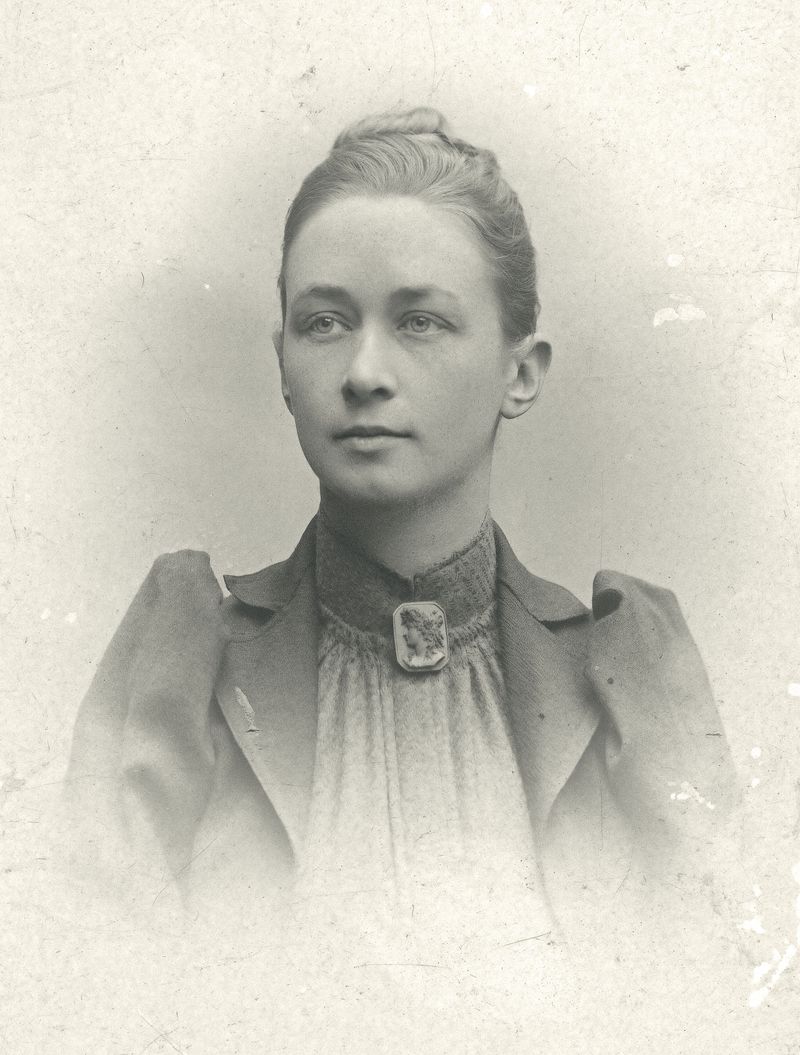
In a post last year, Colin Marshall wrote of the Swedish abstract painter Hilma af Klint, who “developed abstract imagery,” notes Sweden’s Moderna Museet, “several years before” contemporaries like Wassily Kandinsky, Piet Mondrian, and Kazimir Malevich. Much like Kandinsky, who articulated his theories in the treatise Concerning the Spiritual in Art, af Klint “assumed that there was a spiritual dimension to life and aimed at visualizing context beyond what the eye can see.” Influenced by spiritualism and theosophy, she “sought to understand and communicate the various dimensions of human existence.”
Born in 1862 and raised in the Swedish countryside, af Klint began her studies at the Academy of Fine Arts in Stockholm after her family relocated to the city. “After graduating and until 1908,” Moderna Museet writes, “she had a studio at Kungsträdgården in central Stockholm.
She painted and exhibited portraits and landscapes in a naturalist style.” But as a result of her experiences in séances in the late 1870s, af Klint became interested in “invisible phenomena.”
In 1896, Hilma af Klint and four other women formed the group “De Fem” [The Five]. They made contact with “high masters” from another dimension, and made meticulous notes on their séances. This led to a definite change in Hilma af Klint’s art. She began practising automatic writing, which involves writing without consciously guiding the movement of the pen on the paper. She developed a form of automatic drawing, predating the surrealists by decades. Gradually, she eschewed her naturalist imagery, in an effort to free herself from her academic training. She embarked on an inward journey, into a world that is hidden from most people.
During one such séance, in 1904, af Klint reported that she had “received a ‘commission,’” Kate Kellaway writes at The Guardian, “from an entity named Amaliel who told her to paint on ‘an astral plane’ and represent the ‘immortal aspects of man.’” From 1906 to 1915, she produced 193 paintings, “an astonishing outpouring,” which she called “Paintings for the Temple.”
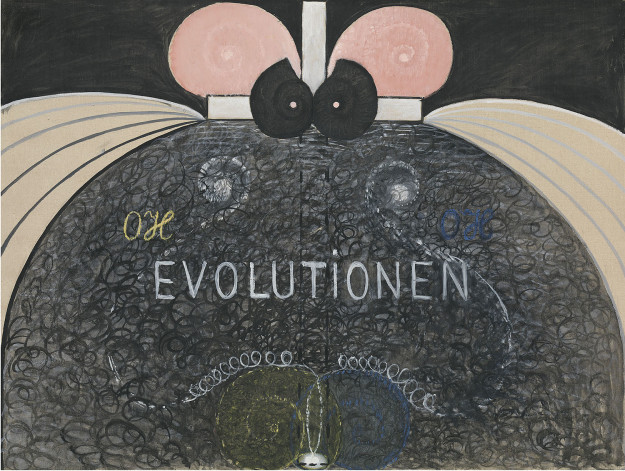
Hers is a strange story. Even in a time when many famous contemporaries, like Sir Arthur Conan Doyle, professed similar beliefs and spiritual practices, not many claimed to be taking dictation directly from spirits in their work. The question af Klint raises for art historians is whether she was “a quirky outsider” or “Europe’s first abstract painter, central to the history of abstract art.” Her mystical eccentricities constitute a large part of the reason she has remained obscure for so long. Rather than seek fame and acclaim for her originality, af Klint stipulated when she died in 1944 at age 81 that “her work—1,200 paintings, 100 texts and 26,000 pages of notes—should not be shown until 20 years after her death.”

Still, it took a further 22 years before her work was seen in public, at a 1986 Los Angeles show called “The Spiritual in Art.” While her peers developed large followings in their lifetimes and took part in influential movements, af Klint cultivated a private, insular world all her own, not unlike that of William Blake, who also remained mostly obscure during his life, though not necessarily by choice. Her choice to hide her work came out of an early encounter, Dangerous Minds notes, with Rudolf Steiner, “who was similarly following a path towards creating a synthesis between the scientific and the spiritual” and who told her “these paintings must not be seen for fifty years as no one would understand them.”
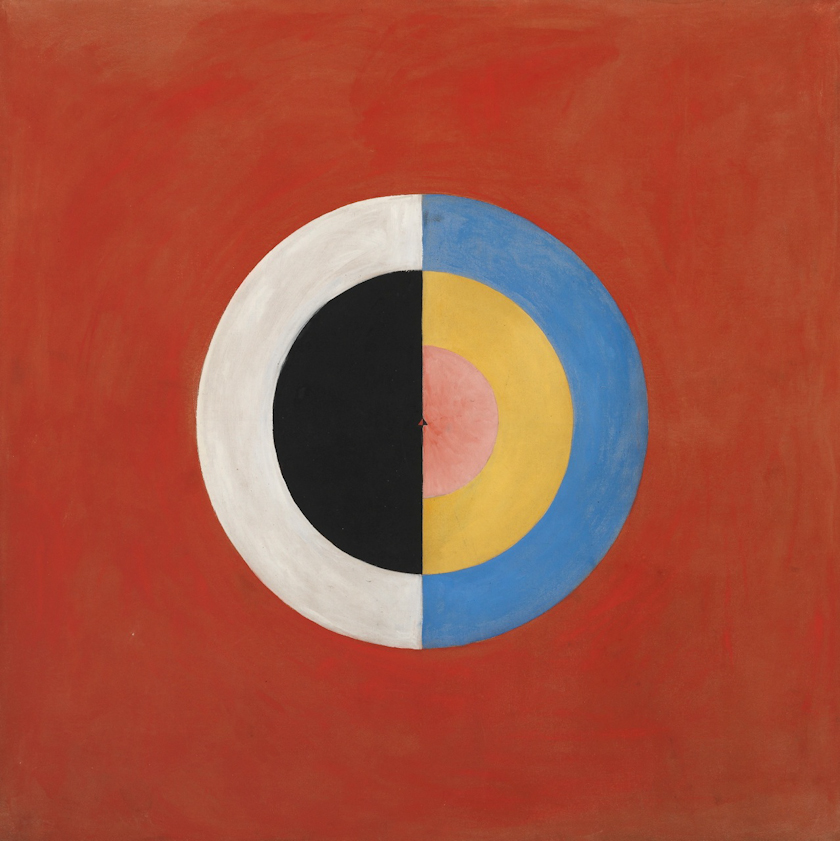
Now that af Klint’s work has been exhibited in full, most recently by the Moderna Museet, curators like Iris Müller-Westermann believe, as Kellawy notes, “that art-historical wrangles should not get in the way of work that needs to be seen.” Although af Klint may not have played an integral historical role in the development of abstract painting, her expansive body of work will likely inspire artists, scholars, and esoteric seekers for centuries to come.
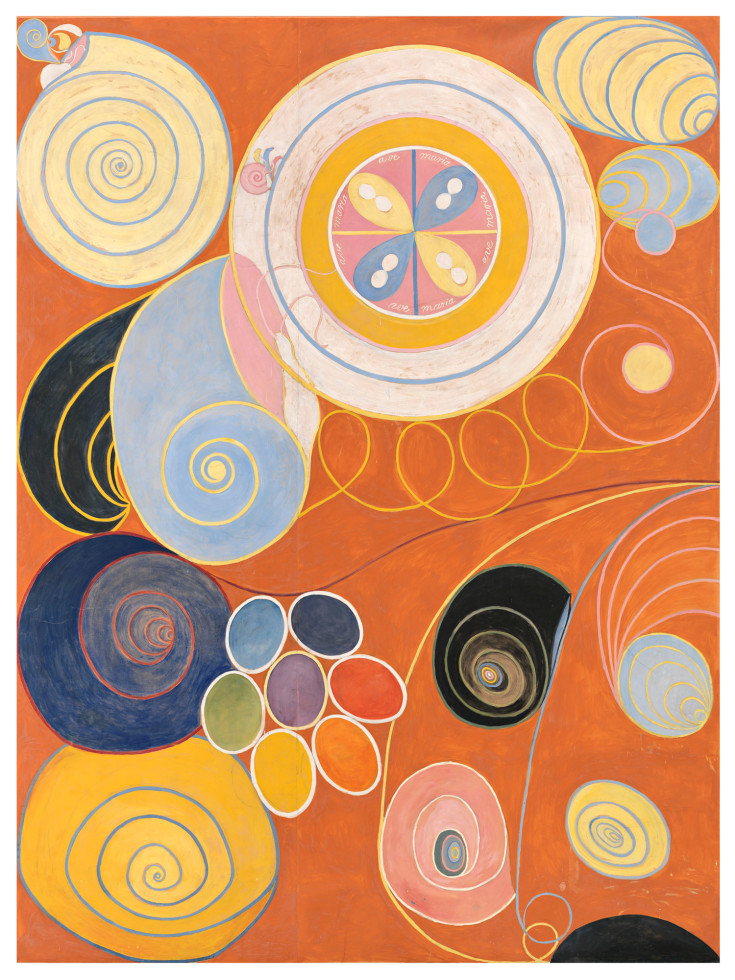
Learn more about af Klint’s work at Moderna Museet, the Hilma af Klint Foundation website, The Art Story and Dangerous Minds.
Related Content:
Josh Jones is a writer and musician based in Durham, NC. Follow him at @jdmagness
Read More...Merry Clayton Tells the Story of Her Amazing Backing Vocal on The Rolling Stones’ “Gimme Shelter”
Some of rock’s greatest singers have catalogs that stretch for miles, with B‑sides and deep cuts as plentiful as the well-known favorites. We could rattle off handfuls of names that fit the description. But there’s a smaller, more select group—a rarified company brought into being almost by accident, whose list of hits consists of just one song.
But it’s one hell of a song.
Pink Floyd’s “The Great Gig in the Sky”… try and imagine it without Claire Torry’s wordless gospel breakdown. Or better yet hear it for yourself. It’s okay. I mean it’s really good. I mean, it’s great, really—as a Richard Wright showcase, and David Gilmour’s slide guitar is heavenly. But it’s no “Great Gig in the Sky,” if you know what I mean.
Ditto the Rolling Stone’s “Gimme Shelter.” Keith really shines, with that “freaky, tremolo-drenched riff like something straight out of the future—or at least a very chilling alternate present,” as Guitar World so aptly puts it. It would take another fifteen years before the effect was put to such memorable use. The cavernous reverb of the whole production conjures spirits, though Jagger’s vocal is typically muffled.
But take out Merry Clayton’s wail and what have you got? A pretty good Stones tune, granted, but it’s no “Gimme Shelter.” Her contributions make this an uncannily haunting song, a warning from some ancient tragic chorus, a frenzied Sibylline prophecy, and I think I’m underselling it. How did she come to haunt this song? Hear her tell it in the video at the top, an excerpt from, 20 Feet from Stardom, the documentary that gives unsung backing singers some long-overdue exposure.
We’ve heard Jagger tell the story before, in an interview we previously highlighted here. “We randomly phoned up this poor lady in the middle of the night,” he says, “and she arrived in her curlers and proceeded to do that in one or two takes, which is pretty amazing. She came in and knocked off this rather odd lyric. It’s not the sort of lyric you give anyone—‘Rape, murder/It’s just a shot away’—but she really got into it, as you can hear on the record.”
Boy, did she. She was in curlers, as she remembers it, and also silk pajamas, a mink coat, and a Chanel scarf. Pregnant and getting ready for bed before she got the call from producer Jack Nitzsche, Clayton, who had no idea who the Stones were, almost refused until her husband said “Honey, you know, you really should go and do this date.” It was fate. “Clayton sang with such emotional force that her voice cracked,” notes Mike Springer in our previous post. “In the isolated track above, you can hear the others in the studio shouting in amazement.”
And in the recollection almost forty years later, Clayton and Jagger still shake their heads in amazement. Asked if she wanted to do a second take, she remembers, “I said to myself, I’m gonna do another one… blow them out of this room.” Unspoken in her remembrance is what the effort may have cost her. “Despite giving what would become the most famous performance of her career,” writes Springer, “it turned out to be a tragic night for Clayton. Shortly after leaving the studio, she lost her baby in a miscarriage…. For many years Clayton found the song too painful to hear, let alone sing.”
In live performances, Lisa Fischer and other singers have taken on Clayton’s vocal, with admirable results. But it would never have existed without her willingness to take a chance, in the middle of the night, pregnant and in pajamas, on an unknown (to her) British band. She lent the track the full force of her personality, turning a pretty good song into a 20th century classic.
Read more of Clayton’s story at Mike Springer’s post here.
Related Content:
The Rolling Stones’ “Gimme Shelter” Played by Musicians Around the World
Josh Jones is a writer and musician based in Durham, NC. Follow him at @jdmagness
Read More...Rare Photos of Frida Kahlo, Age 13–23
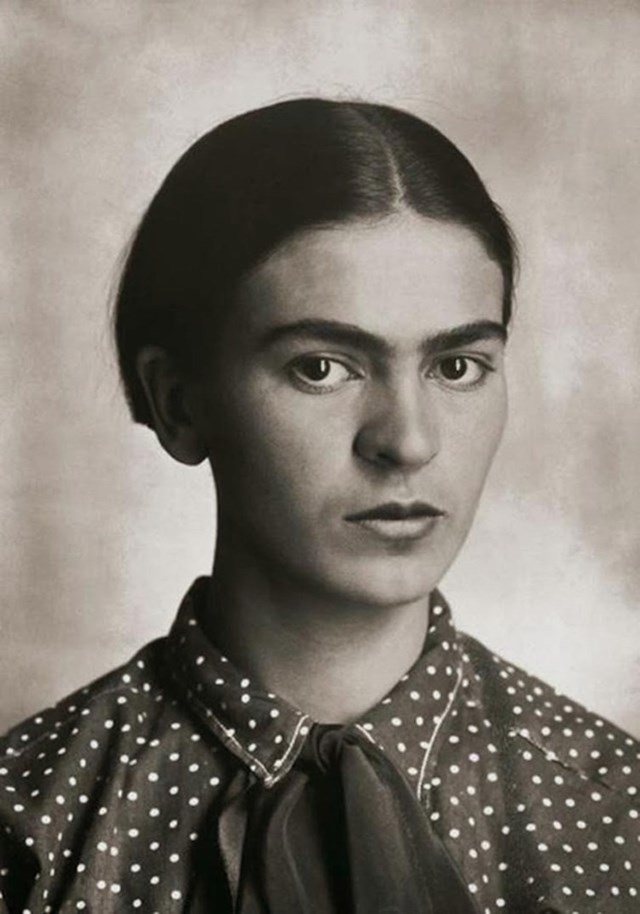
“Before they were famous” photos are a clickbait staple, especially if they reveal a heretofore unseen side of someone whose image is tightly controlled:
The smoldering activist-actress-director as a gawky, open-faced sophomore, her hair moussed to the very limits of her modeling school test shots?
The rising political star, pimple-faced and center-parted, posing with the other three members of his high school’s Dungeons and Dragons Club?
What about evergreen art star Frida Kahlo?
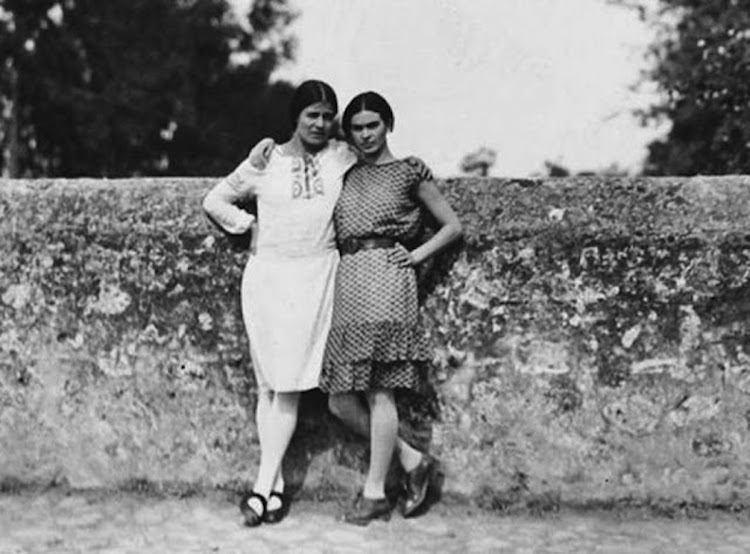
Though her husband, muralist Diego Rivera, was the one who urged her to adopt the traditional Tehuana dress of their native Mexico as a uniform of sorts, Frida engineered her image by placing herself center stage in dozens of allegorical, intimate self-portraits.
Much of her work alludes to the horrific accident she suffered at 18, and the tortuous treatments and surgeries she underwent as a result for the rest of her life.
It shaped the way she saw herself, and, in turn, the way we see her. Her enduring appeal is such that even those who aren’t overly familiar with her work feel they have a pretty good handle on her, thanks to her ubiquity on totebags, apparel, and various gift related items—even Frida Kahlo action figures and paper dolls.
We know this lady, right?
What a pleasure to get to know her better. A collection of photos that has recently come to light introduces us to a younger, more candid Frida—both before and after the accident, when she returned to her studies at National Preparatory School.
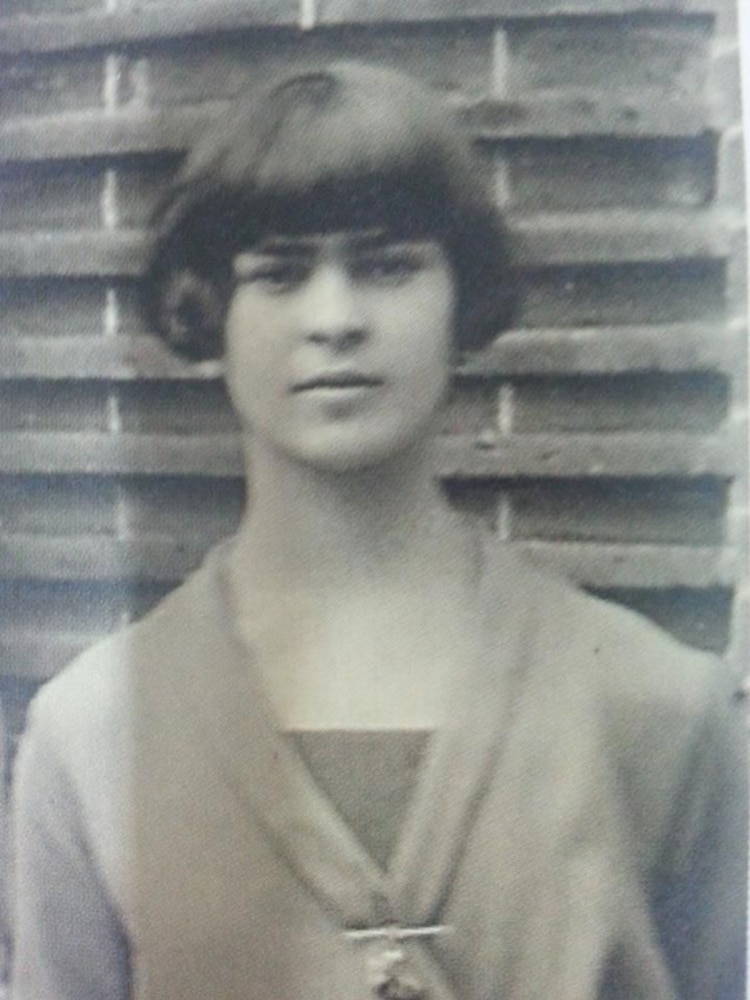
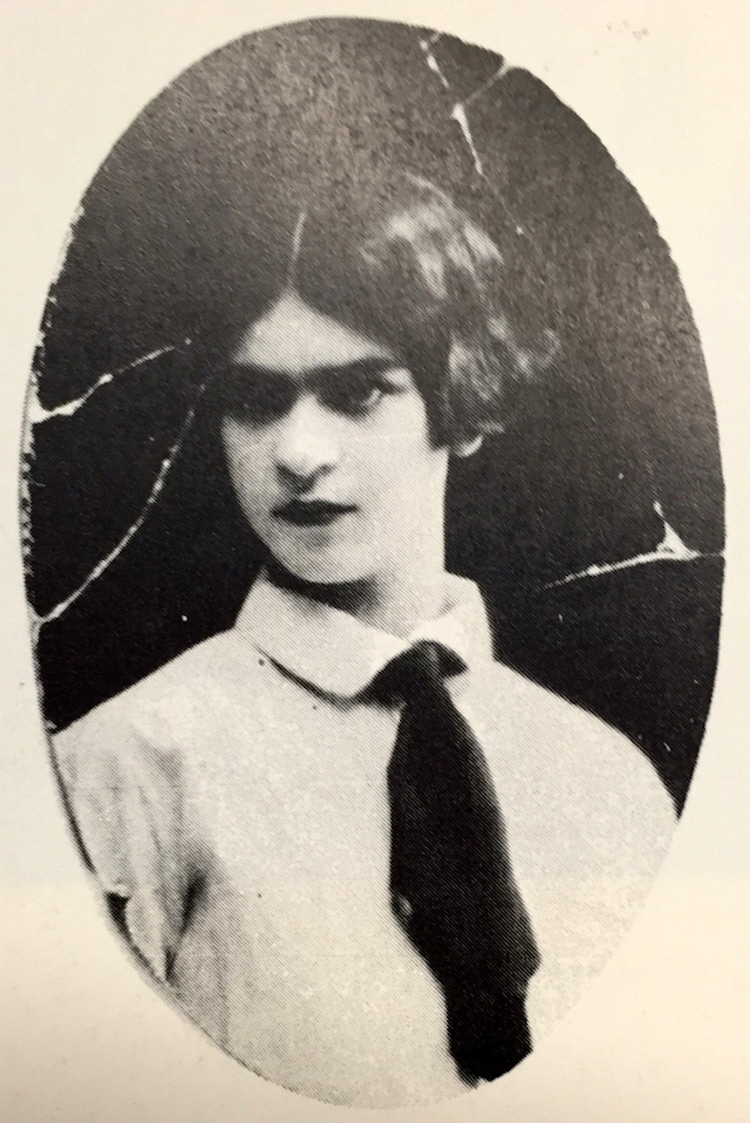
Taken together with the portraits made by her photographer father, they show early evidence of the forceful personality that would dominate and define her public image, Mary Jane-style pumps with socks, a middy blouse, and a variety of blunt bobs aside.
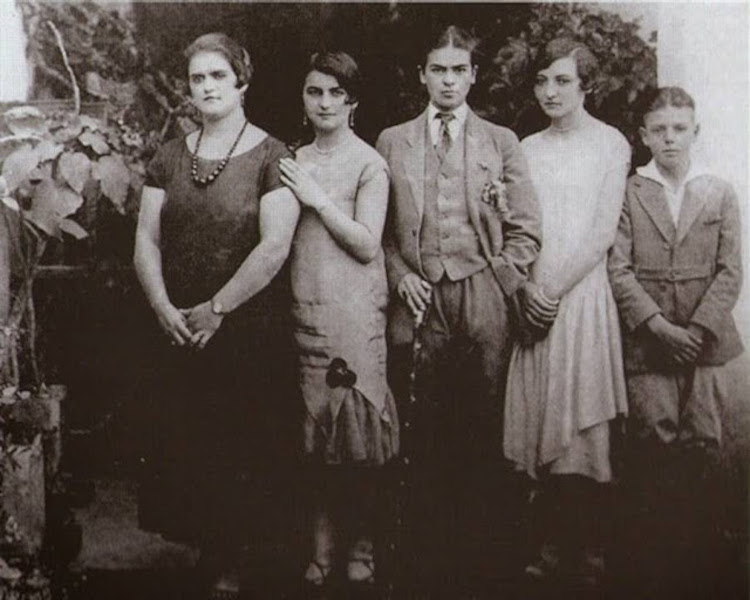
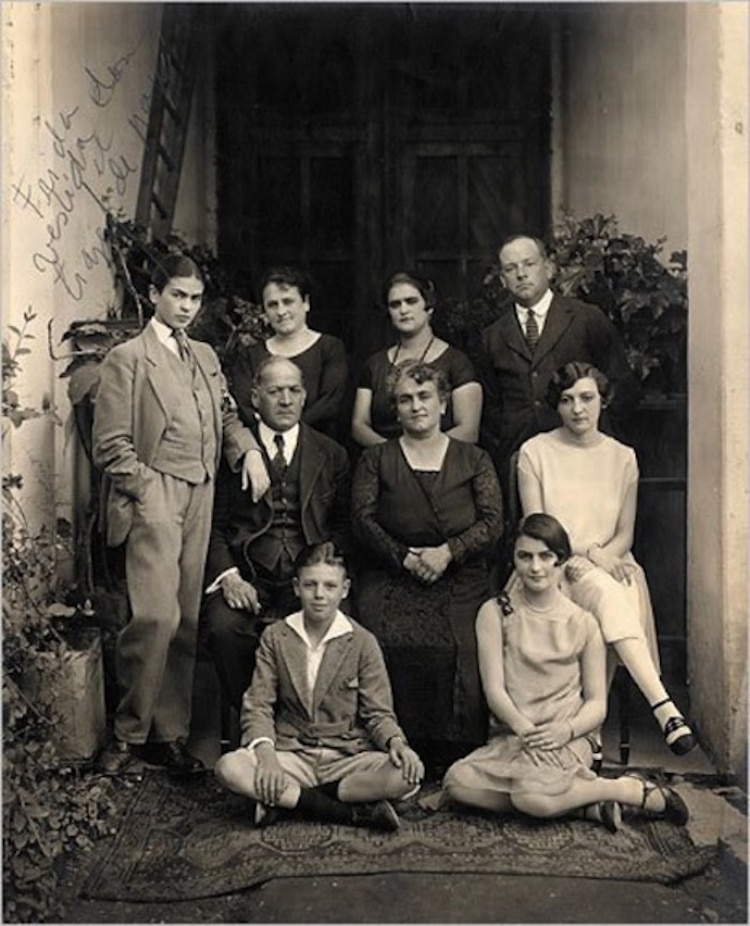
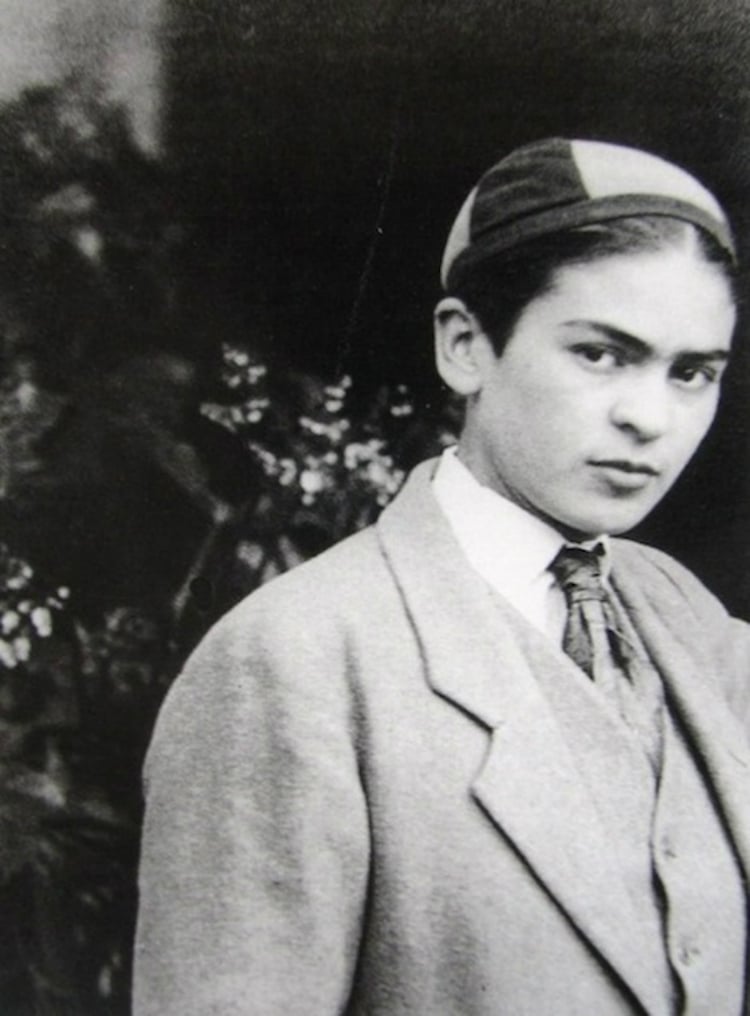
Some of the later photos in this batch speak to her increasing interest in distinguishing herself from her female peers. Her experiments in cross dressing ensured she would stand out in every group photo, a dashing figure in suit, tie, and slicked back hair.
Though this period of her life is less a matter of public record, it gets its due in the 2017 graphic novel Frida: The Story of Her Life by Vanna Vinci. Some of the others in these photos, including her sisters and her first boyfriend, Alejandro Gómez Arias, appear as characters, as does Death in the form of printmaker José Guadalupe Posada’s La Calavera Catrina—perhaps the only image formidable enough to hold its own against the fabulous Frida.
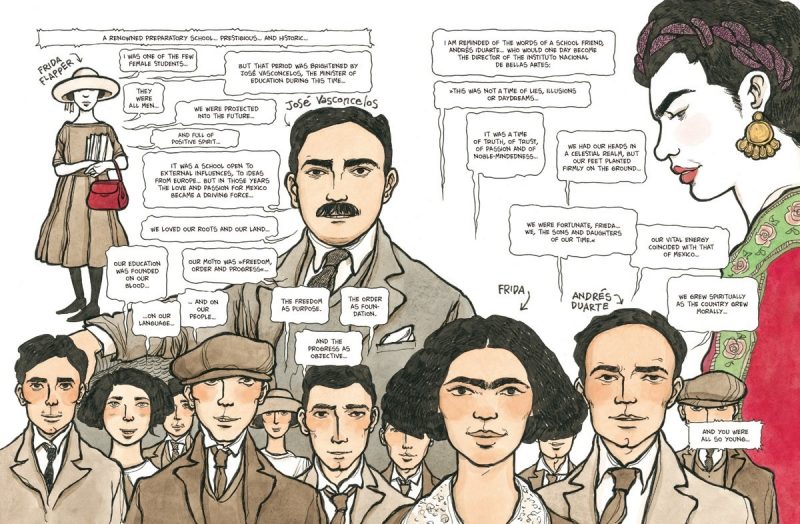
Frida Kahlo The Story of Her Life p. 22–23
Related Content:
The Frida Kahlo Action Figure
Ayun Halliday is an author, illustrator, theater maker and Chief Primatologist of the East Village Inky zine. Follow her @AyunHalliday.
Read More...How to Paint Like Kandinsky, Picasso, Warhol & More: A Video Series from the Tate
Learn How to Print like Warhol… in five minutes?
That sounds like fun! My Saturday’s pretty open…
Unfortunately, The Tate’s How To series is a bit of a misnomer. This is not the anyone-can-do-it approach of PBS legend Bob Ross and his Happy Little Trees…
Yes, the short video demonstrations come with supply lists and step-by-step instructions, but without an existing fine arts background, you may feel more than a little bit daunted, pining for the sort of kid-friendly modifications that help second graders mimic famous artists with such aplomb.
Rather than relegate your freshly-purchased screens, roll of acetate, and economy-sized container of photo-emulsion to the same closet where your cross country skis, foreign language cassettes, and beer-making kit are currently spending eternity, we suggest that you not buy them at all.
Instead, appreciate the way these videos bridge “the gap between Art History and Art Creation,” in the words of one viewer.
So THAT’S how Warhol and untold thousands of other artists, including this segment’s guide Marianne Keating, make their prints! A lot of equipment! A lot of precise steps. Maybe some day you’ll take a stab at it.
’Til then… Keating picked former Jamaican Prime Minister Michael Manley as her subject. Who would you choose?
Artist Sui Kim’s segment on Wassily Kandinsky’s approach to painting inspires a semi-abstract scene from her South Korean childhood, using the same color palette as Kandinsky’s Cossacks.
What would you paint?
Though before blithely slapping a second-grader rainbow on your vision and assuming you now know how to paint like Kandinsky (whether or not you know how to paint), check out the Tate’s description of the original:
Painted between 1910 and 1911, Cossacks is an expression of Kandinsky’s belief in the power of art “to awaken this capacity for experiencing the spiritual in material and in abstract phenomena.” The dynamic tension between abstract form and concrete content may be read as a manifestation of the wider conflict between the forces of political oppression – Kandinsky had been deeply moved by the strikes and upheavals in Odessa a few years earlier – and the hunger for spiritual rejuvenation consequent upon the rise of soulless modernity. Like his contemporaries Piet Mondrian and Henri Matisse, Kandinsky saw painting as an extension of religion, capable, as he wrote in his Reminiscences (1913), of revealing ‘new perspectives and true truths’ in ‘moments of sudden illumination, resembling a flash of lightning.’ The echo of the Ancient Greek writer Longinus’s notion of sublime speech, which similarly strikes like a bolt of lightning, is carried over into Kandinsky’s description of the spiritual mission of the modern artist. In his 1911 essay On the Spiritual in Art, he compares the life of the spirit to ‘a large, acute-angled triangle,’ at the apex of which stands the solitary artistic genius dispensing spiritual food to the multitudes below.
Pretty complex stuff!
Perhaps Picasso is a more straightforward proposition.
Reckon you could rope a friend into modeling for a Cubist portrait a la Bust of a Woman (1909)? If so, which friend, and what might you do for them in return?
Other artists in the Tate’s How To series include J.M.W. Turner and sculptor Rachel Whiteread. Watch them all here.
Related Content:
The MoMA Teaches You How to Paint Like Pollock, Rothko, de Kooning & Other Abstract Painters
Ayun Halliday is an author, illustrator, theater maker and Chief Primatologist of the East Village Inky zine. Follow her @AyunHalliday.
Read More...Sarah Bernhardt Becomes the First Woman to Play Hamlet (1899)
At one time, the name Sarah Bernhardt was synonymous with melodramatic self-presentation. In her heyday, the actress created a category all her own—impossible to judge by the usual standards of the dramatic arts. Or as Mark Twain put it, “there are five kinds of actresses: bad actresses, fair actresses, good actresses, great actresses—and then there is Sarah Bernhardt.”
Admired and beloved by Victor Hugo and playwright Edmond Rostand, who called her “the queen of the pose and the princess of the gesture,” Bernhardt commanded attention in every role, and became infamous as “a canny self-promoter,” as Hannah Manktelow writes. Bernhardt “cultivated her image as a mysterious, exotic outsider. She claimed to sleep in a coffin and encouraged the circulation of outlandish rumors about her eccentric behavior.”
Bernhardt’s worldwide fame rested not only on her public relations skill, but also on her willingness to take dramatic risks most actresses of the time would never dare. In one notable example, she played Hamlet in 1899, at age 55, in a French adaptation of Shakespeare’s play. What’s more, she boldly undertook the role in London, then again in Stratford at the Shakespeare Memorial Theatre. Finally, she became the first woman to portray Hamlet on film (see a short clip above).
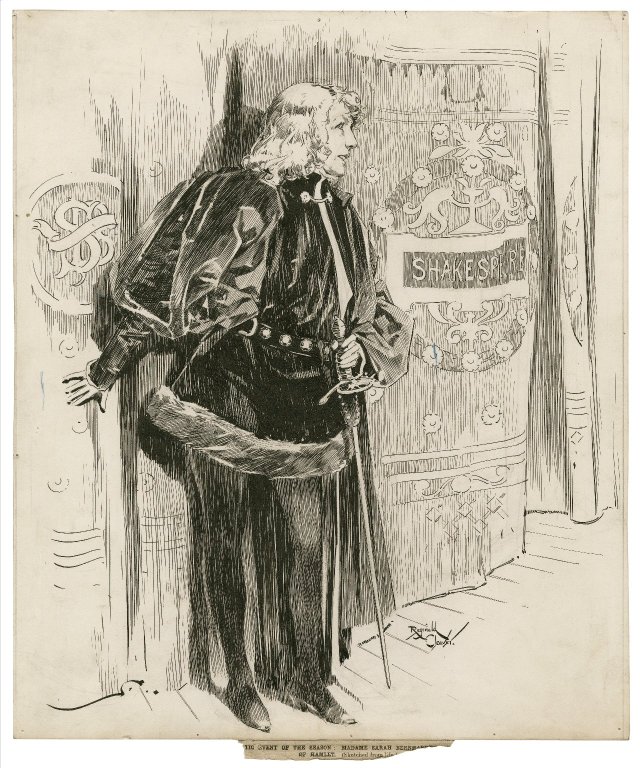
Reactions to her stage performance by contemporaries were mixed. In her review, actress and writer Elizabeth Robins praised Bernhardt’s “amazing skill” in playing “a spirited boy… with impetuosity, a youthfulness, almost childish.” But Robins issued a qualification at the outset: “for a woman to play at being a man is, surely, a tremendous handicap,” she writes, a criticism echoed by English essayist Max Beerbohm, who went so far as to deny women the power to create art.
“Creative power,” wrote Beerbohm, “the power to conceive ideas and execute them, is an attribute of virility; women are denied it, in so far as they practice art at all, they are aping virility, exceeding their natural sphere. Never does one understand so well the failure of women in art as when one sees them deliberately impersonating men upon the stage.” Setting Beerbohm’s categorically sexist assertions aside (for the moment), we must mark the irony that both he and Robins are troubled by a woman playing a man, given that all of Shakespeare’s female characters were once played by men, a fact both critics somehow fail to mention.
Where Beerbohm saw in Bernhardt’s performance a mere “aping of virility,” Robins, unhampered by Beerbohm’s ugly misogyny, observed the great actress in vivid detail, in an essay that brings Bernhardt’s Hamlet to life with descriptions of her, for example, “appealing dumbly for another sign” after seeing her father’s ghost (on painted gauze), “and passing pathetic fluttering hands over the unresponsive surface, groping piteously like a child in the dark.”
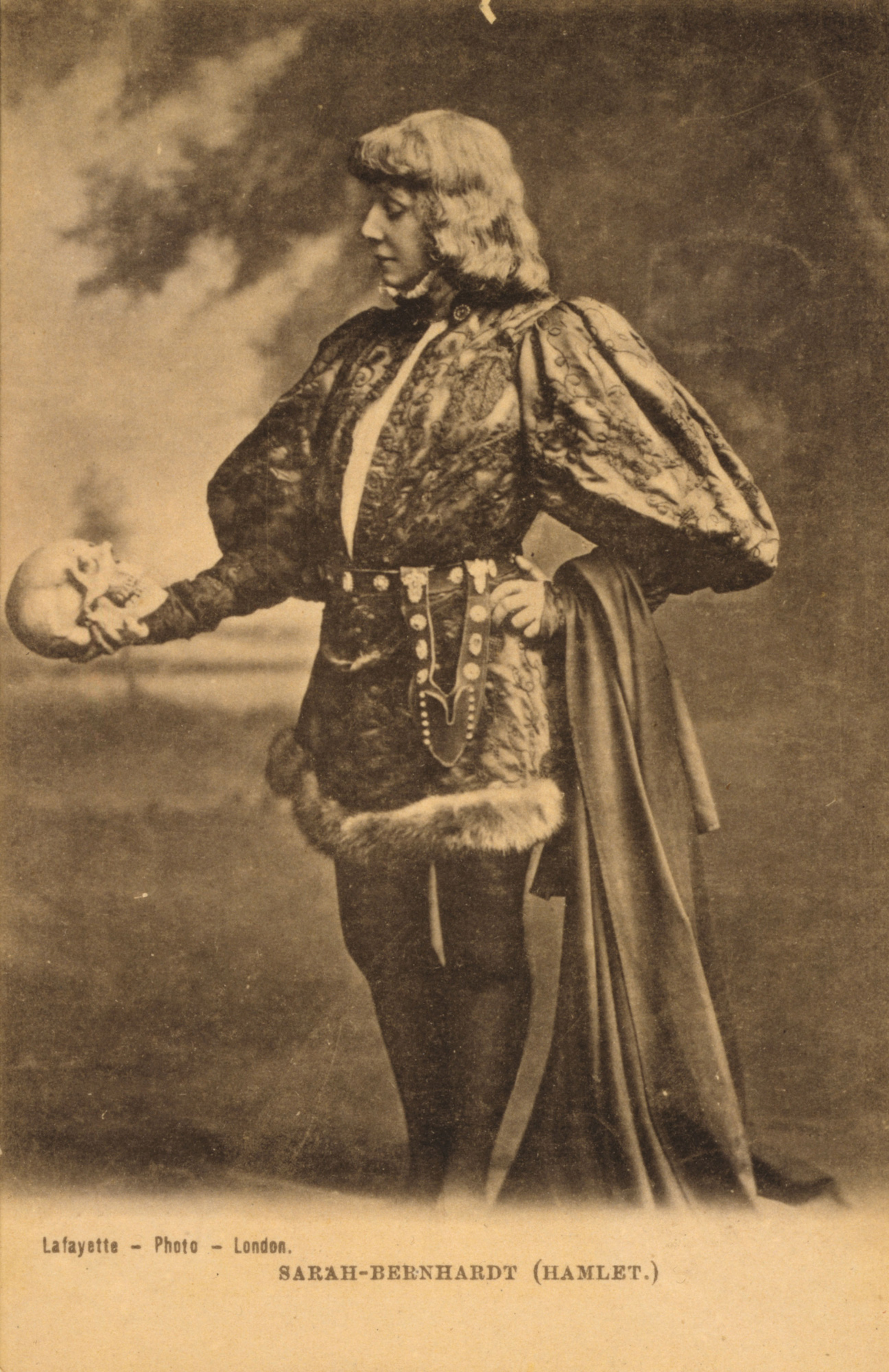
The pathos of Bernhardt’s performance was undercut, Robins felt, by some clumsy moments, such as her mistreatment of poor Yorick’s skull. (A real human skull, by the way, given to her by Victor Hugo). “It was not pleasant,” writes Robins, “to see the grinning object handled so callously…. Indeed, I feel sure that Madame Bernhardt treats her lap-dog more considerately.” On the whole, however, Robins felt the performance a truly dramatic achievement through Bernhardt’s “mastery of sheer poise… of sparing, clean-cut gesture… the effect that the artist in her wanted to produce.”
Further up, see an ink drawing of Bernhardt as Hamlet by Reginal Cleaver and, just above, an 1899 postcard photograph (with Hugo’s gifted skull). Read more about Bernhardt’s performance, and the attendant publicity, at the Shakespeare Blog, and learn about a new play based on Bernhardt’s Hamlet called “The Divine Sarah” at the Folger Shakespeare Library’s Shakespeare & Beyond.
Related Content:
When Ira Aldridge Became the First Black Actor to Perform Shakespeare in England (1824)
What Shakespeare’s English Sounded Like, and How We Know It
Josh Jones is a writer and musician based in Washington, DC. Follow him at @jdmagness
Read More...French Bookstore Blends Real People’s Faces with Book Cover Art
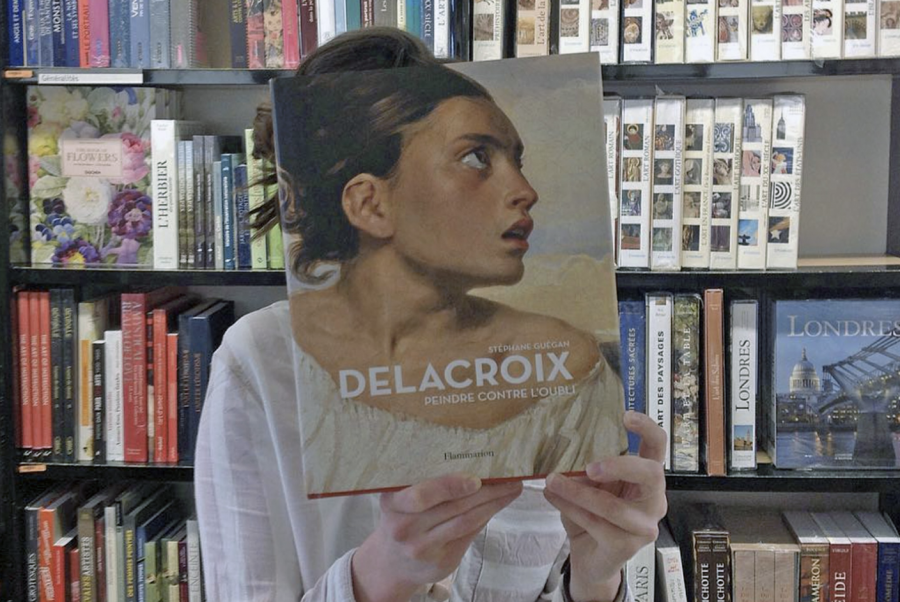
You can lead the I‑generation to a bookstore, but can you make them read?
Perhaps, especially if the volume has an eye-catching cover image that bleeds off the edge.
If nothing else, they can be enlisted to provide some stunning free publicity for the titles that appeal to their highly visual sense of creative play. (An author’s dream!)
France’s first indie bookstore, Bordeaux’s Librairie Mollat, is reeling ‘em in with Book Face, an irresistible selfie challenge that harkens back to DJ Carl Morris’ Sleeveface project, in which one or more people are photographed “obscuring or augmenting any part of their body or bodies with record sleeve(s), causing an illusion.”
The results are proliferating on the store’s Instagram, as fetching young things (and others) apply themselves to finding the best angles and costumes for their lit-based Trompe‑l’œil masterstrokes.
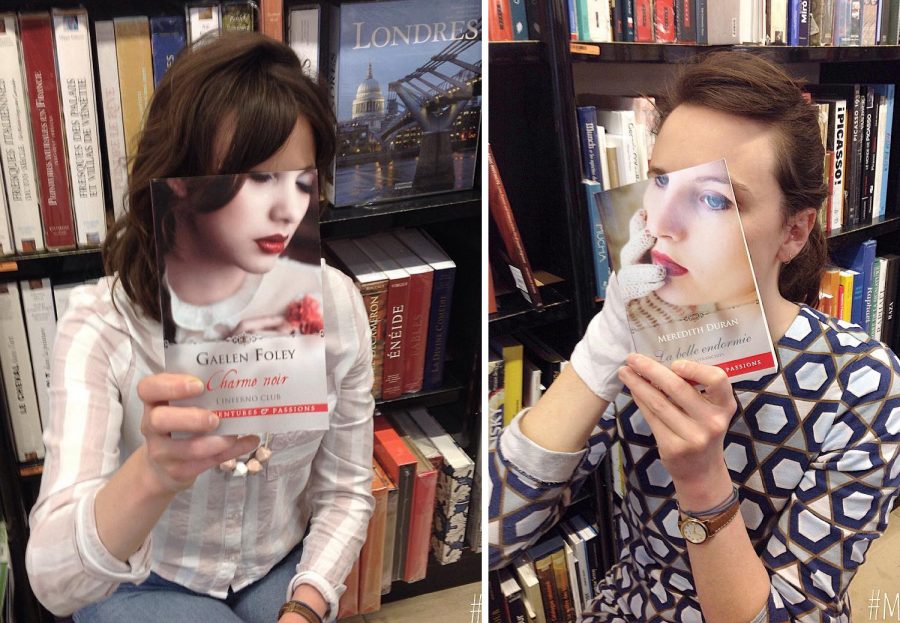
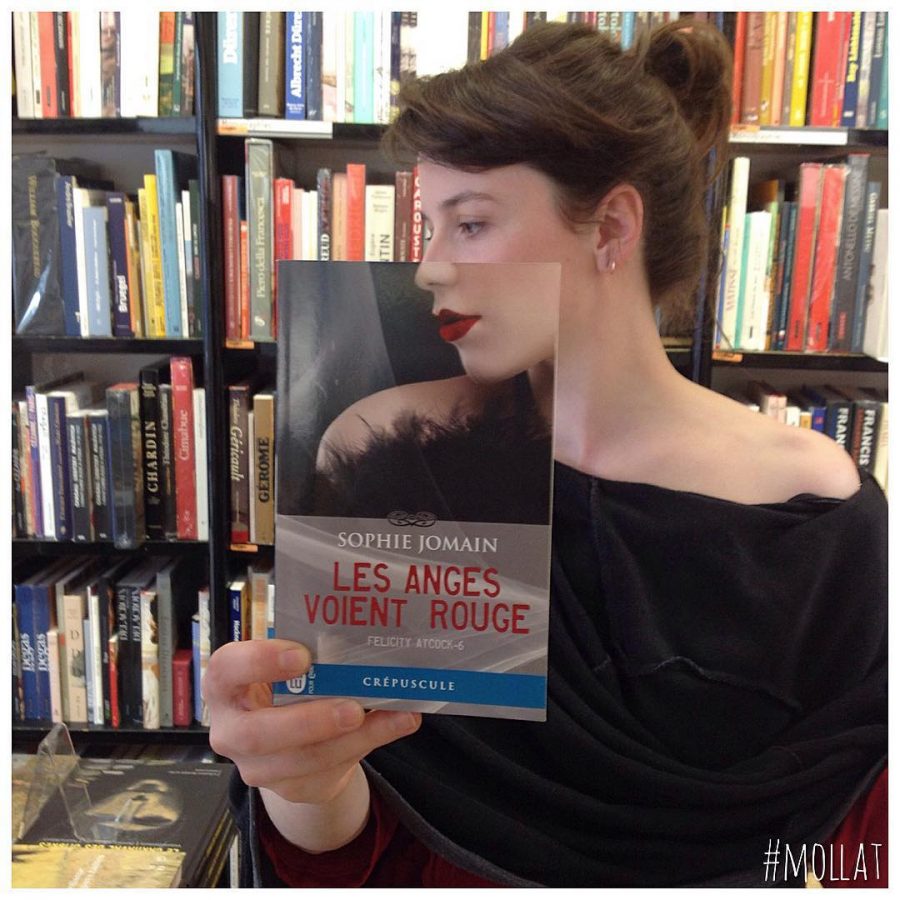
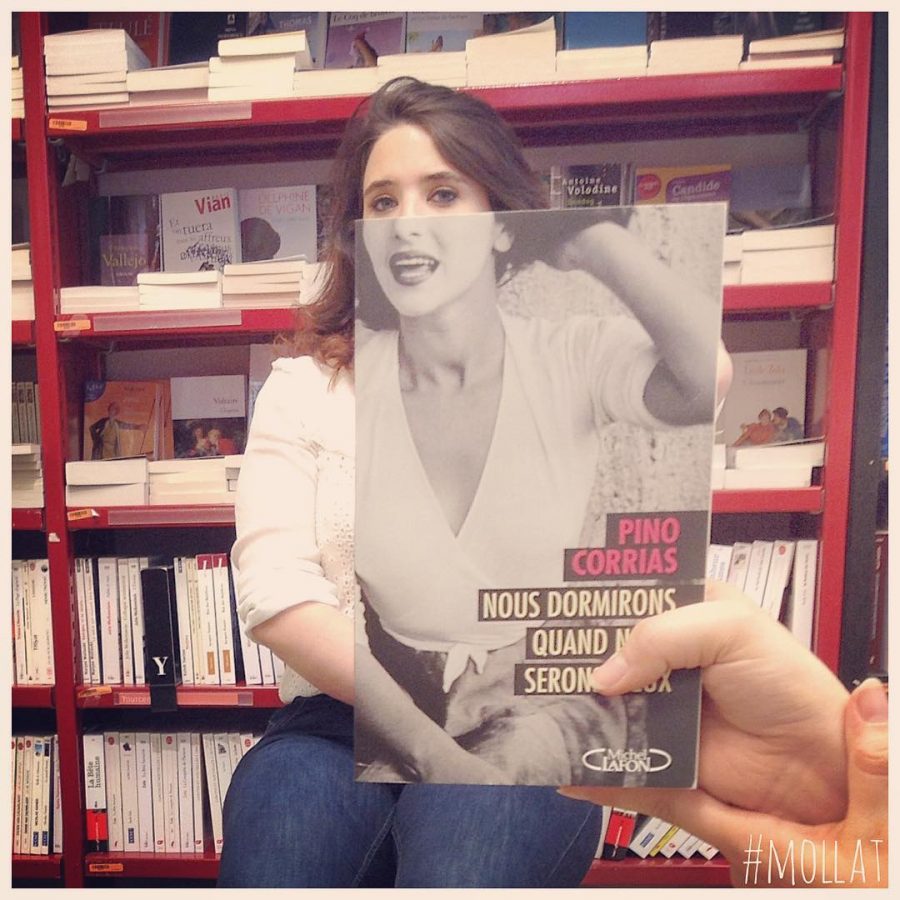

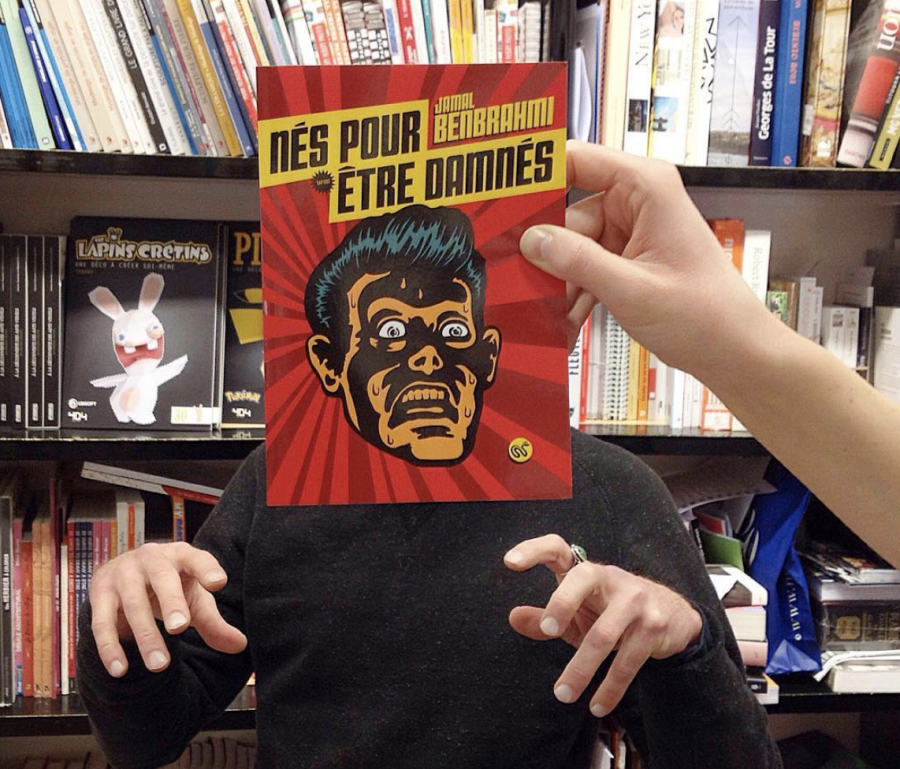
…even the ones that don’t quite pass the forced perspective test have the capacity to charm.

…and not every shot requires intense pre-production and precision placement.
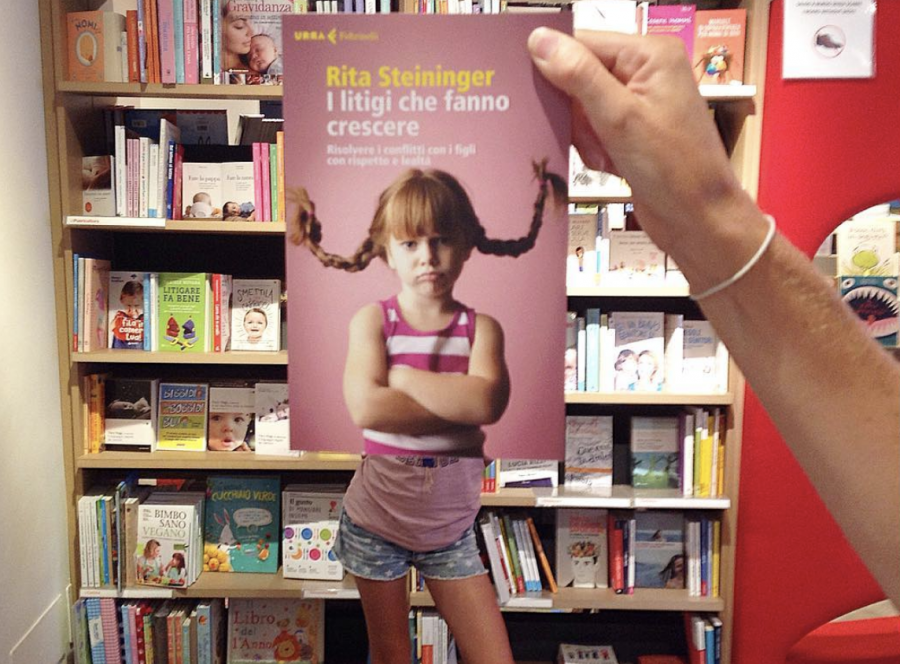
Hopefully, we’ll see more kids getting into the act soon. In fact, if some youngsters of your acquaintance are expressing a bit of boredom with their vacances d’été, try turning them loose in your local bookstore to identify a likely candidate for a Book Face of their own.
(Remember to support the bookseller with a purchase!)
Back stateside, some librarians shared their pro tips for achieving Book Face success in this 2015 New York Times article. The New York Public Library’s Morgan Holzer also cites Sleeveface as the inspiration behind #BookfaceFriday, the hashtag she coined in hopes that other libraries would follow suit.
With over 50,000 tagged posts on Instagram, looks like it’s caught on!
See Librairie Mollat’s patrons’ gallery of Book Faces here.
Readers, if you’ve Book Faced anywhere in the world, please share the link to your efforts in the comments section.
via This is Colossal/Hyperallergic
Related Content:
The Art of Sci-Fi Book Covers: From the Fantastical 1920s to the Psychedelic 1960s & Beyond
Ayun Halliday is an author, illustrator, theater maker and Chief Primatologist of the East Village Inky zine. In honor of her son’s 18th birthday, she invites you to Book Face your baby using The Big Rumpus, her first book, for which he served as cover model. Follow her @AyunHalliday.
Read More...Archaeologists Think They’ve Discovered the Oldest Greek Copy of Homer’s Odyssey: 13 Verses on a Clay Tablet
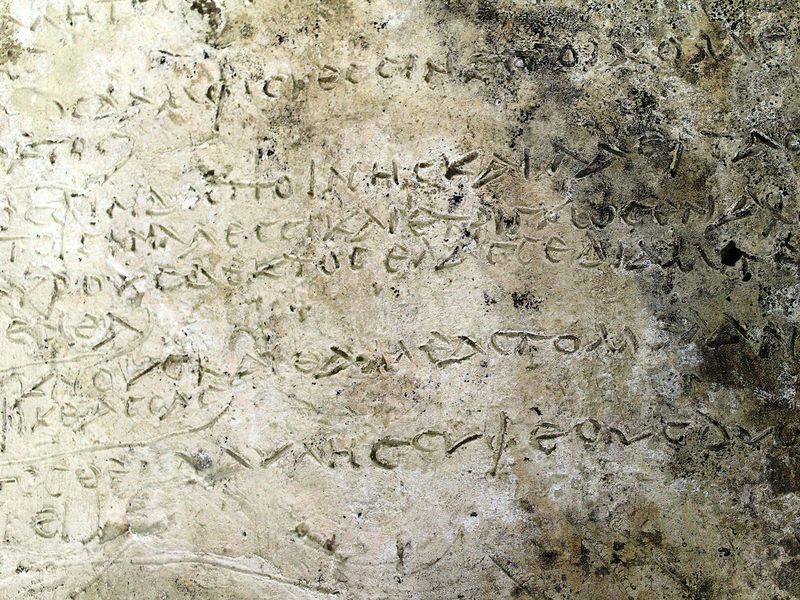
The Homeric epics are thought to have been composed in the 8th century BCE. In the case of these ancient poems, however, “composed” is a very ambiguous term. While archaeological and linguistic research dates Homer’s versions of the poems to somewhere between 650 and 750, BCE., a scholarly consensus agrees these tales existed hundreds of years before, in oral form, transmitted by wandering bards and modified often in the telling. While they are thought to have been written down in Homer’s age, “any glimpse into Homer before medieval times is rare,” notes the Smithsonian, “and any insight into the composition of the epics is precious.”
Before the medieval manuscript tradition, beginning in the 10th century CE, the largest extant copies of the Iliad and Odyssey come from what is known as the “Homeric papyri,” fragments such as the Bankes Papyrus discovered in Egypt in the 19th century. Now, it’s being reported in news sites all over the web that the oldest written copy of the Odyssey has been found—or rather 13 verses of it, carved into a clay tablet and discovered in the ancient city of Olympia in southern Greece. While the dating has not been fully confirmed, experts believe the artifact comes from the Roman era, sometime before the 3rd century CE.
While the discovery may be significant, we should be careful to qualify the many claims made for its status. Like the poem itself, the story of this discovery has seemed to change in its retellings. The tablet is the oldest find in Greece, not in the world. “Finding a bit of Homer in home soil,” says Malcolm Heath, professor of Greek language and literature at Leeds University, “will obviously give the Greeks a warm glow.” But, as The Times reports, “the earliest surviving fragments of the Odyssey” are actually “bits of graffiti scratched into clay by schoolboys at Olbia on the Black Sea coast of what is now Ukraine.” These fragments are “at least 600 years older than the Olympia tablet.”
Furthermore, the Derveni papyrus, discovered in Egypt, which may include a quote from the poem, has been dated as far back as 340 BCE. Nonetheless, the new discovery is still unusual, not only for its place of origin, but also because of the medium. As Cambridge University’s Tim Whitmarsh notes, “It’s rare to find continuous text of Homer written out at such length in clay.” The tablet includes a notable word substitution that will certainly be of interest to scholars, particularly those at work on the “Homer Multitext project.”
That project, Smithsonian writes, is gathering all the fragments together “so they can be compared and put in sequence to provide a broader view of Homer’s epics.” A view that shows us, as the project explains, “that there is not one original text that we should try to reconstruct,” but rather an unknown number of variations, transcribed and altered over the course of hundreds of years and scattered all over the ancient world. All of these fragments are fascinating examples, writes Science Alert, “of the way written texts can survive through the centuries, or even millennia,” just as the story itself shows how oral traditions can survive just as long without any need for written language at all.
Related Content:
Hear What Homer’s Odyssey Sounded Like When Sung in the Original Ancient Greek
Josh Jones is a writer and musician based in Washington, DC. Follow him at @jdmagness
Read More...Margaret Atwood Teaching an Online Class on Creative Writing
FYI: If you sign up for a MasterClass course by clicking on the affiliate links in this post, Open Culture will receive a small fee that helps support our operation.
The problem of dystopian fiction is this: quite often the worst future creative writers can imagine is exactly the kind of present that has already been inflicted on others—by colonialism, dictatorship, genocidal war, slavery, theocracy, abject poverty, environmental degradation, etc. Millions all over the world have suffered under these conditions, but many readers fail to recognize dystopian novels as depicting existing evils because they happen, or have happened, to people far away in space and time. Of course, Margaret Atwood understands this principle. The nightmares she has written about in novels like The Handmaid’s Tale have all already come to pass, she tells us.
In the promo video above for her Masterclass on Creative Writing starting this fall (it’s now open), Atwood says, “when I wrote The Handmaid’s Tale, nothing went into it that had not happened in real life somewhere at some time. The reason I made that rule is that I didn’t want anybody saying, ‘You certainly have an evil imagination, you made up all these bad things.’” And yet, she says, “I didn’t make them up.” In a Swiftian way, she implies, we did—“we” being humanity writ large, or, perhaps more accurately, the destructive, greedy, power-mad individuals who wreak havoc on the lives of those they deem inferiors or rightful property.
“As a writer,” she says above, “your goal is to keep your reader believing, even though both of you know it’s fiction.” Atwood’s trick to achieving this is a devious one in what we might call sci-fi or dark fantasy (though she spurns these designations): she writes not only what she knows to be true, in some sense, but also what we know to be true, though we would rather it not be, as in Virginia Woolf’s characterization of fiction as “as spider’s web, attached ever so lightly perhaps, but still attached to life at all four corners.”
Atwood says that writers turn away from the blank page because they fear something. She has made it her business, instead, to turn toward fear, to see dark visions like those of her MaddAddam Trilogy, an extrapolation of horrors already happening, in some form, somewhere in the world (and soon to be a fun-filled TV series). What she feared in 1984, the year she began writing The Handmaid’s Tale, seems just as chillingly prescient to many readers—and viewers of the TV adaptation—thirty-four years later, a testament to Atwood’s speculative realism, and to the awful, stubborn resistance reality puts up to improvement.
As she put it in an essay about the novel’s origins, “Nations never build apparently radical forms of government on foundations that aren’t there already.” The same, perhaps, might be said of novelists. Do you have some truths to tell in fictional form? Maybe Atwood is the perfect guide to help you write them.
You can take this class by signing up for a MasterClass’ All Access Pass. The All Access Pass will give you instant access to this course and 85 others for a 12-month period.
Related Content:
An Animated Margaret Atwood Explains How Stories Change with Technology
Ursula Le Guin Gives Insightful Writing Advice in Her Free Online Workshop
100 Great Sci-Fi Stories by Women Writers (Read 20 for Free Online)
Josh Jones is a writer and musician based in Washington, DC. Follow him at @jdmagness
Read More...Support Us
We're hoping to rely on loyal readers, rather than erratic ads. Please click the Donate button and support Open Culture. You can use Paypal, Venmo, Patreon, even Crypto! We thank you!

About Us

Open Culture scours the web for the best educational media. We find the free courses and audio books you need, the language lessons & educational videos you want, and plenty of enlightenment in between.
Advertise With Us

FREE UPDATES!
GET OUR DAILY EMAIL
Get the best cultural and educational resources on the web curated for you in a daily email. We never spam. Unsubscribe at any time.
FOLLOW ON SOCIAL MEDIA

Open Culture editor Dan Colman scours the web for the best educational media. He finds the free courses and audio books you need, the language lessons & movies you want, and plenty of enlightenment in between.
Advertise With Us


