Frank Lloyd Wright Creates a List of the 10 Traits Every Aspiring Artist Needs
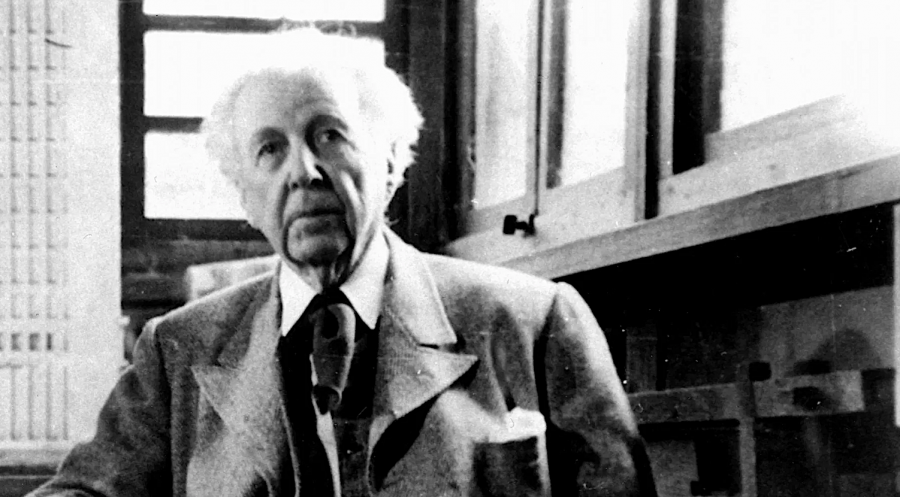
No figure looms larger over American architecture than Frank Lloyd Wright. From the early 1890s to the early 1920s he established himself as the builder of dozens of striking, stylistically innovative private homes as well as public works like Chicago’s Midway Gardens and Tokyo’s Imperial Hotel. But by the end of that period his personal life had already turned chaotic and even tragic, and in his professional life he saw his commissions dry up. Just when it looked like he might not leave much of a legacy at all, an idea came to him: why not start a school?
“Wright founded what he called the Taliesin Fellowship in 1932, when his own financial prospects were dismal, as they had been throughout much of the 1920s,” writes architecture critic Michael Kimmelman in the New York Review of Books. “Having seen the great Chicago architect Louis Sullivan, his former boss, die in poverty not many years earlier, Wright was forestalling his own prospective oblivion.” Charging a tuition of $675 (“raised to $1,100 in 1933, more than at Yale or Harvard”), Wright designed a program “to indoctrinate aspiring architects in his gospel of organic architecture, for which they would do hours of daily chores, plant crops, wash Wright’s laundry, and entertain him and his guests as well as one another in the evenings with musicals and amateur theatricals.”
There at Taliesin, his eponymous home-studio, located in the appropriately rural setting of Spring Green, Wisconsin, Wright sought to forge not just complete architects, and not just complete artists, but complete human beings. He proposed, in Kimmelman’s words, “the creation of a small, independent society made better through his architecture.” He also drew up a list, later included in his autobiography, of the qualities the builders of that society should possess:
I. An honest ego in a healthy body – good correlation
II. Love of truth and nature
III. Sincerity and courage
IV. Ability for action
V. The esthetic sense
VI. Appreciation of work as idea and idea as work
VII. Fertility of imagination
VIII. Capacity for faith and rebellion
IX. Disregard for commonplace (inorganic) elegance
X. Instinctive cooperation
This list reflects the kind of qualities Wright seemed to spend his life cultivating in himself, not to mention displaying to the public. Not that he showed much regard for the truth when it conflicted with his own mythmaking, nor an instinct for cooperation with those he considered less than his equals — and architecturally speaking, he didn’t consider anyone his equal. As well as Wright’s ego may have served him, not every artist needs one quite so colossal, but perhaps, per his list, they do need an honest one. “Early in life I had to choose between honest arrogance and hypocritical humility,” he once said. “I chose the former and have seen no reason to change.”
Related Content:
Frank Lloyd Wright Reflects on Creativity, Nature and Religion in Rare 1957 Audio
Haruki Murakami Lists the Three Essential Qualities For All Serious Novelists (And Runners)
John Cleese’s Advice to Young Artists: “Steal Anything You Think Is Really Good”
Based in Seoul, Colin Marshall writes and broadcasts on cities and culture. His projects include the book The Stateless City: a Walk through 21st-Century Los Angeles and the video series The City in Cinema. Follow him on Twitter at @colinmarshall or on Facebook.
Read More...How Warner Brothers Resisted a Hollywood Ban on Anti-Nazi Films in the 1930s and Warned Americans of the Dangers of Fascism
“In the century spanning the years 1820 to 1924,” writes the Library of Congress, “an increasingly steady flow of Jews made their way to America, culminating in a massive surge of immigrants towards the beginnings of the twentieth century.” Impelled by economic hardship and brutal persecution, the migrants came from Russia and Eastern Europe and settled all over the country. One family, originally named Wonsal, or Wonskolaser, came from the village of Krasnosielc in Poland, first settling in Baltimore, then, after two years in Canada, in Youngstown, Ohio. It was there that four brothers Harry, Abe, Sam, and Jack began exhibiting films, in small mining towns in Ohio and Pennsylvania. Soon, they began producing their own movies. The enterprise would become an empire when Warner Brothers Studio opened in 1918 in Hollywood.
The history of Warner Brothers Pictures sounds like a glittery immigrant success story, but it also includes a significant episode of resistance to the same kind of persecution that the family had once fled, as the anti-Semitism of fascist Europe established a foothold in the U.S. and Hollywood censors started to answer to Joseph Goebbels. “Driven by a personal knowledge of anti-Semitism,” Jack and Harry Warner became “deeply concerned about the rise of Nazism” in the 1930s, as PBS’s History Detectives notes, “and they used their studio to speak out against fascism.” Theirs was not a popular position. Anti-Jewish, pro-fascist sentiments were common in the U.S., stoked by famous figures like Charles Lindbergh, Father Coughlin, and Henry Ford.
“The influence of Nazism was felt across the U.S.,” writes Peter Monaghan at Moving Image Archive News. “The infatuation was sufficient that, for example, swastikas could unabashedly be displayed on the streets of Los Angeles.” An overwhelming majority of Americans opposed the resettling of Jewish refugees; hundreds of thousands of people were turned away in the 1930s. In 1932, Joseph Breen, soon to become head of the Production Code Administration (PCA), censorship arm of the Motion Picture Producers and Distributors of America, wrote a letter to a Jesuit priest in which he called Jews “the scum of the scum of the earth and “dirty lice.” Breen would soon be charged by his boss Will Hays with enforcing a ban on anti-Nazi films in Hollywood between 1934 and 1941, at the behest of Joseph Goebbels, by way of the Nazi consul in Los Angeles, Georg Gyssling.
“By shaping the content of American films,” writes historian Stephen Ross in Hitler in Los Angeles, “Goebbels hoped to shape the ways in which Americans thought about Hitler and his policies.” While most of the studio heads complied with the ban, which also strongly dissuaded the production of films about Jewish subjects or featuring Jewish actors, the Warner brothers did their best to fight back. As History Detectives writes,
The Warners demonstrated their commitment to fighting fascism by donating two Spitfire planes to the British. They also offered the use of the studio to the [US] government, an offer the government wouldn’t accept until a few years later.
It was Harry, the quieter, more religious brother, who saw the threat Nazism posed early on. He reacted by canceling a possible buy of the German studio, Universum. He also pushed his brother Jack to end all relations with Germany, which Warner Brothers did in 1934. They were the first studio to create anti-Hitler content, as well. In 1933, the animated Bosko’s Picture Show portrayed Hitler as an incompetent ruler.
The pre-ban Bosko’s Picture Show incensed the Nazi censors (see an excerpt at the top with Hitler chasing comedian Jimmy Durante), but the Warners would not be deterred even after the PCA cracked down; they were the only studio heads to support the 1936-created Hollywood Anti-Nazi-League. “Two further films, Black Legion and Confessions of a Nazi Spy” followed Bosko’s Picture Show, the first a 1937 “documentary style” production that “shed light on a fascist movement within the U.S.” (see the trailer further up). 1939’s Edward G. Robinson-starring Confessions of a Nazi Spy, whose trailer you can see below, is widely “considered the first film to feature Nazis as the enemy,” preceding other PCA-defiant films like Three Stooges’ short You Nazty Spy! and Charlie Chaplin’s The Great Dictator, both released in 1940.
“Based on the true story of a Nazi spy ring in the United States,” notes the National WWII Museum, “it was, remarkably, the first film by a major US studio to directly address the situation in Germany and to emphatically warn Americans against a stark isolationist position.” The film openly challenged Nazism in the U.S., portraying “the German American Bund and its leader, an American Hitler played by Paul Lukas, as an arm of the German government.” In the year of the film’s release, 20,000 American Nazis held a rally in Madison Square Garden. Mixing “segments of news and scenes from Leni Riefenstahl’s Triumph of the Will” with fictionalized accounts of true events, the film pulled no punches in characterizing Nazi sympathies as a direct threat to national security, despite claims by isolationists like Senator Gerald Nye that “Hollywood Jews [were] more of a problem than Hitler,” as PBS puts it.
The strictures against anti-Nazi films weakened after Confessions of a Nazi Spy and the events it depicted sufficiently alarmed viewers. The ban officially ended in 1941 when the U.S. entered the war. Thereafter, “the president was quick to state the importance of the film industry to America’s success in the war,” and Warner Brothers produced patriotic propaganda films for the duration of World War II.
Related Content:
Josh Jones is a writer and musician based in Durham, NC. Follow him at @jdmagness
Read More...The Rise and Fall of The Simpsons: An In-Depth Video Essay Explores What Made the Show Great, and When It All Came to an End
As an American man in his thirties, I can, if necessary, communicate entirely in Simpsons references. But however voluminous and close at hand my knowledge of the Simpson family and their hometown of Springfield, it doesn’t extend past the 1990s. Most of my demographic can surely say the same, as can quite a few outside it: take the Irishman behind the Youtube channel Super Eyepatch Wolf, author of the video essay “The Fall of The Simpsons: How It Happened.” We both remember tuning in to the show’s debut on December 14, 1989, and how it subsequently “transformed television as we knew it” — and we’ve both lamented how, in the nearly three decades since, “one of the best and most influential TV shows of all time became just another sitcom.”
So how did it happen? To understand what made The Simpsons fall, we have to understand what put it at the top of the zeitgeist in the first place. Not only did the counterculture still exist back in the 1990s, The Simpsons quickly came to constitute its most popular expression. And as with any powerful countercultural product, it was just as quickly labeled dangerous, as anyone who grew up describing each week’s episode of the show to friends not allowed to watch it remember. Yet its “rebellious satire” and all the consequent violations both subtle and blatant of the staid conventions of mainstream American culture (especially in its purest manifestation, the sitcom) came unfailingly accompanied by “comedy grounded in character and heart.”
The fact that The Simpsons’ first generation of writers might well revise a joke twenty or thirty times — creating the countless moments of intricately structured, multilayered verbal and visual comedy we still remember today — didn’t hurt. But even if current writers put in the same hours, they do it on a show that has long since lost touch with what made it great. While each of its characters once had “a very specific set of conflicting beliefs and motivations,” they now seem to do or say anything, no matter how implausible or absurd, that serves the gag of the moment. Celebrity guest stars stopped playing characters specially crafted for them but caricatures of themselves. Plots became bizarre. “The only thing that The Simpsons was a parody of now,” says Super Eyepatch Wolf bringing us to the present day, “was The Simpsons.”
While the show has been self-referentially acknowledging its own decline since about the turn of the millennium, that doesn’t make comparisons with its 1990s “golden age” any less dispiriting. One thinks of the comic strip Calvin and Hobbes, another generational touchstone, whose creator Bill Watterson ended it after just ten years: it still finds an audience today in part, he says, “because I chose not to run the wheels off it.” The Simpsons, by contrast, now draws its lowest ratings ever, and it would pain those of us who grew up with it as much to see it end as it does to see it keep going. But then, “entertainment isn’t meant to last forever. Rather, it’s an extension of the people and places that made it at a particular moment in time.” The Simpsons at its countercultural best will always define that moment, no matter how long it insists on running beyond it.
Related Content:
27 Movies References in The Simpsons Put Side-by-Side with the Movie Scenes They Paid Tribute To
The Simpsons Pay Wonderful Tribute to the Anime of Hayao Miyazaki
Based in Seoul, Colin Marshall writes and broadcasts on cities and culture. His projects include the book The Stateless City: a Walk through 21st-Century Los Angeles and the video series The City in Cinema. Follow him on Twitter at @colinmarshall or on Facebook.
Read More...Barack Obama Shares a List of Enlightening Books Worth Reading
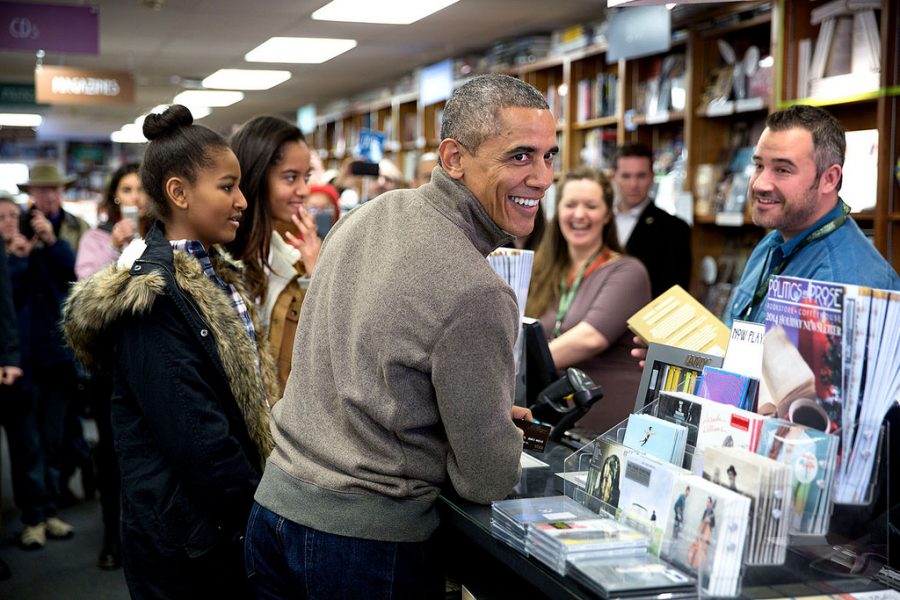
Photo by Pete Souza via obamawhitehouse.archive.gov
Whatever historians have to say about his political legacy, Barack Obama will be remembered as charming, diplomatic, thoughtful, and very well-read. He honed these personal qualities not only as a politician but as a scholar, writer, and teacher, roles that require intellectual curiosity and openness to other points of view. The former president was something of a dream come true for teachers and librarians, who could point to him as a shining example of a world leader who loves to read, talk about books, and share books with others. All kinds of books: from novels and poetry to biography, philosophy, sociology, and political and scientific nonfiction; books for children and books for young adults.
It is refreshing to look back at his tenure as a reliable recommender of quality books during his eight years in office. (See every book he recommended during his two terms here.) Reading gave him the ability to “slow down and get perspective,” he told Michiko Kakutani last year. He hoped to use his office, he said, “to widen the audience for good books. At a time when so much of our politics is trying to manage this clash of cultures brought about by globalization and technology and migration, the role of stories to unify—as opposed to divide, to engage rather than to marginalize—is more important than ever.”
While many people have been hoping he would weigh in on deeply disturbing current events, he “has been relatively quiet on social media of late,” notes Thu-Huong Ha at Quartz. But he has continued to use his platform to recommend good books, suggesting that the perspectives we gain from reading are as critical as ever. “In a Facebook post published on Saturday, Obama recommended some of the nonfiction he’s read recently, focused on government, inequality, and history, with one book that addresses immigration. Together the recommendations are an intellectual antidote to the current US president, who eschews reading,” says Ha.
The list below includes Obama’s brief commentary on each book and article.
Futureface: A Family Mystery, an Epic Quest, and the Secret to Belonging, by Alex Wagner (2018)
Journalist Alex Wagner investigates a potential new twist in her family’s history. “What she came up with,” Obama writes, “is a thoughtful, beautiful meditation on what makes us who we are—the search for harmony between our own individual identities and the values and ideals that bind us together as Americans.”
The New Geography of Jobs, by Enrico Moretti (2012)
Economist Enrico Moretti argues that there are three Americas: brain-hub cities like Austin and Boston; cities once dominated by traditional manufacturing; and the cities in between. “Still a timely and smart discussion of how different cities and regions have made a changing economy work for them,” writes Obama, “and how policymakers can learn from that to lift the circumstances of working Americans everywhere.”
Why Liberalism Failed, by Patrick J. Deneen (2018)
Political scientist Patrick J. Deneen argues that liberalism is not the result of the natural state of politics and lays out the ideology’s inherent contradictions. “In a time of growing inequality, accelerating change, and increasing disillusionment with the liberal democratic order we’ve known for the past few centuries,” says the former president, “I found this book thought-provoking.”
“The 9.9 Percent Is the New American Aristocracy,” by Matthew Stewart (June 2018)
In The Atlantic, Matthew Stewart, author of The Management Myth, defines a “cognitive elite,” a “9.9%” of Americans who value meritocracy and, he argues, are complicit in the erosion of democracy. “Another thought-provoking analysis, this one about how economic inequality in America isn’t just growing, but self-reinforcing,” says Obama.
In the Shadow of Statues: A White Southerner Confronts History, by Mitch Landrieu (2018)
Mitch Landrieu, the former mayor of New Orleans, Louisiana, writes in his memoir of the personal history and reckoning with race that led him to take down four Confederate statues in 2017. “It’s an ultimately optimistic take from someone who believes the South will rise again not by reasserting the past, but by transcending it,” writes Obama.
“Truth Decay: An Initial Exploration of the Diminishing Role of Facts and Analysis in American Public Life,” by Jennifer Kavanagh and Michael D. Rich, RAND Corporation (2018)
This report for the nonprofit RAND Corporation, available as a free ebook, attempts to study the erosion of fact-based policy making and discourse in the US. “A look at how a selective sorting of facts and evidence isn’t just dishonest, but self-defeating,” says Obama.
While the former president no longer has the power to sway policy, he can still inspire millions of people to read—essential for staying balanced, informed, and reflective in our perilous times.
Related Content:
The 5 Books on President Obama’s 2016 Summer Reading List
The Obama “Hope” Poster & The New Copyright Controversy
Josh Jones is a writer and musician based in Durham, NC. Follow him at @jdmagness
Read More...Hear David Lynch Read from His New Memoir Room to Dream, and Browse His New Online T‑Shirt Store
We think of David Lynch as a filmmaker, and rightly so, but the director of Eraserhead, Blue Velvet, and Mulholland Drive has long kept a more diverse creative portfolio. He began as a painter, studying at the Pennsylvania Academy of the Fine Arts, and has also tried his hand at photography, music, and comic strips. More recently, writes the AV Club’s Randall Colburn, “Lynch has also released his own line of coffee, collaborated on Twin Peaks-themed beer and skateboards, and created his own festival. His latest endeavor? T‑shirts, which is wild because it’s hard to imagine the ever-dapper filmmaker ever wearing one.”
Perhaps a line of Lynch-approved traditional white shirts, made to be buttoned all the way up even without a tie, remains in development. But for now, fans choose from the 57 T‑shirts designs now available at Studio: David Lynch’s Amazon store. All suitable for wearing to your local revival house, they include “Turkey Cheese Head,” “Cowboy,” “Small Dog,”“Small Barking Dog,“and “You Gotta Be Kiddin’ Me.” What kind of life, now solidly into its eighth decade, has both enabled and driven Lynch to make not just so many things, but so many Lynchian things? Perhaps we can find a few answers within the nearly 600 pages of Room to Dream, Lynch’s new memoir.

“Fans who share Lynch’s pleasure in mystery will approach this book anxiously, hoping that his secrets may somehow be both revealed and sustained,” writes the Washington Post’s Charles Arrowsmith of the book, an excerpt of which you can hear read by Lynch himself above. (He begins by saying “I’m going to tell you a story about my grandparents” and ends with the image of his young self vomiting into a helmet he’d brought to school for show-and-tell.) And those who fear that the conventionality of the memoir form might flatten out Lynch’s idiosyncrasies can rest assured that “in telling his life story, Lynch demonstrates the same disregard for causality and tonal consistency that marks his films.”
Despite including not just Lynch’s perspective but the perspectives of many others (“surprisingly candid ex-wives, family members, actors, agents, musicians, and colleagues in various fields,” proclaims the jacket copy), “Room to Dream pulls off a neat trick in drawing back a curtain and revealing relatively little. Despite the book’s heft, there’s not much to explicate the mysteries of Lynch’s work. But then, for him, the mystery’s the thing. To explain would be to destroy. What we get instead is insight into his creative process.” As dedicated Lynch enthusiasts understand, the creative process, which throughout his career has led him not to answers but ever more strangely compelling questions, is everything.
Note: When Room to Dream comes out on June 19th, you can download the audiobook version, which Lynch helps narrate, for free if you sign up for Audible’s free trial program. We have details on that program here.
Related Content:
The Paintings of Filmmaker/Visual Artist David Lynch
David Lynch’s Photographs of Old Factories
What Makes a David Lynch Film Lynchian: A Video Essay
Based in Seoul, Colin Marshall writes and broadcasts on cities and culture. His projects include the book The Stateless City: a Walk through 21st-Century Los Angeles and the video series The City in Cinema. Follow him on Twitter at @colinmarshall or on Facebook.
Read More...How Dr. Martens’ Boots Are Made
In recent months, we’ve highlighted how Dr. Martens, the iconic boot maker, has tried to reinvent itself by creating more artistically inspired boots, some actually adorning the artwork of William Blake, Hieronymus Bosch, and traditional Japanese artists. These aren’t your grandfather’s Doc Martens, to be sure.
But however different Docs may now look on the outside, they haven’t changed much on the inside. Just watch the video above, which takes you on a tour of “Dr. Martens’ only UK factory on Cobbs Lane in Wollaston, Northamptonshire.” The factory “employs 50 workers that make about 100,000 pairs of boots per year,” all in the company’s tried and true way.…
If you would like to support the mission of Open Culture, consider making a donation to our site. It’s hard to rely 100% on ads, and your contributions will help us continue providing the best free cultural and educational materials to learners everywhere. You can contribute through PayPal, Patreon, and Venmo (@openculture). Thanks!
Related Content:
Doc Martens Now Come Adorned with William Blake’s Art, Thanks to a Partnership with Tate Britain
Doc Martens Boots Adorned with Hieronymus Bosch’s “Garden of Earthly Delights”
Doc Martens Boots Now Come Adorned with Traditional Japanese Art
Read More...
The Ancient Astronomy of Stonehenge Decoded
The summer solstice draws nigh, and many of us will spend it bemoaning the fact that we have yet again failed to make it to Stonehenge to view the sun rising over its massive Heel Stone.
Don’t beat yourself up too badly.
According to Vox’s Senior Editorial Producer Joss Fong, above, it’s likely that the winter solstice was actually a far bigger deal to the Neolithic builders who engineered the site.
While much of it is now in ruins, archeologists, historians, astronomers, and other experts have been able to reconstruct what the ancient monument would have looked like in its heyday. The placement of the massive stones in carefully arranged concentric circles suggest that its feats of astronomy were no accident.
As Fong points out, the builders would not have known that the earth travels around the sun, nor that it tilts on its vertical axis, thus effecting where the sun’s rays will strike throughout the year.
They would, however, have had good cause to monitor any natural phenomena as it related to their agricultural practices.
The summer solstice would have come at the height of their growing season, but if this year’s sunrise celebrants spin 180 degrees, they will be facing in the same direction as those ancient builders would have when they arrived to celebrate the winter solstice with a sunset feast.
These days, the winter solstice attracts a sizable number of tourists, along with neo-druids, neo-pagans, and Wiccans.
Bundle up and join them, take a virtual tour, or at the very least, try your hand at assembling the nifty Aedes-Ars Stonehenge Model Kit Fong glues together like a pro.
Related Content:
Visit Pompeii (also Stonehenge & Versailles) with Google Street View
Listen to the Oldest Song in the World: A Sumerian Hymn Written 3,400 Years Ago
Ayun Halliday is an author, illustrator, theater maker and Chief Primatologist of the East Village Inky zine. Her solo show Nurse!, in which one of Shakespeare’s best loved female characters hits the lecture circuit to set the record straight opens June 12 at The Tank in New York City. Follow her @AyunHalliday.
Read More...David Bowie Memorialized in Traditional Japanese Woodblock Prints
The East beckons me — Japan — but I’m a bit worried that I’ll get too Zen there and my writing will dry up. — David Bowie, 1980
David Bowie’s longstanding fascination with Japan pervaded his work, becoming the gateway through which many of his fans began to explore that country’s cultural traditions and aesthetics.
Perhaps the entry point is designer Kansai Yamamoto’s Ziggy Stardust togs, Yukio Mishima’s 1963 novel The Sailor Who Fell from Grace from the Sea—one of Bowie’s top 100 books—or the 1000s of images photographer Masayoshi Sukita captured of the rocker over a period of four decades.
Maybe it was Aladdin Sane’s kabuki-like makeup or director Nagisa Oshima’s World War II drama, Merry Christmas Mr. Lawrence, in which Bowie played a British officer in a Japanese POW camp.
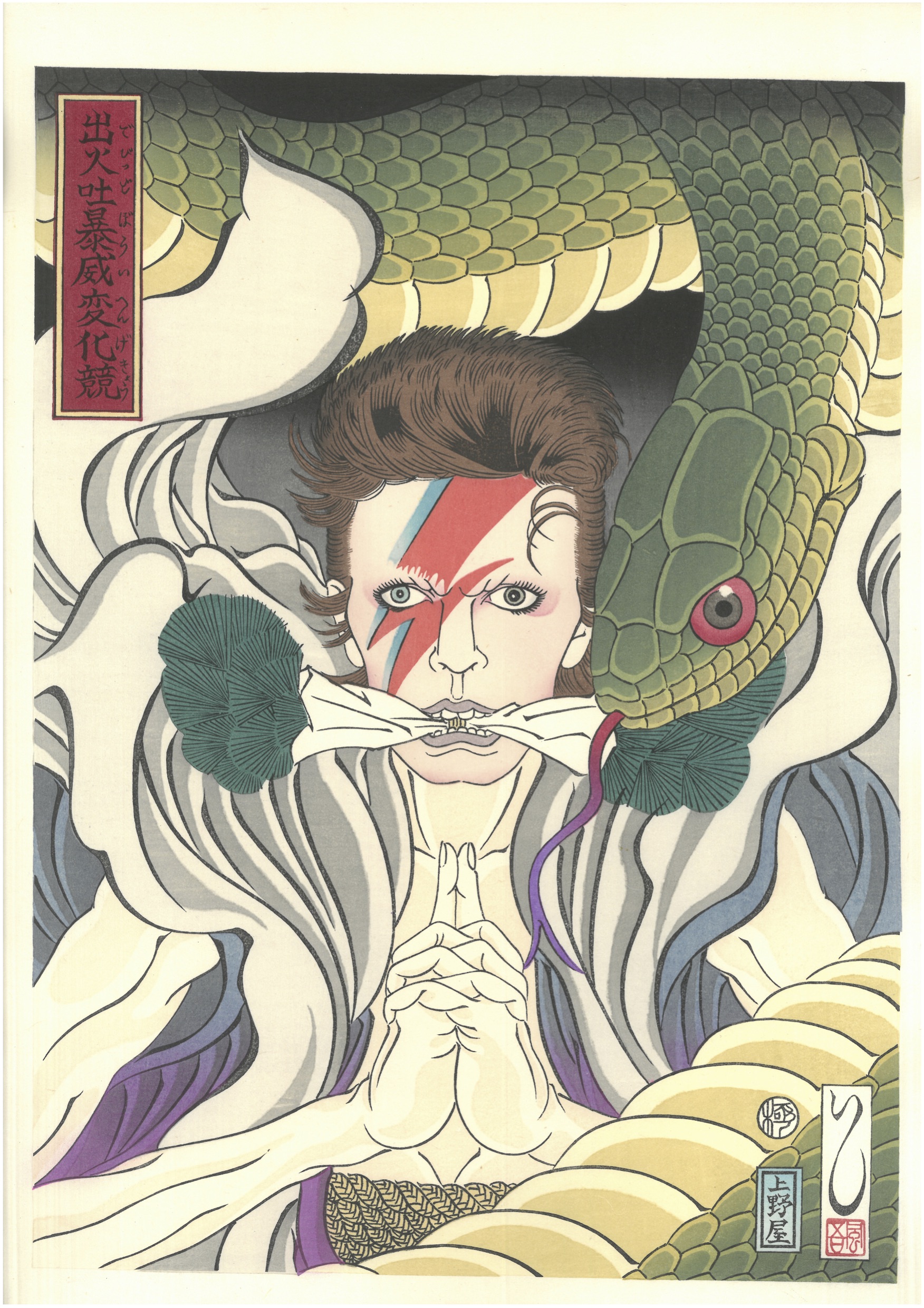
The recent release of two modern ukiyo‑e woodblock prints featuring the rocker has caused such mass swooning among legions of Japanophile Bowie fans, the reverberations may well be powerful enough to ring temple bells in Kyoto.
For each print, artist Masumi Ishikawa casts Bowie as both himself and an iconic Japanese figure.
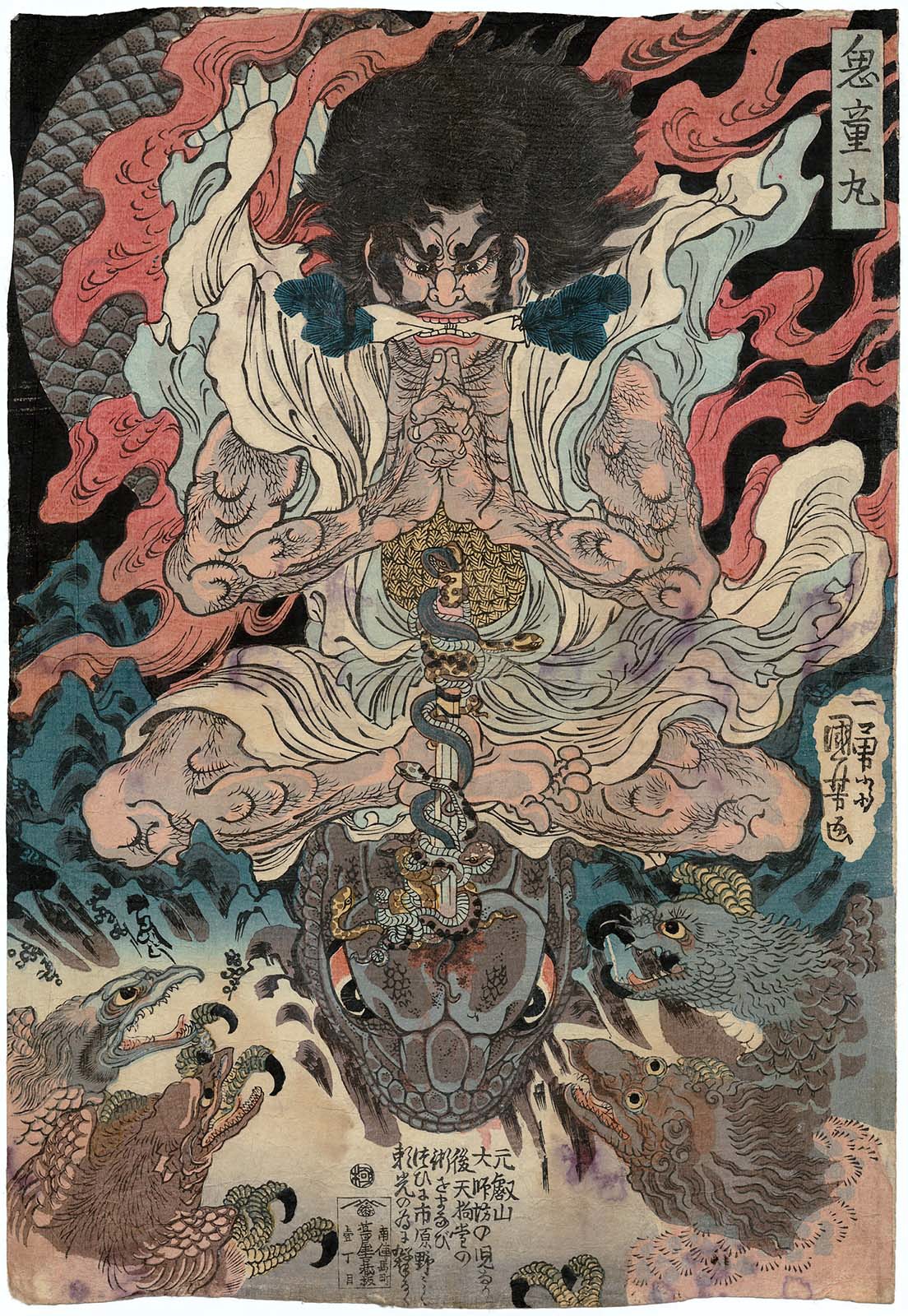
In the image at the top of the page, Bowie’s Aladdin Sane assumes the pose of the central character in Edo Period artist Utagawa Kuniyoshi’s Kidômaru and the Tengu, below.
The other print relocates the dashing Bowie from Terry O’Neill’s Diamond Dogs publicity photos to the realm of magician Takezawa Toji, whose spinning top performances had the power to summon dragons, at least as depicted by Kuniyoshi.
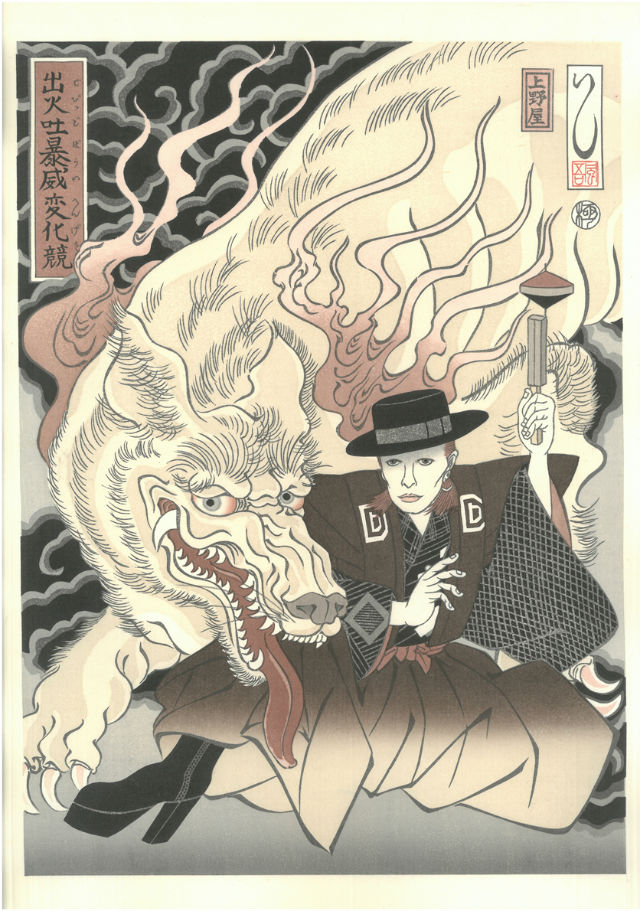
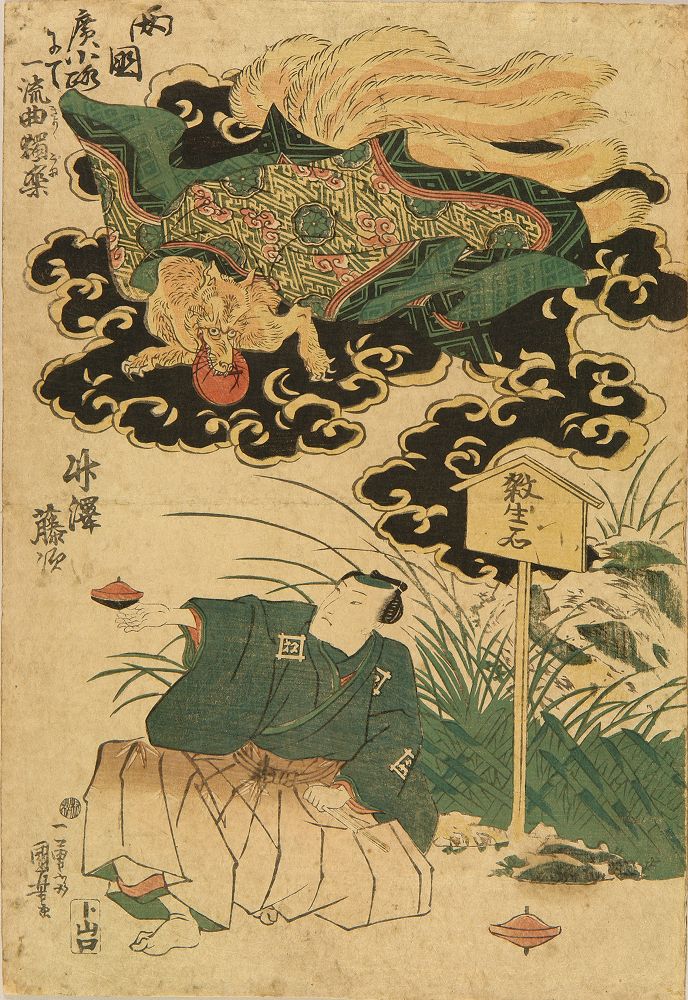
The prints were ordered by the Ukiyo‑e Project, whose mission is to portray today’s artists and pop icons on traditional woodblock prints. (Bowie follows previous honorees Kiss and Iron Maiden.)
The prints and the blocks from which the impressions were made will be on display at BOOKMARC in Tokyo’s Omotesando neighborhood from June 23 to July 1.
Related Content:
Download 2,500 Beautiful Woodblock Prints and Drawings by Japanese Masters (1600–1915)
Special David Bowie MetroCards Get Released in New York City
Ayun Halliday is an author, illustrator, theater maker, Chief Primatologist of the East Village Inky zine and Bowie fan. Her solo show Nurse!, in which one of Shakespeare’s best loved female characters hits the lecture circuit to set the record straight opens June 12 at The Tank in New York City. Follow her @AyunHalliday.
Read More...George Orwell Reveals the Role & Responsibility of the Writer “In an Age of State Control”
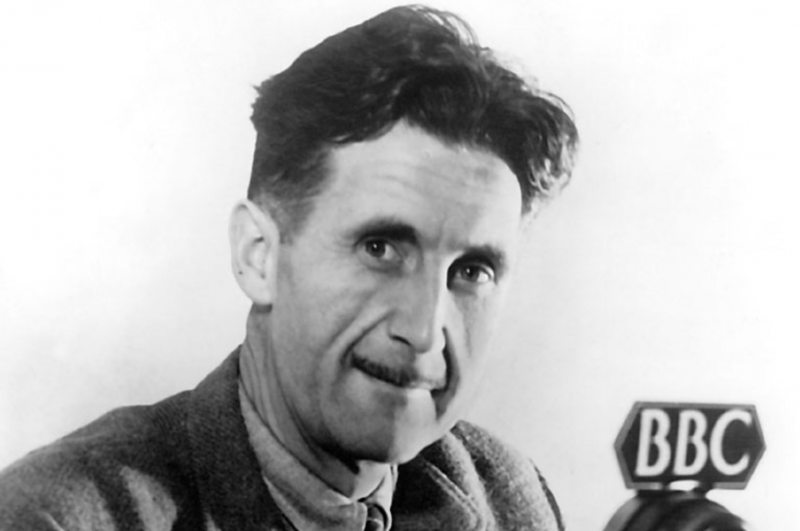
Image by BBC, via Wikimedia Commons
What is the role of the writer in times of political turmoil? Professional athletes get told to “shut up and play” when they speak out—as if they had no vested interest in current events or a constitutional right to speak. But it is generally assumed that writers have a central part to play in public discourse, even when they don’t explicitly write about politics. When writers make controversial statements, it sounds a little ridiculous to tell them to “shut up and write.”
On one view, “it is the responsibility of intellectuals to speak the truth and to expose lies,” as Noam Chomsky declares in “The Responsibility of Intellectuals.” Chomsky deplores those who comfortably accept the consensus and deliberately disseminate untruths out of a “failure of skepticism” and blind belief in the purity of their motives. Faced with obvious lies, outrages, and oppression, “intellectuals”— journalists, academics, artists, even clergy—should “follow the path of integrity, wherever it may lead.”
One such intellectual, George Orwell, is often held up across the political spectrum as a paradigm of intellectual integrity. Orwell, as you might expect, had his own thoughts on what he called “the position of the writer in an age of State control.” He expressed his view in a 1948 essay titled “Writers and the Leviathan.” He accords with Chomsky in most respects, yet in the end does not endorse the view that the political responsibilities of writers are greater than anyone else. Yet Orwell also expresses similar wariness about writers becoming cardboard propagandists, and losing their creative, critical, and ethical integrity.
Orwell begins his argument by claiming that writers bear some responsibility for creating the culture that nurtures politics. “WHAT KIND of State rules over us,” he writes, “must depend partly on the prevailing intellectual atmosphere: meaning, in this context, partly on the attitude of writers and artists themselves.” Moreover, he suggests, it is unrealistic to expect writers, or anyone for that matter, not to have strong political opinions. The “special problem of totalitarianism” infects everything, even literature, making “a purely aesthetic attitude,” like that of Oscar Wilde, “impossible.”
This is a political age. War, Fascism, concentration camps, rubber truncheons, atomic bombs, etc are what we daily think about, and therefore to a great extent what we write about, even when we do not name them openly. We cannot help this. When you are on a sinking ship,
your thoughts will be about sinking ships.
Seventy years after Orwell’s essay, we live in no less a “political age,” burdened by daily thoughts of all the above, plus the deadly effects of climate change and other ills Orwell could not foresee.
We also see our age reflected in Orwell’s description of the “orthodoxies and ‘party lines’” that plague the writer. “A modern literary intellectual,” he writes, “lives and writes in constant dread—not, indeed, of public opinion in the wider sense, but of public opinion within his own group…. At any given moment there is a dominant orthodoxy, to offend against which needs a thick skin and sometimes means cutting one’s income in half for years on end.”
But integrity requires unorthodox thinking. Orwell goes on to analyze a number of “unresolved contradictions” on the left that make a wholesale, uncritical embrace of its political orthodoxy tantamount to “mental dishonesty.” He takes pains to note that this phenomenon is inherent to every political ideology: “acceptance of ANY political discipline seems to be incompatible with literary integrity.” Here is a dilemma. Ignoring politics is irresponsible and impossible. But so is committing to a party line.
Well, then what? Do we have to conclude that it is the duty of every writer to “keep out of politics”? Certainly not! In any case, as I have said already, no thinking person can or does genuinely keep out of politics, in an age like the present one. I only suggest that we should
draw a sharper distinction than we do at present between our political and our literary loyalties, and should recognise that a willingness to DO certain distasteful but necessary things does not carry with it any obligation to swallow the beliefs that usually go with them. When a writer engages in politics he should do so as a citizen, as a human being, but not AS A WRITER. I do not think that he has the right, merely on the score of his sensibilities, to shirk the ordinary dirty work of politics. Just as much as anyone else, he should be prepared to deliver lectures in draughty halls, to chalk pavements, to canvass voters, to distribute leaflets, even to fight in civil wars if it seems necessary. But whatever else he does in the service of his party, he should never write for it. He should make it clear that his writing is a thing apart. And he should be able to act co-operatively while, if he chooses, completely rejecting the official ideology. He should never turn back from a train of thought because it may lead to a heresy, and he should not mind very much if his unorthodoxy is smelt out, as it probably will be.
It might be objected that Orwell himself wrote an awful lot about politics from a definite point of view (which he defined in “Why I Write” as “against totalitarianism and for democratic socialism”). He even cited “political purpose” as one of four reasons that serious writers have for writing. But before accusing him of hypocrisy, we must read on for more nuance. “There is no reason,” he says, that a writer “should not write in the most crudely political way, if he wishes to. Only he should do so as an individual, an outsider, at the most an unwelcome guerilla on the flank of a regular army.” (His position is reminiscent of James Baldwin’s, a political writer who “excoriated the protest novel.”) And if the writer finds some of that army’s positions untenable, “then the remedy is not to falsify one’s impulses, but to remain silent.”
Orwell’s essay characterizes the “almost inevitable nature of the irruption of politics into culture,” argues Enzo Traverso, “Writers were no longer able to shut themselves up in a universe of aesthetic values, sheltered from the conflicts that were tearing apart the old world.” The kind of compartmentalization he recommends might seem cynical, but it represents for him a pragmatic third way between the “ivory tower” and the “party machine,” a way for the writer to act ethically in the world yet retain a “saner self [who] stands aside, records the things that are done and admits their necessity, but refuses to be deceived as to their true nature” and thus become a party mouthpiece, rather than an artist and critical thinker.
Related Content:
George Orwell Creates a List of the Four Essential Reasons Writers Write
George Orwell Explains in a Revealing 1944 Letter Why He’d Write 1984
Josh Jones is a writer and musician based in Durham, NC. Follow him at @jdmagness
Read More...Support Us
We're hoping to rely on loyal readers, rather than erratic ads. Please click the Donate button and support Open Culture. You can use Paypal, Venmo, Patreon, even Crypto! We thank you!

About Us

Open Culture scours the web for the best educational media. We find the free courses and audio books you need, the language lessons & educational videos you want, and plenty of enlightenment in between.
Advertise With Us

FREE UPDATES!
GET OUR DAILY EMAIL
Get the best cultural and educational resources on the web curated for you in a daily email. We never spam. Unsubscribe at any time.
FOLLOW ON SOCIAL MEDIA

Open Culture editor Dan Colman scours the web for the best educational media. He finds the free courses and audio books you need, the language lessons & movies you want, and plenty of enlightenment in between.
Advertise With Us


