What Makes a David Lynch Film Lynchian: A Video Essay
As soon as it began airing on ABC in the early 1990s, Twin Peaks got us wondering where its distinctively resonant oddness, never before felt on the airwaves of prime-time television, could have come from. Some viewers had already seen co-creator David Lynch’s films Eraserhead and Blue Velvet and may thus have had a more developed feel for it, but for everyone else the nature and origin of the “Lynchian” — as critics soon began labeling it — remained utterly mysterious. Now, with the long-awaited Twin Peaks: The Return having completed its own run, we’ve started thinking about it once again.
What does the Lynchian look like from the vantage of the 21st century? David Foster Wallace, in an essay on Lynch’s Lost Highway twenty years ago, defined the term “Lynchian” as referring to “a particular kind of irony where the very macabre and the very mundane combine in such a way as to reveal the former’s perpetual containment within the latter.” Lewis Bond, the video essayist who runs the Youtube channel Channel Criswell, goes a bit deeper in “David Lynch — The Elusive Subconscious.” What is it, he asks, that denotes the style of Lynch? “The same way a hallway sinking into darkness is Lynchian, so is a white picket fence in a slice of Americana.”
These and the enormous variety of other things Lynchian must “exude elusiveness, and the enigma of what signifies Lynchian sensibilities lies in producing unfamiliarity in that which was once familiar.“At first glance, that statement may seem as obscure as some of Lynch’s creative choices do when you first witness them. But spend a few minutes with Bond’s wide-ranging video essay, taking in Lynch’s images at the same time as the analysis, and you’ll get a clearer sense of what both of them are going for. After examining Lynch’s use of the subconscious in his films from several different angles, Bond arrives at Pauline Kael’s description of the filmmaker as “the first populist surrealist.”
“Although his work is puzzling, and more often than not intended to be so,” says Bond, Lynch “still manages to strike a chord with the way we feel.” Lynch, in other words, puts dreams on the screen, but instead of simply relating the inventions of his own subconscious — hearing someone retell their dreams being, after all, a byword for an agonizingly boring experience — he somehow gets all of us to dream them ourselves. What haunts us when we wake up after a particularly harrowing night also haunts us when we come out of a Lynch movie, but the artistry of the latter has a way of making us want to plunge right back into the nightmare again.
Related Content:
Watch an Epic, 4‑Hour Video Essay on the Making & Mythology of David Lynch’s Twin Peaks
An Animated David Lynch Explains Where He Gets His Ideas
What Does “Kafkaesque” Really Mean? A Short Animated Video Explains
What “Orwellian” Really Means: An Animated Lesson About the Use & Abuse of the Term
Based in Seoul, Colin Marshall writes and broadcasts on cities and culture. His projects include the book The Stateless City: a Walk through 21st-Century Los Angeles and the video series The City in Cinema. Follow him on Twitter at @colinmarshall or on Facebook.
Read More...
Why Babies in Medieval Paintings Look Like Middle-Aged Men: An Investigative Video
How much special treatment should we give children, and how much should we regard them as small adults? The answer to that question varies not just between but within time periods and societies. The attitude in the 21st-century west can, at times, seem to have erred toward a patronizing overprotectiveness, but history has shown that if the social pendulum swings one way, it’ll probably swing the other in due time. We certainly find ourselves far from the view of children taken in medieval Europe, of which we catch a glimpse whenever we behold the babies in its paintings — babies that invariably, according to a Vox piece by Phil Edwards, “look like ugly old men.”
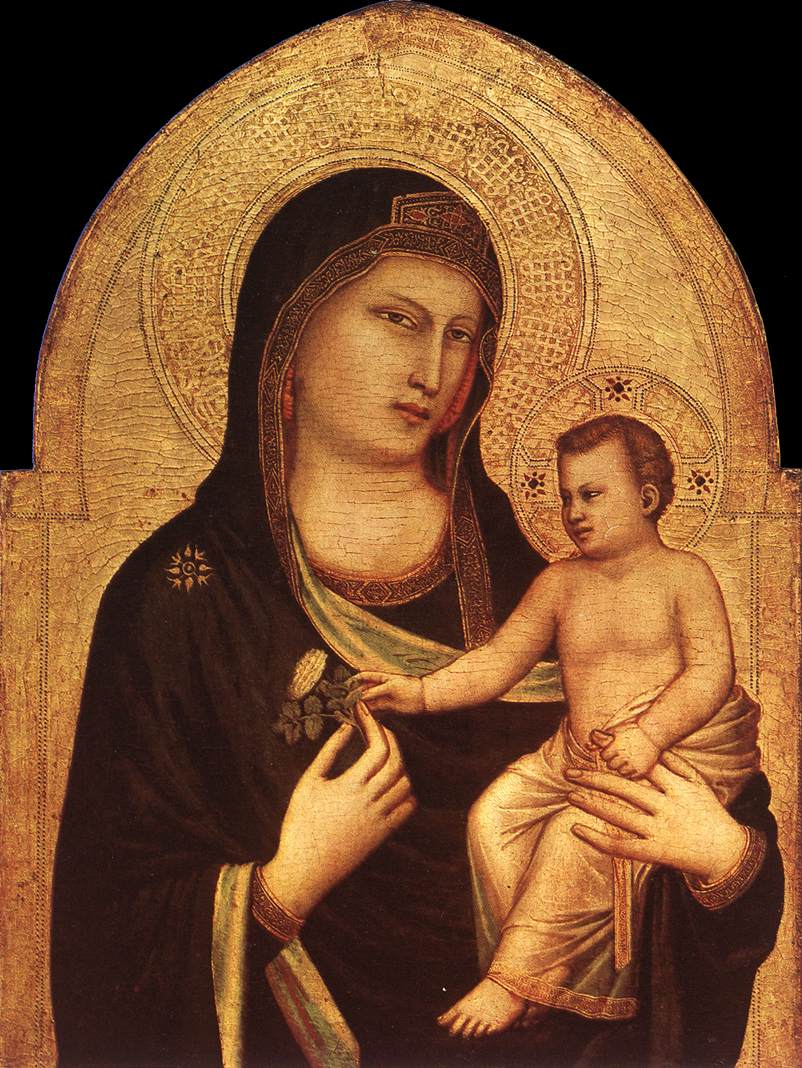
“Medieval portraits of children were usually commissioned by churches,” writes Edwards, “and that made the range of subjects limited to Jesus and a few other biblical babies. Medieval concepts of Jesus were deeply influenced by the homunculus, which literally means little man.” It also goes along with a strangeness prevalent in medieval art which, according to Creighton University art historian Matthew Averett, “stems from a lack of interest in naturalism” and a reliance on “expressionistic conventions.” These conditions changed, as did much else, with the Renaissance: “a transformation of the idea of children was underway: from tiny adults to uniquely innocent creatures” with the cuteness to match.
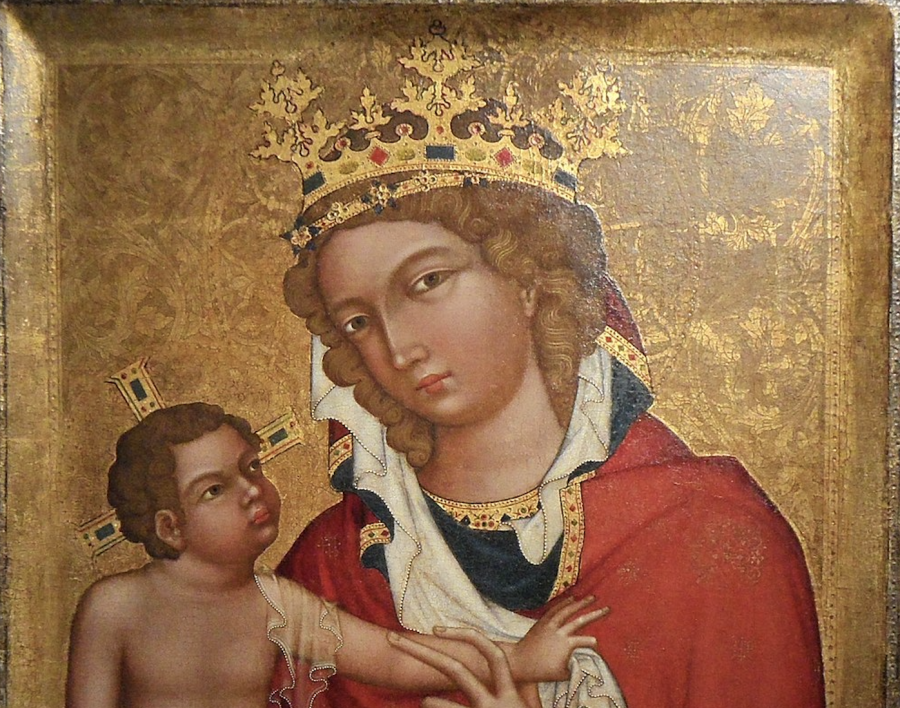
You can witness a veritable parade of oddly manlike medieval babies in the short video at the top of the post. “After the Renaissance, cherubs didn’t seem out of place, and neither did cuter pictures of baby Jesus,” says Edwards, narrating. “It’s kind of stayed that way since. We want babies who look like they need their cheeks pinched, not their prostates checked. We want them chubby and cute, and we want babies that fit our ideals” — ideals that have led from pudgy angels to the Gerber Baby to the collected work of Anne Geddes. We probably need not fear an aesthetic return to the middle-aged, homuncular babies of yore, but their frowny expressions have certainly made a comeback in real life: just look at any 21st-century infant immersed in an iPad.
Related Content:
Leonardo da Vinci’s Bizarre Caricatures & Monster Drawings
Based in Seoul, Colin Marshall writes and broadcasts on cities and culture. His projects include the book The Stateless City: a Walk through 21st-Century Los Angeles and the video series The City in Cinema. Follow him on Twitter at @colinmarshall or on Facebook.
Read More...Ingmar Bergman’s 1950s Soap Commercials Wash Away the Existential Despair
Ingmar Bergman is usually remembered for the intensely serious nature of his films. Death, anguish, the absence of God–his themes can be pretty gloomy. So it might come as a surprise to learn that Bergman once directed a series of rather silly soap commercials.
The year was 1951. Bergman was 33 years old. The Swedish film industry, his main source of income, had just gone on strike to protest high government taxes on entertainment. With two ex-wives, five children, a new wife and a sixth child on the way, Bergman needed to find another way to make money.
A solution presented itself when he was asked to create a series of commercials for a new anti-bacterial soap called Bris (“Breeze,” in English). Bergman threw himself into the project. He later recalled:
Originally, I accepted the Bris commercials in order to save the lives of my self and my families. But that was really secondary. The primary reason I wanted to make the commercials was that I was given free rein with money and I could do exactly what I wanted with the product’s message. Anyhow, I have always found it difficult to feel resentment when industry comes rushing toward culture, check in hand.
Bergman enlisted his favorite cinematographer at that time, Gunnar Fischer, and together they made nine miniature films, each a little more than one minute long, to be screened in movie theaters over the next three years. Bergman used the opportunity to experiment with visual and narrative form.
Many of the stylistic devices and motifs that would eventually figure into his masterpieces can be spotted in the commercials: mirrors, doubles, the telescoping in or out of a story-within-a-story. You don’t need to understand Swedish to recognize the mark of the master.
In the window above we feature Episode 1, “Bris Soap,” which is perhaps the most basic of the commercials. They become progressively more imaginative as the series moves along:
- Episode 2, Tennis Girl: An innocent game of tennis sets the stage for an epic battle between good (Bris soap) and evil (bacteria). Can you guess which side wins?
- Episode 3, Gustavian: Bad hygiene in the 17th century court of King Gustav III. Plenty of foppishness, but no Bris.
- Episode 4, Operation: “Perhaps the most intriguing of the commercials,” writes Swedish film scholar Fredrik Gustafsson. “In this one Bergman is deconstructing the whole business of filmmaking, using all the tricks of his disposal to trick and treat us.”
- Episode 5, The Magic Show: Another battle between good and evil, this time in miniature.
- Episode 6, The Inventor: A man heroically invents anti-bacterial soap, only to awaken and realize it was all a dream. (And anyway, the makers of Bris had already done it.)
- Episode 7, The Rebus: Bergman uses montage to create a game of “rebus,” a heraldic riddle (non verbis, sed rebus: “not by words but by things”), to piece together the slogan, “Bris kills the bacteria–no bacteria, no smell.”
- Episode 8, Three-Dimensional: Bergman thought 3‑D films were “ridiculously stupid,” and in this episode he takes a few playful jabs.
- Episode 9, The Princess and the Swineherd: In this reinvention of Hans Christian Anderson’s “The Swineherd,” a 15-year-old Bibi Andersson, who went on to star in many of Bergman’s greatest films, makes her screen debut as a beautiful princess who promises a swineherd 100 kisses in exchange for a bar of soap. Not a bad deal for the swineherd.
To learn more about Bergman’s soap commercials you can watch a 2009 report by Slate film critic Dana Stevens here. (Note the video requires a flash player.)
Related Content:
The Mirrors of Ingmar Bergman, Narrated with the Poetry of Sylvia Plath
Ingmar Bergman Visits The Dick Cavett Show, 1971
Fellini’s Fantastic TV Commercials
Read More...Leo Tolstoy’s Family Recipe for Mac ‘N’ Cheese
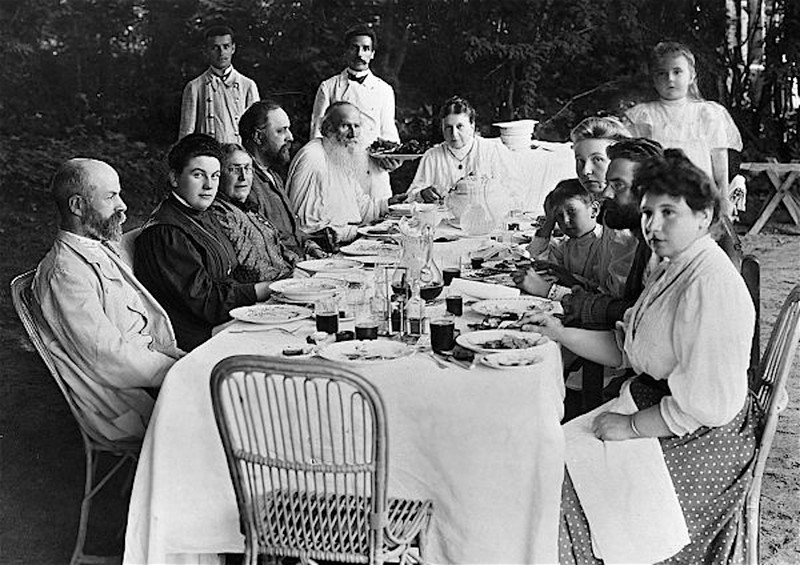
In 1874, Stepan Andreevich Bers published The Cookbook and gave it as a gift to his sister, countess Sophia Andreevna Tolstaya, the wife of the great Russian novelist, Leo Tolstoy. The book contained a collection of Tolstoy family recipes, the dishes they served to their family and friends, those fortunate souls who belonged to the aristocratic ruling class of late czarist Russia. Almost 150 years later, this cookbook has been translated and republished by Sergei Beltyukov.
Available in an inexpensive Kindle format ($3.99), Leo Tolstoy’s family recipe book features dozens of recipes, everything from Tartar Sauce and Spiced Mushrooms (what’s a Russian kitchen without mushrooms?), to Stuffed Dumplings and Green Beans à la Maître d’Hôtel, to Coffee Cake and Viennese Pie. The text comes with a translation, too, of Russian weights and measures used during the period. One recipe Mr. Beltyukov provided to us (which I didn’t see in the book) is for the Tolstoy’s good ole Mac ‘N’ Cheese dish. It goes something like this:
Bring water to a boil, add salt, then add macaroni and leave boiling on light fire until half tender; drain water through a colander, add butter and start putting macaroni back into the pot in layers – layer of macaroni, some grated Parmesan and some vegetable sauce, macaroni again and so on until you run out of macaroni. Put the pot on the edge of the stove, cover with a lid and let it rest in light fire until the macaroni are soft and tender. Shake the pot occasionally to prevent them from burning.
We’ll leave you with bon appétit! — an expression almost certainly heard in the homes of those French-speaking Russian aristocrats.
If you would like to support the mission of Open Culture, consider making a donation to our site. It’s hard to rely 100% on ads, and your contributions will help us continue providing the best free cultural and educational materials to learners everywhere. You can contribute through PayPal, Patreon, and Venmo (@openculture). Thanks!
Note: This post first appeared on OC back in 2014.
Related Content:
Leo Tolstoy’s 17 “Rules of Life:” Wake at 5am, Help the Poor, & Only Two Brothel Visits Per Month
Rare Recording: Leo Tolstoy Reads From His Last Major Work in Four Languages, 1909
Vintage Footage of Leo Tolstoy: Video Captures the Great Novelist During His Final Days
An Archive of 3,000 Vintage Cookbooks Lets You Travel Back Through Culinary Time
MIT Teaches You How to Speak Italian & Cook Italian Food All at Once (Free Online Course)
The Futurist Cookbook (1930) Tried to Turn Italian Cuisine into Modern Art
Works by Tolstoy can be found in our collections, 800 Free eBooks for iPad, Kindle & Other Devices and 1,000 Free Audio Books: Download Great Books for Free
Read More...Alan Watts Explains the Meaning of the Tao, with the Help of the Greatest Nancy Panel Ever Drawn
A Nancy panel is an irreducible concept, an atom, and the comic strip is a molecule. — comics theorist Scott McCloud
A little over ten years ago, cartoonist Jim Woodring isolated a single image from Ernie Bushmiller’s long-running and deeply polarizing Nancy comic strip, celebrating it on his blog, the Woodring Monitor, as “the greatest Nancy panel ever drawn.”
What makes this panel the greatest? Woodring declined to elaborate, though his readers eagerly shared theories—and some befuddlement—in the comments section:
Sluggo has reached the perfect state of no-effort, the satori-like denial of the “small mind” and all of the suffering that comes with it.
… it’s the comic equivalent of a koan—something designed to tie our rational mind in knots so that we can glimpse enlightenment.
Sluggo smiles because he knows a secret. He says no because he rejects consensus reality. He floats along because he doesn’t fight life—he sees the maintenance of the harmony and is one with that harmony. He knows all paths lead away from home. Instead he goes within and knows freedom.
“I am content. I need nothing, I will do nothing, I am fine as I am.”
Another fan, Glyph Jockey’s Lex 10, took it one step further, removing the speech bubble before taking Sluggo on an animated trip through the cosmos, narrated by philosopher Alan Watts:
In the state of being in accordance with the Tao, there is a certain feeling of weightlessness, parallel to the weightlessness that people feel when they get into outer space or when they go deep into the ocean.
Gabby Pahinui’s “Pu’uanahulu” and Ramayana imagery bestow added hypnotic appeal.
Revisit this strange little animated gem the next time your head’s about to explode from stress. Don’t question or get too hung up on meanings, just go with the flow, like Sluggo and Watts.
Could other Nancy panels serve as vehicles for Taoist enlightenment? Mayhaps:
Bushmiller’s strong point was never the content of his comic strip’s jokey plots—a friend once described him as ‘a moron on an acid trip.’ In fact, the gags were even simpler than was necessary for a ‘children’s’ strip. That’s because they were just a vehicle for the controlled and brilliant manipulation of repetition and variety that gave the strip its unique visual rhythm and composition. Bushmiller choreographed his familiar formal elements inside the tightest frame of any major strip, and that helped make it the most beautiful, as a whole, of any in the papers.” — Tom Smucker, The Village Voice, 1982
Recently, Bushmiller’s Nancy has been enjoying a renaissance. The strip that many casual readers of the funny pages dismissed as boring or dumb is revered by many celebrated cartoonists, including Bill Griffith, Daniel Clowes, and Art Spiegelman.
This month sees the publication of Paul Karasik and Mark Newgarden’s How to Read Nancy, a book length analysis of one single strip, which also functions as a how-to and history of the comic medium. This hotly anticipated volume has in turn given rise to a lively online How To Read Nancy Reading Group, a hotbed of fan art, altered panels, and Nancy strips from around the world.
Invite your pals over to play comic theorist Scott McCloud’s Dadaist game Five Card Nancy or take the online version for a solo spin.
And for those who require context, here is the original strip from which the floating Sluggo panel is drawn.
Apparently the key to the Tao is a plastic hammock…
Related Content:
The Wisdom of Alan Watts in Four Thought-Provoking Animations
Download Over 22,000 Golden & Silver Age Comic Books from the Comic Book Plus Archive
Ayun Halliday is an author, illustrator, theater maker and Chief Primatologist of the East Village Inky zine. Follow her @AyunHalliday.
Read More...Enter the The Cornell Hip Hop Archive: A Vast Digital Collection of Hip Hop Photos, Posters & More
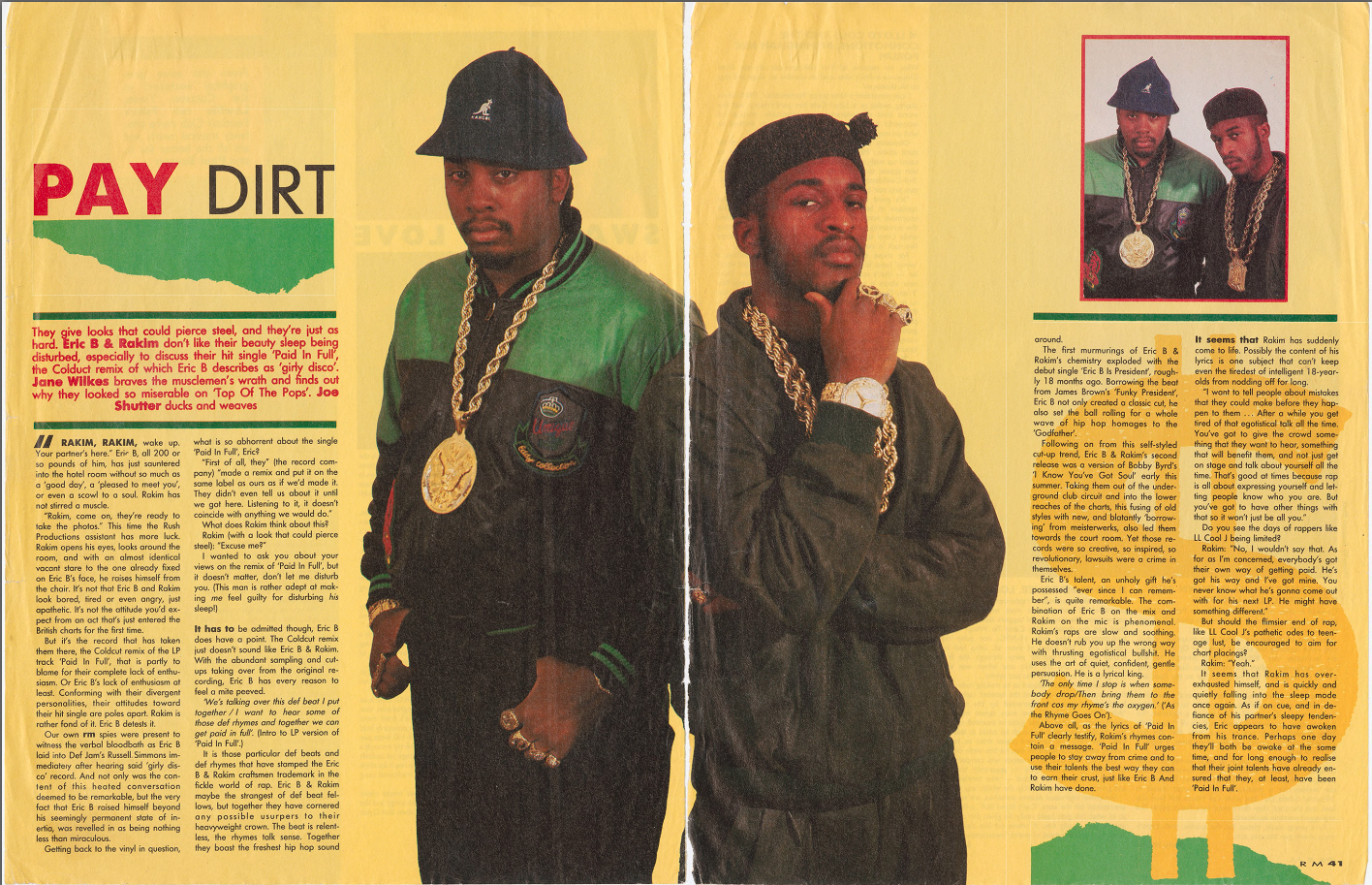
The music and the culture of hip-hop are inseparable from the Bronx, Queens, Harlem, and Brooklyn, NY. And now that the form is a global culture that exists in online spaces as much as it does where people meet and shake hands, its documentary history may be more valuable than ever. Hip-Hop began, unquestionably, as a regional phenomenon, and its formal qualities always bear the traces of its matrix, a confluence of African-American, Caribbean, and Latin American socio-cultural experiences and creative streams, meeting with new consumer audio technology and a drive toward countercultural experiments that took hold all over New York amidst the urban decay of the 70s.
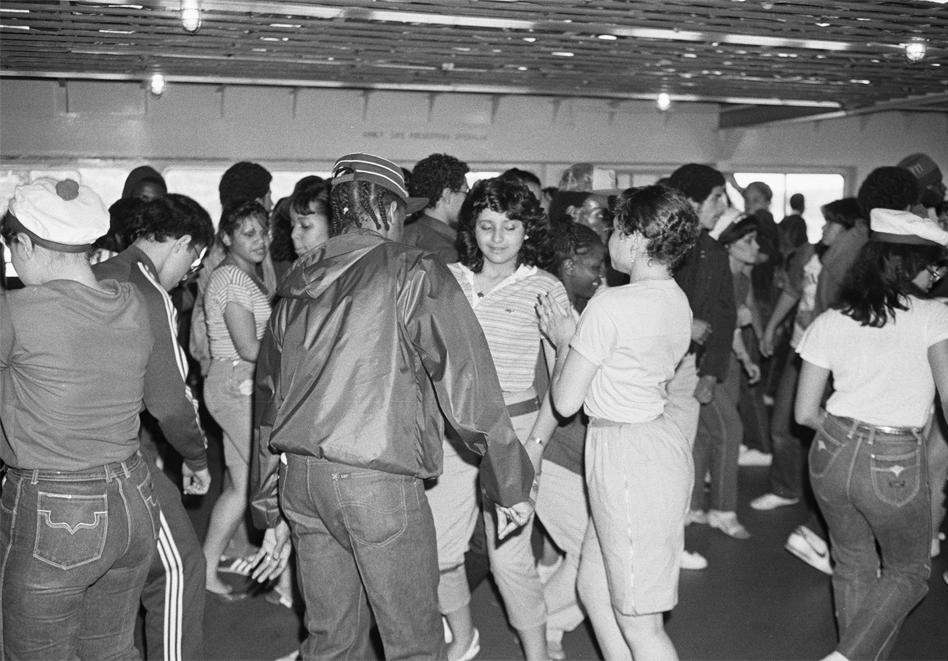
Photo by Joe Conzo, Jr.
We know the story in broad strokes. Now we can immerse ourselves in the daily life, so to speak, of early hip hop, thanks to a partial digitization of Cornell University’s vast hip hop collection. The physical collection, housed in Ithaca New York, contains “hundreds of party and event flyers ca. 1977–1985; thousands of early vinyl recordings, cassettes and CDs; film and video; record label press packets and publicity; black books, photography, magazines, books, clothing, and more.”
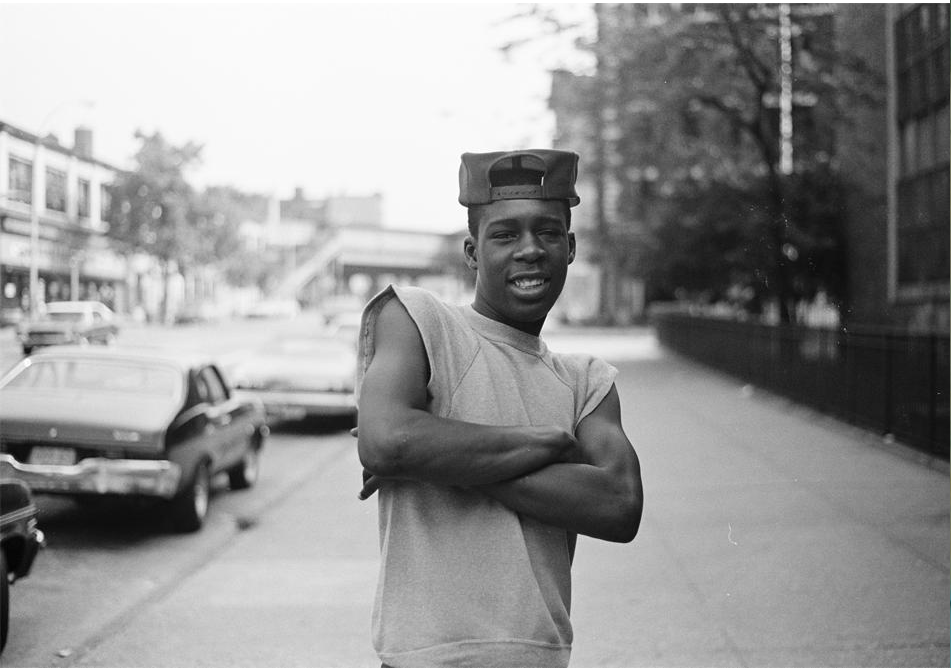
Photo by Joe Conzo, Jr.
While this impressive trove of physical artifacts is open to the public, most of us won’t ever make the journey. But whether we’re fans, scholars, or curious onlookers, we can benefit from its curatorial largesse through online archives like that of Joe Conzo, Jr., who “captured images of the South Bronx between 1977 and 1984, including early hip hop jams, street scenes, and Latin music performers and events.”
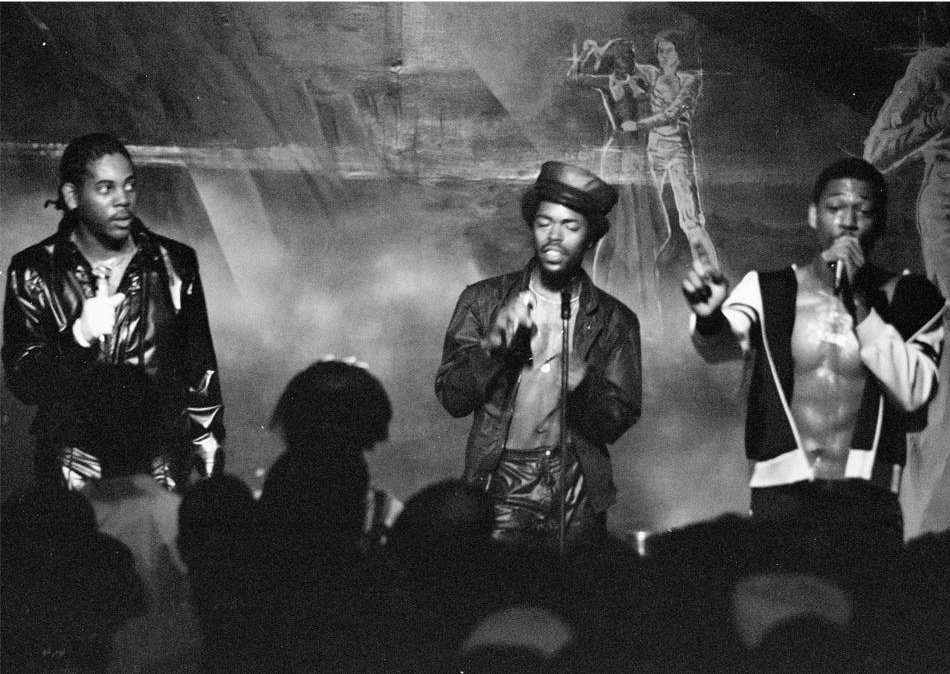
Photo by Joe Conzo, Jr.
While still in high school, Conzo became the official photographer for the early influential rap group the Cold Crush Brothers. The position gave him unique access to the “localized, grassroots culture about to explode into global awareness.” Cornell’s site remarks that “without Joe’s images, the world would have little idea of what the earliest era of hip hop looked like, when fabled DJ, MC, and b‑boy/girl battles took place in parks, school gymnasiums and neighborhood discos.”
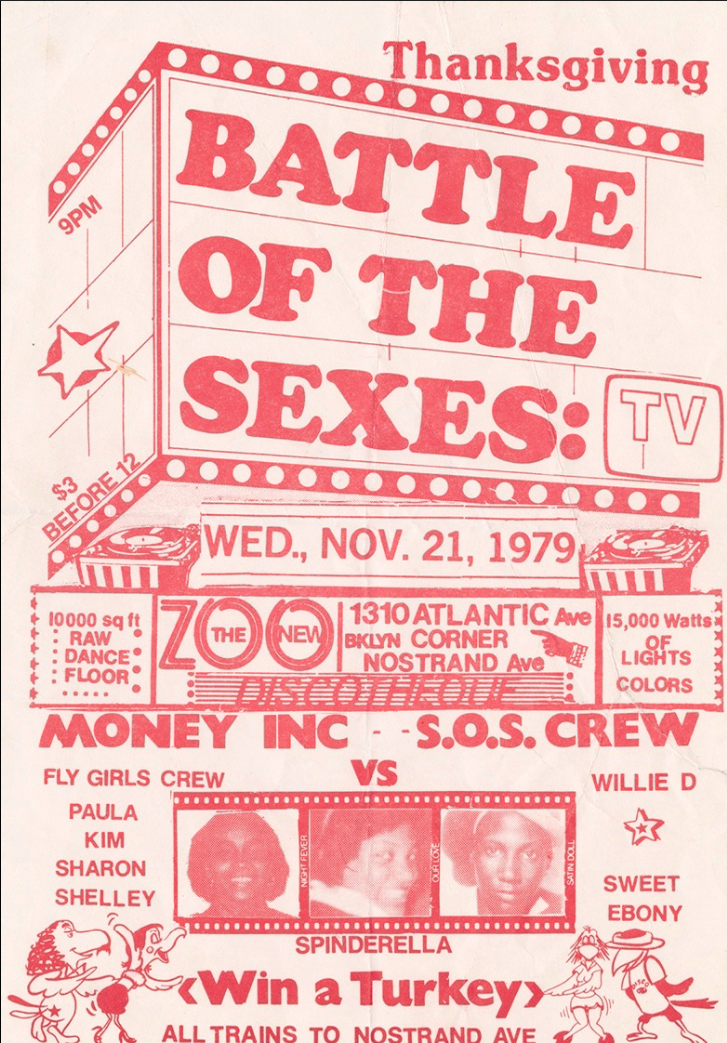
Another of Cornell’s collections, the Buddy Esquire Party and Event Flyer Archive, preserves over 500 such artifacts, the “largest known institutional collection of these scarce flyers, which have become increasingly valued for the details they provide about early hip hop culture.” Local, grassroots scenes like this one seem increasingly rare in a globalized, always-online 21st century. Archives like Cornell’s not only tell the story of such a culture, but in so doing they document a critical period in New York City, much like punk or jazz archives tell important histories of London, New York, D.C., Paris, New Orleans, etc.
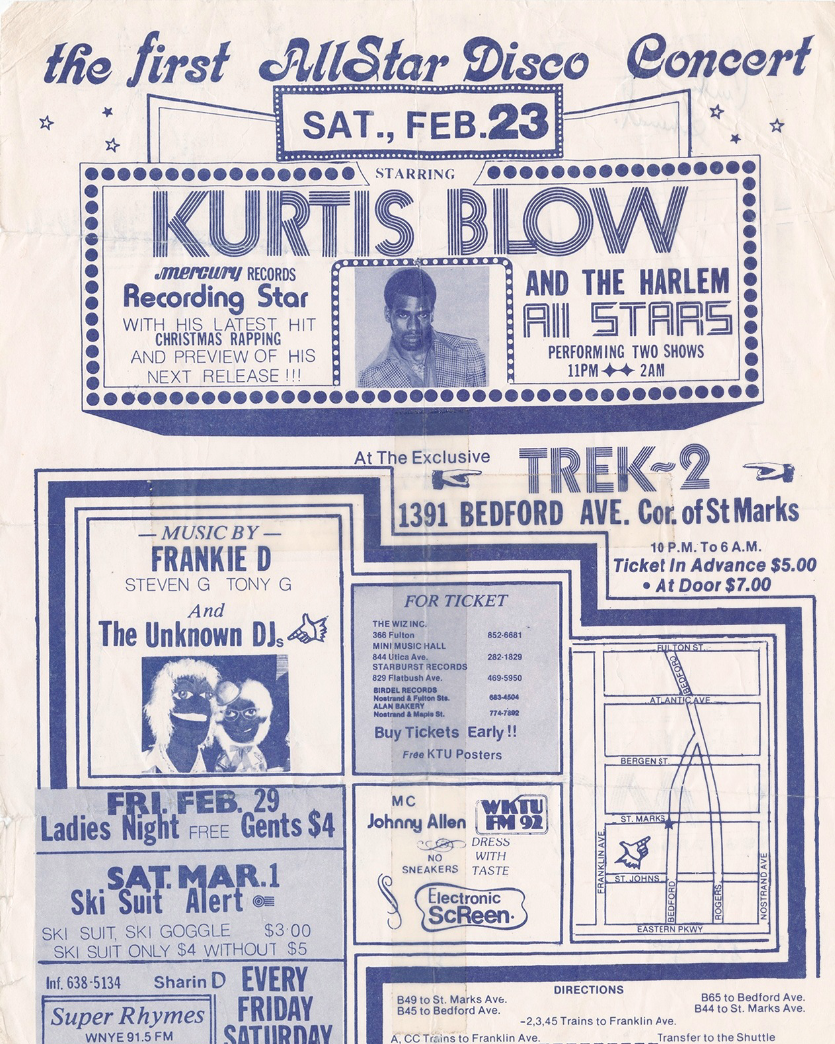
The third digital collection hosted by Cornell, the Adler Hip Hop Archive, comes from journalist and Def Jam Recordings publicist Bill Adler. The materials here naturally skew toward the industry side of the culture, documenting its leap from the New York streets to “global awareness” and a spread to cities nationwide, through magazine photo spreads, ads, promotional pics, press clippings, and much more.
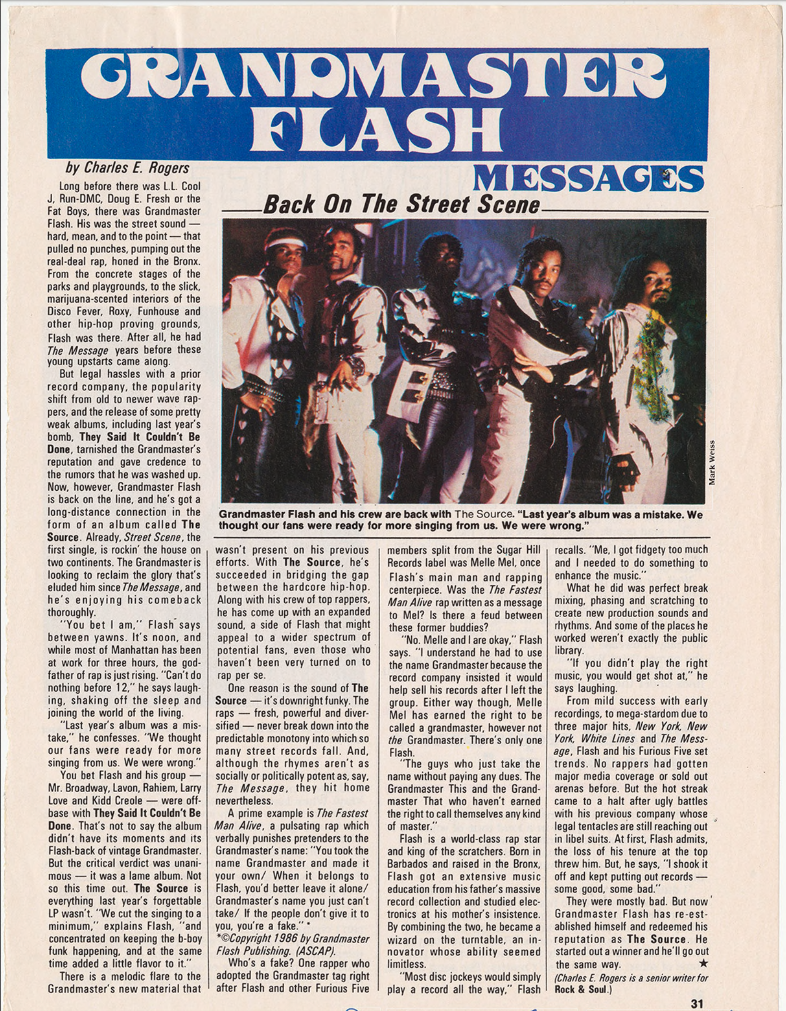
Some of these collections are easier to navigate than others—you’ll have to wade through many non-hip-hop photos in the huge Joe Conzo, Jr. archive, though most of them, like his Puerto Rican portraits and landscapes for example, are of interest in their own right. Conzo’s photo journalism of the Bronx in the late 70s and 80s has all the intimacy and candor of a family album or collection of yearbook pictures—charmingly awkward, exuberant, and a stark contrast to the high-profile glamour of commercial hip-hop eras to follow.
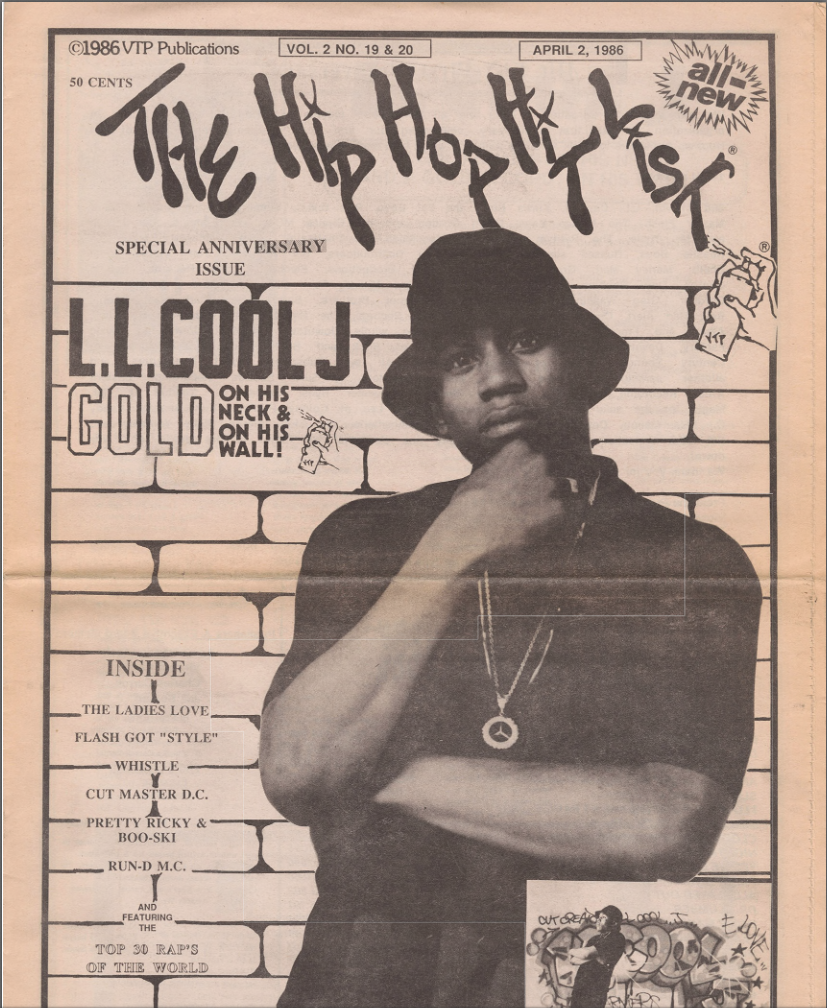
The core of Cornell’s collection came from author, curator, and former record executive Johan Kugelberg, who donated his collection in 1999 after publishing Born in the Bronx: A Visual History of the Early Days of Hip Hop with Joe Conzo, Jr. It has since expanded to 13 different collections from the archives of some of the culture’s earliest pioneers and documentarians. Hopefully many more of these will soon be digitized. But we might want to heed Jason Kottke’s warning in entering the three that have: “don’t click on any of those links if you’ve got pressing things to do.” You could easily get lost in this incredibly detailed treasury of hip-hop—and New York City—history.
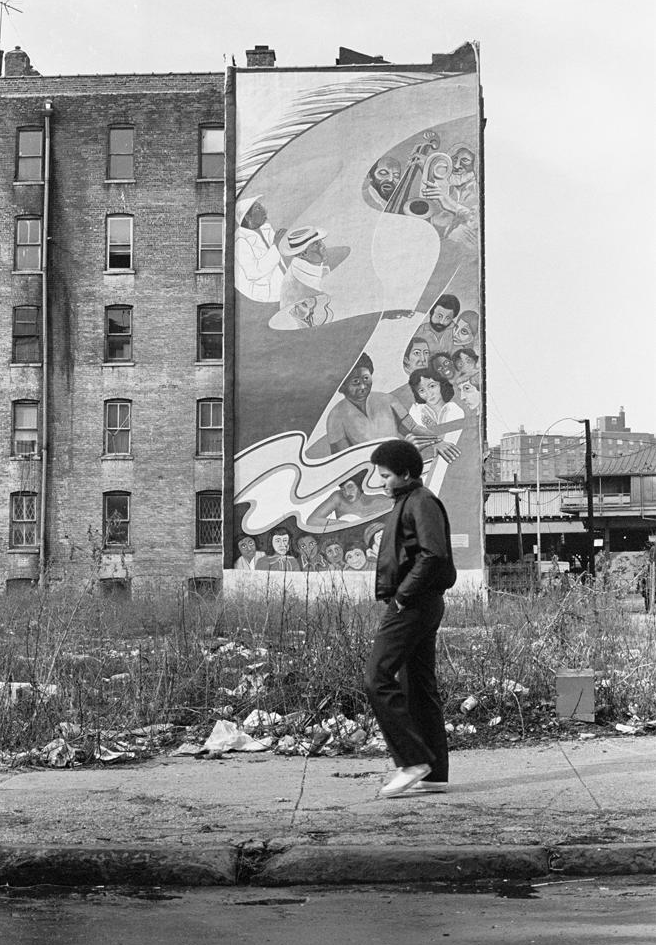
Photo by Joe Conzo, Jr.
via Kottke
Related Content:
The “Amen Break”: The Most Famous 6‑Second Drum Loop & How It Spawned a Sampling Revolution
Josh Jones is a writer and musician based in Durham, NC. Follow him at @jdmagness
Read More...How Marilyn Monroe Helped Break Ella Fitzgerald Into the Big Time (1955)
Think of movie stars, and you’ll almost certainly think of Marilyn Monroe; think of jazz singers, and you’ll almost certainly think of Ella Fitzgerald. Their skills as performers, their inherent iconic qualities, the time of the mid-twentieth century in which they rose to fame, and other factors besides, have ensured that these two women still define the images of their respective crafts. But before their ascension to cultural immortality, the Angeleno Monroe and the New Yorker Fitzgerald’s paths crossed down here on Earth in 1955, and, when they did, the movie star played an integral role in breaking the jazz singer into the big time.
If you wanted to play to an influential crowd in Hollywood back in the 1950s, you had to play the Mocambo, the Sunset Strip nightclub frequented by the likes of Clark Gable, Humphrey Bogart, Lana Turner, Bob Hope, Sophia Loren, and Howard Hughes. But at the time, a singer of the reputedly scandalous new music known as jazz didn’t just waltz onto the stage of such a respectable venue, especially given the racial attitudes of the time. But as luck would have it, Fitzgerald found an advocate in Monroe, who, “tired of being cast as a helpless sex symbol, took a break from Los Angeles and headed to New York to find herself,” writes the Independent’s Ciar Byrne.
There Monroe “immersed herself in jazz,” recognizing in Fitzgerald “the creative genius she herself longed to possess.” Together with Fitzgerald’s manager, jazz impresario and Verve Records founder Norman Granz, Monroe pressured the glamorous Hollywood club to book Ella. “I owe Marilyn Monroe a real debt,” Fitzgerald said later, in 1972. “She personally called the owner of the Mocambo, and told him she wanted me booked immediately, and if he would do it, she would take a front table every night.” He agreed, and true to her word, “Marilyn was there, front table, every night. The press went overboard. After that, I never had to play a small jazz club again.”
Though Monroe’s efforts didn’t make Fitzgerald the first black performer to take the Mocambo’s stage — Herb Jeffries, Eartha Kitt, and Joyce Bryant had played there in 1952 and 1953 — she did use it as a platform to ascend to unusually great career heights, comparable to the way Frank Sinatra launched his solo career there. The story has remained compelling enough for several retellings, including Bonnie Greer’s musical Marilyn and Ella and, more recently, through the hilarious unreliability of an episode of Drunk History. As real history would have it, Fitzgerald would go on to enjoy a much longer and more varied career than the tragic Monroe, but she did her own part to repay the favor by adding nuance to Monroe’s superficial public image: “She was an unusual woman — a little ahead of her times. And she didn’t know it.”
Related Content:
Ella Fitzgerald Sings ‘Summertime’ by George Gershwin, Berlin 1968
Marilyn Monroe’s Go-Getter List of New Year’s Resolutions (1955)
The 430 Books in Marilyn Monroe’s Library: How Many Have You Read?
Marilyn Monroe Recounts Her Harrowing Experience in a Psychiatric Ward in a 1961 Letter
Based in Seoul, Colin Marshall writes and broadcasts on cities and culture. His projects include the book The Stateless City: a Walk through 21st-Century Los Angeles and the video series The City in Cinema. Follow him on Twitter at @colinmarshall or on Facebook.
Read More...Watch Tom Petty (RIP) and the Heartbreakers Perform Their Last Song Together, “American Girl”: Recorded on 9/25/17
It was already a terrible day. Then came the news (retracted, then later sadly confirmed by The New York Times and the BBC) that Tom Petty has passed away at the age of 66. The cause, apparently a heart attack. This summer, I traveled to Philadelphia to see my first Tom Petty show, knowing it might be, as he said, his “last trip around the country,” the final big tour. And I’m so glad I did. What more could I say? It was a wonderful show, a magical two-hour singalong, which ended with “American Girl,” one of my favorites.
Above, you can see Tom Petty and the Heartbreakers play their last song together–again “American Girl”–at their final gig at the Hollywood Bowl. This video was recorded just last week.
If you’ve never given their music a serious listen, just click play on the playlist below. It might be one of the best wall-to-wall hours in music.
If you would like to support the mission of Open Culture, consider making a donation to our site. It’s hard to rely 100% on ads, and your contributions will help us continue providing the best free cultural and educational materials to learners everywhere. You can contribute through PayPal, Patreon, and Venmo (@openculture). Thanks!
Read More...
Watch Brian Eno’s Experimental Film “The Ship,” Made with Artificial Intelligence
“How is Brian Eno still finding uncharted waters after half a century spent making music?” asked The Verge’s Jamieson Cox after the release of Eno’s 25th album, The Ship. Calling it a “dark near-masterpiece,” The Onion’s A.V. Club expressed similar astonishment. The album “can hold its own among the very best in a career full of brilliant work…. Forty-one years after Another Green World, Eno is still foraging for new musical ground, and what he’s able to come up with is nothing short of miraculous. When listening to The Ship, we get the sense that he will never stop.”
Should you think that an exaggeration, note that since The Ship, Eno has already released yet another critically acclaimed ambient album, Reflection—like its predecessor, a somber soundtrack for somber times. And like another endlessly productive multimedia artist of his generation, Laurie Anderson, Eno hasn’t only continued to make work that feels deeply connected to the moment, but he has adapted to wave after wave of technological innovation, this time around, harnessing artificial intelligence to create a “generative film” drawn from The Ship’s title track (below).
You can see a trailer for the film at the top of the post, but this hardly does the experience justice, since each viewer’s—or user’s—experience of it will be different. As Pitchfork describes the project: “On a website, ‘The Ship’ plays, and the user can click on tweets of news stories, which appear alongside historical photos.” The film utilizes “a bespoke artificial intelligence programme,” the site explains, “developed by the Dentsu Lab Tokyo,” exploring “various historical photographic images and real-time news feeds to compose a collective photographic memory of humankind.” (Dentsu received a prestigious prize nomination from the European Commission for their work.)
It’s a conceptually grandiose project—which makes sense given its source material. The Ship, the musical project, takes its inspiration from the Titanic, “the ship that could never sink,” Eno told The New York Times, “and… the First World War was the war that we couldn’t possibly lose—this mentality suffused powerful men. They get this idea that, ‘We’re unstoppable, so therefore, we’ll go ahead and do it….’ And they can’t.” Eno continues in this vein of tragic exploration with the film, remarking in a statement:
Humankind seems to teeter between hubris and paranoia: the hubris of our ever-growing power contrasts with the paranoia that we’re permanently and increasingly under threat. At the zenith we realise we have to come down again… we know that we have more than we deserve or can defend, so we become nervous. Somebody, something is going to take it all from us: that is the dread of the wealthy. Paranoia leads to defensiveness, and we all end up in the trenches facing each other across the mud.
The interactive visual representation takes these themes even further, asking how much we as spectators of hubris and paranoia are complicit in perpetuating them, or perhaps changing and shaping their direction through technology: “Does the machine intelligence produce a point of view independent of its makers or its viewers? Or are we—human and machine—ultimately co-creating new and unexpected meanings?”
You be the judge. See your own personalized version of Eno’s The Ship film here.
Related Content:
Brian Eno on Why Do We Make Art & What’s It Good For?: Download His 2015 John Peel Lecture
Josh Jones is a writer and musician based in Durham, NC. Follow him at @jdmagness
Read More...Marilyn Monroe & Elvis Presley Star in an Action-Packed Pop Art Japanese Monster Movie
Designed by Erik Winkowski, this wild cut-out animation, called “Scary Prairie,” features pop icons, an Andy Warhol aesthetic, Japanese monsters, homages to Wild West films, all in one action-packed minute. What more could you want?
If you would like to support the mission of Open Culture, consider making a donation to our site. It’s hard to rely 100% on ads, and your contributions will help us continue providing the best free cultural and educational materials to learners everywhere. You can contribute through PayPal, Patreon, and Venmo (@openculture). Thanks!
Related Content:
Miyazaki Meets Warhol in Campbell’s Soup Cans Reimagined by Designer Hyo Taek Kim
Marilyn Monroe Recounts Her Harrowing Experience in a Psychiatric Ward in a 1961 Letter
The Entire History of Japan in 9 Quirky Minutes
The Big Ideas Behind Andy Warhol’s Art, and How They Can Help Us Build a Better World
Read More...Support Us
We're hoping to rely on loyal readers, rather than erratic ads. Please click the Donate button and support Open Culture. You can use Paypal, Venmo, Patreon, even Crypto! We thank you!

About Us

Open Culture scours the web for the best educational media. We find the free courses and audio books you need, the language lessons & educational videos you want, and plenty of enlightenment in between.
Advertise With Us

FREE UPDATES!
GET OUR DAILY EMAIL
Get the best cultural and educational resources on the web curated for you in a daily email. We never spam. Unsubscribe at any time.
FOLLOW ON SOCIAL MEDIA

Open Culture editor Dan Colman scours the web for the best educational media. He finds the free courses and audio books you need, the language lessons & movies you want, and plenty of enlightenment in between.
Advertise With Us


