See Ridley Scott’s 1973 Bread Commercial—Voted England’s Favorite Advertisement of All Time
I have often thought that eating some really serious brown bread is a bit like pushing a bike up a very steep hill, a hill called “health.” So what a surprise to find that in 2006 a poll of 1,000 Britons voted this 1973 ad for Hovis bread as the Favorite British Commercial of All Time. And none other than Ridley Scott directed it. Indeed, this story of a young lad delivering bread by bicycle up a steep cobblestone mining-town street is laced through with nostalgia and a sentimental use of Dvorak’s “New World” Symphony. (So beloved is it that Brits often request the classical work on radio as “the Hovis music.”)
Before Ridley Scott became a blockbuster film director, he cut his teeth by directing episodic television in the UK, and then forming an advertising production company with his brother Tony called RSA Films (Ridley Scott Associates). According to Scott, he was involved in the production of roughly 2,700 commercials over the company’s 10 years.
This iconic ad was one of several he directed that year for Hovis, but this is the one that stuck. It might be the simplicity of the ad, the Sisyphean struggle of its young protagonist (who at least gets to easily ride home), or any number of factors, but it would be a stretch to really see the auteur in this film. If anything, it’s reminiscent of his kitchen sink meets French New Wave short film from 1965, “Boy and Bicycle,” which is interesting more as an oddity and a starring vehicle for his brother than a great film.
The Independent tracked down the boy in the Hovis ad, Carl Barlow, who was 13 at the time, but is now 57 and a retired firefighter.
“It was pure fate that I got the part as the Hovis boy. I was down to the last three, and it turned out that one of the two boys couldn’t ride a bike, and the other wouldn’t cut his hair into the pudding bowl style — it was the Seventies after all. As the only boy who could ride a bike and would cut his hair, I got the part.”
This year, as part of an ad campaign for Evans Bicycles, Mr. Barlow made his way to the top of the hill one more time, with the help of an electric bike:
The original commercial is not Ridley Scott’s most famous one. That would go to his Apple Macintosh “1984” ad that screened during the Super Bowl. This list shows a few more that Scott directed, into the 1990s.
Finally, an iconic commercial invites parody, and, in fact, cherished comedians The Two Ronnies made fun of the Hovis ad in this brief skit from 1978.
Related Content:
Ridley Scott Walks You Through His Favorite Scene from Blade Runner
How Ridley Scott Turned Footage From the Beginning of The Shining Into the End of Blade Runner
Ted Mills is a freelance writer on the arts who currently hosts the FunkZone Podcast. You can also follow him on Twitter at @tedmills, read his other arts writing at tedmills.com and/or watch his films here.
Read More...New Iranian Video Game, Engare, Explores the Elegant Geometry of Islamic Art
The intersection of mathematics and art holds out great potential for not just endless discoveries but deeply memorable creations. The 20th-century visionary M.C. Escher understood that, but so did the Islamic artists of centuries before that inspired him. They’ve also inspired the Iranian game developer Mahdi Bahrami, whose newest effort Engare stands at the cross of mathematics, art, and technology, a puzzle video game that challenges its players to complete the kind of brilliantly colorful, mathematically rigorous, and at once both strikingly simple and strikingly complex patterns seen in traditional Islamic art and design.
“The leap from the bare bones prototype to it becoming a game about creating art was a small one, given that Islamic art is steeped in mathematical knowledge,” writes Kill Screen’s Chris Priestman.
“The visual flair of Islamic art also helps to further ensure that Engare doesn’t ever feel ‘dry.’ Yes, it’s a game about math, but there are no dull equations to solve. Yet, the same ideas that those equations belong to are approached in Engare, just from a different angle and one that Bahrami reckons can also evoke emotions. You can see this in mesmerizing action in the gameplay trailer just above.
“There are geometrical shapes that make us feel happy, patterns that make someone nervous/hypnotized, the tiling of a ceiling can make someone feel lonely,” Priestman quotes Bahrami as writing. He’s done this sort of emotional thinking about visual mathematics before: his previous game Farsh “had you rolling out Persian carpets in such a way as to create paths across the levels,” and his next one Tandis is “inspired by Celtic shapes, and is a wild and unpredictable experiment in topographical transformation.” If you’d like to give Engare a try, you can get it from its website or on Steam. When the 21st century’s M.C. Escher discovers Islamic art, will he do it through the medium of video games?
Related Content:
The Complex Geometry of Islamic Art & Design: A Short Introduction
Back to Bed: A New Video Game Inspired by the Surreal Artwork of Escher, Dali & Magritte
Californium: New Video Game Lets You Experience the Surreal World of Philip K. Dick
Ancient Greek Punishments: The Retro Video Game
Mathematics Made Visible: The Extraordinary Mathematical Art of M.C. Escher
Based in Seoul, Colin Marshall writes and broadcasts on cities and culture. His projects include the book The Stateless City: a Walk through 21st-Century Los Angeles and the video series The City in Cinema. Follow him on Twitter at @colinmarshall or on Facebook.
Read More...The Map of Biology: Animation Shows How All the Different Fields in Biology Fit Together
Of all the science classes required throughout primary and secondary school, most students seem to like biology the best. Maybe, dealing as it does with such familiar things as plants, animals, and human beings, the popularity of biology has to do with its clear relevance to their life — or more to the point, to life itself. But any biology-loving youngster who decides to go take their studies more deeply into their favorite subject must sooner or later make a difficult choice: what kind of biology will they focus on? Biophysics, cellular biology, ecology, environmental biology, biomechanics, molecular biology, biochemistry, evolutionary biology… the list seems endless.
So instead of looking at the world of biology as a list, why not look as it as a map? Domain of Science, the Youtube channel previously featured here on Open Culture for their map of mathematics, map of physics, map of chemistry, and map of computer science, have just recently put together one for biology, a video tour of which appears above.
It begins with “the most basic unit in the foundation of all life,” the cell, continues on to molecular, chemical, and physical processes, then to genes, populations, anatomy, the immune system, genetic engineering, paleontology, and even the search for life in outer space, with many other stops along the way besides.
“If there’s one word that describes biology, it’s complexity,” says series creator and narrator Dominic Walliman. “There’s a huge amount we still don’t understand about how life works, how it started, and how it ended up with intelligent apes like us who are able to look back and try and work out. I feel like we’ll be making new biological discoveries for many, many years to come.” Encouraging words for those students now considering going into one of the many biological sciences, although they’ll still have to decide exactly which biological science to go into — bearing in mind how many of those subfields have yet to emerge. It doesn’t take that intelligent an ape to understand that, before long, biology’s going to need a bigger map.
You can purchase Domain of Science’s maps as posters here.
Related Content:
The Map of Mathematics: Animation Shows How All the Different Fields in Math Fit Together
The Map of Physics: Animation Shows How All the Different Fields in Physics Fit Together
The Map of Chemistry: New Animation Summarizes the Entire Field of Chemistry in 12 Minutes
Free Online Biology Courses
Based in Seoul, Colin Marshall writes and broadcasts on cities and culture. His projects include the book The Stateless City: a Walk through 21st-Century Los Angeles and the video series The City in Cinema. Follow him on Twitter at @colinmarshall or on Facebook.
Read More...Giant Clown Sings a Creepy Cover of Radiohead’s “Creep”
You can’t unsee this. You can’t get it out of your head. Tonight, in your dreams, you’ll see Puddles Pity Party, the 6′8″ clown, singing a creeped out version of Radiohead’s “Creep.” He’s backed by Matthew Kaminski, organist for the Atlanta Braves. You’ve been warned.
Related Content:
How Marcel Marceau Started Miming to Save Children from the Holocaust
Read More...Why So Many People Adore The Room, the Worst Movie Ever Made? A Video Explainer
Not since the height of the Rocky Horror Picture Show’s midnight screenings have I seen a crowd go so nuts for a film, but 2003’s The Room seems to have really hit a cultural nerve. And it’s only going to get bigger with the upcoming release of The Disaster Artist, James Franco and Seth Rogen’s retelling of how writer/director/star Tommy Wiseau made his so-bad-it’s‑brilliant film, based on the book by Greg Sestero and Tom Bissell.
Whereas Rocky Horror was an adaptation of an already successful East End musical, and a knowingly camp one at that, The Room is sui generis. As The Disaster Artist’s co-author Tom Bissell describes it, “It’s like a movie made by an alien who has never seen a movie but had movies thoroughly explained to him.”
The above video from Vox takes the uninitiated into the phenomenon of this piece of “paracinema”–any film that lies outside the mainstream–and tries to explain why The Room is so beloved while so many other bad films disappear into the ether.
One reason is its campy nature, though never knowingly so–Wiseau thought he was making something great. And because it’s so hard to find somebody so driven, yet so unaware of the basics of acting, storytelling, and moviemaking, The Room stands out compared to other films that try to be intentionally bad. You just can’t fake that kind of thing.
The other reason is what critic Pierre Bourdieu would call cultural capital. That’s the shared joy between fans, and the importance placed on dressing up like the characters, going to midnight screenings, and seeing who knows the most lines.
The current trailer for The Disaster Artist reframes the story as a typical Hollywood story, where one follows their dreams no matter what, and hints at how The Room’s plot mirrored actual events in Wiseau’s life.
Meanwhile, what is really getting the buzz is James Franco’s uncanny and spot-on portrayal of Wiseau and some of The Room’s recreated footage. It’s almost exact down to the second.
People’s love of The Room has led some to treat it like the work of art it so wanted to be. In YouTube essayist This Guy Edits’ video, he examines Wiseau’s blocking of a scene much like The Nerdwriter broke down Hitchcock’s blocking of Vertigo. Camp in this instance has birthed irony, but in the most loving way.
If you are new to The Room, please follow Tom Bissell’s advice and watch it for the first time at home, not at a midnight screening when you won’t hear any dialog and spoons are thrown at the screen. Hell, don’t even watch The Disaster Artist until you’ve sat down and watched Wiseau’s…masterpiece. (Yeah, we said it.)
Related Content:
Meet the World’s Worst Orchestra, the Portsmouth Sinfonia, Featuring Brian Eno
Susan Sontag’s 50 Favorite Films (and Her Own Cinematic Creations)
Ted Mills is a freelance writer on the arts who currently hosts the artist interview-based FunkZone Podcast and is the producer of KCRW’s Curious Coast. You can also follow him on Twitter at @tedmills, read his other arts writing at tedmills.com and/or watch his films here.
Read More...The Van Gogh of Microsoft Excel: How a Japanese Retiree Makes Intricate Landscape Paintings with Spreadsheet Software
Just when you thought you’ve mastered Microsoft Excel–creating pivot tables, VLOOKUPs and the rest–you discover the feature you never knew was there. The one that lets you create Japanese landscape paintings. When Tatsuo Horiuchi retired, he found that feature and leaned on it, hard. Now 77 years old, he has enough landscape paintings to stage an exhibition–all made with the point and click of a mouse.
So what’s the moral of this story? Maybe it’s you’re never too old to make art. Or maybe it’s never too late to master those hidden features and push technology to the bleeding edge. In Tatsuo’s case, he’s doing both.
Related Content:
The Art of Hand-Drawn Japanese Anime: A Deep Study of How Katsuhiro Otomo’s Akira Uses Light
A Hypnotic Look at How Japanese Samurai Swords Are Made
Download 2,500 Beautiful Woodblock Prints and Drawings by Japanese Masters (1600–1915)
Enter a Digital Archive of 213,000+ Beautiful Japanese Woodblock Prints
Read More...Listen to Rolling Stone’s “500 Greatest Songs of All Time” in One Streamable Playlist
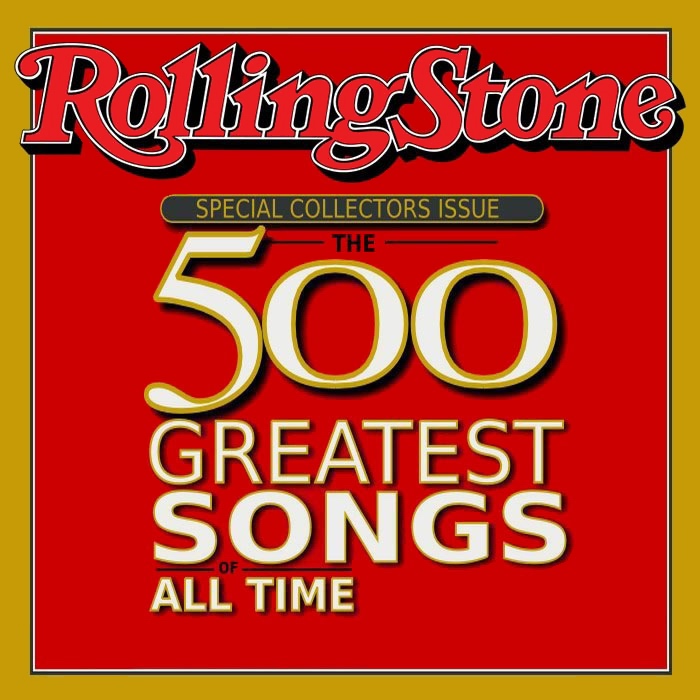
Whatever value one places in “best of” or “greatest” lists, it’s hard to deny they can be virtuoso exercises in critical concision. When running through 10, 50, 100 films, albums, novels etc. one can’t wander through the wildflowers but must make sparkly, punchy statements and move on. Rolling Stone’s writers have excelled at this form, and expanded the list size to 500, first releasing a book compiling their “500 Greatest Albums of All Time” in 2003 then following up the next year with the “500 Greatest Songs of All Time,” a special issue of the magazine with short blurbs about each selection.
In 2010, the magazine updated their massive list, compiled by 162 critics, for a special digital issue, and it now lives on their site with paragraph-length blurbs intact. Each one offers a fun little nugget of fact or opinion about the chosen songs. (Tom Petty, learning that The Strokes admitted to stealing his opening riff for “American Girl,” told the magazine, “I was like, ‘Ok, good for you.’ It doesn’t bother me.”) There’s hardly room to explain the rankings or justify inclusion. We’re asked to take the Rolling Stone writers’ collective word for it.
Maybe it’s a little difficult to argue with a list this big, since it includes a bit of everything—for the possible dross, there’s a whole lot of gold. The updated list swapped in 25 new songs and added an introduction by Jay‑Z: “A great song has all the key elements—melody; emotion; a strong statement that becomes part of the lexicon; and great production.” Broad enough criteria for great, but “greatest”? Put on the Spotify playlist above (or access it here) and judge for yourself whether most of those 500 songs in the updated list—472 to be exact—meet the bar.
You can see the original, 2004 list, sans blurbs, at the Internet Archive. Number one, Dylan’s “Like a Rolling Stone” (get it?). Number 500, Boston’s “More Than a Feeling,” which, well… okay. The updated list gives us Smokey Robinson’s “Shop Around” in last place (don’t worry, Smokey fans, “The Tracks of My Tears” makes it to 50.) Still at number one, naturally, “Like a Rolling Stone.” Find out which 498 songs sit in-between at the online list here. (Wikipedia has a percentage breakdown for both lists of songs by decade.) The magazine may be up for sale, its journalistic credibility in question, but for comprehensive “best of” lists that keep track of the movement of popular culture, we shouldn’t count them out just yet.
Related Content:
89 Essential Songs from The Summer of Love: A 50th Anniversary Playlist
The History of Punk Rock in 200 Tracks: An 11-Hour Playlist Takes You From 1965 to 2016
A Massive 800-Track Playlist of 90s Indie & Alternative Music, in Chronological Order
Josh Jones is a writer and musician based in Durham, NC. Follow him at @jdmagness
Read More...Hear The Cinnamon Bear, the Classic Holiday Radio Series That Has Aired Between Thanksgiving and Christmas for 80 Years
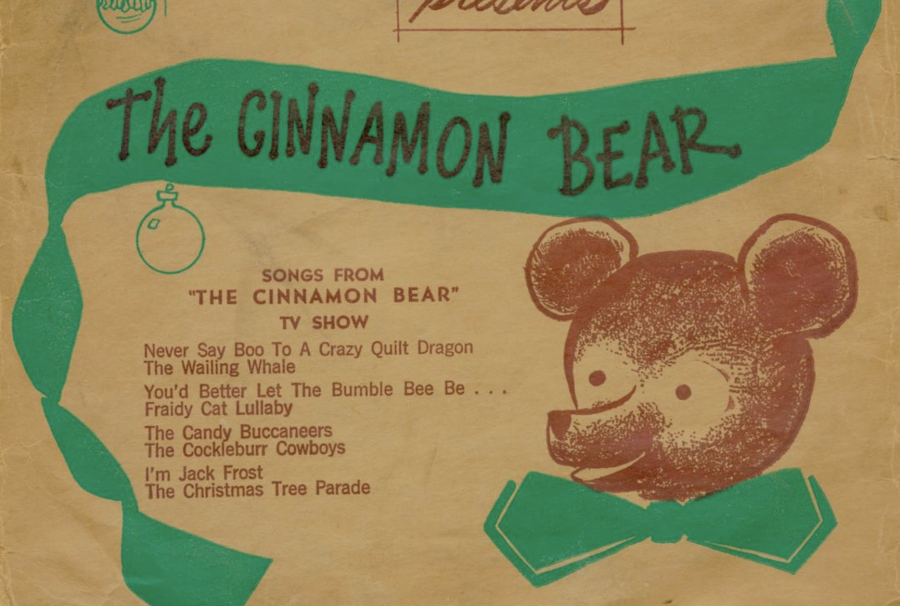
Eighty years ago, just after Thanksgiving, children across America turned on their radios and heard a couple of voices very much like their own: those of Judy and Jimmy Barton, a sister and brother eagerly composing their wish lists to send off to Santa Claus. Judy asks for a velocipede, seemingly a hot item in 1937 but not even a recognizable word to most of the children who’ve listened to the broadcast in holiday seasons since. Despite the occasional such archaism, The Cinnamon Bear, the series in which Judy and Jimmy star, continues to enchant not just generation after generation of kids, but also those grown-ups among us who savor the opportunities this time of year affords to more fully appreciate timeless childhood pleasures.
The Cinnamon Bear follows the adventures of Judy and Jimmy as they search for the lost silver star that tops their Christmas tree. They first check the attic, there encountering the title animal: Paddy O’Cinnamon, an Irish-accented teddy bear with a tendency to greatly overestimate his own fearsomeness but an indefatigable spirit of service as well. He even helps the Barton children “de-grow” to miniature size in order to take the hunt to his home of Maybeland, a hidden fantasy realm inhabited by such eccentrics, harmless and otherwise, as the Crazy Quilt Dragon, the Roly-Poly Policeman, the Wintergreen Witch, Oliver Ostrich (prepared with a musical number about his love of scrambled alarm clocks and bacon), a flying hat, and even Santa Claus himself.
But Paddy O’Cinnamon and the kids don’t meet jolly old Saint Nick until the proper time: Christmas day, on which the original broadcast of The Cinnamon Bear concluded. The first fifteen-minute episode aired on November 26, 1937, with the story continuing six days a week until the big holiday. Produced in Hollywood by radio syndicator Transco and written, songs and all, by the husband-wife team of Glanville and Elizabeth Heisch, it initially found local sponsorship across the country from department stores, some of whom paid for many years of repeat broadcasts and even put up Cinnamon Bear-themed displays and events along with their Santa Clauses. (The now long-defunct Lipman’s of Portland, Oregon got into it in a big way, establishing the show as something of a tradition in the city, where Cinnamon Bear Christmas river cruises run to this day.)
With Christmas over, the children of 1937 had no choice but to wait almost an entire year before they could hear The Cinnamon Bear again. Growing up myself about half a century later, I had the show as a box set of cassette tapes to which I binged-listened on a few different holiday seasons. But now, with seemingly the entire golden age of radio freely available on the internet, kids and anyone else besides can listen however and whenever they like. You’ll find all 26 episodes of The Cinnamon Bear on the Internet Archive, as a Youtube playlist, and even as a podcast on iTunes. (You can stream them all above.) This year, on the 80th anniversary of the original broadcast, why not “air” it for you and yours as those first listeners heard it, once an evening except Saturdays, until December 25th? Though each episode may be in doubt as to whether Judy and Jimmy will ever recover the silver star, it’s no spoiler to say that, with the assistance of Paddy O’Cinnamon, they do find their way to a memorable Christmas indeed.
Related Content:
A Christmas Carol, A Vintage Radio Broadcast by Orson Welles and Lionel Barrymore (1939)
Hear “Twas The Night Before Christmas” Read by Stephen Fry & John Cleese
Dr. Seuss’ “How the Grinch Stole Christmas” Read by Dateline’s Keith Morrison
Walter Benjamin’s Radio Plays for Kids (1929–1932)
Based in Seoul, Colin Marshall writes and broadcasts on cities and culture. His projects include the book The Stateless City: a Walk through 21st-Century Los Angeles and the video series The City in Cinema. Follow him on Twitter at @colinmarshall or on Facebook.
Read More...An Interactive Map of Every Record Shop in the World

Arriving in a new city usually means finding the nearest decent grocery, pharmacy, coffee shop, bookstore, laundry, etc. And before nearly every musical whim could be satisfied with a few clicks, it also meant for many people finding the nearest record store. Even the local strip mall chain might hold a surprise or two. But the true finds appeared among the small proprietors, merchandisers of dusty LPs in wooden bins and keepers of local music scene lore. Entering a well-curated music shop can feel like walking into a medieval apothecary. Whatever ails you, you’re sure to find a remedy here. If it doesn’t work, there remains a certain magic in the transaction. We continue to believe in music even when it lets us down.

But have we lost faith in the record shop? I hope not. Online streaming and buying has the regrettable effect of flattening everything into the same two dimensions without the aura of physical media and the musical paraphernalia we find in real life stores. Should you be among the unlucky who lack a local music store, fear not.
You can recover the romance by traveling to any one of the thousands of shops worldwide that are catalogued and mapped on VinylHub, a crowd-sourced “endeavor,” Ron Kretsch writes at Dangerous Minds, “to create an interactive map of every brick-and-mortar record store on Earth, a perfect resource for the world-traveling vinyl obsessive.”

Brought to us by masterminds behind Discogs and their similar spin-off online catalogs for books, movies, etc., this project might get us out of our chairs—maybe even out of the country—and into new places to dig through the crates. But even if we’re not inclined to leave the house, VinylHub offers a wealth of fascinating information. “The single city with the largest density of shops,” we learn, “is Tokyo,” though “had you asked me,” Kretsch writes, “I’d have probably said London.” I’d have guessed New York, which comes in at a surprising 7th place.
The most remote record store on Earth is a cluster of CD stalls above a produce market in the tiny Pacific Island Kingdom of Tonga, but Vinyl Run, located on the tiny Indian Ocean island of Réunion, sure looks like a contender. The northernmost is in Alta, Norway; the southernmost is in Invercargill, New Zealand.
The UK is currently second in number of shops by country: 537, with .8443 shops per 100,000 inhabitants. The United States at number one has almost triple that number, but also over five times the population. These figures are provisional. Much of the world remains uncharted—at least as far as record shops are concerned—and Discogs members continue to submit new entries. Should you find a blank spot on the map that needs a little record icon, you can join for free and contribute to the VinylHub community. While there’s nothing like a trip to a new music store, even if you’re only in it for the data, you’ll find much here to inspire.

Over at the Discogs blog, we learn several more facts, such as the two shops that are farthest apart (Madrid’s Citadel Records and Star Second-Hand Book-Music in Palmerston North, New Zealand: 19,978 km) and the location of that most remote shop (the market in Nuku’alofa in Tonga, address: “Upstairs of wet market”). VinylHub’s “Explorer” map utilizes Google Maps features to give you unlimited access to every region in the world. Zoom in to see the numbers by city and the individual locations of each and every shop in the database. You can even find record stores listed in Pyongyang—or rather record sections of several hotel bookshops. I wouldn’t necessarily recommend making the trip, but it’s interesting to imagine what odd treasures we might find there—or at any of the other several thousand shops from around the world.

Related Content:
You Can Have Your Ashes Turned Into a Playable Vinyl Record, When Your Day Comes
How Vinyl Records Are Made: A Primer from 1956
Josh Jones is a writer and musician based in Durham, NC. Follow him at @jdmagness
Read More...Meet the 35-Year-Old British Man Who Lives Entirely in the Year 1946
Ben Sansum is something of a young fogey. He’s only 35 years old, but he lives in the year 1946. Entirely. The pictures on his wall in his Cambridgeshire home, the supplies in his cupboard, the music played on his turntable, the clothes he wears–everything comes from 1946 and the post WWII era. His motivation is partly aesthetic. He likes living in a period home, he tells us. But it also goes deeper than that. As he notes, our modern world moves so quickly, it sometimes pays to hang onto old world charms.
If you would like to support the mission of Open Culture, consider making a donation to our site. It’s hard to rely 100% on ads, and your contributions will help us continue providing the best free cultural and educational materials to learners everywhere. You can contribute through PayPal, Patreon, and Venmo (@openculture). Thanks!
Read More...Support Us
We're hoping to rely on loyal readers, rather than erratic ads. Please click the Donate button and support Open Culture. You can use Paypal, Venmo, Patreon, even Crypto! We thank you!

About Us

Open Culture scours the web for the best educational media. We find the free courses and audio books you need, the language lessons & educational videos you want, and plenty of enlightenment in between.
Advertise With Us

FREE UPDATES!
GET OUR DAILY EMAIL
Get the best cultural and educational resources on the web curated for you in a daily email. We never spam. Unsubscribe at any time.
FOLLOW ON SOCIAL MEDIA

Open Culture editor Dan Colman scours the web for the best educational media. He finds the free courses and audio books you need, the language lessons & movies you want, and plenty of enlightenment in between.
Advertise With Us

