The Writing Life of Joyce Carol Oates
Joyce Carol Oates is often described as America’s foremost woman of letters. Since 1963 she has published more than 50 novels and a great many short stories, plays, essays, poems and children’s stories — all of unusually high quality. Her productivity has been legendary, almost from the start. When her former Syracuse University classmate Robert Phillips interviewed Oates for the Paris Review in 1978, he recounted a rumor that circulated campus about how she would finish a novel, turn it over, and begin composing another one on the other side–only to throw the manuscript away when both sides were covered and begin again. Oates didn’t deny the rumor. “I began writing in high school,” she said, “consciously training myself by writing novel after novel and always throwing them out when I completed them.” But sheer volume was never the point, as Oates told Phillips:
Productivity is a relative matter. And it’s really insignificant: What is ultimately important is a writer’s strongest books. It may be the case that we all must write many books in order to achieve a few lasting ones — just as a young writer or poet might have to write hundreds of poems before writing his first significant one. Each book as it is written, however, is a completely absorbing experience, and feels always as if it were the work I was born to write.
Oates has won many honors for her work, including the National Book Award, the Pen/Malamud Award, the National Medal of the Humanities, and a lifetime achievement award from the National Book Critics Circle. Her latest novel, The Accursed, is a Gothic tale of a supernatural curse visited upon Princeton, New Jersey, the town where she lives and teaches. Last month the New Yorker visited Oates at her home in Princeton. The short film above offers a rare look inside the writer’s private world. Oates talks about her work routine, her interest in language and structure, and her sense of her own personality. “I can basically write almost all day long with interruptions,” she says in the film. “It’s not really that I sit down to write as if it were some extraordinary act. It’s basically what I do.”
You can read online Oates’ early short story, “Where Are You Going, Where Have You Been?”. It was written for Bob Dylan in 1966.
via Page-Turner
Mr. Rogers Takes Breakdancing Lessons from a 12-Year-Old (1985)
February 13th, 1985 shall be remembered as a truly beautiful day in the neighborhood, for that is the date on which Fred Rogers learned to breakdance (sort of).
In no time at all, 12-year-old instructor Jermaine Vaughn had Mr. Rogers waving, moonwalking and learning how to press play on a boom box so he could demonstrate some “very fancy things” regarding the first pillar of hip hop. (“I’d never be able to do that,” his pupil says admiringly, and presumably truthfully.)
The television icon’s legendary sincerity is on display throughout, even in this pirated version, which swaps out the wimpy original track in favor of NWA’s 1989 “Fuck Tha Police,” a move that would’ve pleased Eddie Murphy’s Mr. Robinson.
If you would like to support the mission of Open Culture, consider making a donation to our site. It’s hard to rely 100% on ads, and your contributions will help us continue providing the best free cultural and educational materials to learners everywhere. You can contribute through PayPal, Patreon, and Venmo (@openculture). Thanks!
Related Content:
Mr. Rogers Goes to Washington
See Stevie Wonder Play “Superstition” and Banter with Grover on Sesame Street in 1973
Ayun Halliday will always be Fred Rogers’ television neighbor. Follow her @AyunHalliday
Read More...David Bowie Narrates Sergei Prokofiev’s Children’s Symphony Peter and the Wolf
Some of the 20th century’s greatest actors have narrated Sergei Prokofiev’s symphonic story Peter and the Wolf, including Peter Ustinov, Alec Guinness, Ralph Richardson, John Gielgud, Basil Rathbone, Edna Everage, and one of my favorites, Boris Karloff. In 1978, David Bowie joined this illustrious company with his recording of the classic for RCA Victor with the Philadelphia Orchestra. Find it above.
Bowie begins, as do all of the narrators, with a brief summary of how this symphony works, with different instrumentation representing the various characters (see here for full text of the story and description of themes):
Each character in the tale is going to be represented by a different instrument of the orchestra. For instance, the bird will be played by the flute. (Like this.) Here’s the duck, played by the oboe. The cat by the clarinet. The bassoon will represent grandfather. The wolf by the French horns. And Peter by the strings. The blast of the hunters’ shotguns played by the kettle drums.
Bowie has said he that he made the recording as a present for his son, Duncan, then 7. Prokofiev, commissioned by the Central Children’s Theatre in Moscow in 1936 to help cultivate the musical tastes of young children, wrote the symphony in four days. As Tim Smith points out in an essay for PBS, Peter and the Wolf has “helped introduce generations of children to the instruments of the orchestra and the concept of telling a story through music.” I know it will be a part of my daughter’s musical education. I’m pretty sure we’ll start with Bowie’s version.
Related Content:
David Bowie Releases Vintage Videos of His Greatest Hits from the 1970s and 1980s
The Story of Ziggy Stardust: How David Bowie Created the Character that Made Him Famous
Rare 1946 Film: The Great Russian Composer Sergei Prokofiev Plays Piano, Discusses His Music
Josh Jones is a writer and musician based in Washington, DC. Follow him at @jdmagness
Read More...Blondie Plays CBGB in the Mid-70s in Two Vintage Clips
In honor of Debbie Harry’s 68th birthday today, we bring you some very early clips of Blondie at CBGB. Above, the band plays “A Girl Should Know Better” in 1975, an unreleased track that’s got all the garage rock, girl-group sound the band rode in on before going new wave in the 80s. Guitarist Chris Stein looks and sounds like Johnny Thunders and Harry performs the almost-wholesome, semi-vacant sexuality of her Playboy bunny past. While this track didn’t make it onto their first album, 1976’s Blondie, it’s a fun little number all the same.
Down below watch the band play “Rip Her to Shreds” in 1977, looking a little less trash-rock but still sounding harder than they would in later, slicker years. For more vintage Harry moments, pop on over to Dangerous Minds to see her arm wrestle Andy Kaufman, recount a run-in with Ted Bundy, and introduce Americans to the pogo dance on Glenn O’Brien’s local New York show TV Party.
Related Content:
The Talking Heads Play CBGB, the New York Club that Shaped Their Sound (1975)
Andy Warhol Digitally Paints Debbie Harry with the Amiga 1000 Computer (1985)
Josh Jones is a writer and musician based in Washington, DC. Follow him at @jdmagness
Read More...Stephen Fry Reads Oscar Wilde’s Children’s Story “The Happy Prince”
I first encountered Oscar Wilde’s story “The Happy Prince” while working part-time as a tutor on New York’s Upper East Side. Looking for suitable reading material, I came across Wilde’s children’s stories, which I had not known existed. They were perfect—vivid, charming, literary fairy tales with something more besides. Something best described by avid Wilde reader Stephen Fry.
In the promotion of a recent Kickstarter project to fund a 20-minute animation of “The Happy Prince” around Fry’s reading of the story, the actor talks of coming to know Wilde’s fairy tales as a child, before he knew anything else about the 19th century Irish writer. He loved the language, he says, of all of the stories, and “the beauty of thought, the nobility of thought.” But “The Happy Prince” affected him especially, as it affected my young students and me. It is a story, he says, “about the cost of beauty. It is hard for me to read The Happy Prince without crying. I guess because it is also somehow a love story between the swallow and the Prince.”
Fry alludes to the two central characters in the story, but I won’t summarize the plot here. We’ve previously featured a 1974 animated film of “The Happy Prince.” In the video at the top, hear Fry read the entirety of the story, and directly above, watch the video preview for the b good Picture Company’s Kickstarter to bring his reading, and Wilde’s story, to new life. The project has met its minimum goal and now seeks more funding for an original score and a self-published storybook, among other things.
Fry’s relationship to Wilde, whom he calls “Oscar,” has been, according to him, lifelong, capped by his portrayal of the writer in the 1997 biopic Wilde. He has discussed how his reading of Wilde helped him come to terms with his own sexuality. But his love for Wilde’s work exceeds the personal. As he says in the video above, from 2008, he “fell in love with the writing of Oscar Wilde” at the age of 11; after seeing a film version of The Importance of Being Earnest,” he found his “idea of what language could be… completely transformed.” Fry also says above that he was not exposed to Wilde’s fairy tales as a child, in seeming contradiction to his more recent statements. Did he read Oscar as a child or didn’t he? Only Stephen Fry can say for sure. In any case, as an adult, he’s taken on the mantle of Wilde’s popular interpreter, and I think he wears it pretty well.
Related Content:
Watch Animations of Oscar Wilde’s Children’s Stories “The Happy Prince” and “The Selfish Giant”
Shakespeare’s Satirical Sonnet 130, As Read By Stephen Fry
Josh Jones is a writer and musician based in Washington, DC. Follow him at @jdmagness
Read More...The Do’s and Don’ts of Improv Comedy with Liam Neeson, Ricky Gervais, Tina Fey, and Del Close
Attention, all struggling comedians! There’s big money in teaching corporate executives the rules of improvisation. Not to prepare them for a highly lucrative second career on some late night, black box stage, but rather to hone their listening skills, teach them how to work collaboratively, and give them practice communicating in a flexible—and therefore effective—manner.
The above clip from Ricky Gervais and Stephen Merchant’s Life’s Too Short, suggests that actor Liam Neeson might benefit from similar training.
Or are Gervais and Merchant guilty of failing to embrace the Rules of Improv, when Neeson, having solicited a suggestion of “hypochondriac at the doctor’s office” from series star Warwick Davis, announces that he’s contracted full blown AIDS from a starving African prostitute?
Even though it’s obvious that the supremely gifted Neeson is having a laugh, let’s see if we can determine who’s breaking the cardinal rules of improv in this scene.
Comedian Tina Fey has Four Rules of Improv that resonate with both business and funny people:
- The first rule of improvisation is to AGREE.
- The second rule of improv is to not only say YES, say YES, AND.
- The next rule is MAKE STATEMENTS. (Neeson does great in this department)
- THERE ARE NO MISTAKES only OPPORTUNITIES.
Hmm. One thing’s clear. A bad improviser can drag the most gifted practitioners of the form down with him.
The brilliance of the scripted scene recalls late improv guru Del Close’s Eleven Commandments:
- You are all supporting actors.
- Always check your impulses.
- Never enter a scene unless you are NEEDED.
- Save your fellow actor, don’t worry about the piece.
- Your prime responsibility is to support.
- Work at the top of your brains at all times.
- Never underestimate or condescend to your audience.
- No jokes (unless it is tipped in front that it is a joke.)
- Trust… trust your fellow actors to support you; trust them to come through if you lay something heavy on them; trust yourself.
- Avoid judging what is going down except in terms of whether it needs help (either by entering or cutting), what can best follow, or how you can support it imaginatively if your support is called for.
- LISTEN
That’s likely ample rules, though it’s tempting to add:
Never (or perhaps always) pretend to knock on a door by saying “knock knock.”
Never (or perhaps always) pretend to open a shop door by saying “tring.”
Never (or perhaps always) identify a “well known homosexual actor” by name.
And if any corporate clients—or Ricky Gervais—need lessons in how to keep from “corpsing” while delivering funny material, Liam Neeson is for sure the man for the job.
Related Content:
Ricky Gervais Presents “Learn Guitar with David Brent”
“Learn English With Ricky Gervais,” A New Podcast Debuts (NSFW)
Tina Fey Brings Bossypants Tour to Google
Ayun Halliday was a founding member of The No Fun Mud Piranhas, Northwestern University’s Improv Olympic Team. Follow her @AyunHalliday
Read More...Wes Anderson’s First Short Film: The Black-and-White, Jazz-Scored Bottle Rocket (1992)
“The only Wes Anderson movie I like is Bottle Rocket,” declares the character Beatnik Vampire in Dorothy Gambrell’s comic strip Cat and Girl. He does so in a bid for supremacy during a cultural “slap fight” consisting of a volley of claims like “I saw Modest Mouse in Berlin in 1999” and “Cuban food made by Mexicans is better than Italian food made by Albanians.” Even if we’ve avoided participating in such one-upsmanship sessions disguised as conversations, we’ve all witnessed them. But should you one day need your own trump card, I give you Wes Anderson’s first short film above. Watch it, and you can then credibly insist the following: “The only Wes Anderson movie I like is Bottle Rocket. No, the original.”
In the late nineties, Anderson and his collaborators found themselves in a position to make their beloved breakthrough Rushmore on the strength of its predecessor Bottle Rocket, their 1996 feature debut. But even that film, a now-appreciated but then little-seen story of three deeply amateur criminals on the run through the green open spaces of Texas starring now-famous acting brothers Owen and Luke Wilson, followed another. Four years earlier, Anderson and Owen Wilson, who’d met in a playwriting class at the University of Texas, Austin, put together the thirteen-minute short you see here. It tries out the concept of thieves in training, albeit in a very different style from the one we’ve come to regard, over twenty years later, as Andersonian. Wes, if you read this, know that I’d like to see you do something in black-and-white again. With a jazz score.
Related Content:
Wes Anderson from Above. Quentin Tarantino From Below
Bill Murray Introduces Wes Anderson’s Moonrise Kingdom (And Plays FDR)
Colin Marshall hosts and produces Notebook on Cities and Culture and writes essays on literature, film, cities, Asia, and aesthetics. He’s at work on a book about Los Angeles, A Los Angeles Primer. Follow him on Twitter at @colinmarshall.
Read More...The World’s Best Commercials from 2012–2013 Named at Cannes
Growing up, I used to watch those compilations of commercials television networks would throw together to cheaply fill airtime: America’s Funniest Commercials, Coolest Commercials of the Year, The Most Inexplicable Foreign Commercials You’ve Ever Seen. This speaks not only to how boring a childhood I must otherwise have had, but to how many advertisements really do, if looked at from the right angle, contain a kernel of creative value. The Cannes Lions International Festival of Creativity, the world advertising industry’s biggest gathering, recently anointed a few of 2012–13’s commercials as worth watching on purpose. You can watch 21 of them on Adweek’s website (though be warned that they unforgivably put each video on a separate page). At the top you’ll find the first, Melbourne Metro’s train-safety spot “Dumb Ways to Die.”
You may have encountered it before, when it went mildly viral due to not only its sheer macabre cuteness, but presumably public shock at seeing a transit agency commission something entertaining. I’ve certainly seen many a tin-eared pitch by the Metro in my own city, Los Angeles. I’ve also seen stubby Smart Fortwos sprout up like mobile mushrooms here, and the ad just above by Bigfish Filmproduction tells me why by labeling it “the ultimate city car” — and underscoring the point by showing just how poorly it fares out in the wilderness. Below, you’ll find a commercial for a brand that hardly needs advertisement: Leica. It trades on the rich history of the Leica camera, but tells it from the point of view of the camera itself, shooting in the style of a classic World War II film. (If it stirs you to learn more, consider reading “Candid Camera,” Anthony Lane’s meditation on the Leica for the New Yorker.)
H/T Kim L.
Related Content:
David Lynch’s Surreal Commercials
Fellini’s Fantastic TV Commercials
Salvador Dalí Goes Commercial: Three Strange Television Ads
Digital Archive of Vintage Television Commercials
Colin Marshall hosts and produces Notebook on Cities and Culture and writes essays on literature, film, cities, Asia, and aesthetics. He’s at work on a book about Los Angeles, A Los Angeles Primer. Follow him on Twitter at @colinmarshall.
Read More...Amazing Aerial Photographs of Great American Cities Circa 1906
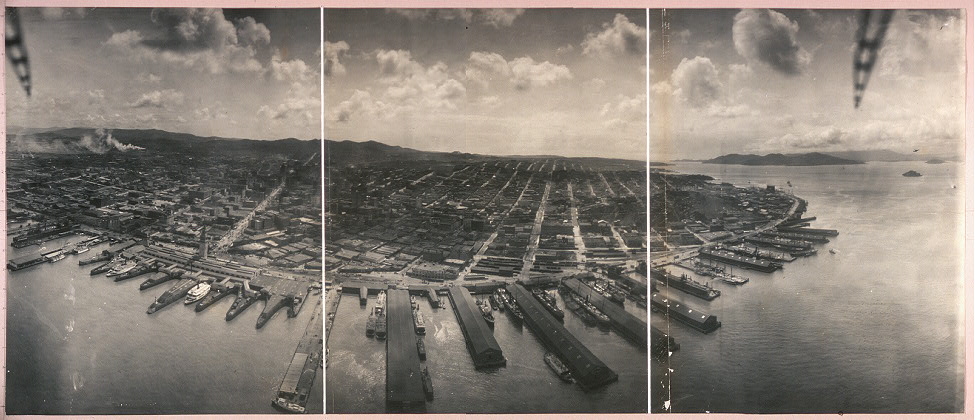
In the late 19th century, an enterprising photographer named George R. Lawrence developed a keen interest in aerial photography. He first began taking pictures with the help of high ladders, towers, and airborne balloons. Later he switched to using unmanned kites, which did the trick. Deploying 17 Conyne kites strung together by piano wire, Lawrence hoisted a hulking, 50 pound camera some 400 to 2,000 feet above the ground and then began capturing views of American cities. Most of these urban centers were growing at a steady clip. But, in his most famous photograph, Lawrence captured San Francisco reeling after the devastation of the 1906 earthquake. (Click the image above to see the leveled city in a larger format.)
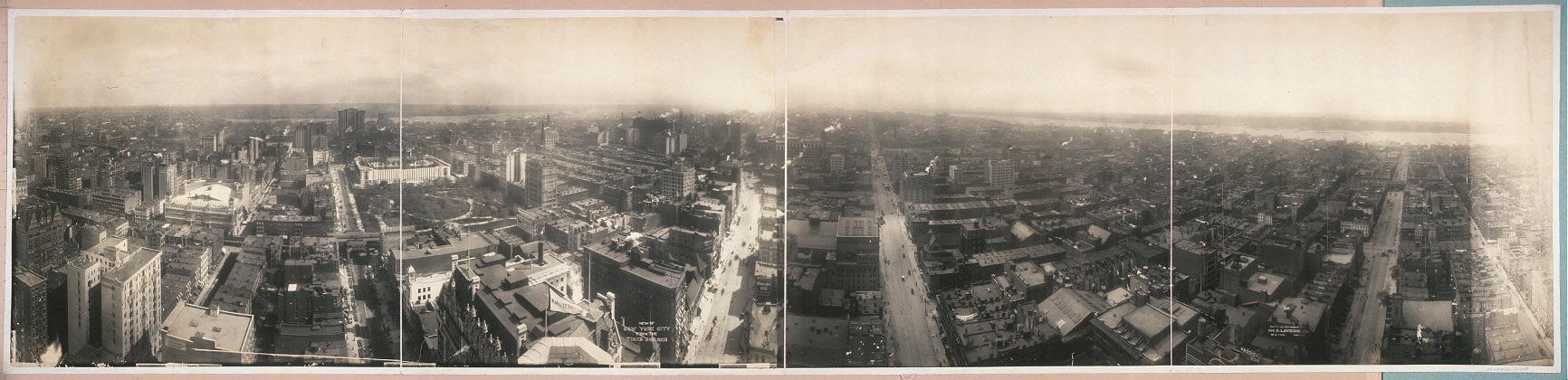
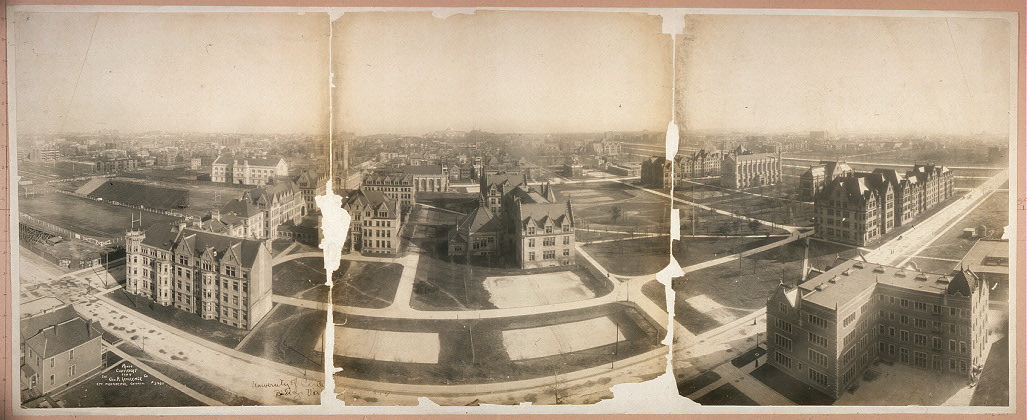
A collection of Lawrence’s panoramic photographs can be viewed over at the Library of Congress web site. The collection includes bird’s-eye views of Manhattan (above) and a more sleepy Brooklyn, not to mention some great Midwestern cities and towns. Below you can see a vintage shot of The University of Chicago campus circa 1904. Or here Evanston’s Northwestern campus in 1907. And let’s not forget this 1908 photo of Madison, WI, where I spent my most formative years some eight decades later.…
via @MatthiasRascher and Daily Mail
Related Content:
The 1906 San Francisco Earthquake: Before and After
Berlin Street Scenes Beautifully Caught on Film (1900–1914)
1927 London Shown in Moving Color
Read More...Japanese Movie Posters of 10 David Lynch Films
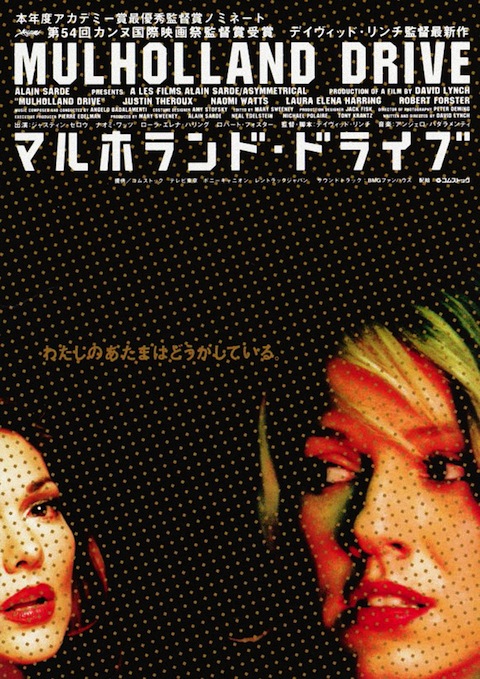
If a Japanese cinephile likes American movies, they probably love David Lynch. I don’t mean to present this as an ironclad rule, but it certainly holds true among my friends. Just as many Americans find something interestingly askew in the fruits of modern Japanese culture, presumably Lynch’s Japanese fans experience his brand of off-kilter Americana — sometimes far off-kilter Americana — just as richly. Observers not particularly familiar with David Lynch have dismissed him as “weird,” just as those not particularly familiar with Japan have dismissed it as “weird.” But those of us familiar with both the filmmaker and the country know that they simply operate on different, and fascinating, sets of sensibilities.
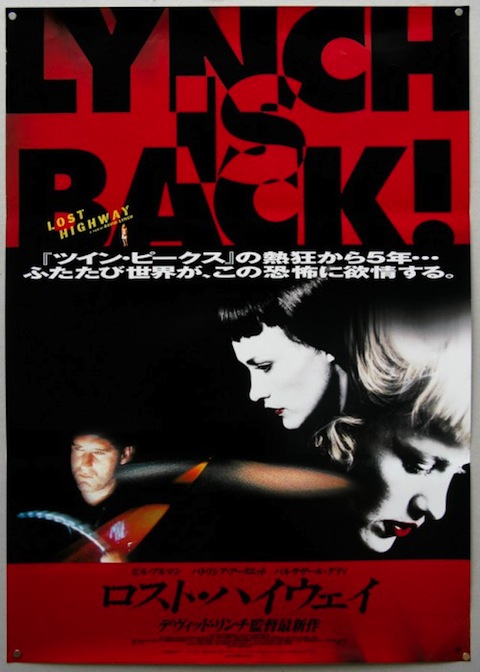
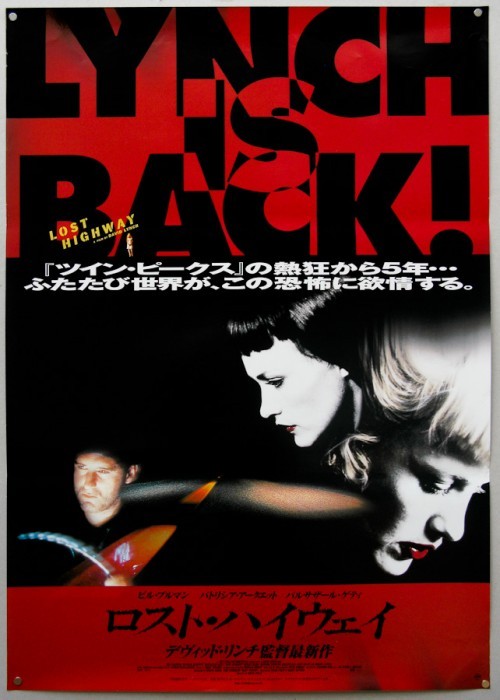
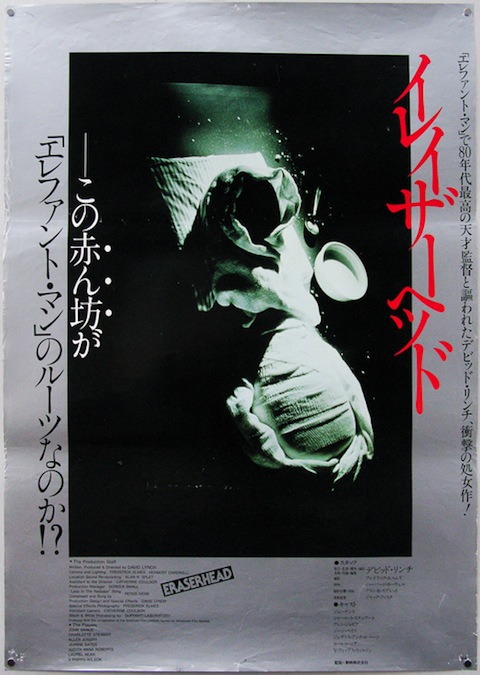
You can see these worlds collide in Biblioklept’s post on Japanese posters advertising David Lynch films. At the top of the post, we have the ominously intriguing one-sheet for Mulholland Drive (or, rendered here in katakana script, “Maruhorando Doraibu”), Lynch’s critically acclaimed 2001 picture that, conceptually, began as a television series to follow up Twin Peaks. “Watashi no atama wa douka shiteiru,” reads the text between the faces of stars Laura Harring and Naomi Watts, which I translate to “Something is the matter with my head” — a viable tagline, come to think of it, for most of Lynch’s works. Just above you’ll find the poster for a personal Lynch favorite, Lost Highway (“Rosuto Haiuei”), clearly also pitched across the Pacific as the director’s mid-nineties comeback. And the chilling nearly abstract image below represents the chilling, abstract movie that started it all, 1977’s Eraserhead — or, Ireizaaheddo:
Related Content:
Eraserhead Stories: David Lynch on the Making of His Famously Nightmarish Movie
David Lynch’s Surreal Commercials
David Lynch in Four Movements: A Video Tribute
Colin Marshall hosts and produces Notebook on Cities and Culture and writes essays on literature, film, cities, Asia, and aesthetics. He’s at work on a book about Los Angeles, A Los Angeles Primer. Follow him on Twitter at @colinmarshall.
Read More...Support Us
We're hoping to rely on loyal readers, rather than erratic ads. Please click the Donate button and support Open Culture. You can use Paypal, Venmo, Patreon, even Crypto! We thank you!

About Us

Open Culture scours the web for the best educational media. We find the free courses and audio books you need, the language lessons & educational videos you want, and plenty of enlightenment in between.
Advertise With Us

FREE UPDATES!
GET OUR DAILY EMAIL
Get the best cultural and educational resources on the web curated for you in a daily email. We never spam. Unsubscribe at any time.
FOLLOW ON SOCIAL MEDIA

Open Culture editor Dan Colman scours the web for the best educational media. He finds the free courses and audio books you need, the language lessons & movies you want, and plenty of enlightenment in between.
Advertise With Us