Watch Free Films by African American Filmmakers in the Criterion Collection … and the New Civil Rights Film, Just Mercy
The Michael B. Jordan- and Jaime Foxx-starring Just Mercy had “the misfortune of hitting theaters at the same time as Clemency, a more daring and better film set on a prison’s Death Row,” wrote Odie Henderson in a December 2019 review at RogerEbert.com. Reading the statement now feels like looking through the wrong end of a telescope (“hitting theaters?”). None of the movie’s middling reviews could have predicted the kinds of misfortunes that lay just around the corner.
If Just Mercy is your kind of distraction, you can watch it free of charge through June. Henderson’s review gives me the impression it may not be equal to the moment.
Since the days of ’50s-era message pictures, the majority of films about African-American suffering have always been calibrated the way “Just Mercy” is, with an eye to not offending White viewers with anything remotely resembling Black anger. We can be beaten, raped, enslaved, shot for no reason by police, victimized by a justice system rigged to disfavor us or any other number of real-world things that can befall us, yet God help us if a character is pissed off about this. Instead, we get to be noble, to hold on to His unchanging hand while that tireless Black lady goes “hmmm-HMMMMM!” on the soundtrack to symbolize our suffering. There’s a lot of “hmmm-HMMMMM”-ing in this movie, so much so that I had to resist laughing.
Only one critic’s opinion, but if such pious, boilerplate films haven’t changed anything since the 50s they probably aren’t about to now.
The Criterion Collection offers a refreshing alternative for representations of the black experience on film, as envisioned by black filmmakers, writers, actors, producers, etc. “This has been a powerfully emotional time,” the Collection writes, citing a string of high-profile, well-documented racist threats and murders that lead up to the breaking point:
Black Lives Matter. The anguish and fury unleashed all across the country are rooted in centuries of dehumanization and death. This pattern must stop. We support the protesters who have taken to the streets to demand justice, and we share their hopes. We are committed to fighting systemic racism.
The Collection has established an “employee-guided fund with a $25,000 initial contribution and an ongoing $5000 monthly commitment to support organizations fighting racism in America.”
More to the point of their central mission, they’re allowing visitors to the Criterion Channel to stream “works by early pioneers of African American Cinema” as well as those by current filmmakers. These are films that can be difficult to find outside of arthouse cinemas and college screening rooms. “Titles streaming for free,” notes IndieWire, “include Julie Dash’s Daughters of the Dust, Maya Angelou’s Down in the Delta, Shirley Clarke’s Portrait of Jason, Agnès Varda’s Black Panthers, Kathleen Collins’ Losing Ground, and many more.”
Also streaming free on the site is “contemporary work by Khalik Allah and Leilah Weinraub; and documentary portraits of the black experience by white filmmakers Les Blank and Shierley Clarke,” Criterion writes, noting that they’ve “taken down the paywall on as many of these titles as we can.”
This announcement will have little effect on people committed to a particularly vicious way of seeing things, but it offers a rare opportunity to watch a diverse collection of enlightening, often bracing, often deeply moving films, stretching over a century, for free. This body of work offers new perspectives on the past and wider understanding of film history. They may just be what you need to get through June. Check out the Criterion Channel collections here.
Related Content:
Watch the Pioneering Films of Oscar Micheaux, America’s First Great African-American Filmmaker
Josh Jones is a writer and musician based in Durham, NC. Follow him at @jdmagness
Read More...When Lucy Lawless Impersonated Stevie Nicks & Imagined Her as the Owner of a Bad Tex-Mex Restaurant: A Cult Classic SNL Skit
What we wouldn’t give to travel back in time to Sedona, Arizona for a non-socially-distanced $2.99 Tuesday night burrito special at Stevie Nicks’ Fajita Roundup, the hundredth best restaurant in this 161-restaurant town according to one ratings site.
Alas, the closest this Fleetwood Mac‑flavored Tex-Mex establishment has ever come to physical existence was in October 1998 when actor Lucy Lawless, famous then as now for playing Xena the Warrior Princess, was hosting Saturday Night Live.
The day before the Wednesday table read to determine which sketches will make it on air, writer Hugh Fink got wind of Lawless’ Stevie Nicks impersonation (she also does a mean Chrissie Hynde…)
Fink thought this was something to build on, inspired by his dad’s Fleetwood Mac fandom, and the fact that Nicks’ star had dimmed a bit since the band’s 70’s heyday, when its members’ interpersonal relations were a hot topic and Rumours, still the 8th best selling album of all time, dominated.
He joined forces with fellow staff writer, Nicks fan Scott Wainio, tarrying ’til the wee hours of Wednesday morning to begin casting about for comic ideas of how the sexy, shawl-draped fairy godmother of rock ‘n’ roll might spend her off duty hours, now that “Lindsay Buckingham and cocaine” were in the rear view.
They decided that having her own a bargain-priced local eatery similar to the ones Fink remembered dining in as a touring stand up was their best bet…and what more fitting locale than New Age mecca Sedona?
Plot-driven SNL skits often peter out en route from a strong opening premise to the ending.
As a commercial parody, Stevie Nicks’ Fajita Roundup has no such trouble.
As Fink recently recalled in an interview with The Ringer’s Dan Devine:
I wanted this commercial to come off as not a classy, nationally produced ad, but clearly a cheap, locally produced commercial for a shitty restaurant and that’s why, even in the script, at the time, I put in those cutaways of, like, really unappealing, bad-looking food with the price, and advertising specials. Comedically, I thought it’d be even funnier if the restaurant was cheap. The research department had to get me photos of the Mexican food, which I would approve. I would tell them, ‘No, I want it to look shittier than that. That looks too good.
The research department definitely delivered. As did New Zealander Lawless, though she lacked the cultural reference points to get the joke, and game as she was, discreetly tried to get producer Lorne Michaels to pull the skit, worried that it was a lead balloon.
It came by its laughs honestly in performance, the audience eating up retooled Fleetwood Mac hits promoting burritos and nachos, but with Youtube some 8 years away, Stevie Nicks’ Fajita Round Up faded into obscurity….
It took a man with vision and a long memory to bring it back.
In 2012, Matthew Amador truffled up the fondly remembered clip and started a Facebook page for the hypothetical restaurant, largely so he could claim it had catered the end-of-year intern-appreciation buffet at the casting agency where he was working.
The first likes came from the dutiful interns, but eventually the page attracted other likeminded fans, who’d caught the original performance over a decade before.
It has since migrated to Twitter, where “Stevie”—the first female double inductee to the Rock & Roll Hall of Fame —is eagerly awaiting reopening while reminding her followers that the Roundup’s tables “have always been a MINIMUM of 6’ apart, giving you a safer dining experience you’ll never forget and giving me plenty of room to twirl depending on the length of my fringe.”
View the full transcript here. And yes, you are correct, that’s Jimmy Fallon at the piano, in his 3rd SNL appearance.
via The Ringer and Metafilter
Related Content:
Ayun Halliday is an author, illustrator, theater maker and Chief Primatologist of the East Village Inky zine. Follow her @AyunHalliday.
Read More...How Jazz Helped Fuel the 1960s Civil Rights Movement
Oh, Lord, don’t let ‘em shoot us!
Oh, Lord, don’t let ‘em stab us!
Oh, Lord, don’t let ‘em tar and feather us!
Oh, Lord, no more swastikas!
Oh, Lord, no more Ku Klux Klan!—Charles Mingus, “Fables of Faubus”
In 1957, Arkansas Governor Orval Faubus decided that integration—mandated three years earlier by Brown v. Board of Ed.—constituted such a state of emergency that he mobilized the National Guard to prevent nine black students from going to school. An outraged Charles Mingus responded with the lyrics to “Fables of Faubus,” a composition that first appeared on his celebrated Mingus Ah Um in 1959.
Those who know the album may be puzzled—there are no lyrics on that recording. Columbia Records, notes Michael Verity, found them “so incendiary that they refused to allow them to be recorded.” Mingus re-recorded the song the following year for Candid Records, “lyrics and all, on Charles Mingus Presents Charles Mingus.” The irascible bassist and bandleader’s words “offer some of the most blatant and harshest critiques of Jim Crow attitudes in all of jazz activism.”
Mingus’ experience with Columbia shows the line most jazz artists had to walk in the early years of the Civil Rights movement. Several of Mingus’ elders, like Louis Armstrong and Duke Ellington, refrained from making public statements about racial injustice, for which they were later harshly criticized.
But between Mingus’ two versions of “Fables of Faubus,” jazz radically broke with older traditions that catered to and depended on white audiences. “’If you don’t like it, don’t listen,’ was the attitude,” as Amiri Baraka wrote in 1962.
Musicians turned inward: they played for each other and for their communities, invented new languages to confound jazz appropriators and carry the music forward on its own terms. Candid Records owner Nat Hentoff, longtime Village Voice jazz critic and columnist, not only issued Mingus’ vocal Faubus protest, but also that same year Max Roach’s We Insist! Freedom Now Suite, which featured a cover photo of a lunch counter protest and performances from his then-wife, singer and activist Abbey Lincoln.
Roach recorded two other albums with prominent Civil Rights themes, Speak Brother Speak in 1962 and Lift Every Voice and Sing in 1971. Jazz’s turn toward the movement was in full swing as the 60s dawned. “Nina Simone sang the incendiary ‘Mississippi Goddam,’” writes KCRW’s Tom Schnabel, “Coltrane performed a sad dirge, ‘Alabama’ to mourn the Birmingham, Alabama church bombing in 1963. Sonny Rollins recorded The Freedom Suite for Riverside Records as a declaration of musical and racial freedom.”
Every Civil Rights generation up to the present has had its songs of sorrow, anger, and celebration. Where gospel guided the early marchers, jazz musicians of the 1960s took it upon themselves to score the movement. Though he didn’t much like to talk about it in interviews, “Coltrane was deeply involved in the civil rights movement,” writes Blank on Blank, “and shared many of Malcolm X’s views on black consciousness and Pan-Africanism, which he incorporated into his music.”
Jazz clubs even became spaces for organizing:
In 1963, CORE—Congress of Racial Equality—organized two benefit shows at the Five Spot Café, [featuring] a host of prominent musicians and music journalists.
In the wake of Dr. King’s “I have a dream” speech at the March on Washington and with the church bombing in Birmingham that killed 4 little girls only the month before, the benefit attracted a host of musicians like Ben Webster, Al Cohn, and Zoot Sims in support of the organization, which, along with the NAACP and SNCC, was one of the leading civil rights groups at the time.
The new jazz, hot or cool, became more deeply expressive of musicians’ individual personalities, and thus of their whole political, social, and spiritual selves. This was no small thing; jazz may have been an American invention, but it was an international phenomenon. Artists in the 60s carried the struggle abroad with music and activism. After a wave of brutal bombings, murders, and beatings, “there were no more sidelines,” writes Ashawnta Jackson at JSTOR Daily. “Jazz musicians, like any other American, had the duty to speak to the world around them.” And the world listened.
The first Berlin Jazz Festival, held in 1964, was introduced with an address by Martin Luther King, Jr. (who did not attend in person). “Jazz is exported to the world,” King wrote, and “much of the power of our Freedom Movement in the United States has come from this music. It has strengthened us with its sweet rhythms when courage began to fail. It has calmed us with its rich harmonies when spirits were down.” Music still plays the same role in today’s struggles. It’s a different sound now, but you’ll still hear Mingus’ verses in the streets, against more waves of hatred and brute force:
Boo! Nazi Fascist supremacists
Boo! Ku Klux Klan (with your Jim Crow plan)
Related Content:
Nina Simone’s Live Performances of Her Poignant Civil Rights Protest Songs
Josh Jones is a writer and musician based in Durham, NC. Follow him at @jdmagness
Read More...The History of the 1918 Flu Pandemic, “The Deadliest Epidemic of All Time”: Three Free Lectures from The Great Courses
In one cascade of events after another, people are finding out the normal they once knew doesn’t exist anymore. Instead it feels as if we’re living through several past crises at once, trying to cram as much historical knowledge as we can to make sense of the moment. 2020 especially feels like an echo of 1918–1919, when the “deadliest epidemic of all time,” as The Great Courses calls the “Spanish flu,” killed millions (then the U.S. devolved into a wave of racist violence.) By offering examples of both negative and positive responses, the history, sociology, and epidemiology of the 1918 flu can guide decision-making as we prepare for a second wave of COVID-19 infections.
The Great Courses started offering free resources on the coronavirus outbreak back in March, with a brief “What You Need to Know” explainer and a free lecture course on infectious diseases. After catching up on the history of epidemics, we’ll find ourselves naturally wondering why we learned little to nothing about the Spanish flu.
The three-part lecture series here, excerpted from the larger course Mysteries of the Microscopic World (available with a Free Trial to the Great Courses Plus), begins by boldly calling this historical lacuna “A Conspiracy of Silence.” Tulane professor Bruce E. Fleury quotes Alfred Crosby, who writes in America’s Forgotten Pandemic, “the important and almost incomprehensible fact about the Spanish influenza, is that it killed millions upon millions of people in a year or less… and yet, it has never inspired awe, not in 1918 and not since.”
Epidemic diseases that have had tremendous impact in the past have become the subject of literary epics. Few epidemics have accomplished mass death “through sheer brute force” like the 1918 flu. The numbers are truly staggering, in the tens to hundreds of millions worldwide, with U.S. deaths dwarfing the combined casualties of all the country’s major wars. Yet there are only a few mentions of the flu in American literature from the time. Fleury mentions some reasons for the amnesia: WWI “took center stage,” survivors were too traumatized to want to remember. We may still wonder why we should look back over 100 years ago and learn about the past when current events are so all-consuming.
“History compels us not to look away,” professor Fleury says, “lest we fail to learn the lessons paid for by our parents and our grandparents.” Faulkner, it seems, was right that the past is never past. But we need not respond in the same failed ways each time. The ability to study and learn from history gives us critical perspective in perilous, uncertain times.
Sign up here for a free trial to the Great Courses Plus now rebranded as Wondrium.
Related Content:
Spanish Flu: A Warning from History
Louis Armstrong Remembers How He Survived the 1918 Flu Epidemic in New Orleans
Josh Jones is a writer and musician based in Durham, NC. Follow him at @jdmagness
Read More...An Introduction to the Sublime, Entrepreneurial Art of Christo & Jeanne-Claude (Courtesy of Alain de Botton’s School of Life)
Of all the work that made Christo and Jeanne-Claude the most famous installation artists of the past fifty years, none still exists. If you wanted to see the Reichstag wrapped in silver fabric, you’d have to have been in Berlin in the summer of 1995. If you wanted to see Central Park threaded with Shinto shrine-style gates, you’d have to have been in New York in the winter of 2005. If you wanted to see an enormous Mesopotamian mastaba made out of 7,506 oil barrels, you’d have to have been in London in the summer of 2018. Though often celebrated for its “ephemeral” nature, Christo and Jeanne-Claude’s art necessitated a formidable amount of political, organizational, logistical, and manual work to pull it off — and in that contrast lies its sublimity.
“To operate realistically on a large scale, they needed to deploy many of the skills traditionally associated with business and which we think of as the domain of the entrepreneur,” says the article on Christo and Jeanne-Claude at The Book of Life, a product of Alain de Botton’s School of Life. The two “had to negotiate with city councils and governments; they had to draw up business plans, arrange large scale finance, employ the talents and time of hundreds even thousands of people, coordinate vast efforts and deal with millions of users or visitors. And all the while, they held on to the high ambitions associated with being an artist.” What’s more, since the couple never took grants or public money of any kind, they had to turn enough of a profit from each project to finance the next, even more majestic (and to some, foolhardy) one.
You can see more of Christo and Jeanne-Claude’s projects, and footage of those projects under construction, in the School of Life video at the top of the post. It also shows Christo creating the preparatory materials that made their work possible, not only in that they presented the visions of the wrapped-up pieces of infrastructure or valleys full of umbrellas to come, but that the sale of the plans and drawings financed the process of making those visions real. All this in the service of what Jeanne-Claude, who died in 2009, called “works of art of joy beauty,” and through Christo departed the realm of existence himself last Sunday, the rest of us have another such work to look forward to: L’Arc de Triomphe, Wrapped. Based on an idea that came to Christo when he and Jeanne-Claude lived in Paris in the late 1950s and early 60s (and recently delayed one more year due to the coronavirus pandemic), it will provide more than reason enough to be in Paris in the fall of 2021.
Related Content:
How the Visionary Artist Christo (RIP) Changed the Way We See the World
Climate Change Gets Strikingly Visualized by a Scottish Art Installation
Pi in the Sky: The World’s Largest Ephemeral Art Installation over Beautiful San Francisco
This Huge Crashing Wave in a Seoul Aquarium Is Actually a Gigantic Optical Illusion
Alain de Botton Shows How Art Can Answer Life’s Big Questions in Art as Therapy
Based in Seoul, Colin Marshall writes and broadcasts on cities, language, and culture. His projects include the book The Stateless City: a Walk through 21st-Century Los Angeles and the video series The City in Cinema. Follow him on Twitter at @colinmarshall, on Facebook, or on Instagram.
Read More...Watch Martin Scorsese’s Brand New Short Film, Made Entirely in His Office Under Quarantine
— Ian Mantgani (@mant_a_tangi) May 28, 2020
Most who saw the last feature by Martin Scorsese, 2019’s The Irishman, saw it at home. That had to do with the fact that the budget came from Netflix, which surely aimed to get its not inconsiderable money’s worth by offering the film on its own streaming service as soon as possible. If The Irishman’s financing and distribution was a sign of the times, Scorsese’s new short is even more so: shot on a smartphone by the famed director himself, it recently premiered on Mary Beard’s BBC special about “lockdown culture.” Seeing as the coronavirus isn’t known to spare famous auteurs — and indeed does seem disproportionately to harm individuals over age 70 — Scorsese has spent a great deal of time at home over the past few months. But like all true creators, he hasn’t stopped doing what he does.
“Been quite a while, now, that I’ve been quarantined,” says Scorsese, turning his camera away from a screening of Alfred Hitchcock’s The Wrong Man on his office wall. “We had been working so hard on so many different projects, and things were spinning and spinning and spinning, and suddenly there was a crash. And a stop.” At first, “there was a day or so of a kind of relief. I didn’t have to go anywhere or do anything. I mean, I had to do everything, but I didn’t have to do it then.” Then, “the anxiety set in.” But as time passed, and as he truly felt that time passing, “a sense of relief settled in. And a real sense of freedom, because you can’t do anything else. I don’t know how much longer I’m going to be in this room. I don’t know when we’re going to be able to actually start production in this film.”
By “this film” Scorsese means Killers of the Flower Moon, a $200 million true-crime Western set in 1920s Oklahoma that will bring Leonardo DiCaprio and Robert De Niro, the director’s leading men of choice, together in a Scorsese feature for the first time. As a joint production between Apple and Paramount, notes the Observer’s Brandon Katz, the picture “will receive all the necessary funding it needs while still receiving a worldwide theatrical rollout,” but the question of when its shoot can start — and indeed, when moviegoers will return to theaters — remains open. “I do know that, given the grace of time and life, we will be in production somehow,” says Scorsese in his lockdown short, after a few shots of the memorabilia on his shelves.
Toward the end of this personal dispatch, Scorsese remembers his final conversation with the Iranian filmmaker Abbas Kiarostami. “We were at a dinner in Lyon a few years ago and he looked at me and said, ‘Don’t do anything you don’t want to do.’ He knew. He understood. One can’t depend on time. One doesn’t know. Ultimately that time has to be worth it, even if it’s just existing. Even if it’s just being alive, breathing — if you can, under these circumstances.” But as we’ve all learned, circumstances can change, and suddenly; it falls to us only to make best use of the situation in which we find ourselves. To underscore that last truth, Scorsese characteristically cites a classic American movie. Though our lives may be restricted, as we see in Robert Siodmak’s Hemingway adaptation The Killers, nothing’s stopping us from keeping our eyes on the stars.
Related Content:
The Filmmaking of Martin Scorsese Demystified in 6 Video Essays
How Martin Scorsese Directs a Movie: The Techniques Behind Taxi Driver, Raging Bull, and More
Martin Scorsese Explains the Difference Between Cinema and Movies
Martin Scorsese’s Very First Films: Three Imaginative Short Works
Based in Seoul, Colin Marshall writes and broadcasts on cities, language, and culture. His projects include the book The Stateless City: a Walk through 21st-Century Los Angeles and the video series The City in Cinema. Follow him on Twitter at @colinmarshall, on Facebook, or on Instagram.
Read More...Spike Lee Debuts the Short Film “3 Brothers”: A Remake of Do the Right Thing for Our Dark Times
When beloved actor Bill Nunn died in September of 2016, two months before the election, his passing felt prophetic of more bad things to come. Best known as the boombox-toting, ultimate Public Enemy fan Radio Raheem in Spike Lee’s 1989 film Do the Right Thing, Nunn’s character is murdered by a gang of cops, who put him in a chokehold and suffocate him. At the time, Raheem’s death was a fictional restatement of what had come before, as Lee explains above in the 30th anniversary commentary on the film.
“I’m renaming this ‘Anatomy of a Murder,’” he says, explaining how he based the scene of Raheem’s death on the 1983 killing of graffiti artist Michael Stewart, who was strangled by 11 NYC transit officers. “The things that are happening in this film,” he says, “are still relevant today.” Lee then references the death of Eric Garner, killed in exactly the same way as Raheem. Now we have seen the murder of George Floyd, asphyxiated with a knee to the neck. These on-camera killings are traumatic, but Lee has not shied away from the power of documentary images.
He reclaimed his place as a big-budget interpreter of American racism with BlackkKlansman, a fictionalized film that ends with extremely hard-to-watch (especially for those who were there) real footage of the murder of anti-racist activist Heather Heyer in Charlottesville. Lee faced a good deal of criticism over the use of this video, but he has again taken real-life footage of racially-motivated killings, this time by the police, and cut them together with fiction, editing together the death of Raheem with the deaths of Garner and Floyd.
3 Brothers-Radio Raheem, Eric Garner And George Floyd. pic.twitter.com/EB0cXQELzE
— Spike Lee (@SpikeLeeJoint) June 1, 2020
Calling the short “3 Brothers,” he opens with the question, “Will History Stop Repeating Itself?” Lee Debuted the film on the CNN special “I Can’t Breathe: Black Men Living & Dying in America.” The cumulative effects of history are critical to understanding the moment we are in, he says. The rage and protest on streets around the world are not a reaction to a single event—they are a confrontation with hundreds of years of violent control over black bodies, a state of affairs always including murder with impunity. “The attack on black bodies has been here from the get-go,” Lee says.
Lee’s short is hard to watch, and I don’t blame anyone who never wants to see this footage again (I don’t). The murders of individual, unarmed black men by groups of officers take on an eerie monotony in their sameness over time. “The killings caught on camera,” writes historian Robert Greene II, “offer a disturbing reminder of the numerous photographs of lynchings dispersed throughout the nation in the early twentieth century. Some were catalogued by the NAACP and displayed as examples of American brutality and barbarism. Others, however, were featured on postcards and sent to white Americans throughout the country, small trinkets of white terror.”
This chilling history gives rise to an understandable ambivalence about sharing videos of police killings. Are these evidence of barbarous injustice or racist snuff films running on an endless loop? As in the lynching photographs, it depends on the audience and the context in which the videos are shown. But when Spike Lee made Do the Right Thing—pre-Rodney King and cell phone cameras—hardly anyone outside of heavily policed black neighborhoods witnessed firsthand the kind of brutality that is now so depressingly familiar in our newsfeeds.
The death of Radio Raheem was shocking to audiences, as it was devastating to the characters and remains, for those who grew up with the film, a moving cinematic touchstone of the time. It is truly heartbreaking and enraging that such scenes have become common currency on social media, instead of historic examples of the brutality of the past—a story, as one person wrote of the 1968 police killing of poet Henry Dumas, of “generations of lost potential.”
via Boing Boing
Related Content:
Spike Lee Shares His NYU Teaching List of 87 Essential Films Every Aspiring Director Should See
How Spike Lee Got His First Big Break: From She’s Gotta Have It to That Iconic Air Jordan Ad
Spike Lee Directs, “Wake Up,” a Five-Minute Campaign Film for Bernie Sanders
Gil Scott-Heron Spells Out Why “The Revolution Will Not Be Televised”
Josh Jones is a writer and musician based in Durham, NC. Follow him at @jdmagness
Read More...Why Should We Read Melville’s Moby-Dick? A TED-Ed Animation Makes the Case
Herman Melville’s Moby-Dick is a major 19th epic and a “Great American Novel” that routinely appears on best-of-all-time lists next to Homer and Dante. This grand literary judgment descends from early 20th century critics who rescued the novel from obscurity after decades of scorn and neglect. When the book first appeared in 1851, no one knew what to make of Melville’s cosmic whaling revenge tale. Reviews were highly mixed, sales dismal, the book flopped.
This Moby-Dick revival happened to coincide with a period of modernist experimentation with narrative structure in the work of writers like James Joyce and Virginia Woolf. Suddenly, Moby-Dick didn’t seem so strange anymore. More like a brilliant, proto-modernist tragedy. But if you expect straightforward seafaring adventure, as the animated TED-Ed lesson above by Sascha Morrell points out, it’s a hard slog. The exhaustive lessons on whales and whaling, chapter-length soliloquies, language so dense, colorful, and allusive.… Leonard Woolf became so frustrated in a 1929 review, he called the book’s prose “the most execrable English.”
Melville wrote bad sentences, Woolf pronounced. “His second greatest vice is rant or rhetoric…. I cannot see the slightest point in this kind of bombast, and, when it raves on for page after page, I almost pitch the book into the waste-paper basket and swear that I will not read another line, however many people vouch for the author’s genius.” This contrarianism sounds an awful like Virginia Woolf’s take on Joyce’s Ulysses. Like that book, Moby-Dick inspires widespread guilt among those who have been told they should read it, but who can’t bring themselves to finish or even begin.
Who was right: Melville’s early critics and readers (and Leonard Woolf)? Or the millions who have since seen in the novel something profound and prophetic, though no one can say exactly what that is? Why should we read Moby-Dick? For many, many reasons, but most of all the language. The word “rich” doesn’t begin to describe the layering of images: “A mountain separating two lakes,” Morrell says in a striking example, “a room papered floor to ceiling with bridal satins, the lid of an immense snuff box. These seemingly unrelated images take us on a tour of a sperm whale’s head.”
The symbols themselves invite us into other cryptic allegories. Chapter 99, “The Doubloon,” competes with Achilles’ shield in The Iliad for metaphoric density, yet like a modernist novel, it fragments into multiple perspectives, each one examining ideas of currency, conquest, myth, ritual, etc., as Ahab bullies and provokes the crew into interpreting a coin nailed to the Pequod’s mast.
If the White Whale be raised, it must be in a month and a day, when the sun stands in some one of these signs. I’ve studied signs, and know their marks; they were taught me two score years ago, by the old witch in Copenhagen. Now, in what sign will the sun then be? The horse-shoe sign; for there it is, right opposite the gold. And what’s the horse-shoe sign? The lion is the horse-shoe sign- the roaring and devouring lion. Ship, old ship! my old head shakes to think of thee.
What Woolf saw as excessive bombast seems to me more like form mirroring function. Melville writes sentences that must echo over the squalls and talk through maddening lulls that bring on strange hallucinations. Like Joyce’s, his language mirrors the discursive tics of Ahab and Ishmael’s modes of thought—nautical, theological, political, sociological, mythic, historic, naturalist, symbolist: explorations into a bloody, cruel, ecologically devastating enterprise that drives its demented captain—violently obsessed with a great white beast that has crippled and enraged him—to wreck the ship and kill everyone aboard except our narrator.
Learn about Melville and Moby-Dick in the additional resources at the TED-Ed lesson page.
Related Content:
Hear Moby Dick Read in Its Entirety by Tilda Swinton, Stephen Fry, John Waters & Others
An Illustration of Every Page of Herman Melville’s Moby Dick
A View From the Room Where Melville Wrote Moby Dick (Plus a Free Celebrity Reading of the Novel)
Josh Jones is a writer and musician based in Durham, NC. Follow him at @jdmagness
Read More...What Is a “Casual Game?” Pretty Much Pop: A Culture Podcast #46 Talks to Nick Fortugno, Creator of “Diner Dash”
Famed game designer Nick joins your hosts Mark Linsenmayer, Erica Spyres, and Brian Hirt to consider fundamental questions about the activity of gaming (Nick calls games “arbitrary limits on meaningless goals”) and what constitutes a casual game: Is it one that’s easy (maybe not easy to win, but at least you don’t die), one meant to be played in short bursts, or maybe one with a certain kind of art style, or just about any game that runs on a phone? Nick’s most famous creation is the casual Diner Dash, which can be very stressful. Vastly different games from very hard but very short action games and very involved but soothing strategy games get lumped under this one label.
Our conversation touches on everything from crosswords to Super Meat Boy, plus the relation between psychology and game design, whether casual games really play less than hardcore gamers, the stigma of an activity that was for marketing reasons at one point branded as being just for adolescent boys, and even heuristics for beating slot machines.
Some sources we looked at include:
- Wikipedia on casual games
- “Casual Games, Time Management, and the Work of Affect” by Aubrey Anable
- “Hyper Casual Game: Mobile Gaming’s Newest Genre” by Matija Hanicar
- “The Rise of Casual Gaming” by Niraj Chokshi
- “Popcap: The 10 Secrets of Casual Game Design” by Keith Stuart
- “Gaming Conceptz: Casual Games for Casual Players” by Vince Vader
- Casual Game Insider Magazine
Just so you don’t have to write them down, our recommendations at the end were:
- Nick: Candy Box!, Dicey Dungeons, Codenames, Super Hexagon
- Erica: A Fisherman’s Tale
- Brian: Two Dots
- Mark: Feeding Frenzy (which is different from Insaniquarium where fish poop coins that Nick I think is referring to)
You can follow Nick @nickfortugno.
Learn more at prettymuchpop.com. This episode includes bonus discussion that you can only hear by supporting the podcast at patreon.com/prettymuchpop. This podcast is part of the Partially Examined Life podcast network.
Pretty Much Pop: A Culture Podcast is the first podcast curated by Open Culture. Browse all Pretty Much Pop posts or start with the first episode.
Read More...When Al Capone Opened a Soup Kitchen During the Great Depression: Another Side of the Legendary Mobster’s Operation
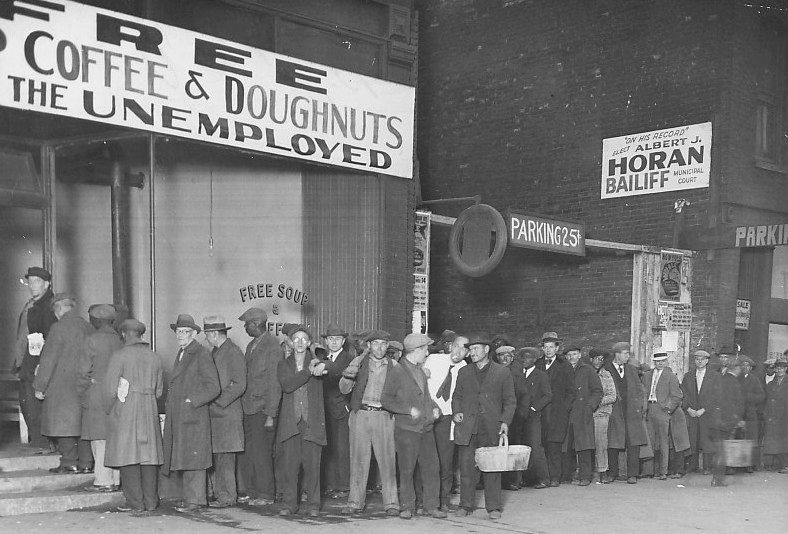
In response to the words “American gangster,” one name comes to mind before all others: Al Capone. (Apologies to Ridley Scott.) Though few Americans could now describe the full scope of his empire’s criminal activities, many know that he grew that empire bootlegging during Prohibition and that he was eventually brought down on the relatively mild charge of tax evasion. A media spectacle by the standards of the day, the trial that convicted Capone in 1931 was in some sense the natural last act of his publicity-commanding career. Most Caponeologists place the beginning of the mob boss’ fall at the 1929 “Saint Valentine’s Day Massacre” of seven of Capone’s rivals. Later that year came the stock market crash that set off the Great Depression, which offered Chicago’s “Public Enemy No. 1” one last chance to win back that public’s favor.
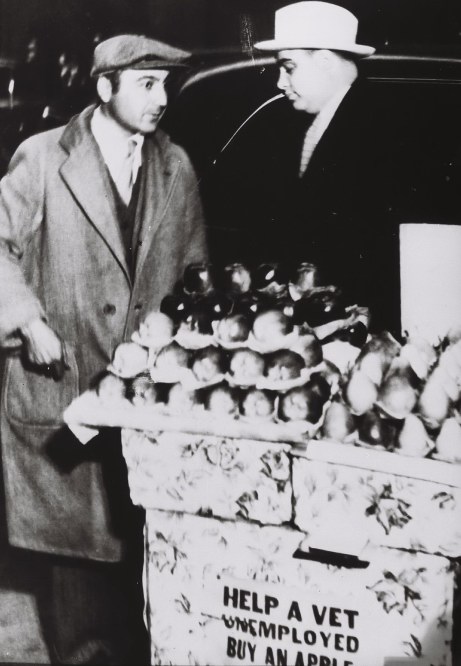
Having long traded on a Robin Hood-esque image, Capone opened a soup kitchen in his home base of Chicago to serve the unfortunates suddenly dispossessed by the devastated American economy. “Capone’s soup kitchen served breakfast, lunch and dinner to an average of 2,200 Chicagoans every day,” writes History.com’s Christopher Klein. “Inside the soup kitchen, smiling women in white aprons served up coffee and sweet rolls for breakfast, soup and bread for lunch and soup, coffee and bread for dinner. No second helpings were denied. No questions were asked, and no one was asked to prove their need.”
Capone’s willingness to satisfy human needs and desires outside the law kept him rich, and thus more than able to run such an operation, even as the Depression set in; still, he “may not have paid a dime for the soup kitchen, relying instead on his criminal tendencies to stockpile his charitable endeavor by extorting and bribing businesses to donate goods.”
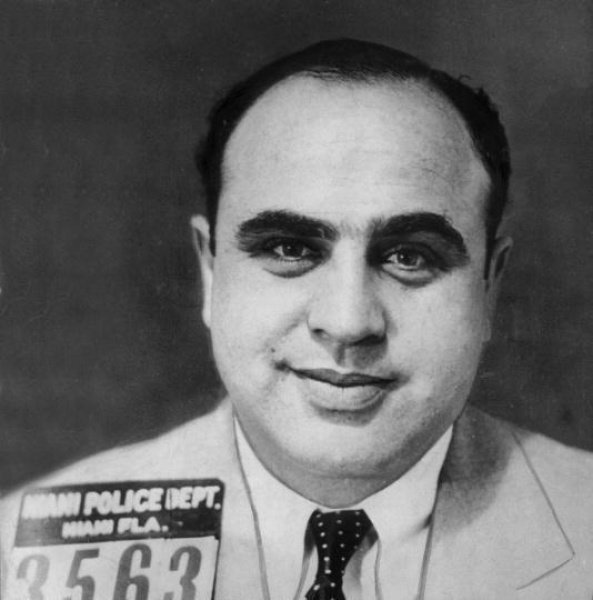
Capone’s soup kitchen may have helped keep Chicago fed, but it could only do so much to clean up his deteriorating public image, associated as it had become with smuggling, extortion, and violence. “Capone’s soup kitchen closed abruptly in April 1932,” writes Mental Floss’ Shoshi Parks. “The proprietors claimed that the kitchen was no longer needed because the economy was picking up, even though the number of unemployed across the country had increased by 4 million between 1931 and 1932.” Two months later, “Capone was indicted on 22 counts of income tax evasion; the charges that eventually landed him in San Francisco’s Alcatraz Federal Penitentiary. Though Capone vowed to reopen his soup kitchen during his trial, its doors stayed shut.” You can learn more about Capone’s soup kitchen at My Al Capone Museum and The Vintage News, and even visit its location at 935 South State Street today — though you won’t find any operation more ambitious than a parking lot.
via Mental Floss
Related Content:
A Map of Chicago’s Gangland: A Cheeky, Cartographic Look at Al Capone’s World (1931)
Yale Presents an Archive of 170,000 Photographs Documenting the Great Depression
1,600 Rare Color Photographs Depict Life in the U.S During the Great Depression & World War II
Confidence: The Cartoon That Helped America Get Through the Great Depression (1933)
What Prisoners Ate at Alcatraz in 1946: A Vintage Prison Menu
New Archive Presents The Chicagoan, Chicago’s Jazz-Age Answer to The New Yorker (1926 to 1935)
Based in Seoul, Colin Marshall writes and broadcasts on cities, language, and culture. His projects include the book The Stateless City: a Walk through 21st-Century Los Angeles and the video series The City in Cinema. Follow him on Twitter at @colinmarshall, on Facebook, or on Instagram.
Read More...Support Us
We're hoping to rely on loyal readers, rather than erratic ads. Please click the Donate button and support Open Culture. You can use Paypal, Venmo, Patreon, even Crypto! We thank you!

About Us

Open Culture scours the web for the best educational media. We find the free courses and audio books you need, the language lessons & educational videos you want, and plenty of enlightenment in between.
Advertise With Us

FREE UPDATES!
GET OUR DAILY EMAIL
Get the best cultural and educational resources on the web curated for you in a daily email. We never spam. Unsubscribe at any time.
FOLLOW ON SOCIAL MEDIA

Open Culture editor Dan Colman scours the web for the best educational media. He finds the free courses and audio books you need, the language lessons & movies you want, and plenty of enlightenment in between.
Advertise With Us

