Imagining the Martin Luther King and Malcolm X Debate That Never Happened
American history as it’s usually taught likes to focus on rivalries, and there are many involving big personalities and major historical stakes. Abraham Lincoln and Stephen Douglas, Thomas Jefferson and Alexander Hamilton, W.E.B. DuBois and Booker T. Washington. These figures are set up to represent the “both sides” we expect of every political question. While the issues are oversimplified (there are always more than two sides and politics isn’t a sport) the figures in question genuinely represented very different perspectives on power and progress.
When it comes to the history of the Civil Rights movement, we are given another such rivalry, between Martin Luther King, Jr. and Malcolm X. Their ideas and influence are pitted against each other as though they had shared a debate stage. In fact, the two leaders met only once, during Senate debates on the Civil Rights Act of 1964. “King was stepping out of a news conference,” writes DeNeen L. Brown at The Washington Post, when Malcolm X, dressed in an elegant black overcoat and wearing his signature horn-rimmed glasses, greeted him.”
“Well, Malcolm, good to see you,” King said.
“Good to see you,” Malcolm X replied.
Cameras clicked as the two men walked down the Senate hall together.
“I’m throwing myself into the heart of the civil rights struggle,” Malcolm X told King.
Later, King would express his disagreement with Malcolm’s “political and philosophical views—at least insofar as I understand where he now stands.” The comment allowed for an evolution in X’s thought that would, in fact, occur that year, while later events would push King in a far more radical direction. As Brown writes:
Although the two men held what appeared to be diametrically opposing views on the struggle for equal rights, scholars say by the end of their lives their ideologies were evolving. King was becoming more militant in his views of economic justice for black people and more vocal in his criticism of the Vietnam War. Malcolm X, who had broken with the Nation of Islam, had dramatically changed his views on race during his 1964 pilgrimage to Mecca.
“Much of America did not know the radical King—and too few know today,” writes Cornell West in his introduction to The Radical King, a collection of lesser-known speeches and writings. But “the FBI and US government did. They called him ‘the most dangerous man in America.’” Malcolm X’s extremely harsh criticism of King as “a 20th-century or modern Uncle Tom” is even more unfair and unwarranted against this background, especially given the title of King’s final, undelivered, sermon: “Why America May Go to Hell.”
In the years after X’s death, King fought for labor rights and advocated for “a better distribution of wealth,” writing in 1966, “America must move toward democratic socialism.” His anti-imperialist, anti-colonial stance alienated many former supporters and enraged the government, but “he refused to silence his voice in his quest for unarmed truth and unconditional love,” West writes. Maybe Malcolm’s unrelenting criticisms played a part in King’s radicalization.
The video “debate” above—actually a 9‑minute edit of their interview discussions of each other—begins with one of Malcolm X’s withering statements about King’s nonviolent resistance, which he characterizes as “defenselessness.” One can see, given the ad hominem attacks, why King refused requests for a debate. Had it happened, however, it might have gone something like this, with questions focused solely on violence vs. nonviolence as effective and/or morally justifiable tactics for the Civil Rights struggle.
The nuances and sickening historical ironies of the question get lost when disagreement is staged as a zero-sum prizefight, as the Rocky theme in the intro not-so-subtly suggests it is. King, X, and virtually every other civil rights leader throughout history, understood the practical importance of self-defense in a violently racist state. “Even the pacifist King was a firm advocate of black gun ownership,” writes John Merfield at Wisconsin Public Radio,” although he, like others, drew a sharp distinction between self-defense, which he saw as legitimate, and political violence, which he called folly.”
King also staunchly refused to address the question of violence outside the larger question of justice, without which, he said, there could be no peace. Movement leaders like Angela Davis who carried forward the radical, anti-imperialist analysis of both the later King and X would continue to push against the simplistic question of whether violence is justified as a response to brutal oppression. In a famous interview clip above, she demonstrates the absurdity of the idea that people subjected to racial terrorism by the authorities and groups protected by them should have to answer charges of committing political violence.
The history of racist killings is a long “unbroken line,” said Davis more recently during the Ferguson uprising. While Civil Rights leaders of the 20th century may have disagreed about the right response, all of them agreed it had to end immediately if the country is to survive and the promise of true freedom to be realized.
Related Content:
Watch Malcolm X Debate at Oxford, Quoting Lines from Shakespeare’s Hamlet (1964)
Josh Jones is a writer and musician based in Durham, NC. Follow him at @jdmagness
Read More...An Anti-Racist Reading List: 20 Books Recommended by Open Culture Readers
You may have received an email from your favorite online retailer, your boss, university president, or the CEO of your bank: “It has come to our attention that racism is real, and it is really, really bad.” Opportunism is real too, but a significant number of individuals seem to have finally drawn the same conclusion and feel morally compelled to do something about an epidemic that has—very discriminately—killed tens of thousands of black, indigenous, and people of color in the U.S. through the unequal distribution of medical resources, and dozens more at the hands of the police and racist vigilantes. That’s only in the past three months.
But racism isn’t new; the current conflict has been on its way for a very long time. How long? Anti-racist scholar and activist Ibram X. Kendi, author of the National Book Award-Winning Stamped from the Beginning, would say from the country’s earliest settlement and enslavement of African people. “For nearly six centuries,” he writes, “antiracist ideas have been pitted against two kinds of racist ideas: segregationist and assimilationist,” Kendi wrote during the protests in Ferguson and other U.S. cities. At the time, antiracists were largely characterized in mainstream media as fringe agitators, naïve Gen‑Z neophytes, and possible foreign agents, not “real Americans.”
How things have changed in six years. Antiracism has become a default position, all of a sudden, for perhaps the first time in U.S. history, so much so that every company and institution has issued some sort of statement in support of Black Lives Matter, and everyone is collecting and sharing Anti-Racist Reading Lists, nearly all of which contain Kendi’s follow-up book, last year’s How to Be an Anti-Racist (which he discusses above with Brené Brown). How long this will last is anyone’s guess, but it is without a doubt a cultural sea change a long time in the making.
Kendi and White Fragility author Robin DiAngelo are the “mac daddies of the bunch” of recent antiracist authors, Lauren Michele Jackson writes at Vulture, and it’s become a crowded field as more and more Americans attempt to come to grips with a national history many of them are learning for the first time. As Kendi and Pulitzer Prize-winning journalist Nikole Hannah-Jones, creator of the 1619 project, discuss on Chris Hayes’ podcast at the top, the country’s past as it is taught to us and as it happened are two entirely different things. Antiracism has always recognized the vicious, ceaseless murder, disenfranchisement, and ransacking of black and brown people, and has pushed against the narratives that deny or excuse these acts.
Carol Anderson, author of White Rage, has given us one of the most raw, compelling, and exhaustively researched accounts of the violence of Reconstruction and the lynchings of the early 20th century. Above, she links the murder of 25-year-old Ahmaud Arbery and recent police killings to the shockingly brutal racism that followed the Civil War. Anderson’s book also routinely appears on suggested reading lists, and well it should. All of these scholars and authors have produced accessible work full of histories one might previously have only encountered in graduate-level college and university courses. It is essential information for people committed to overturning racist systems, which is exactly why it has been left out of the textbooks.
For all the urgency of education, the anti-racist booklist is an ambiguous kind of currency. Jackson wonders what function it serves, exactly. Reading lists can be an erudite brush-off, a polite way of saying, “go away and read a book.” They can be a way to signal mastery and work for online merit badges rather than real beneficial action. They can “feel good to solicit, good to mete out, but someone at some point has to get down to the business of reading. And there, between giving and receiving, lies a great gulf. No one can quite account for what happens. Reading, hopefully, but you never can be sure.”
Jackson’s critique of the anti-racist reading list is worth reading before engaging with lists of books, recent and historical, that oppose racist ideas, policies, and systems. What are we looking for in such lists? And can we really make good use of them? She makes a case for why fiction, poetry, and drama should not appear, since they deserve the status of art, not as instrumental works of social change. “It is unfair,” Jackson writes, “to beg other literature and other authors, many of them dead, to do this sort of work for someone,” when the work they set out to do is primarily creative. Ignoring genre “reinforces an already pernicious literary divide that books written by or about minorities are for educational purposes” only.
Despite many potential blind spots, despite the fact that “our customarily wan attention spans have been decimated” by pandemic and protest, the reading “has to get done,” Jackson wearily admits. Anti-racist booklists must circulate. And readers must make critical judgments about which books to read and what to take away from them, since we’re given the equivalent of a syllabus without a class or an instructor. We trust that our readers can find their way and will make a good faith effort to do the reading. There won’t be a graded exam; the test is far more consequential than that.
We solicited an anti-racist reading list on Twitter and chose the books below submitted by our readers. Since there’s no such thing as a definitive list, and different kinds of readers have different needs, we include other collections of readings lists here, including “41 Children’s Books to Support Conversations on Race, Racism, and Resistance.” You’ll find an anti-racist reading list on Twitter, here, compiled by doctoral researcher Victoria Alexander, and a list on LinkedIn entitled “Why White People Stay Silent on Racism, and What to Read First,” from organizational psychologist Adam Grant.
If this is overwhelming but you feel you must start to engage with the history and theory of anti-racism, don’t despair or buy a pile of books you know you can’t read right now. All of the most prominent anti-racist authors have been in high demand for interviews. “There are snappier places to glean the long-story-short of America, like podcasts, if it took someone this long to care,” writes Jackson, or if, like so many millions of other stressed out, angry, grieving, out-of-work Americans, you’re simply too burned out to crack another book. But if you’re willing and able to dig in, see our reader-submitted list below and suggest other titles you’d recommend in the comments. If you prefer audiobooks, many of these texts also exist as audiobooks on Audible. Get details on Audible’s free trial here.
Between the World and Me—Ta-Nehisi Coates: Hailed by Toni Morrison as “required reading,” a bold and personal literary exploration of America’s racial history by “the most important essayist in a generation and a writer who changed the national political conversation about race” (Rolling Stone)
Biased: Uncovering the Hidden Prejudice That Shapes What We See, Think, and Do—Jennifer L. Eberhardt PhD: How do we talk about bias? How do we address racial disparities and inequities? What role do our institutions play in creating, maintaining, and magnifying those inequities? What role do we play? With a perspective that is at once scientific, investigative, and informed by personal experience, Dr. Jennifer Eberhardt offers us the language and courage we need to face one of the biggest and most troubling issues of our time. She exposes racial bias at all levels of society—in our neighborhoods, schools, workplaces, and criminal justice system. Yet she also offers us tools to address it.
Black Like Me—John Howard Griffin: The history-making classic about crossing the line in America’s segregated south. The Atlanta Journal & Constitution calls it “One of the deepest, most penetrating documents yet set down on the racial question.”
How To Be An Antiracist — Ibram X. Kendi: “What do you do after you have written Stamped From the Beginning, an award-winning history of racist ideas? … If you’re Ibram X. Kendi, you craft another stunner of a book.… What emerges from these insights is the most courageous book to date on the problem of race in the Western mind, a confessional of self-examination that may, in fact, be our best chance to free ourselves from our national nightmare.”—The New York Times
I Can’t Breathe: A Killing on Bay Street—Matt Tiabbi: A work of riveting literary journalism that explores the roots and repercussions of the infamous killing of Eric Garner by the New York City police.
Just Mercy: A Story of Justice and Redemption—Bryan Stevenson: “Every bit as moving as To Kill a Mockingbird, and in some ways more so … a searing indictment of American criminal justice and a stirring testament to the salvation that fighting for the vulnerable sometimes yields.”—David Cole, The New York Review of Books
On the Courthouse Lawn: Confronting the Legacy of Lynching in the Twenty-First Century—Sherrilyn A. Ifill: “This pathbreaking book by Sherrilyn Ifill shows how the ugliest messages from our racial history and politics can hide openly in the public square. Her unflinching memory restores hope for the common good.”—Taylor Branch, Pulitzer Prize–winning author of Parting the Waters
So You Want to Talk About Race—Ijeoma Oluo: “Ijeoma Oluo’s [book] is a welcome gift to us all — a critical offering during a moment when the hard work of social transformation is hampered by the inability of anyone who benefits from systemic racism to reckon with its costs. Oluo’s mandate is clear and powerful: change will not come unless we are brave enough to name and remove the many forces at work strangling freedom. Racial supremacy is but one of those forces.” ―Darnell L. Moore, author of No Ashes in the Fire
Stamped from the Beginning: The Definitive History of Racist Ideas in America—Ibram X. Kendi: The National Book Award winning history of how racist ideas were created, spread, and deeply rooted in American society. In this deeply researched and fast-moving narrative, Kendi chronicles the entire story of anti-black racist ideas and their staggering power over the course of American history. He uses the life stories of five major American intellectuals to drive this history: Puritan minister Cotton Mather, Thomas Jefferson, abolitionist William Lloyd Garrison, W.E.B. Du Bois, and legendary activist Angela Davis.
Stamped: Racism, Antiracism, and You—Jason Reynolds and Ibram X. Kendi: “Readers who want to truly understand how deeply embedded racism is in the very fabric of the U.S., its history, and its systems will come away educated and enlightened. Worthy of inclusion in every home and in curricula and libraries everywhere. Impressive and much needed.” ―Kirkus
Sundown Towns—James Loewen: In this groundbreaking work, sociologist James W. Loewen brings to light decades of hidden racial exclusion in America. In a sweeping analysis of American residential patterns, Loewen uncovers the thousands of “sundown towns”—almost exclusively white towns where it was an unspoken rule that blacks weren’t welcome—that cropped up throughout the twentieth century, most of them located outside of the South.
The Autobiography of Malcolm X: As Told to Alex Haley: In the searing pages of this classic 1964 autobiography, Malcolm X outlines the lies and limitations of the American Dream, along with the inherent racism in a society that denies its nonwhite citizens the opportunity to dream.
The Color of Law—Richard Rothstein: Rothstein argues with exacting precision and fascinating insight how segregation in America—the incessant kind that continues to dog our major cities and has contributed to so much recent social strife—is the byproduct of explicit government policies at the local, state, and federal levels.
The Fire Next Time—James Baldwin: “Baldwin’s bestseller from 1963, which commemorated the centennial of the signing of the Emancipation Proclamation, still resonates powerfully today. The late author’s book consists of two essays that examine racial injustice in America, including his own experience growing up as a black teenager in Harlem.”
The New Jim Crow: Mass Incarceration in the Age of Colorblindness —Michelle Alexander: The New Jim Crow “took the academy and the streets by storm, and forced the nation to reconsider the systems that allowed for blatant discrimination.”—The Chronicle of Higher Education
The Other by Wes Moore: “This is a fascinating book about two young men from Baltimore with the same name. One, the author, became a Rhodes Scholar while the other landed in jail. It’s as much a meditation on circumstance and luck as it is a commentary on how successful our society is in managing those who are on the precipice, both socially and economically.”
The Person You Mean to Be: How Good People Fight Bias—Dolly Chugh: An inspiring guide from Dolly Chugh, an award-winning social psychologist at the New York University Stern School of Business, on how to confront difficult issues including sexism, racism, inequality, and injustice so that you can make the world (and yourself) better.
The Warmth of Other Suns—Isabel Wilkerson: In this epic, beautifully written masterwork, Pulitzer Prize–winning author Isabel Wilkerson chronicles one of the great untold stories of American history: the decades-long migration of black citizens who fled the South for northern and western cities, in search of a better life.
White Fragility: Why It’s So Hard for White People to Talk About Racism—Robin DiAngelo: The New York Times best-selling book exploring the counterproductive reactions white people have when their assumptions about race are challenged, and how these reactions maintain racial inequality.
White Rage—Carol Anderson: “White Rage is a riveting and disturbing history that begins with Reconstruction and lays bare the efforts of whites in the South and North alike to prevent emancipated black people from achieving economic independence, civil and political rights, personal safety, and economic opportunity.” — The Nation
Why Are All the Black Kids Sitting Together in the Cafeteria?—Beverly Daniel Tatum: Walk into any racially mixed high school and you will see Black, White, and Latino youth clustered in their own groups. Is this self-segregation a problem to address or a coping strategy? Beverly Daniel Tatum, a renowned authority on the psychology of racism, argues that straight talk about our racial identities is essential if we are serious about enabling communication across racial and ethnic divides. This fully revised edition is essential reading for anyone seeking to understand the dynamics of race in America.
Related Content:
Josh Jones is a writer and musician based in Durham, NC. Follow him at @jdmagness
Read More...Watch a Mesmerizing Stream of Unwatched YouTube Videos: Astronaut.io Lets You Discover the Hidden Dimensions of the World’s Largest Video Platform

When times are hard, it often helps to zoom out for a moment—in search of a wider perspective, historical context, the forest full of trees…
Astronaut.io, an algorithmic YouTube-based project by Andrew Wong and James Thompson, offers a big picture that’s as restorative as it is odd:
Today, you are an Astronaut. You are floating in inner space 100 miles above the surface of Earth. You peer through your window and this is what you see.
If the stars look very different today, it’s because they’re human, though not the kind who are prone to attracting the paparazzi. Rather, Astronaut is populated by ordinary citizens, with occasional appearances by pets, wildlife, video game characters, and houses, both interior and exterior.
Launch Astronaut, and you will be bearing passive witness to a parade of uneventful, untitled home video excerpts.
The experience is the opposite of earthshaking.
And that is by design.
As Wong told Wired’s Liz Stinson:
There’s this metaphor of being on a train …you see things out the window and think, ‘Oh what is that?’ but it’s too late, it’s already gone by. Not letting someone go too deep is pretty important.
After some trial and error on Twitter, where video content rarely favors the restful, Wong and Thompson realized that the sort of material they sought resided on YouTube. Perhaps it’s been reflexively dumped by users with no particular passion for what they’ve recorded. Or the account is a new one, its owner just beginning to figure out how to post content.
The videos on any given Astronaut journey earn their place by virtue of generic, camera-assigned file names (IMG 0034, MOV 0005, DSC 0165…), zero views, and an upload within the last week.
The overall effect is one of mesmerizing, unremarkable life going on whether it’s observed or not.
Children perform in their living room
A woman assembles a bride’s bouquet
A kitten bats a toy
A pre-fab home is moved into place
The vision is heartwarmingly global.
Astronaut is anti-star, but there are some frequent sightings, owing to the number of nameless inconsequential videos any one user uploads.
This week a Vietnamese fashionista, a karaoke space in Argentina, and a boxing ring in Montreal make multiple appearances, as do some very tired looking teachers.
The effect is most soothing when you allow it to wash over you unimpeded, but there is a red button below the frame, if you feel compelled to linger within a certain scene.
(You can also click on whatever passes for the video’s title in the upper left corner to open it on YouTube, from whence you might be able to suss out a bit more information.)
A very young Super Mario fan has apparently colonized a parent’s account for his narrated gaming videos.
Halfway around the world, a formally dressed man sits behind a desk prior to his first-ever upload.
Some gifted dancers fail to rotate prior to uploading.
A recently acquired night vision wildlife cam has already captured a number of coyotes.
And everyone who comes through the door of a Chinese household adores the happy baby within.
It’s unclear if the algorithm will alight on any cell phone footage documenting the shocking scenes at recent protests sparked by the death of George Floyd. Perhaps not, given the urgency to share such videos, titling them to clue viewers in to the what, who, where, when, and why.
For now Astronaut appears to be the same floaty trip Jake Swearingen described in a 2017 article for New York Magazine:
The internet is a place that often rewards the shocking, the sad, the rage-inducing — or the nakedly ambitious and attention-seeking. A morning of watching Astronaut.io is an antidote to all that.
Begin your explorations with Astronaut here.
h/t to reader Tom Hedrick
Related Content:
A Playlist of Songs to Get You Through Hard Times: Stream 20 Tracks from the Alan Lomax Collection
Soothing, Uplifting Resources for Parents & Caregivers Stressed by the COVID-19 Crisis
Ayun Halliday is an author, illustrator, theater maker and Chief Primatologist of the East Village Inky zine. Every day since March 15, she has uploaded a set of 10 micrhvisions of socially distanced New York City. Follow her @AyunHalliday.
Read More...David Lynch Recounts His Surreal Dream of Being a German Solider Dying on D‑Day
Some of last week’s major headlines:
Police forcibly remove a large number of peaceable protestors from the area in front of a Washington DC church, so a 73-year-old white man can be photographed standing there alone, holding a prop bible.
An unarmed 75-year-old white man approaches a Buffalo police officer at a protest and is shoved so forcefully that he cracks his skull open, lying unconscious and bleeding as members of the force step past him without offering assistance. But first the weather, as perceived by a 74-year-old white man peering out the window of his studio of his Hollywood Hills home (one of three), prior to sharing a dream in which he is a German soldier dying on D‑Day….
What makes this newsworthy?
The date and the identity of the self-appointed weatherman, filmmaker David Lynch.
For the record, June 6, 2020 started out cloudy and a bit chilly. The hope just off Mulholland Drive was for increased “golden sunshine” in the afternoon.
(One does wonder how much time this amateur spends outdoors.)
76 years earlier, an absolutely accurate weather forecast was essential for the Allied Invasion of France. Multiple meteorological teams contributed observations and expertise to ensure that conditions would be right, or right enough, for the invasion General Dwight D. Eisenhower envisioned.
As author William Bryant Logan details in Air: The Restless Shaper of the World:
In the end the Allies won the day because in order to predict the weather, they acted like the weather. Competing groups jostled and maneuvered, each trying to pressure the others into accepting their point of view. In just the same way, the high- and low-pressure cells fought and spun into one another over the Atlantic. The forecasters reinforced their own ideas, and none of their ideas was the winner, just as each gyre and each center of low and high pressure pressed against the others, squeezing out the future among them. The Germans, on the other hand, believing that they could conquer uncertainty by fiat, declared that weather and people would conform to their assumptions. They were proved wrong. The Allies appeared on the beaches of Normandy, just like a surprise storm.
Lynch’s D‑Day anniversary report for Los Angeles was his 27th, part of a daily project launched without explanation on May 11.
His emotional weather seems to run cool. He relays his historic life or death unconscious encounter (it involves a machine gun) in much the same tone that he uses for reporting on Southern California’s pleasant late spring temperatures. For the record, Lynch was born 593 days after D‑Day, and has no plans for a WWII feature—or any other big screen project—in the foreseeable future.
In a visit with The Guardian’s Rory Carroll, he expressed how television has become the medium best suited to the sort of long and twist‑y narratives he finds compelling—like art, life, and reincarnation:
Life is a short trip but always continuing. We’ll all meet again. In enlightenment you realize what you truly are and go into immortality. You don’t ever have to die after that.
So maybe he really was a luckless 16-year-old German soldier…
One whose current incarnation’s foundation created a fund to provide no-cost Transcendental Meditation instruction to veterans as a way of coping with Post-Traumatic Stress. Lynch named the fund in honor of Jerry Yellin, a fellow TM practitioner and peace activist who, as an American fighter pilot, flew the final combat mission of World War II on August 14, 1945.
Subscribe to Lynch’s YouTube channel to stay abreast of his daily weather reports, like the installment from June 3, below, which finds him voicing his support for Black Lives Matter.
Related Content:
David Lynch Releases an Animated Film Online: Watch Fire (Pozar)
David Lynch Teaches an Online Course on Film & Creativity
Ayun Halliday is an author, illustrator, theater maker and Chief Primatologist of the East Village Inky zine. Her daily art-in-isolation project is closely tied to the weather in New York City. Follow her @AyunHalliday.
Read More...Sir Isaac Newton’s Cure for the Plague: Powdered Toad Vomit Lozenges (1669)
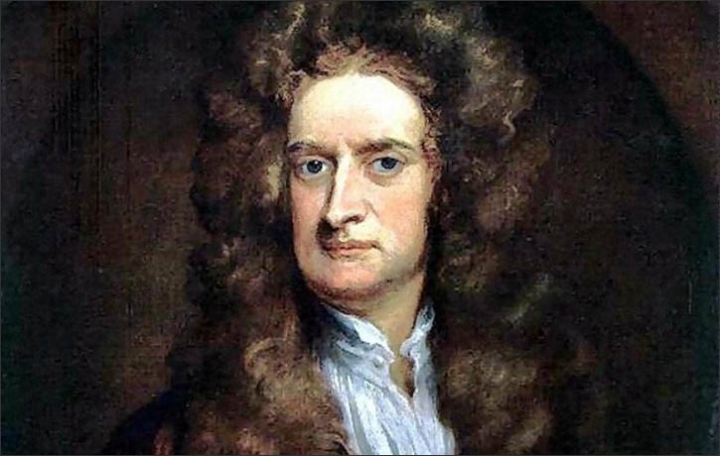
Nearly 300 years after his death, Isaac Newton lives on as a byword for genius. As a polymath whose domain encompassed astronomy, physics, and mathematics, he mastered and expanded the domain of scientific knowledge available to 17th-century Europe. But if we remember him as a one-man engine of the scientific revolution, we should also bear in mind his contrasting intellectual frailties: Newton was no financial genius, as evidenced by his loss of $3 million in the South Sea Bubble of 1720, and though his inquiries into alchemy may be fun to re-enact today, we wonder now why he didn’t see them as a dead end even then. And then we have his forays into medicine, one of which involves toad vomit.
“Two unpublished pages of Newton’s notes on Jan Baptist van Helmont’s 1667 book on plague, De Peste, are to be auctioned online by Bonham’s this week,” reported The Guardian’s Alison Flood earlier this month. “Newton had been a student at Trinity College, Cambridge, when the university closed as a precaution against the bubonic plague, which killed 100,000 people in London in 1665 and 1666. When the polymath returned to Cambridge in 1667, he began to study the work of Van Helmont,” a famous Belgian physician. While some of the conclusions Newton drew from his study of Van Helmont’s work remain practical today — “places infected with the plague are to be avoided,” for instance — his suggested cures may not hold up to scrutiny.
In the “best” plague treatment observed by Newton, “a toad suspended by the legs in a chimney for three days, which at last vomited up earth with various insects in it, on to a dish of yellow wax, and shortly after died. Combining powdered toad with the excretions and serum made into lozenges and worn about the affected area drove away the contagion and drew out the poison.” Learning how, exactly, Newton found his way to such a procedure will inspire enthusiastic collectors to bid on these papers, which remain on the Bonham’s online auction block until June 10th. Newton may, as we recently noted here on Open Culture, have had some of his most groundbreaking ideas during the era of the plague, but even a mind as formidable as his by its very nature missed a few times, sometimes wildly, for every hit. Yet as the world’s scientific-industrial complex races to develop a vaccine for COVID-19, we might consider what unorthodox solutions have gone overlooked in our Newton-less era.
Related Content:
Isaac Newton Conceived of His Most Groundbreaking Ideas During the Great Plague of 1665
Videos Recreate Isaac Newton’s Neat Alchemy Experiments: Watch Silver Get Turned Into Gold
In 1704, Isaac Newton Predicts the World Will End in 2060
Sir Isaac Newton’s Papers & Annotated Principia Go Digital
Based in Seoul, Colin Marshall writes and broadcasts on cities, language, and culture. His projects include the book The Stateless City: a Walk through 21st-Century Los Angeles and the video series The City in Cinema. Follow him on Twitter at @colinmarshall, on Facebook, or on Instagram.
Read More...Noam Chomsky Explains the Best Way for Ordinary People to Make Change in the World, Even When It Seems Daunting
The threat of widespread violence and unrest descends upon the country, thanks again to a collection of actors viciously opposed to civil rights, and in many cases, to the very existence of people who are different from them. They have been given aid and comfort by very powerful enablers. Veteran activists swing into action. Young people turn out by the hundreds week after week. But for many ordinary people with jobs, kids, mortgages, etc. the cost of participating in constant protests and civil actions may seem too great to bear. Yet, given many awful examples in recent history, the cost of inaction may be also.
What can be done? Not all of us are Rosa Parks or Howard Zinn or Martin Luther King, Jr. or Thich Nat Hanh or Cesar Chavez or Dolores Huerta, after all. Few of us are revolutionaries and few may wish to be. Not everyone is brave enough or talented enough or knowledgeable enough or committed enough or, whatever.
The problem with this kind of thinking is a problem with so much thinking about politics. We look to leaders—men and women we think of as superior beings—to do everything for us. This can mean delegating all the work of democracy to sometimes very flawed individuals. It can also mean we fundamentally misunderstand how democratic movements work.
In the video above, Noam Chomsky addresses the question of what ordinary people can do in the face of seemingly insurmountable injustice. (The clip comes from the 1992 documentary Manufacturing Consent.) “The way things change,” he says, “is because lots of people are working all the time, and they’re working in their communities or their workplace or wherever they happen to be, and they’re building up the basis for popular movements.”
In the history books, there’s a couple of leaders, you know, George Washington or Martin Luther King, or whatever, and I don’t want to say that those people are unimportant. Martin Luther King was certainly important, but he was not the Civil Rights Movement. Martin Luther King can appear in the history books ‘cause lots of people whose names you will never know, and whose names are all forgotten and who may have been killed and so on were working down in the South.
King himself often said as much. For example, in the Preface of his Stride Toward Freedom he wrote—referring to the 50,000 mostly ordinary, anonymous people who made the Montgomery Bus Boycott happen—“While the nature of this account causes me to make frequent use of the pronoun ‘I,’ in every important part of the story it should be ‘we.’ This is not a drama with only one actor.”
As for public intellectuals like himself engaged in political struggle, Chomsky says, “people like me can appear, and we can appear to be prominent… only because somebody else is doing the work.” He defines his own work as “helping people develop courses of intellectual self-defense” against propaganda and misinformation. For King, the issue came down to love in action. Responding in a 1963 interview above to a critical question about his methods, he counters the suggestion that nonviolence means sitting on the sidelines.
I think of love as something strong and that organizes itself into powerful, direct action…. We are not engaged in a struggle that means we sit down and do nothing. There’s a great deal of difference between nonresistance to evil and nonviolent resistance. Nonresistance leaves you in a state of stagnant passivity and deadening complacency, whereas nonviolent resistance means that you do resist in a very strong and determined manner.
Both Chomsky, King, and every other voice for justice and human rights would agree that the people need to act instead of relying on movement leaders. Whatever actions one can take—whether it’s engaging in informed debate with family, friends, or coworkers, writing letters, making donations to activists and organizations, documenting injustice, or taking to the streets in protest or acts of civil disobedience—makes a difference. These are the small individual actions that, when practiced diligently and coordinated together in the thousands, make every powerful social movement possible.
Note: This post originally appeared on our site in August 2017 when white supremacists (aka the president’s “many fine people”) marched in Charlottesville, VA. It speaks no less directly to the trauma of the current moment, so we’re bringing it back.
Related Content:
Noam Chomsky Defines What It Means to Be a Truly Educated Person
Henry David Thoreau on When Civil Disobedience and Resistance Are Justified (1849)
Saul Alinsky’s 13 Tried-and-True Rules for Creating Meaningful Social Change
Josh Jones is a writer and musician based in Durham, NC. Follow him at @jdmagness
Read More...Ava DuVernay’s Selma Is Now Free to Stream Online: Watch the Award-Winning Director’s Film About Martin Luther King’s 1965 Voting-Rights March
Ava DuVernay made her award-winning documentary 13th free to stream online. Now comes her film Selma. The 2014 film chronicles Dr. Martin Luther King, Jr.‘s campaign to secure equal voting rights with an epic march from Selma to Montgomery, Alabama, in 1965. Ava DuVernay writes on Twitter: “Paramount Pictures is offering SELMA for free rental on all US digital platforms for June, starting today. We’ve gotta understand where we’ve been to strategize where we’re going. History helps us create the blueprint. Onward.” You can watch Selma on YouTube/Google Play, Apple, Amazon Prime and other streaming platforms listed here. The trailer appears above.
If you would like to support the mission of Open Culture, consider making a donation to our site. It’s hard to rely 100% on ads, and your contributions will help us continue providing the best free cultural and educational materials to learners everywhere. You can contribute through PayPal, Patreon, and Venmo (@openculture). Thanks!
Related Content:
1,150 Free Movies Online: Great Classics, Indies, Noir, Westerns, etc.
Read More...Watch Ava DuVernay’s 13th Free Online: An Award-Winning Documentary Revealing the Inequalities in the US Criminal Justice System
Earlier today, we highlighted some free cinematic offerings online, including the new civil rights film Just Mercy, and a slew of films in the Criterion Collection made by African American directors. Then we stumbled upon this. Above, you can watch Ava DuVernay’s Oscar-nominated film 13th. Combining archival footage with testimony from activists and scholars, DuVernay’s documentary focuses on the U.S. prison system and “how the country’s history of racial inequality drives the high rate of incarceration in America.” It won Best Documentary at the Emmys, the BAFTAs and the NAACP Image Awards.
Update: During the month of June, DuVernay’s film, Selma, is also streaming free online.
If you would like to support the mission of Open Culture, consider making a donation to our site. It’s hard to rely 100% on ads, and your contributions will help us continue providing the best free cultural and educational materials to learners everywhere. You can contribute through PayPal, Patreon, and Venmo (@openculture). Thanks!
Related Content:
4,000+ Free Movies Online: Great Classics, Indies, Noir, Westerns, Documentaries & MoreWatch the Pioneering Films of Oscar Micheaux, America’s First Great African-American Filmmaker
Read More...Documentary Portraits of Allen Ginsberg, John Ashbery, William Carlos Williams, Anne Sexton & Other American Poets (1965)
The annals of American history offer little in the way of documentarian-poets. But luckily for us today — and especially for those of us who enjoy American poetry of the mid-2oth century — one of the country’s few such hyphenates lived an uncommonly productive life. Though known primarily as a poet of the San Francisco Renaissance, Richard O. Moore also had a career in independent and public media, beginning in 1949 with the very first broadcast of Berkeley’s KPFA. In the early 1950s he moved to San Francisco’s newly founded KQED, one of the country’s first public television stations. After a stint at Columbia studying Wittgenstein, Moore returned to KQED in 1961, whereupon he began producing a wide variety of documentaries.
As subject matter, poetry may not naturally lend itself to television. But given Moore’s connections to major American poets on both coasts and elsewhere besides, if anyone could make it work, he could. It certainly helped that so many of those poets had compelling personalities, not least Allen Ginsberg and Lawrence Ferlinghetti, the stars of one episode of Moore’s 1965 documentary series USA: Poetry. “The footage he captured is nothing short of miraculous, a national treasure type time capsule of another, more literary age,” says the web side of Santa Cruz’s Bad Animal Books, which has gathered a selection of episodes together on one page. “Moore provided a rare glimpse of some of the finest American poets of the twentieth century at the summit of their powers,” a lineup also including Kenneth Koch, John Ashbery, Anne Sexton, Frank O’Hara, Ed Sanders, Philip Whalen, and Gary Snyder.
Moore’s documentary portraits unfailingly include readings of the subjects’ work, but they don’t stop there. They also offer glimpses into these poets’ lives, professional, domestic, and otherwise, showing us the cities, towns, homes, bookstores, and libraries they inhabit. A few of these subjects, like Sanders, Snyder, and the especially venerable Ferlinghetti continue to inhabit them, though most have by now shuffled off this mortal coil. William Carlos Williams had already done so by the time of USA: Poetry’s episode about him, and so in addition to footage illustrating the bard of Paterson’s verse and letters (sights that may remind modern-day viewers of Paterson, Jim Jarmusch’s tribute to the workaday American poet), Moore features Williams’ son William E. Williams. Though Williams fils didn’t follow Williams père into poetry, he did follow him into medicine, which constituted not just the poet’s day job but —as we hear read aloud — “my food and drink, the very thing that made it possible for me to write.”
Related Content:
Ladies and Gentlemen… Mr. Leonard Cohen: The Poet-Musician Featured in a 1965 Documentary
John Ashbery Reads “Self-Portrait in a Convex Mirror”
13 Lectures from Allen Ginsberg’s “History of Poetry” Course (1975)
Pablo Neruda’s Poem, “The Me Bird,” Becomes a Short, Beautifully Animated Film
Poems as Short Films: Langston Hughes, Pablo Neruda and More
Allen Ginsberg’s Top 10 Favorite Films
Based in Seoul, Colin Marshall writes and broadcasts on cities, language, and culture. His projects include the book The Stateless City: a Walk through 21st-Century Los Angeles and the video series The City in Cinema. Follow him on Twitter at @colinmarshall, on Facebook, or on Instagram.
Read More...Watch Free Films by African American Filmmakers in the Criterion Collection … and the New Civil Rights Film, Just Mercy
The Michael B. Jordan- and Jaime Foxx-starring Just Mercy had “the misfortune of hitting theaters at the same time as Clemency, a more daring and better film set on a prison’s Death Row,” wrote Odie Henderson in a December 2019 review at RogerEbert.com. Reading the statement now feels like looking through the wrong end of a telescope (“hitting theaters?”). None of the movie’s middling reviews could have predicted the kinds of misfortunes that lay just around the corner.
If Just Mercy is your kind of distraction, you can watch it free of charge through June. Henderson’s review gives me the impression it may not be equal to the moment.
Since the days of ’50s-era message pictures, the majority of films about African-American suffering have always been calibrated the way “Just Mercy” is, with an eye to not offending White viewers with anything remotely resembling Black anger. We can be beaten, raped, enslaved, shot for no reason by police, victimized by a justice system rigged to disfavor us or any other number of real-world things that can befall us, yet God help us if a character is pissed off about this. Instead, we get to be noble, to hold on to His unchanging hand while that tireless Black lady goes “hmmm-HMMMMM!” on the soundtrack to symbolize our suffering. There’s a lot of “hmmm-HMMMMM”-ing in this movie, so much so that I had to resist laughing.
Only one critic’s opinion, but if such pious, boilerplate films haven’t changed anything since the 50s they probably aren’t about to now.
The Criterion Collection offers a refreshing alternative for representations of the black experience on film, as envisioned by black filmmakers, writers, actors, producers, etc. “This has been a powerfully emotional time,” the Collection writes, citing a string of high-profile, well-documented racist threats and murders that lead up to the breaking point:
Black Lives Matter. The anguish and fury unleashed all across the country are rooted in centuries of dehumanization and death. This pattern must stop. We support the protesters who have taken to the streets to demand justice, and we share their hopes. We are committed to fighting systemic racism.
The Collection has established an “employee-guided fund with a $25,000 initial contribution and an ongoing $5000 monthly commitment to support organizations fighting racism in America.”
More to the point of their central mission, they’re allowing visitors to the Criterion Channel to stream “works by early pioneers of African American Cinema” as well as those by current filmmakers. These are films that can be difficult to find outside of arthouse cinemas and college screening rooms. “Titles streaming for free,” notes IndieWire, “include Julie Dash’s Daughters of the Dust, Maya Angelou’s Down in the Delta, Shirley Clarke’s Portrait of Jason, Agnès Varda’s Black Panthers, Kathleen Collins’ Losing Ground, and many more.”
Also streaming free on the site is “contemporary work by Khalik Allah and Leilah Weinraub; and documentary portraits of the black experience by white filmmakers Les Blank and Shierley Clarke,” Criterion writes, noting that they’ve “taken down the paywall on as many of these titles as we can.”
This announcement will have little effect on people committed to a particularly vicious way of seeing things, but it offers a rare opportunity to watch a diverse collection of enlightening, often bracing, often deeply moving films, stretching over a century, for free. This body of work offers new perspectives on the past and wider understanding of film history. They may just be what you need to get through June. Check out the Criterion Channel collections here.
Related Content:
Watch the Pioneering Films of Oscar Micheaux, America’s First Great African-American Filmmaker
Josh Jones is a writer and musician based in Durham, NC. Follow him at @jdmagness
Read More...Support Us
We're hoping to rely on loyal readers, rather than erratic ads. Please click the Donate button and support Open Culture. You can use Paypal, Venmo, Patreon, even Crypto! We thank you!

About Us

Open Culture scours the web for the best educational media. We find the free courses and audio books you need, the language lessons & educational videos you want, and plenty of enlightenment in between.
Advertise With Us

FREE UPDATES!
GET OUR DAILY EMAIL
Get the best cultural and educational resources on the web curated for you in a daily email. We never spam. Unsubscribe at any time.
FOLLOW ON SOCIAL MEDIA

Open Culture editor Dan Colman scours the web for the best educational media. He finds the free courses and audio books you need, the language lessons & movies you want, and plenty of enlightenment in between.
Advertise With Us

