The Art of Europe’s Forgotten Avant-Garde Artists Now Digitized and Put Online

Economically depleted but filled with the desire to pose questions about the future in radically new ways, postwar Europe would prove fertile ground for the development of avant-garde art. Though that environment produced a fair few stars over the second half of the twentieth century, their work represents only the tip of the iceberg: bringing the rest out of the depths and onto the internet has constituted the last few years’ work for Forgotten Heritage. A collaboration between institutions in Poland, Belgium, Croatia, Estonia, and Germany supported by Creative Europe, the project offers a database of European avant-garde art — including many works still daring, surprising, or just plain bizarre — never properly preserved and made available until now.

Forgotten Heritage’s About page describes the project’s goal as the creation of “an innovative online repository featuring digitised archives of Polish, Croatian, Estonian, Belgian and French artists of the avant-garde movement occurring in the second half of the 20th century,” meant to eventually contain “approximately 8 thousand of sorted and classified archive entries, including descriptive data.”
Currently, writes Hyperallergic’s Claire Voon, its site “offers visitors around 800 records to explore, from documentation of artworks to texts. The majority of works stem from to the ’60s and ’70s, as a timeline illustrates, with the most recent piece dating to 2005. This interactive feature, which has embedded links to individual artists’s biographies and examples of their artworks, is one way to explore the well-designed archive.”
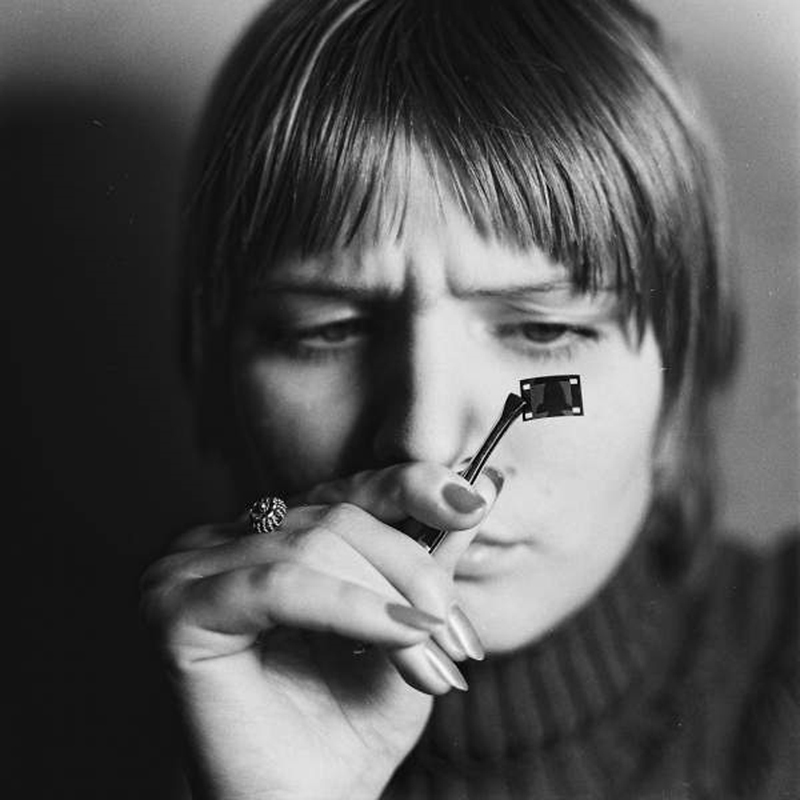
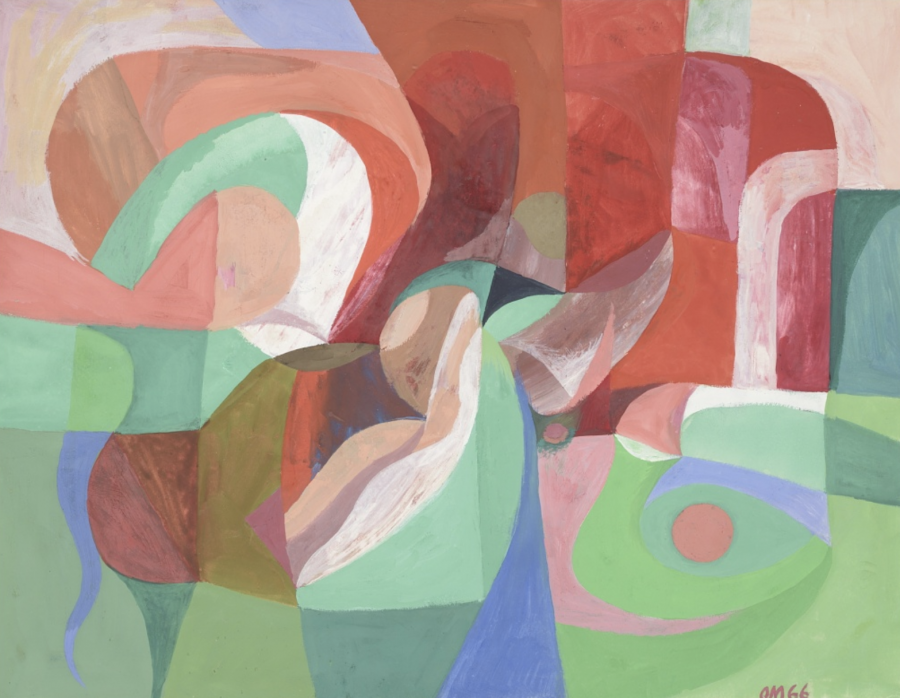
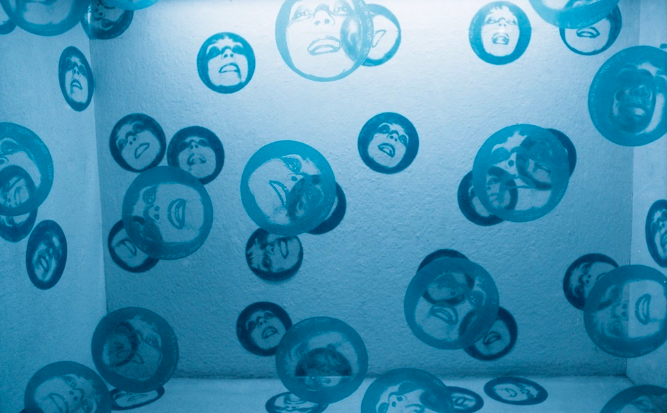
Forgotten Heritage thus makes it easy to discover artists previously difficult for even the avant-garde enthusiast to encounter. Visitors can also browse the growing archive by the medium of the work: painting (like Jüri Arrak’s Artist, 1972, seen at the top of the post), installation (Wojciech Bruszewski’s Visuality, 1980), film (Anna Kutera’s The Shortest Film in the World, 1975), “photo with intervention” (Edita Schubert’s Phony Smile, 1997), Olav Moran’s “Konktal” and many more besides.
Voon cites Marika Kuźmicz’s estimate that about 40 percent of it, mostly from Belgian and Estonian artists, has never before been available online. Debates about whether an avant-garde still exists, in Europe or anywhere else, will surely continue among observers of art, but as a visit to Forgotten Heritage’s digital archives reveals, the avant-garde of decades past, when rediscovered, retains no small amount of artistic vitality today.
via Hyperallergic
Related Content:
Based in Seoul, Colin Marshall writes and broadcasts on cities and culture. His projects include the book The Stateless City: a Walk through 21st-Century Los Angeles and the video series The City in Cinema. Follow him on Twitter at @colinmarshall or on Facebook.
Read More...Robert Rauschenberg’s 34 Illustrations of Dante’s Inferno (1958–60)
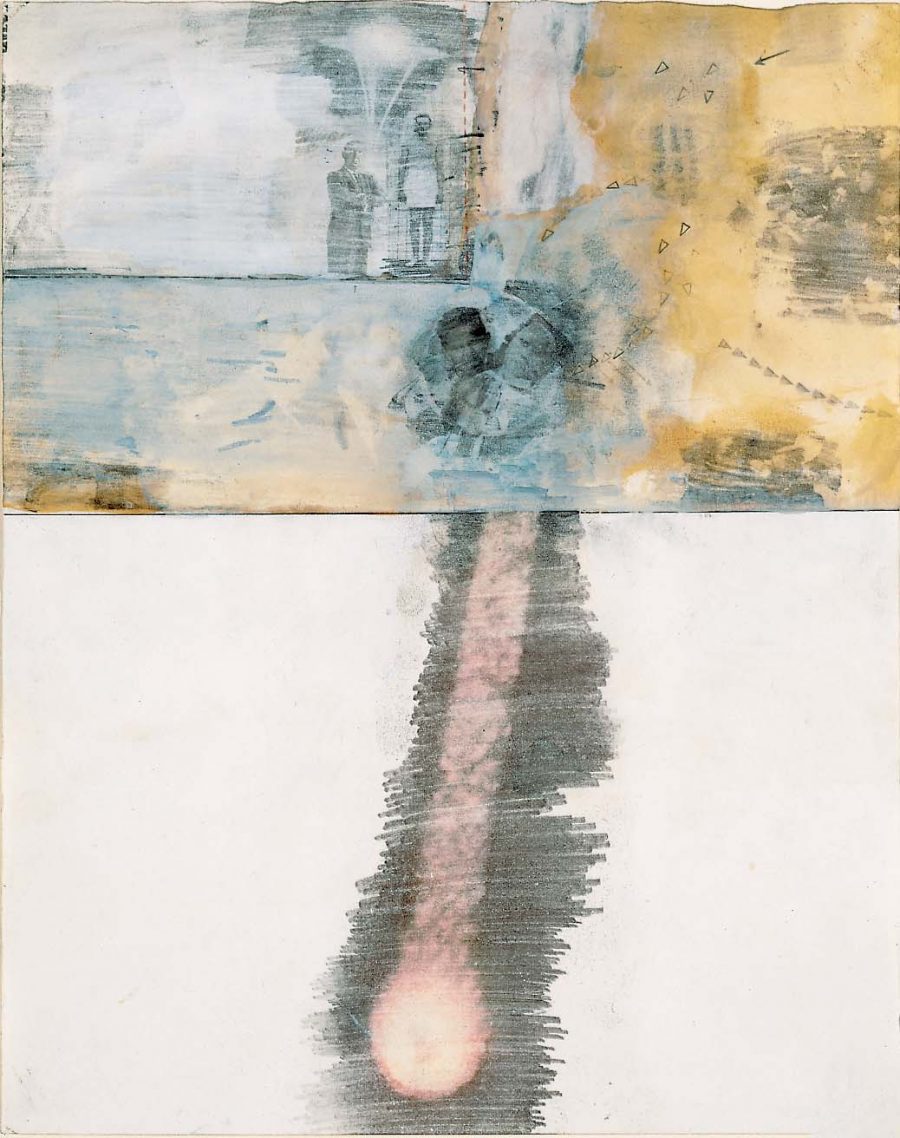
Perhaps more than any other postwar avant-garde American artist, Robert Rauschenberg matched, and maybe exceeded, Marcel Duchamp’s puckish irreverence. He once bought a Willem de Kooning drawing just to erase it and once sent a telegram declaring that it was a portrait of gallerist Iris Clert, “if I say so.” Rauschenberg also excelled at turning trash into treasure, repurposing the detritus of modern life in works of art both playful and serious, continuing to “address major themes of worldwide concern,” wrote art historian John Richardson in a 1997 Vanity Fair profile, “by utilizing technology in ever more imaginative and inventive ways…. Rauschenberg is a painter of history—the history of now rather than then.”
What, then, possessed this artist of the “history of now” to take on a series of drawings between 1958 and 1960 illustrating each Canto of Dante’s Inferno? “Perhaps he sensed a kindred spirit in Dante,” writes Gregory Gilbert at The Art Newspaper, “that encouraged his vernacular interpretations of the classical text and his radical mixing of high and low cultures.”
Critic Charles Darwent reads Rauschenberg’s motivations through a Freudian lens, his Inferno series a sublimation of his homosexuality and repressive childhood: “The young Rauschenberg… came to see Modernist art as a variant of his Texan parents’ fundamental Christianity.”
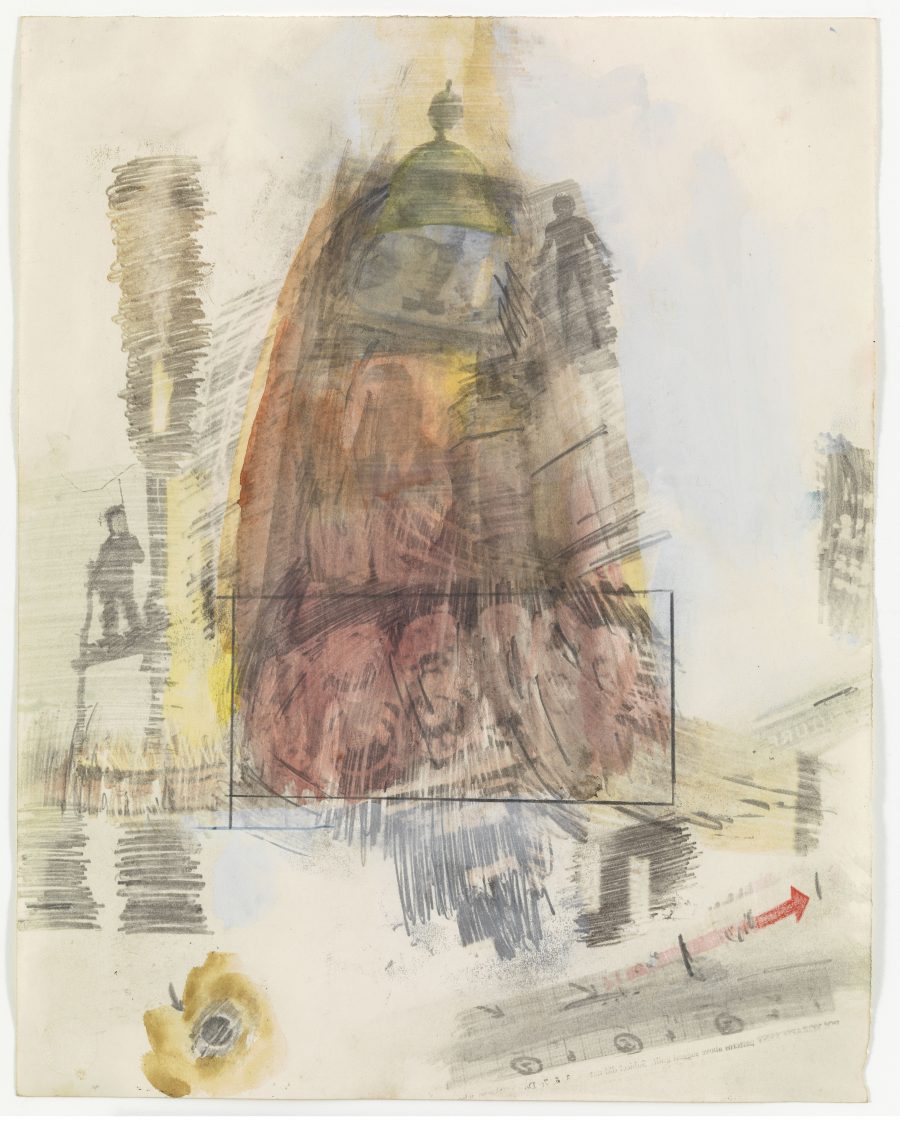
The most straightforward account has Rauschenberg conceiving the project in order to be taken more seriously as an artist. Such biographical explanations tell us something about the work, but we learn as much or more from looking at the work itself, which happens to be very much a history of now at the end of the 1950s. Though Rauschenberg based the illustrations on John Ciardi’s 1954 translation of the Divine Comedy, they were not meant to accompany the text but to stand on their own, the Italian epic—or its famous first third—providing a backdrop of ready-made ironic commentary on images Rauschenberg ripped from newspapers and magazines such as Life and Sports Illustrated.
“To create these collages,” explains MIT’s List Visual Arts Center, “he would use a solvent to adhere the images to his drawing surface, then overlay them with a variety of media, including pen, gouache (an opaque watercolor), and pencil.” Steeped in a Cold War atmosphere, the illustrations incorporate figures like John F. Kennedy and Richard Nixon, who, in the 50s, Gilbert writes, “served as one of Joseph McCarthy’s political henchmen during the Red Scare.” We see in Rauschenberg’s collage drawings allusions to the Civil Rights movement and the decade’s anti-Communist paranoia as well its reactionary sexual politics. “Political and sexual content… needed to be coded,” Gilbert claims, in such an “ultraconservative era.”
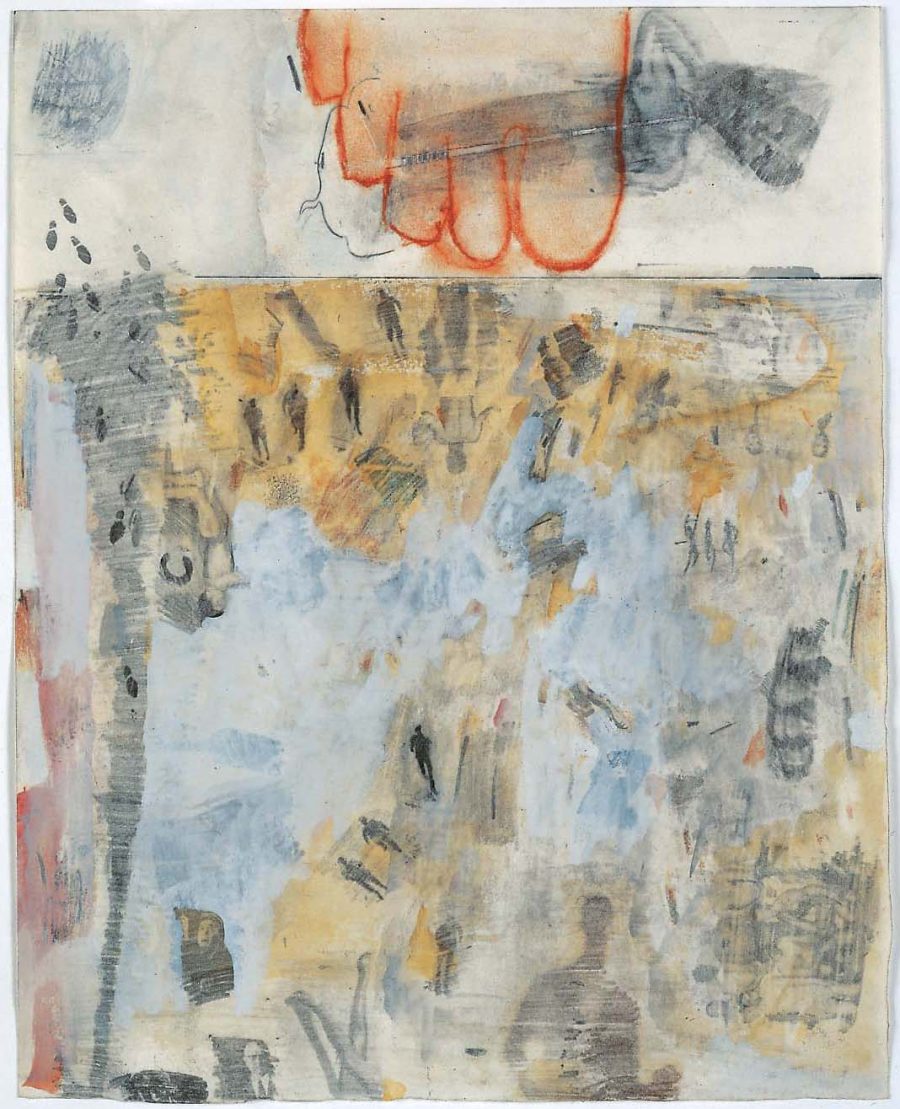
For example, we see a likely reference to the artist’s gay identity in the Canto XIV illustration, above. The text “describes the punishment of the Sodomites, who are condemned for eternity to walk across burning sand. Rauschenberg depicts the theme through a homoerotic image of a male nude… juxtaposed with a red tracing of the artist’s own foot.” Maybe Darwent is right to suppose that had Dante’s poem not existed, Rauschenberg “would have been the man to invent it”—or to invent its mid-20th century visual equivalent. He draws attention to the poem’s autobiographical center, its subversive humor, and its density of references to contemporary 15th century Italian politics, adapting all of these qualities for modernity.
But the illustration of Canto XIV—depicting “The Violent Against God, Nature, and Art”—also encodes Rauschenberg’s violent trampling of artistic convention. Many critics see this series as the artist’s reaction against Abstract Expressionism (like that of De Kooning). And while he “may have felt a creative kinship with Dante,” writes Gilbert, “he also admitted to the art critic Calvin Tomkins his impatience with the poet’s self-righteous morality, a statement likely directed against this Canto.” Like his 1953 Erased de Kooning Drawing, Rauschenberg’s Inferno drawings also perform an act of erasure—or the creation of a palimpsest, with Dante’s poem scratched over by the artist’s wild, childlike strokes.
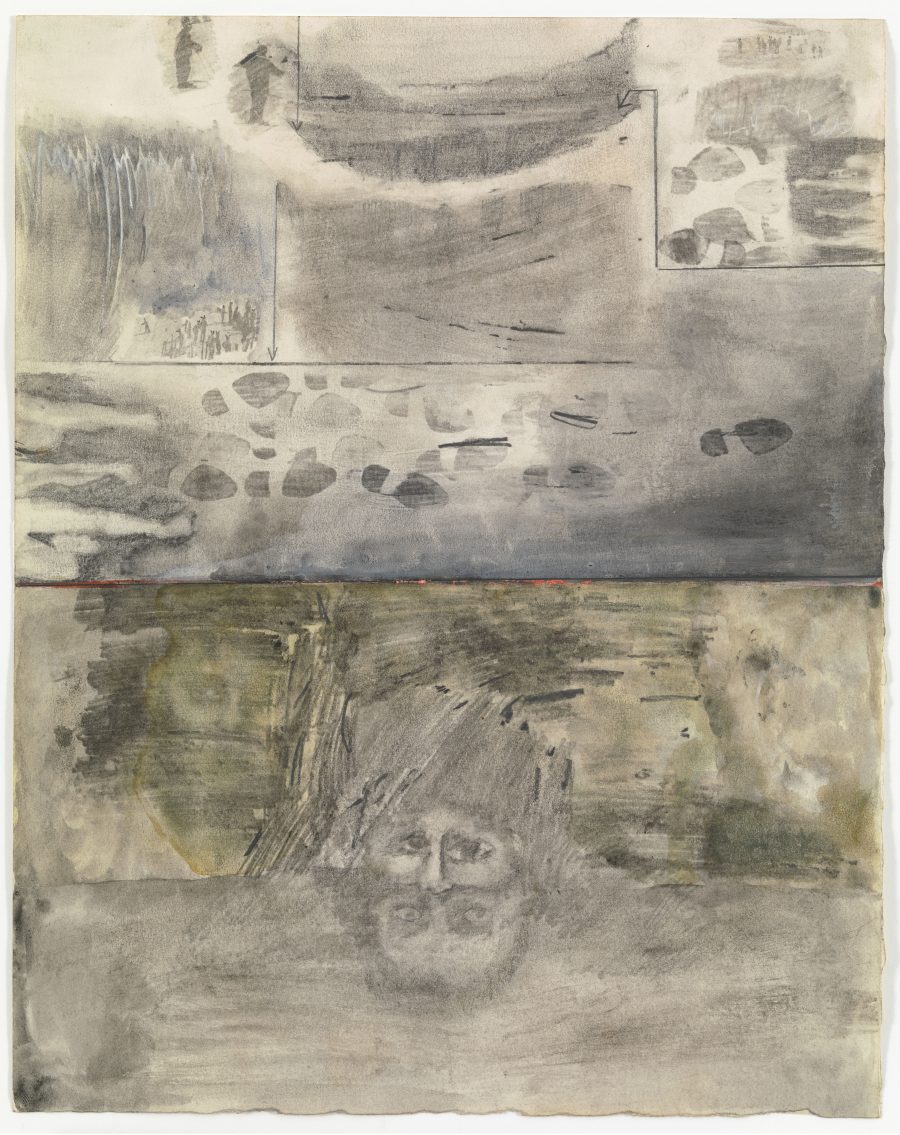
In recognition of the way these illustrations repurpose, rather than accompany, the Inferno, MoMA recently commissioned an edition of Rauschenberg’s 34 drawings, accompanied not by the straight translation by Ciardi but poems by Kevin Young and Robin Coste Lewis, whose portion of the book is titled “Dante Comes to America: 20 January 17: An Erasure of 17 Cantos from Ciardi’s Inferno, after Robert Rauschenberg.” Rather than viewing the illustrations against Dante’s work itself, we can read their particular American proto-pop art character against literary “erasures” like Lewis’s “Canto XXIII,” below. See the full series of Rauschenberg’s 34 illustrations at the Rauschenberg Foundation website here.
Canto XXIII.
by Robin Coste Lewis“I Go with The Body That Was Always Mine”
Silent, one following the other,
the Fable hunted us down.
O weary mantle of eternity,
turn left, reach us down
into that narrow way in silence.College of Sorry Hypocrites, I go
with the body that was always mine,
burnished like counterweights to keep
the peace. One may still see the sort of peacewe kept. Marvel for a while over that:
the cross in Hell’s eternal exile.
Somewhere there is some gap in the wall,
pit through which we may climbto the next brink without the need
of summoning the Black Angels
and forcing them to raise us from this sink.
Nearer than hope, there is a bridgethat runs from the great circle, that crosses
every ditch from ridge to ridge.
Except—it is broken—but with care.
Related Content:
A Free Course on Dante’s Divine Comedy from Yale University
Hear Dante’s Inferno Read Aloud by Influential Poet & Translator John Ciardi (1954)
Josh Jones is a writer and musician based in Durham, NC. Follow him at @jdmagness
Read More...View and Download Nearly 60,000 Maps from the U.S. Geological Survey (USGS)

By reasons of parenting, I’ve become well acquainted with a song—perhaps you know it?— called “Fifty Nifty United States,” taught to schoolchildren as a geographical mnemonic device. The lyrics mention that “each individual state contributes a quality that is great.” What are some great qualities of, say, Delaware, New Mexico, or South Dakota? We aren’t told. Hey, it’s enough that a five or six-year-old can remember “shout ‘em, scout ‘em, tell all about ‘em” before rattling off an alphabetical list of “ev’ry state in the good old U.S.A.”
But if you hail from the U.S., you can enumerate many contributions from a few nifty states, whether culinary delights, historical events, writers, artists, sports heroes, etc. And most everyone’s got stories about visiting natural wonders, hiking mountain trails, fording rivers, gazing upon breathtaking vistas.
We may be occasional tourists, travel enthusiasts, or experts, but whatever our level of experience in the country, it’s probably kid stuff compared to the work of the scientists at the U.S. Geological Survey (USGS).

Established by Congress in 1879, this august body has documented U.S. lands and waters for 125 years, gathering an incredible amount of detailed information as “the nation’s largest water, earth, and biological science and civilian mapping agency.” Thanks to the Libre Map Project, the general public can view and download nearly 60,000 of those topographical maps, from all fifty states, and nearly every region within each of those states. See Colorado’s Pike National Forest and surrounding environs, at the top, for example, created from aerial photographs taken in 1950. Above, see a map of San Francisco, compiled in 1956, then revised in 1993 and further edited in 1996.

And just above, the devastating Kīlauea Volcano, in a map compiled from aerial photos taken in 1954 and 1961. (See the USGS site for the latest info about the ongoing eruption there.) Below, a nifty map of New York City, created “by photogrammetric methods from aerial photographs taken [in] 1954 and planetable surveys [in] 1955. Revised from aerial photographs taken [in] 1966.” Google maps may be more current, but these USGS maps have an aura of scientific authority around them, evidence of painstaking surveys, checked and rechecked over the decades by hundreds of pairs of hands and eyes.

Browsing the archive can be a challenge, since the maps are catalogued by coordinates rather than place names, but you can enter the names of specific locations in the search field. Also, be advised, the maps “are best used with global positioning software,” the archive tells visitors. Nonetheless, you can click on the first download option for “Multi Page Processed TIFF” to pull up a huge, downloadable image. Enter the archive here and get to scouting.
Related Content:
Josh Jones is a writer and musician based in Durham, NC. Follow him at @jdmagness
Read More...Bill Gates Names 5 Books You Should Read This Summer
It’s something of a tradition. Every summer, philanthropist/Microsoft founder Bill Gates recommends five books to read during the slow summer months. This year’s list, he tells us, wrestles with some big questions: “What makes a genius tick? Why do bad things happen to good people? Where does humanity come from, and where are we headed?”
And now, without no further ado, here’s Bill’s list for 2018. The text below is his, not mine:
Leonardo da Vinci, by Walter Isaacson. I think Leonardo was one of the most fascinating people ever. Although today he’s best known as a painter, Leonardo had an absurdly wide range of interests, from human anatomy to the theater. Isaacson does the best job I’ve seen of pulling together the different strands of Leonardo’s life and explaining what made him so exceptional. A worthy follow-up to Isaacson’s great biographies of Albert Einstein and Steve Jobs. [Read his blog post on the book here.]
Everything Happens for a Reason and Other Lies I’ve Loved, by Kate Bowler. When Bowler, a professor at Duke Divinity School, is diagnosed with stage IV colon cancer, she sets out to understand why it happened. Is it a test of her character? The result is a heartbreaking, surprisingly funny memoir about faith and coming to grips with your own mortality. [Read his blog post on the book here.]
Lincoln in the Bardo, by George Saunders. I thought I knew everything I needed to know about Abraham Lincoln, but this novel made me rethink parts of his life. It blends historical facts from the Civil War with fantastical elements—it’s basically a long conversation among 166 ghosts, including Lincoln’s deceased son. I got new insight into the way Lincoln must have been crushed by the weight of both grief and responsibility. This is one of those fascinating, ambiguous books you’ll want to discuss with a friend when you’re done. [Read his blog post on this book here.]
Origin Story: A Big History of Everything, by David Christian. David created my favorite course of all time, Big History. It tells the story of the universe from the big bang to today’s complex societies, weaving together insights and evidence from various disciplines into a single narrative. If you haven’t taken Big History yet, Origin Story is a great introduction. If you have, it’s a great refresher. Either way, the book will leave you with a greater appreciation of humanity’s place in the universe. [Read his blog post on this book here.]
Factfulness, by Hans Rosling, with Ola Rosling and Anna Rosling Ronnlund. I’ve been recommending this book since the day it came out. Hans, the brilliant global-health lecturer who died last year, gives you a breakthrough way of understanding basic truths about the world—how life is getting better, and where the world still needs to improve. And he weaves in unforgettable anecdotes from his life. It’s a fitting final word from a brilliant man, and one of the best books I’ve ever read. [Read his blog post on this book here.]
You can find Gate’s reading lists from previous summers in the Relateds below.
Related Content:
Bill Gates Recommends Five Books for Summer 2017
5 Books Bill Gates Wants You to Read This Summer (2016)
Bill Gates, Book Critic, Names His Top 5 Books of 2015
Read More...The Ups & Downs of Ancient Rome’s Economy–All 1,900 Years of It–Get Documented by Pollution Traces Found in Greenland’s Ice
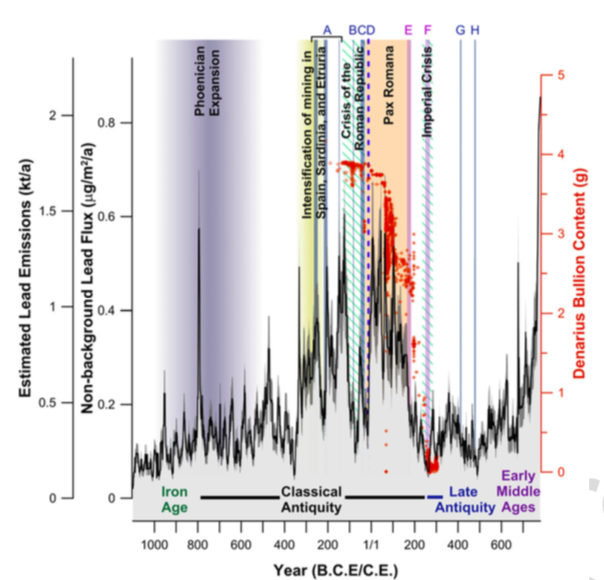
When we see stories pop up involving scientific findings in glacier ice, we might brace for unpleasant environmental news about the future. But a paper published just recently in Proceedings of the National Academy of Sciences instead reveals fascinating findings about the distant past—the history of ancient Rome between 1100 B.C.E. to 800 C.E. Historians know this 1,900-year period through archaeological and literary evidence. Now climate scientists have provided a treasury of new data to help substantiate or revise scholarly understandings of Rome’s economic rises and falls, by measuring the stratifications of lead pollution in a roughly 400-meter ice core from Greenland.
Why lead? “It’s a proxy for coin production,” says Seth Bernard, professor of ancient history at the University of Toronto. Roman currency, the denarius, was made from silver, mined primarily on the Iberian Peninsula. “But these mines didn’t excavate pure silver,” notes Robinson Meyer at The Atlantic. “Instead, they unearthed an ore of silver, lead, and copper that had to be smelted into silver. This process filled the air with lead pollution,” which eventually made its way on air currents to Greenland, where “storms deposited lead-tainted snow or sleet over the Arctic island.” New layers formed upon the old, each one preserved for posterity.
In the mid-1990s, scientists began drilling Greenland’s ice sheet in the North Greenland Ice core Project (NGRIP). At the time, a team attempted a similar analysis on the lead levels and their correspondence to ancient coinage, “which used a similar but rudimentary technique,” Meyer writes. But this study only drew from 18 data points. By contrast, the new research “made 25,000 different measurements of the ice core.” Improved technology has refined the measurement process, allowing researchers to detect “the presence of 35 different elements and chemicals at once,” and to tie their observations to specific years, or fairly close to it, anyway. The chart above shows the fluctuations in lead emissions over the almost 2000-year span.
One of the study’s authors, Joseph McConnell, estimates the margin of error as within one or two years. “That’s pretty good,” he says, “a lot better than what archaeologists are used to, I can tell you that.” This allows the team of climate scientists, archaeologists, and historians to match their observations about lead levels to known historical events. As The New York Times reports, “lead emissions rose in periods of peace and prosperity, such as the Pax Romana, which ran from 27 BC to 180 A.D. and dropped during the civil wars that preceded the Pax and the rise of the emperor Augustus. There were also dramatic drops that coincided with the Antonine plague of 165–180 A.D., thought to have been small pox, and the Cyprian plague, cause uncertain, of 250–270 A.D.”
The data, notes The Economist, “provide a new window onto the workings of the ancient economy…. Not all of the lead trapped in the glacier comes from silver minding, but much of it does,” and scientists can make informed guesses about just how much. Many unanswered questions remain. “What we’d love to have is a document that says Rome had a state monetary policy,” says Bernard. The empire’s specific economic policies are largely a mystery, but the ice core samples provide a wealth of new evidence for the increase and decrease in currency production, and ever-more refined technologies will allow for even more data to emerge from the pollutants trapped in glacial ice in the near future.
Related Content:
The Rise & Fall of the Romans: Every Year Shown in a Timelapse Map Animation (753 BC ‑1479 AD)
Josh Jones is a writer and musician based in Durham, NC. Follow him at @jdmagness
Read More...Tom Wolfe’s Groundbreaking Work, The Electric Kool-Aid Acid Test, Gets Released as a Limited Collector’s Edition, with Each Copy Signed by the Author

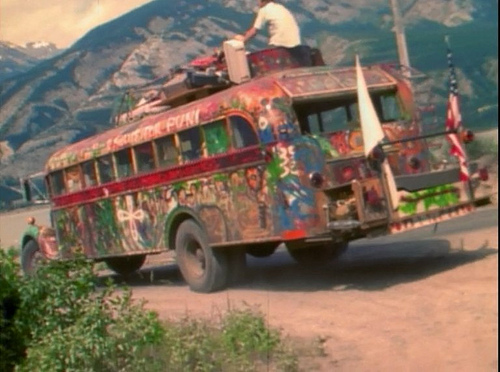
Taschen recently released a collector’s edition of The Electric Kool-Aid Acid Test to commemorate the 50th anniversary of Tom Wolfe’s rollicking account of Ken Kesey and the Merry Pranksters’ acid-fueled road trip across the United States, aboard the psychedelic school bus known as “Further.” With the passing of Tom Wolfe last week, the release of the collector’s edition takes on some added importance.
When The Electric Kool-Aid Acid Test first came out in 1968, Eliot Fremont-Smith wrote in The New York Times that “it is not simply the best book on the hippies, it is the essential book.” The book “is printed in black and white, but the words come through in crazy Day-Glo–fluorescent, psychedelic, at once energetic and epicene.”
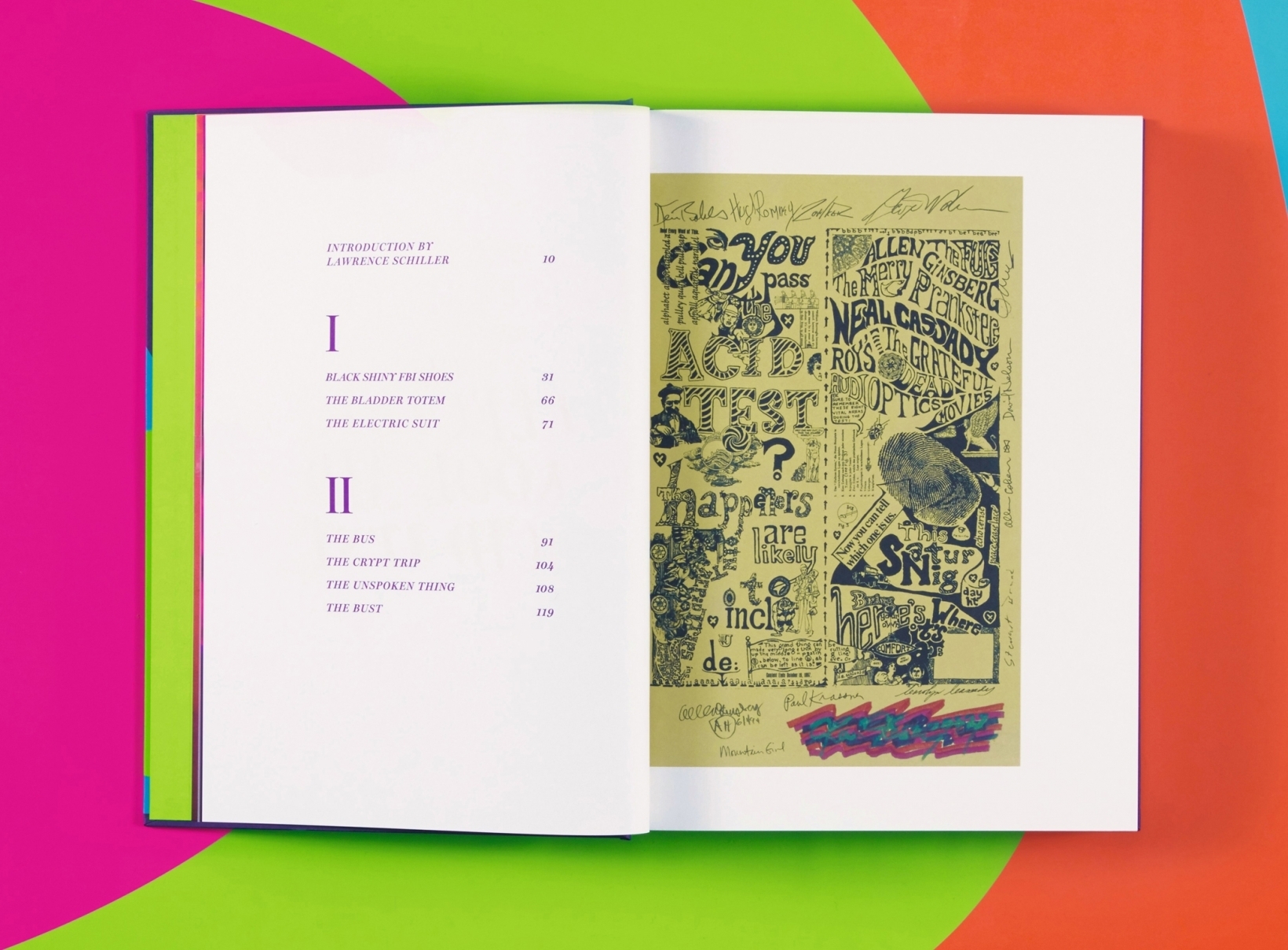
The new Taschen edition is something different. The abridged text is published in “traditional letterpress, with facsimile reproductions of Wolfe’s manuscript pages, as well as Ken Kesey’s jailhouse journals, handbills, and underground magazines of the period.” “Interweaving the prose and ephemera are photographic essays from Lawrence Schiller, whose coverage of the acid scene for Life magazine helped inspire Wolfe to write his story, and Ted Streshinsky, who accompanied Wolfe while reporting for the New York Herald Tribune.” There are also photographs by poet Allen Ginsberg.
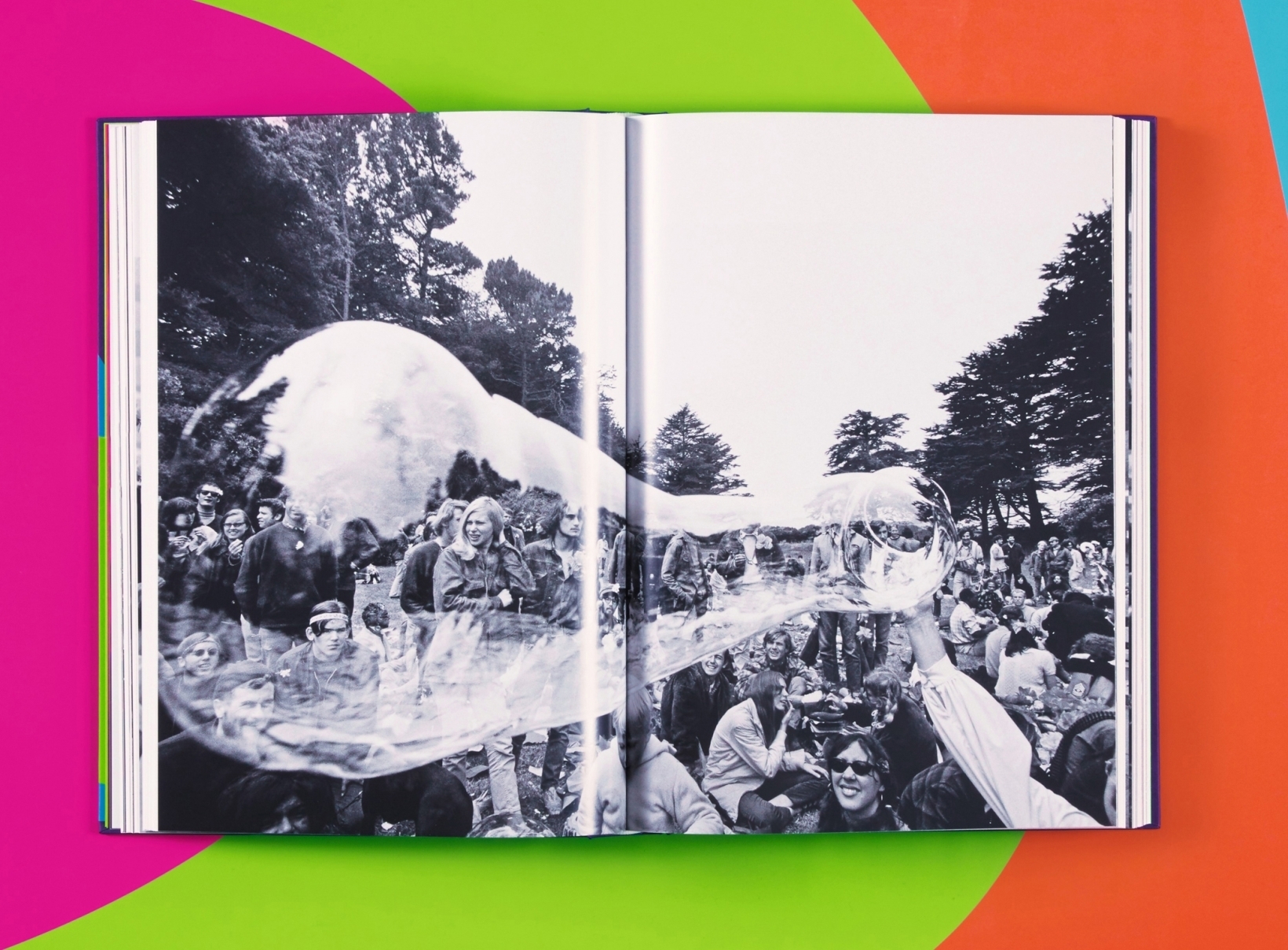
In total, Taschen has produced 1,968 signed copies of the collector’s edition, each signed by Tom Wolfe himself. The cost is set at $350.
If you never spent time with The Electric Kool-Aid Acid Test and want to read a simple paperback edition that costs less than $10, you can find a copy here.
Note: We belong to the Taschen affiliate program. So if you get a copy of the collector’s edition, it benefits not just you and Taschen. It benefits Open Culture too. So consider it win-win-win.
If you would like to support the mission of Open Culture, consider making a donation to our site. It’s hard to rely 100% on ads, and your contributions will help us continue providing the best free cultural and educational materials to learners everywhere. You can contribute through PayPal, Patreon, and Venmo (@openculture). Thanks!
Related Content:
The Acid Test Reels: Ken Kesey & The Grateful Dead’s Soundtrack for the 1960s Famous LSD Parties
Ken Kesey’s First LSD Trip Animated
Aldous Huxley, Dying of Cancer, Left This World Tripping on LSD (1963)
Ken Kesey Talks About the Meaning of the Acid Tests
Read More...How Women Got Dressed in the 14th & 18th Centuries: Watch the Very Painstaking Process Get Cinematically Recreated
We live in an age of convenience, and one getting more convenient all the time. Few comparisons between past and present underscore that quite so much as the morning routine. Hot and cold running water on demand, properly appreciated, can seem miraculous enough, let alone more recent developments like the availability of high-quality coffee on every city block. But consider clothing, the change in whose outward appearance over the past 700 years or so goes along with an equally dramatic change in use. We still wear clothes for all the same basic reasons we did back then, of course, but what it takes to wear them has diminished to comparative effortlessness.
These videos, one on getting dressed in the 14th century and one on getting dressed in the 18th century, offer detailed, narrated, and cinematic looks at what the process once entailed — or at least what the process entailed for English women of a certain class.
The average man in those periods, too, had to deal with much more hassle putting on his clothes in the morning that he does today, but the female case, with its shift, stays, petticoats, pockets, roll, stockings and garters, gown and stomacher, apron, and more besides, required not just a great deal of discipline and concentration on the part of the dresser but assistance from another pair of hands as well.
You can find more such videos on the finer points of women’s dressing routines of yore, including further explanations of such elements as pockets and busks, on this playlist. The social, technological, and industrial stories behind why it has all become so much less complicated over the centuries has provided, and will continue to provide, the driving questions for many an academic thesis. But despite the enormous reduction in the labor-intensiveness of putting them on, clothes have not, of course, become a perfectly simple matter for we dressers of the comparatively ultra-casual 21st century. Still, after watching all it took to get dressed those hundreds and hundreds of years ago, many of us — male or female — might arrive at the thought that we could stand to put just a little more effort into the job.
via Boing Boing
Related Content:
What’s It Like to Fight in 15th Century Armor?: A Surprising Demonstration
An Online Trove of Historic Sewing Patterns & Costumes
The Dresser: The Contraption That Makes Getting Dressed an Adventure
1930s Fashion Designers Predict How People Would Dress in the Year 2000
Based in Seoul, Colin Marshall writes and broadcasts on cities and culture. His projects include the book The Stateless City: a Walk through 21st-Century Los Angeles and the video series The City in Cinema. Follow him on Twitter at @colinmarshall or on Facebook.
Read More...Muhammad Ali & Sly Stone Get Into a Heated Debate on Racism & Reparations on The Mike Douglas Show (1974)
Ah, the 70s… an American president was impeached for criminal activity; a congressman, Wayne Hays, resigned for sleeping with his secretary, after divorcing his wife to marry a different secretary; another congressman, Bud Shuster—who described Hays as “the meanest man in the house”—called for an investigation of Watergate special prosecutor Archibald Cox, after Cox was fired by the soon-to-be impeached president… ‘twas a different time, children, a simpler time….
Well, at any rate, they sure wore funny suits back then, eh? Those lapels…. But just like today, politics mixed freely with sports and entertainment in controversial and televisual ways. Boxers got ratings, singers got ratings, politicians like “meanest man in the house” Wayne Hays got ratings, even before his sex scandal, when he appeared on TV with boxers and singers—appeared, that is, on The Mike Douglas Show in 1974 with Muhammad Ali and Sly Stone. Actor and activist Theodore Bikel was there too, though you might blink and miss him in the fracas just above.
First, Hays offers some banal opinions on the subject of campaign financing, another one of those bygone 70s issues. But when Douglas poses the question to Ali of whether or not he’d ever run for office, things pick up, to say the least. Ali refuses to play the entertainer. He launches flurry after flurry of jabs at white America, and at Hays, who does his best to stay upright under the onslaught. “Ali is unyielding,” writes Dangerous Minds, “intense and brilliant.”
Ali takes on a serious question facing Black nationalists of the 60s and 70s, from the Panthers to the Nation of Islam, whose views Ali embraced at the time, along with, perhaps, some of their ugly anti-Semitism. (The following year he converted to Sunni Islam, and later became a Sufi.) Should Black activists participate in the oppressive systems of the U.S. government? Can anyone do good from inside the halls of imperialist power?
Hays makes an integrationist case, and champions Black leaders like congresswoman Barbara Jordan. Ali is relentlessly combative, calling for reparations. Sly slides in to clarify and pacify, playing mediator and referee. Douglas gets off the applause line, “isn’t it time we all tried to live together.” Ali refuses to gloss over racism and economic inequality. No peace, he says in effect, without justice. Aren’t we glad, forty-four years later, that we’ve ironed all this out? See the full show here for much more heavyweight commentary from Ali and sometimes fuzzy counterpoint from Sly. They go back and forth with Douglas for ten minutes before Hays and Bikel join.
Related Content:
Muhammad Ali Gives a Dramatic Reading of His Poem on the Attica Prison Uprising
James Baldwin Bests William F. Buckley in 1965 Debate at Cambridge University
Josh Jones is a writer and musician based in Durham, NC. Follow him at @jdmagness
Read More...Jimi Hendrix’s “Voodoo Child” Shredded on the Ukulele
Here’s James Hill’s recipe for playing Jimi Hendrix’s 1968 classic, “Voodoo Child (Slight Return)” on the uke. Yes, the uke:
1 Mya-Moe baritone ukulele (Low G — G — B — E)
1 guitar amp (Fender Blues Junior or equivalent)
1 bass amp (15 inch)
1 line splitter (Radial ABY box)
1 Diamond J‑Drive pedal (made in Halifax, NS!)
4 busted strings
2 broken fingernails
Season to taste and serve hot!
Enjoy…
If you would like to support the mission of Open Culture, consider making a donation to our site. It’s hard to rely 100% on ads, and your contributions will help us continue providing the best free cultural and educational materials to learners everywhere. You can contribute through PayPal, Patreon, and Venmo (@openculture). Thanks!
Related Content:
George Harrison Explains Why Everyone Should Play the Ukulele
Jake Shimabukuro plays “Bohemian Rhapsody” on the Uke
Read More...How David Bowie Turned His “Adequate” Voice into a Powerful Instrument: Hear Isolated Vocal Tracks from “Life on Mars,” “Starman,” “Modern Love” “Under Pressure” & More
Believe it or not, the odds were against David Bowie becoming an international pop superstar. When it seemed he’d finally arrived, with the release of Ziggy Stardust and the Spiders from Mars in 1972, “we didn’t realize,” says Jarvis Cocker in a 2012 documentary, “that he’d been trying to be successful for 10 years.” Bowie was 24, a ripe old age in pop star years, and already had four albums under his belt as a solo artist, the first a total commercial failure, and the second notable for its one hit, “Space Oddity,” which seemed like it might have been the artist’s big break in 1969, but somehow wasn’t.
He had played in several bands and tried performing under his given name, Davy Jones, which he just happened to share with one of the biggest pop stars of the day. Had he not persisted, changed his name and style, and, crucially, invented his Martian glam persona, he might have remained a one-hit-wonder, his excellent The Man Who Sold the World and Hunky Dory revered as underrated cult favorites among fans in the know.
In addition to the difficulty Bowie had finding his niche, he was not a naturally gifted singer and was a reluctant performer. Drawn early to “movement and music” classes in school, Bowie’s teachers called his idiosyncratic style “vividly artistic,” but only rated his voice as “adequate.” As voice coach Lisa Popeil writes, “though vocally agile as an adult, Bowie was never known for great pitch accuracy.”
Such things matter less these days, what with pitch correction software. In the old days of analog, singers couldn’t lean on digital wizardry to make them sound better than they were. Bowie wasn’t “particularly fond” of his own voice, he revealed in an interview, and unlike most hungry, young would-be stars, he didn’t set out to put himself in the spotlight—not at first.
“I thought that I wrote songs and wrote music and that was sort of what I thought I was best at doing. And because nobody else was ever doing my songs, I felt, you know, I had to go out and do them.”
So the shy, retiring Bowie charged ahead. “With his theatrical bent and fearlessness,” Popeil writes, his “ability to create memorable and emotional vocal stylings was of the highest order.” This, we might say, is almost an understatement. Aspiring singers and musicians can learn much from Bowie’s career, perhaps foremost the lesson that one needn’t be a prodigy or a bubbly extrovert to follow a musical passion. Bowie honed his vocal skills and achieved mastery over his haunting baritone, while also learning to move into a powerful tenor range.
Witness these isolated vocal tracks from throughout this career. At the top, the vocal mix from “Life on Mars” shows, as Classic fM writes, that “while unpolished, his tremulous voice has real quality and range.” Further down, we hear Bowie goofing around a bit in the vocal booth before launching into his first hit, “Space Oddity,” his voice a bit thin in the verse, then hitting its full stride in the chorus. Three years later, on “Starman” from Ziggy Stardust, we hear more confidence and control in the vocal track. Then, ten years after Ziggy, Bowie belts it out on “Modern Love,” above, having already kept pace with arguably the greatest rock singer of all time on “Under Pressure,” further up.
On “Golden Years,” above, Bowie explores his full range, from deepest baritone to falsetto. His voice inevitably waned with age and the sickness of his final years, but he never lost the ability to imbue a song with maximal emotional range, making the ragged vocals on his last album, especially its chilling single “Lazarus,” some of the most gripping in his entire body of work. The video below from The Last Five Years documentary strips away the instrumentation, leaving us with the image of an aged, blinded Bowie in bed, singing “Look up here man, I’m in danger/I’ve got nothing left to lose.” His breathing is audibly labored, giving the recording a poignant immediacy. But the forever-distinctive Bowie vocal style is as deeply moving as ever.
Related Content:
The Story of Ziggy Stardust: How David Bowie Created the Character that Made Him Famous
Hear Freddie Mercury’s Vocals Soar in the Isolated Vocal Track for “Somebody to Love”
Josh Jones is a writer and musician based in Durham, NC. Follow him at @jdmagness
Read More...Support Us
We're hoping to rely on loyal readers, rather than erratic ads. Please click the Donate button and support Open Culture. You can use Paypal, Venmo, Patreon, even Crypto! We thank you!

About Us

Open Culture scours the web for the best educational media. We find the free courses and audio books you need, the language lessons & educational videos you want, and plenty of enlightenment in between.
Advertise With Us

FREE UPDATES!
GET OUR DAILY EMAIL
Get the best cultural and educational resources on the web curated for you in a daily email. We never spam. Unsubscribe at any time.
FOLLOW ON SOCIAL MEDIA

Open Culture editor Dan Colman scours the web for the best educational media. He finds the free courses and audio books you need, the language lessons & movies you want, and plenty of enlightenment in between.
Advertise With Us