One Minute Art History: Centuries of Artistic Styles Get Packed Into a Short Experimental Animation
From Cao Shu, a new media artist at the China Academy of Art, comes an experimental animation called “One Minute Art History.” This work has been described as “a fascinating montage in which centuries of artistic trends are packed into a single minute of film. Starting in ancient Egypt and continuing into present day, each image in this imaginative animation is a fleeting visual of the past.”
Elsewhere, the film has been described a bit more conceptually:
Art history is a long tale which tells us what happened in the past, but cannot tell us where new opportunities lie. Waiting, like art itself, is an absurdity, some kind of eternal behaviour with no purpose and no ending.
The run time of “One Minute Art History” is, yes, one minute.
If you would like to support the mission of Open Culture, consider making a donation to our site. It’s hard to rely 100% on ads, and your contributions will help us continue providing the best free cultural and educational materials to learners everywhere. You can contribute through PayPal, Patreon, and Venmo (@openculture). Thanks!
Related Content:
An Introduction to 100 Important Paintings with Videos Created by Smarthistory
Free Course: An Introduction to the Art of the Italian Renaissance
100,000 Free Art History Texts Now Available Online Thanks to the Getty Research Portal
Read More...Download 240+ Free eBooks on Design, Data, Software, Web Development & Business from O’Reilly Media
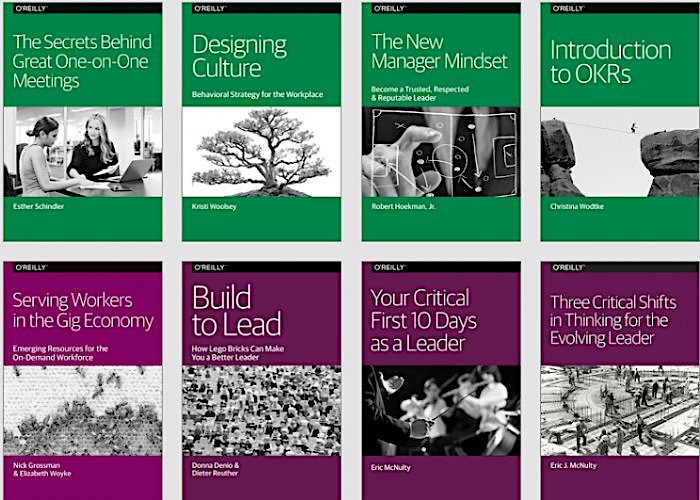
Last year we highlighted for you 20 Free eBooks on Design from O’Reilly Media. Little did we know that we were just scratching the surface of the free ebooks O’Reilly Media has to offer.
If you head over to this page, you can access 240+ free ebooks covering a range of different topics. Below, we’ve divided the books into sections (and provided links to them), indicated the number of books in each section, and listed a few attractive/representative titles.
You can download the books in PDF format. An email address–but no credit card–is required. Again the complete list is here.
- Business & Leadership (10 ebooks total)
- Data & Artificial Intelligence (95 ebooks total)
- Design (21 ebooks)
- Hardware & the Internet of Things (24 ebooks)
- Software/Programming (36 ebooks)
- Security (8 ebooks)
- Web Development & Performance (19 ebooks)
- Web Ops & DevOps (31)
Note: An earlier version of this post originally appeared on our site in January 2017.
If you would like to support the mission of Open Culture, consider making a donation to our site. It’s hard to rely 100% on ads, and your contributions will help us continue providing the best free cultural and educational materials to learners everywhere. You can contribute through PayPal, Patreon, and Venmo (@openculture). Thanks!
Related Content:
Download 20 Free eBooks on Design from O’Reilly Media
Read 700 Free eBooks Made Available by the University of California Press
A New Free eBook Every Month from the University of Chicago Press
800 Free eBooks for iPad, Kindle & Other Devices
Read More...Take Harvard’s Introductory Course on Buddhism, One of Five World Religions Classes Offered Free Online
A friend of mine describes her childhood as, in part, resembling a real-world comparative religions course. Her broad-minded mother encouraged her to choose her own religious identity, or none at all. This required her to do independent research, not only in libraries, but in the churches, mosques, synagogues, and temples of an unusually religiously diverse group of friends and acquaintances. It’s an experience that differs from that of most people, and one not without its own pressures—how does one know what to believe without an authority figure to dictate, many may wonder?
She did just fine, acquiring considerable understanding of world religions while herself settling on a Buddhist path, the only one of the big five, it seems, that encourages people to try out spiritual methods for themselves and determine what seems true or not. At least the Buddha supposedly recommended this in one “Sutta” (or “sutra”)—an ancient form of writing practiced by early Indian philosophical schools and a word whose meaning takes on a very modern resonance for 21st century digital readers: “thread.”
In the “Kalama Sutta,” which one translator describes as “The Buddha’s Charter of Free Inquiry,” the religious founder and former prince attempts to settle religious disputes by explaining to some perplexed villagers that one must use one’s own moral and intellectual reasoning to find the truth. It’s a discourse that captures the Socratic style of many Buddhist texts, and a famous one for Westerners for obvious reasons, but to say that it is representative of all kinds of Buddhism would be myopic.
Buddhist scriptures “number in the thousands,” says Professor Charles Hallisey of Harvard Divinity School, making their study a humbling lifelong activity that can never be exhausted. “What you have is a different phenomenon in which no one can ever say, ‘I know it all.’” Professor Hallisey leads a new online course from Harvard’s edX, which you can audit for free, called “Buddhism through its Scriptures.” The course looks at distinctive properties of this world religion through several important texts, historical context, and commentary from notable scholars like Thanissaro Bhikkhu.
You can register now for Professor Hallisey’s fascinating survey course on Buddhist scriptures here. “Buddhism through its Scriptures” is one of five such rigorous, yet highly accessible courses offered by edX, under the umbrella program “Religious Literacy: Traditions and Scriptures” (see an introductory video above), which offers students and spiritual seekers a sympathetic yet scholarly overview of each of the largest world religions: Christianity, Islam, Judaism, Hinduism and Buddhism. These courses are designed and taught by accomplished Harvard professors, and they introduce students to historical, theological, sociological, cultural, and textual issues within each tradition.
The approach of these courses is summed up by Religious Literacy Project Director Diane L. Moore in a document called “Our Method.” Religious scholars, she writes, recognize “the validity of normative theological assertions without equating them with universal truths about the tradition itself.” One can study religions with a critical, yet charitable, eye, allowing them to speak for themselves while remaining skeptical of their claims, and while acknowledging their “full range of agency from the heinous to the heroic.” In his introductory video lectures, Professor Hallisey admits this isn’t always easy.
It almost goes without saying, as he does say, that “conversations about religious matters can be contentious, even painful—sometimes intensely so.” But like the best religious teachers, Hallisey urges his students to think for themselves, and to place the study of religion “firmly in the Humanities,” a discipline in which “we not only… learn about other men and women, but also… learn about ourselves…. When we look back at what has happened to us, we can say that we ‘have grown.’” We can study some or all of the world religions and have this experience, even if we end up adopting none of them.
Sign up to take “Buddhism and its Scriptures” here, either as a free audited course or for a Verified Certificate for $50.
This course will be added to our collection of Free Religion Courses, a subset of our larger collection 1,700 Free Online Courses from Top Universities.
Related Content:
The Dalai Lama’s Introduction to Buddhism
Buddhism 101: A Short Introductory Lecture by Jorge Luis Borges
Free Online Religion Courses
Josh Jones is a writer and musician based in Durham, NC. Follow him at @jdmagness
Read More...Christianity Through Its Scriptures: A Free Course from Harvard University
From Harvard University and professor Karen L. King comes a free online course called Christianity Through Its Scriptures.
Here’s the description for the course which you can find online here:
Christianity is a global religion. From modest beginnings 2,000 years ago, it has grown to encompass nearly a third of the human population. Diverse in languages, cultures, histories and creeds, Christians nonetheless share a common collection of sacred scripture called the Bible.
This religion course introduces you to the Bible and its scripture and asks the questions:
- What are the contents, languages, and forms of Bibles in various times and places?
- How have Christians lived out their stories and teachings?
- How does Christian history reflect the contested and varied uses of scripture—in the ancient Roman world where Christianity began, in its spread through European and American colonialism, in the diverse forms it takes in varied locations around the globe?
- You will begin to explore these questions and others while learning about the content and interpretations of these sacred texts.
No previous knowledge of Christianity or the Bible required.
This course is part of edX’s World Religions Through Their Scriptures series. Other courses in the series cover Islam, Judaism, Hinduism and Buddhism.
Christianity Through Its Scriptures will be added to our collection of Free Religion Courses, a subset of our larger collection 1,700 Free Online Courses from Top Universities.
Read More...A Field Guide to Fake News and Other Information Disorders: A Free Manual to Download, Share & Re-Use
“Recent scandals about the role of social media in key political events in the US, UK and other European countries over the past couple of years have underscored the need to understand the interactions between digital platforms, misleading information and propaganda, and their influence on collective life in democracies,” writes First Draft, an online journal published by Harvard’s Shorenstein Center on Media, Politics and Public Policy.
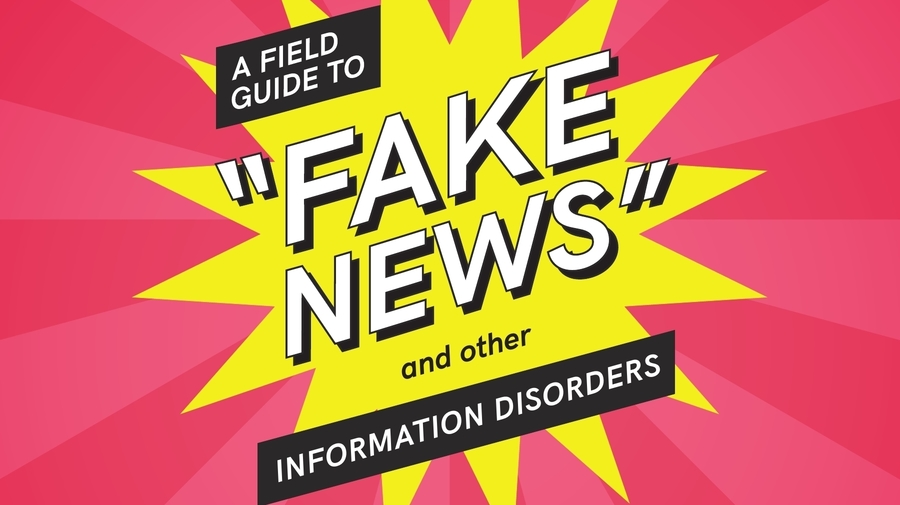
Hence comes A Field Guide to ‘Fake News’ and Other Information Disorders–a free manual that helps “students, journalists and researchers investigate misleading and viral content, memes and trolling practices online.” Packed with valuable data visualizations, the manual highlights a “series of research protocols or ‘recipes’ that can be used to trace trolling practices, the ways false viral news and memes circulate online, and the commercial underpinnings of problematic content.”
A Field Guide to ‘Fake News’ and Other Information Disorders was co-produced by the Shorenstein Center and the Public Data Lab. Because it’s published under a Creative Commons License, you’re free to copy, redistribute and reuse the book. Beyond that, you can find all of the assets needed to translate and publish the guide into other languages over on this GitHub page.
If you would like to support the mission of Open Culture, consider making a donation to our site. It’s hard to rely 100% on ads, and your contributions will help us continue providing the best free cultural and educational materials to learners everywhere. You can contribute through PayPal, Patreon, and Venmo (@openculture). Thanks!
Related Content:
Read More...
“The Couch to 80k” Writing Boot Camp: Take a Free 8‑Week Podcast Course to Start Writing Fiction, or Even Finish a Novel

Image by Book Mama via Flickr Commons
We’ve all read fiction, but how to go about writing it? Nobody has the definitive answer, and there, in the multiplicity of possible approaches, methods, and frames of mind, lies both the challenge and the fascination of the craft. The English writer Tim Clare, who before reaching forty years of age has published poetry, a memoir, and a novel as well as hosted a television series called How to Get a Book Deal, seems to know that full well. Hence the variety of challenges he’ll put you through in “The Couch to 80k” (80,000 words being the industry-standard length of a novel), his free eight-week fiction-writing “boot camp” available for anyone to take free online.
Produced as a part of Clare’s writing-advice podcast Death of 1000 Cuts, the mini-series consists of 48 episodes, each of which, he says, “teaches you new writing skills through a 10 minute exercise – it even times you while you do the exercise, so once the podcast finishes, you’re done for the day. No homework!”
You need only “something to listen to them on, and a pen and notebook or a laptop, so you can write. The whole idea is to give you something low commitment but intense, packing in everything you’d learn on a Fiction MA and more, so every day you’re doing focused exercises that build upon your previous work and rapidly build your imaginative muscles.”
Clare’s jokey, conversational tone makes the course entertaining even if you don’t actually want to write fiction, though Clare himself, in the very first episode (above), cautions strongly against listening unless you’re ready to put pen to paper — and ready to consign everything you’ve written on that paper, through all eight weeks, straight to the recycle bin. Some of the challenges Clare throws down may seem silly, but they do get you writing, and he undergirds the series with forays into more technical matters like the “mathsy business of sentence composition” as well. Reviewing his novel Honours, the Guardian’s Sarah Perry called Clare “a storyteller who knows what his reader wants, and isn’t shy of giving plenty of it.” As this boot camp reveals, he’s also a teacher who knows what his students need.
Enter the “The Couch to 80k” bootcamp here. And if you follow it through to completion, “you’ll have the knowledge and the motivation to finish a novel.”
Related Content:
William S. Burroughs Teaches a Free Course on Creative Reading and Writing (1979)
The Daily Habits of Famous Writers: Franz Kafka, Haruki Murakami, Stephen King & More
Stephen King’s Top 20 Rules for Writers
Seven Tips From Ernest Hemingway on How to Write Fiction
John Updike’s Advice to Young Writers: ‘Reserve an Hour a Day’
10 Writing Tips from Legendary Writing Teacher William Zinsser
Judy Blume Now Teaching an Online Course on Writing
Based in Seoul, Colin Marshall writes and broadcasts on cities and culture. His projects include the book The Stateless City: a Walk through 21st-Century Los Angeles and the video series The City in Cinema. Follow him on Twitter at @colinmarshall or on Facebook.
Read More...Understanding Pink Floyd’s Wish You Were Here, Their Tribute to Departed Bandmate Syd Barrett
Since Dark Side of the Moon, the members of Pink Floyd dealt in various ways with the fate of their original singer Syd Barrett. As Roger Waters said about the band in 1975, “It couldn’t have happened without him, but on the other hand, it couldn’t have gone on with him.” On Dark Side of the Moon, Barrett is not directly addressed, but the themes of madness swirl through the various big statement songs and in the various quotes from friends and roadies peppered throughout the mix. Later on, The Wall would bring listeners a main character who goes mad and shuts himself up in isolation externally and internally. Echoes of Syd are everywhere.
And right in the middle of that stretch is Wish You Were Here, both a direct tribute to Syd Barrett and a caustic musing on the music business. The latter both negatively affected the band at the time and, in some way, accelerated Syd’s decline into (most probably) schizophrenia.
YouTube channel Polyphonic’s eight-minute overview of the album will introduce casual listeners to the story behind the making of the album, and the lyrics that specifically applied to Syd. “You were caught in the crossfire of childhood and stardom” is one of many eulogies to their friend, the “crazy diamond” of the suite of songs that bookend the album.
The video, which includes clips from the BBC documentary on the making of the album currently streaming in various venues (don’t blame us for the particular poor quality of this clip, especially the subtitles), also mentions a visit that Barrett made to the Abbey Road Studio. Bald, eyebrows shaved, and overweight, the man was unrecognizable compared to the svelte, darkly handsome lead singer they had known only a few years’ earlier. It’s an emotional moment that only adds to the impact of this ghostly and melancholic album.
Related Content:
Neil deGrasse Tyson: “Because of Pink Floyd, I’ve Spent Decades Undoing the Idea That There’s a Dark Side of the Moon”
Hear Lost Recording of Pink Floyd Playing with Jazz Violinist Stéphane Grappelli on “Wish You Were Here”
Ted Mills is a freelance writer on the arts who currently hosts the artist interview-based FunkZone Podcast and is the producer of KCRW’s Curious Coast. You can also follow him on Twitter at @tedmills, read his other arts writing at tedmills.com and/or watch his films here.
Read More...Theorist Judith Butler Explains How Behavior Creates Gender: A Short Introduction to “Gender Performativity”
“One is not born, but rather becomes, a woman,” wrote Simone de Beauvoir in one of the most famous articulations of the difference between sex and gender. By this, de Beauvoir does not mean us to believe that no one is born with reproductive organs, but that the social role of “woman” (or for that matter “man”) comes from a collection of behaviors into which we are socialized. The distinction is crucial for understanding most feminist and queer theory and the variety of human identity more generally, yet it’s one that too often gets lost in popular usage of the words sex and gender. Biology does not determine gender differences, culture does.
Gender becomes naturalized, woven so tightly into the social fabric that it seems like a necessary part of reality rather than a contingent production of history. Just how this happens is complicated—we don’t invent these roles, they are invented for us, as Judith Butler argues in her essay “Performative Acts and Gender Constitution.”
Gender identity “is a performative accomplishment,” she writes, “compelled by social sanction and taboo…. Gender is… an identity instituted through a repetition of acts.” For a somewhat more straightforward summary of her theory of “performativity,” see Butler in the Big Think video above, in which she describes gender as a “phenomenon that’s being produced all the time and reproduced all the time.”
Still unclear? Well, it’s complicated, but so is every other facet of human identity many people take for granted, especially people whose gender expression doesn’t threaten strict societal norms. For a more thorough overview of these concepts, see the Philosophy Tube video above, which explains Butler’s theory and a number of other terms central to the discourse, such as “gender essentialism” and “social constructivism.” One thing to note about Butler’s theory, as both she and our philosopher above explain, is that “performativity,” though it uses a theatrical metaphor, is not the same as “performance.” Gender is not a costume one puts on and takes off, like a Shakespearean actor playing male characters one night and female characters the next.
Rather, the technical term “performative” means for Butler an act that not only communicates but also creates an identity. Some examples offered above of performative speech include saying “guilty” at a trial, which turns one into an inmate, or saying “I do” at a wedding, which turns one into a spouse. Performative acts of gender do a similar kind of work, not only communicating to others some aspect of identity, but constructing that very identity, only they do that work through repetition. As de Beauvoir argued, we are not born a self, we become, or create, a self, through social pressure to conform and through “reiterating and repeating the norms through which one is constituted,” Butler writes.
As we might expect of any cultural construct, gender norms vary widely both inter- and intra-culturally and throughout historical periods. And given their constructed nature, they can change in any number of ways. Therefore, according to Butler, “there’s not really any grounds,” as our philosophy explainer puts it, “for saying that somebody’s ‘doing their gender wrong.’”
Related Content:
An Animated Introduction to the Feminist Philosophy of Simone de Beauvoir
11 Essential Feminist Books: A New Reading List by The New York Public Library
Josh Jones is a writer and musician based in Durham, NC. Follow him at @jdmagness
Read More...How the Brilliant Colors of Medieval Illuminated Manuscripts Were Made with Alchemy
Today the word “alchemy” seems used primarily to label a variety of crackpot pursuits, with their bogus premises and impossible promises. To the extent that alchemists long strove to turn lead miraculously into gold, that sounds like a fair enough charge, but the field of alchemy as a whole, whose history runs from Hellenistic Egypt to the 18th century (with a revival in the 19th), chalked up a few lasting, reality-based accomplishments as well. Take, for instance, medieval illuminated manuscripts: without alchemy, they wouldn’t have the vivid and varied color palettes that continue to enrich our own vision of that era.
Many of the illuminators’ most brilliant pigments “didn’t come straight from nature but were made through alchemy,” says the video from the Getty above, produced to accompany the museum’s exhibition “The Alchemy of Color in Medieval Manuscripts.”
Alchemists “explored how materials interacted and transformed,” and “discovering paint colors was a practical outcome.” The colors they developed included “mosaic gold,” a fusion of tin and sulfur; verdigris, “made by exposing copper to fumes of vinegar, wine, or even urine”; and vermillion, a mixture of sulfur and mercury that made a brilliant red “associated with chemical change and with alchemy itself.”
The very nature of books, specifically the fact that they spend most of the time closed, has performed a degree of inadvertent preservation of illuminated manuscripts, keeping their alchemical colors relatively bold and deep. (Although, as the Getty video notes, some pigments such as verdigris have a tendency to eat through the paper — one somehow wants to blame the urine.) Still, that hardly means that preservationists have nothing to do where illuminated manuscripts are concerned: keeping the windows they provide onto the histories of art, the book, and humanity clear takes work, some of it based on an ever-improving understanding of alchemy. Lead may never turn into gold, but these centuries-old illuminated manuscripts may survive centuries into the future, a fact that seems not entirely un-miraculous itself.
Related Content:
1,600-Year-Old Illuminated Manuscript of the Aeneid Digitized & Put Online by The Vatican
Wonderfully Weird & Ingenious Medieval Books
1,000-Year-Old Illustrated Guide to the Medicinal Use of Plants Now Digitized & Put Online
Based in Seoul, Colin Marshall writes and broadcasts on cities and culture. His projects include the book The Stateless City: a Walk through 21st-Century Los Angeles and the video series The City in Cinema. Follow him on Twitter at @colinmarshall or on Facebook.
Read More...Bill Gates Names His New Favorite Book of All Time: A Quick Introduction to Steven Pinker’s Enlightenment Now
How’s this for a nice book blurb?
In a recent blog post, Microsoft co-founder and philanthropist Bill Gates wrote this:
For years, I’ve been saying Steven Pinker’s The Better Angels of Our Nature was the best book I’d read in a decade. If I could recommend just one book for anyone to pick up, that was it. Pinker uses meticulous research to argue that we are living in the most peaceful time in human history. I’d never seen such a clear explanation of progress.
I’m going to stop talking up Better Angels so much, because Pinker has managed to top himself. His new book, Enlightenment Now, is even better.
Enlightenment Now takes the approach he uses in Better Angels to track violence throughout history and applies it to 15 different measures of progress (like quality of life, knowledge, and safety). The result is a holistic picture of how and why the world is getting better. It’s like Better Angels on steroids.
Although the book won’t get officially released until February 13th, Pinker’s Enlightenment Now is already one of the 20 bestselling books on Amazon–no doubt partly thanks to Bill Gates. If you’re looking to get disabused of the widely-shared belief that the world is moving in the wrong direction, you might want to pick up your own copy. (Soon, you could also download it as a free audiobook through Audible.com’s free trial program.)
For a deeper dive into Enlightenment Now watch the video above, and particularly read Gates’s review of what he calls “my new favorite book of all time.”
If you would like to support the mission of Open Culture, consider making a donation to our site. It’s hard to rely 100% on ads, and your contributions will help us continue providing the best free cultural and educational materials to learners everywhere. You can contribute through PayPal, Patreon, and Venmo (@openculture). Thanks!
Related Content:
Steven Pinker Explains the Neuroscience of Swearing (NSFW)
Bill Gates Recommends Five Books for Summer 2017
Steven Pinker on the History of Violence: A Happy Tale
Read More...Support Us
We're hoping to rely on loyal readers, rather than erratic ads. Please click the Donate button and support Open Culture. You can use Paypal, Venmo, Patreon, even Crypto! We thank you!

About Us

Open Culture scours the web for the best educational media. We find the free courses and audio books you need, the language lessons & educational videos you want, and plenty of enlightenment in between.
Advertise With Us

FREE UPDATES!
GET OUR DAILY EMAIL
Get the best cultural and educational resources on the web curated for you in a daily email. We never spam. Unsubscribe at any time.
FOLLOW ON SOCIAL MEDIA

Open Culture editor Dan Colman scours the web for the best educational media. He finds the free courses and audio books you need, the language lessons & movies you want, and plenty of enlightenment in between.
Advertise With Us

