The News Is Broken, and Wikipedia Founder Jimmy Wales Plans to Fix It With His New Site, Wikitribune
“The news is broken and we can fix it.” That’s the idea driving the creation of Wikitribune, a news platform being built by Wikipedia founder Jimmy Wales.
Borrowing tools and concepts from the influential online encyclopedia, Wikitribune will be free and supported by readers, not ads. It will feature professional journalists and community members, working side by side, to produce fact-checked journalism that’s readily supported by evidence and sources. And anyone can flag mistakes or submit revisions for review.
Watch Wales outline the vision for Wikitribune in the Kirby Ferguson-made video above. Then, consider making a financial contribution to the new news platform here. They’re now raising money to get operations started and hire 10 journalists.
Follow Open Culture on Facebook and Twitter and share intelligent media with your friends. Or better yet, sign up for our daily email and get a daily dose of Open Culture in your inbox.
Read More...How Jonathan Demme Put Humanity Into His Films: From The Silence of the Lambs to Stop Making Sense
“My friend, the director Jonathan Demme, passed last night,” wrote Talking Heads’ David Byrne on his blog yesterday. “I met Jonathan in the ‘80s when Talking Heads were touring a show that he would eventually film and turn into Stop Making Sense,” the famous — and in the minds of many, still the very best — concert movie. “I loved his films Melvin and Howard and Citizens Band (AKA Handle With Care). From those movies alone, one could sense his love of ordinary people. That love surfaces and is manifest over and over throughout his career.” Read just a few of the many other tributes to Demme made so far, and you’ll encounter the same words over and over again: love, empathy, compassion.
Few filmmakers manage to get those qualities onscreen as consistently as Demme did, and even fewer do it at his level of technical mastery. The two video essays here examine his cinematic technique, especially as seen in one of his best-known films: 1991’s Silence of the Lambs, the second in the ongoing series featuring refined career cannibal Hannibal Lecter. The brief episode of Tony Zhou’s Every Frame a Painting at the top of the post breaks down how Demme handles the question of who “wins” the interaction in the first conversation between Anthony Hopkins’ Lecter and Jodie Foster’s young FBI trainee Clarice Starling — two characters who enter into this and all their subsequent interactions with their own shifting motivations, goals, and sensitivities.
In this and other scenes throughout his career, Demme made strong and influential use of close-up shots, to the point where Jacob T. Swinney could dedicate a supercut to “The Jonathan Demme Close-Up.” While “most filmmakers choose to employ the close-up shot during scenes of crucial dialogue,” Swinney writes, “Demme prefers to line up his characters in the center of the frame and have them look directly into the lens of the camera.” And so “when Dr. Hannibal Lecter hisses at Agent Clarice Starling, we feel equally victimized,” or in Philadelphia “as Andrew Beckett succumbs to AIDS, we feel an overwhelming sensation of sympathy. These characters seem to be looking at us, and we therefore connect on a deeper level.”
While Demme used his signature close-ups and other emotionally charged shots in all his features, from his early days working for legendary B‑movie producer Roger Corman on, he brought his humanistic style to his various documentary and concert film projects as well. “Stop Making Sense was character driven too,” writes Byrne. “Jonathan’s skill was to see the show almost as a theatrical ensemble piece, in which the characters and their quirks would be introduced to the audience, and you’d get to know the band as people, each with their distinct personalities. They became your friends, in a sense. I was too focused on the music, the staging and the lighting to see how important his focus on character was — it made the movies something different and special.”
Related Content:
David Byrne Plays Seven Characters & Interviews Himself in Funny Promo for Stop Making Sense
Based in Seoul, Colin Marshall writes and broadcasts on cities and culture. He’s at work on a book about Los Angeles, A Los Angeles Primer, the video series The City in Cinema, the crowdfunded journalism project Where Is the City of the Future?, and the Los Angeles Review of Books’ Korea Blog. Follow him on Twitter at @colinmarshall or on Facebook.
Read More...Jonathan Demme Narrates I Thought I Told You To Shut Up!!,” a Short Film About the Counterculture Cartoon Reid Fleming
Earlier today, we sadly learned about the passing of Jonathan Demme, director of The Silence of the Lambs and Stop Making Sense. We’ll have more to say about his contributions to cinema in the morning. But, for now, I want to share a short film, narrated by Demme himself in 2015, called I Thought I Told You To Shut Up!!. Featuring stop motion animation and interviews, the short revisits David Boswell’s 1970s counterculture cartoon, Reid Fleming, World’s Toughest Milkman. Perhaps the cartoon never ended up on your radar. But it certainly influenced a number of important creators you’re familiar with. And, happily, you can still pick up copies of Reid Fleming: World’s Toughest Milkman on Amazon or over at the official Reid Fleming web site.
Directed by Charlie Tyrell, I Thought I Told You To Shut Up!! will be added to our collection, 4,000+ Free Movies Online: Great Classics, Indies, Noir, Westerns, Documentaries & More. You can also download it over at Tyrell’s vimeo page.
If you would like to support the mission of Open Culture, consider making a donation to our site. It’s hard to rely 100% on ads, and your contributions will help us continue providing the best free cultural and educational materials to learners everywhere. You can contribute through PayPal, Patreon, and Venmo (@openculture). Thanks!
Related Content:
The Comic Biography of Underground Publisher & Political Writer, John Wilcock
Read More...If You Could Spend Eternity with Your Ashes Pressed Into a Vinyl Record, What Album Would It Be?

In February, Ted Mills wrote about a new company–And Vinyly–which will press your ashes into a playable vinyl record when your time eventually runs out. The basic service runs $4,000, and it gets you 30 copies of a record containing your ashes. The rub is that you can’t “use copyright-protected music to fill up the 12 minutes per side, so no ‘Free Bird’ or ‘We Are the Champions,’ unfortunately.”
But it does raise the question, as I put on Twitter yesterday… If you could head into eternity pressed into a cherished album, which would you choose? This isn’t necessarily a what-record-would-you-take-to-a-deserted island scenario, taken to the nth degree. Meaning, it’s not necessarily a question of what record would you listen to endlessly, for eternity (although you could choose to make it that). Rather, the question might be: What album do you have a deep, abiding personal connection with? Which record captures your spirit? And, when thrown on the turntable, can keep you sonically in this world?
My pick, Abbey Road. “Come Together” has a bit of anti-establishment bite. “Here Comes the Sun” and “Something” tap into something emotional and nostalgia-inducing for me. And, oh, that medley on Side 2! Just click play any time.
Your picks? Please add them to the comments below.
If you would like to support the mission of Open Culture, consider making a donation to our site. It’s hard to rely 100% on ads, and your contributions will help us continue providing the best free cultural and educational materials to learners everywhere. You can contribute through PayPal, Patreon, and Venmo (@openculture). Thanks!
Read More...Download 200+ Free Modern Art Books from the Guggenheim Museum
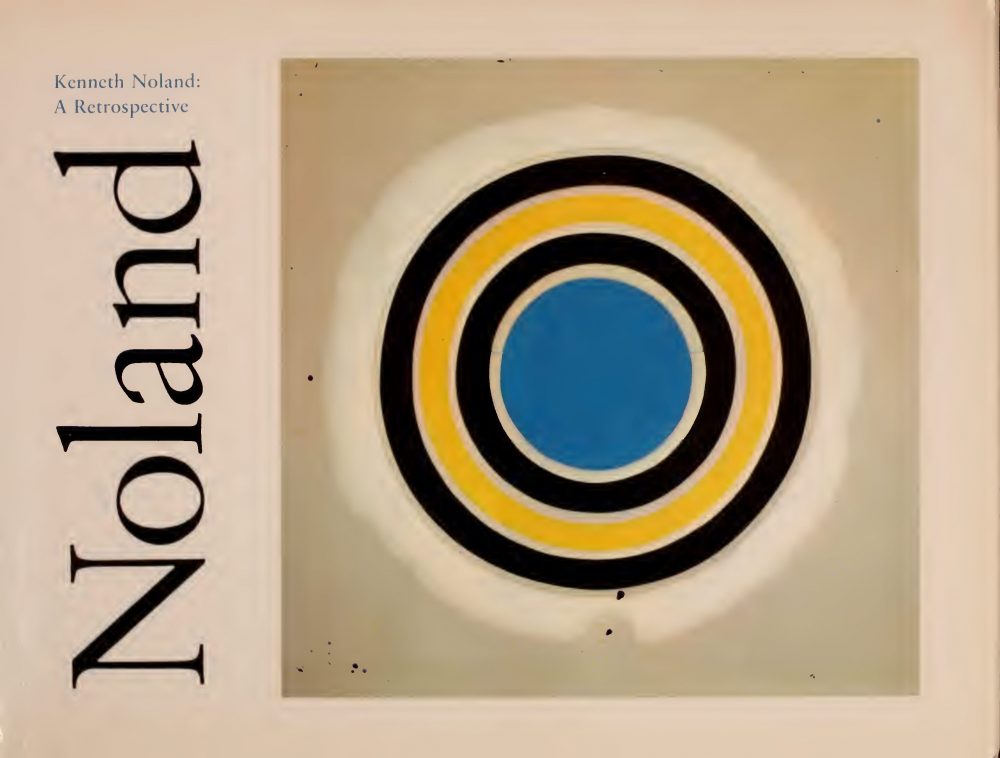
For at least half a decade now, New York’s Solomon R. Guggenheim Museum has been digitizing its exhibition catalogs and other art books. Now you can find all of the publications made available so far — not just to read, but to download in PDF and ePub formats — at the Internet Archive. If you’ve visited the Guggenheim’s non-digital location on Fifth Avenue even once, you know how much effort the institution puts toward the preservation and presentation of modern art, and that comes through as much in its printed material as it does in its shows.
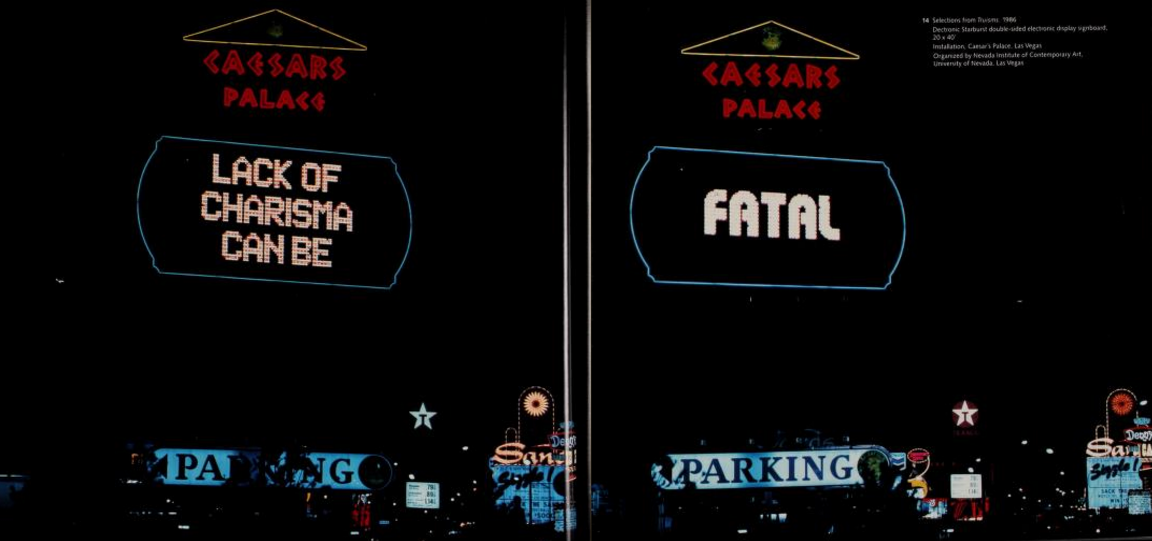
Among the more than 200 Guggenheim art books available on the Internet Archive, you’ll find one on a 1977 retrospective of Color Field painter Kenneth Noland, one on the ever-vivid icon-making pop artist Roy Lichtenstein, and one on the existential slogans — “MONEY CREATES TASTE,” “PROTECT ME FROM WHAT I WANT,” “LACK OF CHARISMA CAN BE FATAL” — slyly, digitally inserted into the lives of thousands by Jenny Holzer. Other titles, like Expressionism, a German Intuition 1905–1920, From van Gogh to Picasso, from Kandinsky to Pollock, and painter Wassily Kandinsky’s own Point and Line to Plane, go deeper into art history.
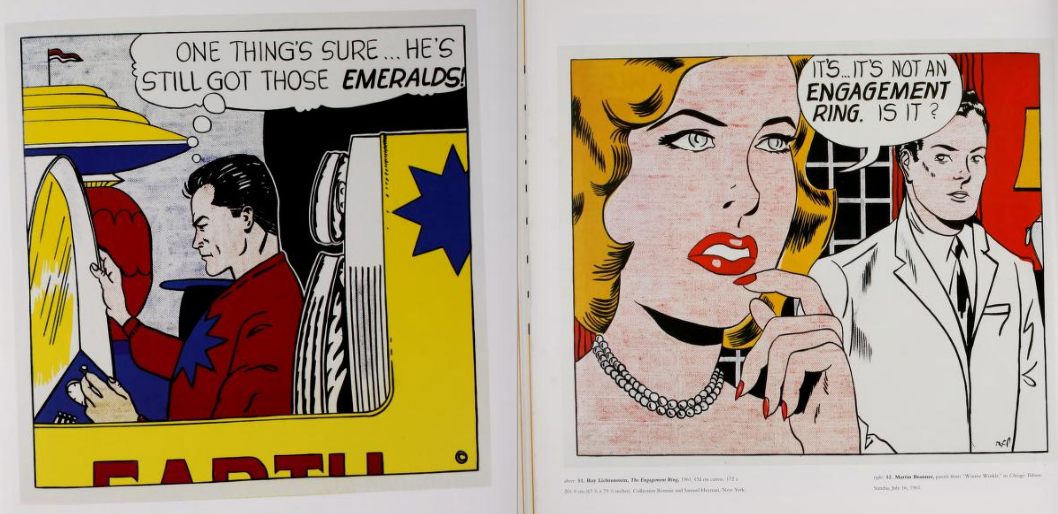
Where to start amid all these books of modern (and even some of pre-modern) art? You might consider first having a look at the books in the Internet Archive’s Guggenheim collection about the Guggenheim itself: the handbook to its collection up through 1980, for instance, or 1991’s Masterpieces from the Guggenheim Collection: From Picasso to Pollock, or the following year’s Guggenheim Museum A to Z, or Art of this Century: The Guggenheim Museum and its Collection from the year after that. But just as when you pay a visit to the Guggenheim itself, you shouldn’t worry too much about what order you see everything in; the important thing is to look with interest.
Explore the collection of 200+ art books and catalogues here.
If you would like to support the mission of Open Culture, consider making a donation to our site. It’s hard to rely 100% on ads, and your contributions will help us continue providing the best free cultural and educational materials to learners everywhere. You can contribute through PayPal, Patreon, and Venmo (@openculture). Thanks!
Related Content:
Download 448 Free Art Books from The Metropolitan Museum of Art
Download Over 300+ Free Art Books From the Getty Museum
The Guggenheim Puts Online 1600 Great Works of Modern Art from 575 Artists
Based in Seoul, Colin Marshall writes and broadcasts on cities and culture. He’s at work on a book about Los Angeles, A Los Angeles Primer, the video series The City in Cinema, the crowdfunded journalism project Where Is the City of the Future?, and the Los Angeles Review of Books’ Korea Blog. Follow him on Twitter at @colinmarshall or on Facebook.
Read More...Robert Pirsig Reveals the Personal Journey That Led Him to Write His Counterculture Classic, Zen and the Art of Motorcycle Maintenance (1974)
I well remember pulling Robert Pirsig’s Zen and the Art of Motorcycle Maintenance from my parents’ shelves at age twelve or thirteen, working my way through a few pages, and stopping in true perplexity to ask, “what is this?” The book fit no formal scheme or genre I had ever encountered before. I understood its language, but I did not know how to read it. I still don’t, though I’ve had decades to study some of Pirsig’s references and influences, from Plato to Kant to Dōgen. Is this memoir? Fiction? Philosophy? A meditation on machinery, like Henry Adams’ strange essay “The Dynamo and the Virgin”? Yes.
Pirsig’s countercultural classic, published in 1974 after five years of rejections (121 in total) was “not… a marketing man’s dream,” as the editor at his eventual publisher, William Morrow, wrote to him at the time. Nevertheless, it sold—“50,000 copies in three months,” writes the L.A. Times, “and more than 5 million in the decades since. The dense tome has been translated into at least 27 languages…. Its popularity made Pirsig ‘probably the most widely read philosopher alive,’ one British journalist wrote in 2006.’” Pirsig, who died this past Monday, only wrote one other work, the philosophical novel Lila: An Inquiry into Morals. But he will be remembered as an important, if quixotic, figure in 20th century thought.
Zen ostensibly recounts a motorcycle journey Pirsig took with his son, Chris, and two friends. They are shadowed by another character, Phaedrus, the author’s neurotic alter ego. Pirsig poured all of himself into the book: his unorthodox philosophical and spiritual journey, his struggle with schizophrenia, his close and fretful relationship to his son (who later succumbed to drug addiction and was murdered at age 22, five years after Zen came out). It is a book “filled with unanswered and, perhaps, unanswerable questions.”
The kind of deep ambiguity and uncertainty Zen explores is not easy to write about, unsurprisingly, and in the NPR interview above from 1974, Pirsig describes his struggles as a writer—the distractions and intrusions, the self-doubt and confusion. Pirsig secluded himself for much of the writing of the book, and for much of it worked a day job writing technical manuals, which explains quite a lot about its intricate levels of technical detail.
Pirsig’s descriptions of the hard-won self-discipline (and exhaustion) that the writer’s life requires will ring true for anyone who has tried to write a book. He sums up his motivation succinctly: “this was really a compulsive book. If I didn’t do it, I’d feel worse than if I did do it.” But Pirsig found he couldn’t make any progress as a writer until he gave up trying to be “in quotes, a ‘writer,’” or play the role of one anyway. “It was always a separation of my real self from the act of writing,” he says.
His process sounds like the freewriting of Kerouac’s road novel or the automatic writing of the Surrealists: “I could almost watch my hand moving on the page; there was almost no volition one way or the other, it was just happening.” What he identifies as the “sincerity” of the book’s voice helps steady readers who must trust a very unreliable narrator to guide them through a philosophy of what Pirsig calls “quality”—a metaphysical condition that underlies religions and philosophies East and West. “One can meditate,” he wrote, “on the fact that the old English roots for the Buddha and Quality, God and good, appear to be identical.” Pirsig subjected all human endeavor to the scrutiny of “quality,” including so-called “value free” science, a characterization he found dubious.
In the BBC radio interview above, you can hear Pirsig describe his personal and intellectual journey, which took him through a troubled childhood in Minnesota, a tour in the Korean War, an academic career, and eventually a central role in the “whole attempt to reform America” begun by “beatniks” and “hippies” in San Francisco. (Both words, he wrote, were “cliches and stereotypes… invented for the antitechnologists, the antisystem people.”) Urged by a university colleague to pursue the question “what is quality?,” Pirsig undertook an obsessive investigation. His willingness and courage to follow wherever it led defined the rest of his life as a writer and thinker.
12 Classic Literary Road Trips in One Handy Interactive Map
Philosophy of Religion: A Free Online Course
Josh Jones is a writer and musician based in Durham, NC. Follow him at @jdmagness
Read More...Watch Teeny Tiny Japanese Meals Get Made in a Miniature Kitchen: The Joy of Cooking Mini Tempura, Sashimi, Curry, Okonomiyaki & More
Every time I go to Japan, I marvel at the artificial sandwiches, omelets, bowls of noodles, and parfaits displayed outside even the humblest shopping-arcade cafés, all made to give the customer a more vivid sense of the dishes on offer than would any two-dimensional photograph. But while those fake foods, made to scale with polyvinyl chloride and other inedible materials, do reflect Japan’s long tradition of high-quality hand-craftsmanship, they don’t reflect some of the culture’s other virtues: the advanced Japanese skills of miniaturization (remarked upon by even the earliest Western visitors to the once-closed country), not to mention the deliciousness of actual Japanese food.
At a stroke, the Youtube channel Miniature Space combines all of those into a single project: its creators replicate a variety of classic Japanese, Western, and Japanese-Western dishes like shrimp tempura, curry, and okonomiyaki on video, all at what seems an impossibly small scale. Not only that, but they use only miniature kitchen tools, right down to wee knives, spatulas, and rolling pins as well as tea candle-powered stoves.
Some of these, writes iDigitalTimes’ ND Medina, “come from Re-Ment, a Japanese company noted for the impressive detail of its miniatures. However, many of the tools used have long been out of production, like anything by Konapun, a brand which made fun miniature cooking sets for kids to experience the joys of cooking.”
Miniature cooking at this level of rigor requires not just considerable manual dexterity but a certain knack for creative substitution: toothpicks instead of standard skewers, quail eggs instead of chicken eggs, special shrimp from the aquarium supply store small enough to fit inside one’s thimble-sized cooking pot. Though aesthetically satisfying on many levels and technically edible to boot, these mini-meals wouldn’t satisfy any normal human appetite. Nevertheless, watching enough Miniature Space videos in a row will almost certainly get you hungering for a regular-sized grill of yakitori, bowl of spaghetti, or plate of pancakes — and leave you with some of the know-how needed to make such dishes, even in a non-miniature kitchen.
You can view a playlist of miniature Japanese cooking here.
Related Content:
Cookpad, the Largest Recipe Site in Japan, Launches New Site in English
How Japanese Things Are Made in 309 Videos: Bamboo Tea Whisks, Hina Dolls, Steel Balls & More
Based in Seoul, Colin Marshall writes and broadcasts on cities and culture. He’s at work on a book about Los Angeles, A Los Angeles Primer, the video series The City in Cinema, the crowdfunded journalism project Where Is the City of the Future?, and the Los Angeles Review of Books’ Korea Blog. Follow him on Twitter at @colinmarshall or on Facebook.
Read More...David Mamet Teaches Dramatic Writing in a New Online Course
FYI: If you sign up for a MasterClass course by clicking on the affiliate links in this post, Open Culture will receive a small fee that helps support our operation.
David Mamet, one of America’s preeminent playwrights and screenwriters, is now offering an online course on Dramatic Writing over at MasterClass. Featuring 26 video lessons and a downloadable workbook, the course will take you through Mamet’s “process for turning life’s strangest moments into dramatic art. He’ll teach you the rules of drama, the nuances of dialogue, and the skills to develop your own voice and create your masterpiece.” The cost is $90. It’s not every day that you can get inside the creative process of the Pulitzer Prize-winning writer of Glengarry Glen Ross. So perhaps it’s money well spent. (If you want to give this course as a gift, just click here.)
As we’ve previously mentioned, MasterClass has enlisted other accomplished figures to teach courses on their craft–eg, Steve Martin does comedy; Werner Herzog, filmmaking; Aaron Sorkin, screenwriting; Christina Aguilera, singing, and Frank Gehry, architecture, to name a few. You can browse their complete list of courses here. And, for $180, you can now get a year-long pass to all Masterclass courses.
If you’re looking for free courses, check out our collection, 1,700 Free Online Courses from Top Universities.
If you would like to support the mission of Open Culture, consider making a donation to our site. It’s hard to rely 100% on ads, and your contributions will help us continue providing the best free cultural and educational materials to learners everywhere. You can contribute through PayPal, Patreon, and Venmo (@openculture). Thanks!
Read More...New Film Project Features Citizens of Alabama Reading Walt Whitman’s “Song of Myself,” a Poetic Embodiment of Democratic Ideals
In times of national anxiety, many of us take comfort in the fact that the U.S. has endured political crises even more severe than those at hand. History can be a teacher and a guide, and so too can poetry, as Walt Whitman reminds us again and again. Whitman witnessed some of the greatest upheavals and revolutionary changes the country has ever experienced: the Civil War and its aftermath, the assassination of Abraham Lincoln, the failure of Reconstruction, the massive industrialization of the country at the end of the 19th century.…
Perhaps this is why we return to Whitman when we make what critics call a “poetic turn.” His expansive, multivalent verse speaks for us when beauty, shock, or sadness exceed the limits of everyday language. Whitman contained the nation’s warring voices, and somehow reconciled them without diluting their uniqueness. This was, indeed, his literary mission, to “create a unified whole out of disparate parts,” argues Karen Swallow Prior at The Atlantic. “For Whitman, poetry wasn’t just a vehicle for expressing political lament; it was also a political force in itself.” Poetry’s importance as a binding agent in the fractious, fragile coalition of states, meant that for Whitman, the country’s “Presidents shall not be their common referee so much as their poets shall.”
Whitman wrote as a gay man who, by the time he published the first edition of Leaves of Grass in 1855, had gone from being an “ardent Free-Soiler” to fully supporting abolition. His poetry proclaimed a “radically egalitarian vision,” writes Martin Klammer, “of an ideal, multiracial republic.” A country that was, itself, a poem. “The United States themselves are essentially the greatest poem,” wrote Whitman in his preface. The nation’s contradictions inhabit us just as we inhabit them. The only way to resolve our differences, he insisted, is to embody them fully, with openness toward other people and the natural world. Understanding Whitman’s mission makes filmmaker Jennifer Crandall’s project Whitman, Alabama all the more poignant.
For two years, Crandall “crisscrossed this deep Southern state, inviting people to look into a camera and share part of themselves through the words of Walt Whitman.” To the question “Who is American?,” Crandall—just as Whitman before her—answers with a multitude of voices, weaving in and out of a collaborative reading of the epic “Song of Myself,” beginning with 97-year-old Virginia Mae Schmitt of Birmingham, at the top, who reads Whitman’s lines, “I, now thirty-seven years old in perfect health begin / Hoping to cease not till death.” No one watching the video, Crandall remarks, should ask, “Why isn’t’ a thirty-seven year old man reading this?” To do so is to ignore Whitman’s design for the universal in the particular.
When Whitman penned the first lines of “Song of Myself,” the country had not yet “Unlimber’d” the cannons “to begin the red business,” as he would later write, but the 1850 Fugitive Slave Act had clearly lain the foundation for civil war. The poet’s many revisions, additions, and subsequent editions of Leaves of Grass after his first small run in 1855 continued until his death in 1892. He was obsessed with the hugeness and dynamism of the country and its people, in their darkest, bloodiest moments and at their most flourishing. His vision lets everyone in, without qualification, constantly rewriting itself to meet new faces in the ever-changing nation.
As Mariam Jalloh, a 14-year old Muslim girl from Guinea, recites in her short portion of the reading further up, “every atom belonging to me as good belongs to you.” Jollah quite literally makes Whitman’s language her own, translating into her native Fulani the line, “If they are not just as close as they are distant, they are nothing.” Jalloh “may seem like a surprising conduit for the writing of Whitman, a long-dead queer socialist poet from Brooklyn,” writes Christian Kerr at Hyperallergic, “but such incongruity is the active agent in Whitman, Alabama’s therapeutic salve.” It is also, Whitman suggested, the matrix of American democracy.
See more readings from the project above from Laura and Brandon Reeder of Cullman, the Sullivan family of Mobile, and by Demetrius Leslie and Frederick George, and Patricia Marshall and Tammy Cooper, inmates at mens’ and womens’ prisons in Montgomery. Whitman’s voice winds through these bodies and voices, settling in, finding a home, then, restless, moving on, inviting us all to join in the chorus, yet also—in its contrarian way—telling us to find our own paths. “You shall no longer take things at second or third hand.…,” wrote Whitman, “nor look through the eyes of the dead, nor feed on the spectres in books, / You shall not look through my eyes either, nor take things from me, / You shall listen to all sides and filter them from yourself.”
Find many more readings at the Whitman, Alabama website. And stay tuned for new readings as they come online.
Also find works by Walt Whitman on our lists of Free Audio Books and Free eBooks.
Related Content:
The Civil War & Reconstruction: A Free Course from Yale University
Josh Jones is a writer and musician based in Durham, NC. Follow him at @jdmagness
Read More...Milton Glaser’s 10 Rules for Life & Work: The Celebrated Designer Dispenses Wisdom Gained Over His Long Life & Career
“None of us has really the ability to understand our path until it’s over,” the celebrated graphic designer Milton Glaser muses less than a minute into the above video.
The 86-year-old Glaser’s many contributions to pop culture—the I ❤ NY logo, the psychedelic portrait of a rainbow-haired Bob Dylan, DC Comics’ classic bullet logo—confer undeniable authority. To the outside eye, he seems to have a pretty firm handle on the path he’s been traveling for lo these many decades. Aspirant designers would do well to give extra consideration to any advice he might share.
As would the rest of us.
His “Ten Things I Have Learned,” originally delivered as part of a talk to the AIGA—a venerable membership organization for design professionals—qualifies as solid life advice of general interest.
Yes, the Internet spawns bullet-pointed tips for better living the way spring rains yield mushrooms, but Glaser, a self-described “child of modernism” who’s still a contender, does not truck in pithy Instagram-friendly aphorisms. Instead, his list is born of reflection on the various turns of a long and mostly satisfying creative career.
We’ve excerpted some of his most essential points below, and suggest that those readers who are still in training give special emphasis to number seven. Don’t place too much weight on number nine until you’ve established a solid work ethic. (See number four for more on that.)
MILTON GLASER”S TEN RULES FOR WORK AND LIFE (& A BONUS JOKE ABOUT A RABBIT).
1. YOU CAN ONLY WORK FOR PEOPLE THAT YOU LIKE
Some years ago I realized that… all the work I had done that was meaningful and significant came out of an affectionate relationship with a client.
2. IF YOU HAVE A CHOICE NEVER HAVE A JOB
Here, Glaser quotes composer John Cage: Never have a job, because if you have a job someday someone will take it away from you and then you will be unprepared for your old age.
3. SOME PEOPLE ARE TOXIC AVOID THEM.
Glaser recommends putting a questionable companion to a gestalt therapy test. If, after spending time with that person “you are more tired, then you have been poisoned. If you have more energy, you have been nourished. The test is almost infallible and I suggest that you use it for the rest of your life.”
4. PROFESSIONALISM IS NOT ENOUGH (or THE GOOD IS THE ENEMY OF THE GREAT)
Glaser concedes that a record of dependable excellence is something to look for in a brain surgeon or auto mechanic, but for those in the arts, “continuous transgression” is the quality to cultivate. Professionalism does not allow for that because transgression has to encompass the possibility of failure and if you are professional your instinct is not to fail, it is to repeat success.
5. LESS IS NOT NECESSARILY MORE
I have an alternative to the proposition that I believe is more appropriate. ‘Just enough is more.’
6. STYLE IS NOT TO BE TRUSTED
Style change is usually linked to economic factors, as all of you know who have read Marx. Also fatigue occurs when people see too much of the same thing too often.
7. HOW YOU LIVE CHANGES YOUR BRAIN
The brain is the most responsive organ of the body…. Thought changes our life and our behavior. I also believe that drawing works in the same way…. Drawing also makes you attentive. It makes you pay attention to what you are looking at, which is not so easy.
8. DOUBT IS BETTER THAN CERTAINTY
One of the signs of a damaged ego is absolute certainty. Schools encourage the idea of not compromising and defending your work at all costs. Well, the issue at work is usually all about the nature of compromise…. Ideally, making everyone win through acts of accommodation is desirable.
9. IT DOESN’T MATTER
Glaser credits essayist Roger Rosenblatt’s Rules for Aging (misidentifying the title as Aging Gracefully) with helping him articulate his philosophy here. It doesn’t matter what you think. It does not matter if you are late or early, if you are here or there, if you said it or didn’t say it, if you are clever or if you were stupid. If you were having a bad hair day or a no hair day or if your boss looks at you cockeyed or your boyfriend or girlfriend looks at you cockeyed, if you are cockeyed. If you don’t get that promotion or prize or house or if you do – it doesn’t matter.
10. TELL THE TRUTH
It’s interesting to observe that in the new AIGA’s code of ethics there is a significant amount of useful information about appropriate behavior towards clients and other designers, but not a word about a designer’s relationship to the public. If we were licensed, telling the truth might become more central to what we do.
BONUS JOKE
A butcher was opening his market one morning and as he did a rabbit popped his head through the door. The butcher was surprised when the rabbit inquired ‘Got any cabbage?’ The butcher said ‘This is a meat market – we sell meat, not vegetables.’ The rabbit hopped off. The next day the butcher is opening the shop and sure enough the rabbit pops his head round and says ‘You got any cabbage?’ The butcher now irritated says ‘Listen you little rodent, I told you yesterday we sell meat, we do not sell vegetables and the next time you come here I am going to grab you by the throat and nail those floppy ears to the floor.’ The rabbit disappeared hastily and nothing happened for a week. Then one morning the rabbit popped his head around the corner and said ‘Got any nails?’ The butcher said ‘No.’ The rabbit said ‘Ok. Got any cabbage?’’
Read Milton Glaser’s “Ten Things I Have Learned” in its entirety here.
Related Content:
Milton Glaser Draws Shakespeare & Explains Why Drawing is the Key to Understanding Life
World-Renowned Graphic Designer Milton Glaser Has a Laugh on Old Jews Telling Jokes
Ayun Halliday is an author, illustrator, theater maker and Chief Primatologist of the East Village Inky zine. Follow her @AyunHalliday.
Read More...Support Us
We're hoping to rely on loyal readers, rather than erratic ads. Please click the Donate button and support Open Culture. You can use Paypal, Venmo, Patreon, even Crypto! We thank you!

About Us

Open Culture scours the web for the best educational media. We find the free courses and audio books you need, the language lessons & educational videos you want, and plenty of enlightenment in between.
Advertise With Us

FREE UPDATES!
GET OUR DAILY EMAIL
Get the best cultural and educational resources on the web curated for you in a daily email. We never spam. Unsubscribe at any time.
FOLLOW ON SOCIAL MEDIA

Open Culture editor Dan Colman scours the web for the best educational media. He finds the free courses and audio books you need, the language lessons & movies you want, and plenty of enlightenment in between.
Advertise With Us