What Makes a Coen Brothers Movie a Coen Brothers Movie? Find Out in a 4‑Hour Video Essay of Barton Fink, The Big Lebowski, Fargo, No Country for Old Men & More
What could movies as different as Barton Fink, The Big Lebowski, No Country for Old Men, and True Grit have in common? Even casual cinephiles will take that as a silly question, knowing full well that all of them came from the same sibling writing-directing team of Joel and Ethan Coen, better known as the Coen brothers. But to those who really dig deep into movies, the question stands: what, aesthetically, formally, intellectually, or emotionally, does unify the filmography of the Coen brothers? Though it boasts more than its fair share of critical, commercial, and cult fan favorites, its auteurs seemingly prefer to mark their work with many subtle signatures rather than one bold and obvious one.
Cameron Beyl, creator of The Directors Series (whose examinations of Stanley Kubrick and David Fincher we’ve previously featured here on Open Culture), finds out just what makes a Coen brothers movie a Coen brothers movie in his seven-part, nearly four-hour set of video essays on the two Jewish brothers from the Minnesota suburbs who went on to make perhaps the most distinctive impact on the zeitgeist of their generation of American filmmakers.
He begins with the Coen brothers’ Texas noir debut Blood Simple and sophomore southwestern slapstick Raising Arizona, then goes on to their larger-scale postmodern period pieces Miller’s Crossing, Barton Fink, and the Hudsucker Proxy.
The next chapter covers their breakout films of the late 1990s Fargo and The Big Lebowski, and then two highly stylized pictures, the Odyssey-inspired prison break O Brother, Where Art Thou? and the black-and-white noir The Man Who Wasn’t There. Then come Intolerable Cruelty and The Ladykillers, two 21st-century screwball comedies, followed by their “prestigious pinnacle,” the acclaimed four-picture stretch of No Country for Old Men, Burn After Reading, A Serious Man, and True Grit.
The final chapter (below) looks at the Coen brothers’ two most recent works, both of which take on the culture industry: Inside Llewyn Davis, the tale of a would-be 1960s folk star, and Hail, Caesar!, one of early-1950s Hollywood.
Beyl’s analysis brings to the fore both the more and the less visible common elements of the Coen brothers’ movies. The former include their fondness for historical and “middle American” settings, their repeated use of actors like John Goodman, Steve Buscemi, Frances McDormand, and John Turturro, and their tendency to move the camera with what Beyl several times describes as “breakneck speed.” The latter include easily missable place and character interconnections (for instance, how Barton Fink and Hail, Caesar!, set a decade apart and made a quarter-century apart, involve the same fictional Hollywood studio) and their simultaneous deployment and subversion of genre conventions, possibly owing to their lifelong “outsider” perspective.
But above all, nothing signals the work of the Coen brothers quite so clearly as their ever-more-refined mixture of zaniness and brutality, which Beyl puts in terms of their mixture of disparate filmmaking influences: Preston Sturges on one hand, for example, and Sam Peckinpah on the other. This comes with their films’ built-in resistance to straightforward interpretation, a kind of pleasurable complexity that prevents any one simple historical, social, or political reading from making much headway. In fact, as Beyl acknowledges in the first of these video essays, the Coen brothers would probably consider this sort of long-form examination of their work a waste of time, but if it sends viewers back to that work — and especially if it sends them back watching and noticing more closely — it does a favor to the rare kind of modern cinema that actually merits the word unique.
Related Content:
How the Coen Brothers Storyboarded Blood Simple Down to a Tee (1984)
Is The Big Lebowski a Great Noir Film? A New Way to Look at the Coen Brothers’ Iconic Movie
Tuileries: A Short, Slightly Twisted Film by Joel and Ethan Coen
World Cinema: Joel and Ethan Coen’s Playful Homage to Cinema History
Discover the Life & Work of Stanley Kubrick in a Sweeping Three-Hour Video Essay
How Did David Fincher Become the Kubrick of Our Time? A New Series of Video Essays Explains
Based in Seoul, Colin Marshall writes and broadcasts on cities and culture. He’s at work on a book about Los Angeles, A Los Angeles Primer, the video series The City in Cinema, the crowdfunded journalism project Where Is the City of the Future?, and the Los Angeles Review of Books’ Korea Blog. Follow him on Twitter at @colinmarshall or on Facebook.
Read More...Discover the Creative, New Philosophy Podcast Hi-Phi Nation: The First Story-Driven Show About Philosophy
Let me call your attention to a new and quite different philosophy podcast. Created by Barry Lam (Associate Professor of Philosophy at Vassar College), Hi-Phi Nation is a philosophy podcast “that turns stories into ideas.” Consider it “the first sound and story-driven show about philosophy, bringing together narrative storytelling, investigative journalism, and soundtracking.”
Above you can watch a trailer that introduces Hi-Phi Nation, which is now available on iTunes, Google Play, Soundcloud and this website. Below, hear Episode 9 of Season 1, called “The Ashes of Truth.” Among other things, it features filmmaker Errol Morris.
The first season of Hi-Phi Nation has been made possible by the National Endowment for the Humanities, The Center for Documentary Studies at Duke University, the Humanities-Writ Large Fellowship, and other institutions. Learn more about the show by reading these write-ups by Vassar and Princeton.
If you would like to support the mission of Open Culture, consider making a donation to our site. It’s hard to rely 100% on ads, and your contributions will help us continue providing the best free cultural and educational materials to learners everywhere. You can contribute through PayPal, Patreon, and Venmo (@openculture). Thanks!
Related Content:
Free Online Philosophy Courses
The History of Philosophy … Without Any Gaps
A History of Philosophy in 81 Video Lectures: From Ancient Greece to Modern Times
The History of Philosophy Visualized
Read More...How to Make the World’s Smallest Cup of Coffee, from Just One Coffee Bean
The Finnish coffee company, Paulig, has been around for a good long while–since 1876, to precise. But only in 2017 did they get around to doing this–enlisting Helsinki designer Lucas Zanotto “to make the smallest cup of coffee, out of 1 bean.” Zanotto doesn’t need much more than a nail file, candle, and thimble-sized cup to produce that tiny cup of joe. Conceptually, it’s a neat exercise in efficiency and conservation. But, practically speaking, will it get you through the day?
If you would like to support the mission of Open Culture, consider making a donation to our site. It’s hard to rely 100% on ads, and your contributions will help us continue providing the best free cultural and educational materials to learners everywhere. You can contribute through PayPal, Patreon, and Venmo (@openculture). Thanks!
Related Content:
A Rollicking French Animation on the Perils of Drinking a Little Too Much Coffee
Philosophers Drinking Coffee: The Excessive Habits of Kant, Voltaire & Kierkegaard
David Lynch Directs a Mini-Season of Twin Peaks in the Form of Japanese Coffee Commercials
“The Virtues of Coffee” Explained in 1690 Ad: The Cure for Lethargy, Scurvy, Dropsy, Gout & More
Read More...Hear Four Hours of Music in Jim Jarmusch’s Films: Tom Waits, Iggy Pop, Neil Young, Screamin’ Jay Hawkins & More
“I gotta say — not to rant, but — one thing about commercial films is, doesn’t the music almost always really suck?” Jim Jarmusch, director of films like Stranger Than Paradise, Mystery Train, Broken Flowers, and most recently Paterson, put that important question to his audience during a live interview a few years ago. “I’ve seen good movies — or maybe they would be good — just destroyed by the same crap, you know? If you look at films from even in the seventies, it wasn’t that bad. People had some sense of music for films. But maybe that’s just the commercial realm: guys in suits come and tell ’em what kind of music to put on.”
Jarmusch’s own movies draw obsessive fans as well as bewildered detractors, but they’ll never draw the accusation of having their soundtracks assembled by guys in suits. Music seems to matter to his work on almost as fundamental a level as images, not just in the final products but in every stage of their creation as well.
“I get a lot of inspiration from music, probably more than any other form,” he says in the same interview. “For me, music is the most pure form. It’s like another language. Whenever I start writing a script, I focus on music that sort of kickstarts my ideas or my imagination.” The process has also resulted in several high-profile collaborations with musicians, such as Neil Young in the “acid western” Dead Man and the Wu-Tang Clan’s RZA in the urban samurai tale Ghost Dog.
You can hear four hours of the music that makes Jim Jarmusch movies Jim Jarmusch movies in the Spotify playlist embedded just above. (If you don’t have Spotify’s free software, you can download it here.) Its 76 tracks begin, suitably, with Screamin’ Jay Hawkins’ “I Put a Spell on You,” to which Eszter Balint famously danced in Jarmusch’s breakout feature Stranger Than Paradise. Five years later, Jarmusch cast Hawkins himself as the concierge of a run-down Memphis hotel in Mystery Train. Between those pictures came Down by Law, the black-and-white New Orleans jailbreak picture starring no less an icon of American singing-songwriting than Tom Waits, whose work appears on this playlist alongside that of Roy Orbison, Elvis Presley, Otis Redding, Neil Young and RZA, and many others.
Given the importance of music to his movies, it should come as no surprise that Jarmusch originally set out to become a musician himself, and now, in parallel with his career as one of America’s most respected living independent filmmakers, spends a fair chunk of his time being one. His band Sqürl, formed to record some instrumental pieces to score 2009’s The Limits of Control, has now grown into its own separate entity, and several of their tracks appear on this playlist. Jarmusch described their music to the New York Times Magazine as follows: “It varies between avant noise-rock, drone stuff and some song-structured things with vocals. And some covers of country songs that we slow down and give a kind of molten treatment to” — all of which fits right in with the rest of the music that has shaped his movies.
Related Content:
Jim Jarmusch’s Anti-MTV Music Videos for Talking Heads, Neil Young, Tom Waits & Big Audio Dynamite
Jim Jarmusch: The Art of the Music in His Films
New Jim Jarmusch Documentary on Iggy Pop & The Stooges Now Streaming Free on Amazon Prime
Based in Seoul, Colin Marshall writes and broadcasts on cities and culture. He’s at work on a book about Los Angeles, A Los Angeles Primer, the video series The City in Cinema, the crowdfunded journalism project Where Is the City of the Future?, and the Los Angeles Review of Books’ Korea Blog. Follow him on Twitter at @colinmarshall or on Facebook.
Read More...
Alec Baldwin Has a Podcast: Hear His Intimate Interviews with Patti Smith, Thom Yorke, Jerry Seinfeld, Ira Glass, Amy Schumer & More
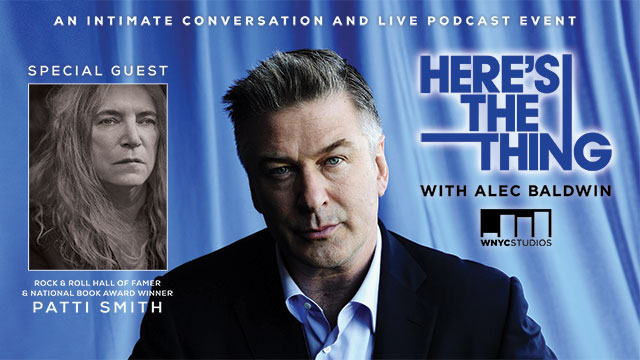
It somehow escaped me. Alec Baldwin has a podcast. With 133 episodes in its archive, Here’s The Thing with Alec Baldwin (Web — iTunes — Feeds) features “intimate and honest conversations” with “artists, policy makers and performers – to hear their stories, what inspires their creations, what decisions changed their careers, and what relationships influenced their work.” Below, we’ve embedded his recent conversation with Patti Smith. It’s quite good. But there are so many others worth a mention. Let me rattle off a quick list: REM’s Michael Stipe, Viggo Mortensen, Michael Pollan, Amy Schumer and Judd Apatow, William Friedkin, Paul Simon, Ira Glass, Jerry Seinfeld, David Simon, Radiohead’s Thom Yorke, Lena Dunham, Peter Frampton, David Letterman, Carol Burnett, Kristen Wiig, SNL’s Lorne Michaels, and Chris Rock.
Click the links to stream each interview, and don’t miss Baldwin’s new memoir, Nevertheless. He happens to narrate the audiobook version, which you can download for free if you sign up for Audible.com’s 30-day free trial. We have info on that here.
If you would like to support the mission of Open Culture, consider making a donation to our site. It’s hard to rely 100% on ads, and your contributions will help us continue providing the best free cultural and educational materials to learners everywhere. You can contribute through PayPal, Patreon, and Venmo (@openculture). Thanks!
Read More...Philosophical, Sci-Fi Claymation Film Answers the Timeless Question: Which Came First, the Chicken or the Egg?
It’s a question that’s occupied our greatest thinkers, from Aristotle and Plato to Neil deGrasse Tyson and Bill Nye:
Which came first—the chicken or the egg?
The debate will likely rage as long as there’s a faith-based camp to square off against the evidence-based camp.
With that in mind, and the weekend looming, we’re inclined to go with the Claymation camp, in the form of Time Chicken, Nick Black’s 6‑minute stop-motion meditation, above.
Described by its creator as a “philosophical-action-fantasy into the world of science, religion, knowledge and creation,” Time Chicken benefits from an appropriately bombastic original score performed by the Prague Symphony Orchestra and the seeming-eyewitness testimony of its admittedly clay-based, all-poultry cast.
Black’s copious cinematic references and science fiction tropes are every bit as delectable as a Mughal style egg-stuffed whole chicken slow cooked in a rich almond-poppy seeds-yogurt-&-saffron gravy.
Kudos to the filmmaker, too, for eschewing the uncredited dubbing that made fellow claymator Nick (Park)’s Chicken Run a crossover hit, trusting instead in the (unsubtitled) original language of his subjects.
Readers, watch this hilarious little film and weigh in. Which came first? The chicken? Or the egg?
Related Content:
Ayun Halliday is an author, illustrator, theater maker and Chief Primatologist of the East Village Inky zine. Follow her @AyunHalliday.
Read More...NASA Releases a Massive Online Archive: 140,000 Photos, Videos & Audio Files Free to Search and Download
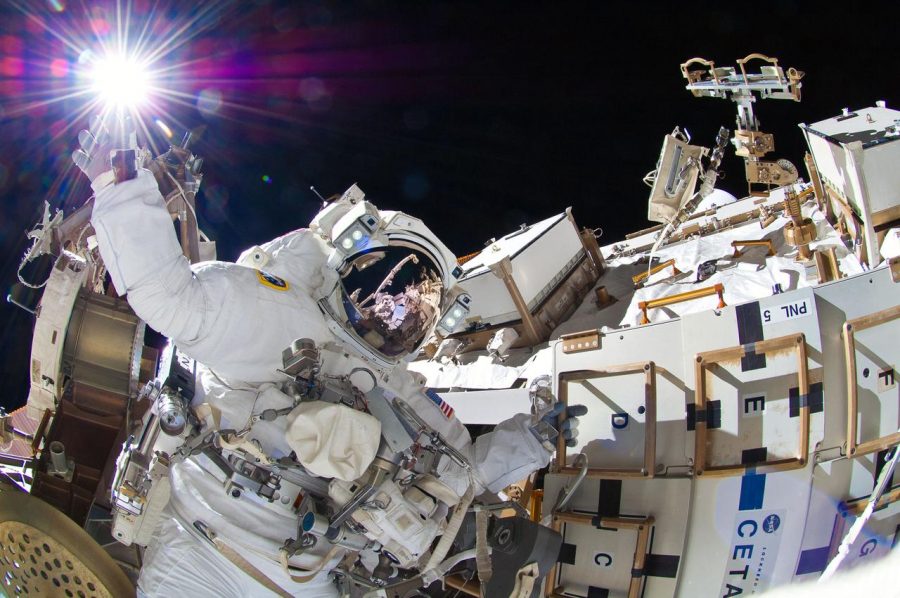
Last summer, astronomer Michael Summer wrote that, despite a relatively low profile, NASA and its international partners have been “living Carl Sagan’s dream for space exploration.” Summers’ catalogue of discoveries and groundbreaking experiments—such as Scott Kelly’s yearlong stay aboard the International Space Station—speaks for itself. But for those focused on more earthbound concerns, or those less emotionally moved by science, it may take a certain eloquence to communicate the value of space in words. “Perhaps,” writes Summers, “we should have had a poet as a member of every space mission to better capture the intense thrill of discovery.”

Sagan was the closest we’ve come. Though he never went into space himself, he worked closely on NASA missions since the 1950s and communicated better than anyone, in deeply poetic terms, the beauty and wonder of the cosmos. Likely you’re familiar with his “pale blue dot” soliloquy, but consider this quote from his 1968 lectures, Planetary Exploration:
There is a place with four suns in the sky — red, white, blue, and yellow; two of them are so close together that they touch, and star-stuff flows between them. I know of a world with a million moons. I know of a sun the size of the Earth — and made of diamond. There are atomic nuclei a few miles across which rotate thirty times a second. There are tiny grains between the stars, with the size and atomic composition of bacteria. There are stars leaving the Milky Way, and immense gas clouds falling into it. There are turbulent plasmas writhing with X- and gamma-rays and mighty stellar explosions. There are, perhaps, places which are outside our universe. The universe is vast and awesome, and for the first time we are becoming a part of it.
Sagan’s lyrical prose alone captured the imagination of millions. But what has most often made us to fall in love with, and fund, the space program, is photography. No mission has ever had a resident poet, but every one, manned and unmanned, has had multiple high-tech photographers.
NASA has long had “a trove of images, audio, and video the general public wanted to see,” writes Eric Berger at Ars Technica. “After all, this was the agency that had sent people to the Moon, taken photos of every planet in the Solar System, and launched the Hubble Space Telescope.”

Until the advent of the Internet, only a few select, and unforgettable, images made their way to the public. Since the 1990s, the agency has published hundreds of photos and videos online, but these efforts have been fragmentary and not particularly user-friendly. That changed this month with the release of a huge photo archive—140,000 pictures, videos, and audio files, to be exact—that aggregates materials from the agency’s centers all across the country and the world, and makes them searchable. The visual poetry on display is staggering, as is the amount of technical information for the more technically inclined.

Since Summers lauded NASA’s accomplishments, the fraught politics of science funding have become deeply concerning for scientists and the public, provoking what will likely be a well-attended march for science tomorrow. Where does NASA stand in all of this? You may be surprised to learn that the president has signed a bill authorizing considerable funding for the agency. You may be unsurprised to learn how that funding is to be allocated. Earth science and education are out. A mission to Mars is in.

As I perused the stunning NASA photo archive, picking my jaw up from the floor several times, I found in some cases that my view began to shift, especially while looking at photos from the Mars rover missions, and reading the captions, which casually refer to every rocky outcropping, mountain, crater, and valley by name as though they were tourist destinations on a map of New Mexico. In addition to Sagan’s Cosmos, I also began to think of the colonization epics of Ray Bradbury and Kim Stanley Robinson—the corporate greed, the apocalyptic wars, the history repeating itself on another planet….

It’s easy to blame the current anti-science lobby for shifting the focus to planets other than our own. There is no justification for the mutually assured destruction of climate science denialism or nuclear escalation. But in addition to mapping and naming galaxies, black holes, and nebulae, we’ve seen an intense focus on the Red Planet for many years. It seems inevitable, as it did to the most far-sighted of science fiction writers, that we would make our way there one way or another.

We would do well to recover the sense of awe and wonder outer space used to inspire in us—sublime feelings that can motivate us not only to explore the seemingly limitless resources of space but to conserve and preserve our own on Earth. Hopefully you can find your own slice of the sublime in this massive photo archive.
Related Content:
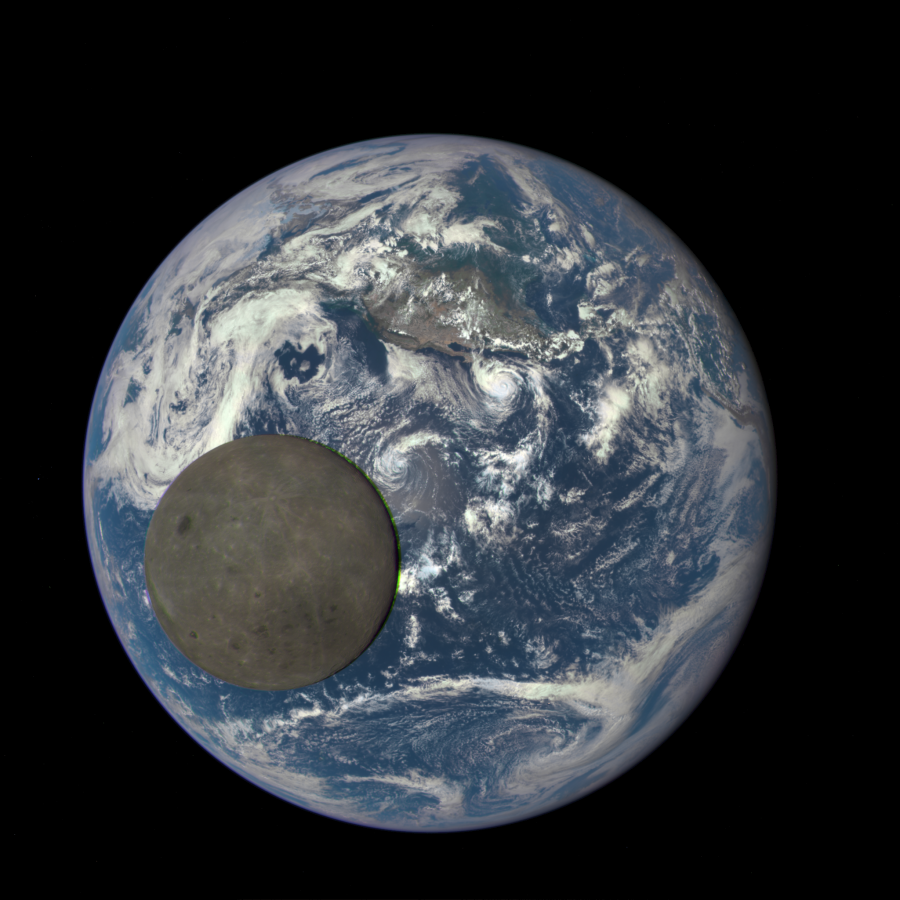
How the Iconic 1968 “Earthrise” Photo Was Made: An Engrossing Visualization by NASA
NASA Releases 3 Million Thermal Images of Our Planet Earth
NASA Its Software Online & Makes It Free to Download
Josh Jones is a writer and musician based in Durham, NC. Follow him at @jdmagness
Read More...An Interactive Visualization of Hegel’s Science of Logic (Available on Github)

In 1812, GWF Hegel published his Science of Logic. Two centuries later, one of his disciples put on Github an interactive visualisation of Hegel’s work, which essentially takes the structure of the text and puts it into a visual map. Whether the visualization has any utility, I’m not sure. But it’s fun to give it a quick spin.
If you would like to support the mission of Open Culture, consider making a donation to our site. It’s hard to rely 100% on ads, and your contributions will help us continue providing the best free cultural and educational materials to learners everywhere. You can contribute through PayPal, Patreon, and Venmo (@openculture). Thanks!
Related Content:
Free Online Philosophy Courses
Read More...5 Animations Introduce the Media Theory of Noam Chomsky, Roland Barthes, Marshall McLuhan, Edward Said & Stuart Hall
We watch it happen in real time, aghast as the media cannibalizes itself, turning reality into a parody of the kind we laughed at in goofy dystopian scenarios from Back to the Future, The Simpsons, Idiocracy. A brave new world of hypercredulity and monstrous disingenuousness arrived on our smart phones and TVs. It was gaudy and pernicious and lied to us like we couldn’t trust our lying eyes. We saw reality TV mainlined into reality. The response was to shout, “Fake News,” a phrase almost immediately redigested and spun into flimsy conspiracy theories. It now serves little purpose but to get the snake gnawing its tail again.
How?, many wondered in despair. Haven’t people read the theory? Noam Chomsky, Marshall McLuhan, Stuart Hall, Edward Said, Roland Barthes.… Didn’t we see them proven right time and again? But chances are if you know all these names, you’ve spent time in university English, Communications, or Media Studies departments.
You’ve hung around hip bookstores and coffeeshops in cities and puzzled over critical theory, pretending, perhaps, to have read at least one of these writers you hadn’t. You gave up your TV years ago and kept your kids away from screens (or told people you did). You fit, in other words, a certain profile, and while there’s nothing wrong with that, it was, in the scheme of things, a pretty narrow niche, and an often pretty smug one at that.
Maybe academics, critics, and journalists need to be better at talking and listening to ordinary people? Maybe fashionable waves of anti-intellectualism need to be resisted with almost religious vigor…? Whatever the solution(s) for mass media illiteracy, we can treat the video series here from Al Jazeera as a step in the right direction. Called “Media Theorized: Reading Against the Grain,” the project takes as its subtitle a quote from Roland Barthes, the French philosopher and literary critic who distilled cultural studies into highly readable essays, dissecting everything from wrestling to tourism to advertising. Barthes showed how these genres constitute symbolic texts, just like romantic novels and morality plays, but purport to show us unmediated truth.
“Media Theorized” surveys five cultural critics who have, in five different ways, made similar analyses of mass media. Marshall McLuhan famously declared the medium as the message: its signal inseparable from its noise; Noam Chomsky demonstrated how popular consent is engineered by a narrow set of shady special interests with influence over the media; Stuart Hall showed how mass media manipulates discourses of race, class, gender, and religion to misrepresent outsiders and marginalized people and keep them in their place in the social imaginary; and Edward Said documented the long tradition of “Orientalism”—a totalizing Euro-American discourse that estranges, belittles, and dehumanizes whole countries, cultures, and religious communities.
While it’s impossible to do justice to the richness and depth of their arguments with quick summaries and pithy animation, what “Media Theorized” does well is to present this handful of academics as accessible and uniquely relevant to our current situation. This works especially well because the presenters are people used to putting theory into practice, communicating with the public, and critiquing mass media. Activists and journalists from all over the world, who have not only contributed short videos on YouTube, but thoughtful supplementary essays and interviews at the “Media Theorized” site (which also includes high resolution posters from each video.) The project is an invitation for each of us to take several steps back and ask some highly pertinent questions about how and why the stories we’re told get told, and for whose benefit.
Millions of people have had enough and are demanding accountability from individual figures in the media—a positive development, to be sure, though it seems like too little too late. We need to understand the damage that’s been done, and continues to be done, by the systems mass media enable and sell. This series introduces “critical tools” we can use in our “everyday encounters” with such salesmanship.
Related Content:
Sci-Fi Author J.G. Ballard Predicts the Rise of Social Media (1977)
Josh Jones is a writer and musician based in Durham, NC. Follow him at @jdmagness
Read More...Salvador Dalí Figurines Let You Bring the Artist’s Surreal Paintings Into Your Home

Whether at the Museum of Modern Art, a dorm-room wall, or anywhere in between, we’ve all seen Salvador Dalí’s 1931 canvas The Persistence of Memory, and who among us wouldn’t want to own one of the “melting watches” it famously depicts? Alas, technology hasn’t quite caught up to that flamboyant Spanish surrealist’s vivid imagination: though clocks now come as flat as you like, no artistically minded entrepreneur has yet put such a Camembertishly malleable one into production. But that doesn’t mean you can’t surround yourself with the other stuff of Dalí’s paintings, thanks to this set of collectable figurines.

Just like the Hieronymus Bosch figurines we featured last month, these come from the UK manufacturer Parastone, and you can browse the selection on their Dalí page on Amazon. At the top of the post we have one of the tigers leaping from the mouth of a fish originally painted in 1944’s Dream Caused by the Flight of a Bee Around a Pomegranate a Second Before Awakening (another dorm-room favorite, incidentally). The folks at Parastone describe it as “a Freudian image based on a dream from Gala, Dalí’s wife.” Their figurine drawn from the previous year’s Geopoliticus Child Watching the Birth of the New Man, however, bears a message: “The new human must free itself from its oppressive entwinement with the past.”

Or perhaps you’d prefer to add not just a touch of Dalí to your home, but a touch of Dalí depicting Dalí. In that case you might consider Parastone’s three-dimensional version of his 1941 Soft Self-Portrait with Grilled Bacon. Salvador-Dali.org describes the image as “a spectre full of irony, where an amorphous, soft face appears, supported by crutches” — the face of Dalí himself — “with a pedestal that bears the inscription of the title of the work and, above, a slice of fried bacon, a symbol of organic matter and of the everyday nature of his breakfasts in New York’s Saint Regis Hotel.” Not only does the figurine thus feature a vogue meat of the early 21st-century, it renders it in a manner that perhaps even Dalí, also a noted cookbook author, would consider good enough to eat. See the full figurine collection here.

Related Content:
The Tarot Card Deck Designed by Salvador Dalí
Salvador Dalí’s 1973 Cookbook Gets Reissued: Surrealist Art Meets Haute Cuisine
Salvador Dalí’s Avant-Garde Christmas Cards
Walk Inside a Surrealist Salvador Dalí Painting with This 360º Virtual Reality Video
Based in Seoul, Colin Marshall writes and broadcasts on cities and culture. He’s at work on a book about Los Angeles, A Los Angeles Primer, the video series The City in Cinema, the crowdfunded journalism project Where Is the City of the Future?, and the Los Angeles Review of Books’ Korea Blog. Follow him on Twitter at @colinmarshall or on Facebook.
Read More...Support Us
We're hoping to rely on loyal readers, rather than erratic ads. Please click the Donate button and support Open Culture. You can use Paypal, Venmo, Patreon, even Crypto! We thank you!

About Us

Open Culture scours the web for the best educational media. We find the free courses and audio books you need, the language lessons & educational videos you want, and plenty of enlightenment in between.
Advertise With Us

FREE UPDATES!
GET OUR DAILY EMAIL
Get the best cultural and educational resources on the web curated for you in a daily email. We never spam. Unsubscribe at any time.
FOLLOW ON SOCIAL MEDIA

Open Culture editor Dan Colman scours the web for the best educational media. He finds the free courses and audio books you need, the language lessons & movies you want, and plenty of enlightenment in between.
Advertise With Us

