Acclaimed Japanese Jazz Pianist Yōsuke Yamashita Plays a Burning Piano on the Beach
Unlikely as it might seem, the Japanese jazz scene has for decades and decades produced some of the finest players in the world, from traditionalists to experimentalists and everything in-between. One might say the same about other jazz-inclined countries (those of northern Europe, for instance, having developed particularly robust scenes), but those countries have to do without enlivenment by “only in Japan” moments like the one we have above: jazz pianist Yōsuke Yamashita, acclaimed on both sides of the Pacific, playing piano on the beach — a piano on fire on the beach, to be precise.
This wasn’t even the first time he’d done it. In 1973, famed graphic designer Kiyoshi Awazu asked Yamashita to appear in his short film burning piano, playing the titular instrument. Watching it again 35 years later, Yamashita wrote, “Seeing myself engaged in that extraordinary performance, I felt this wave of emotion that was like, ‘What was that?’
In one sense, I had performed as an ‘object’ in a Kiyoshi Awazu artwork. In another, however, I had perhaps experienced a form of artistic expression that no one before me had ever experienced before, as the result of a situation that could only have happened at that time. ‘What was that?’ There was only one way I could reconfirm this for myself—by doing it one more time.”
The opportunity arose at the behest of Kanazawa’s 21st Century Museum of Contemporary Art, who staged Burning Piano 2008. You can read the event’s program as a PDF, which contains Yamashita’s reflections leading up to the event. It also contains remarks from an Awazu Design Room representative who witnessed the original burning piano shoot, a local piano dealer (who assures us that long after the piano “began to appear in Japanese homes in the era of high-level economic growth,” some “must be destroyed amid reluctant feelings”), and the mayor of Shika Town, on whose Masuhogaura Beach Yamashita donned his silver protective suit and played a funeral requiem on the flaming instrument until it could produce not a sound more.
“I did not think I was risking my life,” Yamashita later said, “but I was almost suffocating from the smoke that was continuously getting into my eyes and nose. I had decided to keep on playing until the piano stopped making sounds, so though I did not mean it, but it ended up having a life-or-death battle between the piano and myself.” Dedicated jazz players know what it means to suffer for their art, as do all the participants in the age-old intensive Japanese conception of mastery, but who would have guessed that those cultures would intersect so… combustibly?
Related Content:
CERN’s Cosmic Piano and Jazz Pianist Jam Together at The Montreux Jazz Festival
Hear the Experimental Piano Jazz Album by Comedian H. Jon Benjamin — Who Can’t Play Piano
Parking Garage Door Does Impression of Miles Davis’ Jazz Album, Bitches Brew
Hunter S. Thompson Sets His Christmas Tree on Fire, Nearly Burns His House Down (1990)
Based in Seoul, Colin Marshall writes and broadcasts on cities and culture. He’s at work on a book about Los Angeles, A Los Angeles Primer, the video series The City in Cinema, the crowdfunded journalism project Where Is the City of the Future?, and the Los Angeles Review of Books’ Korea Blog. Follow him on Twitter at @colinmarshall or on Facebook.
Read More...New York City: A Social History (A Free Online Course from N.Y.U.)
Taught by Daniel Walkowitz, this N.Y.U. course, entitled New York City: A Social History, covers the following ground:
New York City, growing from the small Dutch commercial settlement of New Amsterdam early in the seventeenth century into a bustling multi-cultural city of more than 7 million and metropolis of more than 15 million by the twentieth century, is a place with many stories. A semester of 14 weeks can only touch on some of them. This course will focus on the social history of the city – the peoples who have built the city and competing efforts by different numbers to authorize their dreams for the city. As arguably the capital for global capitalism today, one focus of this course will seek to plot its development and legacy for the shaping of the city. A more particular and related local story will be studied as well, however: the political and cultural interests, ideologies and players who shape and reshape the city as Manhattan, as New York and as the Metropolis.
You can watch the 26 lectures above, or find them on YouTube. New York City: A Social History will be added to our collection of Free Online History courses, a subset of our collection, 1,700 Free Online Courses from Top Universities.
If you would like to support the mission of Open Culture, consider making a donation to our site. It’s hard to rely 100% on ads, and your contributions will help us continue providing the best free cultural and educational materials to learners everywhere. You can contribute through PayPal, Patreon, and Venmo (@openculture). Thanks!
Read More...Giant Dinosaurs Travel Down the Hudson River: See What Awestruck New Yorkers Witnessed in 1963
Amazing things happen every day in New York City—some spontaneous, some whose execution is carefully planned over weeks and months.
Equally amazing is the total ignorance with which one can go about one’s business at just a few blocks remove … be it the Coney Island Mermaid Parade, Egg Rolls and Egg Creams, or the Three Kings Day Parade, some folks only have eyes for brunch.
But it would have been difficult for anyone to overlook seven animatronic dinosaurs, traveling by barge on October 15, 1963, bound for the Sinclair Oil Corporation’s “Dinoland” exhibit at the 1964 World’s Fair.
In a stunt worthy of Barnum, the synthetic beasts trekked 150 miles from the exhibit’s designer, Jonas Studios, to the World’s Fair site in Flushing, Queens, hailed by fireboats and an enthusiastic throng. The sponsoring corporation, whose highly recognizable logo was a brontosaurus, had furnished the public with a timetable of estimated arrivals along the route.

For good measure, every family to visit the exhibit within the first year was offered a coupon for a free gallon of gasoline.
Installed in what the marvelously evocative Jam Handy short below termed a “prime location surrounded by titans of American industry,” the dinosaurs attracted over 10 million “car-owning, traveling” fans. (That’s a lot of fossil fuel.)
On the way out, visitors were encouraged to avail themselves of the Mold-A-Rama machine, which pumped out miniature plastic dinosaur souvenirs at 25¢ a pop.
After the fair closed, the dinosaurs went on tour, put in an appearance in the Macy’s Thanksgiving Day Parade, and eventually settled into zoos and natural history museums around the country.
Read the Dinoland guidebook here. A sample:
Sinclair uses the Dinosaur “Brontosaurus” as a symbol to dramatize the age and quality of the crude oils from which Sinclair Petroleum Products are made — crudes which were mellowing in the earth millions of years ago when Dinosaurs lived.
Related Content:
Gertie the Dinosaur: The Mother of all Cartoon Characters (1914)
Watch a Timelapse Video Showing the Creation of New York City’s Skyline: 1500 to Present
Ayun Halliday is an author, illustrator, theater maker and Chief Primatologist of the East Village Inky zine. Her play Zamboni Godot is opening in New York City in March 2017. Follow her @AyunHalliday.
Read More...Concepts of the Hero in Greek Civilization (A Free Harvard Course)
By clicking here you can access “all the resources associated with a distance learning course taught by Center Director Gregory Nagy–including multimedia lectures and discussions, audio recordings, lecture notes, and the complete collection of readings. Concepts of the Hero in Greek Civilization provides an engaging introduction to the major themes of ancient Greek myth, cult, and poetics.”
Gregory Nagy is Professor of Classical Greek Literature at Harvard University. Concepts of the Hero in Greek Civilization has been added to our collection, 1,700 Free Online Courses from Top Universities.
Read More...China: Traditions and Transformations (A Free Harvard Course)
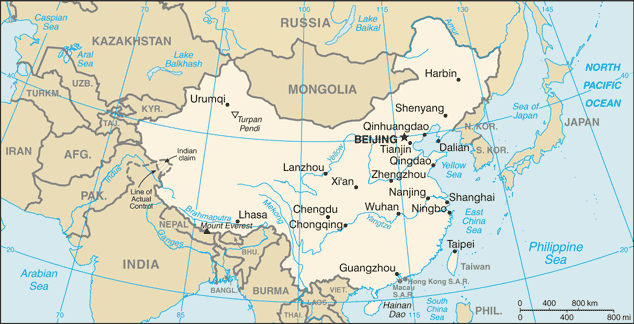
Originally presented at Harvard University’s Extension School by professor Peter K. Bol, this course–entitled “China: Traditions and Transformations”–covers the following material:
Modern China presents a dual image: a society transforming itself through economic development and social revolution; and the world’s largest and oldest bureaucratic state, coping with longstanding problems of economic and political management. Both images bear the indelible imprint of China’s historical experience, of its patterns of philosophy and religion, and of its social and political thought. These themes are discussed in order to understand China in the modern world and as a great world civilization that developed along lines different from those of the Mediterranean.
You can find the lectures in various media formats on this archived page.
China: Traditions and Transformations will be added to our collection of Free Online History courses, a subset of our collection, 1,700 Free Online Courses from Top Universities.
Read More...Shakespeare After All: The Later Plays (A Free Course from Harvard)
Taught by Harvard English professor Marjorie Garber, this course–entitled Shakespeare After All: The Later Plays–“focuses on Shakespeare’s later plays beginning with Measure for Measure and ending with The Tempest.” The course description continues as follows:
Building on the discussions of individual plays in Marjorie Garber’s book Shakespeare After All, this course takes note of key themes, issues, and interpretations of the plays, focusing on questions of genre, gender, politics, family relations, silence and speech, and cultural power from both above and below (royalty, nobility, and the court; clowns and fools). Designed as part lecture-presentation and part discussion, this is a course that is meant to be interactive, taking up topics generated by students as well as by the instructor. We discuss a play each week, along with the relevant critical reading.
The thirteen lectures are available on Youtube (watch them above), and you can also find them in other formats (Quicktime, Flash video, MP3 audio only) on this archived page. Each lecture runs about 2 hours.
Shakespeare After All: The Later Plays has been added to our collection of Free Online Literature Courses, a subset of our collection, 1,700 Free Online Courses from Top Universities.
Read More...Introduction to Psychology: A Free Course from Yale University
Taught by Yale professor Paul Bloom, this course presents an Introduction to Psychology and tries to explain what makes us tick:
What do your dreams mean? Do men and women differ in the nature and intensity of their sexual desires? Can apes learn sign language? Why can’t we tickle ourselves? This course tries to answer these questions and many others, providing a comprehensive overview of the scientific study of thought and behavior. It explores topics such as perception, communication, learning, memory, decision-making, religion, persuasion, love, lust, hunger, art, fiction, and dreams. We will look at how these aspects of the mind develop in children, how they differ across people, how they are wired-up in the brain, and how they break down due to illness and injury.
You can watch the 20 lectures from the course above, or find them on YouTube and iTunes. To get more information on the course, including the syllabus, visit this Yale website.
The main texts used in this course include:
- Gray, Peter. Psychology. New York: Worth Publishers, 2007.
- Marcus, Gary, ed. The Norton Psychology Reader. New York: W. W. Norton & Company, 2006.
Introduction to Psychology will be added to our collection, 1,700 Free Online Courses from Top Universities. There you can find a specialized list of Free Online Psychology and Neuroscience Courses.
Related Content:
A Crash Course on Psychology: A 30-Part Video Series from Hank Green
The Neuroscience & Psychology of Procrastination, and How to Overcome It
How To Think Like a Psychologist: A Free Online Course from Stanford
Read More...African-American History: Modern Freedom Struggle (A Free Course from Stanford)
Taught by historian Clayborne Carson, the editor of the papers of Martin Luther King, Jr., this Stanford University course–entitled African-American History: Modern Freedom Struggle–provides an introduction to African-American history, “with a particular emphasis on the political thought and protest movements of the period after 1930.” It focuses “on selected individuals who have shaped and been shaped by modern African-American struggles for freedom and justice.”
All 18 video lectures can be viewed above. Or they can be otherwise found on YouTube and iTunes.
African-American History: Modern Freedom Struggle has been added to our list of Free Online History Courses, a subset of our collection, 1,700 Free Online Courses from Top Universities.
If you would like to support the mission of Open Culture, consider making a donation to our site. It’s hard to rely 100% on ads, and your contributions will help us continue providing the best free cultural and educational materials to learners everywhere. You can contribute through PayPal, Patreon, and Venmo (@openculture). Thanks!
Related Content:
African American History-Emancipation to the Present: A Free Course from Yale University
Free Online History Courses
Read More...
Introduction to the Old Testament: A Free Yale Course
Taught by Christine Hayes, this Yale course offers an Introduction to the Old Testament, and covers the following ground:
This course examines the Old Testament (Hebrew Bible) as an expression of the religious life and thought of ancient Israel, and a foundational document of Western civilization. A wide range of methodologies, including source criticism and the historical-critical school, tradition criticism, redaction criticism, and literary and canonical approaches are applied to the study and interpretation of the Bible. Special emphasis is placed on the Bible against the backdrop of its historical and cultural setting in the Ancient Near East.
You can watch the 24 lectures from the course above, or find them on YouTube. To get more information on the course, including the syllabus, visit this Yale website.
Texts used in this course include:
Berlin, Adele, and Marc Zvi Brettler, eds., Michael Fishbane, senior consulting editor. 2004. The Jewish Study Bible: Featuring the Jewish Publication Society Tanakh Translation. Oxford: Oxford University Press.
Pritchard, James B, ed. 1958. The Ancient Near East, Volume 1: An Anthology of Texts and Pictures. Princeton, N.J.: Princeton University Press.
Introduction to the Old Testament will be added to our collection, 1,700 Free Online Courses from Top Universities. There you can find a specialized list of Free Online Religion Courses.
If you would like to support the mission of Open Culture, consider making a donation to our site. It’s hard to rely 100% on ads, and your contributions will help us continue providing the best free cultural and educational materials to learners everywhere. You can contribute through PayPal, Patreon, and Venmo (@openculture). Thanks!
Read More...Introduction to Political Philosophy: A Free Online Course from Yale University
Taught by professor Steven B. Smith, this course from Yale University offers an Introduction to Political Philosophy, and covers the following ground:
This course is intended as an introduction to political philosophy as seen through an examination of some of the major texts and thinkers of the Western political tradition. Three broad themes that are central to understanding political life are focused upon: the polis experience (Plato, Aristotle), the sovereign state (Machiavelli, Hobbes), constitutional government (Locke), and democracy (Rousseau, Tocqueville). The way in which different political philosophies have given expression to various forms of political institutions and our ways of life are examined throughout the course.
You can watch the 24 lectures from the course above, or find them on YouTube. To get more information on the course, including the syllabus, visit this Yale website.
The main texts used in this course include the following. You can find them in our collection of Free eBooks.
- Plato, Trial and Death of Socrates
- Plato, Republic
- Aristotle, Politics
- Machiavelli, The Prince
- Thomas Hobbes, Leviathan
- John Locke, Second Treatise of Government
- Jean-Jacques Rousseau, Political Writings
- Alexis de Tocqueville, Democracy in America
Introduction to Political Philosophy will be added to our collection, 1,700 Free Online Courses from Top Universities. There you can find a specialized list of Free Online Philosophy Courses.
If you would like to support the mission of Open Culture, consider making a donation to our site. It’s hard to rely 100% on ads, and your contributions will help us continue providing the best free cultural and educational materials to learners everywhere. You can contribute through PayPal, Patreon, and Venmo (@openculture). Thanks!
Related Content:
Oxford’s Free Course Critical Reasoning For Beginners Teaches You to Think Like a Philosopher
Free Online Philosophy Courses
Michael Sandel’s Free Course on Justice, the Most Popular Course at Harvard, Is Now Online
Read More...Support Us
We're hoping to rely on loyal readers, rather than erratic ads. Please click the Donate button and support Open Culture. You can use Paypal, Venmo, Patreon, even Crypto! We thank you!

About Us

Open Culture scours the web for the best educational media. We find the free courses and audio books you need, the language lessons & educational videos you want, and plenty of enlightenment in between.
Advertise With Us

FREE UPDATES!
GET OUR DAILY EMAIL
Get the best cultural and educational resources on the web curated for you in a daily email. We never spam. Unsubscribe at any time.
FOLLOW ON SOCIAL MEDIA

Open Culture editor Dan Colman scours the web for the best educational media. He finds the free courses and audio books you need, the language lessons & movies you want, and plenty of enlightenment in between.
Advertise With Us

