The Fear and Loathing in Las Vegas Board Game, Inspired by Hunter S. Thompson’s Rollicking Novel
There was a time, fair children of the late 20th century, when every movie and television show had itself a board game. Most were bad. But we bought them, and then tried our best to make it work. You can see a collection here. Few ever recreated the spirit of the original work, but instead coasted by on a cynic’s heart hoping to harvest your pop culture memories.
However, the board game version of Fear and Loathing in Las Vegas, created by designer, programmer, and artist J.R. Baldwin, is very much in the spirit of Hunter S. Thompson’s book and well-loved film adaptation by Terry Gilliam. It is also very dangerous to play, and is probably not survivable unless you are Hunter S. Thompson and you have traveled in time to 2009. That’s the year of our clip above, when Alana Joy interviewed Baldwin for a web channel called Life on Blast.

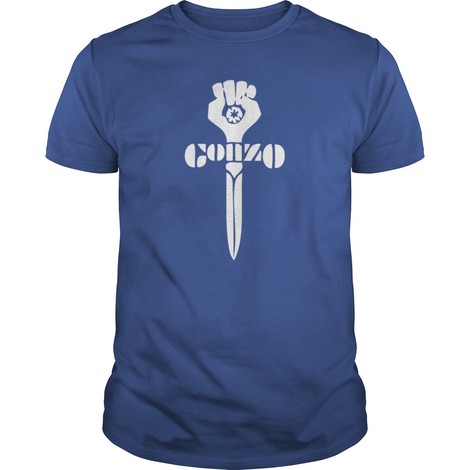
The game comes in a briefcase modeled after Thompson’s traveling apothecary, and uses a board, game pieces, and cards. The board is designed to look like a psychedelic trip, with the spaces and indeed the whole board modeled after peyote buttons, which were also part of Thompson’s Gonzo logo. The starting space quotes the famous first lines of the book (“We were somewhere around Barstow on the edge of the desert when the drugs began to take hold”) and the goal space uses the quote “All energy flows according to the whims of the great magnet” written around a brain.

But it’s the other contents of the case that make the game special: drugs and alcohol, to be taken depending on what circle you land on the game board. Three different card groups dictate actions to take during the game. Yellow cards mean the player must measure out an amount of drugs (including stimulants, inhalants, or hallucinogens) or a shot of booze or absinthe and ingest. (The game helpfully comes with a scale.) Blue cards send the player on an adventure or activity. Red cards are challenges to be taken while under the influence of the substances.

So, okay, Baldwin’s game is not to be taken seriously…or taken orally. It’s actually a one-of-its-kind piece of art that can be purchased for $3,500. Drugs, like batteries, are not included. You must supply your own, possibly through your attorney.
“You could, theoretically, survive the entire game, on all these different substances” Baldwin says. “So why not?”
You can get a sense of the game from the images above. They come from Baldwin’s website, where you can see yet more visuals.
Related Content:
Hunter S. Thompson’s Harrowing, Chemical-Filled Daily Routine
Read 11 Free Articles by Hunter S. Thompson That Span His Gonzo Journalist Career (1965–2005)
Playing Golf on LSD With Hunter S. Thompson: Esquire Editor Remembers the Oddest Game of Golf
Ted Mills is a freelance writer on the arts who currently hosts the FunkZone Podcast. You can also follow him on Twitter at @tedmills, read his other arts writing at tedmills.com and/or watch his films here.
Read More...Foundations of Modern Social Theory: A Free Yale Course
Taught by professor Iván Szelényi, this Yale course “provides an overview of major works of social thought from the beginning of the modern era through the 1920s. Attention is paid to social and intellectual contexts, conceptual frameworks and methods, and contributions to contemporary social analysis.” And the writers covered “include Hobbes, Locke, Rousseau, Montesquieu, Adam Smith, Marx, Weber, and Durkheim.”
The 25 lectures can be found on YouTube and iTunes (in audio and video). A complete syllabus can be found be on this Yale web site.
Foundations of Modern Social Theory has been added to our collection, 1,700 Free Online Courses from Top Universities.
If you would like to support the mission of Open Culture, consider making a donation to our site. It’s hard to rely 100% on ads, and your contributions will help us continue providing the best free cultural and educational materials to learners everywhere. You can contribute through PayPal, Patreon, and Venmo (@openculture). Thanks!
Read More...Yes, the Holocaust Happened, Even If a Top Google Search Result Says It Didn’t
We’re well into the backlash cycle of the post-election outrage over “fake news,” as commentator after commentator calls this phrase into question and celebrates the fall of the gatekeeper media. Taking a phrase from Tom Wolfe, Matthew Continetti at the conservative Commentary argues that “the press… is a Victorian Gentleman, the arbiter of manners and fashion, the judge of right conduct and good breeding.” We should not lament this gentleman’s loss of a “liberal, affluent, entitled cocoon.” He had long ago “changed his job description and went from telling his readers what had happened to telling them what to think.”
Likewise, The Intercept has shown how fake news panic produced a “McCarthyite Blacklist” of independent organizations lumped together by “shoddy, slothful journalistic tactics” of the kind used by “smear artists” and peddlers of disinformation. Politics aside, what we should at least gather from this firestorm is that the story of “fake news”—or of deliberate hoaxes, lies, and propaganda—is much older than the Internet, though the speed at which it spreads has increased exponentially with the dominance of social media. We’re left wondering how we might reclaim some orientation toward the truth in any media. If everything is potentially fake news, what can we trust?
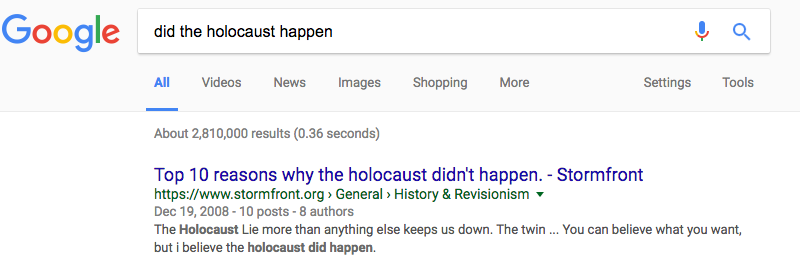
With the professional vetting of information in crisis, we are thrown back on the popularization of Darwinism advanced by “British defender of capitalism” Herbert Spencer, who—writes Timothy Snyder in his New York Times bestseller Black Earth: The Holocaust as History and Warning—described the market as “an ecosphere where the strongest and best survived.” In our information ecosystem, “strongest and best” is often determined not by natural forces, nor by expert adjudication of merit, but by algorithms… and cash. And as journalists at The Independent and elsewhere discovered last week, Google’s algorithms have decided that the best, most helpful answer to the question “did the holocaust happen?” comes from neo-Nazi hate site Stormfront, in a piece glibly titled “Top 10 reasons why the Holocaust didn’t happen.”
It should go without saying—and yet it must be said—that no serious historian of the period considers the systematic mass murder of millions of Jews and other “undesirables” to be an open historical question. The horror of the 30s and 40s, writes the U.S. Holocaust Memorial Museum, is “one of the best documented events in history” and denials and distortions of these events “are generally motivated by hatred of Jews.” (See their video explaining denialism at the top.) There’s no question that’s the motive in Google’s top search result for Holocaust denialism. Google admits as much, writing this past Monday, “We are saddened to see that hate organizations still exist. The fact that hate sites appear in search results does not mean that Google endorses these views.”
And yet, writes Carole Cadwalladr at The Guardian, the search engine giant also “confirmed it would not remove the result.” Cadwalladr details how she displaced the top result herself “with the only language that Google understands: money.” Lilian Black, the daughter of a Holocaust survivor, compared the tech giant’s response to “saying we know that the trains are running into Birkenau, but we’re not responsible for what’s happening at the end of it.” But they should bear some responsibility. Google, she says, shapes “people’s thinking… Can’t they see where this leads? And to have a huge worldwide organization refusing to acknowledge this. That’s what they think their role is? To be a bystander?”
The question forces us to confront not only the role of the press but also the role of the new gatekeepers, Google, Facebook, Twitter, etc., who have displaced Victorian systems of managing information and knowledge. The loss of status among academics and professional journalists and editors may have salutary effects, such as a democratization of media and the emergence of credible voices previously confined to the margins. But what can be done about the corresponding rise in deliberate misinformation published by hate groups and propaganda organizations? Moral considerations carry no weight when the figurative “marketplace of ideas” is reduced to the literal market.
Danny Sullivan, a search engine expert Cadwalladr cites, suggests that the reason the Stormfront result rose to the top of Google’s search may be nothing more than populism for profit: “Google has changed its algorithm to reward popular results over authoritative ones. For the reason that it makes Google more money.” The rising popularity of hate sites presents a growth opportunity for Google and its competitors. Meanwhile, racist hate groups spread their messages unimpeded, ordinary citizens are badly misinformed, and so-called “self-radicalized” individuals like mass killer Dylann Roof and Tommy Mair—who murdered British MP Jo Cox this past summer—continue to find the “strongest and best” cases for their homicidal designs, no matter that so much of the information they consume is not only fake, but designedly, malevolently false.
Related Content:
The Touching Moment When Nicholas Winton (RIP) Met the Children He Saved During the Holocaust
Rudolf Brazda, Last Man to Wear the Pink Triangle During the Holocaust, Tells His Story
Josh Jones is a writer and musician based in Durham, NC. Follow him at @jdmagness
Read More...Hear the First Live Performance of the Rolling Stones’ “Brown Sugar:” Recorded at the Fateful Altamont Free Concert in 1969
In January, 1970—with a line that might have come right out of any number of current opinion pieces taking the media to task—Rolling Stone ripped into Time, Life, Newsweek, the New York Times for their coverage of the 1969 Altamont Free Concert: “When the news media know what the public wants to hear and what they want to believe, they give it to them.”
What did the public want to hear? Apparently that Altamont was “Woodstock West,” full of “peace and love” and “good vibes.” Since, however, it was “undeniable that one man was actually murdered at the concert, a certain minimal adjustment was made, as if that event had been the result of some sort of unpredictable act of God, like a stray bolt of lightning.” The murdered fan, 18-year-old Meredith Hunter, was not, of course, killed by lightning, but stabbed to death by one of the Hell’s Angels who were hired as informal security guards.
Hunter was killed “just 20 feet in front of the stage where Mick Jagger was performing ‘Under My Thumb,’” writes the History Channel: “Unaware of what had just occurred, the Rolling Stones completed their set without further incident, bringing an end to a tumultuous day that also saw three accidental deaths and four live births.”
We know the moment best from the Maysles brothers concert film Gimme Shelter, which opens with a scene of Jagger viewing footage of the violence. See the unrest during “Sympathy for the Devil,” above, and the confused scene of the killing during “Under My Thumb,” further down.
In an interview about that grim day, Joel Selvin, music critic and author of a book on Altamont, sums up the judgment of forty years of history:
It’s one of the few dark days in the history of rock. This was the anti-Woodstock. It also took place in December of 1969, so it bookmarked the end of the ‘60s in a chronological way. The loss of innocence that day really is why this has lasted and why it endures as a cultural touchstone.
The loss of American innocence is an old trope that assumes the country, at some mythical time in the past, was a blameless paradise. But who was to blame for Altamont? The Stones were not held legally accountable, nor was the biker who stabbed Hunter. In another echo from the past into the present, he was acquitted on self-defense grounds. “What happened at Altamont,” was also “not the music’s fault,” writes The New Yorker’s Richard Brody, who blames “Celebrity” and a loss of “benevolent spirits… the idea of the unproduced.”
To ascribe such incredible weight to this incident—to mark it as the end of peace and love and the birth of “infrastructure” and “authority,” as Brody does—seems historically tone deaf. Strictly from the point of view of the Stones’ musical development, we might say that the close of the sixties and the year of Altamont marked a transition to a darker, grittier period, the end of the band’s forays into psychedelia and folk music. That summer, Brian Jones drowned in his swimming pool. And the band followed the sneering “Under My Thumb” at Altamont with a brand new tune, “Brown Sugar,” a song about slavery and rape.
You can hear the first live performance of the song at the top of the post, captured in an audience recording, two years before its official recording and release on 1971’s Sticky Fingers. “It was a song of sadism,” writes Stanley Booth, “savagery, race hate/love, a song of redemption, a song that accepted the fear of night, blackness, chaos, the unknown.” It’s a song that would face instant backlash were it released today. “Twitter would lampoon [the band] with carefully thought out hashtags,” writes Lauretta Charlton, “Multiple Change.org petitions would be signed. The band would be forced to issue an apology.”
Jagger himself said in 1995, “I would never write that song now. I would probably censor myself.” And he has, in many subsequent performances, changed some of the most outrageous lyrics. Charlton confesses to loving and hating the song, calling it “gross, sexist, and stunningly offensive toward black women.” And yet, she says, “When I hear ‘Brown Sugar,’ the outrage hits me like a postscript, and by that point I’m too busy clapping and singing along to be indignant.” Surrounded by the violence at Altamont, Jagger channeled the violence of history in a raunchy blues that—like “Under My Thumb” and “Sympathy for the Devil”—captures the seductive nature of power and sexualized aggression, and gives the lie to facile ideas of innocence, whether of the past or of the contemporary social and political late-sixties scene.
Related Content:
Hear the Never Released Version of The Stones’ “Brown Sugar,” With Eric Clapton on Slide Guitar
Josh Jones is a writer and musician based in Durham, NC. Follow him at @jdmagness
Read More...Introduction to Ancient Greek History: A Free Online Course from Yale
Taught by Yale professor Donald Kagan, this introductory course in Greek history traces “the development of Greek civilization as manifested in political, intellectual, and creative achievements from the Bronze Age to the end of the classical period.” In it, students “read original sources in translation as well as the works of modern scholars.” You can watch the 24 video lectures above, or find them on YouTube. The lectures also appear on iTunes in audio and video. Find the texts used in the course below. More information about the course, including the syllabus, can be found on this Yale website.
- Pomeroy, Burstein, Donlan and Roberts. Ancient Greece. Oxford University Press: New York, 1999.
- Kagan, Donald. “Problems in Ancient History.” In The Ancient Near East and Greece. 2nd ed., vol. 1. Prentice-Hall: New York, 1975.
- Herodotus, The Histories.
- Plutarch, The Rise and Fall of the Athens.
- Thucydides, The Peloponnesian War.
Introduction to Ancient Greek History will be added to our collection of Free Online History courses, a subset of our collection, 1,700 Free Online Courses from Top Universities.
If you would like to support the mission of Open Culture, consider making a donation to our site. It’s hard to rely 100% on ads, and your contributions will help us continue providing the best free cultural and educational materials to learners everywhere. You can contribute through PayPal, Patreon, and Venmo (@openculture). Thanks!
Related Content
Learn Ancient Greek in 64 Free Lessons: A Free Online Course from Brandeis & Harvard
Roman Architecture: A Free Online Course from Yale University
Read More...George Orwell’s Life & Literature Presented in a 3‑Hour Radio Documentary: Features Interviews with Those Who Knew Orwell Best
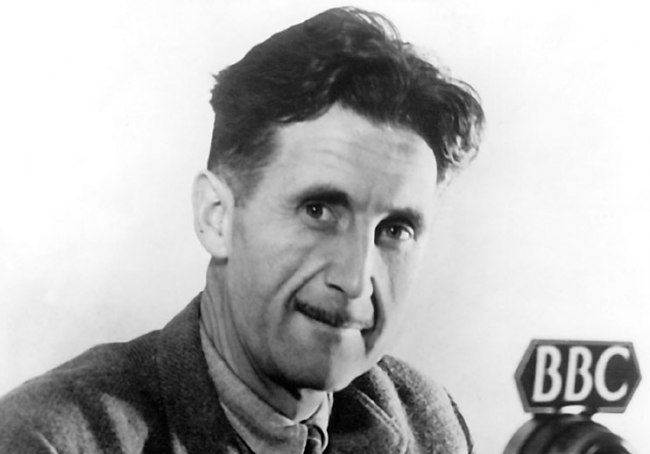
Image via Wikimedia Commons
Say you find yourself in a one-party state that promises to dismantle every civil institution you believe in and trample every ethical principle you hold dear. You may feel a little despondent. While a “this too shall pass” attitude may help you gain perspective, the problem isn’t simply that you’re on the losing side of a political contest. As George Orwell wrote in 1984, total authoritarian control means that “Who controls the past controls the future. Who controls the present controls the past.” The epistemic baseline you took for granted may become increasingly, frighteningly elusive as the ruling party reshapes all of reality to its designs.
With more vivid clarity than perhaps anyone since, Orwell characterized the mechanisms by which totalitarianism takes hold. His 1948 novel has not only given us a near-universal set of terms to describe the phenomenon, but it also gives us a metric: when our society begins to resemble Orwell’s dystopia in pervasive and alarming ways, we should know without question things have gone badly wrong. Whether we can do much about it is another question, but we should remember that Orwell himself was not simply an armchair observer of Fascism, Soviet totalitarianism, or oppressive English colonial rule. He fought Franco’s forces in Spain during the Spanish Civil War and as a journalist wrote critical articles and essays exposing hypocrisies and abuses of law and language. The impact of his work on later generations speaks for itself.
In the CBC radio documentary The Orwell Tapes, in three parts here, we have a comprehensive introduction to Orwell’s work, thought, and life. It opens with alarming soundbites from lightning rods (and villains or heroes, depending on who you ask) Julian Assange and Edward Snowden. But it doesn’t stray into the clichéd territory of overheated conspiracy those names often inspire. Instead we’re largely treated throughout each episode to firsthand accounts of the subject from those who knew him well.
“CBC is the only media organization in the world,” says host Paul Kennedy, “with a comprehensive archive of recordings featuring people who knew Orwell, from his earliest days, to his final moments. 75 people, 50 hours of recordings.” Edited snippets of these audio recordings make up the bulk of The Orwell Tapes, hence the title, making the program oral history rather than sensationalism. The interviewees include friends, former girlfriends, comrades-in-arms, and critical opponents. Each episode’s page on the CBC site features a list of names and relations to Orwell at the bottom.
But of course, accusations of sensationalism always follow those who warn of Orwellian trends and tendencies. Like many of our contemporaries, Orwell was a contradictory figure. He served as a colonial policeman in Burma even as he grew disgusted with Empire; he considered himself a Democratic Socialist, but he never looked away from the authoritarian horrors of state communism; and he has been held up as a pillar of resistance to state surveillance and control, even as he also stands accused of “naming names.” But the overall impression we get from Orwell’s friends and colleagues is that he was fully committed—to writing, to political engagement, to telling the truth as he saw it.
In releasing The Orwell Tapes this month, the CBC gives us five reasons why Orwell “is still very much with us today.” Some of these—modern surveillance, the corruptions of power (and the power of corruption)—will be familiar, as will number 3, a variation on what we’ve come to call “empathy” for one’s opponent. The 4th reason, CBC notes, is the renewed relevance of socialism as a viable alternative to capitalist predation. And finally, we have the continued danger of speaking truth to power, and to those who serve it religiously, uncritically, and often violently. As Orwell wrote in the preface to Animal Farm, “If liberty means anything at all, it means the right to tell people what they don’t want to hear.”
Related Content:
Huxley to Orwell: My Hellish Vision of the Future is Better Than Yours (1949)
George Orwell’s Six Rules for Writing Clear and Tight Prose
Josh Jones is a writer and musician based in Durham, NC. Follow him at @jdmagness
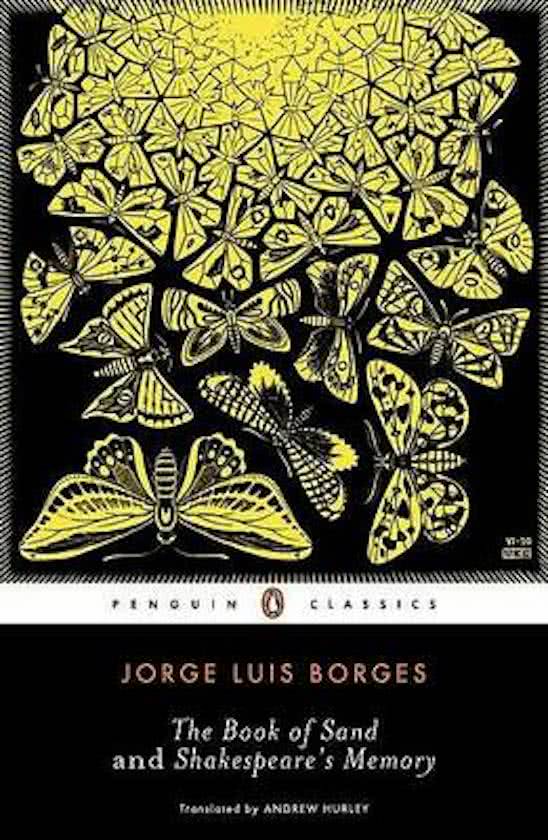
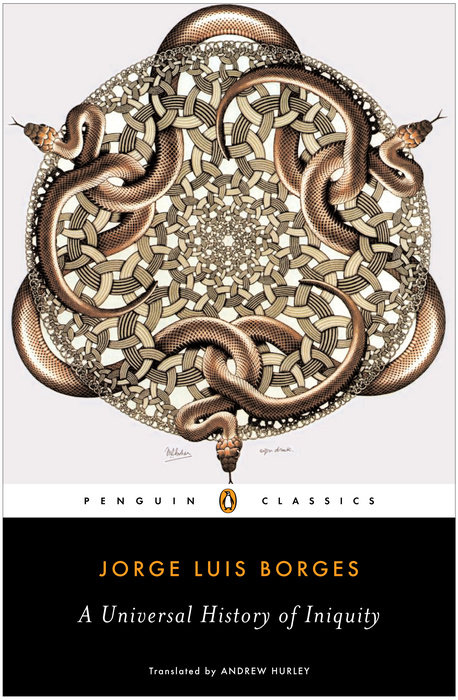
Read More...M.C. Escher Cover Art for Great Books by Italo Calvino, George Orwell & Jorge Luis Borges
The writer David Auerbach once posted a fascinating inquest on left-brained literature, an examination of what he calls “a parallel track of literature that is popular specifically among engineers,” excluding genre fiction (science- or otherwise), with an eye toward “which novels of some notoriety and good PR happen to attract members of the engineering professions.” Favored author names turn out to include Richard Powers, Umberto Eco, Haruki Murakami, William Gibson, Italo Calvino, and Jorge Luis Borges.
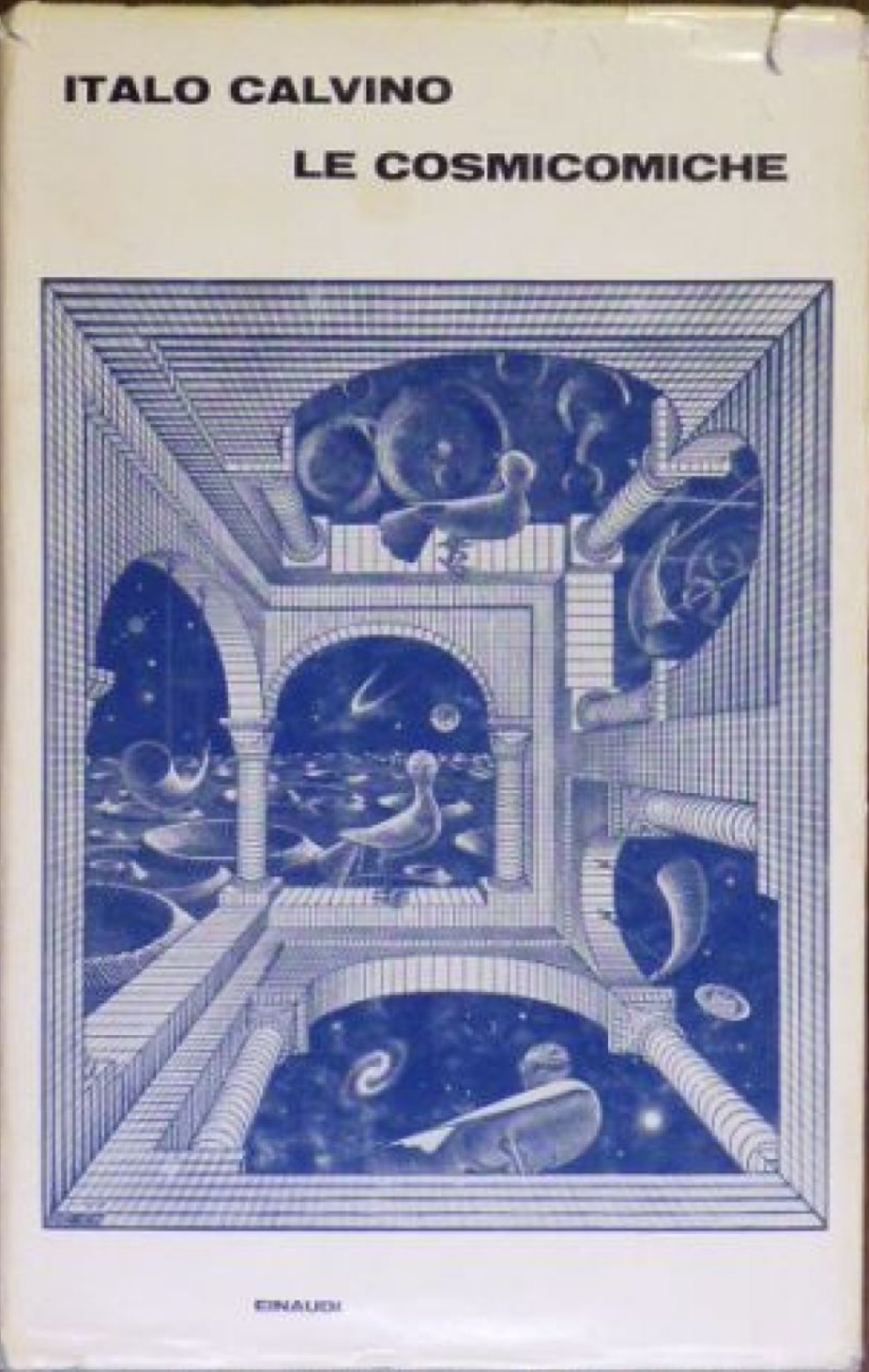
More of these literarily inclined left-brainers exist than one might imagine. From the publisher’s point of view, what cover art could best attract them? Books targeted toward that demographic could do far worse than to use the work of M.C. Escher, who spent his career with one foot in art and the other in mathematics.
In the hitherto unseen (and even unimagined) worlds pictured in his woodcuts, lithographs, and mezzotints, he made use of mathematical concepts from tessellation to reflection to infinity in ways at once impossible and somehow plausible, all of them still intellectually and aesthetically compelling today.
The non-novelist Douglas Hofstadter appears in Auerbach’s inquest since his best-known work, Gödel, Escher, Bach: an Eternal Golden Braid, “which partly uses fictional forms, is too great not to list.” Not only does Escher’s name appear in Hofstadter’s book title, his art informs its central concepts. “Hofstadter wove a network of connections linking the mathematics of Gödel, the art of Escher, and the music of Bach,” writes Allene M. Parker in the paper “Drawing Borges: a Two-Part Invention on the Labyrinths of Jorge Luis Borges and M.C. Escher.” In Gödel, Escher, Bach he describes their common denominator as a “strange loop,” a phenomenon that “occurs whenever, by movement upwards (or downwards) through the levels of some hierarchical system, we unexpectedly find ourselves right back where we started.”
Parker identifies 1948’s “Drawing Hands” as a “particularly striking and familiar example” of a strange loop in Escher’s work. We can interpret that image by recognizing that “it is Escher, the artist, who is drawing both hands and who stands outside this particular puzzle.” Or we can “adopt a Zen-inspired solution and let mystery be mystery by choosing to embrace a unity which contains oppositions,” such as one described by the opening of Borges’ poem “Labyrinths”:
There’ll never be a door. You’re inside
and the keep encompasses the world
and has neither obverse nor reverse
nor circling in secret center.
The Escher-Borges connections go deeper beyond, and as you can see in John Coulthart’s original post, the selection of Escher-covered books extends farther.
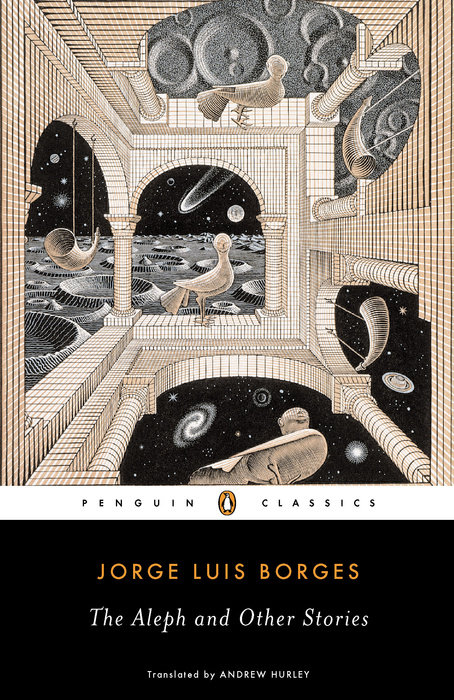
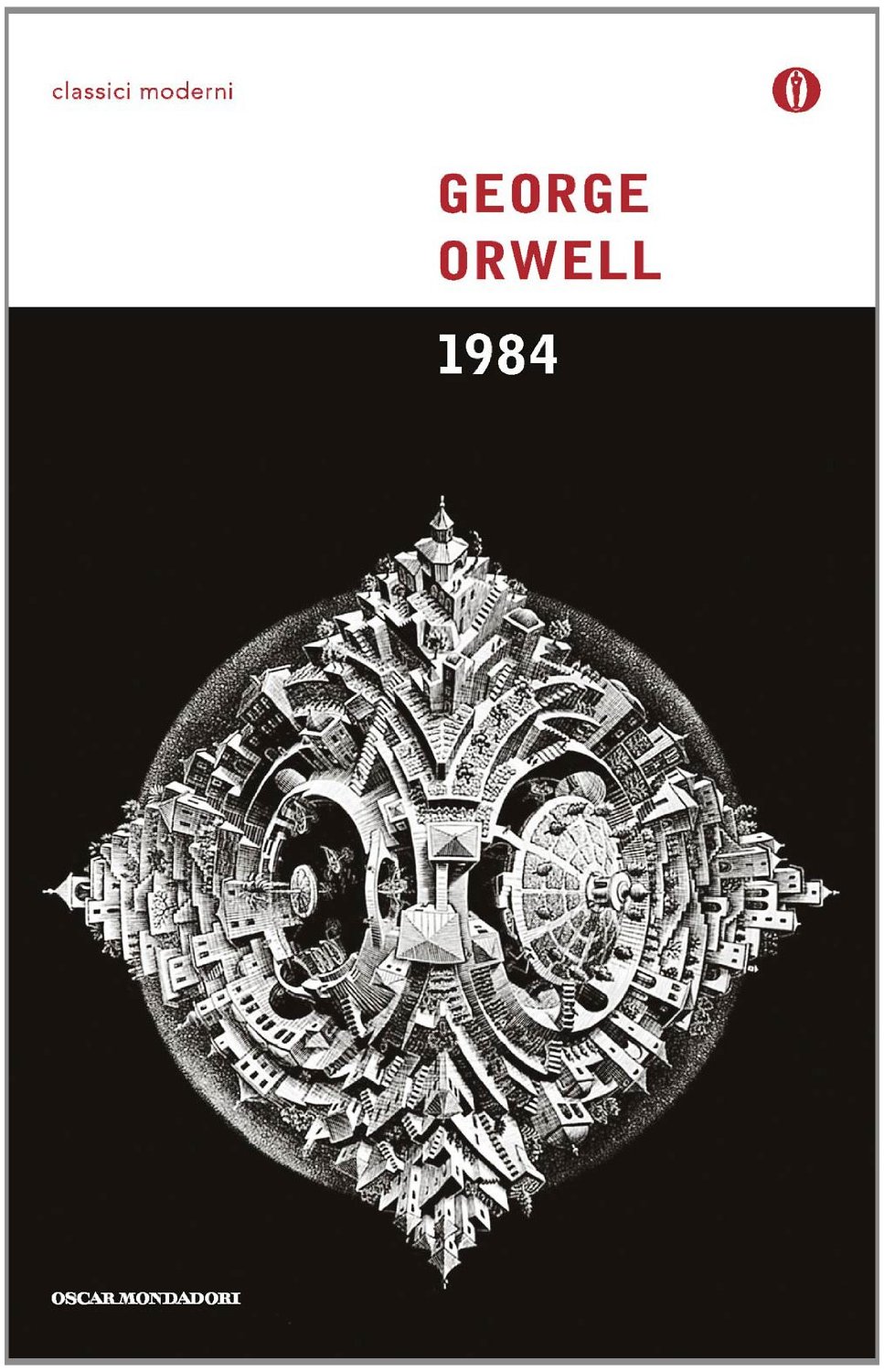
Aside from countless nonfiction publications, the Dutch mathematical master’s work has graced science-fiction and fantasy magazines, one edition of Flatland, a collection of “Forteana, weird fiction, occultism and historical speculation,” Clive Barker’s The Damnation Game, and George Orwell’s 1984, a novel more widely read than ever by the left- and right-brained alike. But no matter which hemisphere we favor, Escher — like Orwell, Borges, and Calvino — shows us how to see reality in more interesting ways.
via John Coulthart
Related Content:
Metamorphose: 1999 Documentary Reveals the Life and Work of Artist M.C. Escher
Inspirations: A Short Film Celebrating the Mathematical Art of M.C. Escher
The Cover of George Orwell’s 1984 Becomes Less Censored with Wear and Tear
Based in Seoul, Colin Marshall writes and broadcasts on cities and culture. He’s at work on a book about Los Angeles, A Los Angeles Primer, the video series The City in Cinema, the crowdfunded journalism project Where Is the City of the Future?, and the Los Angeles Review of Books’ Korea Blog. Follow him on Twitter at @colinmarshall or on Facebook.
Read More...Learn Python: A Free Online Course from Google
Google has created a free Python class designed for “people with a little bit of programming experience who want to learn Python.” A fortunate thing since Python is a computer language that’s now strongly in demand. (By the way, did you know that Python takes its name from Monty Python? A true story.)
According to Google’s course description:
The class includes “written materials, lecture videos, and lots of code exercises to practice Python coding. These materials are used within Google to introduce Python to people who have just a little programming experience. The first exercises work on basic Python concepts like strings and lists, building up to the later exercises which are full programs dealing with text files, processes, and http connections. The class is geared for people who have a little bit of programming experience in some language, enough to know what a “variable” or “if statement” is. Beyond that, you do not need to be an expert programmer to use this material.
This material was created by Nick Parlante working in the engEDU group at Google. Google’s Python class will be added to our list of Free Online Computer Science Courses, a subset of our larger collection, 1,700 Free Online Courses from Top Universities.
For anyone interested in an introductory programming course that uses Python, see: Introduction to Computer Science and Programming: A Free Course from MIT.
Other outfits offering free instruction in Python include Udacity, Codecademy, and Coursera.
If you’re looking for a generally well-reviewed textbook, consider Learning Python, 5th edition (from O’Reilly Media.
If you would like to support the mission of Open Culture, consider making a donation to our site. It’s hard to rely 100% on ads, and your contributions will help us continue providing the best free cultural and educational materials to learners everywhere. You can contribute through PayPal, Patreon, and Venmo (@openculture). Thanks!
Read More...Introduction to Computer Science and Programming: A Free Course from MIT
Taught by Professor John Guttag, this MIT course provides an Introduction to Computer Science and Programming. It covers “introductory computer science methods and topics,” and “all programming assignments use Python.”
You can watch all 26 lectures above, or find them on YouTube. A syllabus for the course and related materials can be found on MIT’s web site. The optional textbook used in the course is Introduction to Computation and Programming Using Python.
For anyone interested in a course more squarely focused on Python itself, see: Learn Python: A Free Online Course from Google.
Introduction to Computer Science and Programming will be added to our list of Free Online Computer Science Courses, a subset of our larger collection, 1,700 Free Online Courses from Top Universities.
If you would like to support the mission of Open Culture, consider making a donation to our site. It’s hard to rely 100% on ads, and your contributions will help us continue providing the best free cultural and educational materials to learners everywhere. You can contribute through PayPal, Patreon, and Venmo (@openculture). Thanks!
Read More...
Learn Python: A Free Online Course from Google
Google has created a free Python class designed for “people with a little bit of programming experience who want to learn Python.” A fortunate thing since Python is a computer language that’s now strongly in demand. (By the way, did you know that Python takes its name from Monty Python? True story.)
According to Google’s course description:
The class includes “written materials, lecture videos, and lots of code exercises to practice Python coding. These materials are used within Google to introduce Python to people who have just a little programming experience. The first exercises work on basic Python concepts like strings and lists, building up to the later exercises which are full programs dealing with text files, processes, and http connections. The class is geared for people who have a little bit of programming experience in some language, enough to know what a “variable” or “if statement” is. Beyond that, you do not need to be an expert programmer to use this material.
This material was created by Nick Parlante working in the engEDU group at Google. Google’s Python class will be added to our list of Free Online Computer Science Courses, a subset of our larger collection, 1,700 Free Online Courses from Top Universities.
For anyone interested in an introductory programming course that uses Python, see: Introduction to Computer Science and Programming: A Free Course from MIT.
Other outfits offering free instruction in Python include Udacity, Coursera and Codecademy.
If you’re looking for a generally well-reviewed textbook, consider Learning Python, 5th edition (from O’Reilly Media).
If you would like to support the mission of Open Culture, consider making a donation to our site. It’s hard to rely 100% on ads, and your contributions will help us continue providing the best free cultural and educational materials to learners everywhere. You can contribute through PayPal, Patreon, and Venmo (@openculture). Thanks!
Read More...Support Us
We're hoping to rely on loyal readers, rather than erratic ads. Please click the Donate button and support Open Culture. You can use Paypal, Venmo, Patreon, even Crypto! We thank you!

About Us

Open Culture scours the web for the best educational media. We find the free courses and audio books you need, the language lessons & educational videos you want, and plenty of enlightenment in between.
Advertise With Us

FREE UPDATES!
GET OUR DAILY EMAIL
Get the best cultural and educational resources on the web curated for you in a daily email. We never spam. Unsubscribe at any time.
FOLLOW ON SOCIAL MEDIA

Open Culture editor Dan Colman scours the web for the best educational media. He finds the free courses and audio books you need, the language lessons & movies you want, and plenty of enlightenment in between.
Advertise With Us